



Discover products with sustainability features this Earth month
Enjoy fast, free delivery, exclusive deals, and award-winning movies & TV shows.
Kindle app logo image

Download the free Kindle app and start reading Kindle books instantly on your smartphone, tablet, or computer - no Kindle device required.

Read instantly on your browser with Kindle for Web.

Using your mobile phone camera - scan the code below and download the Kindle app.

QR code to download the Kindle App

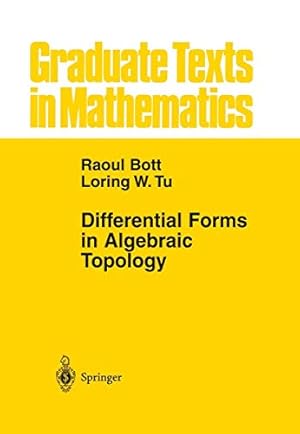
  • An Introduction to Manifolds (Universitext)

Follow the author

Get new release updates & improved recommendations
Something went wrong. Please try your request again later.

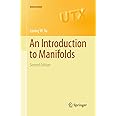
An Introduction to Manifolds (Universitext) 2nd ed. 2011 Edition


{"desktop_buybox_group_1":[{"displayPrice":"$34.01","priceAmount":34.01,"currencySymbol":"$","integerValue":"34","decimalSeparator":".","fractionalValue":"01","symbolPosition":"left","hasSpace":false,"showFractionalPartIfEmpty":true,"offerListingId":"sFpFih303WejHtMQSbzbe4arSZccZa%2FlM89Gcfy9uQPtZrIm54J32sCGN6b4FHb9lS4CX6QUm9CRhqY%2BVKNKDjuDrSeZAgqTwZ2kZ8xFXPETKIBAReIzrZf3bqBdvx7kXiapMxgowe4%3D","locale":"en-US","buyingOptionType":"NEW","aapiBuyingOptionIndex":0}]}

Purchase options and add-ons

Manifolds, the higher-dimensional analogs of smooth curves and surfaces, are fundamental objects in modern mathematics. Combining aspects of algebra, topology, and analysis, manifolds have also been applied to classical mechanics, general relativity, and quantum field theory. In this streamlined introduction to the subject, the theory of manifolds is presented with the aim of helping the reader achieve a rapid mastery of the essential topics. By the end of the book the reader should be able to compute, at least for simple spaces, one of the most basic topological invariants of a manifold, its de Rham cohomology. Along the way, the reader acquires the knowledge and skills necessary for further study of geometry and topology. The requisite point-set topology is included in an appendix of twenty pages; other appendices review facts from real analysis and linear algebra. Hints and solutions are provided to many of the exercises and problems. This work may be used as the text for a one-semester graduate or advanced undergraduate course, as well as by students engaged in self-study. Requiring only minimal undergraduate prerequisites, 'Introduction to Manifolds' is also an excellent foundation for Springer's GTM 82, 'Differential Forms in Algebraic Topology'.

Frequently bought together

This item: An Introduction to Manifolds (Universitext)
$34.01
Get it as soon as Thursday, Apr 16
In Stock
Ships from and sold by Amazon.com.
+
$68.20
Get it as soon as Friday, Apr 24
Usually ships within 3 to 5 days
Ships from and sold by Amazon.com.
+
$67.26
Get it as soon as Thursday, Apr 16
In Stock
Ships from and sold by Amazon.com.
Total price: $00
To see our price, add these items to your cart.
Details
Added to Cart
Some of these items ship sooner than the others.
Choose items to buy together.

Customers also bought or read

Loading...

Editorial Reviews

Review

From the reviews of the second edition:

“This book could be called a prequel to the book ‘Differential forms in algebraic topology’ by R. Bott and the author. Assuming only basic background in analysis and algebra, the book offers a rather gentle introduction to smooth manifolds and differential forms offering the necessary background to understand and compute deRham cohomology. … The text also contains many exercises … for the ambitious reader.” (A. Cap, Monatshefte für Mathematik, Vol. 161 (3), October, 2010)

From the Back Cover

Manifolds, the higher-dimensional analogues of smooth curves and surfaces, are fundamental objects in modern mathematics. Combining aspects of algebra, topology, and analysis, manifolds have also been applied to classical mechanics, general relativity, and quantum field theory. In this streamlined introduction to the subject, the theory of manifolds is presented with the aim of helping the reader achieve a rapid mastery of the essential topics. By the end of the book the reader should be able to compute, at least for simple spaces, one of the most basic topological invariants of a manifold, its de Rham cohomology. Along the way the reader acquires the knowledge and skills necessary for further study of geometry and topology. The second edition contains fifty pages of new material. Many passages have been rewritten, proofs simplified, and new examples and exercises added. This work may be used as a textbook for a one-semester graduate or advanced undergraduate course, as well as by students engaged in self-study. The requisite point-set topology is included in an appendix of twenty-five pages; other appendices review facts from real analysis and linear algebra. Hints and solutions are provided to many of the exercises and problems. Requiring only minimal undergraduate prerequisites, "An Introduction to Manifolds" is also an excellent foundation for the author's publication with Raoul Bott, "Differential Forms in Algebraic Topology."

Product details

About the author

Follow authors to get new release updates, plus improved recommendations.
Loring W. Tu
Brief content visible, double tap to read full content.
Full content visible, double tap to read brief content.

Discover more of the author’s books, see similar authors, read book recommendations and more.

Customer reviews

4.7 out of 5 stars
166 global ratings

Customers say

Customers find the book provides a gentle yet rigorous introduction to manifolds, with clear derivations of propositions and theorems. They appreciate its accessible approach and easy-to-medium level exercises.
AI Generated from the text of customer reviews

Select to learn more

13 customers mention content, 13 positive, 0 negative
Customers find the content of the book to be decent for beginners, with one customer noting its clear derivations of propositions and theorems, and another highlighting its gentle yet rigorous approach to the subject.
This seems to be a very good book, it is easier than graduate texts I would say at a advanced undergraduate level it covers many topics starting...Read more
This is an excellent book for what it is. A gentle yet rigorous introduction to the subject....Read more
This is the best book of it's kind, It provides a solid introduction to manifolds....Read more
It is remarkable! It is a complete book ! Let's get started.Read more
9 customers mention clarity of content, 7 positive, 2 negative
Customers find the content of the book clear and gentle, serving as an accessible introduction to manifolds with easy to medium level exercises.
...Tu's book is a friendly and smooth introduction to these topics and more....Read more
...Loring Tu's book has many computational examples and easy to medium level exercises, which are essential because of the onslaught of notation one...Read more
This was a very accessible introduction to manifolds, but I felt that I could have been pushed more by the exercises....Read more
When I first began reading the text, I had a difficult time understanding the concepts, but the presentation of the material really laid bare all of...Read more
This book taught me how to calculate de Rham Cohomology Groups for any compact and oriented Surface!
5 out of 5 stars
This book taught me how to calculate de Rham Cohomology Groups for any compact and oriented Surface!
This seems to be a very good book, it is easier than graduate texts I would say at a advanced undergraduate level it covers many topics starting with flat space and calculus on it like R*n and then starts with Manifolds, it even brings a chapter on Lie Groups and Lie Algebras an another on Categories and Functors. But I have not read any of these chapters I immediately went for the last chapter, chapter 7 De Rham Theory, which consist in 6 subchapters: 24-De Rham Cohomology, 25-The Long Exact Sequence in Cohomology, 26-The Mayer-Vietoris Sequence, 27- Homotopy Invariance, 28- Computation of de Rham Cohomology, 29-Proof of Homotopy Invariance. These sections actually taught me HOW TO USE AND CALCULATE COHOMOLOGY GROUPS with the Mayer Vietoris Sequence and for this an only this it is worth it to buy it, here you will find how to calculate the de Rham Cohomology groups for any oriented Riemann surface of whatever genus you want!!!! and this is very important because de Rham's Cohomology groups are very important topological invariants of Manifolds, I am glad I purchased this book and learnt this stuff.
Thank you for your feedback
Sorry, there was an error
Sorry we couldn't load the review

Top reviews from the United States

  • Reviewed in the United States on February 3, 2013
    Format: PaperbackVerified Purchase
    When I first began reading the text, I had a difficult time understanding the concepts, but the presentation of the material really laid bare all of the esoteric topics that I hadn't encountered formally before.

    Loring Tu has done an excellent job of making sure even the uninitiated student can make his/her way through this text, having sprinkled a few easy exercises through the text itself to emphasize the learning and familiarity with definitions, with more difficult exercises at the end (including computations as well as topics that force a student to understand and digest the section immediately preceding the problems). He labels every problem, so a student doesn't wade through pages of text needlessly trying to discover which part of the text will be most useful, but this method allows the student to hone in on the material which is exactly pertinent to that problem. I am by far not the best and brightest student, but I have been able to read the text and given a few hours for each section, complete all exercises throughout the reading and at the end of the section. With many hints and solutions at the end of the textbook, I can be sure I'm not only learning the material, I'm learning it correctly!

    I would agree with some of the other reviewers that this should be a text every graduate student in mathematics should read. It is not out of the realm of possibilities for a student to read it on his/her own, and the enlightenment gained from the generalizations of multivariate calculus is really a gift to oneself, as well as to any future students the person may have, for they will be able to answer any up-and-coming student's questions with a clarity surpassing any instructor I've personally had, which would have been very helpful as a budding mathematician.

    34 people found this helpful
    Report
  • Reviewed in the United States on August 16, 2019
    Format: PaperbackVerified Purchase
    I used this book for a semester long senior undergraduate/masters level class that culminated in Stoke's theorem. I found the material fascinating and thought this book did a good job of being self-contained in developing the basic machinery for integration on manifolds via partitions of unity, while also giving a taste of some interesting related topics: several chapters about Lie groups, immersions/submersions, regular/critical points, and de Rahm cohomology at the end. I especially enjoyed the 5 page section on the category theoretic perspective and the functorial nature of the pullback and pushforward. No complaints really, maybe it could use a few more exercises, but the ones in the book are pretty good. I would have liked discussion of the hodge dual (which is alluded to in an exercise on Maxwell's equations), but the book stays pretty strictly away from the metric tensor and anything else remotely Riemannian, which I think is ultimately a good choice because it leaves room to discuss cohomology, Mayer-Vietoris, homotopy, etc.
    13 people found this helpful
    Report
  • Reviewed in the United States on February 21, 2022
    Format: PaperbackVerified Purchase
    This seems to be a very good book, it is easier than graduate texts I would say at a advanced undergraduate level it covers many topics starting with flat space and calculus on it like R*n and then starts with Manifolds, it even brings a chapter on Lie Groups and Lie Algebras an another on Categories and Functors. But I have not read any of these chapters I immediately went for the last chapter, chapter 7 De Rham Theory, which consist in 6 subchapters: 24-De Rham Cohomology, 25-The Long Exact Sequence in Cohomology, 26-The Mayer-Vietoris Sequence, 27- Homotopy Invariance, 28- Computation of de Rham Cohomology, 29-Proof of Homotopy Invariance. These sections actually taught me HOW TO USE AND CALCULATE COHOMOLOGY GROUPS with the Mayer Vietoris Sequence and for this an only this it is worth it to buy it, here you will find how to calculate the de Rham Cohomology groups for any oriented Riemann surface of whatever genus you want!!!! and this is very important because de Rham's Cohomology groups are very important topological invariants of Manifolds, I am glad I purchased this book and learnt this stuff.
    Customer image
    5.0 out of 5 stars
    This book taught me how to calculate de Rham Cohomology Groups for any compact and oriented Surface!

    Reviewed in the United States on February 21, 2022
    This seems to be a very good book, it is easier than graduate texts I would say at a advanced undergraduate level it covers many topics starting with flat space and calculus on it like R*n and then starts with Manifolds, it even brings a chapter on Lie Groups and Lie Algebras an another on Categories and Functors. But I have not read any of these chapters I immediately went for the last chapter, chapter 7 De Rham Theory, which consist in 6 subchapters: 24-De Rham Cohomology, 25-The Long Exact Sequence in Cohomology, 26-The Mayer-Vietoris Sequence, 27- Homotopy Invariance, 28- Computation of de Rham Cohomology, 29-Proof of Homotopy Invariance. These sections actually taught me HOW TO USE AND CALCULATE COHOMOLOGY GROUPS with the Mayer Vietoris Sequence and for this an only this it is worth it to buy it, here you will find how to calculate the de Rham Cohomology groups for any oriented Riemann surface of whatever genus you want!!!! and this is very important because de Rham's Cohomology groups are very important topological invariants of Manifolds, I am glad I purchased this book and learnt this stuff.
    Images in this review
    Customer image
    8 people found this helpful
    Report
  • Reviewed in the United States on June 30, 2017
    Format: PaperbackVerified Purchase
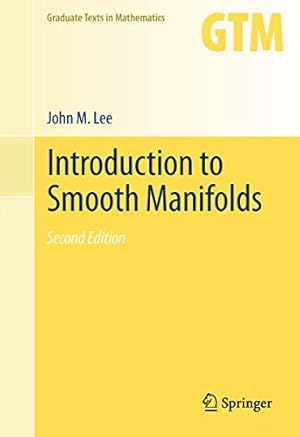
    This past year I took my first manifold theory/differential geometry course. We used John Lee's Introduction to Smooth Manifolds and the terse encyclopedic nature of the book didn't really help me understand what the professor was saying. Luckily, I found Loring Tu's book which gives a gentler introduction to the subject. Loring Tu's book has many computational examples and easy to medium level exercises, which are essential because of the onslaught of notation one encounters in manifold theory.

    I've been able to compare this book with John Lee's Introduction to Smooth Manifolds, which seems to be one of the standard texts for an introductory geometry course. My guess is that when Mr. Tu was writing his book, he started with John Lee's book and got rid of all of the obscure and difficult examples. He then expanded out the important essential ones in more detail so that a student who has never seen manifold theory would have a better chance of understanding.
    51 people found this helpful
    Report
  • Reviewed in the United States on February 14, 2025
    Format: PaperbackVerified Purchase
    This was a very accessible introduction to manifolds, but I felt that I could have been pushed more by the exercises. Any vaguely interesting or difficult exercise was accompanied with a hint that did all the hard work. If you don’t care about exercises, this book might be the easiest to read you can get.
    One person found this helpful
    Report
  • Reviewed in the United States on October 24, 2025
    Format: PaperbackVerified Purchase
    Great text for graduate/undergraduate students who start studying differential geometry.

Top reviews from other countries

  • DNA B
    5.0 out of 5 stars Concise introduction. Very readable.
    Reviewed in Germany on September 20, 2022
    Format: PaperbackVerified Purchase
    Bought this book since my university completely didn't care to teach it's mathematicians any geometry beyond Euclidean... For me this book is quite concise I worked trough the entire book during the last two weeks. It consists of a lot of small subsegments that are easily understood. Not too much unnecessary text very well structured. Cannot say how understandable it is for non mathematicians, however it for for me self studying geometry. Will see how it works now as reference manual.
  • Audrey Milet
    5.0 out of 5 stars Parfait
    Reviewed in France on May 5, 2019
    Format: PaperbackVerified Purchase
    Très bon livre d’introduction !
    Achat pas parfait !
  • Geometer
    5.0 out of 5 stars The best undergraduate text on Manifolds
    Reviewed in Canada on February 2, 2014
    Format: PaperbackVerified Purchase
    Definitely the best text of manifolds for an undergraduate. Also good for a graduate student who needs an easier and more slow-paced companion to Lee's book on smooth manifolds.
  • Rodrigo de Oliveira Gomes
    5.0 out of 5 stars Very good book
    Reviewed in Brazil on November 18, 2025
    Format: PaperbackVerified Purchase
    Very good book
  • Volkan
    5.0 out of 5 stars Perfect!
    Reviewed in Turkey on May 31, 2025
    Format: PaperbackVerified Purchase
    Perfect introduction to manifolds. If you know Multivariable Calculus, a bit of point set topolgy and Linear algebra, then you are ready to use this book.

    Great journey. I bought Differential Geometry book of Tu as well. Both of them are crystal clear