


what is belief?


-

-
 Number of slices to send:Optional 'thank-you' note:
-

-

http://www.lifesbizzare.blogspot.com || OCJP:81%
-
- Number of slices to send:Optional 'thank-you' note:
-
-
http://www.lifesbizzare.blogspot.com || OCJP:81%
-
 1
1 -
- Number of slices to send:Optional 'thank-you' note:
-
-
-
- Number of slices to send:Optional 'thank-you' note:
-
-
Actually, Ulf, you are right to say without proof; with proof it would become knowledge. Belief without evidence becomes irrational, however.

-
- Number of slices to send:Optional 'thank-you' note:
-
-

http://www.lifesbizzare.blogspot.com || OCJP:81%


-
- Number of slices to send:Optional 'thank-you' note:
-
-
Vishal Hegde wrote:Belief=Knowledge+Experience
That doesn't sound very logical to me. Can you explain it?


-
- Number of slices to send:Optional 'thank-you' note:
-
-
Belief = Hope or Fear - Evidence
Tim Driven Development | Test until the fear goes away


-
- Number of slices to send:Optional 'thank-you' note:
-
-
Campbell Ritchie wrote:Belief without evidence becomes irrational, however.
Does it? I'm pretty sure that the general theory of Relativity wasn't actually demonstrated until well after Einstein's death; but I could be wrong.
I also don't like the notion that belief (or conjecture) can simply be dismissed as "irrational" unless you're incredibly careful how you define "evidence"; otherwise, it sounds to me like you have an anthill.
At the same time, I'm pretty sure there are a lot of quacks around.

Winston
"Leadership is nature's way of removing morons from the productive flow" - Dogbert
Articles by Winston can be found here

-
- Number of slices to send:Optional 'thank-you' note:
-
-
Winston Gutkowski wrote:...the general theory of Relativity wasn't actually demonstrated until well after Einstein's death...
But there still could have been evidence pointing towards it, even if it had not been fully demonstrated.
There are only two hard things in computer science: cache invalidation, naming things, and off-by-one errors
-
- Number of slices to send:Optional 'thank-you' note:
-
-
Winston Gutkowski wrote:
Campbell Ritchie wrote:Belief without evidence becomes irrational, however.
Does it? I'm pretty sure that the general theory of Relativity wasn't actually demonstrated until well after Einstein's death; but I could be wrong.
Winston
I cannot attest to the Theory of Relativity, although my thoughts on the matter are that it has not been either proven nor disproved (I only glanced at the article ). I do now that the Pythagoream Theorem was just proven in the last decade. Not the actual theorem, but that the expression only applies to a2 + b2 = c2 and will not work on any other expression (i.e. a3+b3=c3). The same holds for black holes. Science has known they exist, but until recently have not been able to prove they existed.
Anyway, I will second Ulf's position that belief is an acceptance that something is true without empirical evidence to prove that it does.
There are worse crimes than burning books. One of them is not reading them. Ray Bradbury


- 1
-
- Number of slices to send:Optional 'thank-you' note:
-
-
fred rosenberger wrote:
Winston Gutkowski wrote:...the general theory of Relativity wasn't actually demonstrated until well after Einstein's death...
But there still could have been evidence pointing towards it, even if it had not been fully demonstrated.
I am actually perfectly fine with scientific theories that doesn't have any proof whatsoever. However, there are two caveats. First, the theory has to be written in such a way that it can be proven or dis-proven in the future. The theory can't have a component, that by its very nature, states that it can't be proven -- that's faith and not scientific theory.
Second, a scientific theory can be vague (and have no proof), if it is trying to be a place-holder for an observation. The two interesting theories in this regard, are dark matter and dark energy. Personally, I am really interested to see the actual reason for those observations myself.
Henry

- 1
-
- Number of slices to send:Optional 'thank-you' note:
-
-
Small-b beliefs can be characterised as "belief=knowledge+experience" that Vishal mentioned above. For example, everyday when I'm getting ready to plop myself down on the sofa, I'm operating on a belief that the sofa won't break. I really don't know until I'm on the sofa. Why do I know that sofa won't break? because I have looked at the construction of the sofa ("knowledge") and I have plopped myself down on it hundreds of times ("experience") Everyone operates on these small-b beliefs all the time. You can walk because you believe that the ground won't give away. You open up to your loved ones because you believe that they won't criticize you. You make posts on Coderanch because you believe that people won't mislead you. Ultimately, the whole scientific method is based on a belief that the very nature of the universe is predictable:- running the same experiment in the exact same way would yield the same results, and if it doesn't then there is something else going on that you need to investigate. Everyone is trained to believe since childhood that if all pre-conditions are the same then the results will be the same. This belief is so ingrained in us that we don't even stop to think about it. Without small-b beliefs we won't be able to function as people
Big-B beliefs are completely differrent though. Here is where we go into religious territory. This is where you believe in something without having evidence for it. You believe in a bearded man in the sky who is watching over you and loves you. You believe that doing good things will get you to a better life the next time you are born. You believe that tying a string around a tree would make you pass the exam. You believe doing good in this world will make the world a better place. These are "irrational" beliefs because you don't have any way to test whether the beliefs are true. Most people hold on to these beliefs because it makes them feel good. Personally, I choose to believe that people are good. I believe that the human tendency to love is greater than the human tendency to hate. I don't have evidence of this. Actually, I would rather not look at evidence that proves me wrong, because I know I won;t be able to operate if I'm scared of each human around me. I have an irrational desire to be an optimist, so I irrationally believe that the world is a good place
Big-B beliefs are irrational, and have lead to people killing other people in name of religion. However, I don't think they are all bad. They give you hope. The human mind is a strange thing. You can overcome a lot of obstacles if you think that things are getting better. Let's say you are afraid of spiders, and you want to get over the fear of spiders. You can get over the fear if you start believing that you will. If someone tells you that counting to ten while scratching yourself behind the ear can help you get rid of the fear, and you truly believe them, you will get over the fear by counting to ten and scratching behind you ear. It;s completely irrational, but that's how our minds work. You just need something to focus your fear on, and truly believe that doing that doing something will make the fear disappear, and *foop* the fear dissappears. I know.. easier said than done.. but that is in essence what techniques like Cognitive Based Therapy are based on
I think this is what primarily caused Big-B beliefs to develop from small-b beliefs. Imagine being a hunter-gatherer who is scared of thunder. Once in 10 days, the sky grows angry and starts shooting sparks and making loud noises while cold heavy rain pelts down on you. You don;t really know what causes the sky to become angry like that, and you don't know how to make it go away. However, you start doing some sort of ritual, and you stop focusing on this scary thing. Eventually, the storm goes away, and you feel that you made it go away by making the sky happy. Eventually, you start doing that ritual everytime there is a storm, and the storm keeps going away, and you build a small-b belief that doing this prayer makes the storm go away. You start believing in prayer, and you start praying to everything. Eventually over centuries, prayer/ritual becomes institutionalized, and even though you know that there is no sky god angry at you, you still keep praying.
-
- Number of slices to send:Optional 'thank-you' note:
-
-
fred rosenberger wrote:But there still could have been evidence pointing towards it, even if it had not been fully demonstrated.
And I'm sure there was. I guess what I'm trying to say is that in a technocracy, where science is king, it needs to be aware that it is every bit as much the "edifice" against which things are argued now as The Church (or the State) was back in the day, so it needs to be very careful before it starts putting labels like "irrational" in order to dismiss what it simply doesn't understand, or doesn't have the tools to deal with.
I'm the product of my generation and training, which tends to make me a believer in the tangible and provable, and a "snake oil sceptic"; but hope I'm also smart enough to know that there may well be things out there that we simply don't have the knowledge or technique to fathom yet.
A simple example: Almost every major religion contains common threads, just one of which is to "do unto others" or "do no harm", which is just now starting to be realised as a possible winning (albeit 'conservative', from what I understand) strategy in game theory. I like that. I like the fact that two or three (or more) thousand years ago people were already accepting principles that we're only now able to prove.
It also suggests to me that "evidence" or "proof" are likely not the only yardsticks available to us. They're just the best ones we've got so far.
Winston
"Leadership is nature's way of removing morons from the productive flow" - Dogbert
Articles by Winston can be found here
-
- Number of slices to send:Optional 'thank-you' note:
-
-
Robert D. Smith wrote:
I cannot attest to the Theory of Relativity, although my thoughts on the matter are that it has not been either proven nor disproved (I only glanced at the article ).
The theory of relatively, IMO, has been proven -- at least, indirectly. One of the "issues" with the theory was that the math predicted the existence of black holes. For a long time, this was felt to be the way to disprove the theory. Even Einstein believe that black holes was likely not possible, and that the math wasn't complete in that regard.
Well, black holes have been observed to exist, and the theory no longer has any contenders to disprove it. So, while arguably, it hasn't been proven, it has certainly held the test of time -- and is the basis for many other theories today.
Henry
- 2
-
- Number of slices to send:Optional 'thank-you' note:
-
-
-
- Number of slices to send:Optional 'thank-you' note:
-
-
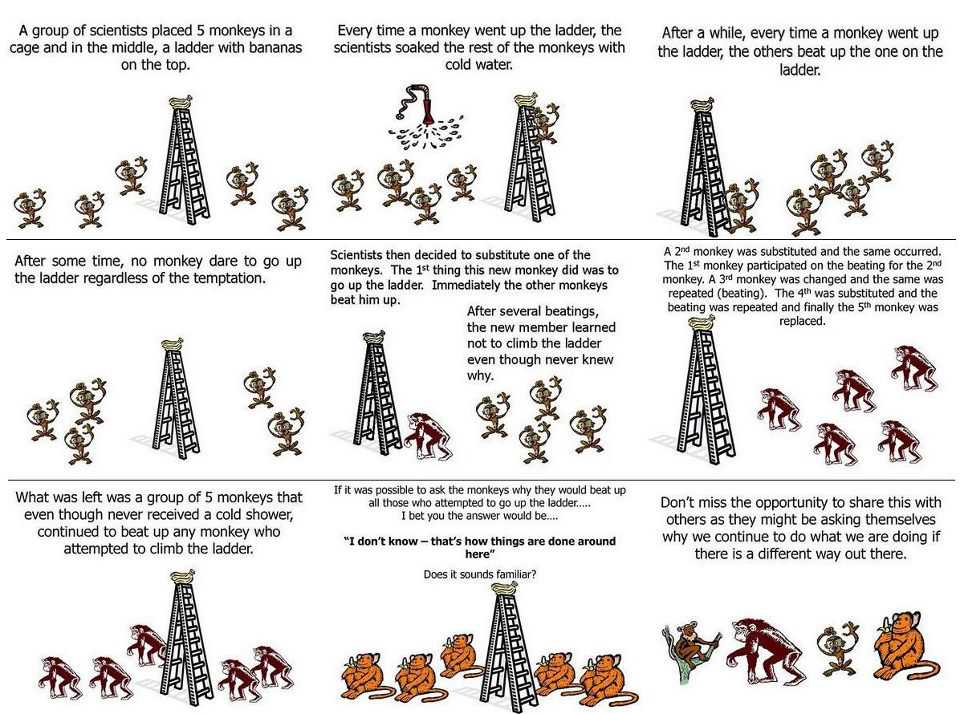
Jesper de Jong wrote:[monkey cartoon]
Gets a cow from me. A picture is worth a thousand words.
Winston
"Leadership is nature's way of removing morons from the productive flow" - Dogbert
Articles by Winston can be found here
-
- Number of slices to send:Optional 'thank-you' note:
-
-
Robert D. Smith wrote:I do now that the Pythagoream Theorem was just proven in the last decade.
You KNOW this? Really? The proof actually came out in 1993, with some corrections in it. An updated version came out in 1994, which has been accepted as correct.
Robert D. Smith wrote: Not the actual theorem, but that the expression only applies to a2 + b2 = c2 and will not work on any other expression (i.e. a3+b3=c3).
This is not quite correct. What you are talking about is known as "Fermet's Last Theorem", which went unsolved for around 450 years. What it ACTUALLY states is that for any integer exponent greater than 2, there are no integer solutions.
There are only two hard things in computer science: cache invalidation, naming things, and off-by-one errors

-
- Number of slices to send:Optional 'thank-you' note:
-
-
Robert D. Smith wrote:I cannot attest to the Theory of Relativity, although my thoughts on the matter are that it has not been either proven nor disproved (I only glanced at the article ).
That's because scientific theories are never "proved" in the sense that mathematical theorems are proved. There's no proof that the law of gravity is true either but if you believed that if you let go of a rock then it would fall towards the centre of the earth, that would be an entirely sensible belief.
I do now that the Pythagoream Theorem was just proven in the last decade. Not the actual theorem, but that the expression only applies to a2 + b2 = c2 and will not work on any other expression (i.e. a3+b3=c3).
That's Fermat's Last Theorem actually, not Pythagoras's. But again that's math, where things can actually be proved and therefore belief is unnecessary.
-
- Number of slices to send:Optional 'thank-you' note:
-
-
Even with the lack of evidence, I still believe that the story that illustrates the folly of belief without evidence is true though :p How fucked up is that?

-
- Number of slices to send:Optional 'thank-you' note:
-
-
I can understand where the people who say "Well, it's just a theory" are coming from, even though I know they are wrong. If you don't have the mental capacity to understand genetics, you would have to put belief in the scientists.. just like I put belief in Einstein and Hawkins. But if putting my belief in the scientists puts me in opposition with beliefs that I've held since childhood, then I'm going to discard the new belief. It's like an ant who would rather walk around in circles on the kitchen floor than climb on a leaf so it can be carried to safety.
-
- Number of slices to send:Optional 'thank-you' note:
-
-
-
- Number of slices to send:Optional 'thank-you' note:
-
-
Paul Clapham wrote:That's Fermat's Last Theorem actually, not Pythagoras's. But again that's math, where things can actually be proved and therefore belief is unnecessary.
Again: Really? There are no more conjectures? Or things that may never be proved? Seems a poor subject for the inquisitive then (I jest).
It also seems to me to be at odds with what I know of my favourite mathematician who was beset his entire life with issues of faith.
When arguing about a subject like this, I'm not sure you can simply assume that "rationality" is the norm.
Winston
"Leadership is nature's way of removing morons from the productive flow" - Dogbert
Articles by Winston can be found here
-
- Number of slices to send:Optional 'thank-you' note:
-
-
Vishal Hegde wrote:Belief=Knowledge+Experience
I'd have said that knowledge is stronger than belief, whereas this is the other way round.
What is knowledge? Philosophers discuss that a lot, and the classical definition dates back to Plato and can be summed up as "justified true belief". If you accept that definition (and it does have its flaws), then going on to define belief in terms of knowledge all gets a bit circular.
-
- Number of slices to send:Optional 'thank-you' note:
-
-
If memory serves, this episode of Star Trek came out a few months before the proof was released. It is amazing that the writers of Star Trek thought that it will remain unproven for 800 years.
Henry

-
- Number of slices to send:Optional 'thank-you' note:
-
-
Paul Clapham wrote:That's Fermat's Last Theorem actually, not Pythagoras's. But again that's math, where things can actually be proved and therefore belief is unnecessary.
While it's possible to prove things in mathematics, that doesn't mean there's no room for belief. I'm pretty sure Andrew Wiles wouldn't have spent so much of his career trying to prove Fermat's Last Theorem if he didn't have a reasonable belief that it was, in fact, true, and he therefore had a chance of success. Of course, that belief would have been flipped instantaneously if anyone had managed to conclusively prove it was false.
-
- Number of slices to send:Optional 'thank-you' note:
-
-
Matthew Brown wrote:While it's possible to prove things in mathematics, that doesn't mean there's no room for belief...
Maybe we should start a new thread: "Science is the new Church - discuss".
And maybe it's also worth remembering Clarke's three laws (especially the third).
Winston
"Leadership is nature's way of removing morons from the productive flow" - Dogbert
Articles by Winston can be found here
- 4
-
- Number of slices to send:Optional 'thank-you' note:
-
-
Winston Gutkowski wrote:Maybe we should start a new thread: "Science is the new Church - discuss".
When I start getting scientists knocking on my front door trying to tell me how I should live my life, maybe I'll agree
.-
- Number of slices to send:Optional 'thank-you' note:
-
-
Matthew Brown wrote:When I start getting scientists knocking on my front door trying to tell me how I should live my life, maybe I'll agree
Nice one, but maybe there's a grain of truth to it.
So far, in all this discussion, we've sidestepped the big picture of "belief", as defined by Ulf, possibly because none of us "techocrats" want to face it head-on - something that exists (and that we accept exists), but we can't prove.
That leaves us uneasy, because it defines our "compass" - specifically, our moral and ethical one - which is why we fall back on aspects that are familiar to us. A lawyer knows the law...but justice?
Personally, I rather like the Unitarian idea of "God on earth". That is: you are defined by what you do here; not in some intangible afterlife or reincarnation. But maybe it's just that I've been indoctrinated in ancient game theory.
As an intelligent bloke though, I do like the idea that we don't know everything. Nor indeed, how to analyse it. I therefore believe that there can be truth without proof.
And isn't science, in it's most basic form, a search for truth?
Winston
"Leadership is nature's way of removing morons from the productive flow" - Dogbert
Articles by Winston can be found here
-
- Number of slices to send:Optional 'thank-you' note:
-
-
Paul Clapham wrote:that's math, where things can actually be proved and therefore belief is unnecessary.
Winston Gutkowski wrote:Again: Really? There are no more conjectures? Or things that may never be proved?
It sort of depends on what you mean by "proof" in math.
To the best of my knowledge, all branches of math rely on a few basic assumptions. Even Euclidean geometry has five axioms - things that seem so obvious that they have to be true. You take these, and using on them as a starting point, start proving everything else. So if you accept the original X postulates, then yes, things can be "proved". However, if you realize/decide that one (or more) is NOT true, then the whole system comes crashing down.
This is how we ended up with both Euclidean and the two non-Euclidean geometries. All three are consistent within their own frameworks, but all rely on you accepting the initial axioms.
So...are they 'proved'? I would say "yes...for some definitions of proof"
There are only two hard things in computer science: cache invalidation, naming things, and off-by-one errors
-
- Number of slices to send:Optional 'thank-you' note:
-
-
fred rosenberger wrote:It sort of depends on what you mean by "proof" in math...
But we're back to proof being an axiom of "belief", and I'm not at all sure that it applies. Once you have a mathematical proof, it is simply "knowledge" (presuming someone had the sense to write it down); anything that derives directly from it is simply fact.
I think what most people have argued is that "belief" and science must somehow be connected, whereas the (only) definition we have been given so far would suggest that it is patently NOT so. In fact it's diametrically opposed to it.
My argument is that, while science (and scientific rigour) are a huge advance in our way of thinking, it is NOT the end; and unless we understand that this might be the case, it will be to the "next generation" what the Church was to Darwin.
Does that explain my thinking? It is a bit tough when I'm outside my "comfort zone".
Winston
"Leadership is nature's way of removing morons from the productive flow" - Dogbert
Articles by Winston can be found here
-
- Number of slices to send:Optional 'thank-you' note:
-
-
Alongwith the experience I am experiencing whether programming at home or in office.
If my experience is positive.... Then knowledge+ positive experience will increase my belief of being a good programmer
If experience is negative then my knowlege+ negative experiences will minimise my belief
http://www.lifesbizzare.blogspot.com || OCJP:81%
-
- Number of slices to send:Optional 'thank-you' note:
-
-
. . . because either of those events would have constituted evidence. The fact that Fermat was a good mathematician counted as evidence for Wiles' belief that the theory could have been proven.Matthew Brown wrote: . . .
While it's possible to prove things in mathematics, that doesn't mean there's no room for belief. I'm pretty sure Andrew Wiles wouldn't have spent so much of his career trying to prove Fermat's Last Theorem if he didn't have a reasonable belief that it was, in fact, true, and he therefore had a chance of success. Of course, that belief would have been flipped instantaneously if anyone had managed to conclusively prove it was false.
-
- Number of slices to send:Optional 'thank-you' note:
-
-
Winston Gutkowski wrote:
Paul Clapham wrote:That's Fermat's Last Theorem actually, not Pythagoras's. But again that's math, where things can actually be proved and therefore belief is unnecessary.
Again: Really? There are no more conjectures? Or things that may never be proved?
Sure there are conjectures. Sure there are unprovable statements. But I don't think it's necessary to believe in Goldbach's conjecture or the axiom of choice. Or to believe in their opposites, either.
Personally I think Goldbach's conjecture is true. So if this means to you that I believe it, then so be it. But there are no consequences to this belief -- I could just as well think it's false and nothing would change. That's why I say that belief is unnecessary in math.
-
- Number of slices to send:Optional 'thank-you' note:
-
-
Paul Clapham wrote:Personally I think Goldbach's conjecture is true. So if this means to you that I believe it, then so be it. But there are no consequences to this belief -- I could just as well think it's false and nothing would change. That's why I say that belief is unnecessary in math.
Fair enough. But doesn't that simply mean that the word itself has no meaning in Maths? It's just (?) a theory, hypothesis or conjecture (still not sure of the difference between those two). The act of "belief" is simply what moves it forward or not. And it's human.
Which takes me back to the idea that we haven't dealt with Ulf's definition...
Winston
"Leadership is nature's way of removing morons from the productive flow" - Dogbert
Articles by Winston can be found here


- 1
-
- Number of slices to send:Optional 'thank-you' note:
-
-
Winston Gutkowski wrote:I'm pretty sure that the general theory of Relativity wasn't actually demonstrated until well after Einstein's death; but I could be wrong.
It greatly depends on the precision you require to accept a demonstration.
Einstein himself formulated three tests (see Tests of general relativity):
and the first two were quite convincingly demonstrated by 1920 (deflection of light by Sun during the famous solar eclipse of 1919, it was a huge success of the theory).
Since Einstein's death, the theory was tested to amazing, ever increasing precision. However, I am not able to find a source that would state when the GTR became mainstream. And the search for the replacement of the GTR is still in progress, there are some observations that are not compatible with GTR.
Sorry, I know the discussion moved along meanwhile, but I cannot resist my favorite topic... :-)
-
- Number of slices to send:Optional 'thank-you' note:
-
-
Martin Vajsar wrote:Sorry, I know the discussion moved along meanwhile, but I cannot resist my favorite topic... :-)
No probs. And interesting stuff - I'm a big history buff.
Winston
"Leadership is nature's way of removing morons from the productive flow" - Dogbert
Articles by Winston can be found here
-
- Number of slices to send:Optional 'thank-you' note:
-
-
Now that I think of it -- I think that there was a observation that was attributed to the theory of relatively recently.
I believe it had to do with the GPS satellites. Apparently, the clocks on the satellites are incredibly accurate, since they are needed to be so, in order to do their jobs. But even with the accuracy, they are constantly checked and updated as needed.
Apparently, the clocks where not as accurate as they are supposed to be -- they seem to be drifting more than specifications, and it could not be determined why. Furthermore, they are were all drifting the same -- and not some getting faster and some getting slower. The drift window seems to be skewed in one direction.
This was confusing for awhile, until someone did the calculations, and determined that the satellites were within specification, if time was adjusted. Apparently, since the satellites were further from the earth, they were less affected by the earth's gravity, and hence, time ran slightly faster...
Henry
-
- Number of slices to send:Optional 'thank-you' note:
-
-
The very idea of flying precise clock in satellites and measuring relativistic effects predates the invention of the GPS.
-
- Number of slices to send:Optional 'thank-you' note:
-
-
Martin Vajsar wrote:The very idea of flying precise clock in satellites and measuring relativistic effects predates the invention of the GPS.
But, surely not, the belief that it would be proved correct.
Winston
"Leadership is nature's way of removing morons from the productive flow" - Dogbert
Articles by Winston can be found here
-
- Number of slices to send:Optional 'thank-you' note:
-
-
Winston Gutkowski wrote:But, surely not, the belief that it would be proved correct.
When experiments prove existing theories, they are fruitless, just as the confirmation of the existence of Higgs boson was fruitless - no new physics in sight. We need a bigger LHC, apparently.

| I miss the old days when I would think up a sinister scheme for world domination and you would show a little emotional support. So just look at this tiny ad: Paul Wheaton's 16th Kickstarter: Gardening playing cards for gardeners and homesteaders https://coderanch.com/t/889615/Paul-Wheaton-Kickstarter-Gardening-playing |
