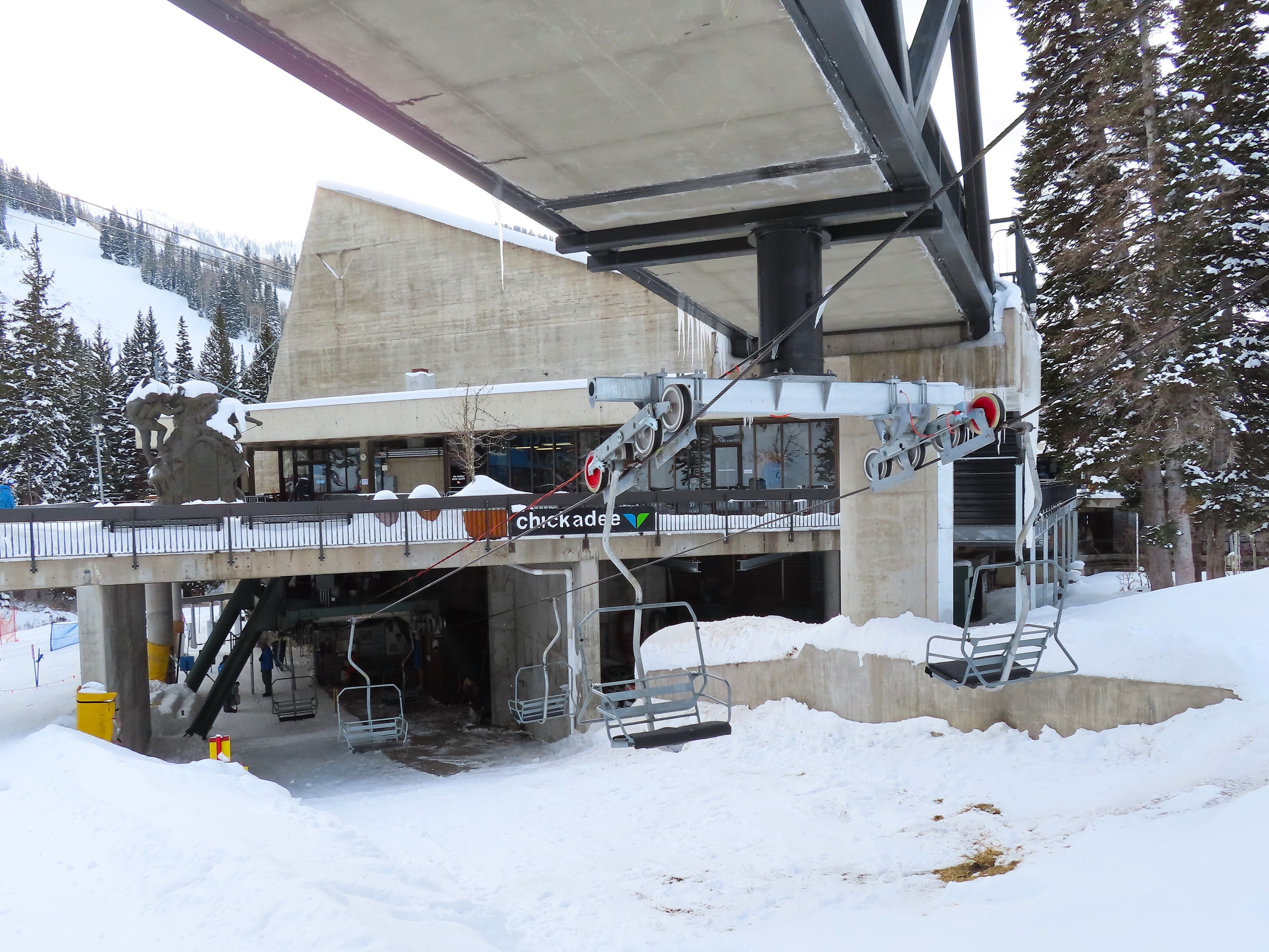
This weekend is your last chance to ride Snowbird’s oldest chairlift, Chickadee. On Monday, Snowbird will begin work to replace the 1972 Thiokol double with a quad in partnership with Skytrac. The new lift will come out from underneath the Snowbird Center deck, giving beginners more space to queue and load. Riders will also enjoy a loading conveyor, making boarding even easier. “The new and fully grown-up version of the Chickadee chair will continue to create the next generation of powder chasers, future Olympians and local legends, just with a bit more room to squeeze in your whole fam,” said Snowbird.
Interestingly this will be the first lift in Snowbird’s 55 year history not constructed by Doppelmayr or a brand it acquired. Snowbird and Skytrac plan to fast-track construction and christen the new Chickadee for summer operations some time in July.
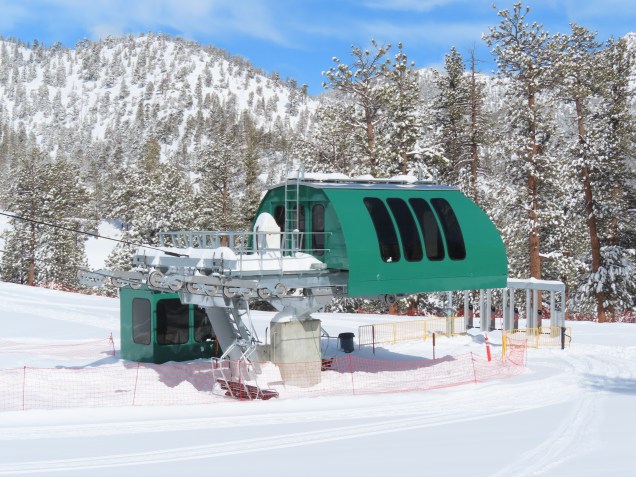
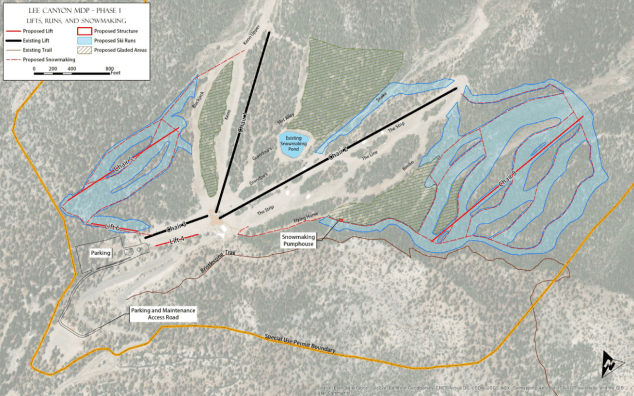
A fifth chairlift will debut at Nevada’s Lee Canyon next winter servicing five new trails in an area known as West Bowl. The 2,200 foot Skytrac quad will rise 650 vertical feet and transport up to 1,800 skiers per hour. It is shown on the below master plan as Chair 8. Lee Canyon completed a similar expansion to the East three years ago with three new runs. West Bowl trails will range from low intermediate to advanced with snowmaking throughout. West Bowl is expected to open for the 2026/27 winter season.
The expansion caps a period of remarkable growth at Las Vegas’ only ski area with new chairlifts in 2012, 2014 and 2023 plus a new lodge in 2019.
Lee Canyon owner Mountain Capital Partners will also partner with Skytrac this summer on an expansion at Purgatory, Colorado. Skytrac plans a busy year overall with projects in Colorado, Michigan, Nevada, Utah, Wisconsin, British Columbia and Quebec.
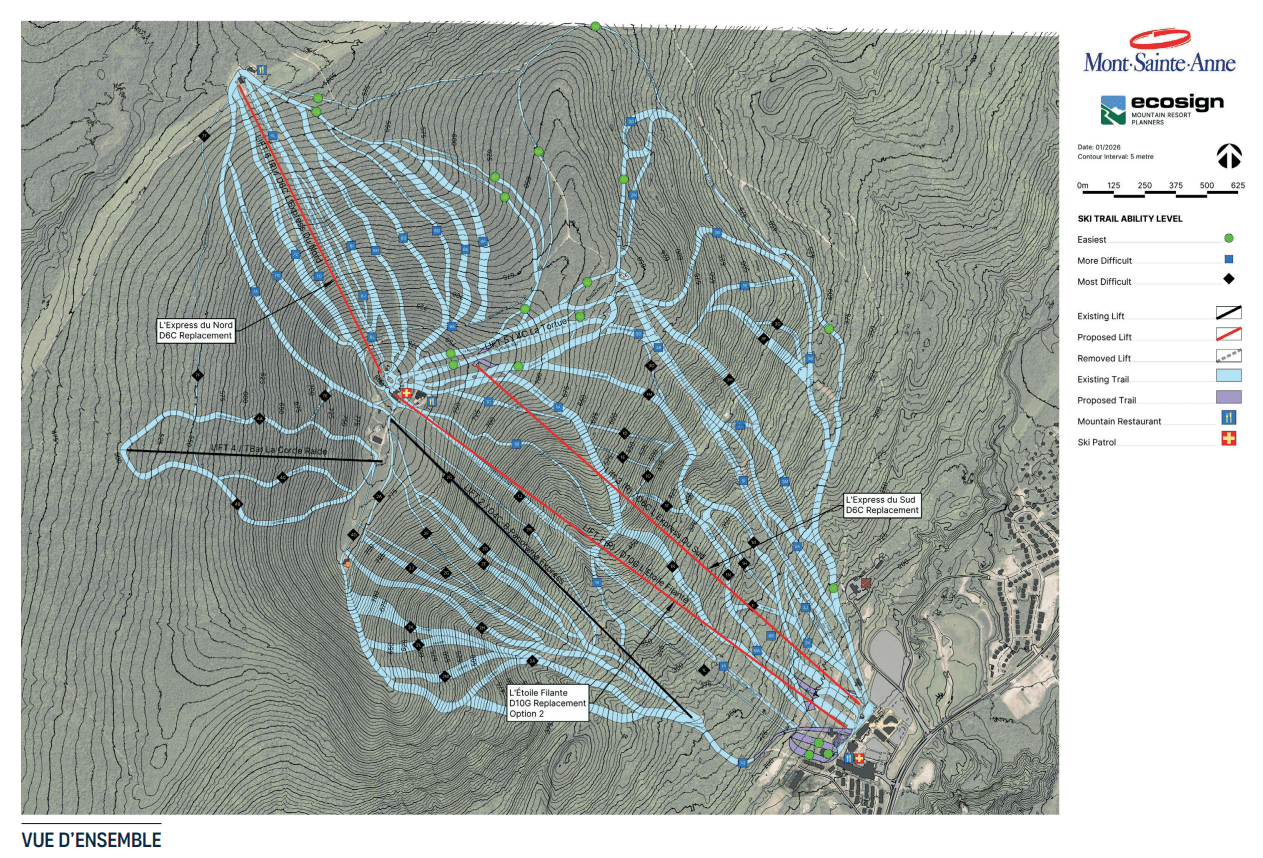
Mont-Sainte-Anne today announced a groundbreaking order for three Doppelmayr lifts to revitalize the mountain’s aging infrastructure over the next three years. The order, signed on March 26th and among Doppelmayr Canada’s largest ever, encompasses two six place chairlifts and a 10 place gondola. The project will be funded in part with a CA$50 million loan from Investissement Québec, a government economic development agency. Mont-Sainte-Anne’s owner, Resorts of the Canadian Rockies, will fund an equal portion.
A new Express du Sud will debut first in February 2027. The bubble six pack will follow a completely new alignment, replacing both the current Express du Sud detachable and La Tortue fixed grip, both of which date back to 1986. Whistler-based Ecosign sited this lift so skiers can access North, South and East slopes from a single unload point just below the summit. Express du Sud’s 97 bubble chairs will travel at a speed of five meters per second with a trip time of 7.3 minutes, The UNI-G lift will transport 2,400 people per hour and become the first six place bubble in Eastern Canada. Tree clearing will begin this summer and both existing lifts will remain operational into next winter until the new lift is ready.
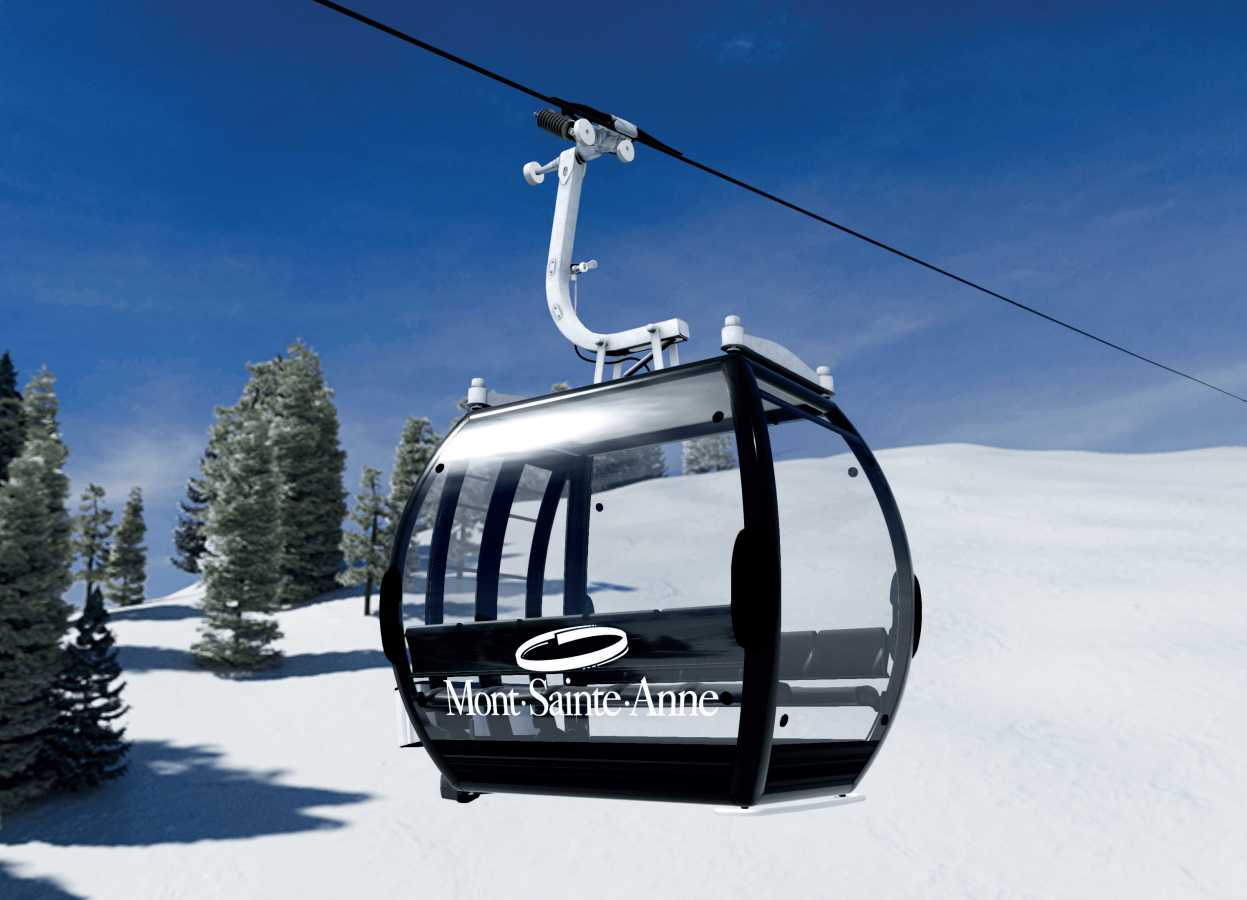
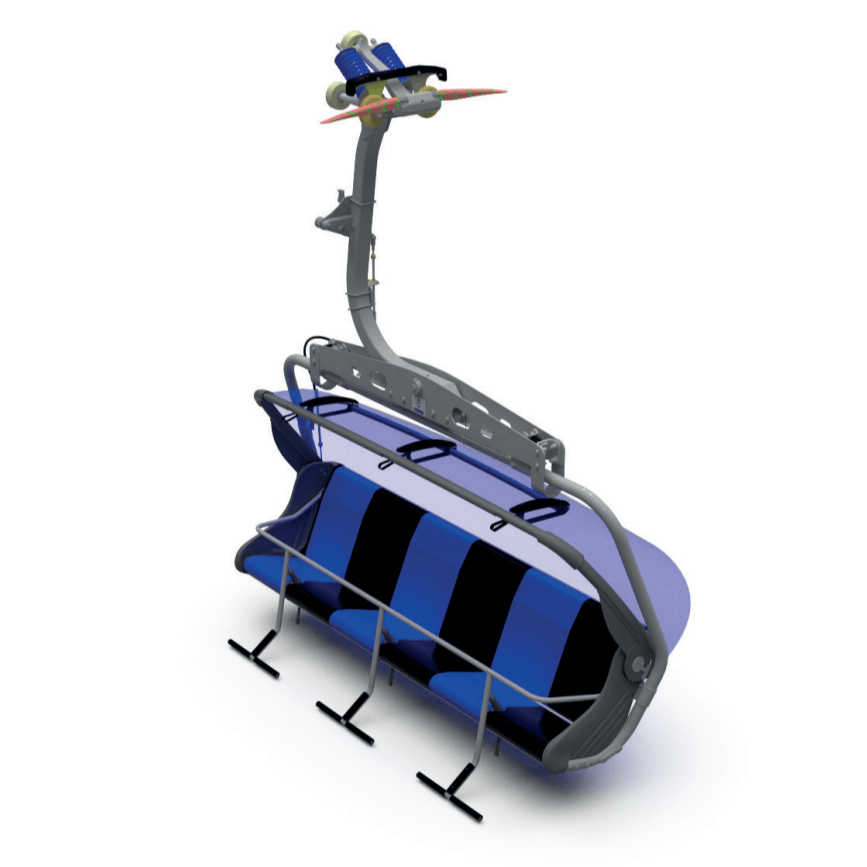
Come December 2027, Doppelmayr will complete the first 10 place gondola in Eastern Canada, replacing the mountain’s 1989 vintage gondola. This UNI-G system will include 65 CWA Omega IV level walk in cabins with individual seats and floor-to-ceiling windows. The gondola will fly a brisk six meters per second, lifting 2,600 guests per hour to the summit in just 7.4 minutes. “Designed for four-season use, this facility will also allow the transportation of mountain bikes, facilitating the development of a summer offering,” noted Mont-Sainte-Anne. “It will become much more than just a means of transportation: an experience in itself, suitable for skiers as well as visitors, groups and convention customers.” The base of the gondola will shift toward L’Express du Sud to coincide with redevelopment of the village and beginner area.
Finally a second six pack will open on the North side of the mountain in December 2028, replacing both a 1987 detachable quad and 1970s T-Bar. This UNI-G detachable will include 67 non-bubble chairs moving at five meters per second. A ride will run just 4.6 minutes with an hourly capacity of 2,600 skiers. When Express du Nord is complete, Mont-Sainte-Anne will have replaced five aging lifts with three modern machines. Mont-Sainte-Anne noted it selected Doppelmayr after a competitive bid process in part due to the Austrian company’s head office in Saint-Jérôme, Quebec, “providing superior guarantees for installation and adherence to schedules.”
Mont-Sainte-Anne also plans to install a mountain coaster and revitalize the snowmaking system together with the new lifts. “This project marks a turning point for Mont-Sainte-Anne, said Maxime Cretin, Vice President and General Manager, Eastern Region for Resort of the Canadian Rockies. “It allows us not only to modernize our infrastructure, but also to rethink the overall experience offered to our visitors starting next season, by focusing on performance, comfort and innovation.”
Alterra-owned Sugarbush Resort intends to replace its oldest chairlift next year, subject to state approval. The North Ridge Express, which began life lower on Mt. Ellen as the Green Mountain Express, would be removed in spring 2027 and swapped for a Doppelmayr UNI-G detachable quad. The project is expected to cost $10 million, including $2 million of site preparation and utilities work. The new lift would transport 2,400 skiers per hour and follow the same alignment as the existing lift. Alterra first eyed replacing North Ridge in 2023 but the project was tabled in favor of other priorities.
Poma constructed the current lift in 1990 as Sugarbush’s first detachable chair. American Skiing Company then moved Green Mountain Express to North Ridge in 1995. NRX currently ranks 7th oldest detachable in New England and has suffered frequent downtime of late, most recently a result of communication line damage. Sugarbush notes the new lift will improve operational reliability and the overall guest experience at Mt. Ellen. North Ridge Express 2.0 is expected to open in time for the 2027-28 ski season.
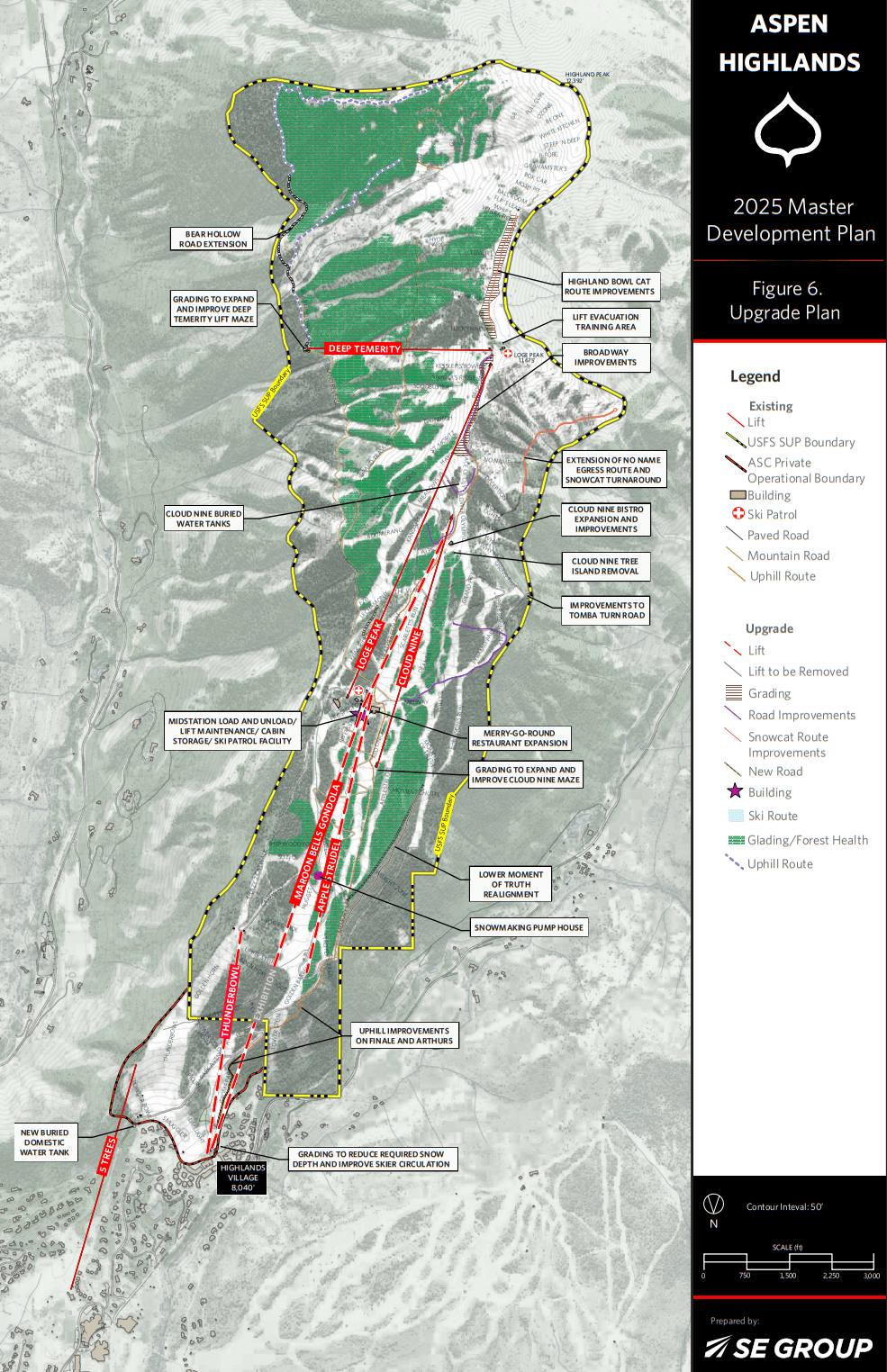
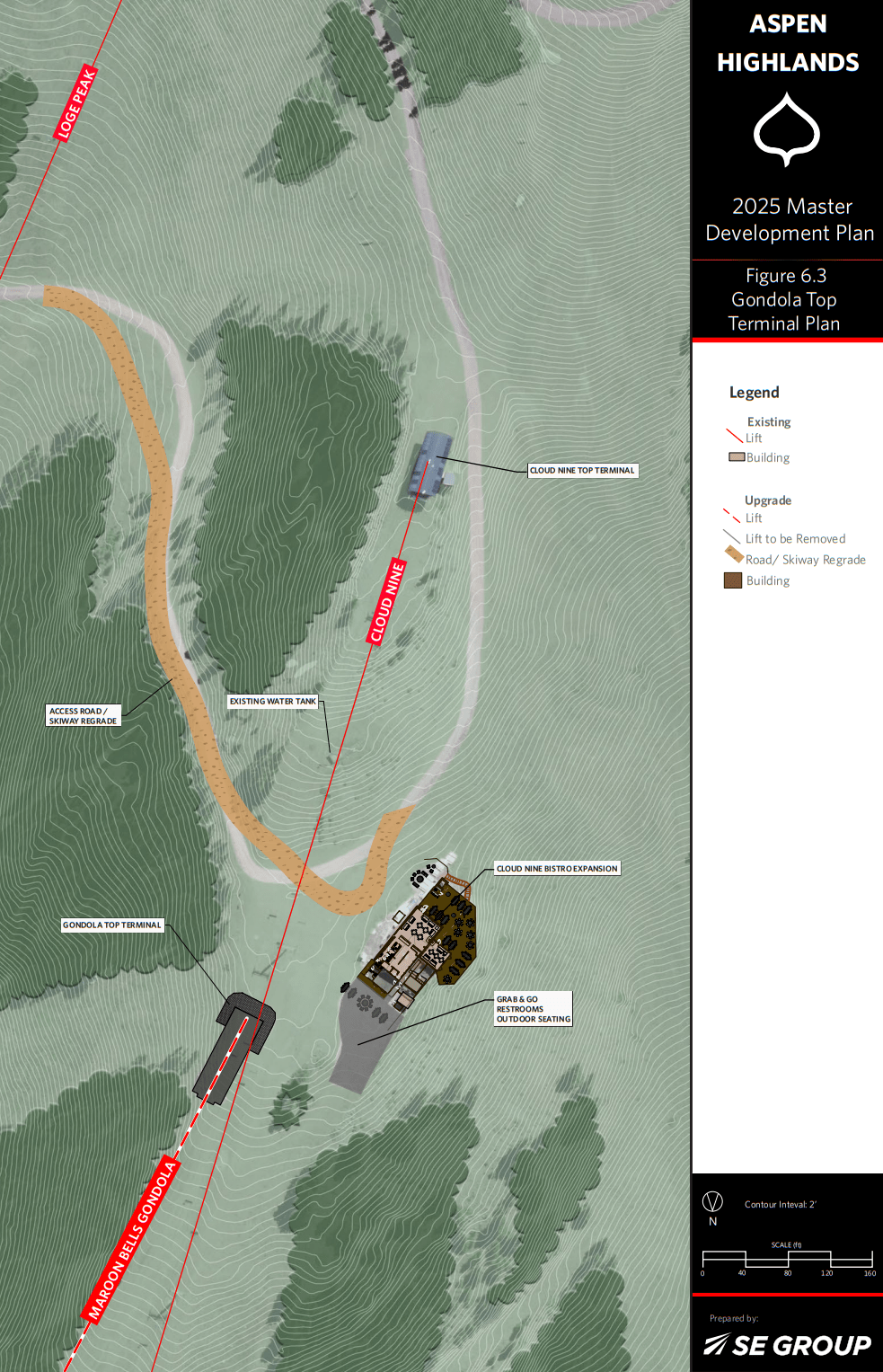
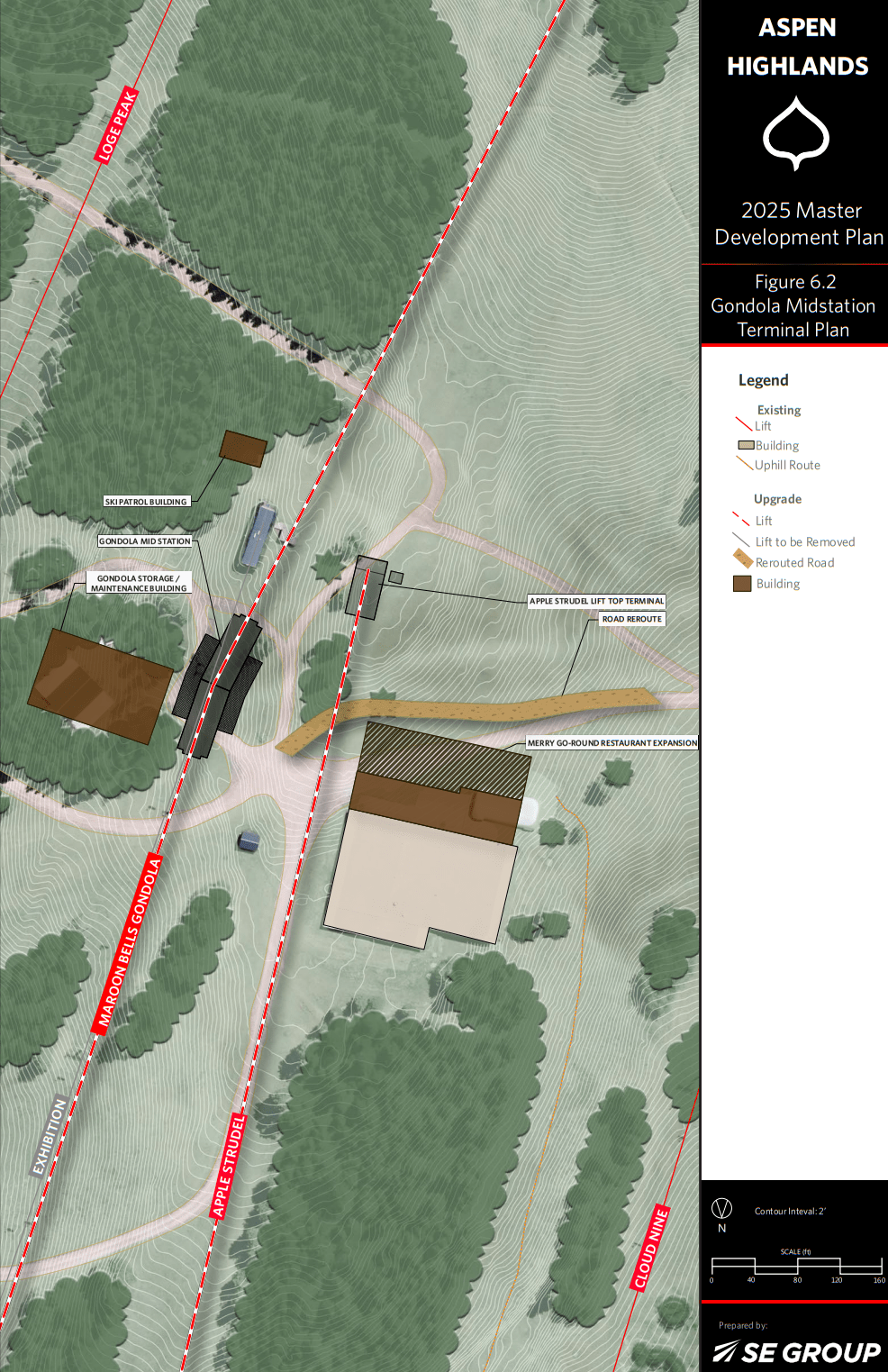
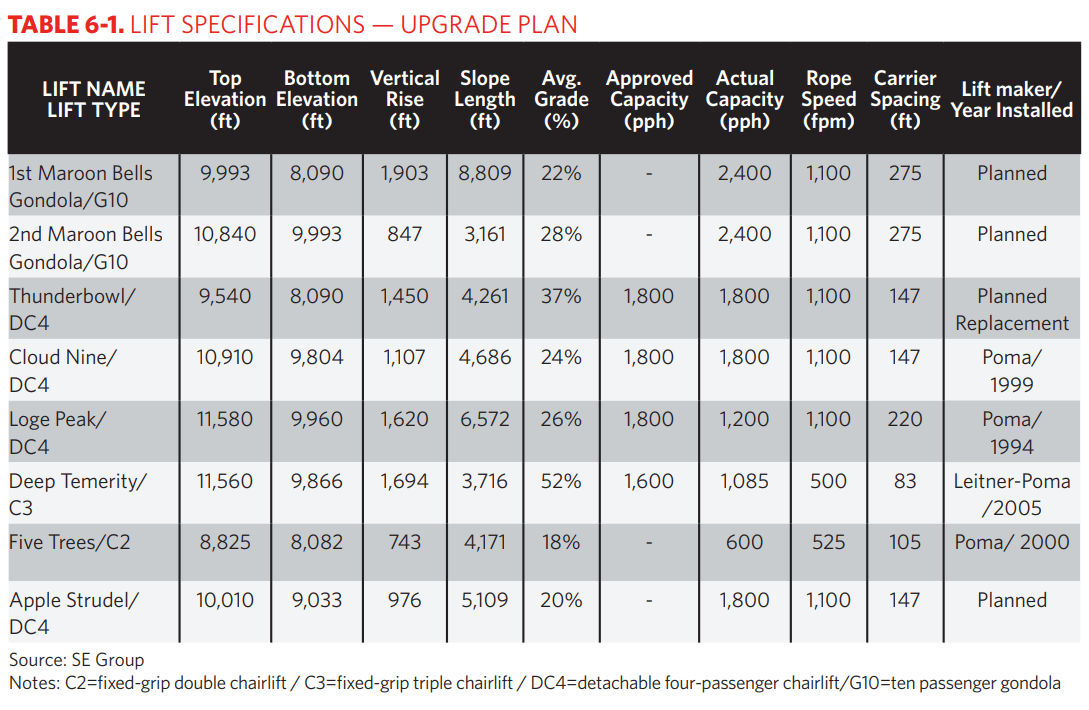
Aspen Highlands could join the year-round gondola club alongside Aspen Mountain and Snowmass under a new plan submitted to the Forest Service. Over the past ten seasons, Aspen Highlands averaged 210,000 skier visits with occasional long lines in the base area and a lack of lift redundancy. To address these challenges, the Aspen Highlands 2025 Master Development Plan envisions replacing two of Highlands’ oldest lifts as well as building an infill lift called Apple Strudel. The out-of-base lift experience would change dramatically with a higher capacity ten place gondola replacing the four place Exhibition lift. The new Maroon Bells Gondola would feature a mid-station just below the current Exhibition top terminal with full cabin parking. The gondola would then continue higher and unload at the popular Cloud Nine Alpine Bistro, elevation 10,840 feet. Maroon Bells Gondola would rise a total of 2,750 vertical feet with just under 12,000 feet of slope length. Both the Merry-Go-Round restaurant at the mid-station and Cloud Nine at the top would be expanded and could open year-round. The gondola could also enable early- and late-season skiing on the upper mountain with downloading.
Next door to the new gondola, the Thunderbowl triple would be upgraded to a detachable quad, increasing capacity from 1,200 to 1,800 skiers per hour. This would become a more attractive out-of-base option than the current fixed grip lift and better serve Goldenhorn race terrain.
Finally a new Apple Strudel lift would debut for those looking to lap mid-mountain terrain. This would also create redundancy in case the gondola went down. One interesting aspect of this proposal is a Pomalift called Grand Prix used to run a similar alignment from the 1970s until the early 1990s. The new version would be a detachable quad rising 976 vertical feet in just 4.7 minutes. Apple Strudel would carry 1,800 riders per hour, equal to the nearby Cloud Nine detachable quad.
If all lifts on the plan are completed, Highlands will operate a mostly-detachable fleet including a two stage gondola and four detachable quads. Two fixed grip lifts – Five Trees and Deep Temerity – will continue to spin on the periphery of the mountain. The Forest Service hasn’t yet accepted the new master plan and all projects will require review under the National Environmental Policy Act.
A final, interesting tidbit from the master plan is Aspen Snowmass seeks to connect some or all of its four mountains via lifts. “The technology exists to connect ski areas by aerial tramways, and there are multiple successful examples of these systems in operation in both resort and urban contexts throughout Europe as well as in North and South America,” SE Group notes. “However, the land use complexity, infrastructure costs and construction logistics in the Roaring Fork Valley are such that implementing a linked aerial tramway system across all four ski areas at Aspen/Snowmass provides a tremendous challenge. With that said, conditions are evolving to the point where constructing an aerial tramway connecting Aspen Highlands to Aspen Mountain, to Buttermilk and/or to nodes on the valley floor may prove feasible in the nearer term.”
Powder Mountain plans to invest $40 million on the public side of the resort over the next two years with a focus on the Sundown zone. Under new majority owner Reed Hastings, Powder operates a public-private model, with lifts on the eastern half of the resort open only to homeowners. So far, Hastings has added five new lifts since 2023 with up to five more on deck.
DMI expansion on the backside of James Peak seen last summer.
Sundown lies within the public western half of the resort with a variety of terrain for both day and night skiing. By fall 2026, Skytrac will complete a new public lift called DMI, serving 1,000 acres of steeps on the backside of Sundown. Construction began last summer on the triple chair, which will rise 1,796 feet and rank among Skytrac’s steepest-ever lifts. On the front side, Leitner-Poma will replace the existing Sundown quad with a detachable. Powder’s fourth high speed quad will expand both capacity and hours. The old Sundown chair will then move to become a beginner chairlift called Doodle. “Doodle allows beginners and ski school students of all ages to get efficient laps on a gentle, dedicated pitch,” said Powder. In addition to three new lifts, the Sundown Lodge will be replaced with a modern 15,000 square foot facility featuring ski school, rentals and dining for 2027-28. “This development plan is a demonstration of our commitment to keeping Powder a thriving public ski resort for generations to come,” said Powder President Brandi Hammon. “As a local and an avid skier, the team and I are committed to our community and season passholders and will continue investing in their on-mountain experience.”
PowMow didn’t announce specifics for the private side known as Powder Haven, though construction began on a new Half Pint chairlift last summer that could also be completed this year. For this project, Powder opted to repurpose equipment from the old Paradise quad for a new high-alpine neighborhood. Powder’s master plan also calls for a new lift up Cobabe Canyon, which could eventually replace the aging Sunrise Poma. For now, Powder Mountain says the Sunrise lift will remain publicly accessible for the 2026/27 season regardless of further lift development on the private side.
Powder Haven Half Pint lift under construction last summer.
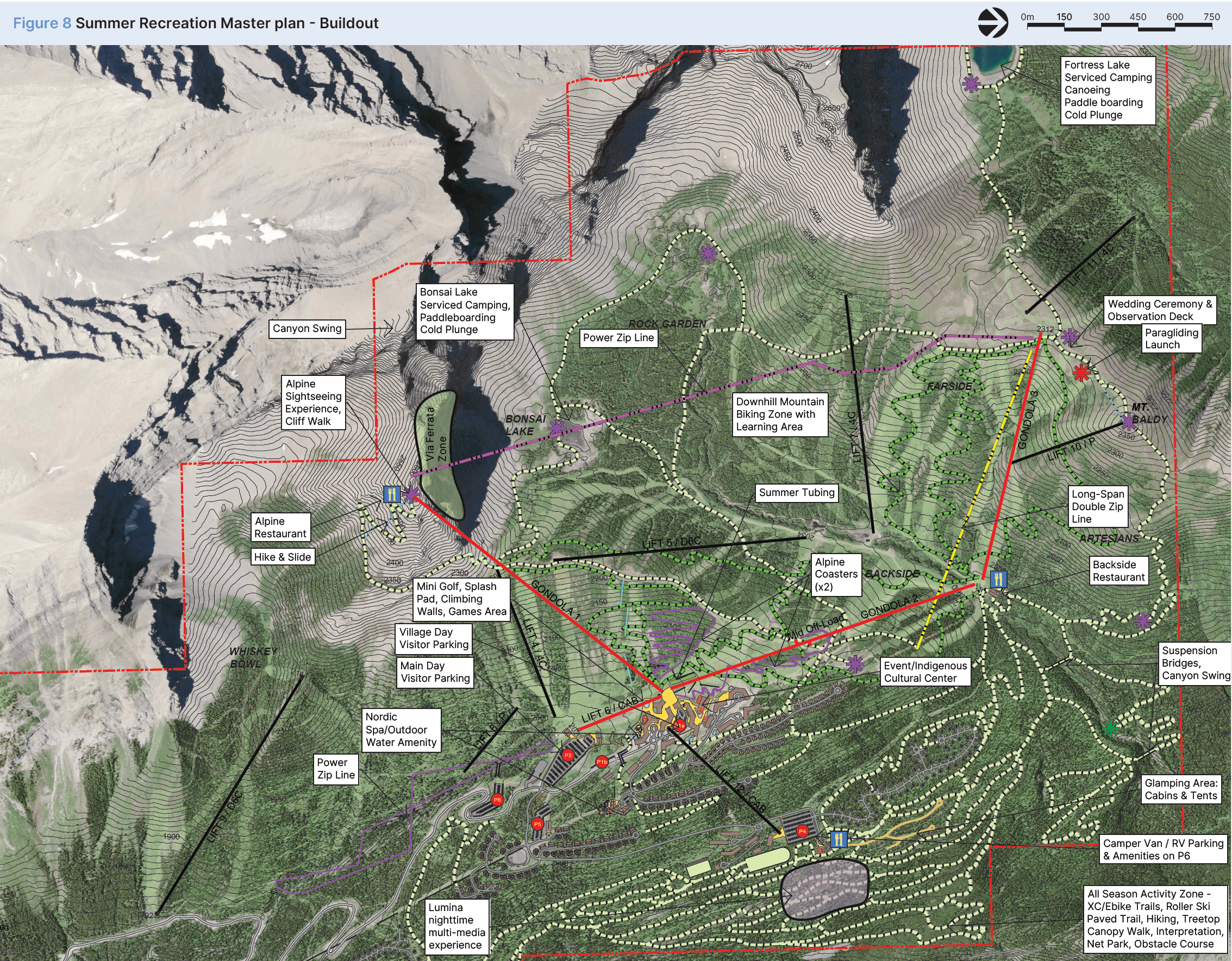
One of North America’s largest lost ski areas could reopen in a few years under a plan submitted to the Province of Alberta last week. Kelowna-based Ridge North America and Calgary-based Western Securities Limited would join forces to acquire Fortress Mountain Holdings and eventually construct up to 14 lifts. Fortress wouldn’t be another Kicking Horse or Revelstoke but rather a year-round resort and recreation hub with a modest ski component. Real estate forms a key aspect of the plan along with summer activities like mountain coasters, downhill biking and zip lines.
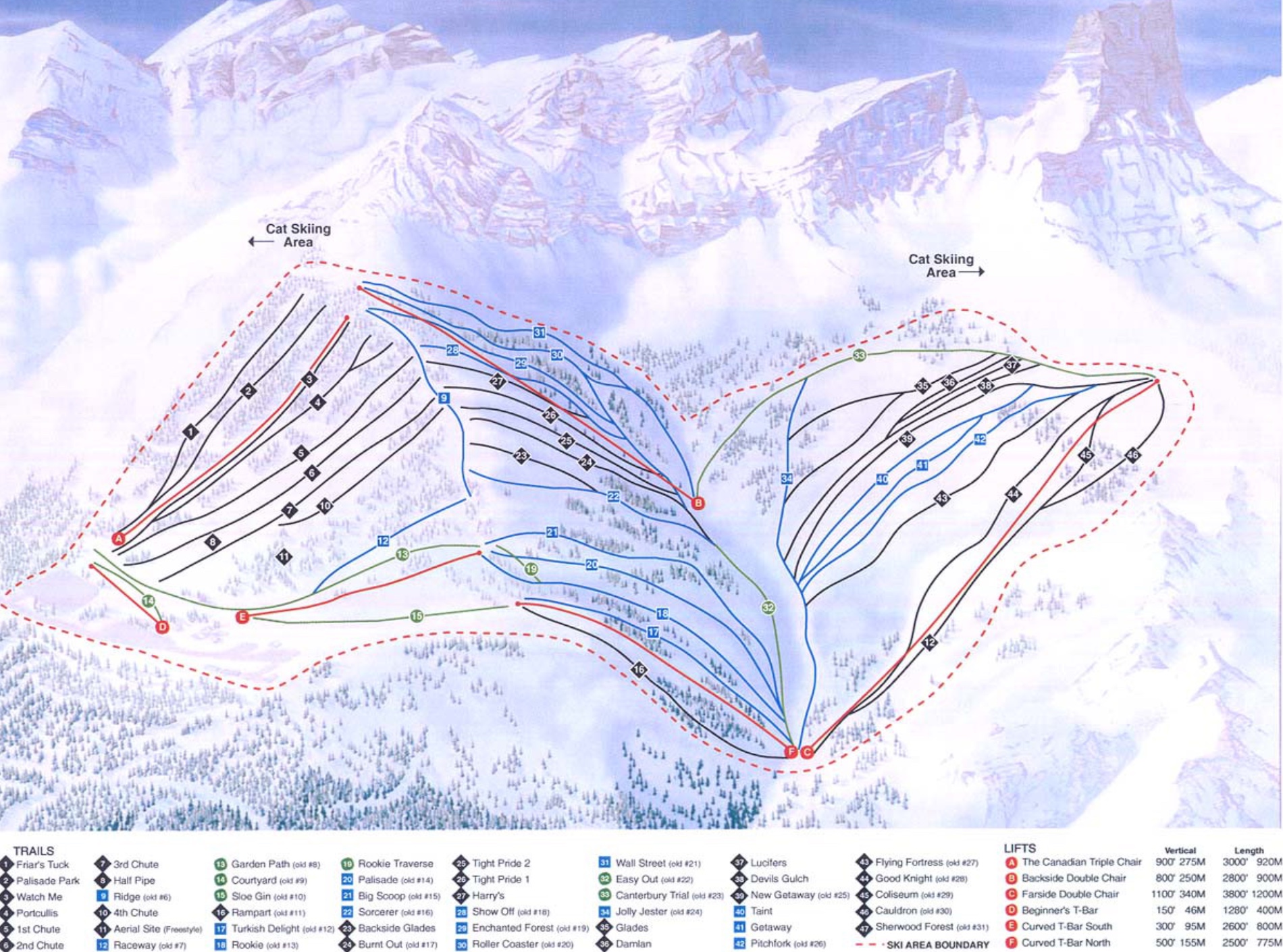
Fortress Mountain trail map circa 2004. Note: lifts E and F were actually one T-Bar that ran in a triangle with downhill portions not shown.
Fortress first opened as Snowridge in 1967 with an all-Doppelmayr fleet consisting of two T-Bars and one double. Doppelmayr supplied two additional chairlifts in the mid-1970s, creating a mid-sized mountain with skiing on three aspects. Though surrounded by towering peaks, vertical at Fortress was never huge with the biggest chair rising 1,070 feet. The ski area declared bankruptcy and closed several times through the second half of the 20th century. At one point Aspen Skiing Company acquired a 50 percent stake and funded the two newest lifts. The company that would later become Resorts of the Canadian Rockies bought Fortress in 1986 but put it up for sale 15 years later as part of its own bankruptcy. RCR continued operating the mountain in bankruptcy until shuttering Fortress in 2004.
Banff Rail Company, headed by Zrinko Amerl, bought the lease in 2005 and ran lifts for a few months in 2006 before the province condemned several buildings. By late 2006, regulators ordered Amerl to stop advertising services he couldn’t provide and forbid pass sales for the 2006-07 and 2007-08 seasons. BRC sold the mountain to Fortress Mountain Holdings in 2010. Both T-Bars were removed in 2012 but the chairlifts remain standing. Today the property is off limits to the public with a limited cat skiing and movie shoot operations. With no maintenance in decades, all three chairlifts are expected to be removed and replaced in new alignments.
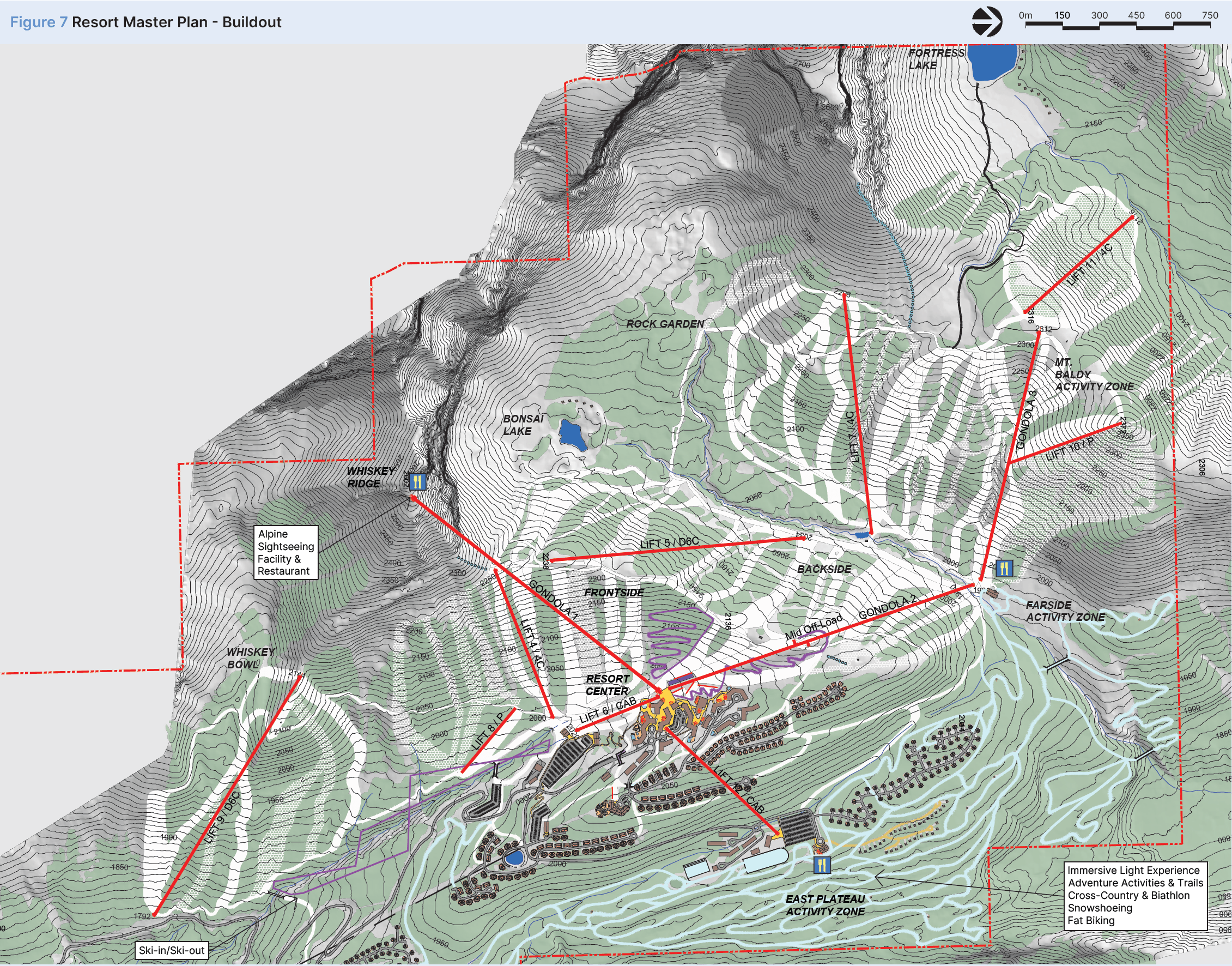
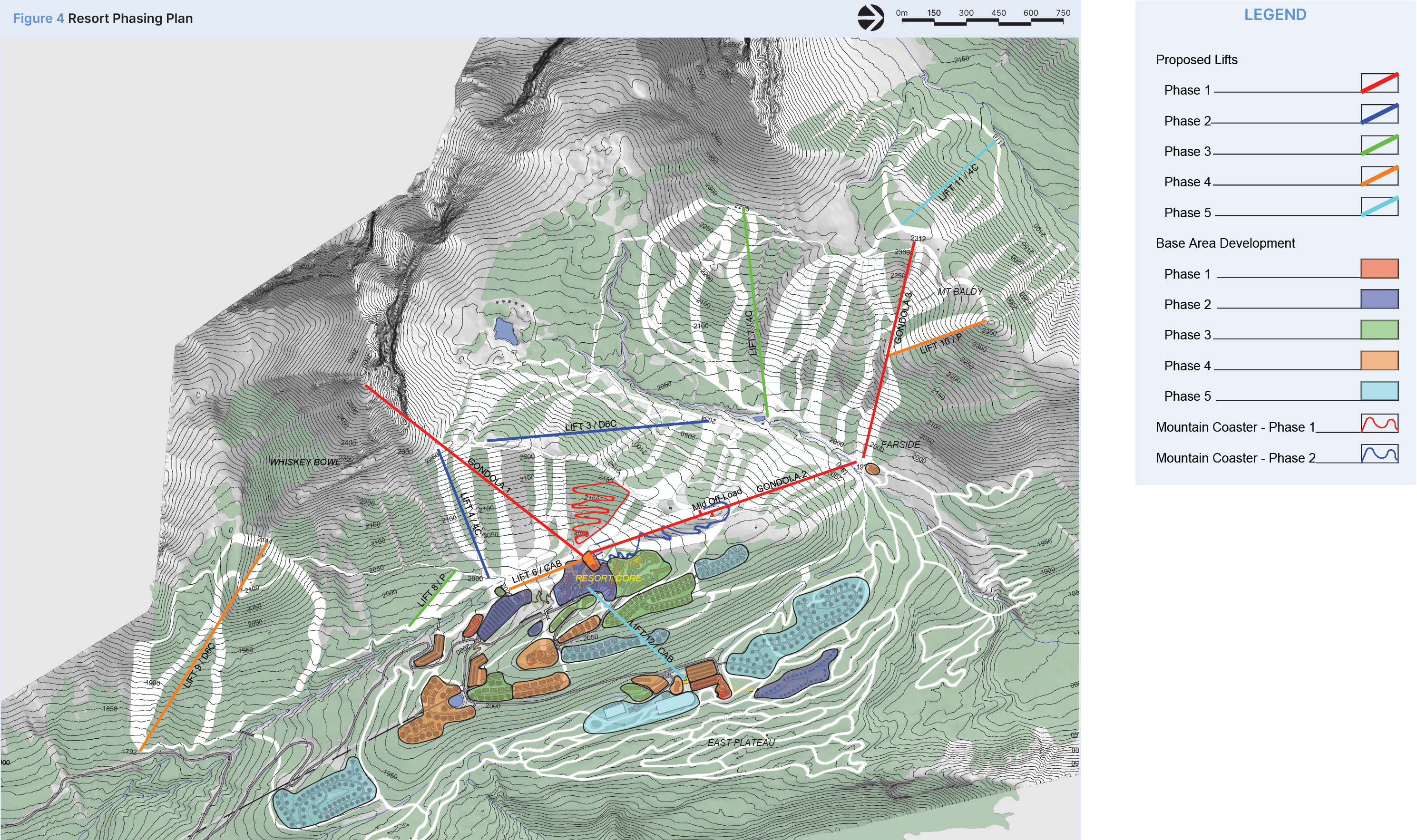
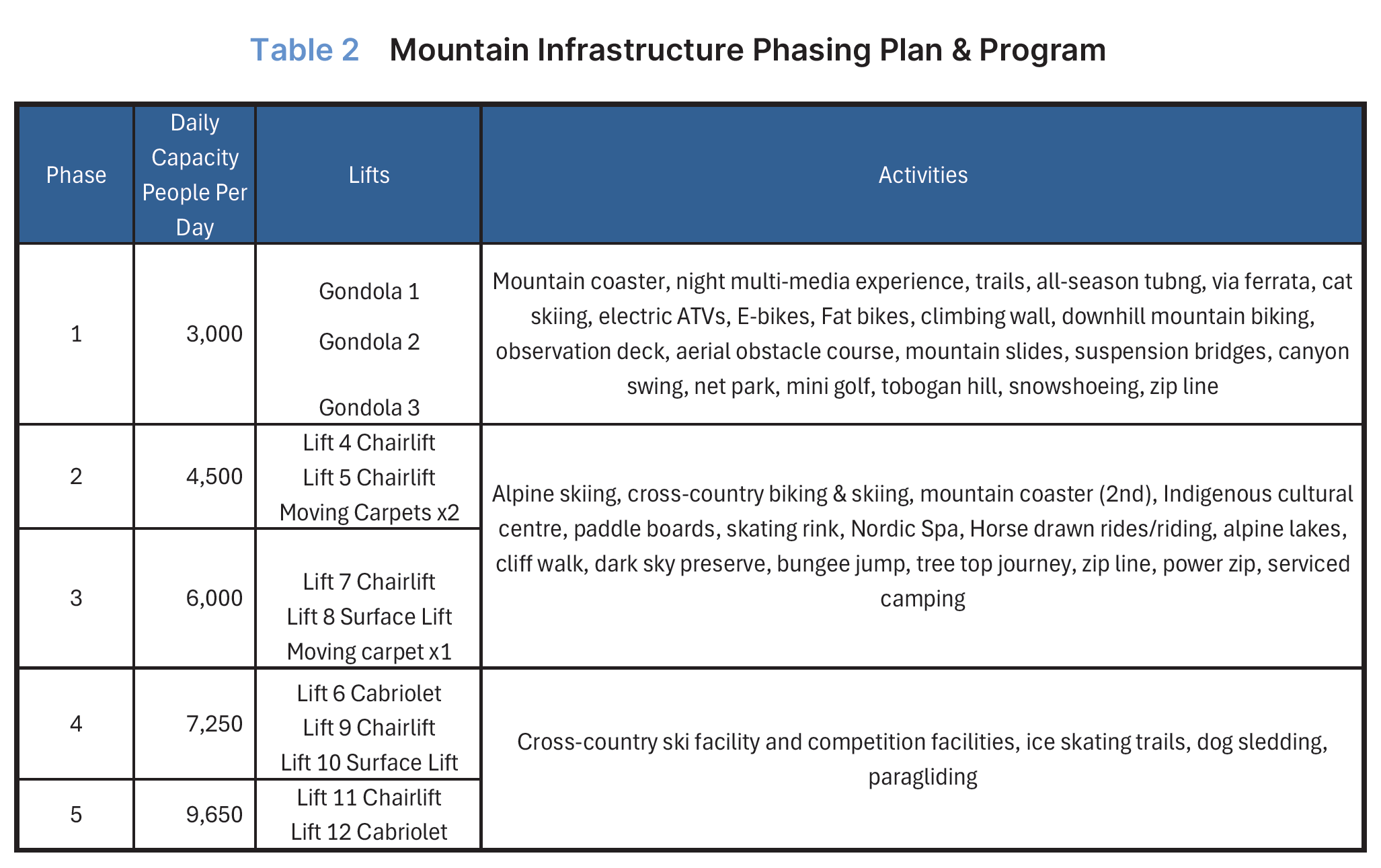
Whistler-based Ecosign prepared the resort’s latest master plan, which encompasses 3,500 acres of crown land. “The Fortress All Season Resort Master Plan presents a long-term vision to develop a modern, world class destination in one of Alberta’s most spectacular mountain contexts,” Ecosign notes. Phase one includes no ski lifts but rather three sightseeing gondolas similar to one Ridge is currently constructing near Kelowna. Each gondola would service distinct adventure nodes with activities like a cliff walk, paragliding and paddleboarding.
Lift-served downhill skiing would resume in phase two with chairlifts on Fortress’ traditional front and backside terrain. A fixed quad and two conveyors would serve the front with a detachable six pack on the back. Phase three envisions a fixed quad on the former Farside terrain plus a beginner platter and third conveyor. A second six pack is earmarked for Whiskey Bowl in phase four, plus a cabriolet lift connecting the resort core to parking and a surface lift on Mt. Baldy. The final phase would include a quad chair on the backside of Mt. Baldy and a second parking cabriolet. At full buildout, the resort could accommodate 6,780 skiers and 9,650 total visitors per day.
The ambitious vision faces several challenges. First, terrain is scenic but limited with significant competition from nearby ski areas with far more vertical. Ridge and Western Securities have significant experience building attractions and commercial buildings but have never operated a ski resort. Many have failed here before. On the plus side, the current plan wisely focus on activities beyond skiing which appeal to broad audiences. Ridge and Western Securities are well-capitalized and experienced developers. Alberta is booming with 4.2 million people visiting nearby Banff National Park last year. Fortress lies just outside the park, however, making large-scale development more practical than at existing ski areas like Lake Louise or Sunshine. In 2024, Alberta passed the All Seasons Resort Act, aiming to double visitor spending to CA$25 billion annually by 2035. Last year Alberta designated Fortress, Nakiska and Castle the first three mountains targeted for possible development. These policies place Alberta among the most pro-development jurisdictions in North America.
The Province will accept public comments on the proposal through February 27th. Developers also launched a survey to guide further refinements to the plan. If approved, full buildout is expected to take 14 years and last through 2040.
Central Ontario gem Sir Sam’s plans to build its first new chairlift in 34 years next summer, part of a strategic modernization plan. Doppelmayr Canada will construct the fixed-grip quad chair on the front side of the mountain. It will replace the former Eagle View double, which retired this fall after 42 seasons. “The sleigh bells are ringing, and we’re delivering more than just cheer,” the mountain announced on social media. “Our shareholders want to give you, our patrons, supporters, and followers a special holiday gift.” The yet-to-be-named lift will open in time for the 2026-27 ski season.
Next year is already shaping up to be a strong construction season in Canada with projects in the works across British Columbia, Alberta, Ontario and Quebec.
The world’s largest mountain operator today revealed two incremental lift projects for 2026, bringing the total to three. At Whistler Blackcomb, Vail plans to replace the Showcase T-Bar with a fixed grip chairlift, subject to government approval. Across the continent, another fixed quad will replace the Blitzen triple at Seven Springs, Pennsylvania. The two projects join the previously-announced Canyons Village gondola at Park City as part of Vail’s $234 to $239 million capital plan for ’26. By comparison, Vail built four new detachable lifts in 2025 at Perisher, Australia; Andermatt-Sedrun, Switzerland and Park City, Utah as part of a $249 million to $254 million capital plan. Vail operates just over 300 overhead cable lifts at 42 resorts as of this winter.
Opened in 1988, the Showcase T-Bar crests the upper part of Horstman Glacier near Blackcomb Peak. For much of its history, the T-Bar ran throughout winter, spring and summer; servicing a wide variety of terrain. In recent years, glacial recession caused the Doppelmayr T-Bar to operate sporadically. Three of Showcase’s towers are pinned on ice, requiring periodic maintenance and repair. When snow levels drop too low, the track becomes too steep for safe riding. Vail removed the nearby Horstman T-Bar without replacement in 2020 due to recession on the lower part of the glacier.
Now Whistler Blackcomb has a long-term plan. The new chairlift will follow a longer alignment off the ice. It will shift north and continue to service the glacier without running on top of it. The lift is expected to be in place by the beginning of the 2026-27 ski season.
A world away in western Pennsylvania, Vail plans to retire Seven Springs’ oldest lift and only remaining Thiokol called Blitzen. The classic triple dates back to 1975 and services a variety of beginner to advanced terrain. The new quad will be Vail’s first project at Seven Springs since acquiring the resort in 2021.
Manufacturer(s) have not been announced for any of Vail’s 2026 projects. Alongside today’s lift news, the company announced its fiscal first quarter results. Season pass sales declined 2 percent in units but increased 3 percent in dollars compared to a year ago. The company expects to welcome approximately 2.3 million passholders this season representing 74 percent of skier visits. Vail reaffirmed its fiscal 2026 guidance, including net income of $201 million to $276 million and Resort Reported EBITDA of $842 million to $898 million.
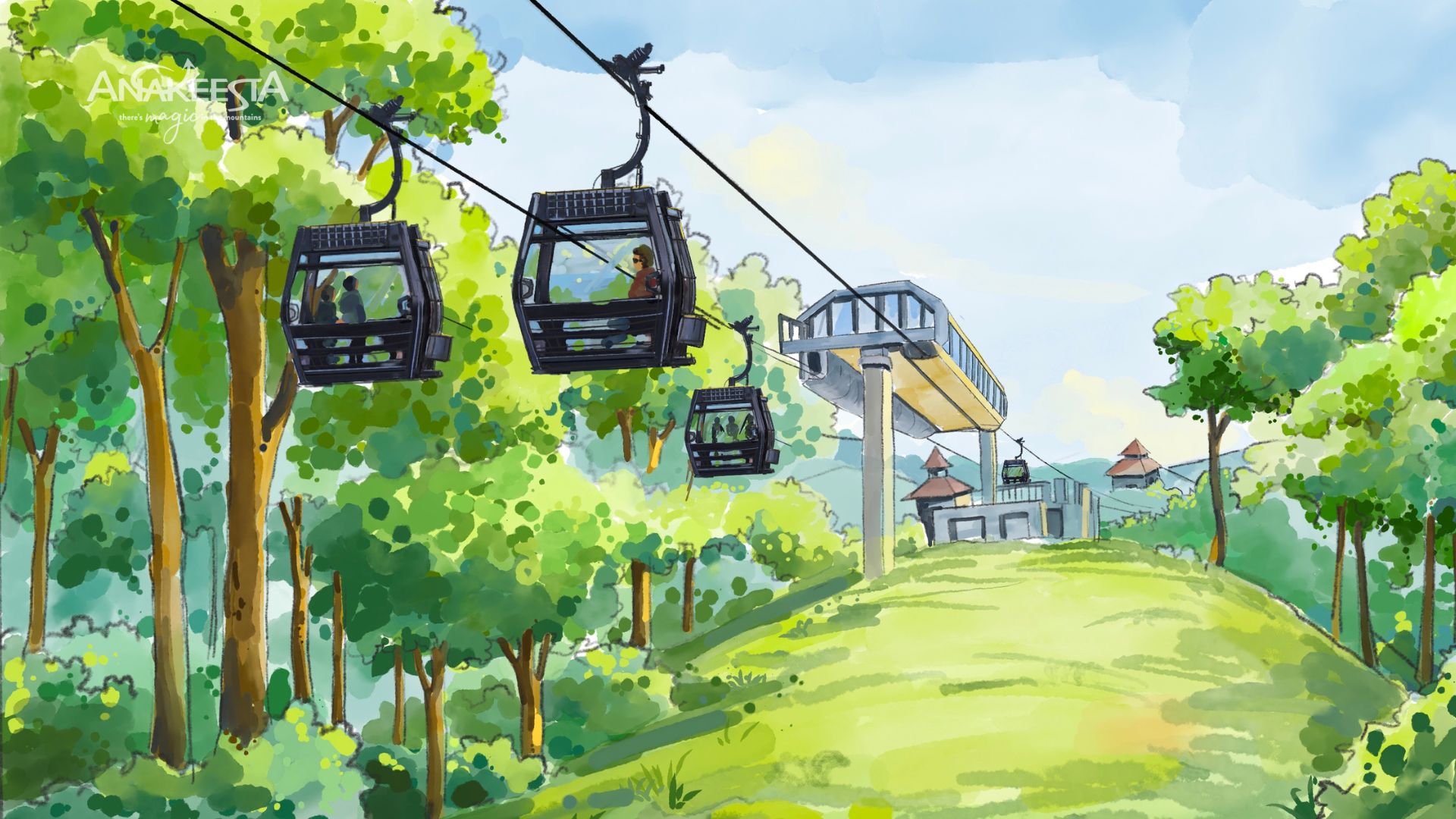
Tennessee mountaintop theme park Anakeesta will debut a detachable gondola next year, part of a $100 million expansion called Making More Magic. The high-speed, six place lift will replace Anakeesta’s fixed grip chondola, which has carried millions of guests from downtown Gatlinburg to the park over the past nine years. The current lift moves only 200 feet per minute, leading to long ride times and limited capacity. Leitner-Poma designed the new gondola to move more people with 56 Diamond Evo cabins featuring floor-to-ceiling windows and glass floors. “Designed to offer panoramic, 360-degree views of the Great Smoky Mountains, each cabin transforms a simple ride into an unforgettable experience,” said Anakeesta. “As guests glide gently upward during the four-minute ascent, the world unfolds beneath the cabin—lush forests, native wildlife and the charming skyline of downtown Gatlinburg.” This will be the first true gondola in Gatlinburg, a bustling town with no fewer than five scenic chairlifts and an aerial tramway.
Construction will begin this month and the existing lift will spin through the Christmas holiday period. Anakeesta will close completely on January 5th and reopen in March with alternative transportation. The upgraded gondola will follow later in the spring alongside a reimagined mountaintop village and expanded treetop skywalk.








 Lift Blog