

 Weng Choy Lee

580 California St., Suite 400
San Francisco, CA, 94104
1996, Looking at Culture
…
14 pages

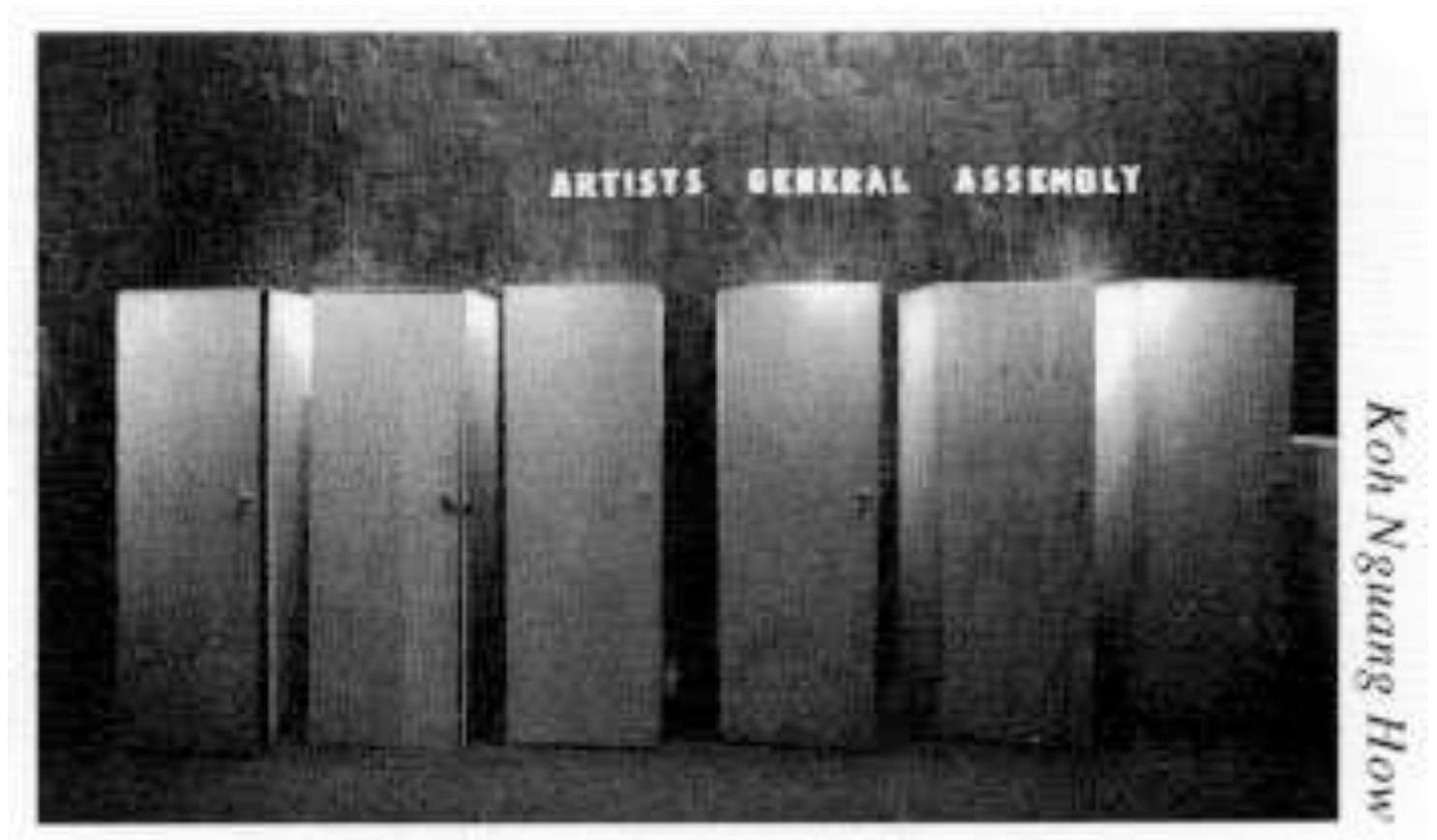
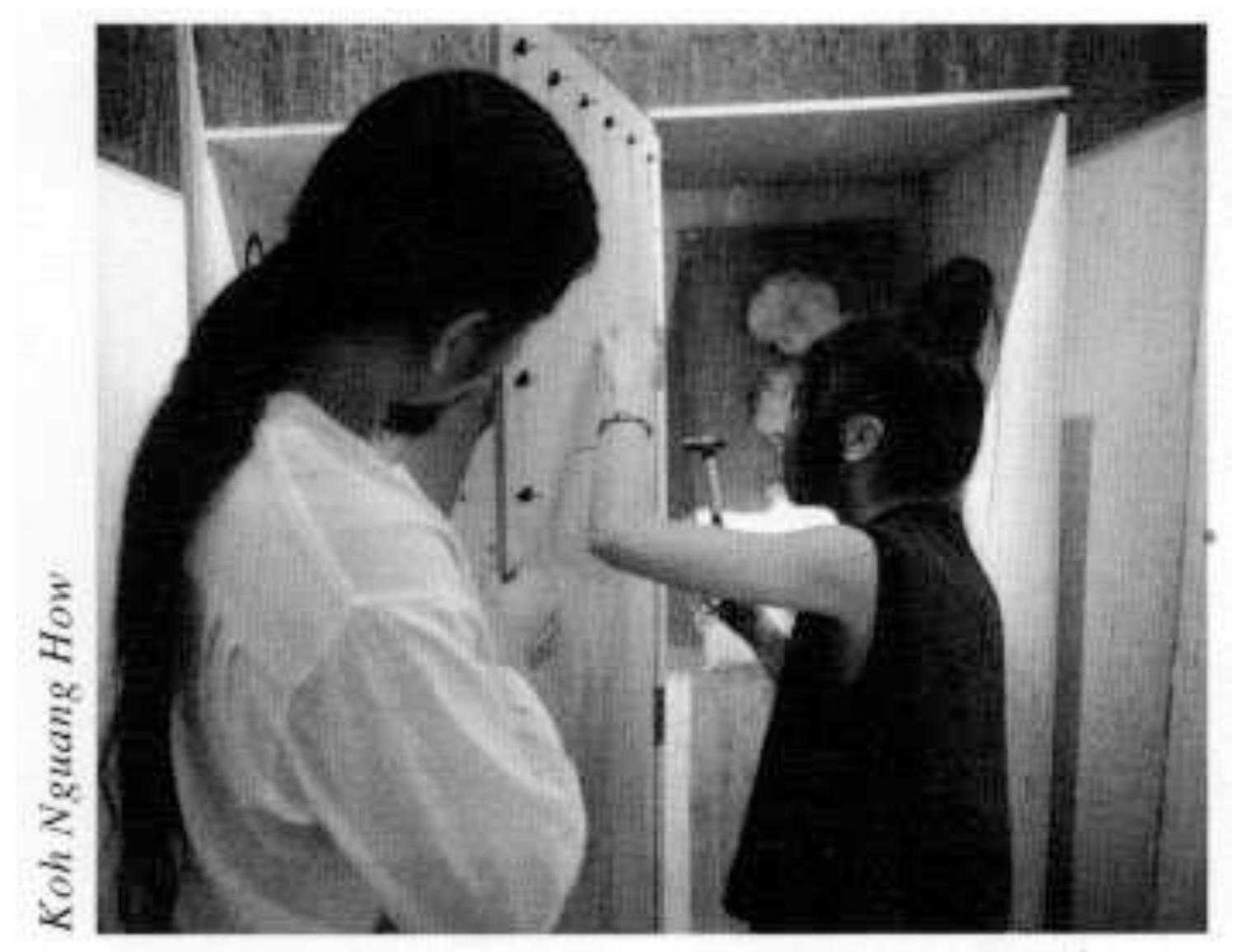
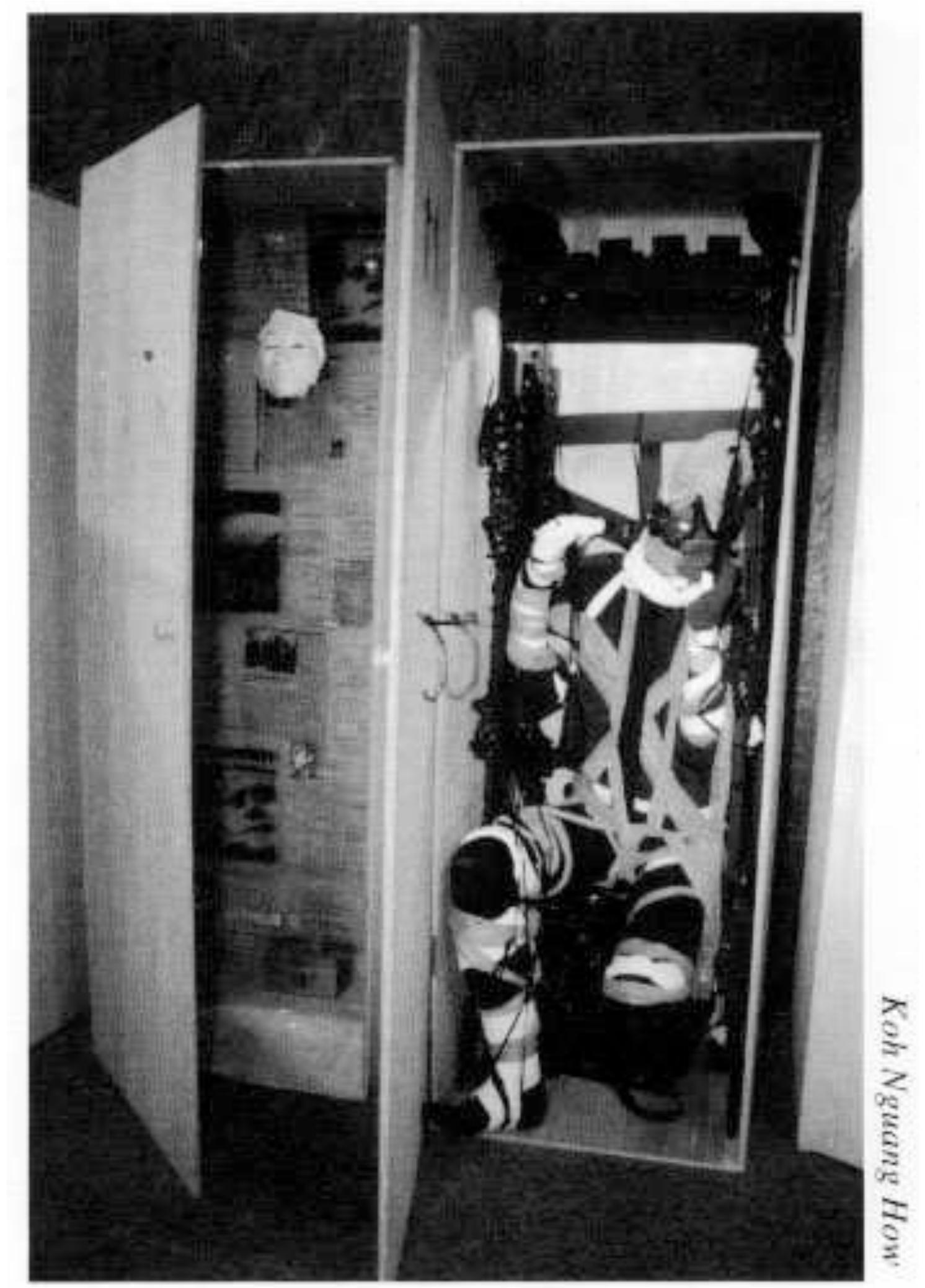
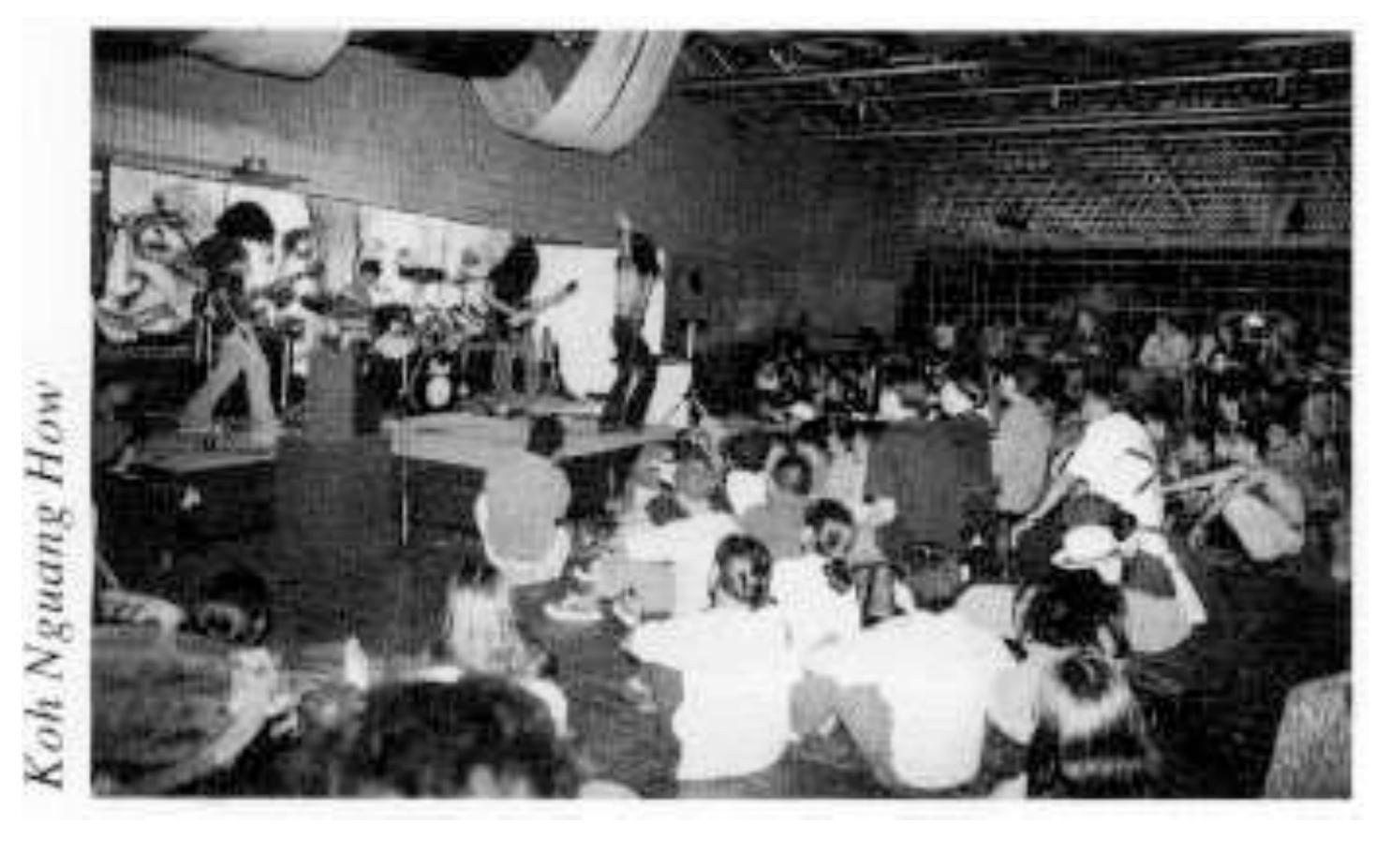
The controversy over Performance Art and Forum Theatre have already made an impact on the arts scene in Singapore. Comprehensive documentation and a fuller history are essential to understanding the larger issues, but for starters here is a chronology.
Theatre Survey, 2004
Frakcija 55, 2010
Since its appearance in Singapore, the practice of performance artposed various questions. Why would artists feel motivated to work in atemporal art form, which does not result in the making of a material artobject? Given the temporal and ephemeral nature of performance art howdoes it continue to be represented? For those who had not seen the actualperformances presented in the past how can one continue to discuss therelevance and contexts of those performances today? Should the temporalephemeral works be preserved?My research will attempt as much as possible to follow an academicformat and research based on published materials. However, it is anendeavor embarked upon with the foreknowledge that there are very fewcomprehensive, analytical texts on contemporary art of Singapore andespecially in regard to performance art. My thesis therefore will alsodepend on personal interviews and interactions with the practicingperformance artists as well as based on my own personal work andexperience as a practicing artist.From this research we may reclaim performance art and its position asa valid fine art form in relation to more traditional media. It will alsointerrogate possibilities for future actions and directions to develop mywork in performance art and its contribution to contemporary art discourse.
Theatrical Colloquia, 2020
Drama writings and theatre performances have always been, in my opinion, the mirror in which our society reflects itself. If in the decades before the 90s our society witnessed a total or quasi-total lack of freedom and a lack of voices to be heard in theatres, in the 90s we have all been witnesses to an absolute freedom that has been constantly managed chaotically. Immediately after The Revolution, the long lost freedom has soon become confusing and has turned into a heavy tormenting issue. The new drama writing and theatre performance have needed more than 10 years to change into something new. The independent theatres and the new drama have arisen as a reaction to the crisis that our theatres underwent in the 90s. The new artist of the new millennium is often self-taught, he has to improve his organizational abilities, to think big when it comes to new projects, to see the bigger picture and not to remain stranded into his own piece of art.
Theatralia, 2021
Nigerian Theatre Journal , 2010
For any art form to be used for development, it has to first develop itself. In this paper, I intend to problematise inherited definitions of theatre which exclude emergent performance forms and show ways in which they keep theatre perpetually underdeveloped and less likely to reach its full potentials in catalysing development in Nigeria. This enquiry therefore will go beyond merely adducing economic downturn as the reason for the execrable nature of theatre-going in Nigeria to underscoring how conservative reading of theatre and obsolete theatre studies curriculum in schools have metamorphosed into major co-culprits in making theatre underdeveloped. By analogy, one cites the fact that rather than asphyxiating theatre in the west, the proliferation of theories and ―post-theories‖ has catalysed a polyphony of performance genres that has enriched the resultant meta-theatre. Thus, aboard a ―paper canoe‖ of interrogating emergent recondite texts in other climes, my critical navigation in this paper, will course through the murky waters of our present non-existent theatre to the shore of advancing a further liberalisation of our art to acknowledging the fact that the emergent performances we see as different could still be the same theatre we know. Hence, this paper examines the possibilities of incorporating all strands of emergent performance traditions in Nigeria—video film, stand-up comedy, city festivals/carnivals, music/song performances, road shows/processions and the likes—through a liberalising of scholarly definition of theatre which will in turn occasion an overhaul of the theatre curriculum in schools; with a view to charting a multi-artistic course to making our society a better one for every one.
In The Art of Theater I propose and explain a claim that many theater people hold true in some form but, so far as I can tell, have defended in a manner that has had almost no success outside discussions among themselves. 1 The claim proposed is that, in an unqualified way, theater is a form of art. By that I mean theatrical performances are what are created in the practice of theater and that theatrical performances are works of art because they can be picked out and appreciated in the same ways we appreciate other kinds of artworks. 2 The agenda I set for the book is to state and explain what that claim comes to-exactly and in detail. Accordingly, most of the book consists of explanations of what else must be true if the claim is true, together with arguments defending the truth of those entailments. some of the material consists of clarifying what the claim does not entail, and some passages contain arguments to show that alternative claims have problems that this one does not. Of these, I have allowed the explanation and clarification materials to carry the burden. Many philosophers and literary theorists are likely to find the claim incomprehensible because they have inherited, rather than critically accepted, a conception of theater as centrally dependent on literary texts. 3 Philosophers, literary theorists, and theater theorists are better served by the explanations and clarifications I offer, however, because they show the claim can withstand the immediate objections or worries likely to arise.
This single-day curated conference, following on from the first performance-as-paradigm conference in April 2013, explores the politics of acts of creativity and their consumption. Framing and staging have historically been powerful ways to negotiate collectivity, both metaphorically and in practice. This conference looks at ways in which performance is less about objects than the power of frames. Questions addressed will include: How do groups – both hegemonic and counter-hegemonic - imagine and perform themselves politically? Can something be performance without assuming a collective reception, and vice versa? In cultures that privilege the individual, how can systems be made visible? How do artworks deal with their situation of complicity with the political relations they seek to critique? How does creative behaviour interact with its various economic frames? How does performance subvert prevalent notions of ‘the work’? How do live and recorded performances respectively frame interaction between participants of all kinds? In this interdisciplinary conversation, we take the paradigm of performance as a mode of enhancing cultural critique. Featuring: Joe Kelleher, author of Theatre & Politics (2009) and (forthcoming) The Illuminated Theatre: Studies on the Suffering of Images. Georgina Born (Professor of Music and Anthropology, University of Oxford) Jen Harvie, Professor of theatre and performance, QMUL Selma Dimitrijevic (Artistic Director, Greyscale) The Voice Project (Sian Croose and Jon Baker, of Neutrinos fame) Lena Simic, performance artist and founder of the Free University of Liverpool and the Institute for the Art and Practice of Dissent at Home METIS/World Factory Lucy Ellison, artist (Grounded, Gate Theatre, Notting Hill) Rafael Schacter on Independent Public Art, BA Postdoctoral Fellow, UCL Khadija Caroll, artist, Humboldt Foundation fellow, author Art in the Time of Colony New Art Club (Tom Roden and Peter Shenton) Helen Stratford, performance architect Eirini Kartsaki Vita Peacock, anthropologist and ERSC Postdoctoral Fellow on anti-austerity activism and the rise of ‘spectacular dissent’, UCL Rachel Beckles-Willson, Professor of Music, RHUL Once again a series of roundtables and performances throughout the day will be brought together in a summing up discussion at the Cambridge Junction, in a conference ‘dinner’ staged by live artists Hunt and Darton. Conveners Clare Foster (Classics, University of Cambridge) Floris Schuiling (Music, University of Cambridge) Zoe Svendsen (English, University of Cambridge) Jonas Tinius (Anthropology, University of Cambridge)
2017
This year, About Performance celebrates thirty years of the teaching of performance studies in the Faculty of Arts and Social Sciences, the University of Sydney-the journal's home. To mark the occasion, we have produced a special issue, a double issue, with an oversized sixteen articles. There have been thirteen issues of About Performance to date. The first appeared in 1995, and each edition has collected its papers around a special theme. Successive editors have explored the lives of actors (no. 13), risk and performance (no. 12), movement (no. 11), audiences (no. 10), politics and performance (no. 9), photography as/of performance (no. 8), sitespecific theatre (no. 7), rehearsal studies (no. 6), Body Weather (no. 5), performance analysis (no. 4), theatre (no. 3), crosscultural performance (no. 2), and translation (no. 1). Upcoming issues of About Performance, currently in the works, are on fashion, phenomenology, medicine, and the history of emotions. Although this anniversary issue, Performance Studies: Here, There, Then, Now, has no specific organisational theme, there are two things that bring the edition together: the subjects explored in each paper follow in the theoretical and methodological veins of our catalogue to date, adding to an image of the discipline as About Performance has explored it; and each papers' author has had, and in many cases continues to have, an association with the Department of Theatre and Performance Studies at the University of Sydney. There are papers from established and emerging scholars: former and current students, visiting fellows, current and former academic staff, as well as research and artistic associates. As editors of this edition, Justine Shih Pearson and I cast the net wide in our call for abstracts; a shortlist was chosen by the Executive Editors of the journal, all current and former staff with the department, and together they collated an eclectic, yet representative, mix of papers which were peer reviewed by theatre and performance studies colleagues and fellow travellers. There are articles on butoh in Australia, immersive and site-specific performance in the United Kingdom, union parades in 1889, contemporary theatre in Ireland, phenomenology and performance, actors as manual philosophers, Body Weather and butoh, student theatre, fashion parades, Capetown music and patois, performance art in Detroit, and discussions about the

Loading Preview
Sorry, preview is currently unavailable. You can download the paper by clicking the button above.
LEE Weng Choy is an independent art critic and consultant, based in Kuala Lumpur. He writes on contemporary art and culture in Southeast Asia; his current projects include a collection of essays on artists, “The Address of Art and the Scale of Other Places”, which asks: what is art’s address?, how does art speak to us and how does it locate us in the world? Lee is also working on a series of written collaborations, “Friends with Disagreements”, which aims to ground ideas and issues in the contexts of relationships and personal histories, as well as an Instagram profile, “Regarding the Reader”, about why, what and how we read.
positions: asia critique, 2013
Today, Forum Theater has become mainstream practice in Singapore. But from 1994 to 2004, the government tried to ban it. This article explores the political and economic dimensions of the birth, death, and re-birth of Forum Theater, focusing on the practice of The Necessary Stage and Drama Box.
positions: asia critique, 2013
Forum theater is a radical technique of political theater originating within totalitarian societies of Latin America as a revolutionary device for the oppressed classes but increasingly transposed into techniques for dealing with internalized oppressions (or repressions) that afflict the bourgeois classes within advanced capitalist-industrial societies. In this article, I will treat forum theater as performative events in which complex and contingent negotiations interpret and activate the form in varied ways, according to varied commitments. In this regard, I will explore the difference the Singapore situation makes to an understanding of the global circulation and local appropriation of forum theater. Specifically, I will critically analyze the birth, death, and rebirth of forum theater as a situated practice in Singapore. That forum theater reemerged as a legitimate part of the global city's state-led and economically motivated artistic and cultural positions 21:1
(This is a sample syllabus for the University of California, Irvine undergraduate class, Drama 15 Performance Now.) Theatre and performance practices are a study of the possible. They challenge the audience to dispel myths and to imagine creative possibilities and responses to our contemporary social, cultural and political environment. This course will explore how the society we inhabit and the reality we experience can be manifested, reflected or embodied as/through performance, focusing specifically on contemporary performance in Asia. By separating Asia from the notion of "tradition," this course aims at unfolding the contemporaneity of Asian performance and how it provides an insight for theatre-making. Students will also learn question the representations and the contentious issues that are portrayed either onstage or in real life. Through the introduction to contemporary Asian and Asian American theatre and performances by some of the most influential artists, we look forward to understanding contemporary performance culture transpacifically, interculturally, and transmedially. The attention will be drawn to the intellectual, artistic, social, political and cultural practice of theatre, and further rethinking how we perceive the world as well as how the world affects our experience of it.
2015
The ephemeral and ungraspable moment of performance has ramifications that extend far beyond its immediate time and place. This dissertation explores performances in Singapore as indicators of divergent visions of the nation-state. During 1993-94, 'performance art' and Forum Theatre provided an arena for a convergence and collision of imaginings and desires for civil society, held on the one hand by a small group of ruling Peoples Action Party (PAP) politicians, and on the other, by a small group of progressive artists and other intellectuals. To understand the ways in which the government and artists contested (or, in some cases, agreed to not contest) the cultural ground requires an examination of performance as a semiotic mode in public life, a genre in art, and an instrument of cultural politics. A study of performance alone cannot sufficiently reveal the subtleties of governmental and artistic agency. The government and artists have mobilized specific figures of speech from a repertoire developed over centuries. These tropes are analysed for their uses, their performative instrumentality, and their discursive power. Finally, tropes and performances coalesce and disseminate prevailing national, regional, and global ideologies. Through an understanding of their ideological import, we can situate specific tropes and performances in the full complexity of the socio-political moment, and reveal the sensitivities and desires that in 1994 drove the government to stigmatise Forum Theatre and performance art as capable of 'agitating' audiences, 'propagating' deviant social or religious information, and 'subverting' the state. This dissertation examines the power of aesthetic forms, and the aesthetics of power. Competing notions of performance in Singapore led to a cultural crisis in 1993-94. That historical punctum and its ramifications constitutes the primary object of this study, and is presented as a significant indicator of the state of the Singapore state at that time.
2020
The objective to set up archives dedicated to collecting, collating, and researching performance practices in post-independence India, in order to rewrite colonial histories with a vision for the future, was a project initiated by the new state, then subsequently forgotten. However, this is an apt entry point to open up critical debates about how the post-colonial euphoria urged new scholarship and how, at the core of this, theatre and performance practices would be redefi ned. In tracing the history and politics of discourses around performativity and theatricality in the United States and Europe, Janelle Reinelt draws attention to the fact that the applications of the terms theatre and performance resonate with "local struggles" and enable "a challenge to these discourses in light of an increasingly urgent imperative to think and resituate performance theory in relation to our contemporary transnational situation" (2002 , 201). She argues that theatre and performance are not mere linguistic distinctions but are rooted in diff erent conceptual foundations with political implications. In post-colonial contexts, particularly in India, debates have focused on the dichotomy of theatre as a colonial import along with a wide range of heterogeneous local practices referred to as performance. Reviving, recovering, and archiving performances was therefore a much-anticipated and pedagogic post-colonial project of rewriting histories. As has become apparent, this was not merely in the realm of idealism, but ultimately had long-term implications for the discipline of theatre and performance studies in the Indian as well as other post-colonial contexts. Thus, in view of the colonial experience and its aftermath, the binary of theatre and performance collapsed into reductive categories layered with diff erent meanings than the ones prevalent in Western academies. This aff ected the course of the discipline in India and provoked crucial debates around secularism vis-à-vis communitarianism. Signifi cant in this context, I argue, was an intervention in the original binary perspectives, which often extended or changed meanings. The idea behind landmark debates is the hypothesis that while theatre histories can be researched and written, the study of performance practices cannot follow the critical historical method that is widely practised in the discipline. Instead, ethnography was seen as the means to research, archive, and write on performance practices. Meanwhile, theatre, which continued
TDR, 2006
and debates that have preoccupied both scholars and practitioners since 1960: questions of the literal versus the figurative, of the ideology of performance paradigms associated with the social sciences, and of racial performativity. And I expect that Jackson would be the first to admit that her book does not provide-or, indeed, aim for-a totalizing narrative.
Theatrical Colloquia, 2021
Moments of major crisis in a society subdued by economic and identity interests. Shutting down the performing arts with the intention of subjugating the community by eliminating forms of psychological resilience in moments of crisis? Is the medical crisis an engine of economic capture at the expense of maintaining the mental health of the population? Does political correctness have the power to change perceptions of immediate reality? Can we look back to the immediate past in an attempt to untie the Gordian knot that suffocates theatre in this period of inquisitorial valence in an attempt to save the aesthetic approach?
Centre 42 Archive, 2025
On 31 January 2024, the Singapore Repertory Theatre (SRT) officially announced that they would be changing their name to Singapore Theatre Company (STC). On 8 February 2024, SRT shared that they had heard the feedback of their peers and that they would be reversing their decision to change their name to STC. On 31 July 2024, SRT formally publicised that they would retain their original name. Despite the relatively short duration, SRT’s decision to change its name sparked passionate conversations within the local theatre ecology, with many arts workers expressing their disquiet over the change. Why was this change of name even a matter of concern? This article provides a perspective of what unfolded, with a focus on the developments and conversations surrounding the change of name. It will also critically analyse this event and provide a contextual explanation of the significance of the change of name.
This course provides an overview of world theatre and performance traditions from ancient times through the early 17 th Century. We will focus on traditional performance forms, classical drama, and national performance traditions. We begin with the paradigm that theatre is an institution with deep ties to social, political, and religious institutions. We will examine historical documents and artifacts, dramatic and performance texts and reconstructions (including taped and live performances), and major theories of early theatre. Emphasis will be placed on the discipline of theatre research as a vital area of scholarship, as well as its relevance and applications to contemporary socio-cultural processes.
Studia Dramatica, 2017
Paradoxically, historical studies of performing arts seem to have seldom approached the manner of development of critical discourses; and this, despite the fact that the basic subject matter that comes to the aid of historiographers interested in arts (fewer and fewer of them can be seen in the academic environment of my activity) is given by critical discourses: leading articles, essays, reviews, investigative pieces, feature reports and interviews from this or that time. Very few researchers seem to have raised valid questions about the relationship between (artistic, theatrical…) creation and the critical discourses meant to represent and assess it. A simple web search including the keywords " theatre " , " history " , " theatre criticism " , " rhetoric " will expose the austerity of this field: such austerity may seem unfathomable, since, both from the viewpoint of the history of performing arts and from the viewpoint of the history of aesthetic, social, philosophical or political ideas, interactions are essential and their dynamics is almost impossible to ignore. This is why this article seeks to emphasize a number of primary themes, each of them potentially representing individual research stages that deserve subsequent systematic development. Political context, ideology, aesthetics: normative criticism vs axiological criticism The attempt to place theatre criticism in the historical context of the time of its development is extremely necessary, if not even mandatory,
