Determining Sample Size 1
Abstract
Perhaps the most frequently asked question concerning sampling is, "What size sample do I need?" The answer to this question is influenced by a number of factors, including the purpose of the study, population size, the risk of selecting a "bad" sample, and the allowable sampling error. Interested readers may obtain a more detailed discussion of the purpose of the study and population size in Sampling The Evidence Of Extension Program Impact, PEOD-5 (Israel, 1992).
Key takeaways
AI
AI
- Sample size determination hinges on study purpose, population size, precision, confidence, and variability.
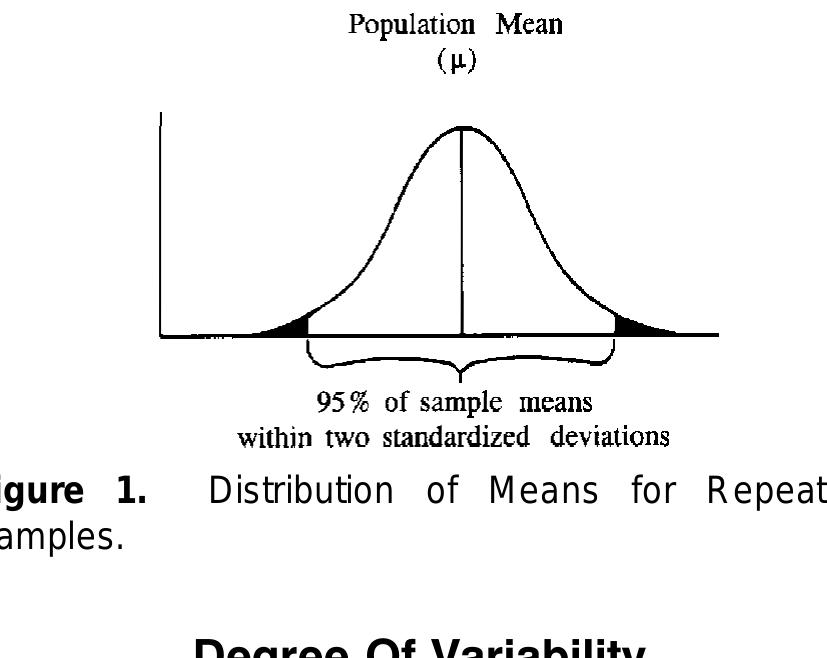
- A 95% confidence level implies 95 out of 100 samples likely contain the true population value.
- High variability in attributes necessitates a larger sample size for precision.
- Census sampling is feasible for populations of 200 or fewer, eliminating sampling error.
- Adjust sample sizes by adding 10-30% to account for nonresponse and contact issues.
References (7)
- Cochran, W. G. 1963. Sampling Techniques, 2nd Ed., New York: John Wiley and Sons, Inc.
- Israel, Glenn D. 1992. Sampling The Evidence Of Extension Program Impact. Program Evaluation and Organizational Development, IFAS, University of Florida. PEOD-5. October.
- Kish, Leslie. 1965. Survey Sampling. New York: John Wiley and Sons, Inc.
- Miaoulis, George, and R. D. Michener. 1976. An Introduction to Sampling. Dubuque, Iowa: Kendall/Hunt Publishing Company.
- Smith, M. F. 1983. Sampling Considerations In Evaluating Cooperative Extension Programs. Florida Cooperative Extension Service Bulletin PE-1. Institute of Food and Agricultural Sciences. University of Florida.
- Sudman, Seymour. 1976. Applied Sampling. New York: Academic Press.
- Yamane, Taro. 1967. Statistics, An Introductory Analysis, 2nd Ed., New York: Harper and Row.
FAQs
AI
What factors influence the determination of sample size in a study?
The paper identifies key factors like purpose of the study, population size, and variability. Precision and confidence levels are also critical, as shown by examples with ±5% precision.
How does population homogeneity affect sample size requirements?
More heterogeneous populations require larger sample sizes for a given level of precision. Conversely, homogeneous populations allow for smaller sample sizes as in the case of 20% versus 50% proportions.
What are effective strategies for determining sample size?
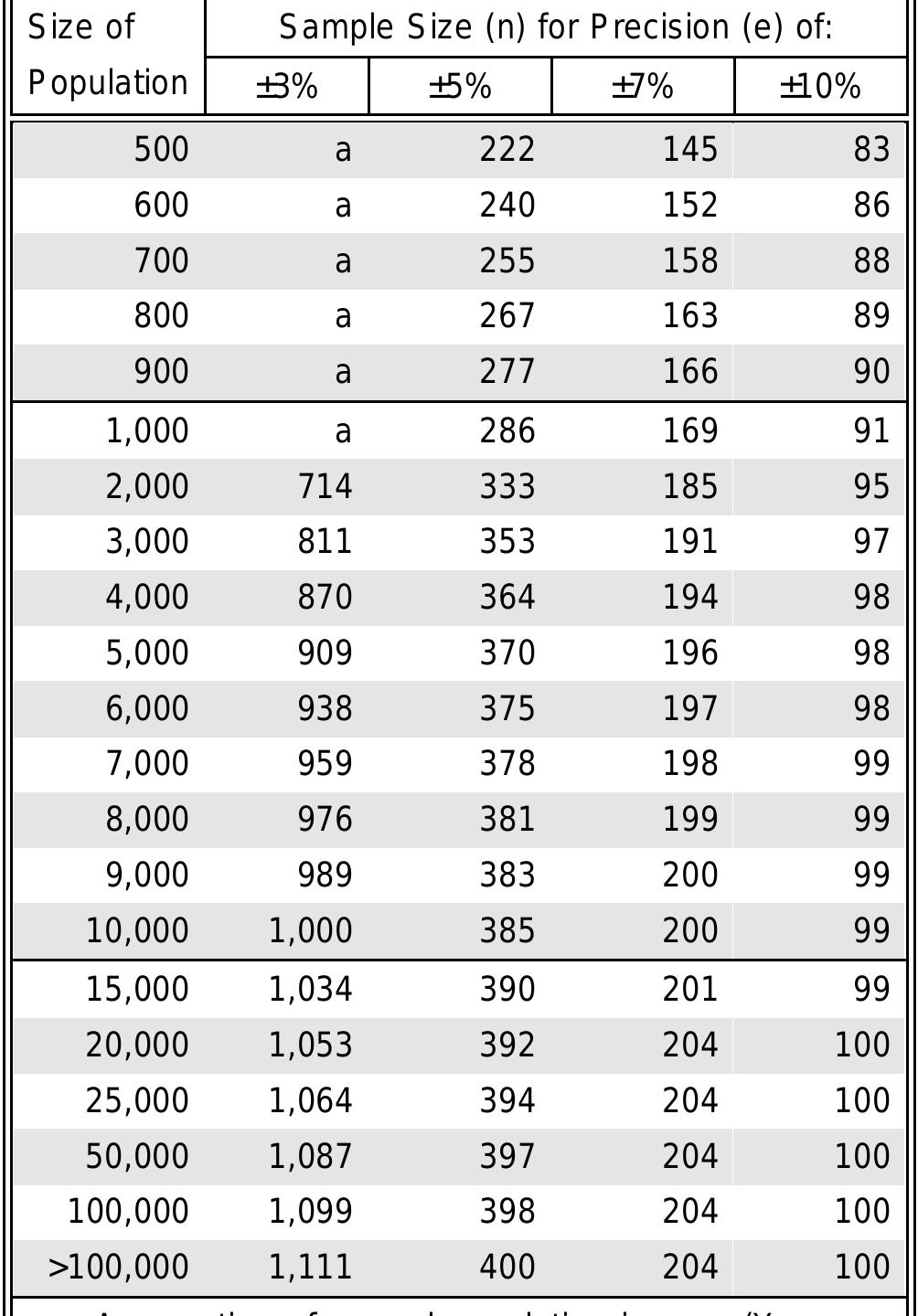
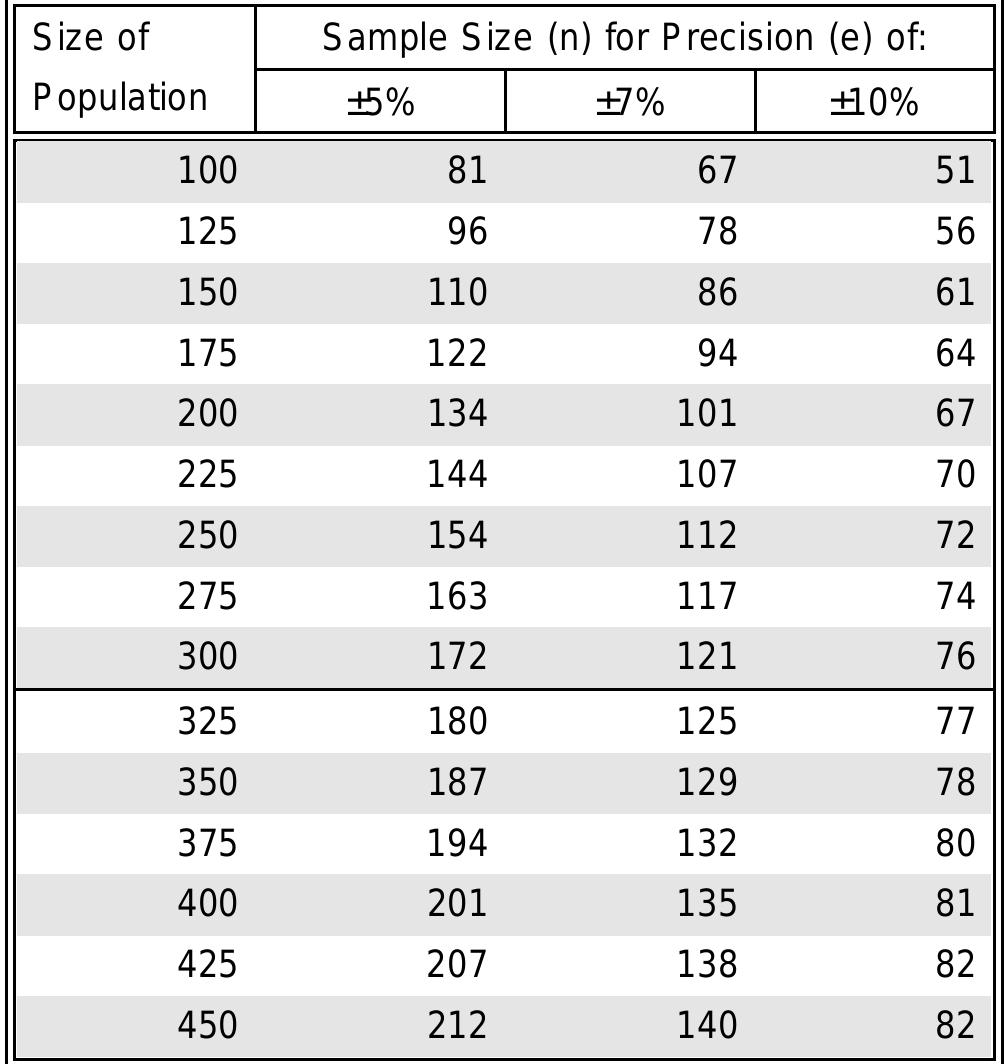
The study outlines strategies including using a census, imitating similar studies, and employing published tables. Each method has unique advantages in terms of cost and accuracy depending on population size.
How is the finite population correction applied to sample size calculations?
The finite population correction allows for reducing sample size when the population is small, improving efficiency. For instance, if evaluating 2,000 farmers, a significantly smaller sample can yield sufficient insight.
What statistical principles guide confidence levels in sample size determination?
Confidence levels relate to the Central Limit Theorem, determining that 95% of sample values lie within two standard deviations of the population mean. This principle emphasizes the risk reduction when using higher confidence intervals.
LAU PARIS