“Transmission of the Tetragrammaton in Judeo-Greek and Christian Sources” («Η Μεταβίβαση του Τετραγράμματου στις Ιουδαιο-Ελληνικές και Χριστιανικές Πηγές»), Flavia Buzzetta (ed.), Accademia Cahier, Nr. 12 (June 2021), pp. 85–126.
2021, Accademia Cahier
Abstract
Pavlos D. Vasileiadis and Nehemia Gordon, “Transmission of the Tetragrammaton in Judeo-Greek and Christian Sources,” Flavia Buzzetta (ed.), Accademia Cahier, Nr. 12 (June 2021), pp. 85–126.
Key takeaways
AI
AI
- The Tetragrammaton was often replaced with κυριος and θεος in Greek translations, impacting theological interpretations.
- Evidence suggests the Tetragrammaton appeared in early Christian texts, influencing understanding of divine names.
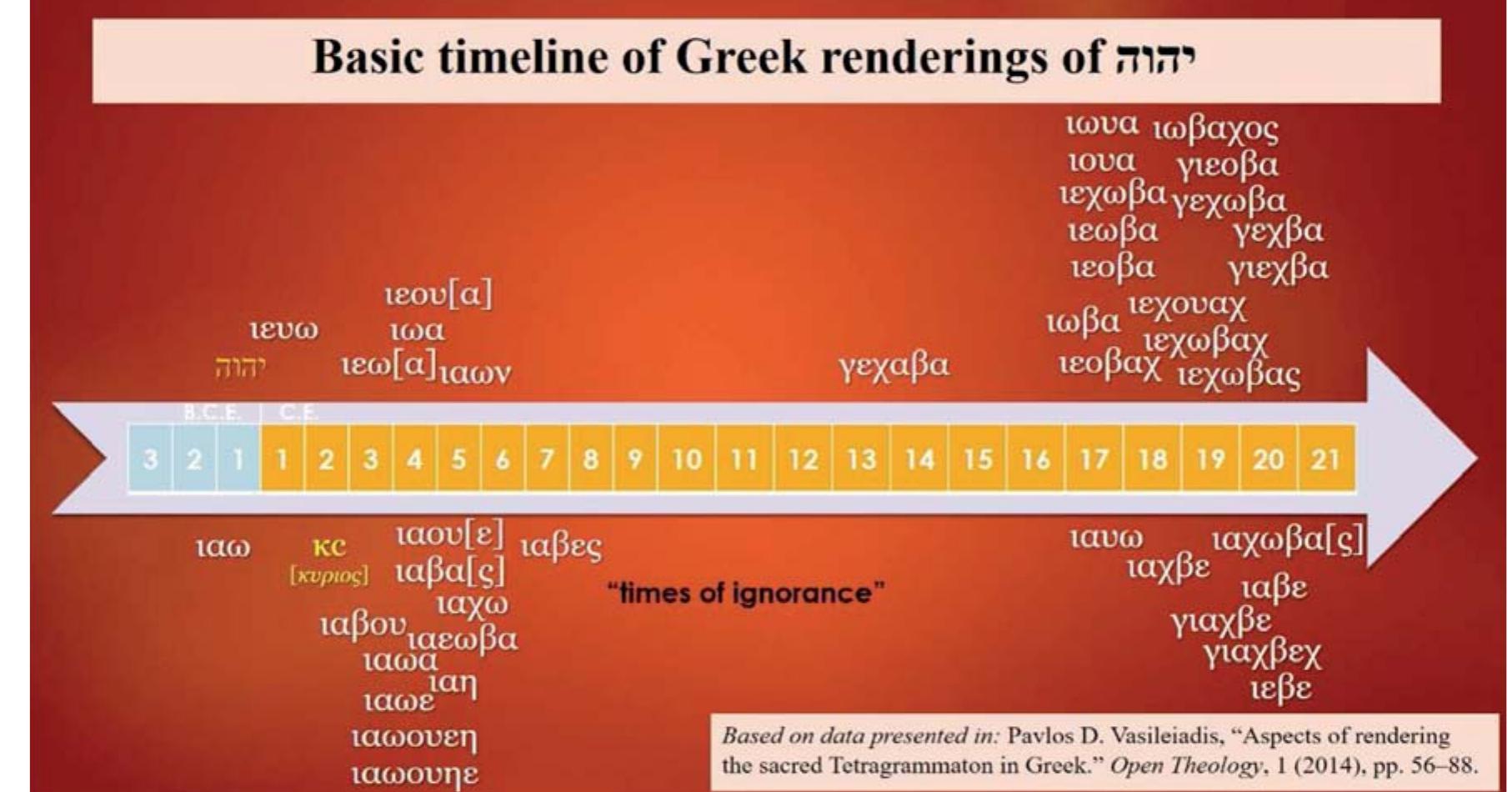
- Over a hundred Greek renderings of the Tetragrammaton exist, reflecting diverse transliteration practices through history.
- Nikolaos of Otranto's unique rendering γεχαβα highlights a renaissance of the Tetragrammaton in medieval Greek literature.
- The re-evaluation of Septuagint practices reveals a complex history of the Tetragrammaton in Jewish and Christian contexts.
References (43)
- Eugene A. NIDA, Charles R. TABER, The Theory and Practice of Translation, Brill, Leiden, 2003/ 1 1969, p. 25.
- Emanuel TOV, Textual Criticism of the Hebrew Bible. Third revised and expanded edition, Fortress Press, Minneapolis, MN 2012, p. 132 ; Eugene NIDA, Charles R. TABER, The Theory, p. 25.
- For the "second stage" of this development, see Scott CHARLESWORTH, Early Christian Gospels : Their Production and Transmission. Papyrologica Florentina, 48, Edizioni Gonnelli, Firenze, 2016.
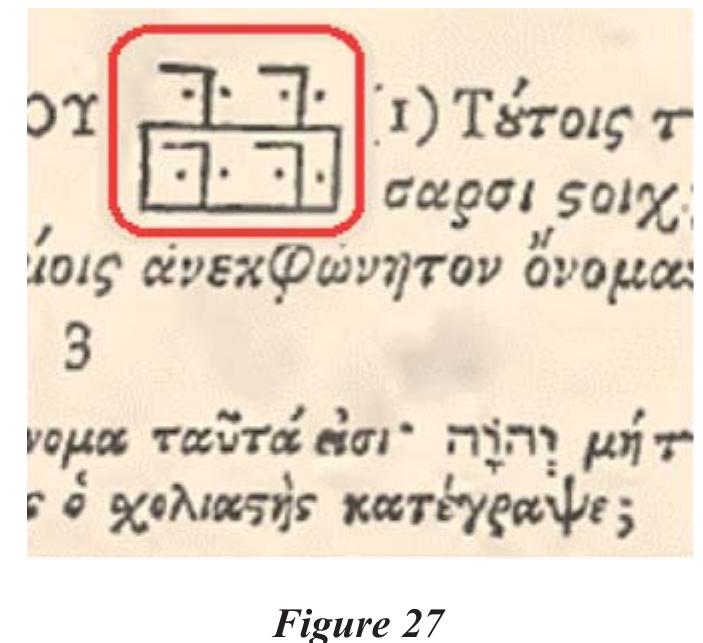
- « Τὸ τετραγράμματον, ἀνεκφώνητον ὂν παρ' Ἑβραίοις, ὃ καταχρηστικῶς παρὰ μὲν αὐτοῖς Ἀδωναῒ καλεῖται, παρὰ δὲ ἡμῖν Κύριος » (In ΠΙΠΙ ]יהוה[ ; Paul DE LAGARDE, Onomastica sacra, 2 nd edition, Horstmann, Göttingen 1887 [reprinted by Olms, Hildesheim 1966], p. 229-230). The closest comment of Origen, on which Evagrius obviously based his comment (or, at very least, shared with him a common exegetical tradition) is this : « Ἔστι δέ τι τετραγράμματον ἀνεκφώνητον παρ' αὐτοῖς, ὅπερ καὶ ἐπὶ τοῦ πετάλου τοῦ χρυσοῦ τοῦ ἀρχιερέως ἀναγέγραπ ται, καὶ λέγεται μὲν τῇ «Ἀδωναῒ» προσηγορίᾳ, οὐχὶ τούτου γεγραμμένου ἐν τῷ τετραγραμμάτῳ• παρὰ δὲ Ἕλλησι τῇ «Κύριος» ἐκφωνεῖται » (Selecta in Psalmos [Dub., fragmenta e catenis] 12:1104). Eusebius was able to check the Hebrew text and see whether κυριος corresponded to the Tetragrammaton or Adonai : « Τηρητέον δὲ, ὅτι ἐν τῷ, Κύριε, καταφυγὴ ἐγενήθης ἡμῖν, τὸ, Κύριε. οὐ διὰ τοῦ τετραγράμμου φέρεται παρ' Ἑβραίοις, ἀλλὰ διὰ τῶν κοινῶν καὶ συνήθων γραφομένων στοιχείων, τῶν καὶ ἐπὶ τῆς ἀνθρωπ ίνης προσηγορίας ταττομένων, εἴποτε τὸν ἐν ἀνθρώποις δεσπότην, κύριον καλοῦμεν. Κατὰ τὰ αὐτὰ γὰρ καὶ ἐπὶ τοῦ παρόντος τὸ Ἀδωναῒ ἡρμήνευται εἰς τὸν Κύριον, τοῦ τετραγράμμου ὀνόματος, ὃ τὴν ἀπόῤῥητον τοῦ Θεοῦ θεολογίαν σημαίνει, μὴ κειμένου κατὰ τὴν παροῦσαν λέξιν, ἀλλὰ τοῦ δεσπότου μάλιστα εὐκαίρως ὠνομασμένου, εἰς παράστασιν τοῦ κήδεσθαι αὐτὸν καὶ φροντίζειν τῶν αὑτοῦ οἰκετῶν, ὧν καὶ καταφυγὴ τυγχάνει » (Commentary on Psalms 89|90:1; PG 23:1128C). The definition of « καταχρηστικῶς » was taken from the Brill Dictionary of Ancient Greek (edited by Franco MONTANARI, 2015).
- Austin SURLS, Making Sense, p. 197.
- Johanna W. H. VAN WIJK-BOS, Writing on the Water : The Ineffable Name of God, in : Jews, Christians, and the Theology of the Hebrew Scriptures, eds. Alice OGDEN BELLIS, Joel S. KAMINSKY, Society of Biblical Literature, Atlanta 2000, p. 56. According to Anne PASQUIER, Christian manuscripts of the LXX may have preserved special forms of the Tetragrammaton as late as the second century CE (Invocation et glorification du Nom divin dans le Livre sacré du grand Esprit invisible ou Évangile égyptien (NHC III,2; NHC IV,2), in : Mystery and Secrecy in the Nag Hammadi Collection and Other Ancient Literature: Ideas and Practices, eds. Christian H. BULL, Liv LIED, John D. TURNER, Brill, Leiden, 2011, p. 127).
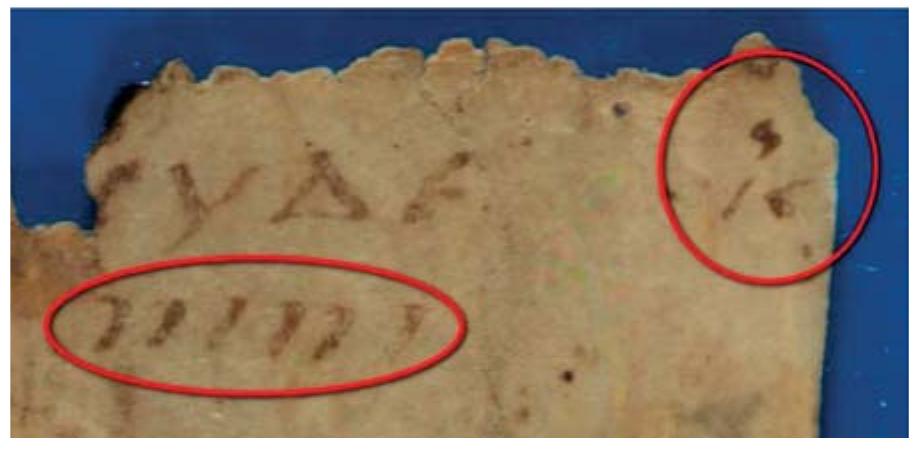
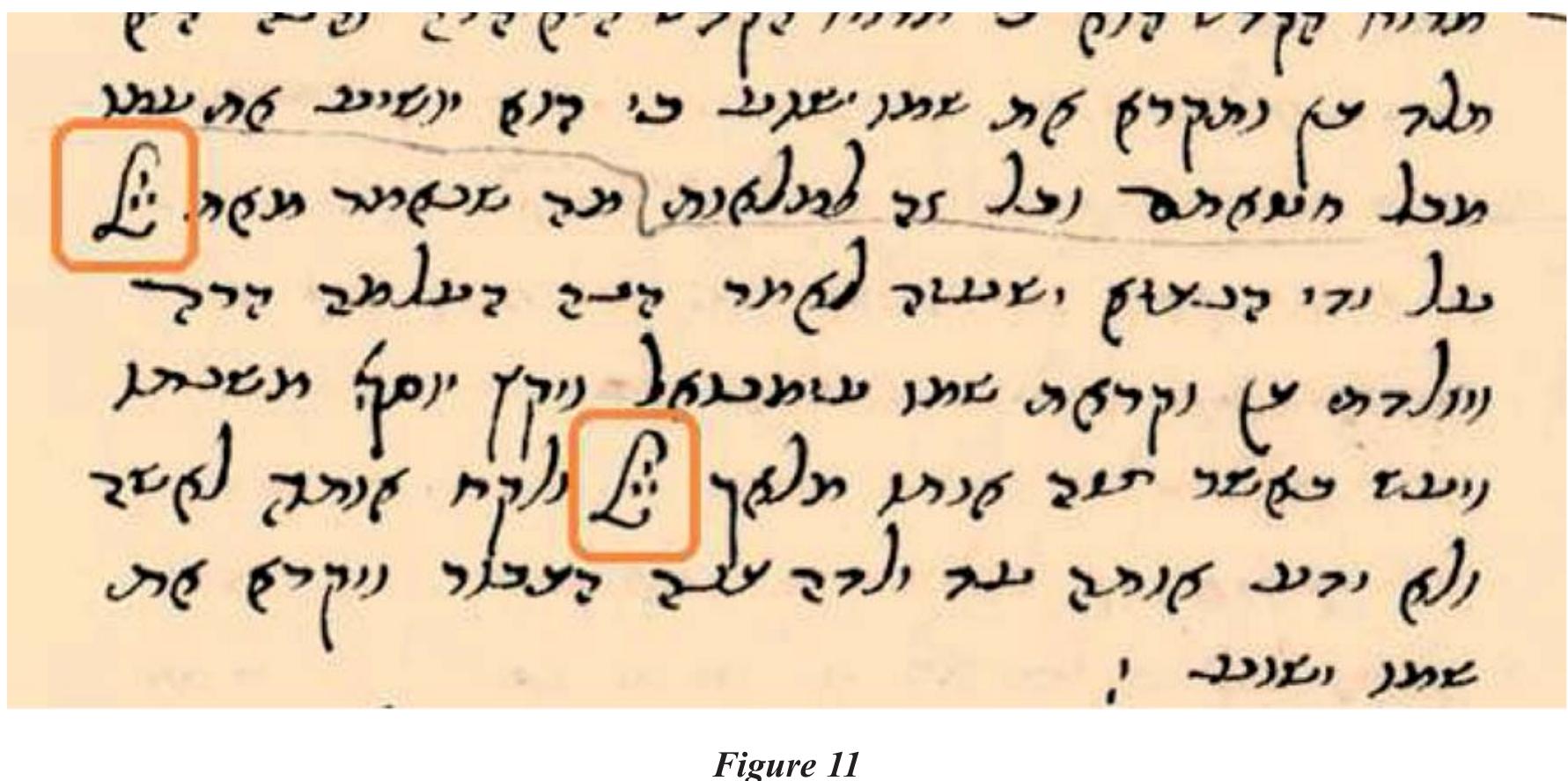
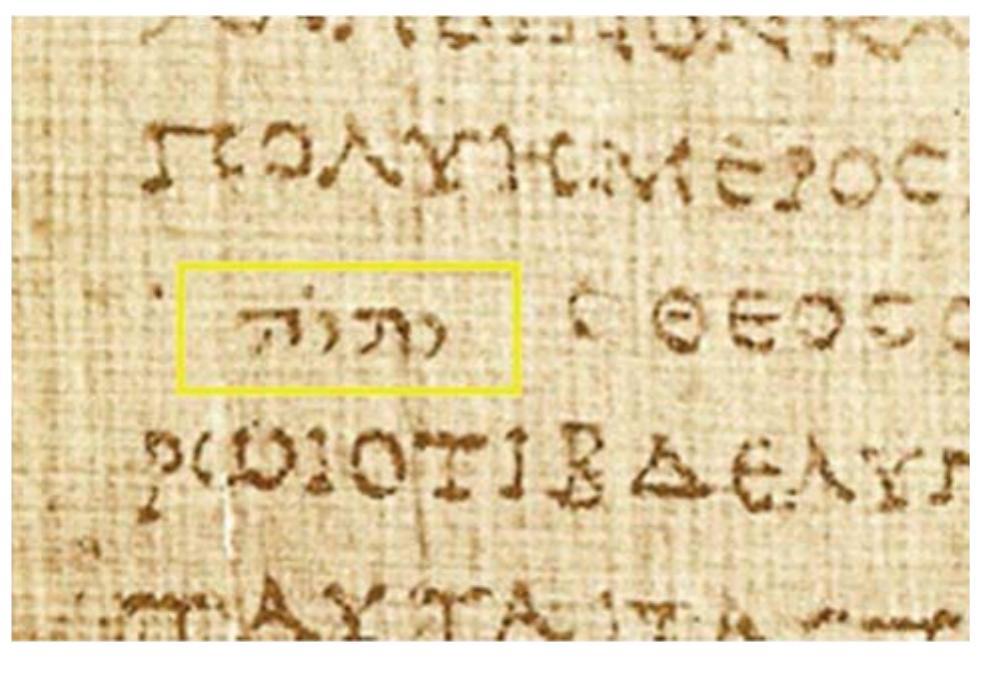
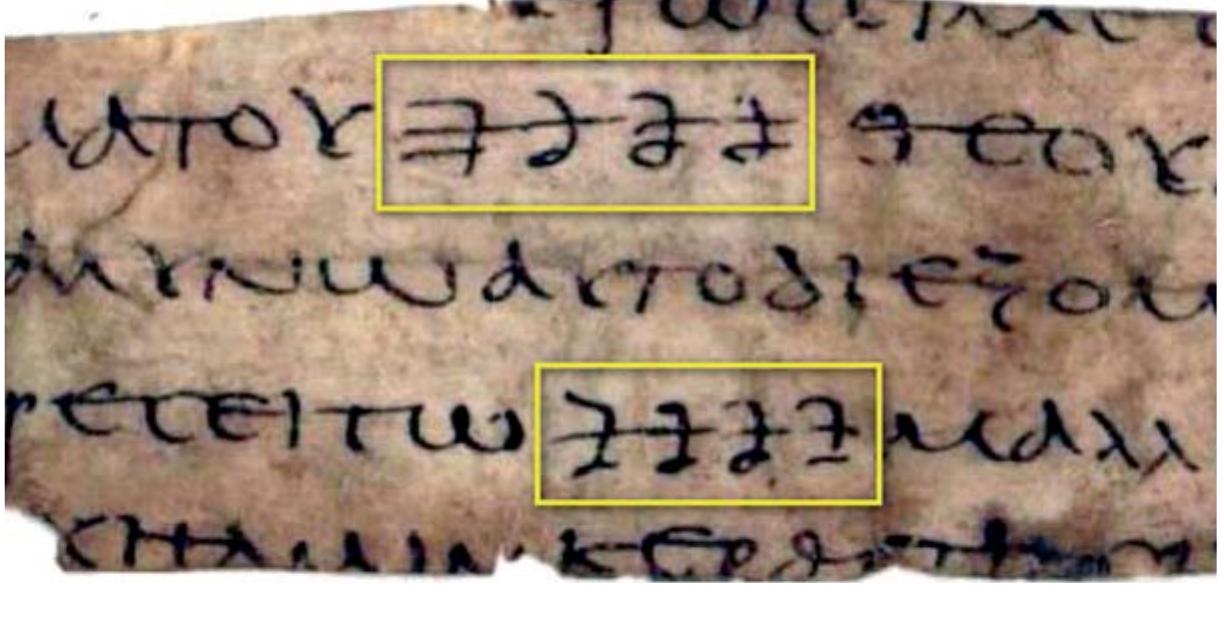
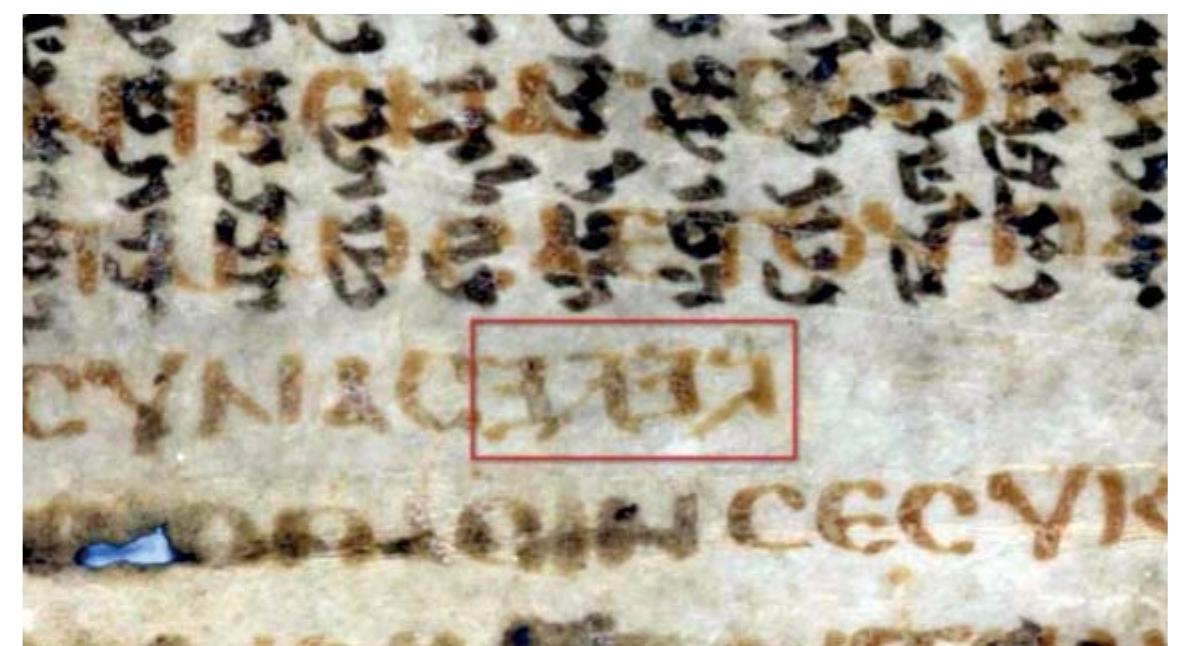
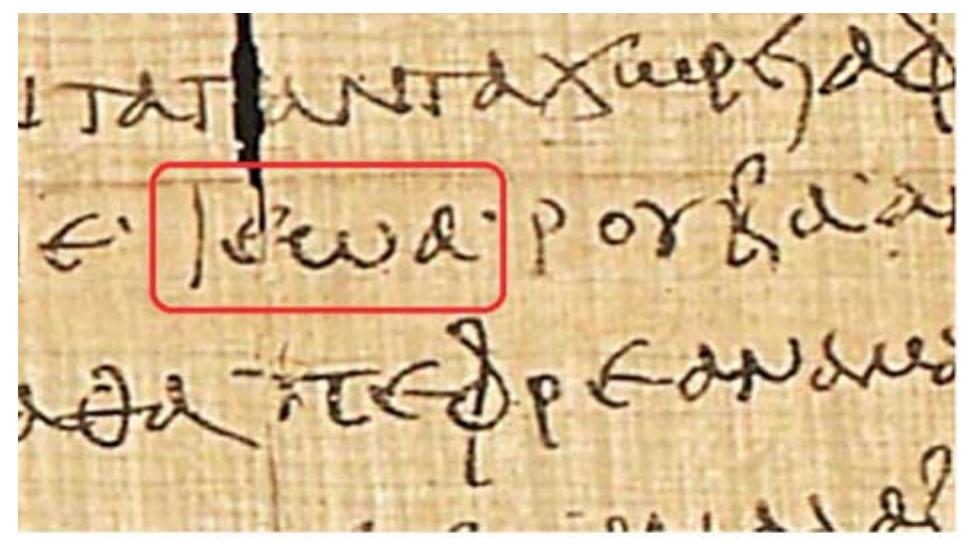
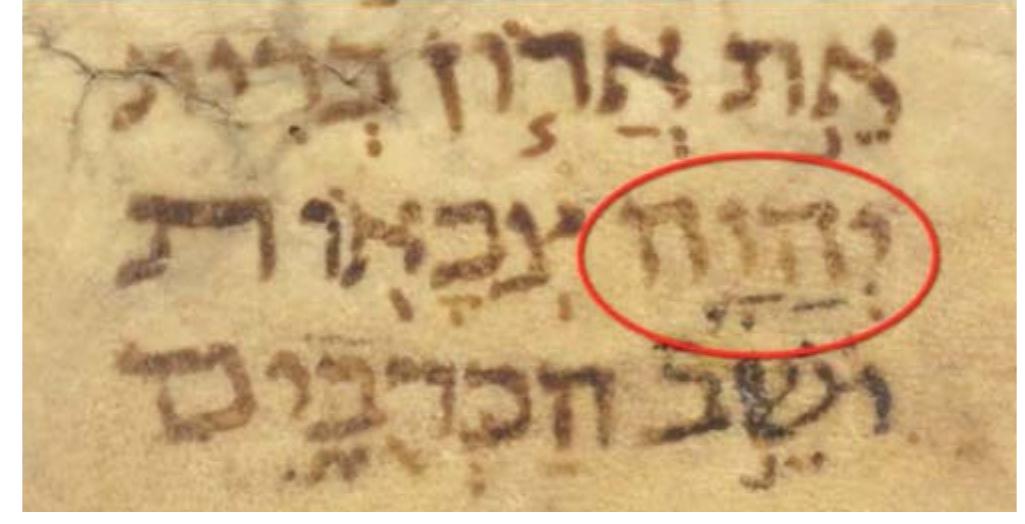
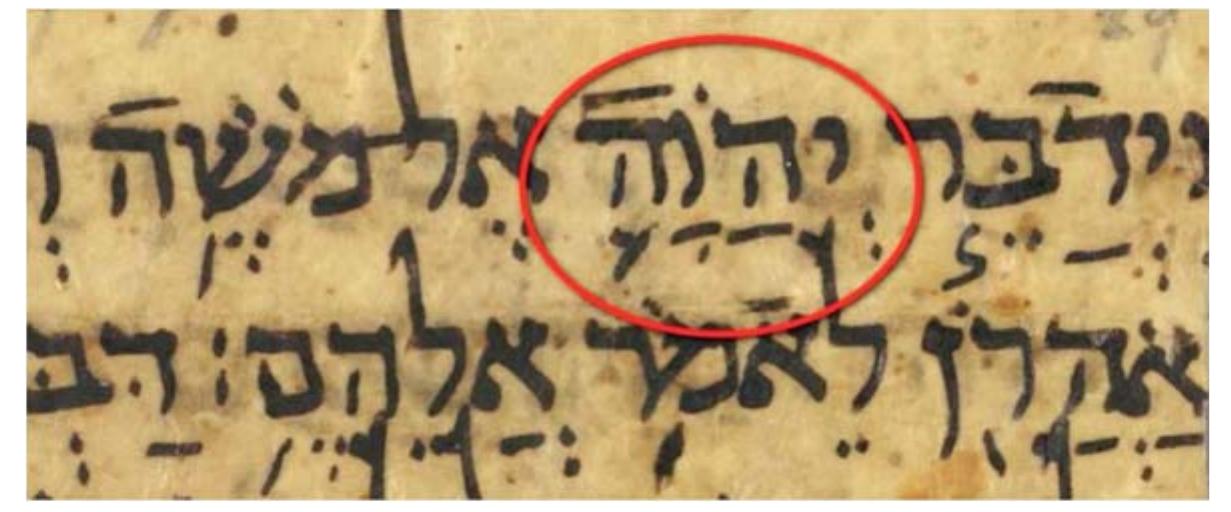
- Nicholas DE LANGE, Japheth in the Tents of Shem : Greek Bible Translations in Byzantine Judaism, Mohr Siebeck, Tübingen, 2015, p. 74. See figs. 3-4 ; our thanks to Schmidt Werner from the library of the University of Würzburg for providing physical access to GIOVANNI MERCATI's Psalterii hexapli reliquiae.
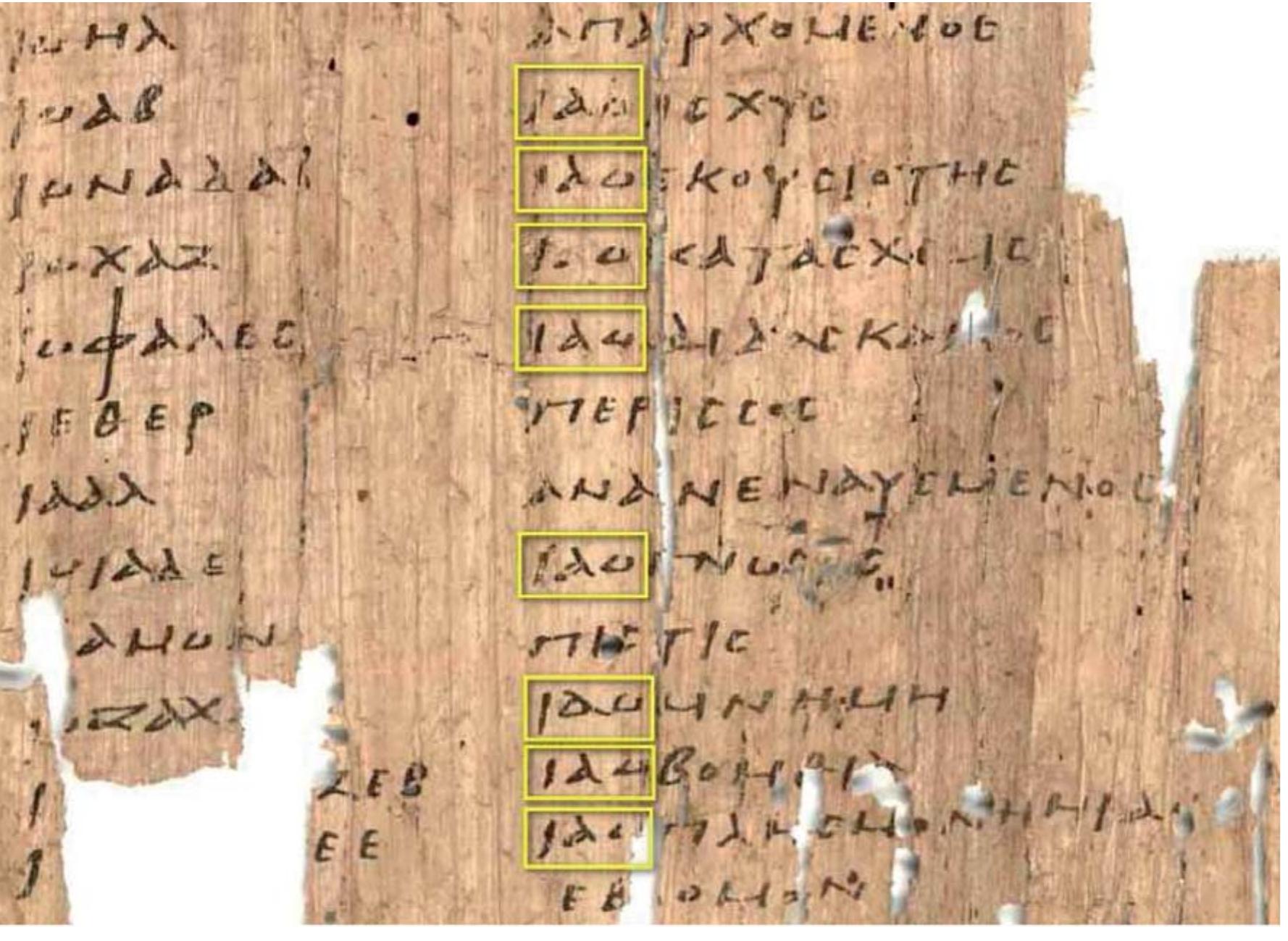
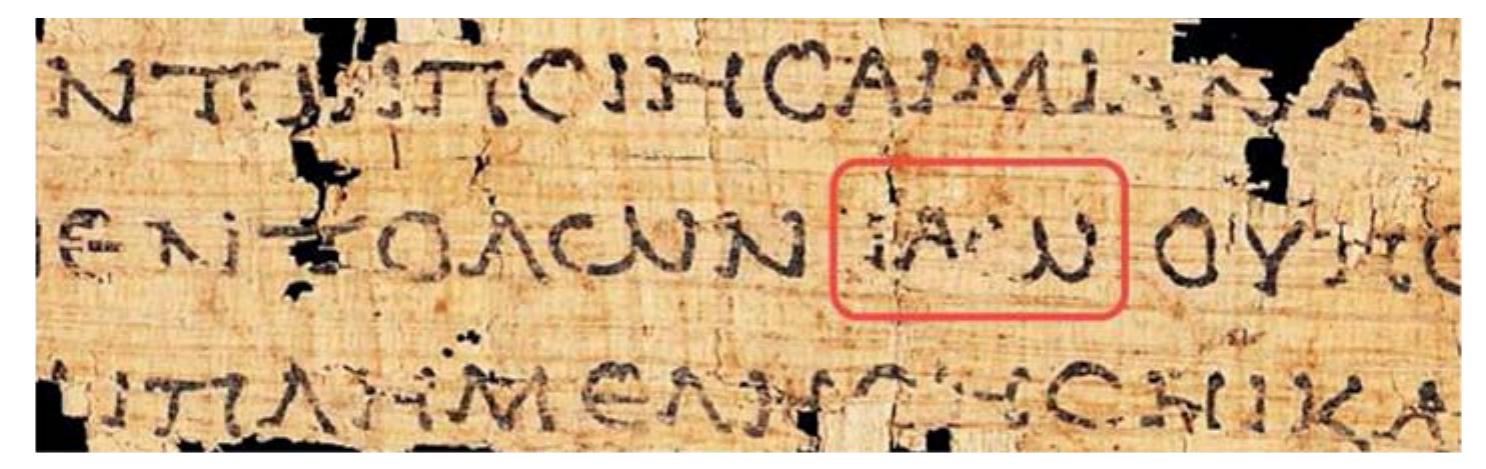
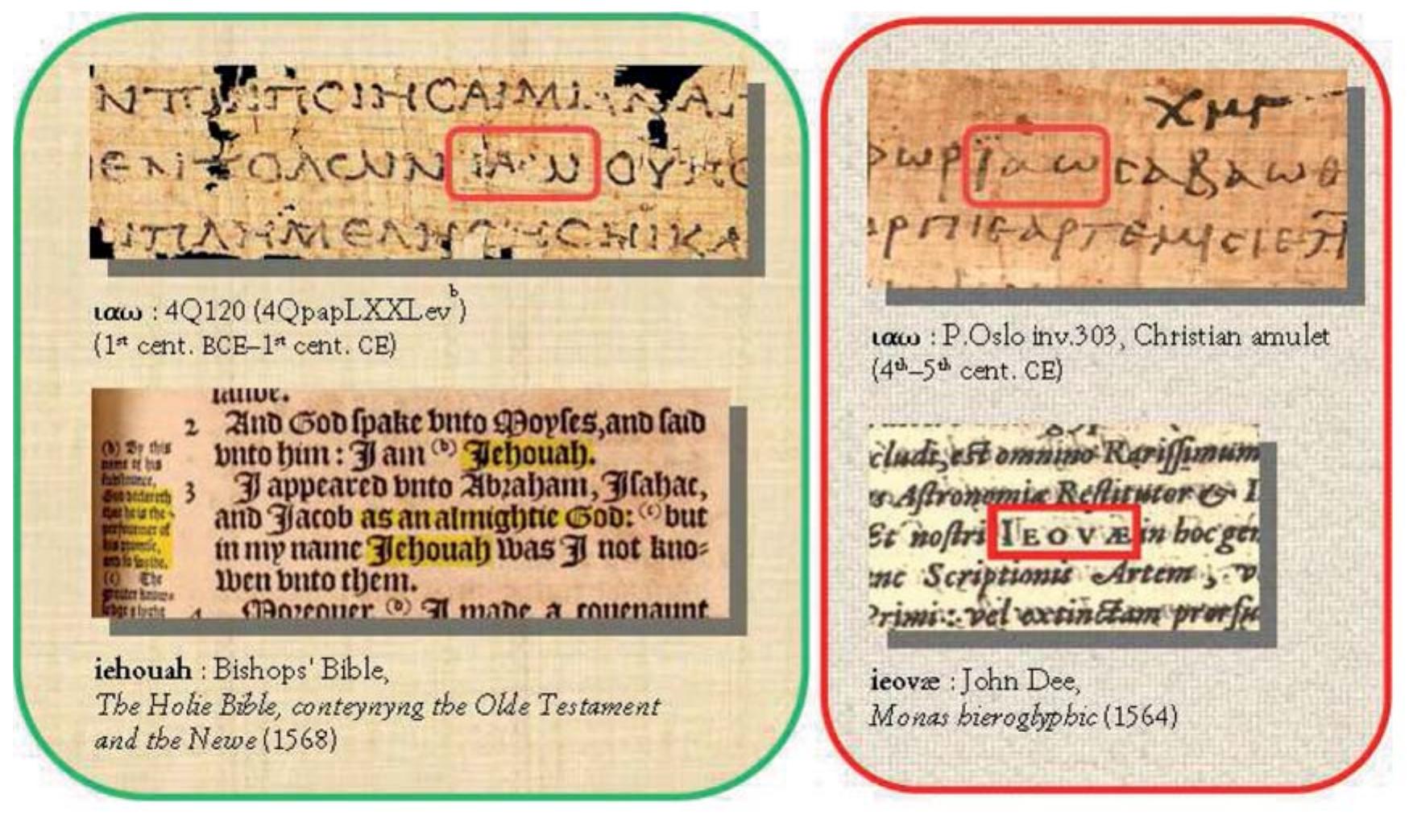
- Pavlos VASILEIADIS, Iao, p. 41-51 ; ID., Το Ιερό Τετραγράμματο και η Πρόσληψή του στη Μεσαιωνική Γραμματεία [The Sacred Tetragrammaton and its Reception in the Medieval Literature], PhD dissertation, Aristotle University of Thessaloniki, Greece 2017, p. 41-43 ;
- Frank SHAW, The Earliest.
- Austin SURLS stated : « Two earlier onomastica of probable Jewish origin freely used Ἰαὼ in their name explanations. This shows that at least some Jews in the pre-Christian era were comfortable with uttering an explicit form of the divine name » (Making Sense, p. 77).
- Frank SHAW, The Earliest, p. 107.
- ROKEACH OF WORMS (13 th century), Sefer Hashem, New York, Jewish Theological Seminary, Ms. 2367, fol. 173r ; cf. Joseph DAN, History of Jewish Mysticism and Esotericism, Zalman Shazar Center for the History of Israel, Jerusalem, 2011, vol. 6, p. 561 (Heb.).
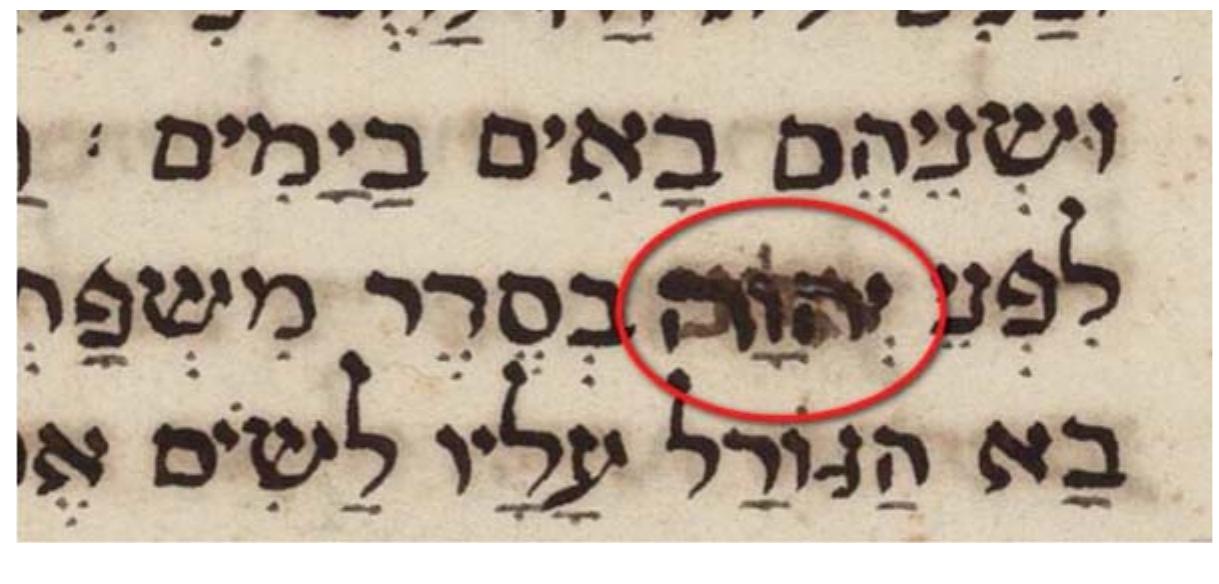
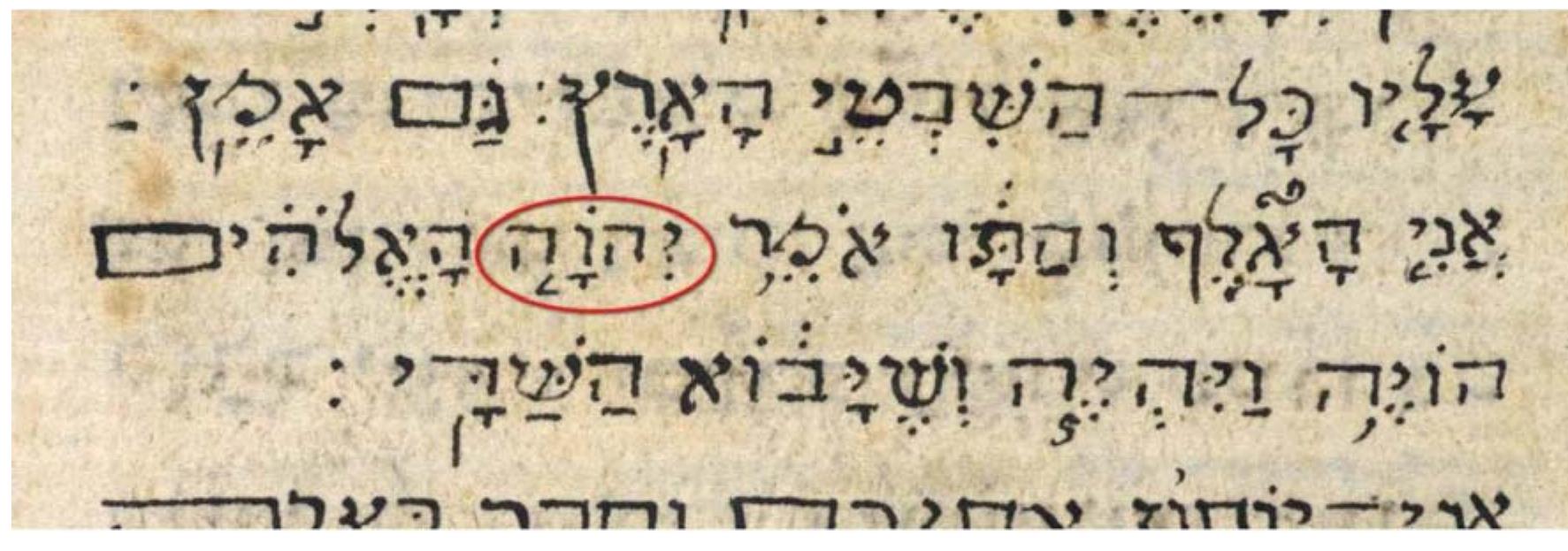
- Biblia Hebraica, Soncino edition, Brescia, 1494, fol. 72v.
- A modern parallel can be found in rabbinical discussions about the permissibility of "erasing" divine names from computers, cf. David AUERBACH, Deleting the Digital Name of God, « Tablet Magazine » <https://www.tabletmag.com/scroll/269413/deleting-the-digital-name-of-god>, published online 27
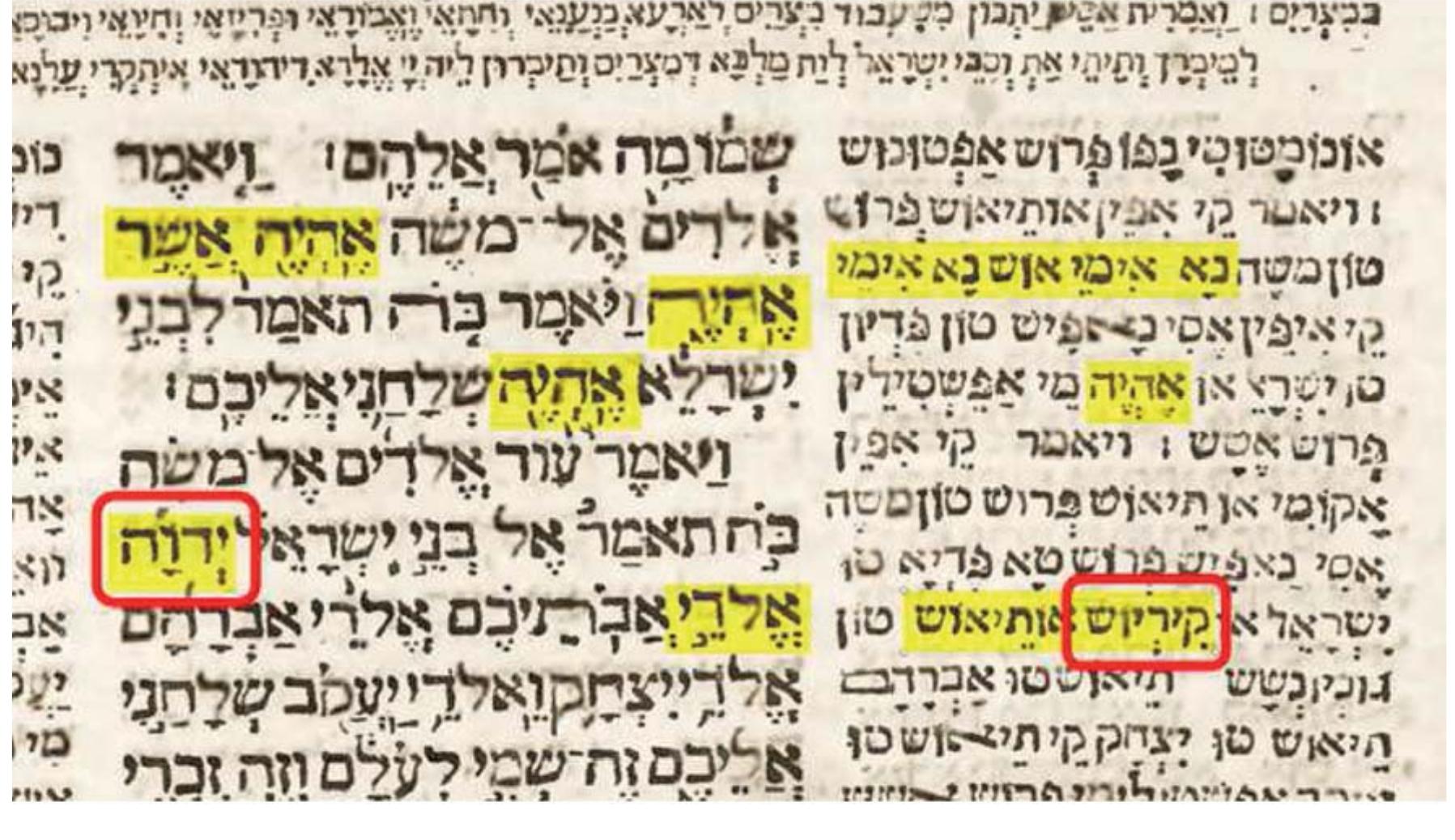
- Nicholas DE LANGE et al, Jewish Reception, p. 43. J. Krivoruchko wrote about this valuable work : « The most remarkable Judeo-Greek text of the Ottoman period is the anonymous translation included in the Constantinople Pentateuch (1547). Printed by Eliezer Soncino, this edition included also the Targum and a Ladino translation. It is the longest existing Judeo-Greek biblical translation after the Septuagint. Unfortunately, few historical facts are known about its creation, and its dialectological profile is difficult to establish. Hesseling (1897a) published a Greek transcription of this Pentateuch ; see also the review by Belléli (1897) and the rejoinder by HESSELING (1897b) » (Judeo-Greek, p. 194-225).
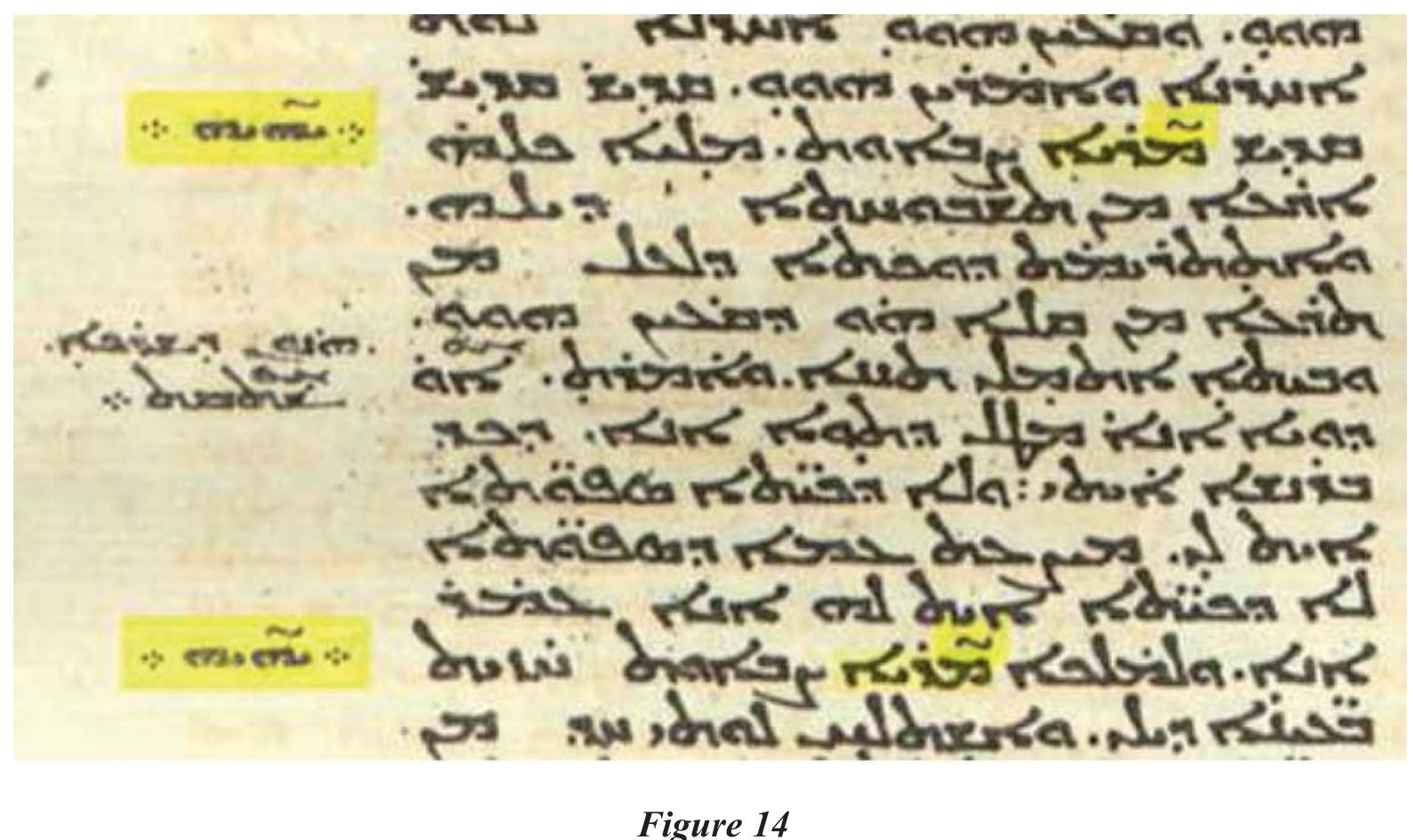
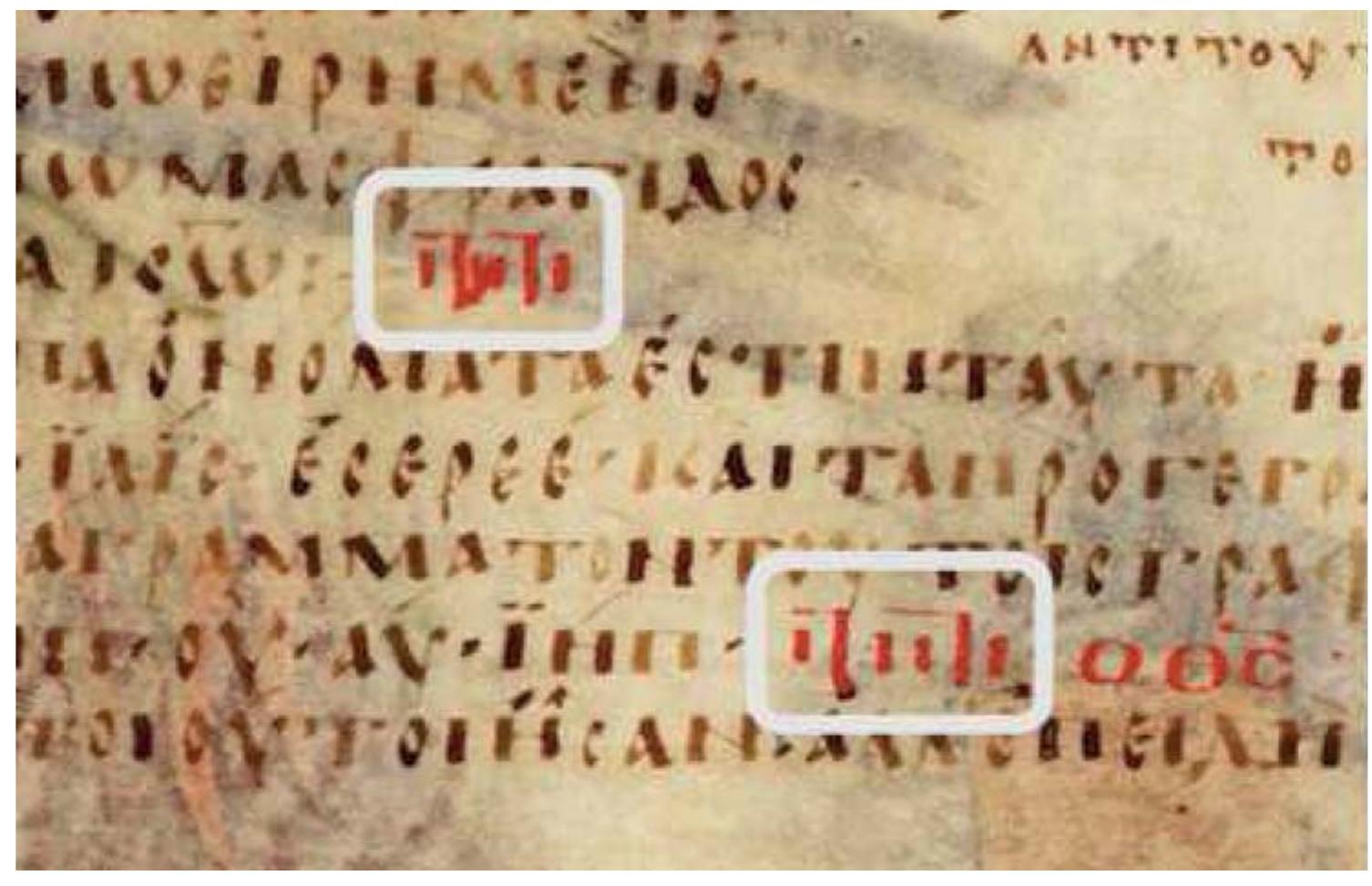
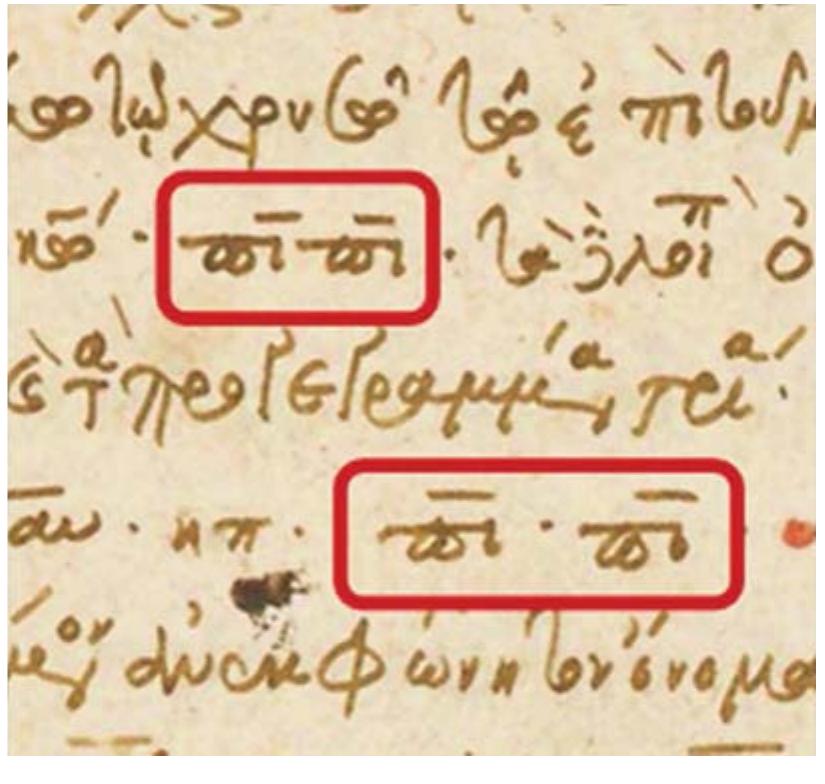
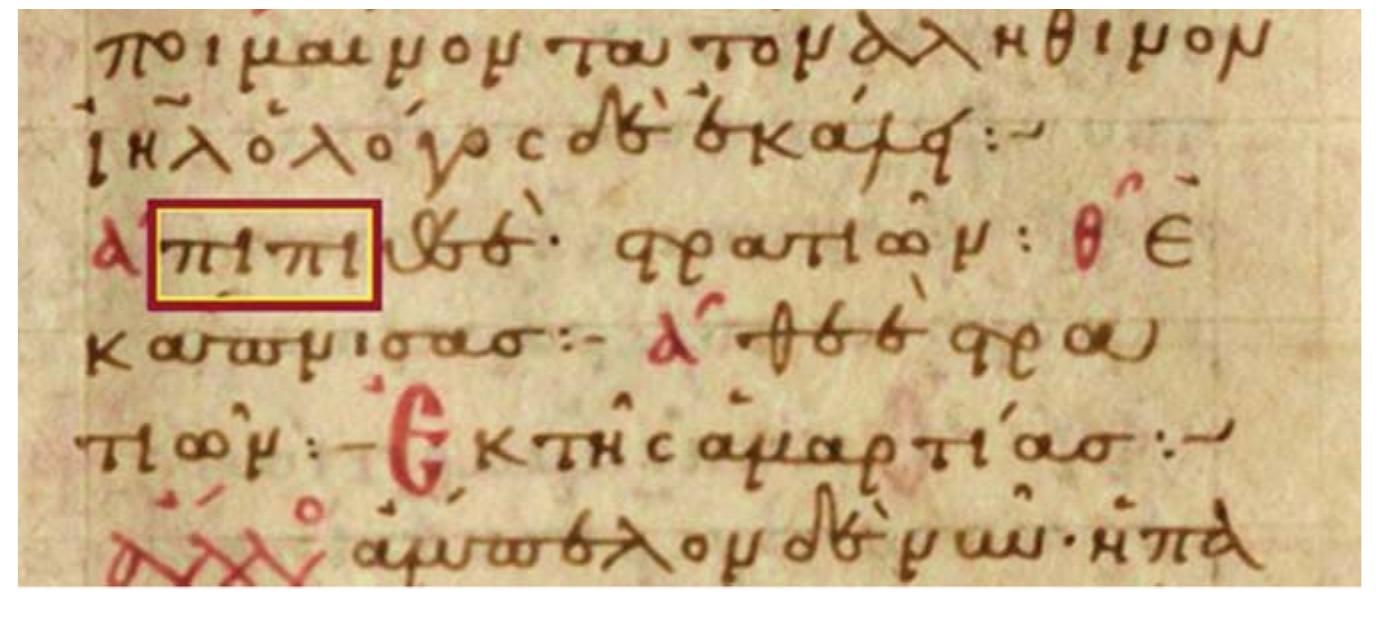
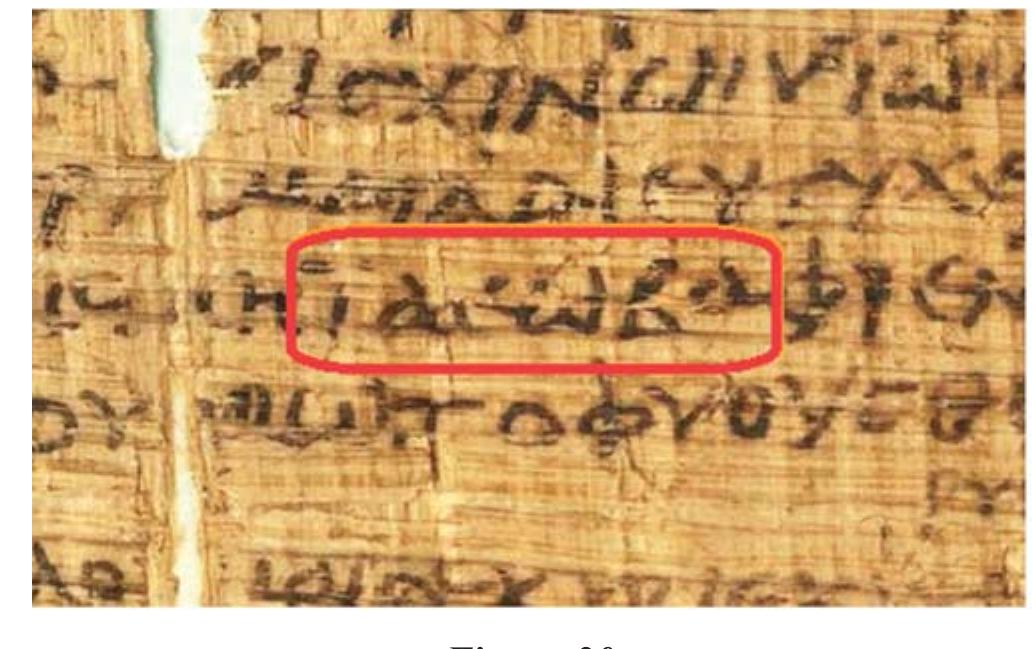
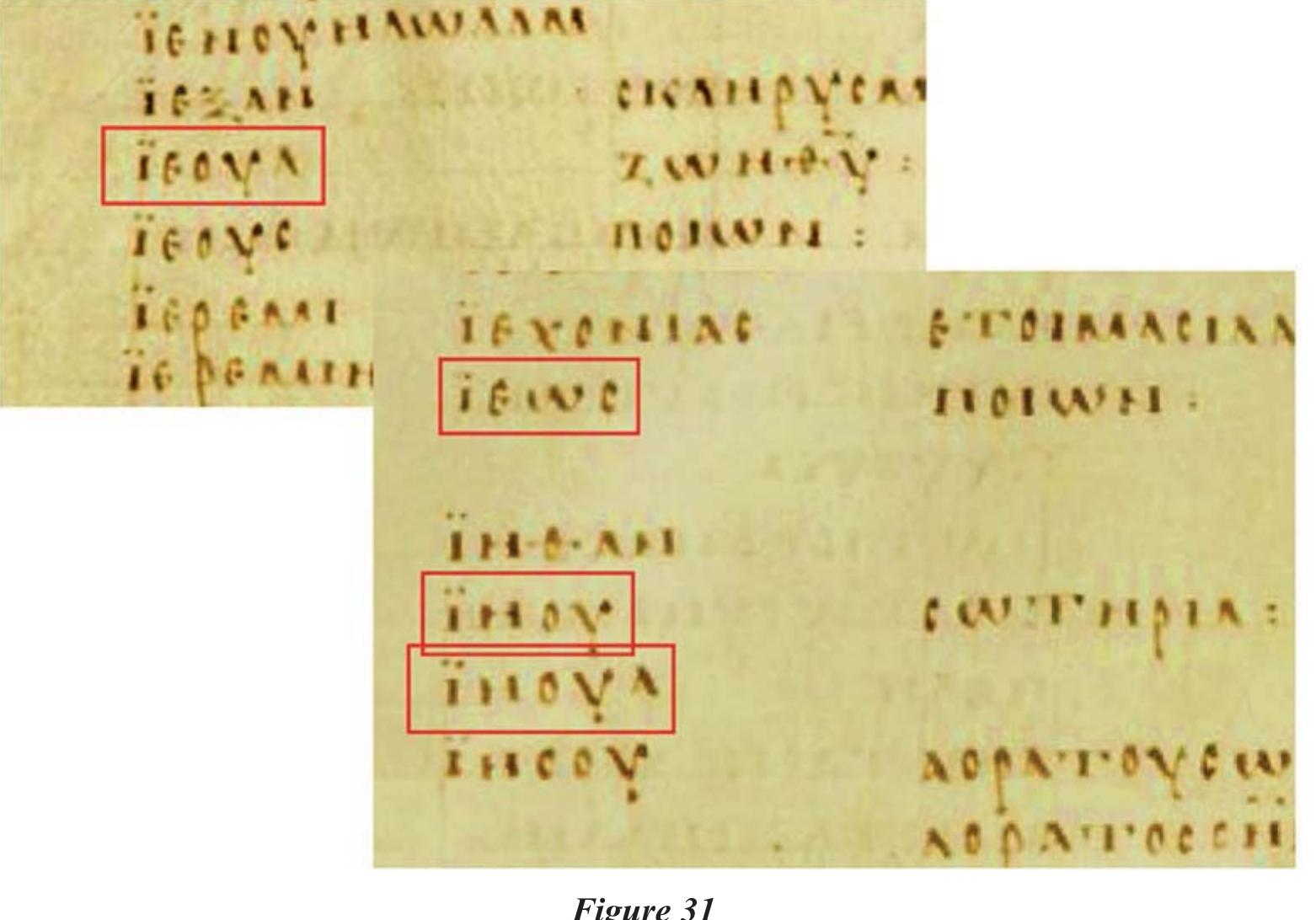
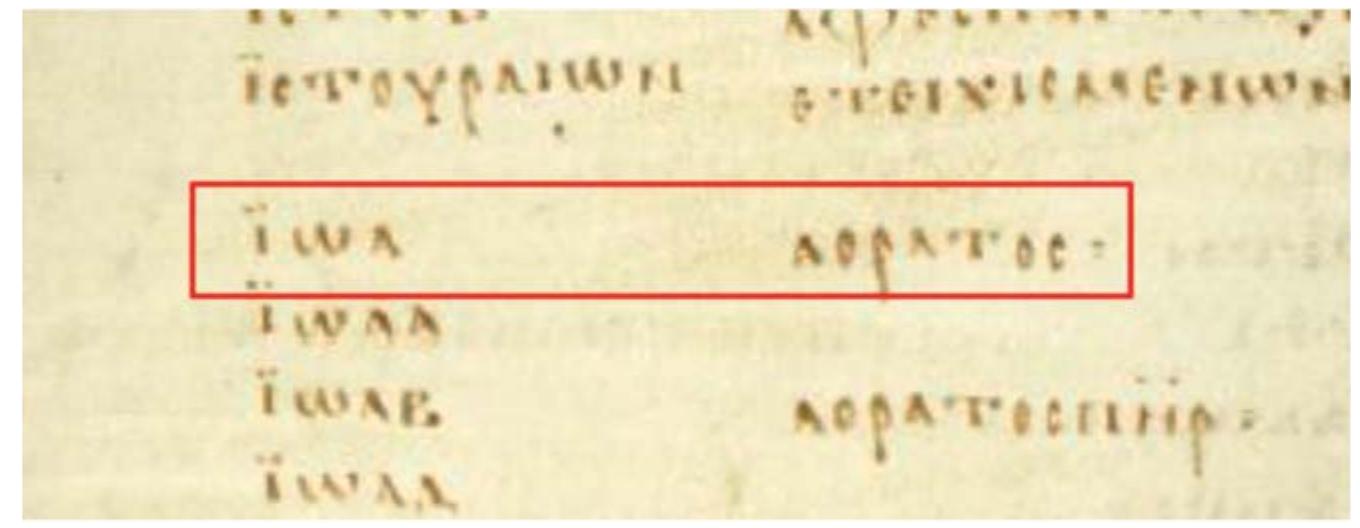
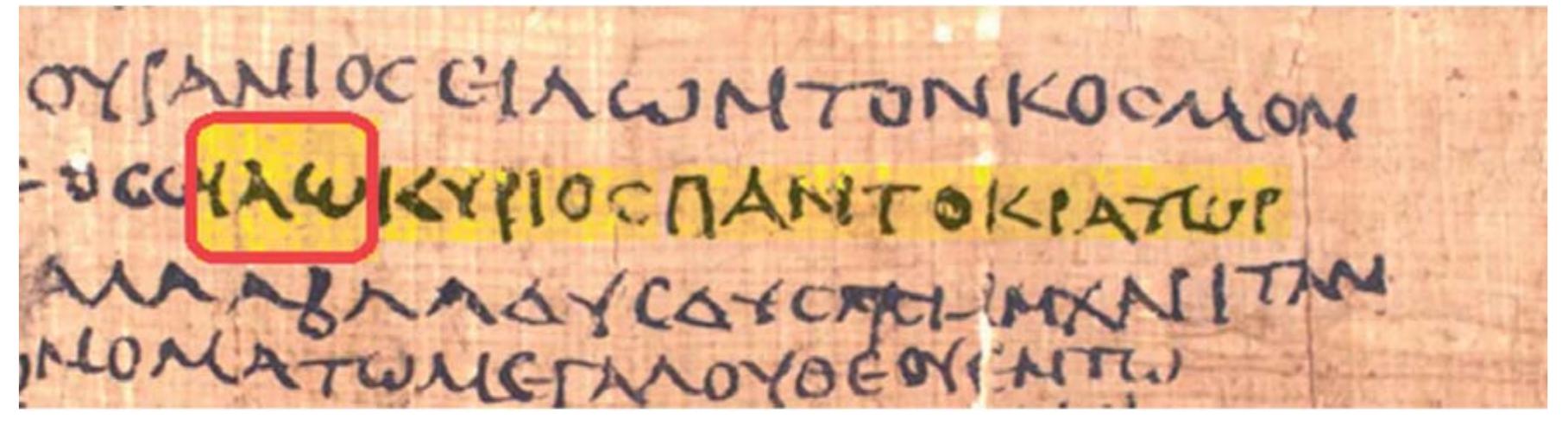
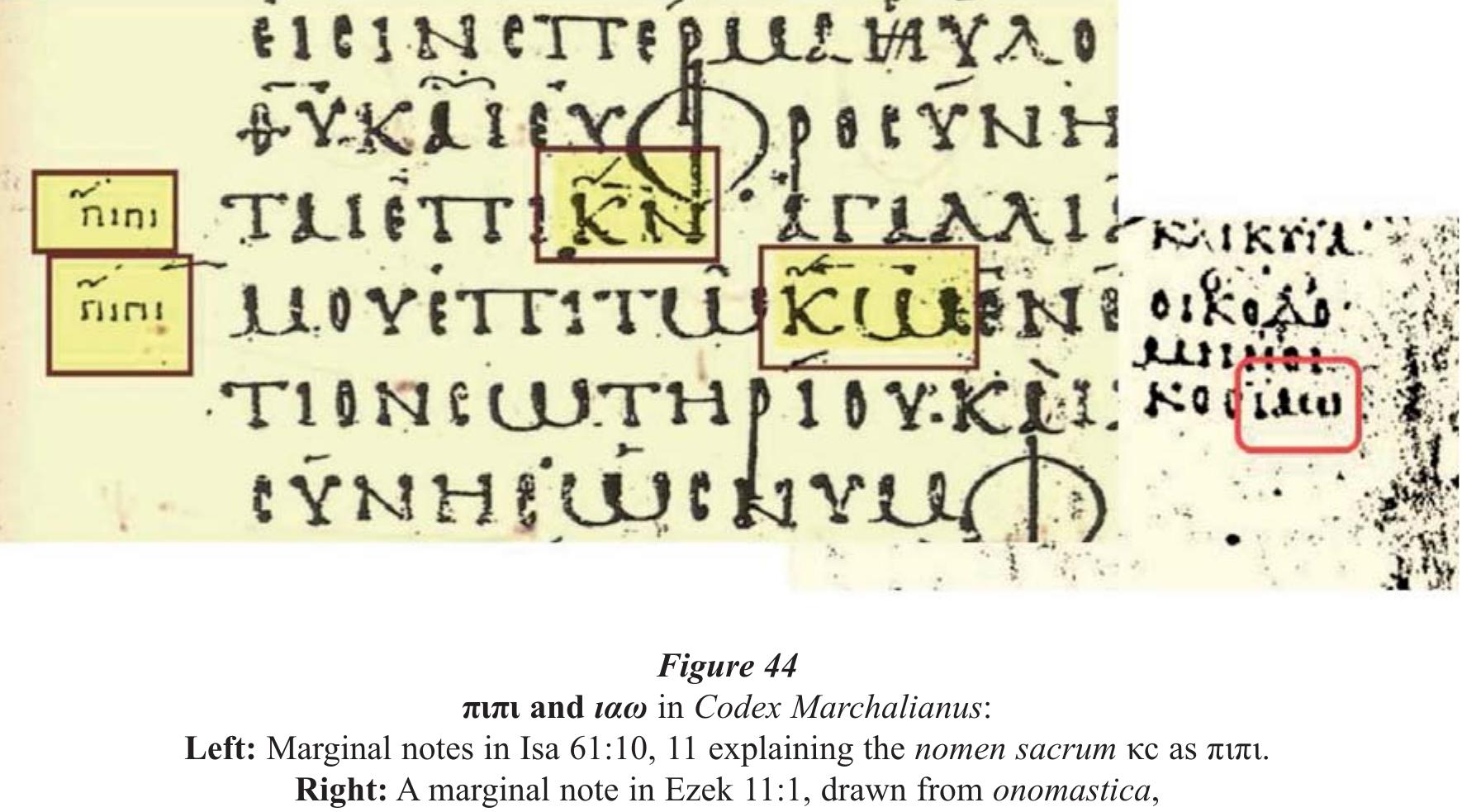
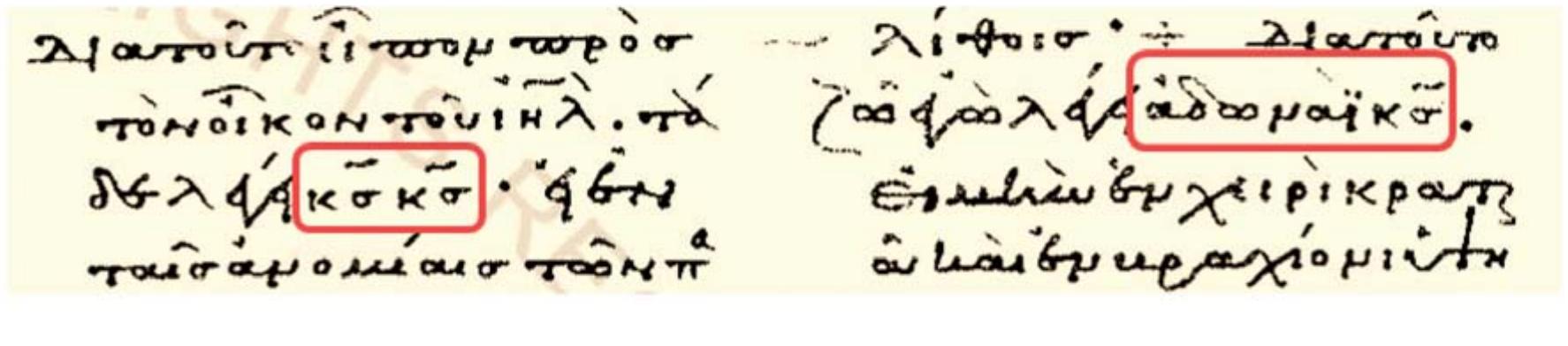
- Robert J. WILKINSON, Tetragrammaton : Western Christians and the Hebrew Name of God, Brill, Leiden- Boston, 2015, p. 213-279. As already discussed, a notable exception is the transmission of Hexaplaric material, mainly found in marginal notes of Septuagint manuscripts, commentaries by Christian authors and onomastica (John D. MEADE, Hexaplaric Greek translations, in : The Hebrew Bible, Vol. 1B : Pentateuch, Former and Latter Prophets, eds. Armin LANGE, Emanuel TOV, Brill, Leiden-Boston, 2016, p. 637-643). Fig. 44 includes images of Ms. Vat. gr. 2125 with Hexaplaric marginal notes explaining that the nomen sacrum κc is equivalent to the Tetragrammaton in the form πιπι and material from onomastica that include ιαω.
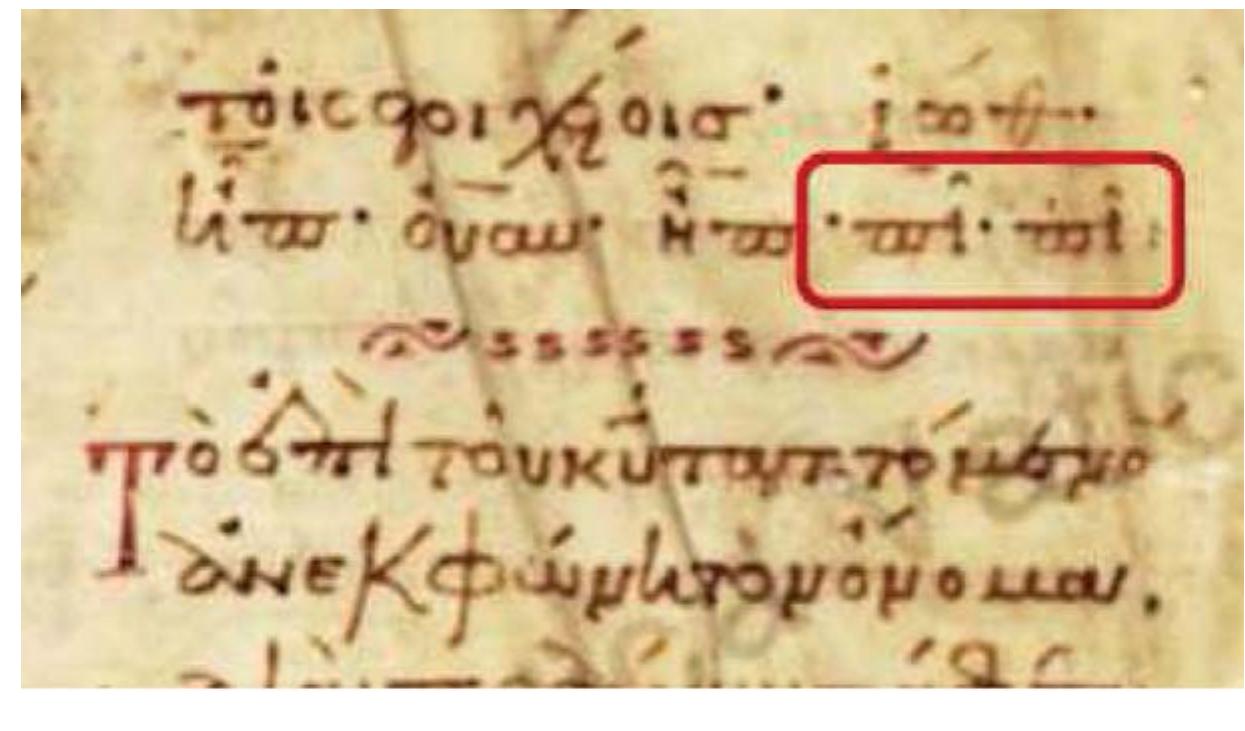
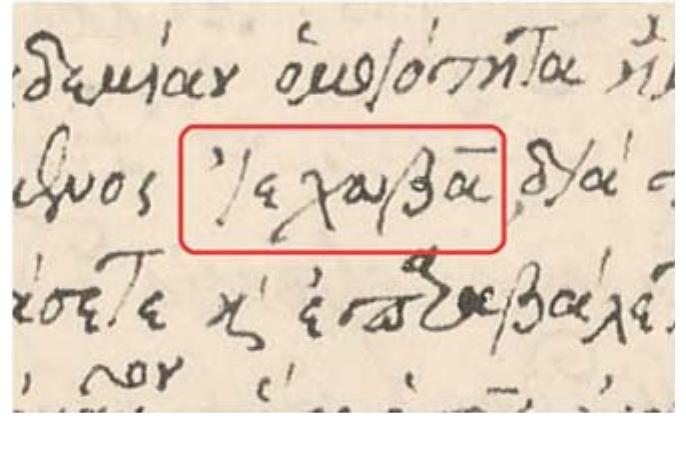
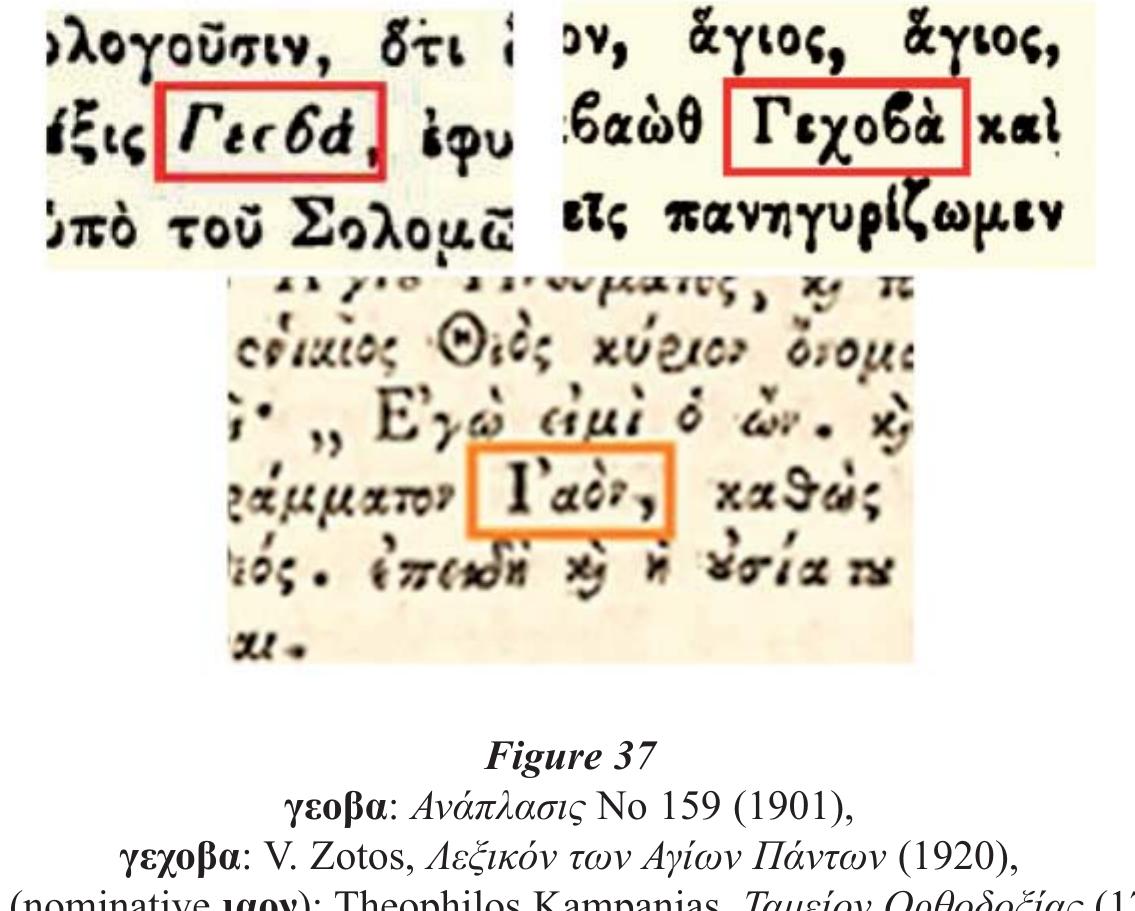
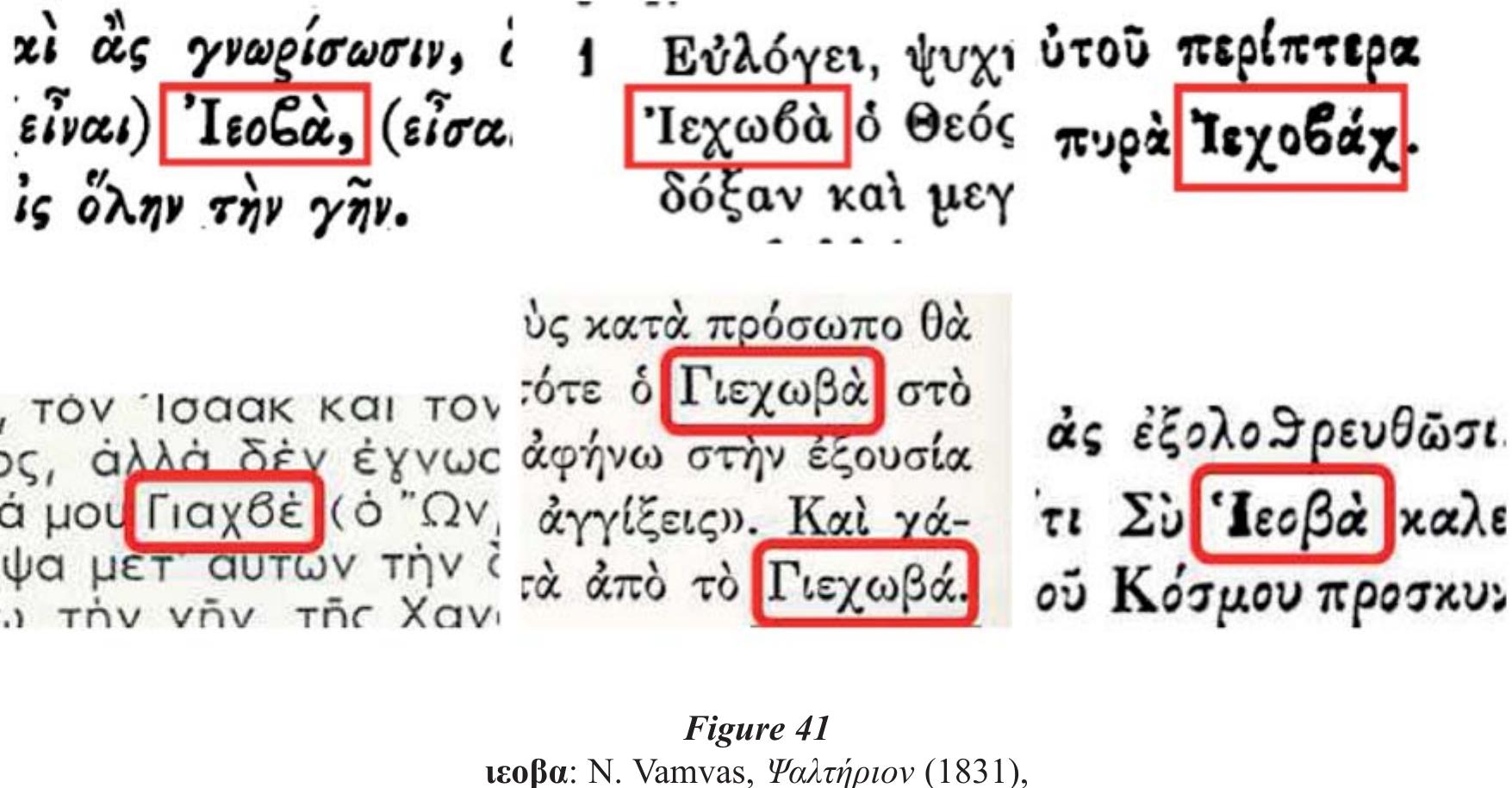
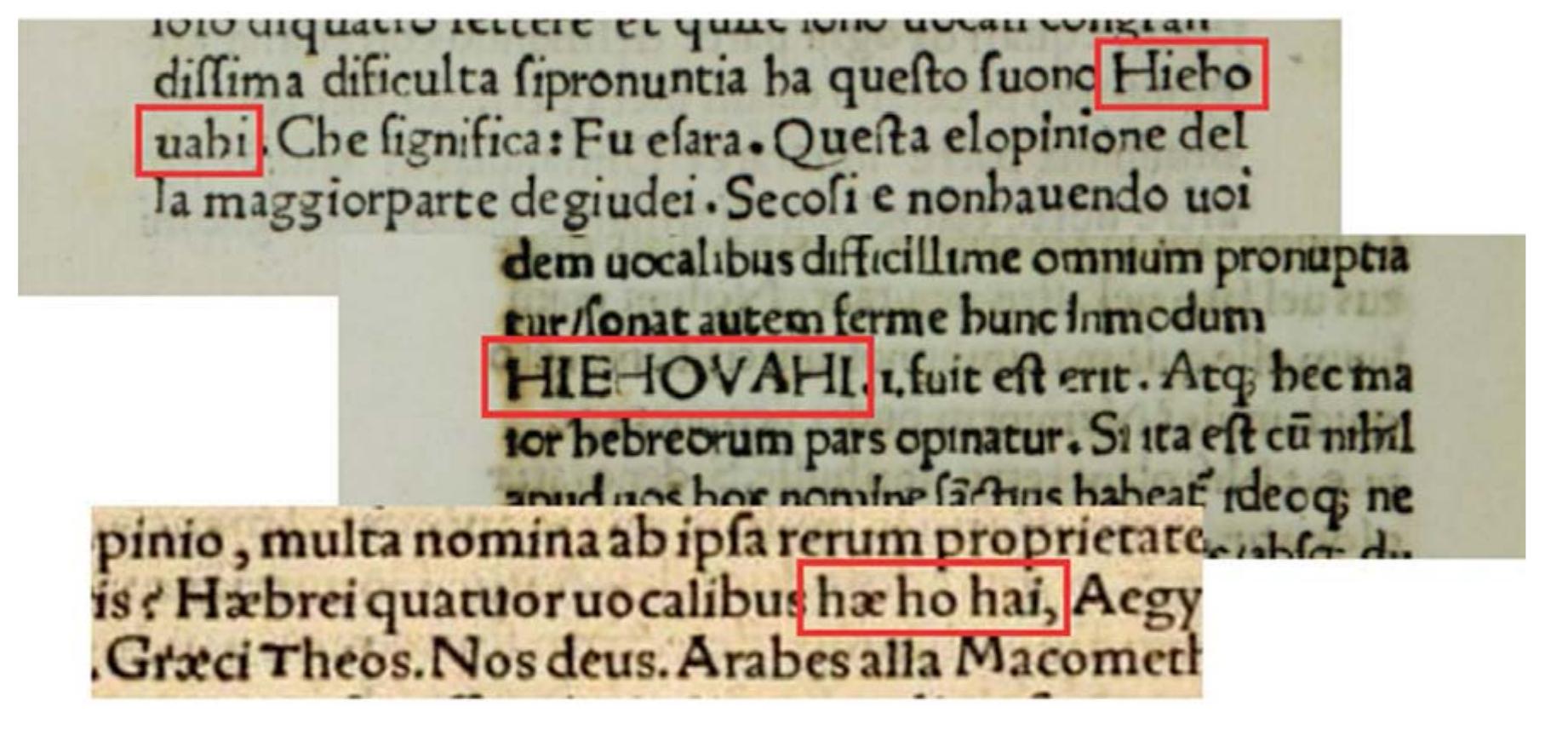
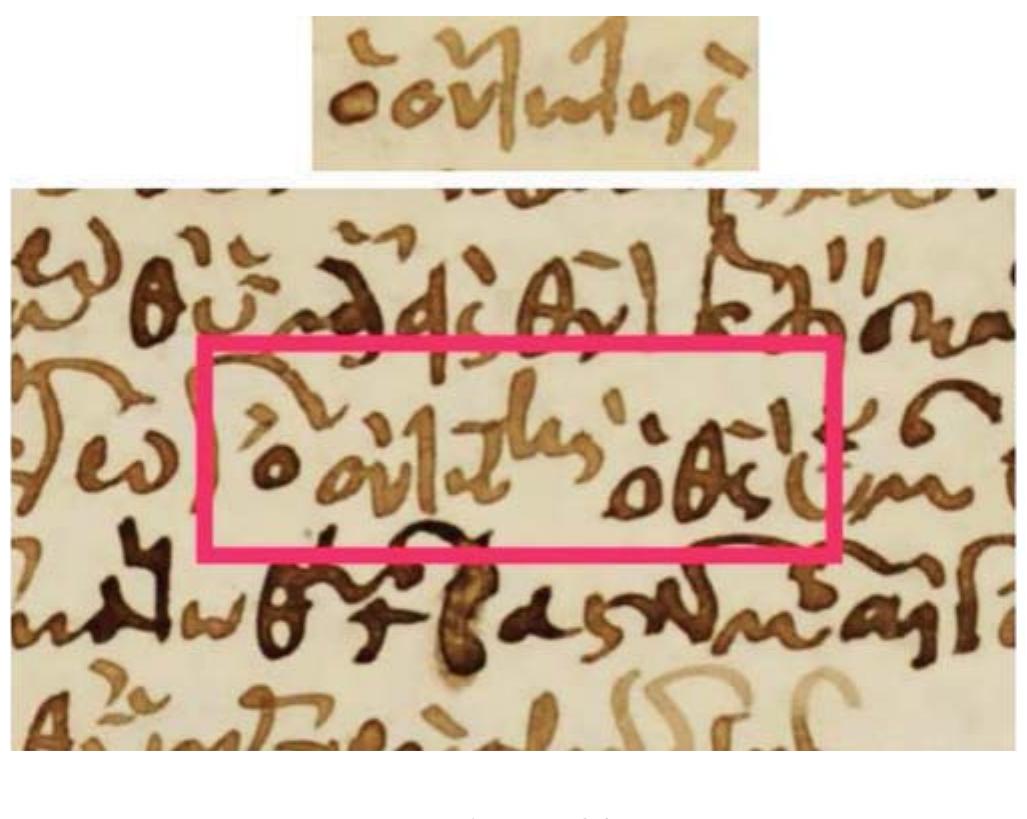
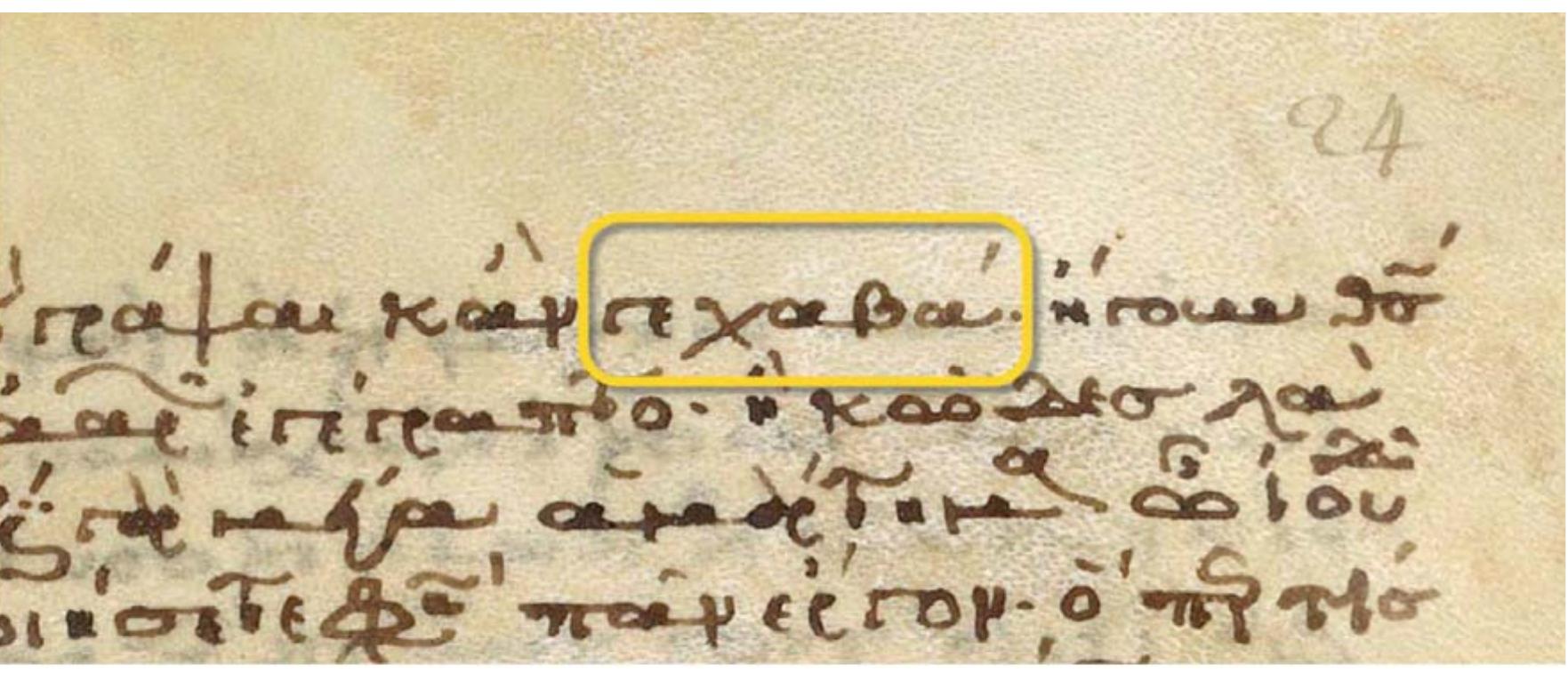
- Marsilio Ficino uses Hiehouahi in the Italian translation of his De Christiana religione (chapter "De Miracoli," 1474-75), HIEHOVAHI in his Latin De Christiana religione (chapter "De Miraculis," 1476), and hae ho hai is found in his Opera (1576, p. 1218). process of "Lordization," a special case of semantic translation appears in the Greek translation of selected Old Testament books in Codex Marcianus gr. 7 (=377, Graecus Venetus, Venice) of the 14 th century prepared by a Christian hand, probably of Jewish origin, well-versed in Hebrew and likely with the help of some Jewish scholars 69 . The Tetragrammaton is translated in every appearance by one of three terms : οντωτής, οντουργός or ουσιωτής and is usually followed by the nomen sacrum θc (see fig. 46). These terms roughly translate as "Maker of Being[s]" and "Maker of Existence," i.e. the Creator of everything. While there may have been some attempts at disguising the Tetragrammaton to prevent it from being accidentally or intentionally pronounced, the opposite also took place. In 2015, attention was drawn to a rare case of a Greek rendering of the Tetragrammaton. It regards a transliteration of the Tetragrammaton as γεχαβά /je.xa.ˈva/ that appears in Nikolaos of Otranto's Dialogue Against the Jews (ca. 1220 ; see fig. 47) 70 .
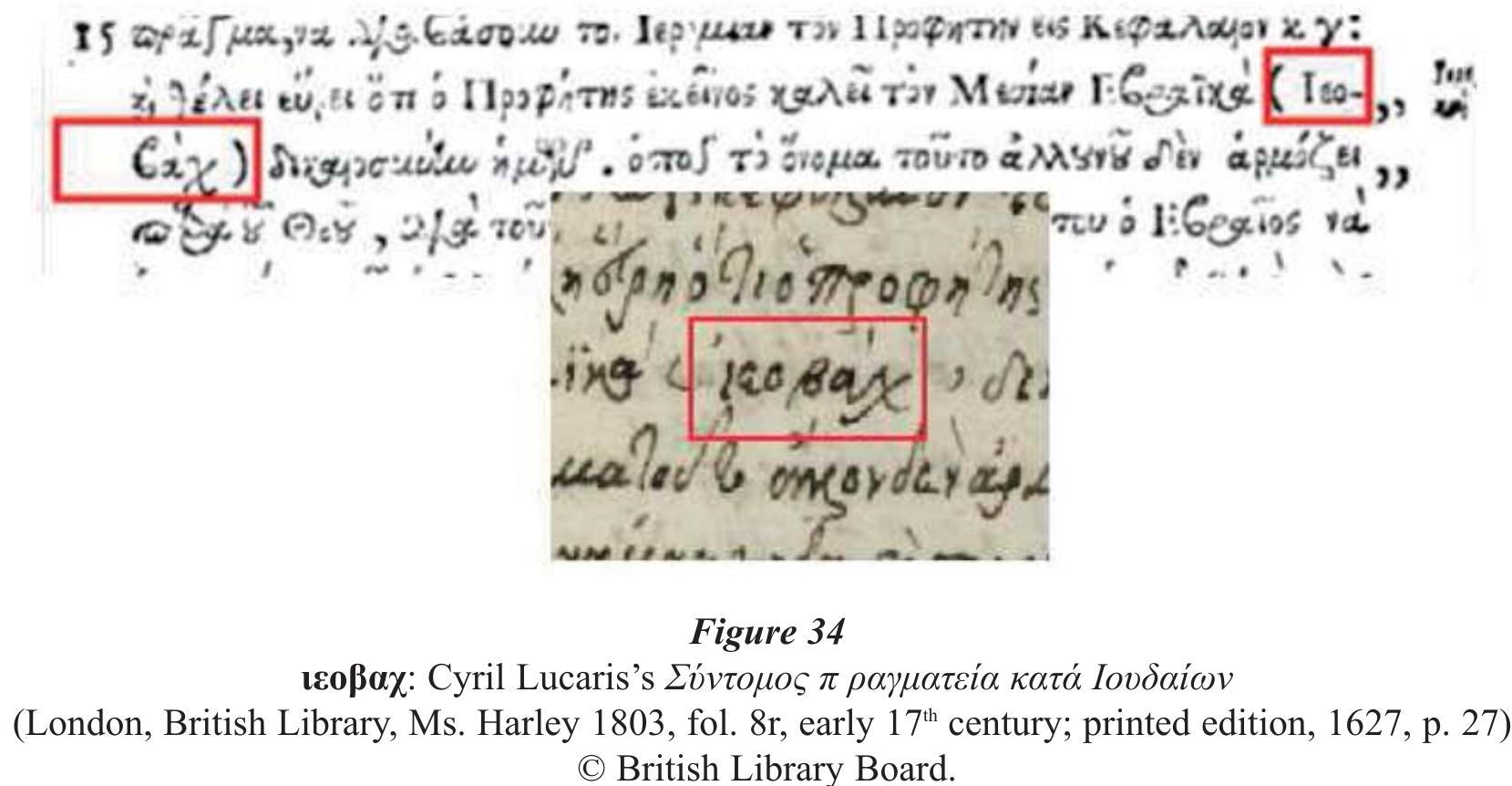
- In L.M. Hoffmann's editio princeps, he translates γεχαβα back into Hebrew as ּא גחב 71 . Hoffmann explains the meaningless Hebrew form gkhbʾ ּא גחב with a translation into Latin as "clandestine." He seems to assume an error for nekhbāʾ ָא ְבּ ֶח נ "hidden," based on the graphic similarity of gimel and nun. This would assume that the Greek abbot and author Nikolaos or his Jewish informant misread some unknown Hebrew source that called God the "Hidden One." Alternatively, this unknown Hebrew source itself could have had the gimel/nun scribal error. As already pointed out elsewhere, rather than a reference to God as "clandestine," γεχαβa should be understood as a transliteration of the Tetragrammaton 72 . Nikolaos's reference to γεχαβα appears in his criticism of the Jewish prohibition against writing on the Sabbath 73 : But to you was said "make holy the seventh [day]," which you finely and carefully make holy ; you abstain from every work for yourself, for instance, that you must not take hold 74 of a reed-pen even to write Yehava, that is "God Lord," which had ~ 101 ~CAHIERS ACCADEMIA 12
- 69 For the current discussion on the identity of the author of Graecus Venetus, see Nicholas DE LANGE, Japheth in the Tents of Shem, p. 157.
- Pavlos VASILEIADIS, Aspects of rendering, p. 69-70, 87. Nikolaos transliterates about 40 Hebrew words and forms, primarily from Biblical verses. For the identity of Nikolaos of Otranto, see Nicholas DE LANGE, Japheth in the Tents of Shem, p. 121-122.
- Lars Martin HOFFMANN, Der antijudische Dialog Kata Iudaion des Nikolaos-Nektarios von Otranto, Universitaẗsbibliothek Mainz, Mainz 2015, p. 44. Nikolaos's text survives in a single manuscript : Paris, Bibliothèque nationale de France, Ms. grec. 1255 (henceforth : Ms. Paris).
- Michael CHRONZ, Abt Nektarios Casole (Nikolaos aus Otranto), disputation gegen die Juden : ktitische ausgabe, PhD dissertation ; National and Kapodistrian University of Athens 2008, p. 65 (Gr.). Although a minuscule manuscript, Chronz apparently recognized γεχαβα as a proper noun and capitalized the gamma (fol. 24r).
- m. Sabb. 7:2; 12:3. 74 The phrase «οὐ λήψῃ» may have the literal sense here of not taking hold of the reed-pen on the Sabbath for the purpose of writing. This was forbidden not only in rabbinical law, but also in other Jewish traditions, see Yehudah SCHIFFMAN, Law, Custom and Messianism in the Dead Sea Sect, Zalman Shazar Center for the History of Israel, Jerusalem, 1993, p. 123-124 (Heb.). been written on the plate of Aaron, actually, kodes la adonai, that is "holy of the Lord" ; is this a great sin, O Jew, or not ? 75 "holy" by prohibiting, not only its writing on the Sabbath, but its pronunciation at all times. Hoffmann's misreading of gekhbā ּא גחב was presumably due to Nikolaos's use of Greek gamma as a transliteration of Hebrew yod. However, this is commonplace in Nikolaos's transliteration of Hebrew. For example, λογιὶχ χιγὲ for lōʾ yihye ֶה ְי ִה י ֹא ל in Exod 20:3 77 , βιγιό, μέρους for wayyōʾmǝrû ּ ְרו ּאמ ֹ ַי ו in Exod 32:8 78 , and γισσακένι for yishshāqēnî ִי ֵנ ּק ׁ ָ ִש י in Cant 1:2 79 . All of these transliterations apparently reflect the pronunciation of gamma as a voiced palatal fricative /ʝ/.
- Ms. Paris, fol. 24r.
- Nikolaos's transcription breaks the word laʾdōnāy ָי ֹנ ַאד ל into two words, separating the inseparable preposition. The expected transliteration for standard Tiberian Hebrew would be λαδωναῒ reflecting the silent aleph following the preposition lamed (GESENIUS §102m). This is in accordance with the rule ִיס ְנ ַכ מ ֵב ָל ְכ ו ִיא ֹצ מו ֶה ,משׁ "Moses brings out, and Caleb brings in," i.e. the aleph of Adonai is audible when preceded by the inseparable mem, shin, and he, but silent after vav, kaph, lamed, and bet. Nikolaos's transliteration may reflect the non-standard reading laʾădōnāy ָי ֹנ ֲד ַא ל found in some so-called Palestinian- Tiberian pointed manuscripts, such as Codex Reuchlinianus, fol. 199v (Isa 22:5) and Parma, Biblioteca Palatina, Cod. Parm. 1849, fol. 184r (Gen 18:30). The provenance of the latter is 13 th -14 th century Italy. Nikolaos's transliteration may disprove the suggestion that this orthography did not reflect pronunciation, see Ilan ELDAR, The Hebrew Language Tradition in Medieval Ashkenaz (ca. 950-1350
- C.E.), 2 vols. Magnes, Jerusalem 1978, Vol. 1 p. 69 (Heb.) ; cf. Nehemya ALONY, Which is "Our Pointing" in "Machzor Vitry ?, in : Studies in Medieval Philology and Literature, 6 vols. Ben Zvi, Jerusalem, 1986-1992, Vol. 2, p. 529-539 (Heb.).
- Ms. Paris, fol. 2v ; Chronz ed., p. 5; Hoffmann ed. p. 6. In this instance, Hoffmann correctly recognized gamma as representing Hebrew yod.
- Ms. Paris, fol. 42r ; Chronz ed., p. 116; Hoffmann ed., p. 78. Hoffmann back-translated this into Hebrew as ּ ,בקעו taking gamma as representing Hebrew qoph, rather than yod. However, this is part of Nikolaos's quotation of Exod 32:8 and the imperative masculine plural biqʿû ּ ְעו ּק ִ ב (qal) or baqqǝʿû ּ ּעו ְ ּק ַ ב (piel), "split!" has no coherent meaning in this context.
- Ms. Paris, fol. 89v ; Chronz ed., p. 245; Hoffmann ed., p. 164. In this instance, Hoffmann recognized gamma as a transliteration of yod.
- Ben Zvi Institute, Ms. 3519 ; Shifra SZNOL, "A Judeo-Greek Translation of Haftarah Wāʾetḥannan for the 'Sabbath of Naḥămû' (Isa 40:1-26)," Textus 20 (2001), p. 9-32 (Heb.).
- The translation incorporates interpretations of Rabbi David Kimḥi (13 th century) and contains a single word in Turkish, which may point to the final redaction after the Ottoman conquest; see Sznol, A Judeo-Greek Translation, p. 9-11.
- Ben Zvi Institute, Ms. 3519, fol. 2v, line 12 (v. 25); fol. 2r, line 6 (v. 16). Yod is also used to represent gamma in the Judeo-Greek haftarah of Naḥămû in the following instances: γιὰ ἰσάδι ִי ׁד ָ יש (fol. 1r, line 12 [v.
- γιὰ λάκκα ָא ַק ַל י (fol. 1r, line 12 [v. 4]), γιὰ να ζυγώσουν ּן ֹסו ִיגו ַז ַנ י (fol. 2r, line 6 [v. 16]), γιὰ χώρισμα ָא ְמ ִז ֹר ַחו י (fol. 2r, line 14 [v. 20]), γιὰ νὰ ὀρδινιάσει ִי ַס ְי ִנ ְד ֹר ַאו ַנ י (fol. 2r, line 16 [v. 20]), γιὰ μὴ μπορεῖ ֹרי ּו ְב מ ַא י bis (fol. 2r, line 17 [v. 21]) γιὰ νὰ καθίζει ִי ִיס ָת ַק ַנ י (fol. 2v, line 3 [v. 22]), τῆς γῆς ִיס ִי ְא ִס ט (fol. 2v, line 5 [v. 23]), εἰς τὴν γὴν ִין ִי א ִין ְט ִס א (fol. 2v, line 8 [v. 24]).
- Cambridge, University Library, T-S Misc.28.74, fol. 1v, lines 5 (Eccl 2:19), 9 (Eccl 2:29). The fragment was transcribed into Greek characters by David S. BLONDHEIM, Échos du judéo-hellénisme, étude sur l'influence de la Septante et d'Aquila sur les versions néo-grecques des juifs, reprinted in Les parlers judéo- romans et la Vetus Latina, Librairie Ancienne, Édouard Champion Paris 1925, p. 170; on the date, see p. 158-159 ; cf. Nicholas DE LANGE, Two Genizah Fragments in Hebrew and Greek, in : Interpreting the Hebrew Bible: Essays in Honour of Erwin I.J. Rosenthal, eds. J. A. EMERTON, Stefan C. REIF (Cambridge : Cambridge University Press, 1982), p. 61-83.
- Zeev BEN-HAYYIM, Do the Samaritans Pronounce the Tetragrammaton According to Its Letters?, « Eretz Israel », III, 1954, p. 152 (Heb.).
- « It is possible that [Christians] initially had recourse to Jewish masters or converts willing to share their knowledge… From at least the early 13th century, however, there was enough interest and competence among Christian scholars of some circles, that some were able to study Hebrew on their own, without the help of Jewish masters » (Judith OLSZOWY-SCHLANGER, Christian Hebraists : Medieval Period, in : Encyclopedia of Hebrew Language and Linguistics, ed. Geoffrey KHAN. Consulted online on 4 Aug. 2017 <http://dx.doi.org/1o.1163/2212-4241_ehll_EHLL_COM_ ooooo634>. First published online : 2013).
- Nikolaos's incorrect division of words include : έθά'θ σαμάϊν (fol. 2v) for ִם ַי ּמ ׁ ָ ַש ה ֵת ,א λογιίχ χιγὲ (fol. 2v)
- for ֶה ְי ִה י ֹא ,ל βιγιό, μέρους (fol. 42r, the comma is in the manuscript !) for ּ ְרו ּאמ ֹ ַי ,ו and μίν νεχικὸθ for ֹת ׁיקו ִ ּש ְ ִנ .מ 87 ἐλωαάχχα for ָ ֶיך ֹה ֱל א with double alpha for segol, even though segol is usually transliterated by epsilon, e.g. λογιίχ χιγὲ (fol. 2v), κῶδες (fol. 24r), and ἔλλε (fol. 42r) ; βιγιό, μερούς (fol. 42r) for ּ ְרו ּמ ֹ ַיא ו with iota instead of alpha iota for patakh yod, but cf. ἀδωναί (fol. 24r) and ἀδωναῒ (fol. 43r).
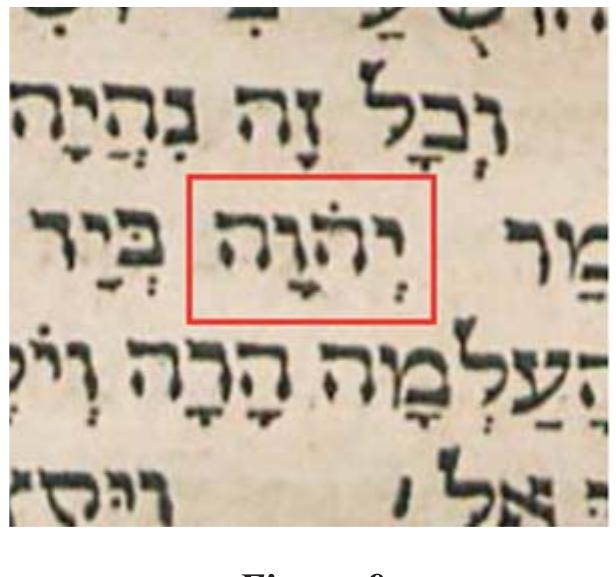
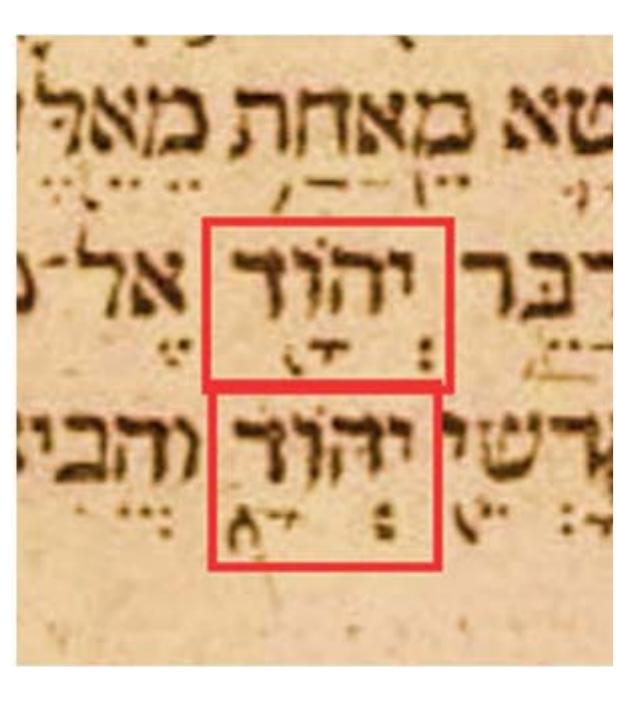
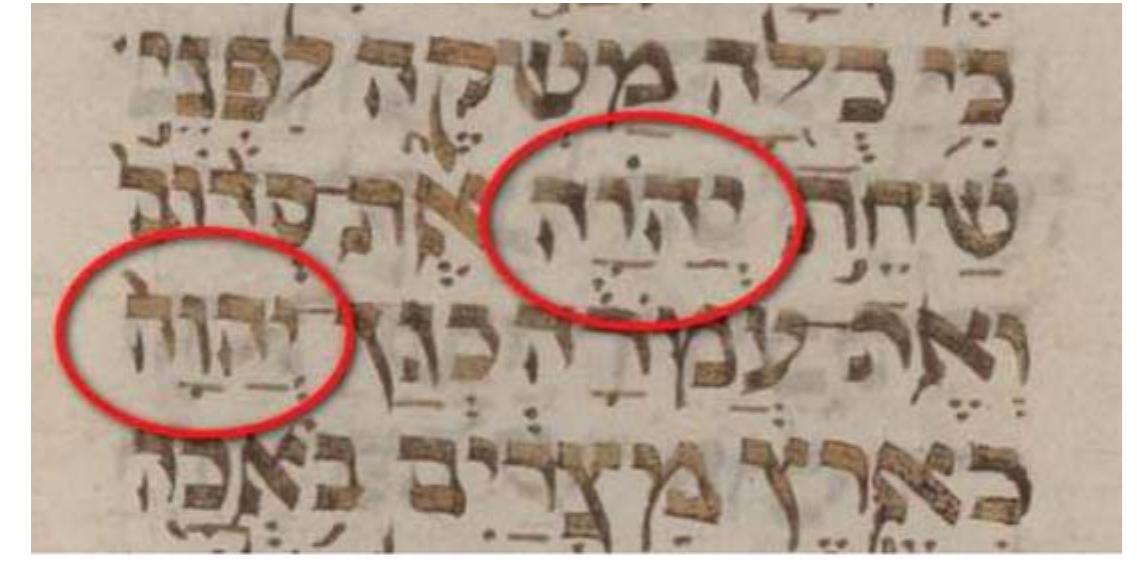
- Israel YEIVIN identified eight manuscripts with the vocalization Yǝhōwâ ָה ֹו ְה י (HaKeter, Hebrew University Bible Project, Jerusalem 1968, p. 71-72).
- Nikolaos transliterates holam with omega, e.g. ἐλωὶμ (fol. 2v ; Hoffmann ed., p. 6), ἀδωνάι (ibid.), κῶδες (fol. 24r, Hoffmann ed., p. 44); and with omicron, e.g. ἀνοχὶ (fol. 2v, Hoffman ed., p. 6), βιγιό, μέρους (fol. 42r; Hoffmann ed., p. 78), and νεχικὸθ (fol. 89v; Hoffmann ed., p. 164).
- The fragment has two other instances of the Tetragrammaton : Gen 2:15 where the vowels are illegible and Gen 2:18 which has the common Yǝhwâ ָה ְהו .י
- Israel YEIVIN, HaKeter, p. 71-72.
- Yossi PERETZ, Unpunctuated Biblical Passages in Masoretic Codices of the Middle Ages, « Studies in Bible and Exegesis », VII, 2015, p. 184 (Heb.). For the Tetragrammaton to be read as Yǝhwâ would have required a silent shewa under the first he, see Gesenius §10i.
FAQs
AI
What explains the shift from Tetragrammaton to κυριος in ancient texts?
The consensus has evolved to indicate that the Tetragrammaton was actively replaced by κυριος beginning in the second century CE, driven by evolving linguistic and theological contexts.
How did translators handle the Tetragrammaton in early Christian texts?
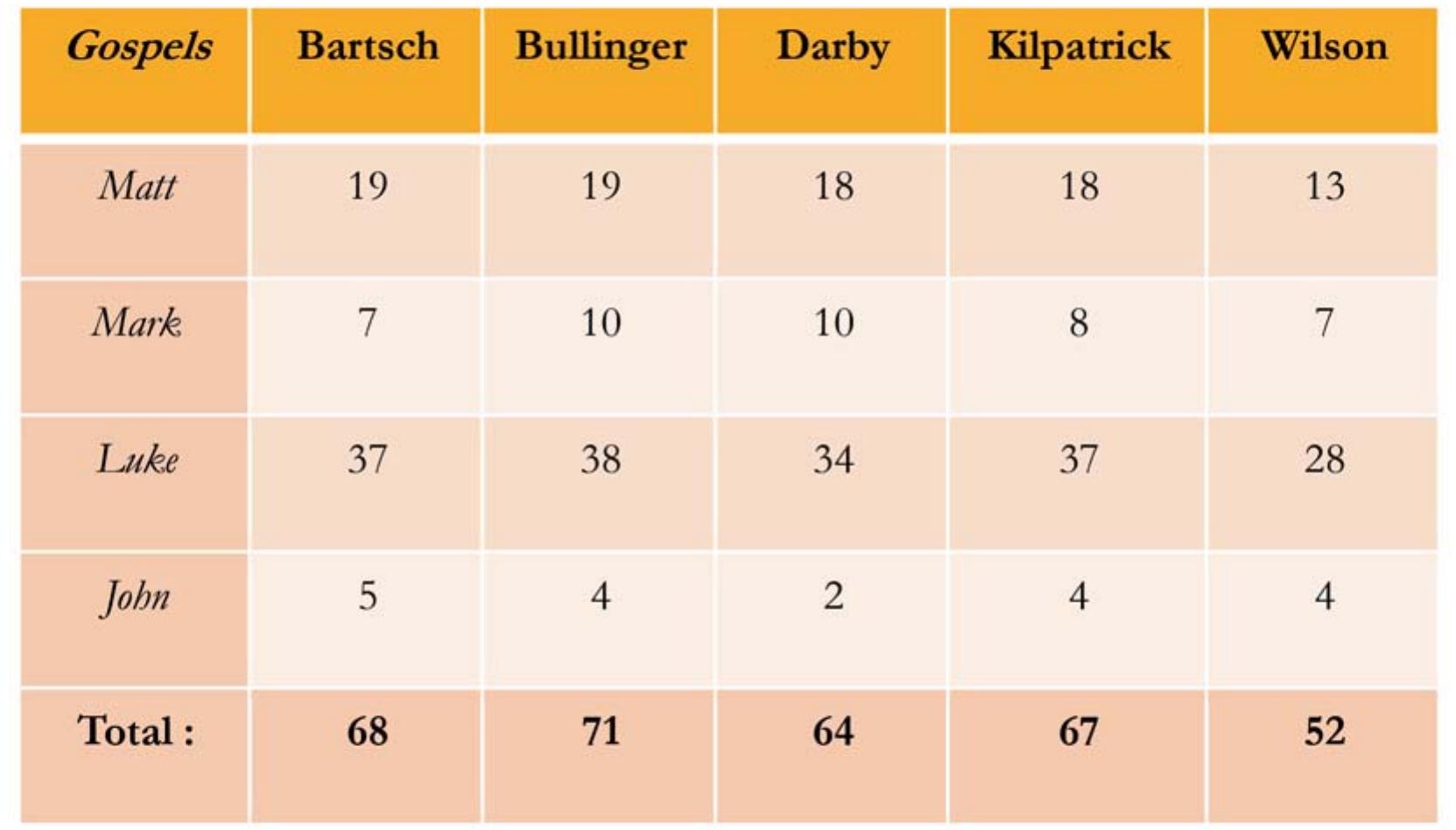
Translators often used the epithet κύριος instead of the Tetragrammaton to denote God, as evidenced by an average of 64 instances identified in the Gospels.
When did the systematic replacement of Tetragrammaton occur in biblical manuscripts?
The systematic replacement of the Tetragrammaton with the nomina sacra is posited to have occurred in the second half of the second century CE.
What unique rendering of the Tetragrammaton did Nikolaos of Otranto provide?
Nikolaos of Otranto rendered the Tetragrammaton as γεχαβα in the early 13th century, a unique form in Greek literature.
Why was the Tetragrammaton largely avoided in medieval Christian texts?
Jews historically refrained from pronouncing the Tetragrammaton, and this convention carried over into Christian translations during the medieval period.
Pavlos D Vasileiadis
Nehemia Gordon


![NENT ANE EEE EE OO ———— eT rn Terre Attempting to distinguish Adonai (“Lord”) from the Tera, the former is rendered by transcribing it in Greek as adwvai and the latter by using the nomen sacrum xc. Ezek 20:27 [MT: 717? 7178] in codex Vatican, Barb.gr.549 (=Rahlfs 86, fol. 266r, 9"—10" century CE). © 2021 Biblioteca Apostolica Vaticana.](https://figures.academia-assets.com/68680242/figure_003.jpg)
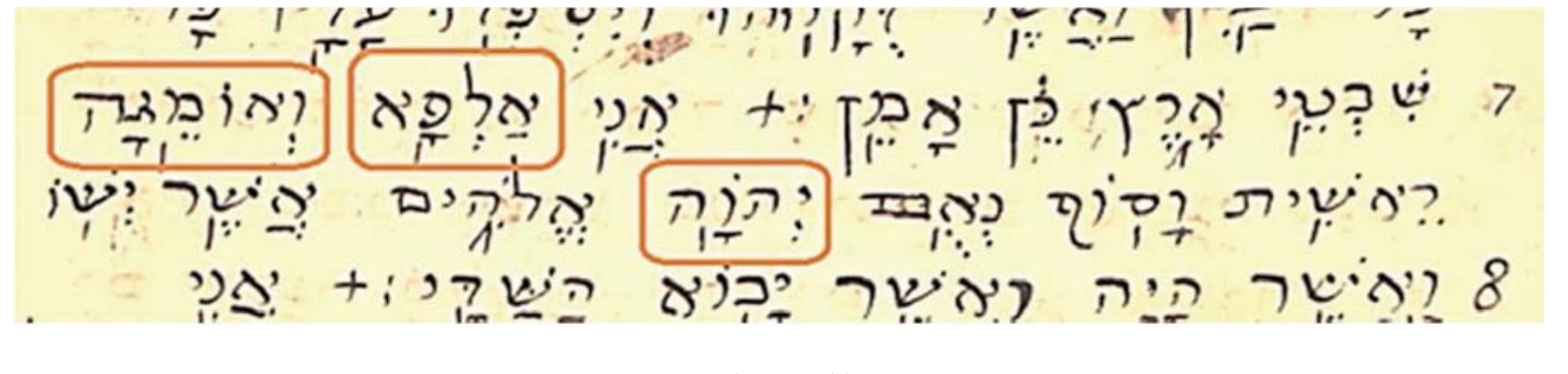
![Figure 3 et © pee mim° (YHWH): The Hebrew Tetragrammaton appearing in all five columns of the Hexapla. The first column with the Hebrew text was not included in this copy and the fourth column includes the LXX. Ps 28:6, 7 [LXX 27:6, 7] in the palimpsest Milan, Biblioteca Ambrosiana, Ms. O 39 sup. (Giovanni MERCATI, Psalterii hexapli reliquiae, Vol. 1 Codex rescriptus Bybliothecae Ambrosianae O 39 SVP, Roma 1958, p. 10-11). © 2021 Biblioteca Apostolica Vaticana.](https://figures.academia-assets.com/68680242/figure_004.jpg)