



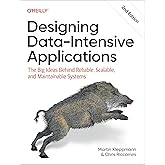
















Designing Data-Intensive Applications really exceeded my expectations. Even if you are experienced in this area this book will re-enforce things you know (or sort of know) and bring to light new ways of thinking about solving distributed systems and data problems. It will give you a solid understanding of how to choose the right tech for different use cases.
The book really pulls you in with an intro that is more high level, but mentions problems and solutions that really anyone who has worked on these types of applications have either encountered or heard mention of. The promise it makes is to take these issues such as scalability, maintainability and durability and explain how to decide on the right solutions to these issues for the problems you are solving. It does an amazing job of that throughout the book.
This book covers a lot, but at the same time it knows exactly when to go deep on a subject. Right when it seems like it may be going too deep on things like how different types of databases are implemented (SSTables, B-trees, etc.) or on comparing different consensus algorithms, it is quick to point out how and why those things are important to practical real-world problems and how understanding those things is actually vital to the success of a system.
Along those same lines it is excellent at circling back to concepts introduced at prior points in the book. For example the book goes into how log based storage is used for some databases as their core way of storing data and for durability in other cases. Later in the book when getting into different message/eventing systems such as Kafka and ActiveMQ things swing back to how these systems utilize log based storage in similar ways. Even if you have prior knowledge or even have worked with these technologies, how and why they work and the pros and cons of each become crystal clear and really solidified. Same can be said of it's great explanations of things like ZooKeeper and why specific solutions like Kafka make use of it.
This book is also amazing at shedding light on the fact that so little of what is out there is totally new, it attempts to go back as far as it can at times on where a certain technology's ideas originated (back to the 1800s at some points!). Bringing in this history really gives a lot of context around the original problems that were being solved, which in turn helps understanding pros and cons. One example is the way it goes through the history of batch processing systems and HDFS. The author starts with MapReduce and relating it to tech that was developed decades before. This really clarifies how we got from batch processing systems on proprietary hardware to things like MapReduce on commodity hardware thanks in part to HDFS, eventually to stream based processing. It also does great at explaining the pros and cons of each and when one might choose one technology over the other.
That's really the theme of this book, teaching the reader how to compare and contrast different technologies for solving distributed systems and data problems. It teaches you to read between the lines on how certain technologies work so that you can identify the pros and cons early and without needing them to be spelled out by the authors of those technologies. When thinking about databases it teaches you to really consider the durability/scalability model and how things are no where near black and white between "consistent" vs "eventually consistent", these is a ton of nuance there and it goes deep on things like single vs multi leader vs leaderless, linearizability, total order broadcast, and different consensus algorithms.
I could go on forever about this book. To name a few other things it touches on to get a good idea of the breadth here: networking (and networking faults), OLAP, OLTP, 2 phase locking, graph databases, 2 phase commit, data encoding, general fault tolerance, compatibility, message passing, everything I mentioned above, and the list goes on and on and on. I recommend anyone who does any kind of work with these systems takes the time to read this book. All 600ish pages are worth reading, and it's presented in an excellent, engaging way with real world practical examples for everything.


Download the free Kindle app and start reading Kindle books instantly on your smartphone, tablet, or computer - no Kindle device required.
Read instantly on your browser with Kindle for Web.
Using your mobile phone camera - scan the code below and download the Kindle app.

Follow the author
Get new release updates & improved recommendations
Something went wrong. Please try your request again later.
There is a newer edition of this item:

Designing Data-Intensive Applications: The Big Ideas Behind Reliable, Scalable, and Maintainable Systems
$57.39
(6)
This title will be released on March 24, 2026.
$57.39
(6)
This title will be released on March 24, 2026.
Frequently bought together

This item: Designing Data-Intensive Applications: The Big Ideas Behind Reliable, Scalable, and Maintainable Systems
$59.99
Get it as soon as Wednesday, Mar 25
In Stock
+
$39.99
Get it as soon as Wednesday, Mar 25
In Stock
+
$40.00
Get it as soon as Wednesday, Mar 25
In Stock
Total price: $00
To see our price, add these items to your cart.
Choose items to buy together.
What other items do customers buy after viewing this item?
Page 1 of 1 Start over
- Designing Data-Intensive Applications: The Big Ideas Behind Reliable, Scalable, and Maintainable SystemsPaperbackFREE Shipping by AmazonThis title will be released on March 24, 2026.
- System Design Interview – An insider's guidePaperbackFREE Shipping by AmazonGet it as soon as Wednesday, Mar 25
- System Design Interview – An Insider's Guide: Volume 2PaperbackFREE Shipping by AmazonGet it as soon as Wednesday, Mar 25
- AI Engineering: Building Applications with Foundation ModelsPaperbackFREE Shipping by AmazonGet it as soon as Wednesday, Mar 25
- A Philosophy of Software Design, 2nd EditionPaperbackFREE Shipping on orders over $35 shipped by AmazonGet it as soon as Wednesday, Mar 25
- Fundamentals of Data Engineering: Plan and Build Robust Data SystemsPaperbackFREE Shipping by AmazonGet it as soon as Wednesday, Mar 25
From the brand

-


Databases, data science & more
-


Data Science
-


Data Visualization
-

Databases
-

Streaming
-

Sharing the knowledge of experts
O'Reilly's mission is to change the world by sharing the knowledge of innovators. For over 40 years, we've inspired companies and individuals to do new things (and do them better) by providing the skills and understanding that are necessary for success.
Our customers are hungry to build the innovations that propel the world forward. And we help them do just that.
From the Publisher
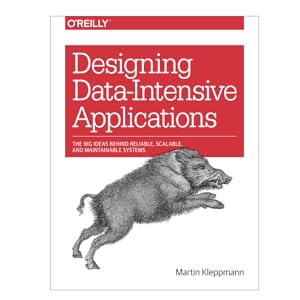
Who Should Read This Book?
If you develop applications that have some kind of server/backend for storing or processing data, and your applications use the internet (e.g., web applications, mobile apps, or internet-connected sensors), then this book is for you.
This book is for software engineers, software architects, and technical managers who love to code. It is especially relevant if you need to make decisions about the architecture of the systems you work on—for example, if you need to choose tools for solving a given problem and figure out how best to apply them. But even if you have no choice over your tools, this book will help you better understand their strengths and weaknesses.
You should have some experience building web-based applications or network services, and you should be familiar with relational databases and SQL. Any non-relational databases and other data-related tools you know are nice, but not required.
A general understanding of common network protocols like TCP and HTTP is helpful. Your choice of programming language or framework makes no difference for this book.
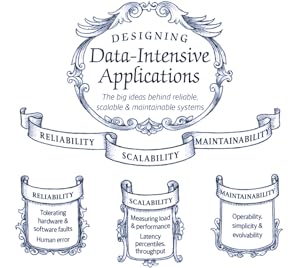
Sometimes, when discussing scalable data systems, people make comments along the lines of, 'You’re not Google or Amazon. Stop worrying about scale and just use a relational database'. There is truth in that statement: building for scale that you don’t need is wasted effort and may lock you into an inflexible design. In effect, it is a form of premature optimization. However, it’s also important to choose the right tool for the job, and different technologies each have their own strengths and weaknesses. As we shall see, relational databases are important but not the final word on dealing with data.
Scope of This Book
This book does not attempt to give detailed instructions on how to install or use specific software packages or APIs, since there is already plenty of documentation for those things. Instead we discuss the various principles and trade-offs that are fundamental to data systems, and we explore the different design decisions taken by different products.
We look primarily at the architecture of data systems and the ways they are integrated into data-intensive applications. This book doesn’t have space to cover deployment, operations, security, management, and other areas—those are complex and important topics, and we wouldn’t do them justice by making them superficial side notes in this book. They deserve books of their own.
Product Videos

About the author

Customers say
Customers find this book provides a thorough theoretical overview of data-intensive systems, with detailed explanations of modern techniques and real-world big data architecture. Moreover, the book is well-structured, serves as an incredible resource for software engineers, and helps prepare for system design interviews. Customers appreciate its clarity, with one noting how the author makes complex concepts simple, and its readability, with one mentioning it's readable even on complex topics.
AI Generated from the text of customer reviews
Select to learn more
122 customers mention insight, 120 positive, 2 negative
...I wish I had started earlier. This book is very comprehensive and informative. The author makes complex concepts look simple....Read more
My engineering manger recommended me this book, it is very insightful I recommend everybody to read itRead more
InsightfulRead more
...A great reference and thought-provoker.Read more
89 customers mention readability, 83 positive, 6 negative
...whip out the big guns right off the bat - this is probably the best technical book that I've ever read and it's very likely I'll be returning to it...Read more
...This is one of the best technical books that I've encountered, and I go back to it again and again....Read more
The book is very readable. The author has done an excellent job of unfolding the complexity layer by layer with great real-life examples....Read more
...This book is a great resource, it’s laid out well and easy to read. The last section is weaker than the rest, but it’s still worth buying.Read more
73 customers mention depth, 67 positive, 6 negative
A great overview of what’s going on in system design today....Read more
An exceptional book. Comprehensive, unusually coherent and readable even on complex topics. In ~500 pages there I only caught ~1-2 editing errors....Read more
Very detailed but also handles everything from a high level perspective which makes it easy for a developer to implement....Read more
Painstakingly researched and well documented book. One stop for lot of innovation and research in current distributed data.Read more
46 customers mention use, 45 positive, 1 negative
must-have for software engineersRead more
This is a very well written and practical book covering data intensive application as the title claims....Read more
I agree with other similar reviews. This book is a great resource, it’s laid out well and easy to read....Read more
Very good book with narratives and examples. Cannot stop.Read more
39 customers mention design, 37 positive, 2 negative
...This book, Designing Data-Intensive Applications, is an eye-opener for anyone who has ever wondered about the internals of these services....Read more
...Book is nicely organized with lots of references and nice definitions.Read more
This book dives deep into its subject with clear structure and thoughtful explanations....Read more
I like this book. It has a lot of well structured information. It filled gaps in my knowledge.Read more
33 customers mention clarity, 29 positive, 4 negative
Ideas are elaborately explained giving real world examples. Concepts are clear and intriguing. Helped me in cracking systems design interviewsRead more
...It will give you a solid understanding of how to choose the right tech for different use cases....Read more
...This book helped me in getting a clear understanding of every topic it has covered.Read more
Really informative, and not too technical....Read more
32 customers mention writing style, 31 positive, 1 negative
My favorite technical book currently. Very well written and talk about a lots of interesting things that I encounter on daily basis.Read more
...recapping historical designs in the first half, but it is so well written with useable information, that it is an enjoyable read from cover to cover...Read more
...The replacement copy is of much better quality. Such a well-written and well-researched book does not deserve to be printed this way....Read more
The book content is good and very well-written. However, the quality of the paperback book is bad. The pages keep falling out of the binding...Read more
23 customers mention book content, 23 positive, 0 negative
The book content is good and very well-written. However, the quality of the paperback book is bad. The pages keep falling out of the binding...Read more
Excellent content, but paper and ink quality are terrible - at least for my copy....Read more
The content of the book is good. But the way the book was packaged was only satisfactory. The outer cover in which it was wrapped was torn.Read more
Pretty interesting book, lots of useful material, would’ve been better if more details were provided on some topicsRead more

Designing Data-Intensive Applications
Fantastic book for Software Engineers or Designers who want to learn in deep detail about crucial subjects related to critical mission applications. Instead of only add Spring Annotations for Transactional isolation and propagation, now I know under the hood a lot of these and other related aspects which we need to consider the right tool for each scenario.
Top reviews from the United States
There was a problem filtering reviews. Please reload the page.
- Reviewed in the United States on June 3, 2025
Top reviews from other countries
- Nikola ZifraReviewed in the United Arab Emirates on September 18, 2024
Lacks details
Format: PaperbackVerified Purchase - Joachim O.Reviewed in the United Kingdom on November 17, 2024
Great in-depth analysis of data architectures
- VladyslavReviewed in Poland on February 7, 2026
Great book if you want to get into systems design
Format: PaperbackVerified Purchase - AndreaReviewed in Italy on June 9, 2022
Uno dei più bei libri tecnici che abbia mai letto
Format: PaperbackVerified Purchase - Amazon CustomerReviewed in Singapore on January 7, 2026
Insightful read on data management
Format: PaperbackVerified Purchase The book provides solid insights into managing data, particularly at scale. It helped clarify concepts I'd been grappling with and offered practical perspectives that go beyond surface-level explanations. Would recommend for anyone looking to deepen their understanding of large-scale data systems.Amazon CustomerInsightful read on data management
Reviewed in Singapore on January 7, 2026
Images in this review


