
2026 K-12 EdTech Pulse
What Education Leaders Are Thinking, Planning, and Prioritizing Now
Informed by feedback from over 1,300 K–12 educators and leaders, the EdTech Pulse reveals how districts are aligning systems, strategies, and investments to meet today’s most pressing educational challenges.
Introduction
Over the past five years, K-12 educators and administrators have been stuck on an ever-escalating treadmill of external and internal pressures. Though the pandemic seems to be in the rearview mirror, the lasting impact is still being felt in our schools. As educators work to address the increasingly diverse academic needs of all students, they must also consider students who missed foundational skill development during the pandemic.
Today, schools continue to struggle with recruiting and retaining high-quality staff, notably classroom educators. This situation is exacerbated by significant increases in teachers’ workload that far exceed instruction and now include meeting student needs for social and emotional well-being. Districts are reporting decreases in enrollment, and they’re uncertain how to manage the ripple effect these decreases have on school finances. Moreover, effectively engaging students’ families and caregivers has become harder than ever.
Finally, there are many simmering questions about the long-tail impact of artificial intelligence (Al) tools and agents on K-12 education.

With advancements in AI and the availability of more tools, it is going to be key to stay focused on instructional best practices. . . We need to build capacity in all our stakeholders so that they are able to select those tools that are best suited for the goal they are attempting to achieve.
Author and education thought leader Michael Fullan calls change a double-edged sword and advises that “when things are unsettled, we can find new ways to move ahead and to create breakthroughs not possible in stagnant societies.” 1
Rather than falling into paralysis, school and district leaders are increasingly heeding Fullan’s advice to seek new opportunities for positive impact. For example, many leaders are looking to leverage technology and data to better meet the evolving, complex needs of their students, staff, and local communities.
Core to technology-forward efforts, however, must be a renewed commitment to classroom instructional best practices and the pedagogy of sound teaching, as noted by Veronica Alvidrez Alvarez, Director of Innovative Learning, from Ysleta Independent School District. From this renewed commitment will emerge an opportunity for increased capacity in all stakeholders to improve K-12 teaching and learning.
Jean-Claude Brizard, Chief Executive Officer of Digital Promise, takes this concept one step further to include a renewed commitment to district operations and organization, highlighting the critical and strategic role technology can play.

It is inherent on systems to create coherence within their structures that cascade from central office to the class room level to be able to see real results from these improved opportunities. ... At the end of the day, it is the educators who can transform education. Technology can play an important role, but the key is to make sure that technology is used effectively to support that transformation, and to always be focused on the coherence within the overall system.
This year’s K-12 EdTech Pulse (formerly the Education Focus Report) examines the need for a coherent systems approach to address the challenges facing K-12 education today—and to avoid the trap of fragmentation that can limit the potential effectiveness of technology solutions to those challenges. From the classroom to the boardroom, there are new opportunities to address student needs and create a coherent vision for teaching and learning. Using authentic feedback from classroom educators, school building administrators, and district administrators, we explore how technology and data resources can:
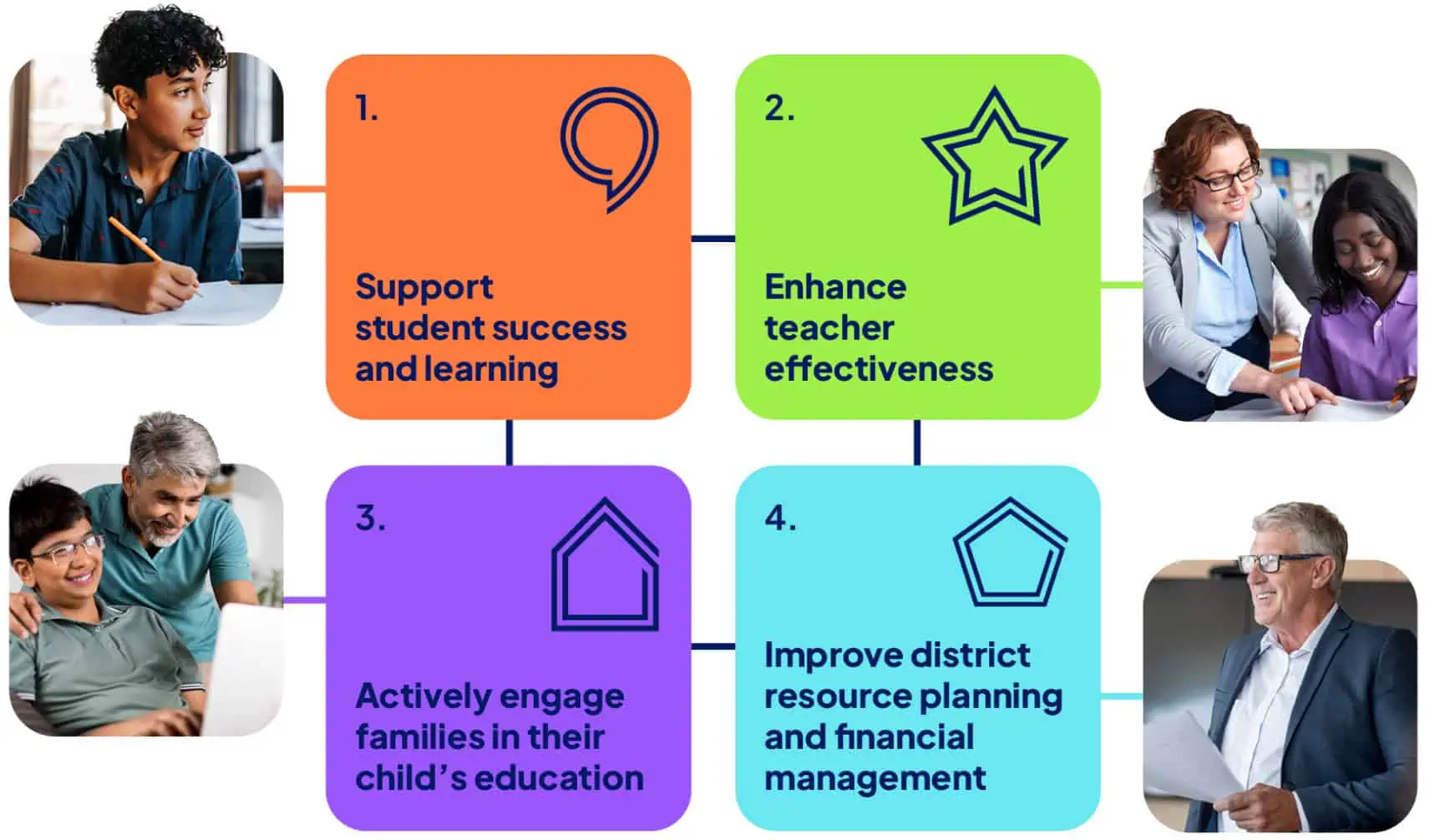
This report is a collaboration between PowerSchool and the national education nonprofit organization, Project Tomorrow®. On behalf of PowerSchool, Project Tomorrow designed a mixed-methods data collection and analysis process to uncover insights about the state of K-12 education and technology usage from classroom educators, school building administrators, and district administrators.
Critical Challenges
The 2026 K-12 EdTech Pulse is grounded in a deep understanding of the challenges facing K-12 schools and districts today. Even when districts and school organizations have clear priorities and strategic plans, challenges emerge.
Quite often, districts struggle to find adequate and sustainable solutions to address these challenges. Appreciating and acknowledging the inherent difficulties of these challenges is a first step to identifying potential solutions or resources to support district goals.
Using the unique insights and perspectives of classroom educators, building administrators, and district administrators, we have identified five critical challenges facing leaders today. The top challenges center on teacher workload and staffing, student and family engagement, and finance management (Table 1).
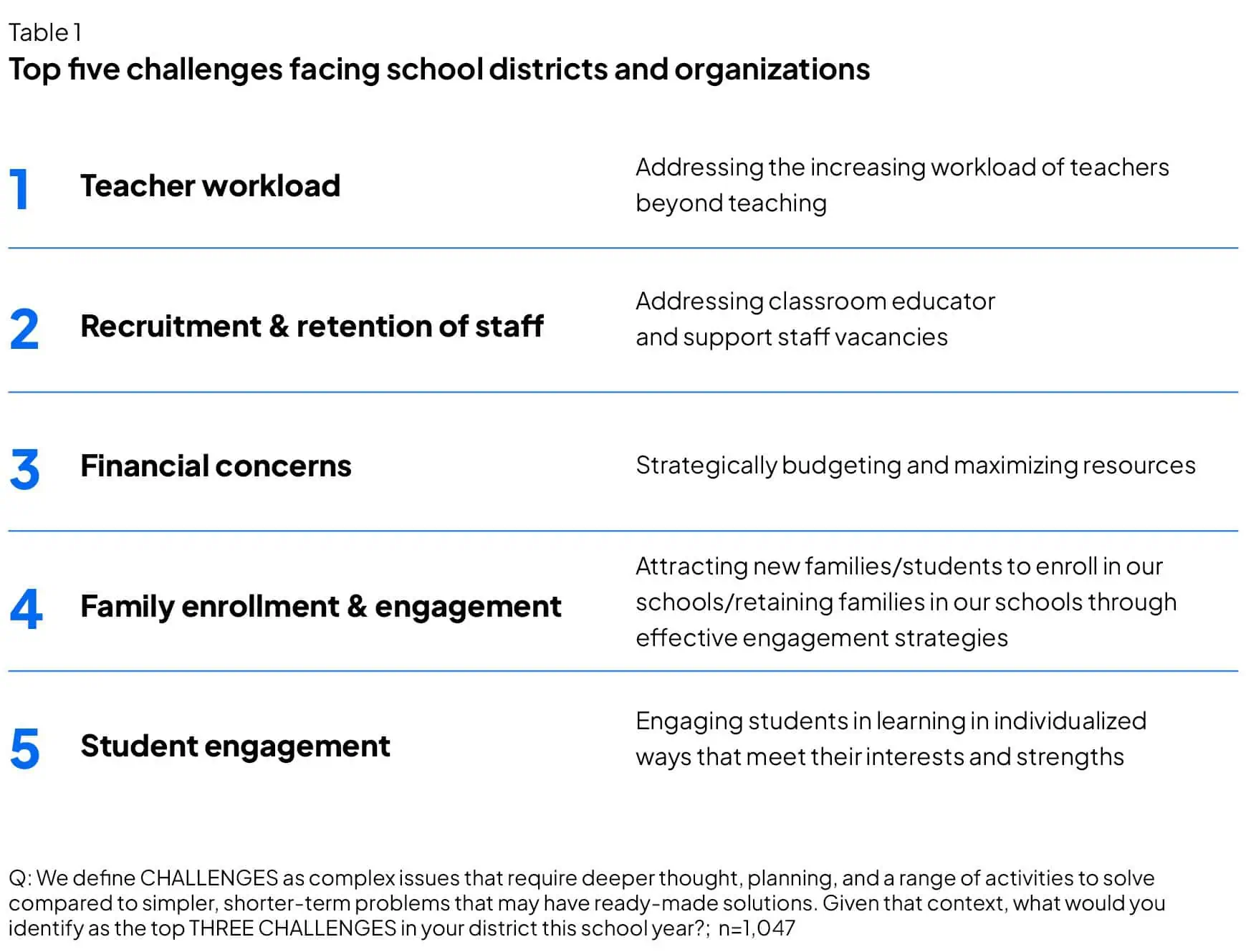
As in the previous reports, addressing educator and staff vacancies continues to be a top concern in districts. The challenge of how to effectively recruit and retain talent in education is an ongoing dilemma.

What is noteworthy in this year’s report is the dramatic increase in the concerns around district finances and how to manage budgets across a backdrop of uncertain funding streams and declining enrollment. The percentage of educators and administrators identifying this challenge more than doubled from the 2024 report.2 This year, enrollment and family engagement are top concerns, in addition to teacher workload. The ever-expanding list of tasks and responsibilities of the average classroom teacher that are beyond instructional goals has significant implications for teacher effectiveness, teacher well-being, and student outcomes.

Increased teacher workload can significantly hinder a teacher’s ability to be effective in the classroom. When educators are burdened with administrative tasks . . . they have less time and energy to focus on direct instruction, individualized support, and relationship-building with students... Ultimately, the increased workload can compromise both teacher well-being and student learning outcomes.
For district leaders, financial concerns are their No. 1 challenge this year. In 2024, that challenge registered as No. 14 for district administrators, climbing 22 percentage points in one year to claim the No. 1 positioning for those leaders now. More information about how district administrators say they are dealing with this financial challenge can be found further in this report.
Filling teacher and staff vacancies and finding new ways to attract and retain families within their schools are also intractable problems for district leaders today. In many states, attracting and retaining students has a direct bearing on district finances.
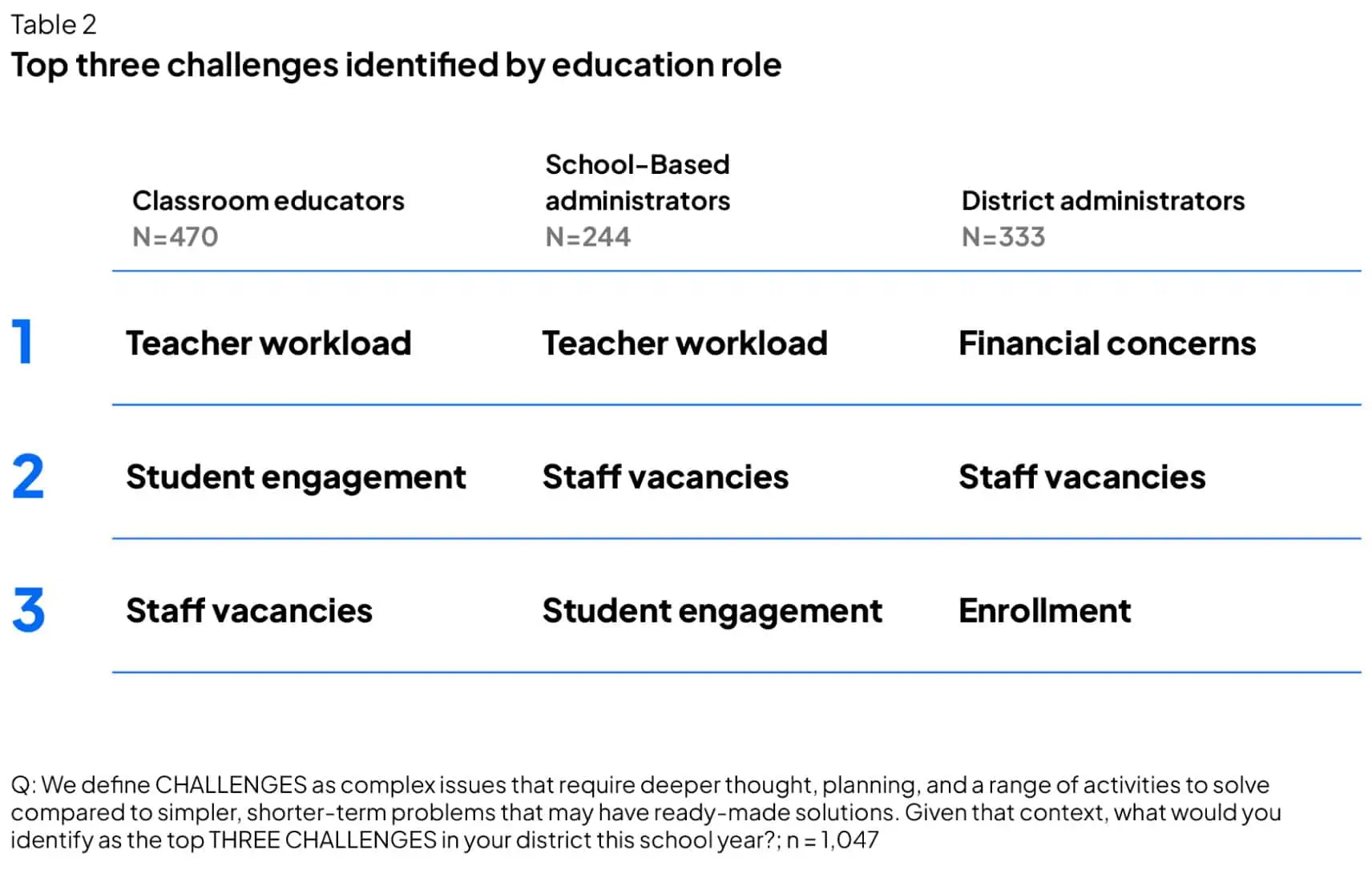
Notably, classroom educators and school-based administrators share the same top three concerns, just slightly reordered to reflect their own professional responsibilities and perspectives (Table 2).
Technology has long held the promise of being an equalizer of opportunity. With digital resources in the classroom, every student has the potential to access meaningful learning experiences that are not limited by the textbook publication date or their teacher’s knowledge.

Technology has now transcended its original value proposition to include supporting the operational efficiencies and effectiveness of district operations, from managing student data to supporting teacher recruitment. Considering the challenges facing districts today, a wide range of technology tools and enhanced access to data are being called up to support the strategic plans of the organization. How technology resources are implemented depends on the timely priorities of the district organization.
Pressing Priorities for EdTech
Priorities are the building blocks of a district’s strategic plan. The identification of district priorities acknowledges the challenges while also surfacing opportunities they present for new ways of approaching solutions.
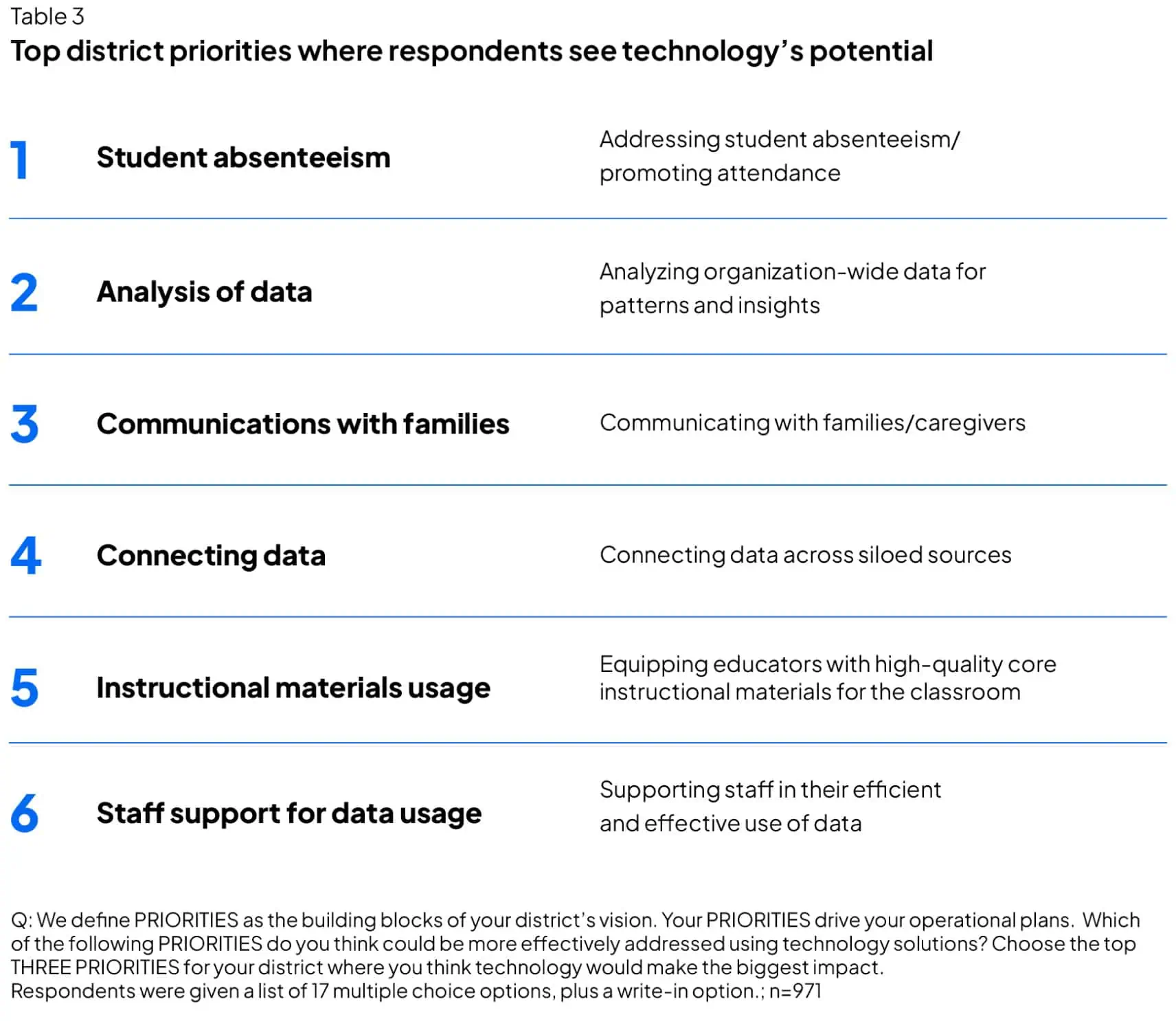
To inform this year’s K-12 EdTech Pulse, classroom educators, building administrators, and district administrators characterized the top six pressing district priorities that they believe could be more effectively addressed using technology solutions (Table 3).
For each of the four focus areas explored in this report, we share how technology can better support these priorities and address critical challenges in K-12 education.
Key Findings on Technology and Enhanced Data Access for K-12


Student Success
How can we rekindle curiosity and ensure purposeful screen time?
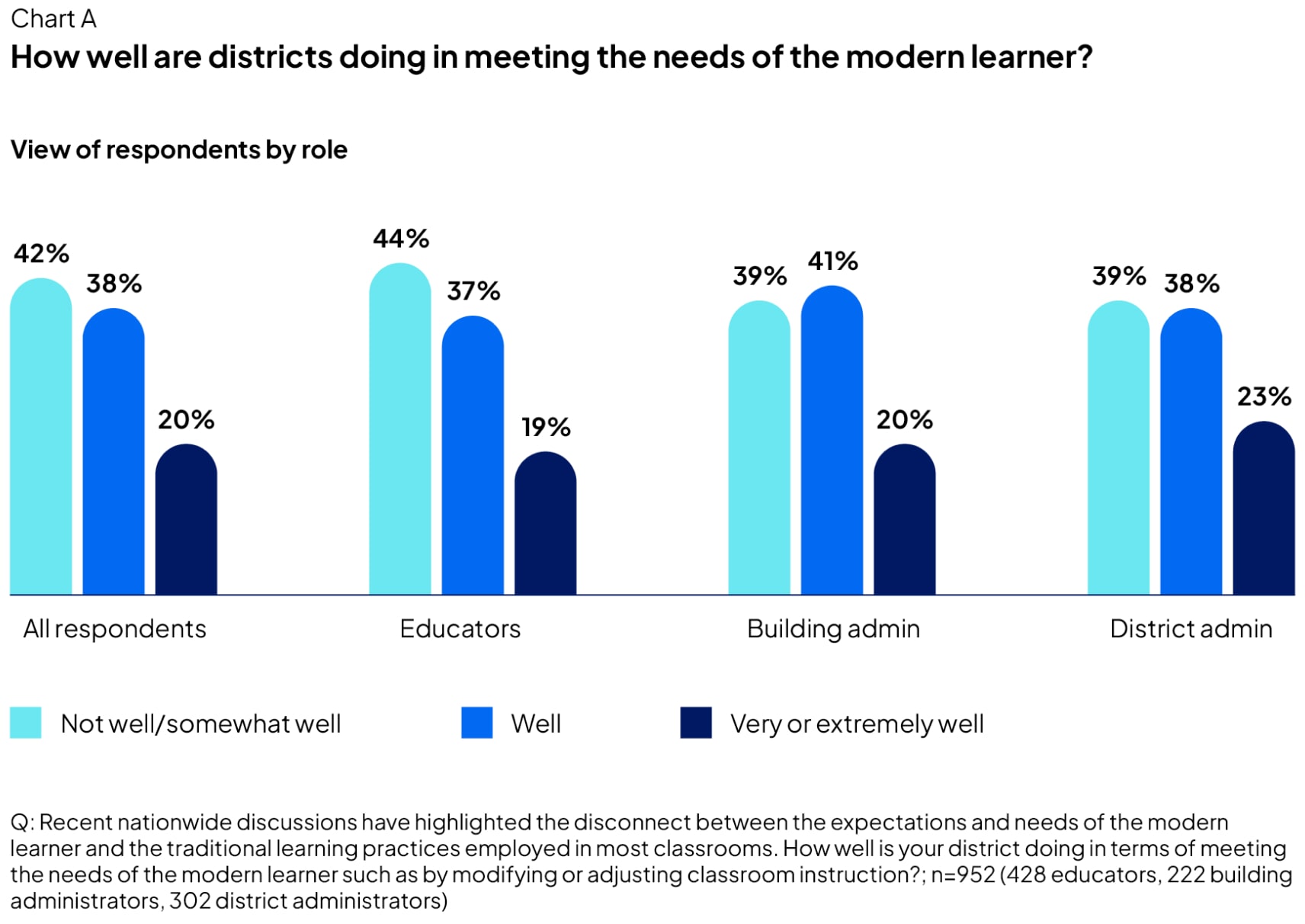
Student expectations continue to evolve in the post-pandemic classroom. Today’s learners are looking to replicate their own self-directed, out-of-school learning experiences, especially when it comes to technology usage. Only one out of five survey respondents say their district is doing very or extremely well in meeting the needs of the modern learner.
Track and measure impact
A multitiered system of supports (MTSS) is widely accepted as an integral framework for student interventions. Fifty-eight percent (58%) of MTSS users say leadership now have access to data that can validate intervention effectiveness.
Show up for student attendance
Creating a positive school climate (60%) and building meaningful relationships with students (52%) were identified as the highest-impact strategies for increasing attendance.
Employ AI for career planning
Though career technical education (CTE) courses (59%) and career fairs (57%) remain top resources, 36% of respondents say educators in their district are already using AI to support students with work-based learning (WBL) plans.

Teacher Effectiveness
How can we simplify tasks and retain great educators?
Given the ongoing challenges of recruiting and retaining high-quality teachers, our survey reveals that schools want to better utilize technology and data, including AI, to enhance teacher effectiveness, improve efficiency, and reduce burnout.
Integrate every student’s interests
Fifty percent (50%) of educators believe AI tools that personalize learning will have the most significant impact on their effectiveness over the next two to four years.
Rewrite our relationship with the clock
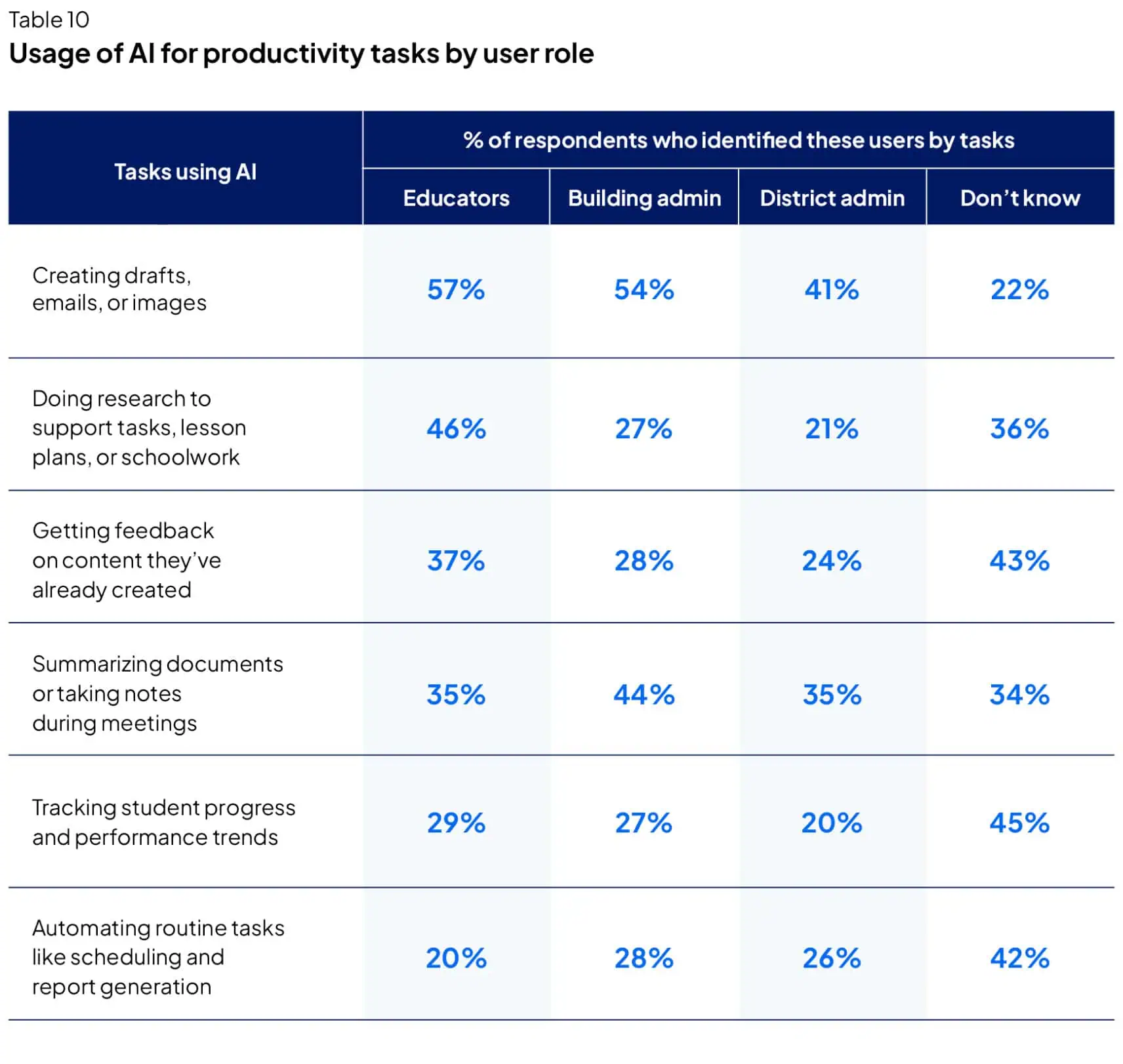
Respondents report that educators in their district are utilizing AI to create drafts and emails (57%), research lesson plans (46%), and summarize meetings (35%) to improve productivity.
Personalize professional development
Nearly half of respondents (48%) believe aggregating student data outcomes and tying them to professional objectives would significantly benefit job-embedded coaching and mentoring.

Family Engagement
How can we connect with caregivers in new ways?
Some families and caregivers are changing their attitudes about the innate value of school itself. This paradigm shift requires new approaches to family engagement that meet caregivers where they are, use tools that have existing resonance with them, and put a higher premium on relationship development.
Streamline information sharing
Consistency is key; 68% of educators and administrators prioritize consistent communication via newsletters and apps, while 60% leverage mobile apps and portals for convenient access to student performance data.
Stay alert
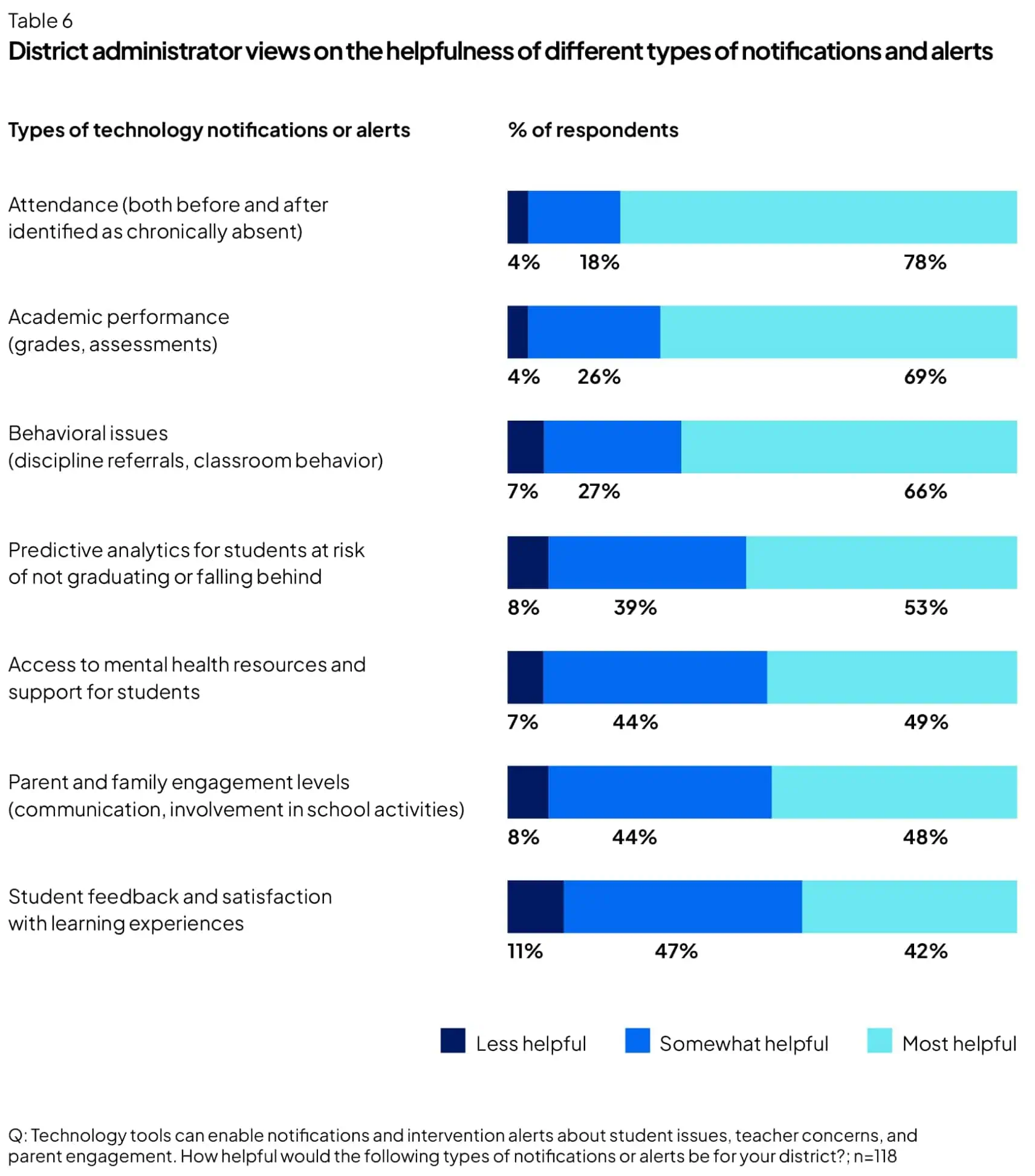
District administrators (78%) identify attendance notifications as the most helpful alert type, followed by academic performance (69%) and behavioral issues (66%).
Amplify district stories
Schools are optimizing websites (52%) and promoting achievements across online channels (50%) to attract families. A smaller number (approximately 18%) are currently using school ambassadors in parent social media communities.

Strategic Resource Management
How can we make the most of every resource?
External factors—from education funding to increasing competition—place a large burden on districts’ ability to plan. Forty-four percent (44%) of district administrators say strategically budgeting to protect core instruction and maximize limited resources is a paramount objective. Technology and data access, including AI, point to a path forward.
Identify the essentials
Forty-six percent (46%) of administrators are considering delaying infrastructure projects due to decreased funding. District leaders would rather avoid cutting instructional staff (26%), new technology investments (21%), and elective programming (19%).
Focus on knowns vs. unknowns
District leaders (67%) with financial responsibilities cite political unknowns and economic fluctuations as top concerns impacting their budgets. Access to real-time financial and enrollment data can help leaders make more strategic decisions.
Attend to enrollment strategies
Forward-thinking districts are beginning to use data to identify parents interested in specific programs (17%) to target recruitment efforts more effectively.

Understand Technology's Impact on K-12
Scroll down to read the full report or download the report by clicking the button below.
Download Report
How Technology and Enhanced Access to Data Can
Support Student Success

A future where AI is ubiquitous implores us to focus on teaching the deep, human skills of problem-solving, collaboration, creativity, and critical thinking. These ‘durable’ versus ‘vulnerable’ skills will serve students well... evergreen competencies that reflect the aspects of humanity that AI will not soon replace.

Recent nationwide discussions have highlighted the disconnect among the expectations and needs of the modern learner, today’s students, and the traditional learning practices employed in many classrooms. Modern learning classrooms meet the needs of their students through an emphasis on hands-on collaborative learning, technology-forward programs, and instruction that match students’ academic and career aspirations.
Whereas 58% of educators and administrators say they are effectively addressing the needs of the modern learner, 42% say their approach to student learning is not meeting the minimal level needed to effectively engage students in learning and prepare them for future success. It’s notable, however, that only 20% of classroom educators, building administrators, and district administrators say that their school or district is doing very or extremely well in meeting the needs of the modern learner (Chart A).

A modern classroom well-equipped to support today’s learners needs to embrace flexibility and ambiguity. The technology tools should . . . support how students are creating authentic work that can be shared beyond the classroom walls. The focus should shift . . . to a more process-oriented . . . mastery of competencies . . . We should be creating intrapreneurs who are ready to walk into workplaces with an immediate value add.
Educators and administrators identified engaging students in learning in individualized ways that will meet their interests and strengths as a key challenge for this school year (Table 1). But educators have always valued personalized learning and student engagement. That is not the paradigm shift that is driving the transformation of instruction. Rather, the paradigm shift to modernizing the classroom is being driven by the changing expectations of students for classroom learning experiences that more closely replicate their own self-directed, out-of-school learning experiences, especially relative to the use of technology.
Per Project Tomorrow’s 2024-25 Speak Up Research results, only 42% of students in grades 6-8 and 39% of students in grades 9-12 say their classroom environment allows them to do their best work.3 Central to this conversation is identifying student needs and expectations and then using those insights to reimagine how to more effectively use technology tools and data to inform instruction and program offerings for students.
While we have had many wonderful classroom technology tools for several years... we have not yet come close to full adoption... because the educational environment is still clinging to the industrial-age model of teaching and assessing students. I see AI... as the catalyst we need to change our still-outdated instructional practices.
Student engagement
This year’s K-12 EdTech Pulse research identified three opportunity areas in which technology and enhanced data access can help district leaders address the challenge of student engagement and result in enhanced student success.
- The use of technology, including AI, to support MTSS.
- Technology tools that enable notifications and intervention alerts about student issues, teacher concerns, and family engagement.
- Enhanced data access and AI tools to support WBL programs or resources for students.
The use of technology, including AI, to support MTSS for interventions
Understanding individual student needs is at the heart of an effective MTSS approach to student support and empowerment. The current MTSS framework for academic and behavioral support is derived from the earlier Response to Intervention (RTI) approach which primarily focused on interventions to close achievement gaps. The MTSS umbrella of support has now expanded to include behavioral, social-emotional, and, increasingly, school attendance interventions.
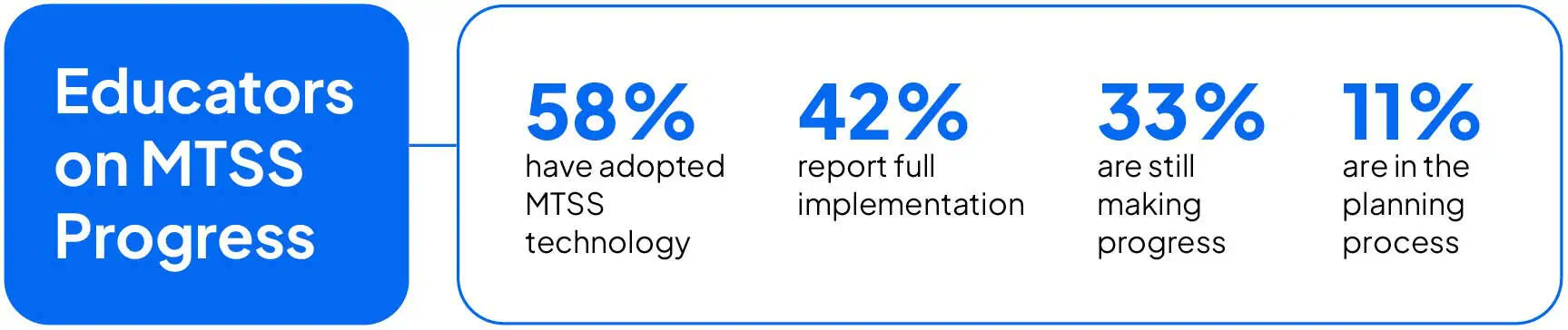
Per the research findings, 58% of educators and administrators say that their school or district has adopted MTSS technology solutions to track student interventions. To understand the status of district or school MTSS implementations, survey respondents who have implemented MTSS categorized their implementation on a scale from planning to fully implemented. Forty-two percent (42%) of these respondents reported a fully implemented and standardized MTSS approach to student intervention support; 33% noted that their implementation is making progress but is not fully implemented. Approximately one in 10 respondents within this group (11%) say they are in the planning process for MTSS.
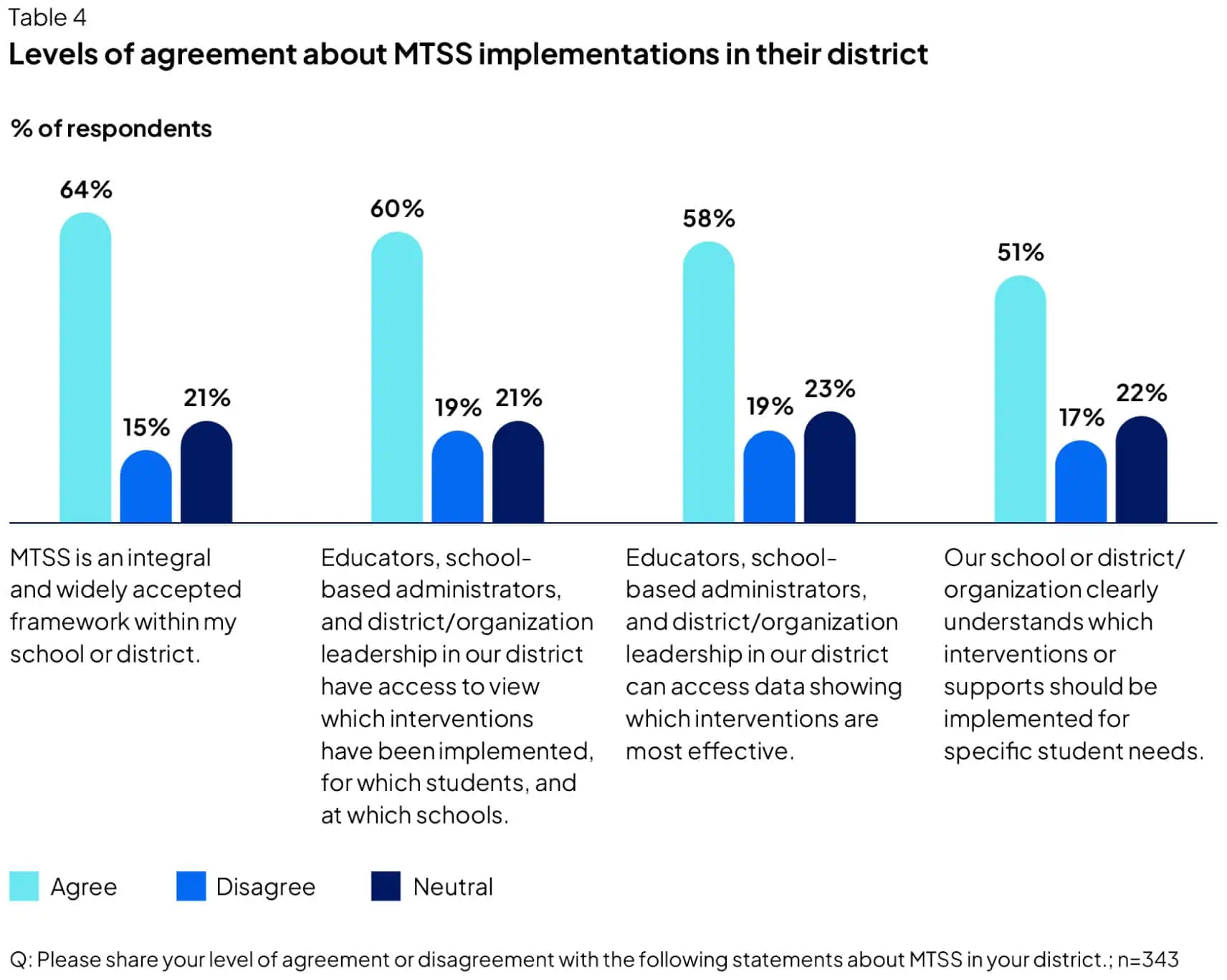
As with any new implementation of a learning model or intervention framework, it is important to understand the views and beliefs of the key stakeholders. With the MTSS implementations, nearly two-thirds (64%) of 343 respondents believe that MTSS has gained a strong foothold in their school or district (Table 4). This speaks well to the positive impact that MTSS can have on student success. Additionally, 60% of these respondents say that their leadership has data access to view which interventions have been implemented at the student level, and 58% say their leaders can access the information and data to demonstrate which interventions have been the most successful. This is a powerful use of enhanced data access to support student learning.

The effective use of data aligns with the staffing discussion by enabling us to pinpoint where and when specific, high-impact interventions are most needed, thereby optimizing our human resources rather than applying a one-size-fits-all approach.
Though the MTSS framework continues to emphasize academic support, there is increasing interest in using MTSS technology solutions to support behavioral, social-emotional, and attendance needs as well. This is especially true for classroom educators.
Approximately one in three school building leaders would like to see the MTSS strategies leveraged to impact student behavioral issues (Chart B). Classroom educators are particularly interested in the role that an MTSS framework can play in addressing the student attendance conundrum (21%) and in helping them support their students’ social, emotional, and mental health needs (19%).
This expansion of the mission of MTSS will only be possible with the effective use of technology supports and enhanced access to data.

Alongside this increased interest in using the MTSS tools for a wider range of student needs, there is also the emergence of the use of AI tools for student-support workflows associated with MTSS and/or Individualized Education Programs (IEPs). Approximately one-quarter of respondents (27% and 24% respectively) say educators and building administrators are using AI to collaborate on these types of workflows (Table 5).
This AI-enhanced approach within MTSS is another example of how to leverage technology solutions to best meet the needs of educators and leaders from a productivity standpoint.

Technology tools that enable notifications and intervention alerts about student issues, teacher concerns, and family engagement
A developing opportunity to support student success and learning is in the use of technology-enabled notifications and alerts to serve a wide variety of needs. The goal with this technology innovation is to increase educator and administrator productivity while at the same time providing just-in-time and early interventions that can impact student success. Given the challenges faced by schools and districts, we wanted to understand which types of notifications and alerts would be most helpful.
Because student absenteeism emerged as a top priority in our research, it is not surprising that the type of technological notification or alert that district administrators say would be most helpful is focused on attendance, with 78% of 118 respondents choosing that option (Table 6). It is also significant that across the board, educators and administrators highly value the use of technology-enabled notifications and alerts. Reflecting the ongoing concern for students’ social, mental, and emotional health, 93% of district administrators say that notifications and alerts providing access to mental health support for students would be helpful.
Reflecting the pressing priority of stemming chronic student absenteeism, 96% of district administrators say that alerts and notifications can be helpful tools in their extraordinary efforts to get kids to come to school:
Monitoring attendance data to identify patterns of absenteeism allows schools to intervene before absenteeism becomes chronic.
District administrators indicated that notifications about student academic performance (69%) and behavioral issues (66%) would also be most helpful. The ability to leverage AI to support predictive analytics for students at risk of not graduating becomes more impactful when married with a technology-driven notification system.
Seven in ten (71%) respondents say that the use of AI for early warning and predictive analysis would provide high value to their productivity and ability to better address student needs. Correspondently, a majority of educators and administrators also see the value of alerts based upon those types of predictive analytics for their students at risk of falling behind or not graduating.
Enhanced data access and AI to support WBL programs or resources for students
What is most promising... is integrating WBL/CTE earlier and creating direct pipelines for high-demand, credentialed jobs... driven by worker shortages in skilled trades and a societal shift recognizing that a four-year degree is not the only path to a stable, high-wage career.
Many discussions about how to best support the needs of the modern learner emphasize the imperative to ensure that students have access to WBL experiences. A WBL approach connects classroom instruction with real-world work experiences, such as through internships, apprenticeships, and job shadowing. The goal with these types of experiences is to help students develop both academic and technical skills and explore potential career paths in real-world settings. Parents and education guardians are increasingly interested in such programs for their children.
Based upon long-standing research from Project Tomorrow, a top concern of parents is that their children are not learning the right skills in school to have a successful future. WBL experiences help to address that concern.

Schools and districts report they offer a variety of WBL programs and resources to support students’ exploration of careers as well as skill development needed for future employability. Topping the list of school-provided programs or resources are CTE courses (59%), career fairs (57%), and field trips to workplaces (53%). Technology tools that support the evaluation of students’ interests for certain careers are effective ways to leverage data that can inform students’ preparation efforts and their future planning (Table 7).
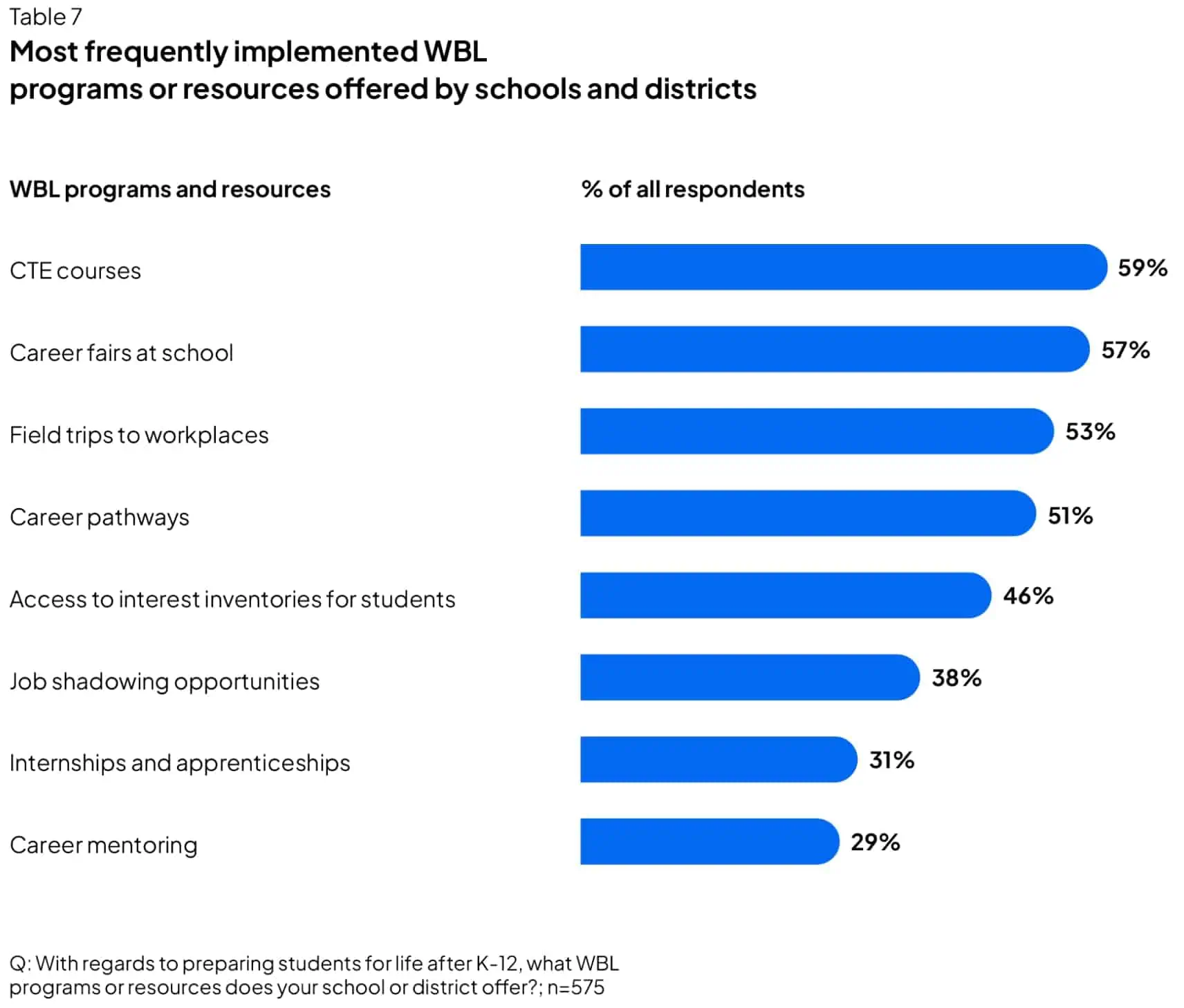
Although less than a quarter of educators and administrators noted that their schools or districts offered the following WBL programs, these are emerging resources that can support students’ preparation. From a technology standpoint, the use of simulated workplaces or enterprises could help to address the modern learners’ desires for real-world context when exploring career fields.
- Informational interview opportunities with career professionals
- Co-op education experiences
- Career-oriented competitions
- Clinical experiences
- School-based enterprises
- Simulated workplaces/simulated enterprises
Educators and administrators are also exploring how the use of AI supports WBL experiences for students (Table 8). This is an interesting new use case for AI, and it is one that is working in many different industries right now.
It appears from this year’s findings that our classroom educators are leading the pack in thinking about the value of AI to support WBL for their students. Parents will be glad to hear this given that 75% say that the use of AI at school can help their child develop the college and workplace skills needed for future success.

WBL and CTE have stayed consistent... but the perceived value has been cyclical. With the push that a college education was the ultimate path toward success, traditional core subjects became the center... What we see now is a devaluation of traditional education because of college graduates saddled with debt and disappointing job prospects. This has caused a shift back toward WBL and CTE programs that focus on durable skills and certifications that make students attractive to hiring managers.

How Technology and Enhanced Access to Data Can
Support Teacher Effectiveness

AI has the potential to significantly strengthen teacher professional learning by making it more personalized, timely, and responsive... we see AI supporting educators through just-in-time coaching, classroom planning support, adaptive professional learning pathways, and faster access to data-informed insights. To realize this potential, educators will need sustained training that focuses not just on how to use AI tools, but how to apply them responsibly, ethically, and in ways that align with sound instructional practice... AI must remain a support for teachers rather than a substitute for their expertise.

The role of the classroom educator has undergone dramatic changes over the past few years. Classroom educators are taking on additional responsibilities beyond instruction, including managing students’ social and emotional health and providing more basic needs than ever before. This has resulted in a dramatic increase in teacher workload and teacher burnout.

From a systems standpoint, school districts are concerned about not just filling critical vacancies such as in special education, computer science, and advanced mathematics, but also about the quality of their teaching staff to deliver effective instruction to an increasingly diverse student population.
When asked to identify their top talent priorities for this year, school and district administrators call out “evaluation and coaching” as their primary objective for 2026. Being creative with recruitment strategies is still a top priority, but a stronger focus on teacher effectiveness and well-being reflects a new paradigm shift.
Top priorities for talent management in 2026:
- Evaluation and coaching to support increased teacher effectiveness in the classroom
- Recruitment strategies to fill key vacancies
- Evidence-based professional development (e.g., science of reading)
- Supporting teachers’ mental health and life-work balance
- Supporting teachers to use technology (e.g., existing and new)
- New teacher leadership roles for growth opportunities
Administrators are therefore highly interested in understanding how technology tools and enhanced access to data can improve the classroom educators’ overall effectiveness while providing an impetus for transforming teaching practices to better meet the needs of the modern learner.
The value of a community of support cannot be undervalued either. Teaching is a humanistic profession, and our classroom educators need ongoing support from both human and technological resources. The focus on mentoring and coaching teachers is nothing new, but technology provides us with new avenues to explore both community and mentorship with new outcomes. This can result in more effective teachers and less turnover.

It was an epiphany when I was able to connect with another teacher in another school or city dealing with similar issues... That was the most dramatic professional growth for me. We have a lot of new, less experienced teachers in our schools today. They need community to grow and thrive... they are interested in... using technology to support both student outcomes and their own professional growth.
Teacher workload, recruitment, and retention
This year’s K-12 EdTech Pulse research identified three opportunity areas in which technology and enhanced data access can help district leaders address changing expectations for our classroom educators and difficulties in recruiting and retaining high-quality teachers.
- Enhancing teacher effectiveness through the strategic use of technology and data.
- AI to improve teacher productivity and support new modalities for professional learning.
- The use of technology to support coaching and mentoring of educators.

For me, technology isn’t about replacing people. I see technology as something that amplifies human connection. It gives me more time to focus on people, culture, and the relationships that drive our schools forward. It’s about empowering leaders to do their jobs better.
Enhancing teacher effectiveness through the strategic use of technology and data
Education researchers have long connected enhanced teacher effectiveness to improvements in student outcomes. Though many technology implementations in the classroom have put the focus on improving student engagement with highly interactive tools and resources, little work has been done to understand how innovative technology solutions can also enhance teacher effectiveness.
With this year’s report, we have new insights into the views of classroom educators, building administrators, and district administrators about how technology innovations can positively impact teacher effectiveness.
There are high expectations for the role of AI in enhancing teacher effectiveness, with respondents indicating AI tools as having the highest impact potential over the next two to four years (Table 9). Notably, respondents believe AI can support increased personalized learning for students and productivity for teachers and staff.

Among classroom educators, 50% say AI tools that could help personalize learning would have the most significant impact on their own effectiveness; 40% believe that AI agents can help reduce the time and effort for administrative work done by teachers and administrators. Classroom educators (39%) are also bullish about the potential efficacy of computer-aided identification of student needs that could be paired with recommended actions.
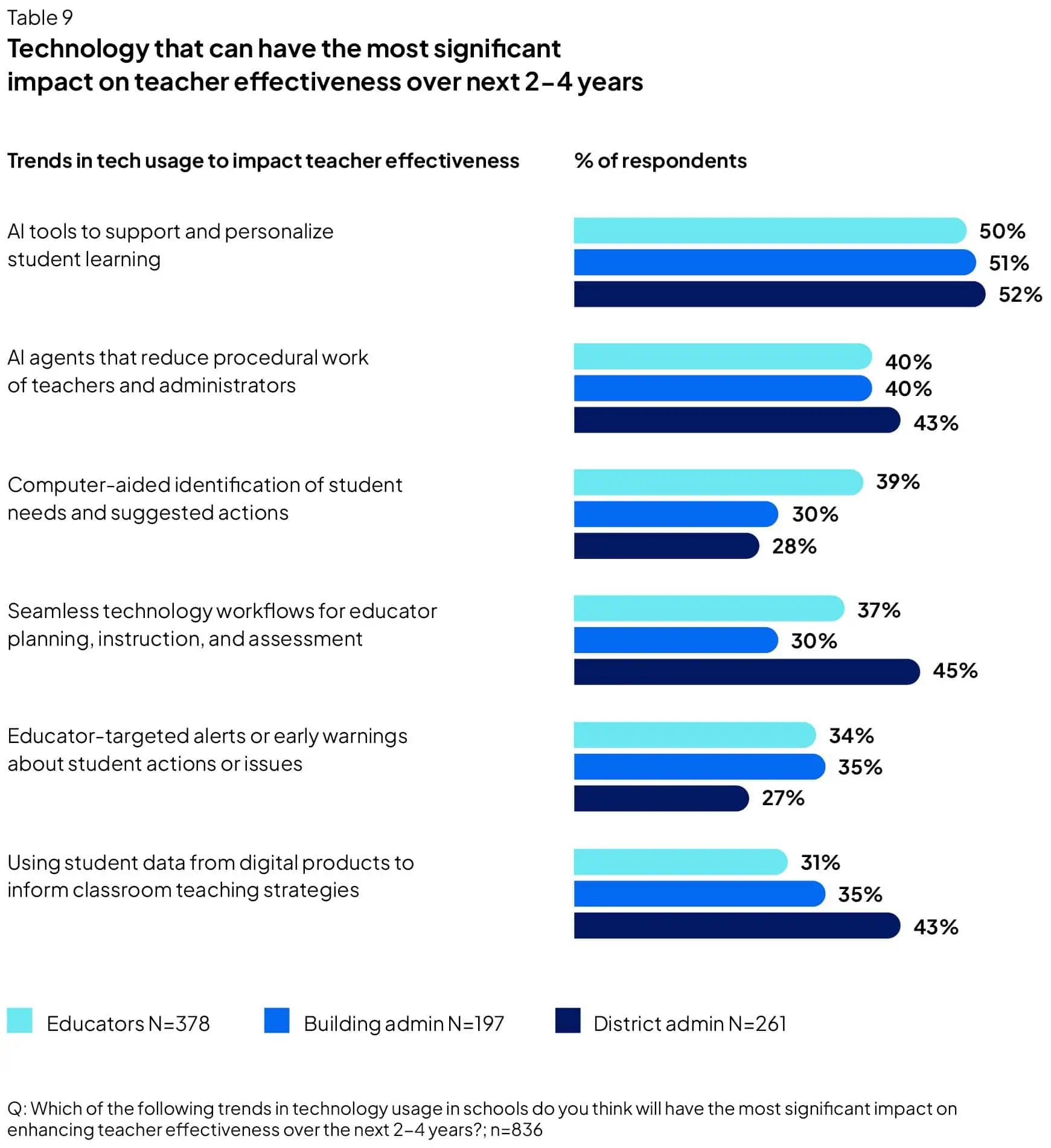
From a systems perspective, district administrators (45%) are more likely to support the idea that technology and data could best be used to “create seamless workflows for educator planning, instruction, and assessment.” Another 43% noted that “using student data from digital products to inform classroom teaching strategies” would have a significant impact. Given the twin challenges of recruiting and retaining staff while also managing the additional workload on teachers today, this technological innovation would yield significant benefits for the entire district team.
AI to improve teacher productivity and support new modalities for professional learning
Many discussions in K-12 districts today center on what AI use cases will be most beneficial in an education setting. According to 2024-25 findings from the Speak Up Research Project, 74% of district administrators agree that the use of generative AI has the potential to positively impact K-12 instruction.

Project Tomorrow research indicates that the use cases supporting teacher effectiveness and productivity are gaining the most initial traction, which was also validated by the results from this year’s report. When asked to identify who in their school or district is leveraging AI to support various tasks or activities, more than half of respondents said educators and building administrators are using AI to create drafts, emails, or images (Table 10). Approximately two in five respondents say district administrators are using AI for the same tasks.
Also significant for classroom educators is the use of AI to research lesson plans and gain feedback on created content. These simple use cases all support the widely recognized premise that AI can support enhanced teacher and staff productivity.

As Director of Curriculum, Instruction, and Digital Learning for Chicago Public Schools (CPS), I witnessed firsthand how technology—when implemented strategically—can transform both operational efficiency and instructional effectiveness. . . .Today, using a large language model within a digital curriculum, CPS is enabling teachers to use AI safely and effectively to search for lesson plans and instructional resources. The system can also suggest learning materials tailored to students’ individual needs... The result has been a measurable improvement in both efficiency and adaptability. This model shows how an intentional use of open standards, data interoperability, and AI can help large districts build resilient, scalable, and future-ready educational systems that directly benefit both educators and learners.
Educators and administrators also see the high value of AI in supporting productivity-oriented tasks through real-time data analysis (77%), auto-reporting (63%), producing data insights (59%), and creating customizable dashboards (58%). Through these types of AI-enabled features, educators and administrators are gaining greater access to data that can improve productivity and support the implementation of more effective student learning experiences.
Educators and administrators are also interested in how AI can support their own professional learning. Over one-third of respondents (34%) say classroom educators are already using AI to learn new skills that are personalized to their own needs (Table 11).
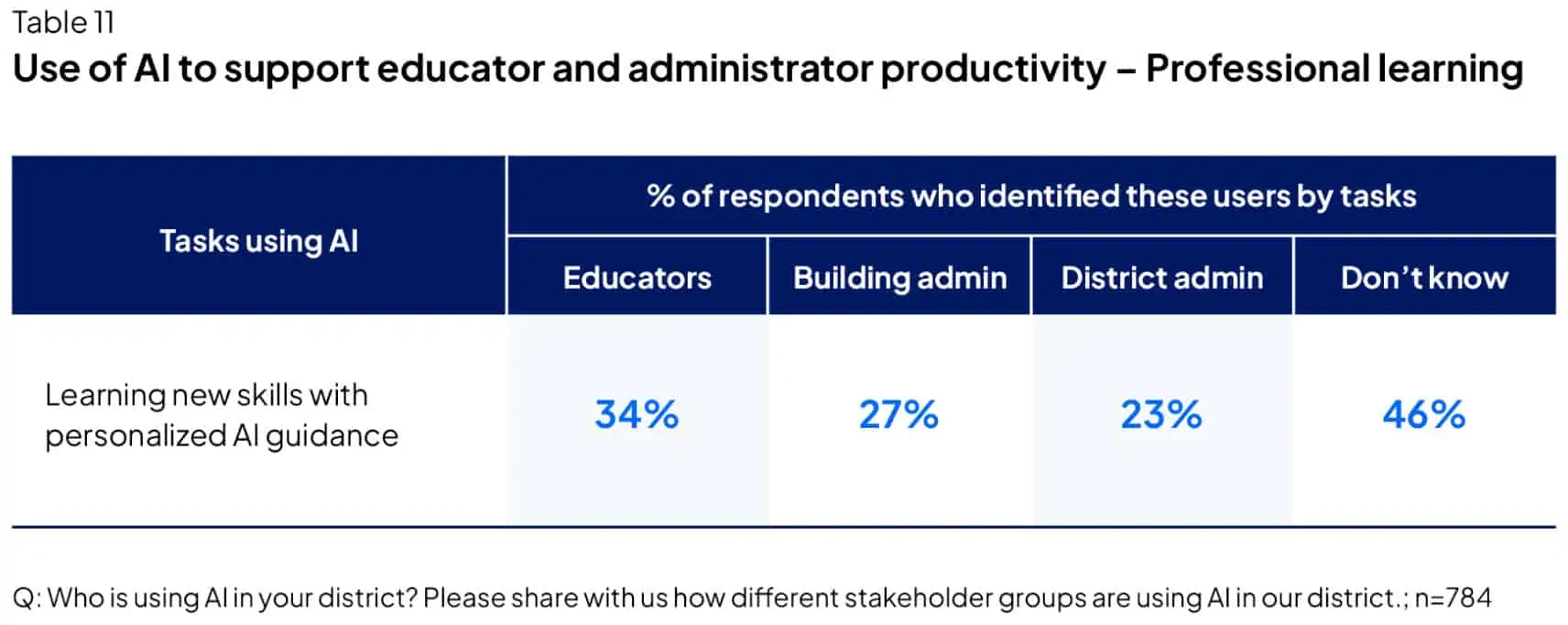
This focus on more personalized professional learning is often cited as a key to meeting the challenges of recruiting and retaining staff. A new generation of educators are looking to work in schools and districts where personalized professional learning and timely support is the norm, not the exception.
These modern educators are familiar with self-directed learning and believe that AI can support that preferred modality.
Another valuable professional learning modality for educators is the opportunity to have a hands-on learning experience with new products, resources, or teaching strategies. This is aligned to the expectations of today’s students for their own classroom learning. Nearly two-thirds (63%) of classroom educators identify interactive workshops at conferences as their most effective professional learning modality (Table 12). Building administrators (54%) and district administrators (47%) agree with that assessment.
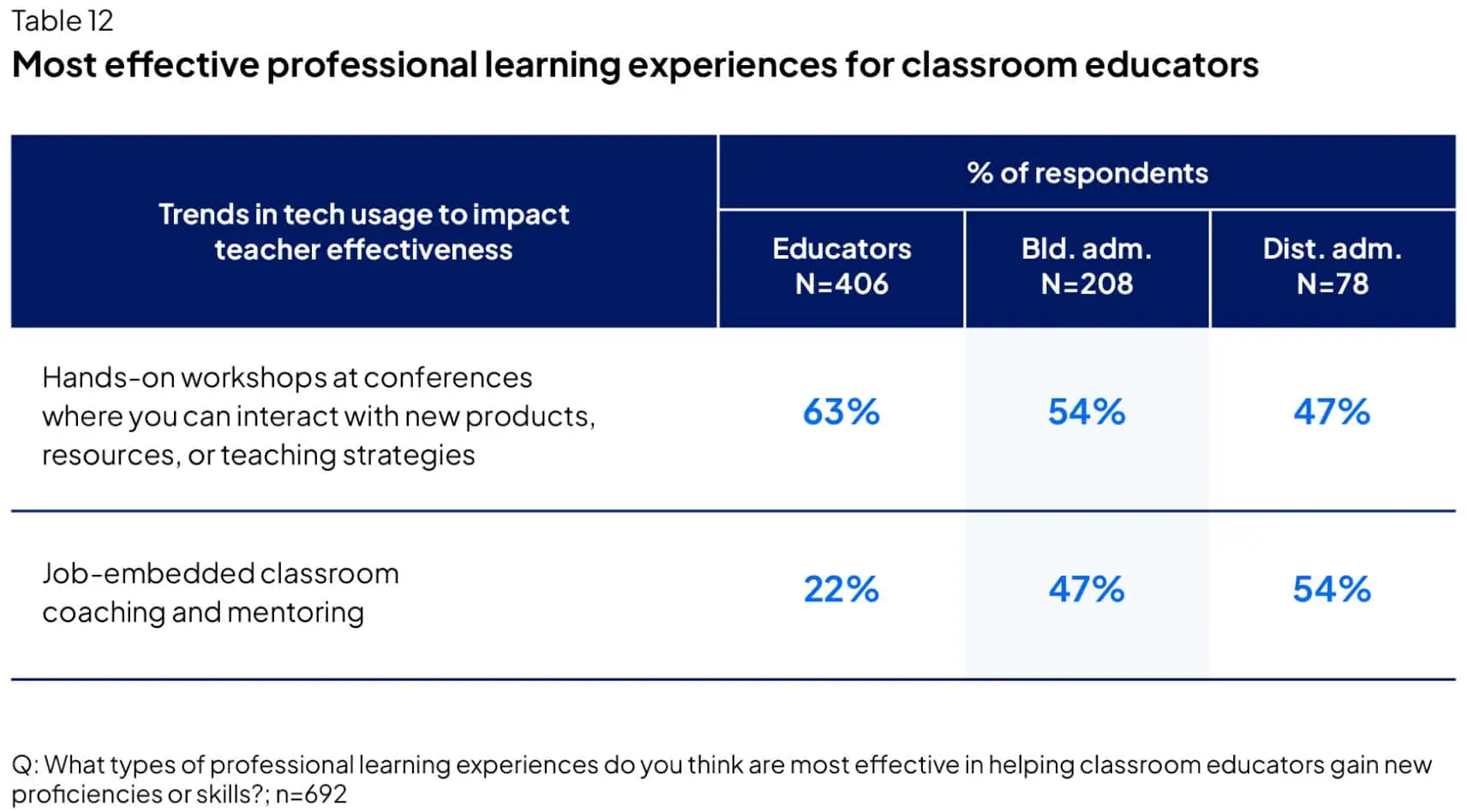
Interestingly, more than twice as many district administrators (54%) and building administrators (47%) as educators (22%) identify job-embedded classroom coaching and mentoring as highly effective professional learning. Whereas administrators may be seeking opportunities for more sophisticated technology-enhanced solutions for classroom mentoring, it’s important to note that classroom educators do not appear to realize yet how these solutions could impact their own productivity.
Demonstration of the viability and value of those job-embedded solutions for mentoring and coaching may be an important next step.
Decision-makers should remember that technology and AI are powerful tools for improving efficiency, access, and personalization, but they are not substitutes for the relational side of education. The most successful innovation efforts occur in cultures built on trust, shared purpose, and strong professional relationships. . . .The strongest educational ecosystems intentionally blend in-person connection with digital capabilities rather than positioning them as competing forces.
The use of technology to support coaching and mentoring of educators
The environment for recruiting and retaining educators and staff has not seen any relief in the past year. Given the difficult challenge of addressing educator and staff vacancies, it’s critical for districts to ensure that (1) the teachers in their classrooms are highly effective, and (2) those teachers feel supported in their efforts to improve their practice.
With advances in technology use, many districts are adopting new innovative ways to use digital tools and data to address both goals simultaneously.
Our survey asked educators and administrators about the various ways technology and data could be better used to support mentoring and coaching of classroom teachers as a modality of professional learning.
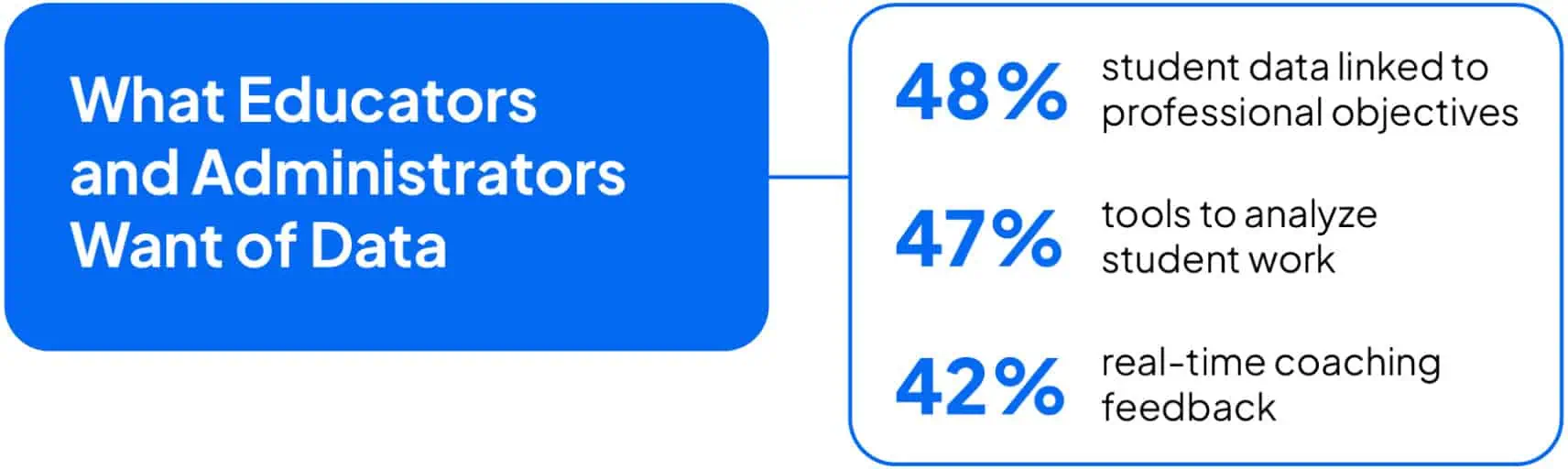
The use of data stands out from those findings. Nearly half of respondents (48%) note that aggregating student data outcomes and connecting them to professional objectives would be a benefit for job-embedded coaching and mentoring (Table 13). Providing tools to help analyze student work (47%) and access to real-time feedback from the coaching sessions (42%) are highly ranked approaches as well.
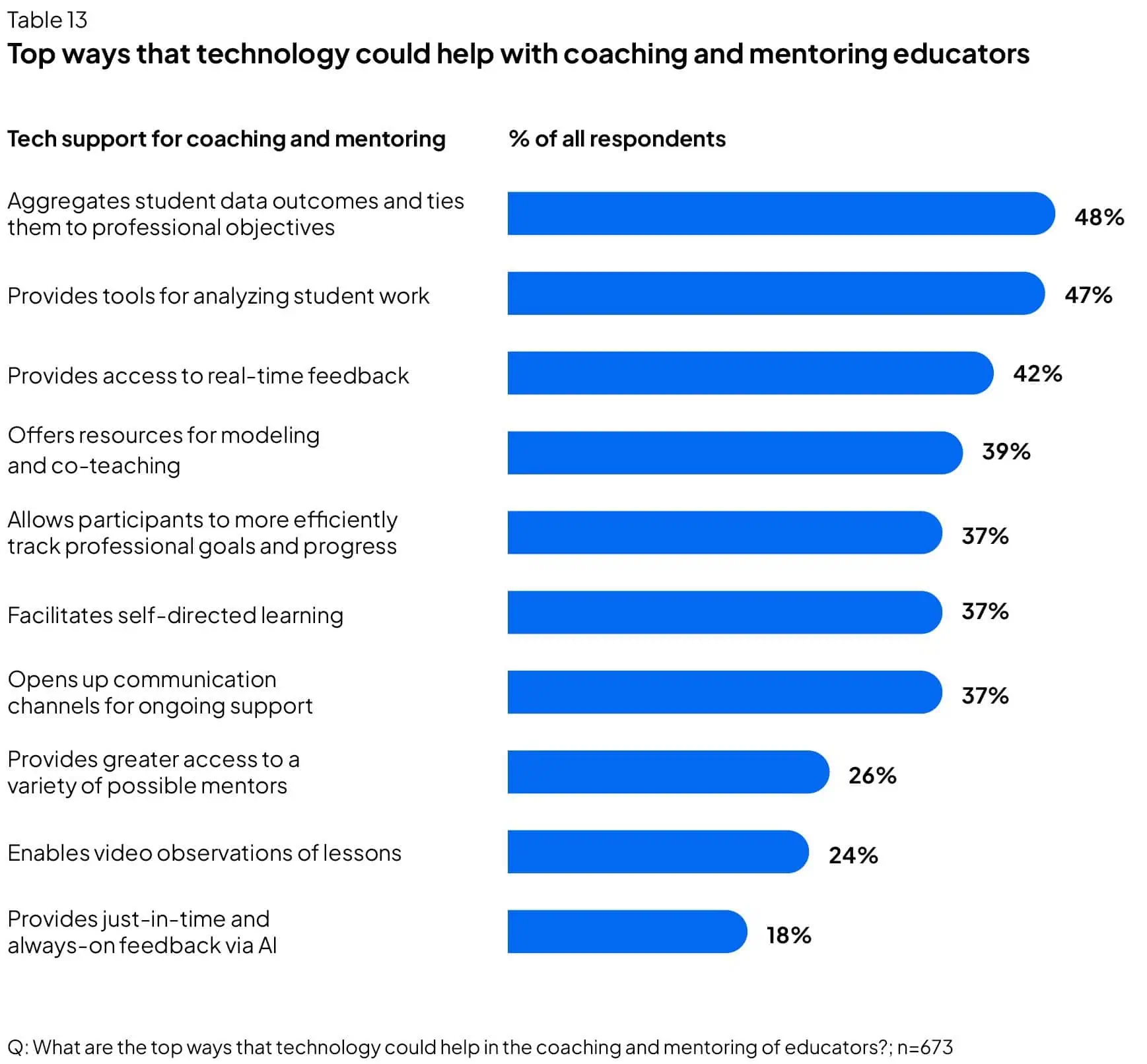
Educators and administrators also conceptualized how technology and data could support teacher capacity building by allowing educators to more efficiently track their own professional goals and progress (37%). Though buy-in is small at this time, it’s encouraging that 18% of respondents notice the potential of AI to provide just-in-time and always-on coaching and mentoring feedback to educators.

Given that only 25% of classroom educators believe their district is providing ample professional development around AI currently, there is certainly room for growth in terms of professional learning around AI and the utilization of AI to support mentoring and coaching.

How Technology and Enhanced Access to Data Can
Support Family Engagement

According to Gallup, a record-low 35% of Americans (including 39% of parents) are satisfied with the quality of K-12 education in the US. At the same time, 74% of parents say they are completely satisfied (32%) or somewhat satisfied (42%) with the quality of their own child’s education, crediting their teachers and curriculum most often.4 This gap offers insights into the role individual educators and human interactions play in discernments of quality and value.
When it comes to practical skill-building, however, 47% of families say they are worried their child is not learning the right skills in school to be successful in the future, per 2024-25 Project Tomorrow Speak Up Research. Given this level of concern, families are increasingly valuing WBL and future-ready skill development as critical components of education. This value shift may be a result of families’ own personal experiences: observing virtual education and technology use during the pandemic, employing modern technology in their work and personal lives, and understanding what abilities are truly needed for economic self-sufficiency.
Furthermore, views on the innate necessity of school itself are different than in generations past. According to a recent study conducted by the Rand Corporation and the Center on Reinventing Public Education, district leaders reported “a shift in student and parental attitudes away from viewing school as compulsory” across family income levels.5 The impact of this may be one of the reasons for the increase in student absenteeism in many communities.
Given these changing attitudes from families and caregivers about school’s value proposition, it makes sense that educators and administrators report having a difficult time connecting with them using traditional methods for communication and engagement.
This paradigm shift requires new approaches to family engagement that meet caregivers where they are, use tools that have existing resonance with them, and put a higher premium on relationship development, not just communication. New technology tools and enhanced access to data present a unique opportunity for schools and districts to reimagine family engagement in 2026.
Family engagement and student retention
Our research identified two opportunity areas in which technology and enhanced data access can help district leaders address the challenges of engaging with parents and families and using that increased engagement to increase student attendance.
- Leveraging technology effectively to engage with parents and families.
- The use of technology tools and resources to support student attendance.
Leveraging technology effectively to engage with parents and families
Effective strategies for parent and family engagement cannot be a “one size fits all” approach. Today’s school communities include four generations of parents and education guardians. Baby boomer grandparents who are serving as education guardians for their grandchildren have different needs and expectations for school engagement than the younger Gen Z parents with children just entering school.

Each generation’s familiarity with various digital tools, especially social media, is shaped by their own personal experiences using these tools. For example, Project Tomorrow research findings indicate that whereas 37% of baby boomer education guardians want an auto phone message about school activities, only 14% of Gen X parents find that helpful. Younger parents are much more familiar with Instagram, Snapchat, and TikTok than older parents and believe those tools can be effective for school-to-home communication.
It is important therefore for districts to think carefully about the tools they are using to engage with parents and families about their child’s learning progress and school life.
Educators and administrators in this year’s survey indicate they are using a wide variety of technology tools to engage with parents, families, and students. In addition, they are being sensitive to the needs of different types of guardians and ensuring increased inclusivity in those engagement efforts. For example, 68% of the educators and administrators note the importance of consistency in their communication with parents and families (Table 14). And understanding the critical importance of good first impressions, 59% say they are creating a more welcoming experience for parents in the front office and on their campuses.
From a technology standpoint, schools and districts are highly leveraging mobile apps and online parent portals for convenient access to student performance data (60%), regularly updating social media accounts (58%), and ensuring that school websites are current (55%).
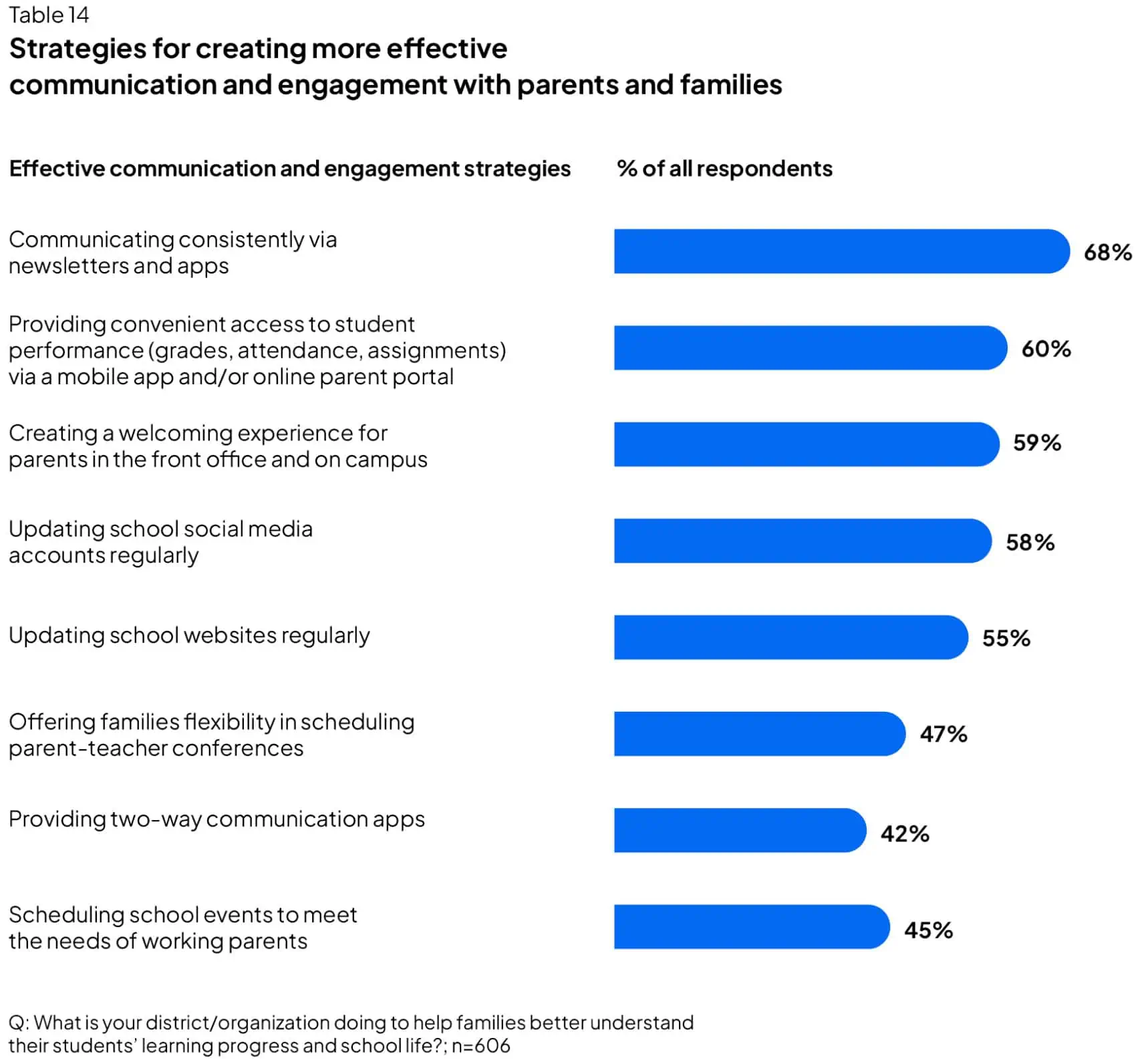
Meeting families where they are in terms of their abilities to be engaged in their child’s education often means adjusting normal operating procedures to be more inclusive. It’s noteworthy that 47% of the educators and administrators say that their school or district offers flexibility in scheduling parent-teacher conferences, and 45% say they are scheduling school events to better address the needs of their working parents and education guardians.
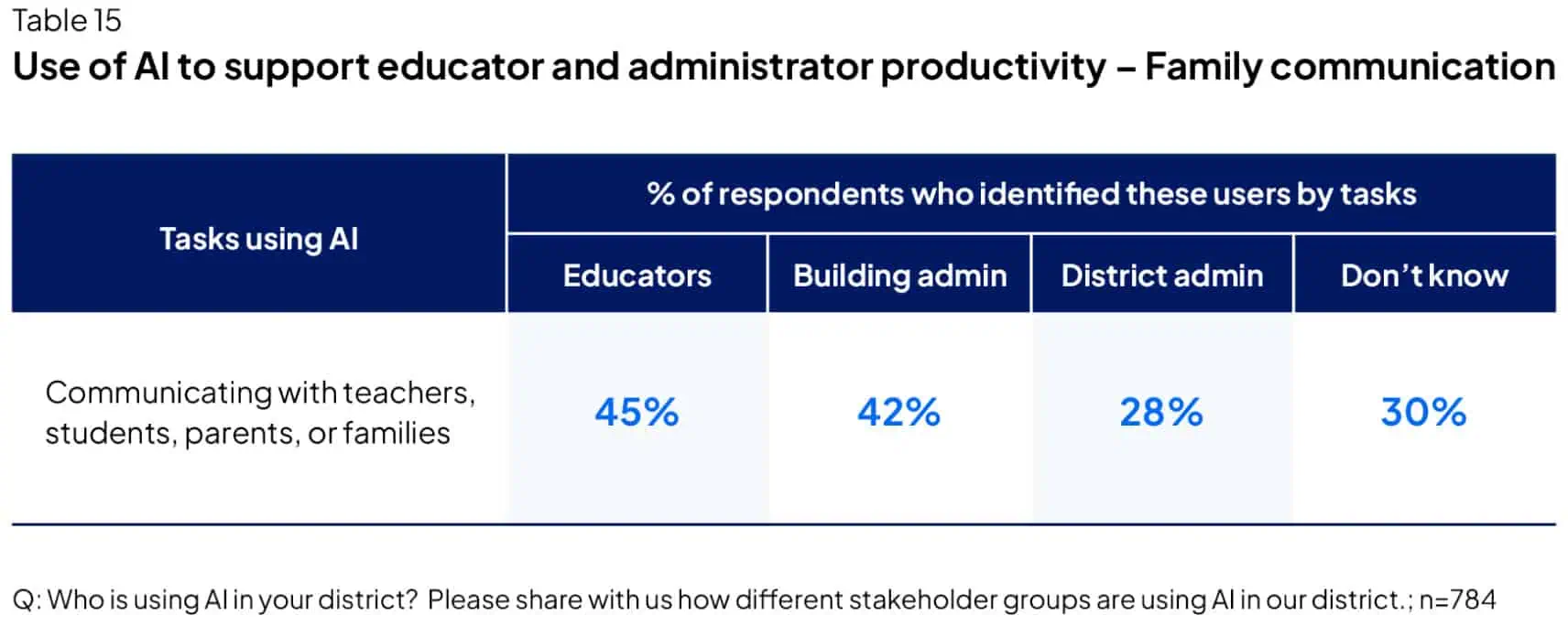
The use of AI to streamline communication with parents and families is an emerging trend—evidenced by how many respondents identified the use of AI tools across roles to address this goal of family engagement (Table 15). We expect to see these percentages rise as more educators and administrators adopt AI tools to enhance their own productivity and see the firsthand impact of using these tools to increase and augment communication with parents and families.
The use of technology tools and resources to support school attendance
The challenge and impact of students missing school regularly have reached epidemic proportions in many communities. Addressing student absenteeism is the No. 1 priority for school districts as identified by respondents.
The impact of students not attending school is both personal and organizational. Students who do not attend school regularly miss out on critical learning experiences and knowledge acquisition. And for school districts in states where average daily attendance is the basis for school funding, a decrease in attendance impacts all students and families when critical programs and resources are cut to maintain a balanced budget.
Over the past five years, school districts have employed a variety of innovative methods to encourage and entice student attendance. Some strategies have had stronger results than others. For this year’s report, we asked respondents to identify the most successful strategies they have used to stem absenteeism in their district.
Positive engagement strategies such as creating a welcoming and inclusive school environment, fostering strong teacher-student relationships, and connecting learning to students’ interests can motivate attendance. . . .Increasing family and community involvement ... in addressing barriers such as transportation, health issues, or family responsibilities can support consistent attendance and has also proven successful.
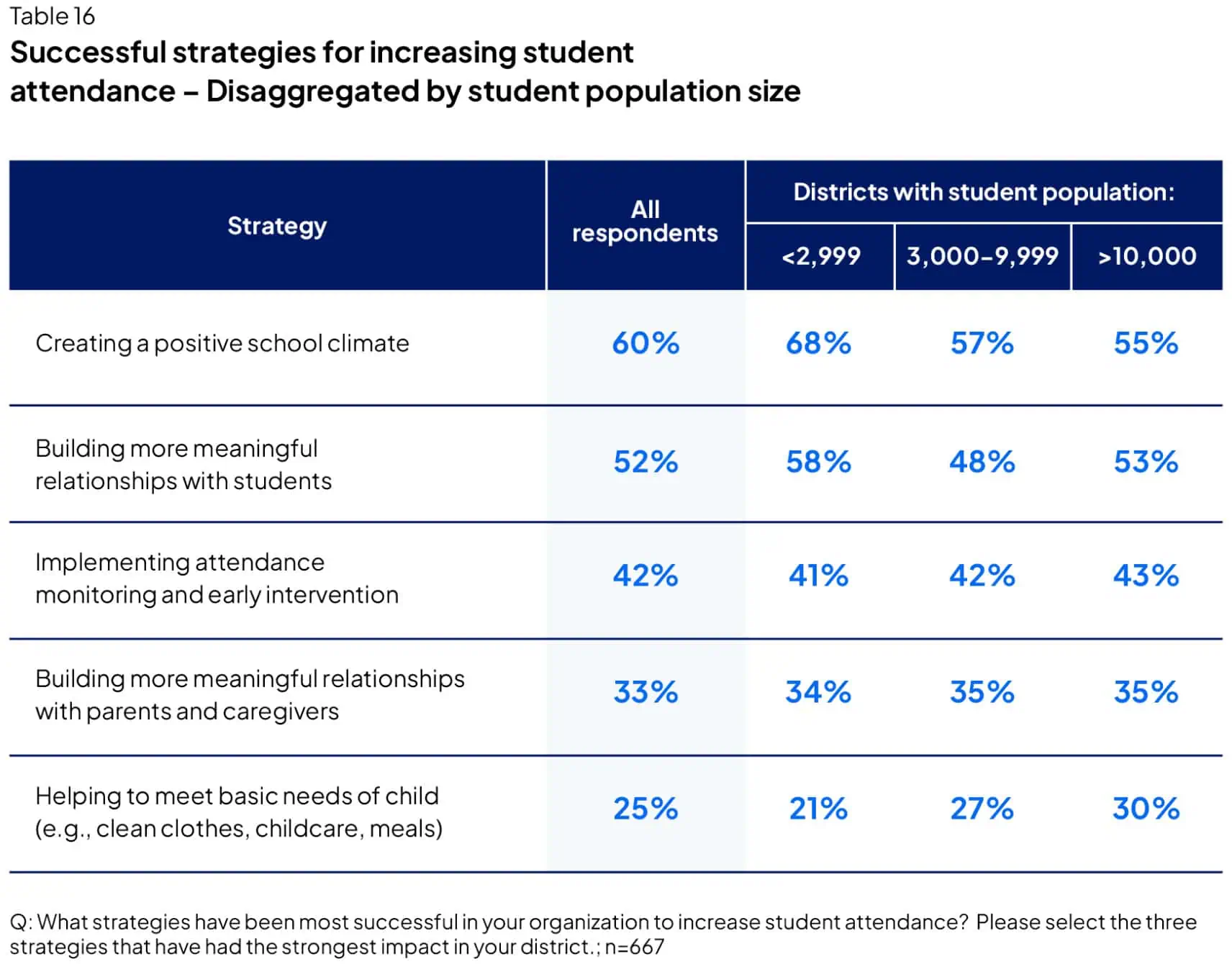
Nicole Bond’s approaches mirror what we learned in this year’s survey results. As noted in Table 16, the highest impact strategies employed to encourage student attendance include creating a positive school climate (60%), building more meaningful relationships with students (52%), and implementing attendance monitoring and early intervention when erratic attendance is noted (42%).
The effective use of data and potentially technology notifications and alerts most likely contributed to success with that particular strategy.
Whereas most districts appear to be having similar results with the same strategies, some differences based on district size emerged from the data analysis. For example, 68% of educators and administrators from smaller districts with fewer than 3,000 students note that creating a positive school climate has been a successful strategy for them. Comparatively, only 55% of the educators and administrators from districts with student populations of more than 10,000 students note the same strategy.
Considering our earlier discussion about the need to adjust classroom learning to better meet the needs of today’s modern learners, only 12% of educators, building administrators, and district administrators say they are focusing on the inclusion of more relevant and personalized learning experiences in the classroom to encourage students to come to school.

For school and district leaders, addressing the environmental factors and barriers to coming to school as well as building a culture that keeps them coming is a high priority. But as part of keeping students coming to school, districts should absolutely be striving to improve the engagement and relevance of their students’ learning experience.

How Technology and Enhanced Access to Data Can
Support Strategic Resource Management

Considering current decreases in education funding due to economic fluctuations, changes in policy and student demographics, and increased competition for student enrollment, school and district leaders are adjusting their aperture on their budgets from simply controlling expenses to strategically managing organizational resources on a broader scale.
One of the variables in this new calculus is the external factors that are influencing district funding. Consequently, today’s education leaders must be a bit psychic to predict future financial impacts while still managing the everyday operations of their district to ensure that the district’s mission is still achievable.
Increasingly, leaders are realizing that technology and enhanced access to data, including through the purposeful use of AI resources, can help them better navigate this paradigm shift. Leaders appreciate that there are new definitions for student success in 2026, their teachers need enhanced support to build their capacity for more effective instruction, and the old approaches to family engagement are simply not working anymore. Correspondingly, districts are starting to think differently about innovative ways to more strategically manage district assets and resources.
Budgeting in times of revenue uncertainty
Our research identified two opportunity areas in which technology and enhanced data access can help district leaders address the challenges of uncertain financial resources to support their district’s mission and navigate declining student enrollment.
- The role of technology and data in the management of financial concerns.
- Leveraging technology tools and data to attract new families to enroll in local schools.
Use of technology to streamline operations and maximize resources
In the lineup of the challenges facing K-12 schools and districts today, the uncertainty around school funding streams is the most critical. For 44% of district administrators, strategically budgeting to protect core instruction and maximizing limited resources is a paramount objective. How they meet this challenge may decide the fate of their district and community. The use of technology and enhanced access to data can be a benefit in solving this crisis.
District administrators identified the top factors contributing to their concerns about the financial health of their district.
- Political unknowns and economic fluctuations that may impact district funding
- Government or legislative mandates that have unanticipated costs
- Challenges in forecasting student enrollment and related needs
- Emerging needs of their schools, students, and teachers (e.g., technology, mental health)
- Balancing needs of various departments or programs in a tight budget environment
The first two named challenges are external factors beyond the local control of district leaders or the local community. Often, school districts have little or no say in legislative mandates that come with hefty price tags, but not necessarily additional funding for implementation. Fluctuations in the economy that could result in lower property taxes as a key funding source or higher costs for the things that districts buy are also difficult to plan for or mitigate.

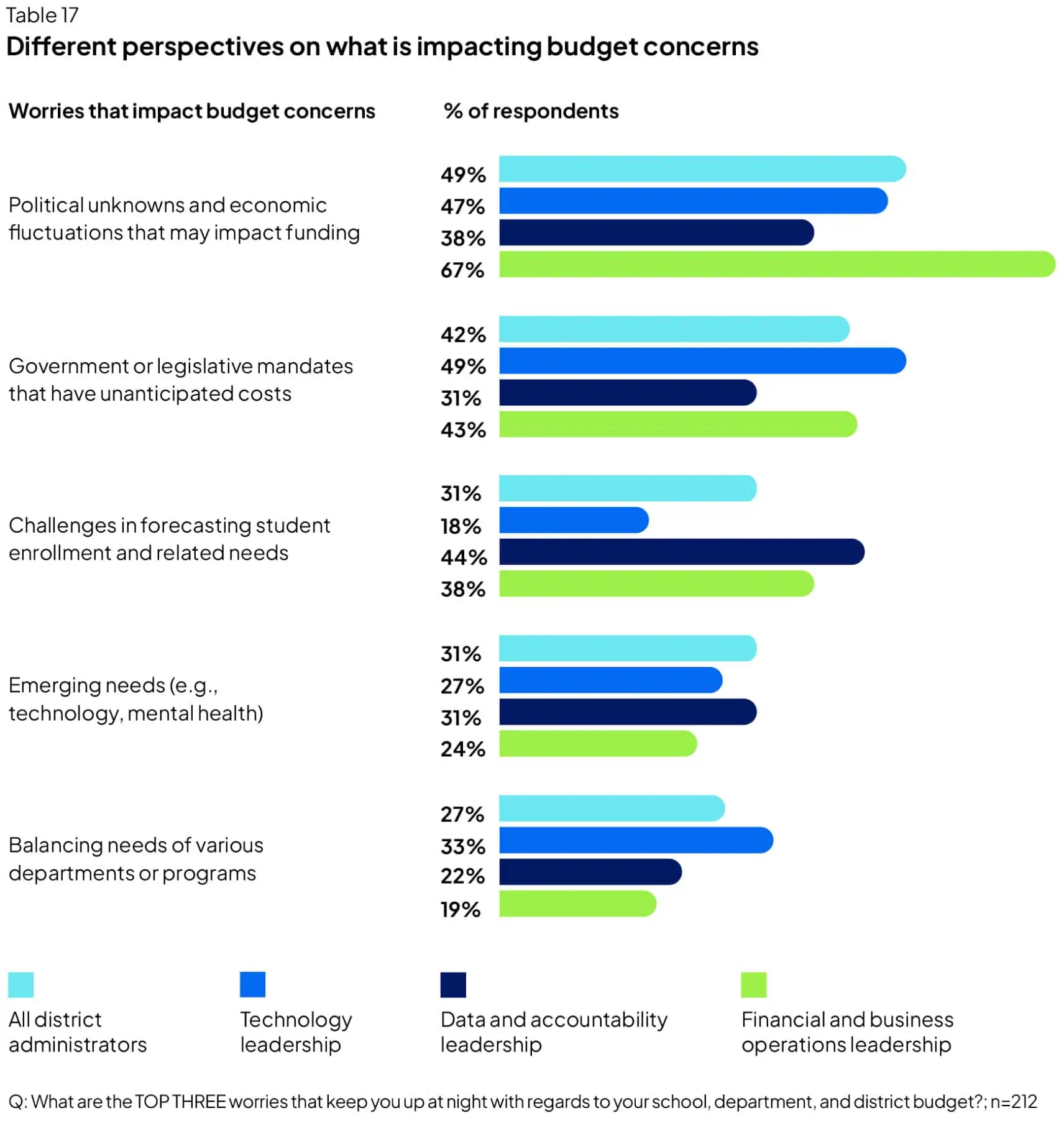
District leaders with financial or business operations responsibilities (67%) are particularly concerned about the impact of those situations on their district budget (Table 17). Technology leaders (49%) are particularly sensitive to the government or legislative mandates that may require additional technology expenditures or additional staff to address those mandates (as has been noted in the past around child safety and data privacy issues).
The challenges around forecasting student enrollment and what that means in terms of school capacity, staffing numbers, and district accountability are the nexus point for district leaders involved with data systems such as their student information system (SIS). These worries impact the entire district team as they work to create a balanced budget.
An ongoing concern according to multiple media stories this year is about how K-12 districts are reacting to both the real and perceived concerns in managing their strategic resources, including their financial resources, in a time of economic uncertainty.
We asked district administrators to provide us with real-world insights about their plans for managing their organizations with decreased funding. District administrators ranked the hard decisions they need to make to ensure financial stability. These decisions are an indication of the district’s priorities and provide insights into how they are thinking about managing their strategic resources, including technology.

The instability in the economy and the changes at the federal level are forcing us to be creative. Even though we have used these financial resources for generations to support programs we hold dear, it is time for us to be realistic and reevaluate the way we are spending public funds. It is hard, but it is our reality today.
In order of priority chosen by district administrators, strategic decisions would include both infrastructure issues (including technology) and human capital/staffing considerations (Table 18).
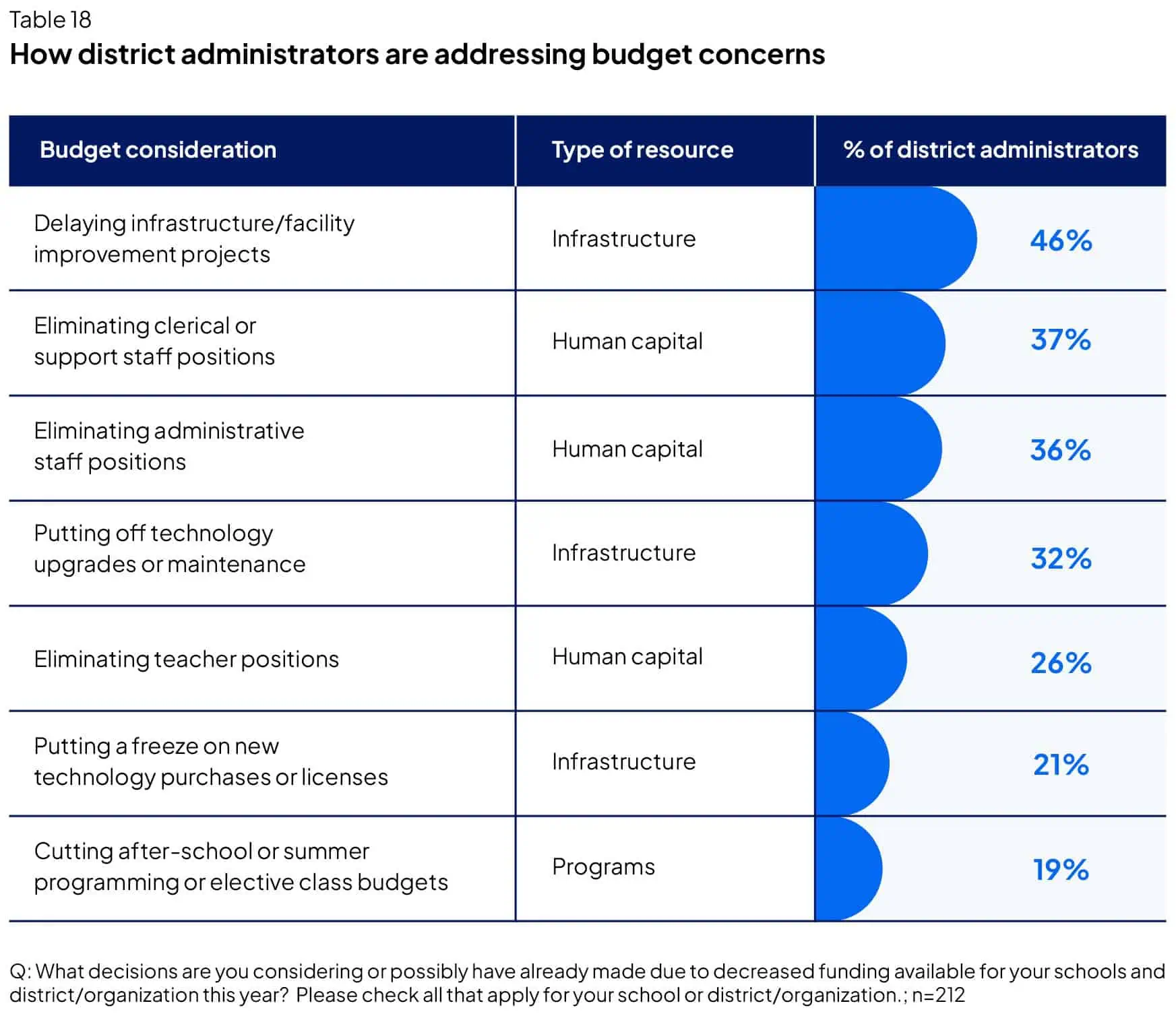
As noted in this list, the emphasis is to avoid cutting instructional staff, new technology investments, and noncore programming. However, putting off technology infrastructure upgrades or maintenance could be problematic for districts in the long term because enhanced access to real-time financial and enrollment data can help inform these budget decisions in the future. Technology upgrades also create opportunities for district teams to focus more on strategic planning.

Technology gives our teams time back by taking the repetitive, manual work off their plates so they can focus on what actually moves the district forward. When we automate routine tasks with a human in the loop across HR, finance, IT, and school operations, we improve accuracy, speed, and service while freeing staff to do the work only people can do.
Leveraging technology tools and data to attract new families to enroll in local schools
District administrators note that they face challenges in forecasting student enrollment. Forecasting student enrollment has always been difficult, especially for districts that have faced either higher rates of family mobility or are in high population growth areas.
Managing student enrollment today, however, is more challenging due to an increase in alternatives to public education. Parents and families in many states have more choice in terms of enrolling their children in private and parochial schools with legislatively mandated public funding for those choices. Whereas there are many different types of school choice or voucher programs, according to Ballotpedia as of September 2025, 21 states have enacted Education Savings Accounts (ESAs) where public funds (like per-pupil funding) are deposited into individual, state-managed accounts for eligible students, giving parents choices as to how to spend those funds.6
Virtual schools... provided a valuable option for addressing parent concerns following the pandemic. But what started... as a way to maintain enrollment and continuity of learning has matured into a growing mindset about the flexibility of the modern classroom and how it can meet ...student needs. Is a virtual program likely to significantly address chronic absenteeism? Generally, not by itself. But it is part of a solution set districts should explore. ...It certainly helps... retain students... as well as meet the increased demand by families for more flexibility in where and how their child learns.
Additionally, nationwide, more parents than ever before are choosing to homeschool their children. According to researchers at Johns Hopkins School of Education, “In the 2024-2025 school year, homeschooling continued to grow across the United States, increasing at an average rate of 5.4%. This is nearly three times the pre-pandemic homeschooling growth rate of around 2%. Notably, 36% of reporting states recorded their highest homeschool enrollment numbers ever—exceeding even the peaks reached during the pandemic.”7
Public charter schools also present compelling options for many families. Given these trends, maintaining or increasing school enrollment is a definite challenge today that impacts a school district’s bottom line. Attracting families, however, to enroll their children in local public schools presents an opportunity for districts to think creatively about how to leverage technology to support new marketing campaigns and efforts to attract and retain school families.
For many districts, marketing local schools and their successful educational outcomes has not been a strength. And yet, faced with an opportunity to more effectively message the benefits of local school choice, many districts are stepping up their efforts to use technology effectively to tell their story.
From the research findings, we identified traditional technology approaches that districts are using to attract families, and some emerging technology strategies that show promise.
Heading the pack of traditional approaches, school districts (52%) are optimizing their websites to increase their visibility in their local communities and leveraging online channels (50%) and social media outlets (47%) to showcase their school achievements and to tell authentic stories about student life at their schools (Table 19).
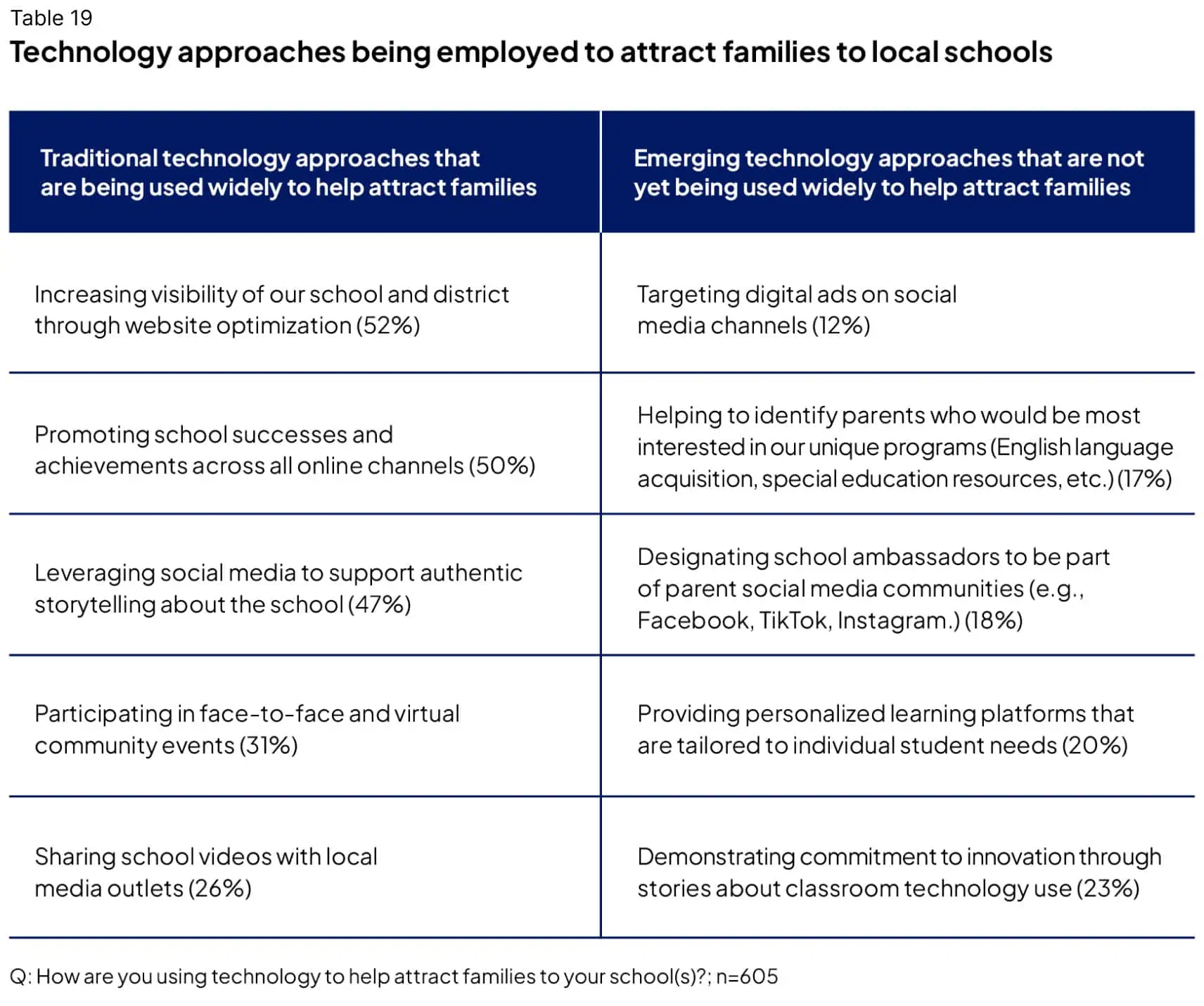
Though only adopted to date by less than one-quarter of districts, some of the other emerging technology and data-infused strategies could provide additional support in a district’s quest to attract new families. Demonstrating how technology is being used in the classroom, especially to help students develop future-ready skills, could resonate with many new families.
Thinking about leveraging the role of influential parents as school ambassadors may yield greater impact than simply posting news, images, and videos on school social media channels. And finally, using data to identify parents and caregivers who may be interested in certain school offerings and programs and placing digital ads targeting specific types of families is borrowing a page from common marketing strategies used by many higher education institutions, government agencies, and businesses today.
The bottom line is the same. School districts need to be more proactive in marketing their schools to prospective families. Increased enrollment is a necessity to stabilize budgets. New innovative strategies for using technology and data to attract families to consider local schools is a new imperative for many districts.
Conclusion
It’s clear to me that the experiences that students have in the classroom shape their future only if they care about and engage in what they are learning. Classroom practice is key. Parents want education to be flexible enough to enable more personalization of the learning process. Students want more flexibility as well to support learning at their own pace and around areas of interest. And the same goes for our workforce. We are not set up yet to be this flexible or provide all these options, but schools must shift to a different model that is in alignment with the way the world works today.
Today, K-12 leaders at every level want to ease teachers’ workloads, strengthen teacher recruitment and retention practices, skillfully navigate district financial concerns, and implement effective strategies for engaging students and families. Our survey and interview findings provide a valuable road map for starting to address these challenges with the help of technology:
- Earlier, more effective student interventions and AI-supported career planning
- Stronger instructional supports and customized professional development for teachers
- Better tools and streamlined communications to help educators and families respond to student needs more quickly
- Real-time budget insights and data-driven marketing efforts to increase enrollment
Beyond targeted improvements like these, districts will need to create a coherent vision for technology and data usage moving forward. Specifically, leaders will need to decide if, why, when, and how responsible AI will be implemented to support personalizing learning, professional development, family communication, budget management, and more.
Interest is there; the coherence of a systems vision is still pending. And yet, as noted by Bill Bass, we know that the school model must shift to meet the needs of a new generation of students and families who want the classroom experience to better mirror the way people are living and working in our increasingly information-centric, tech-driven society.
Technology can provide more options, enable personalized experiences to meet individual needs, and optimize human capital and relationships. With this new set of norms within our schools, the onus is on our leaders to drive a new coherent vision for the future—a vision that allows for adaptation.
If leaders recognize an opportunity for digital efficiency but lack the components of digital readiness, it’s too late to build them. If the district or school has invested in digital readiness but leaders are unable to see opportunities to adapt, students are underserved.
It is our hope that this report will encourage cross-departmental dialogue and inspire education professionals to think anew about why and how to leverage technology in their own context. We also hope to amplify new perspectives on how AI in particular can enrich tomorrow’s teaching and learning.
The opportunity is now. The future is waiting to see how we embrace it.
Let's connect and discuss how we can support your organization's goals.
Appendix
Research Methodology
On behalf of PowerSchool, Project Tomorrow designed a mixed-methods data collection and analysis process to support the development of this year’s K-12 EdTech Pulse. A national online survey was developed to collect quantitative and qualitative data from classroom educators, school building administrators, and district office administrators from schools and districts across the country. In addition, Project Tomorrow facilitated qualitative feedback through small online focus groups or virtual discussion roundtables of educators and administrators, and through one-on-one interviews with national thought leaders. Project Tomorrow utilized our highly regarded Speak Up Research methodologies and knowledge to design and implement the research processes for this year’s report.8
A national online survey was developed to collect quantitative and qualitative data from educators and administrators from schools and districts across the United States and in US territories. The quantitative data findings in this report represent the views of 1,327 respondents gathered in October 2025. Project Tomorrow also facilitated the collection of qualitative feedback through small virtual discussion roundtables of educators and administrators, and through one-on-one interviews with national thought leaders. In total, 30 K-12 education leaders participated in those discussions. To provide added validity and context to the findings, Project Tomorrow utilized its highly regarded Speak Up Research Project methodologies and knowledge to design and implement the research processes for this year’s report. Where appropriate, Speak Up Research results augment the report data findings.
National Online Survey
To gather perception data on key topics relevant to this report, an online survey was available for input from October 7 to October 24, 2025. Potential respondents were recruited to participate through outreach conducted by both PowerSchool and Project Tomorrow. In addition to providing feedback on the key education focus areas covered in this report, respondents were also asked to identify their role, state or territory, years worked in education, and school district size. The quantitative data findings in this report represent the views of 1,327 respondents. Analysis of the data findings are included in this report as descriptive statistics. Where applicable, cross-tab analysis was used to identify similarities or differences by respondent roles with schools or districts. Project Tomorrow shared key findings from the 2024-25 Speak Up Research Project to provide additional context for the findings in this report. The appendix provides further information on the demographics of the participants in the online survey.
Virtual Roundtables
Project Tomorrow convened six virtual roundtables to better understand a variety of perspectives on the key education focus areas. The 60-minute conversations included representatives of districts across the US using a common discussion guide for given groups and focus areas. Educator roles ranged from technology department staff to district administrators. The participants in these discussions were:
- Veronica Alvidrez Alvarez, Director of Innovative Learning, Ysleta Independent School District (TX)
- Tony Campbell, Director of Learning and Innovation, Washington County School District (UT)
- Jeremy Davis, Assistant Superintendent of Innovation & Instructional Support, Fullerton School District (CA)
- Kristin Donahue, Director of Special Education & Student Services, Bourne Public Schools (MA)
- Kristy Espino, Chief Technology Officer, Glendora Unified School District (CA)
- Chris Guerrera, Information Systems Manager, Hamilton Township School District (NJ)
- Tricia Griffith, Assistant HR Director, Dripping Springs Independent School District (TX)
- Mike Jodon, Executive Director of Network Systems, Capital Preparatory Charter Schools (CT, NY)
- Leah Kirk, SIS Administrator, Paul Public Charter School (DC)
- Shelley Mumaw, Director of Technology, Ottoville Local School (OH)
- Doug Skinner, District Instructional Data Officer, Gateway Regional School District (NJ)
- Jackie Sonsiadek, SIS Specialist/Data Analyst, Rich Township District 227 (IL)
Interviews
Project Tomorrow conducted interviews with 18 national thought leaders representing different constituencies and sectors within K-12 education. The leaders were identified by Project Tomorrow with additional input from the PowerSchool team and included members of the company’s Education Advisory Council (designated with an asterisk). Each semi-structured interview was focused on the key challenges facing education today and the leaders’ perceptions on the value of technology solutions to address these challenges. The thought leaders that participated in these 30-45 minute virtual interviews included:
- Bill Bass, Innovation Coordinator for Instructional Technology, Information, Library Media, and Federal Programs, Parkway School District (MO) *
- Andrea Bennett, Executive Director, California IT in Education (CITE)
- Nicole Bond, Director of Attendance and Enrollment, Haywood County School District (TN) *
- Jean-Claude Brizard, President and CEO, Digital Promise
- Douglas Casey, Executive Director, Connecticut Commission for Educational Technology
- Tim Clark, Vice President, K-12 Programs, 1EdTech
- Rae Fearing, Director of Programs, California Association for Leading Innovation in Education (CALIE)
- Christine Feenstra, Executive Director, California Association for Leading Innovation in Education (CALIE)
- Rick Gaisford, Educational Technology Specialist, Utah State Board of Education
- Lori Gracey, Executive Director, Texas Computer Education Association
- Keith Krueger, CEO, CoSN
- Tammy Maginity, Executive Director, Michigan Association for Computer Users in Learning (MACUL)
- Ben Maynard, Digital Learning Coach, School Digital Readiness Services Office of Education Technology, Kentucky Department of Education (KY)
- Tiffany McDole, Policy Director, Education Commission of the States
- Susan Moore, Director of Technology, Meriden Board of Education (CT) *
- Kim Nidy, Director of Technology, North Canton City Schools (OH) *
- Joseph South, Chief Innovation Officer, ISTE
- Jeremy Thompson, Deputy Superintendent, Denton Independent School District (TX) *
The qualitative feedback from the roundtables and interviews was used as background input for the analysis of the quantitative findings shared in this report. Where appropriate, specific quotes from the data collection process are included to support the research findings.
About Project Tomorrow
Project Tomorrow's vision is to ensure that today’s students are well prepared to be tomorrow’s innovators, leaders, and engaged citizens. We believe that authentic learning experiences enable all students to develop the skills and mindsets needed for future success. Our work spans Efficacy Studies and Research that measure the real-world impact of educational innovations, the nationally recognized Speak Up Research Project that amplifies the authentic voices of millions of K–12 stakeholders, and New Learning Model Programs that support schools in designing future-ready teaching and learning. Since 2003, we have provided education leaders, teachers, and parents with research-based insights that drive data-informed decisions, improve student outcomes, and create more effective learning experiences for all.
Learn more at tomorrow.org
About the PowerSchool Research Institute
The PowerSchool Research Institute supports K-12 decision-makers with evidence-based insights on emerging priorities, EdTech usage and trends, and the impact of education technology solutions in real-world settings. In addition to the K-12 EdTech Pulse, the Institute publishes the annual State of K-12 Finance study, as well as research on solution efficacy in partnership with leading educational research organizations.
Learn more at powerschool.com/research
Endnotes
- https://leadchangegroup.com/change-double-edged-sword/
- Education Focus Report. PowerSchool, 2024. https://www.powerschool.com/edtech-focus-report-2024/
- https://www.tomorrow.org/resource/2025-national-report/
- https://news.gallup.com/poll/695174/record-low-satisfied-education-quality.aspx
- https://www.edweek.org/leadership/school-attendance-suffers-as-parent-attitudes-shift/2024/08
- https://ballotpedia.org/School_choice_in_the_United_States#:~:text=As%20of%20September%2025%2C%202025,Other%20education%20policy%20topics
- https://education.jhu.edu/edpolicy/policy-research-initiatives/homeschool-hub/homeschool-growth-2024-2025/#:~:text= In%20the%202024%2D2025%20school,peaks%20reached%20during%20the%20pandemic.
- https://www.tomorrow.org/projects/speak-up/