Apache Cassandra Overview and Basics © Oleg Magazov omagazov@t-online.de
Learning Targets  Big Data introduction  Understand driving forces behind NoSQL development  Map known RDBMS concepts to corresponding NoSQL paradigms  Get overview about Apache CassandraTM architecture  Get overview about CassandraTM data model  Get first experience of CassandraTM packaging and CLI
Agenda • • • • • • • Big Data NoSQL. Main Technologies NoSQL. Products Apache CassandraTM Features Apache CassandraTM Architecture Apache CassandraTM Data Modeling Apache CassandraTM CLI
Big Data
Origin • • April 1998 John R. Mashey from SGI, Usenix talk: “Big Data and the Next Wave of Infrastress” Big Data refers to huge data volumes, continuously increasing data sources, velocity of data generation, data analysis and related technology solutions
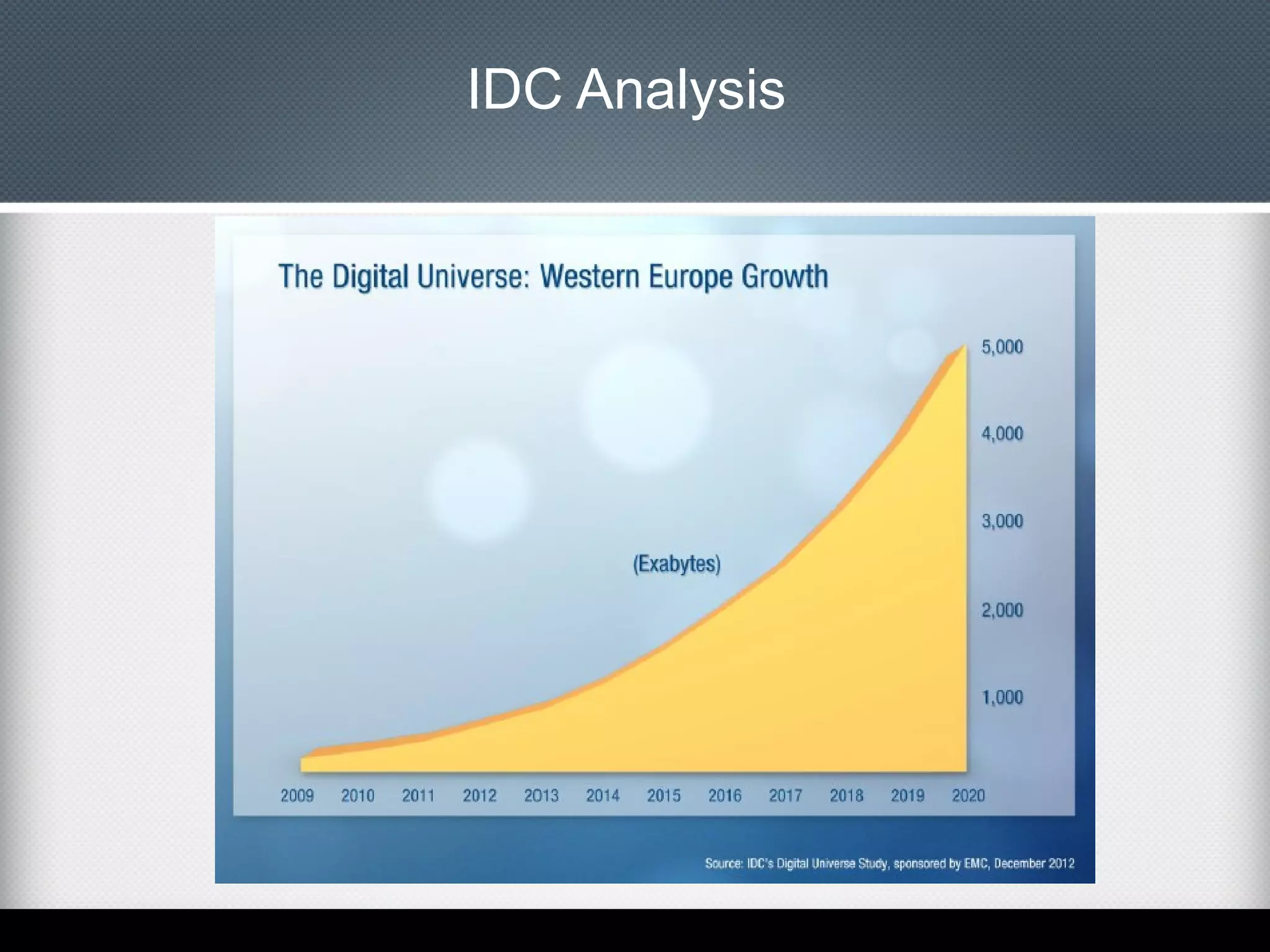
IDC Analysis
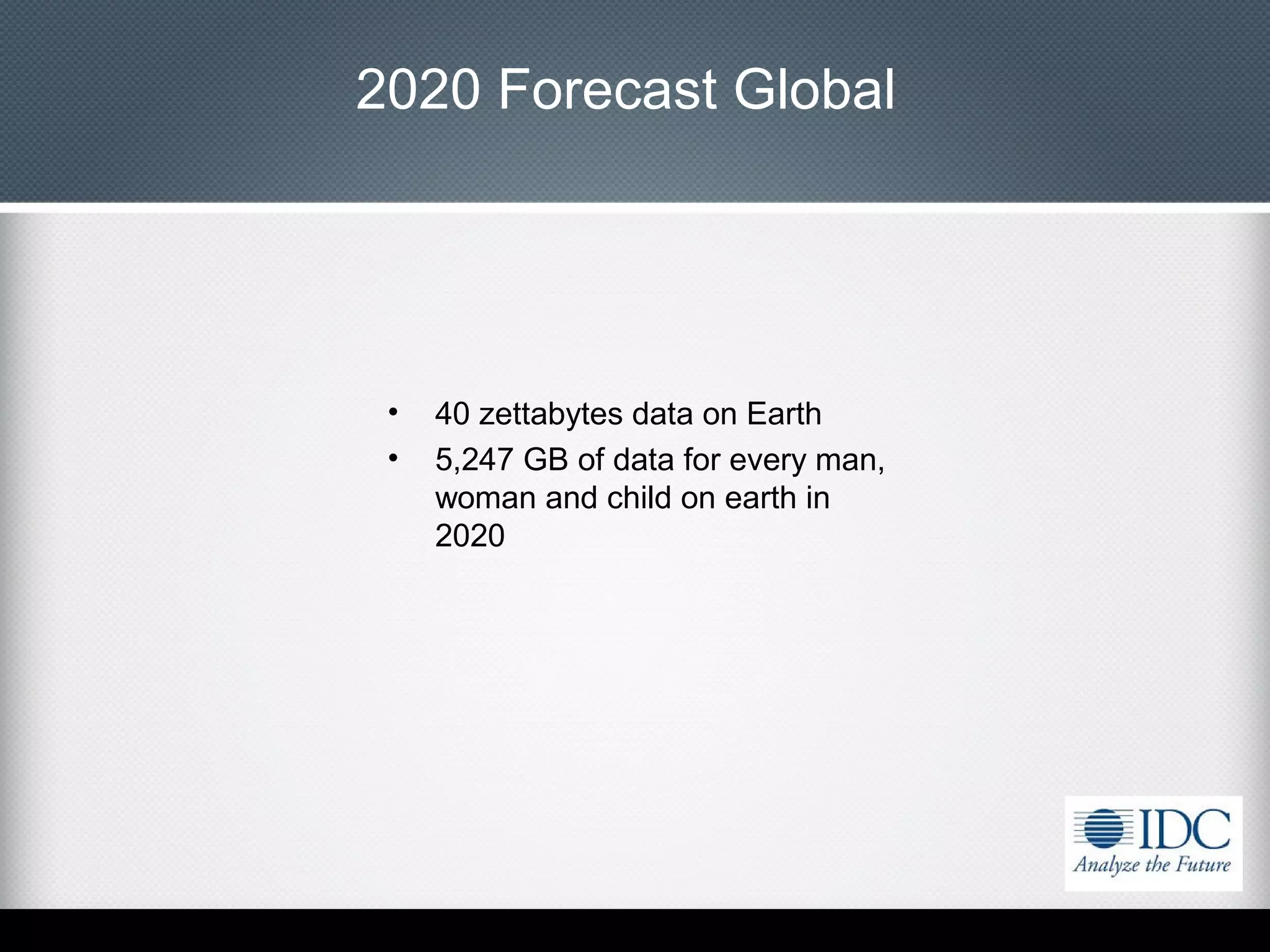
2020 Forecast Global • • 40 zettabytes data on Earth 5,247 GB of data for every man, woman and child on earth in 2020
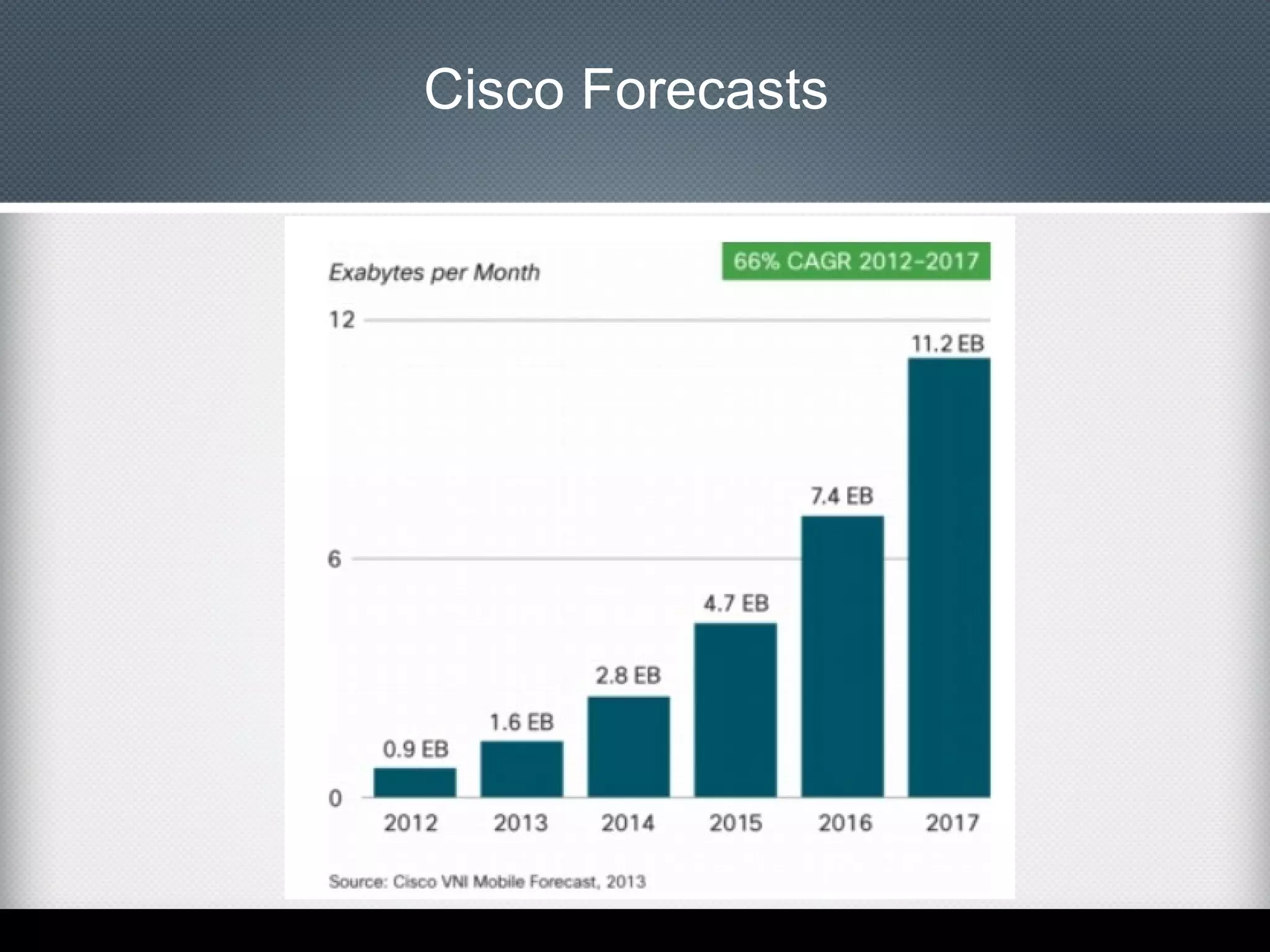
Cisco Forecasts
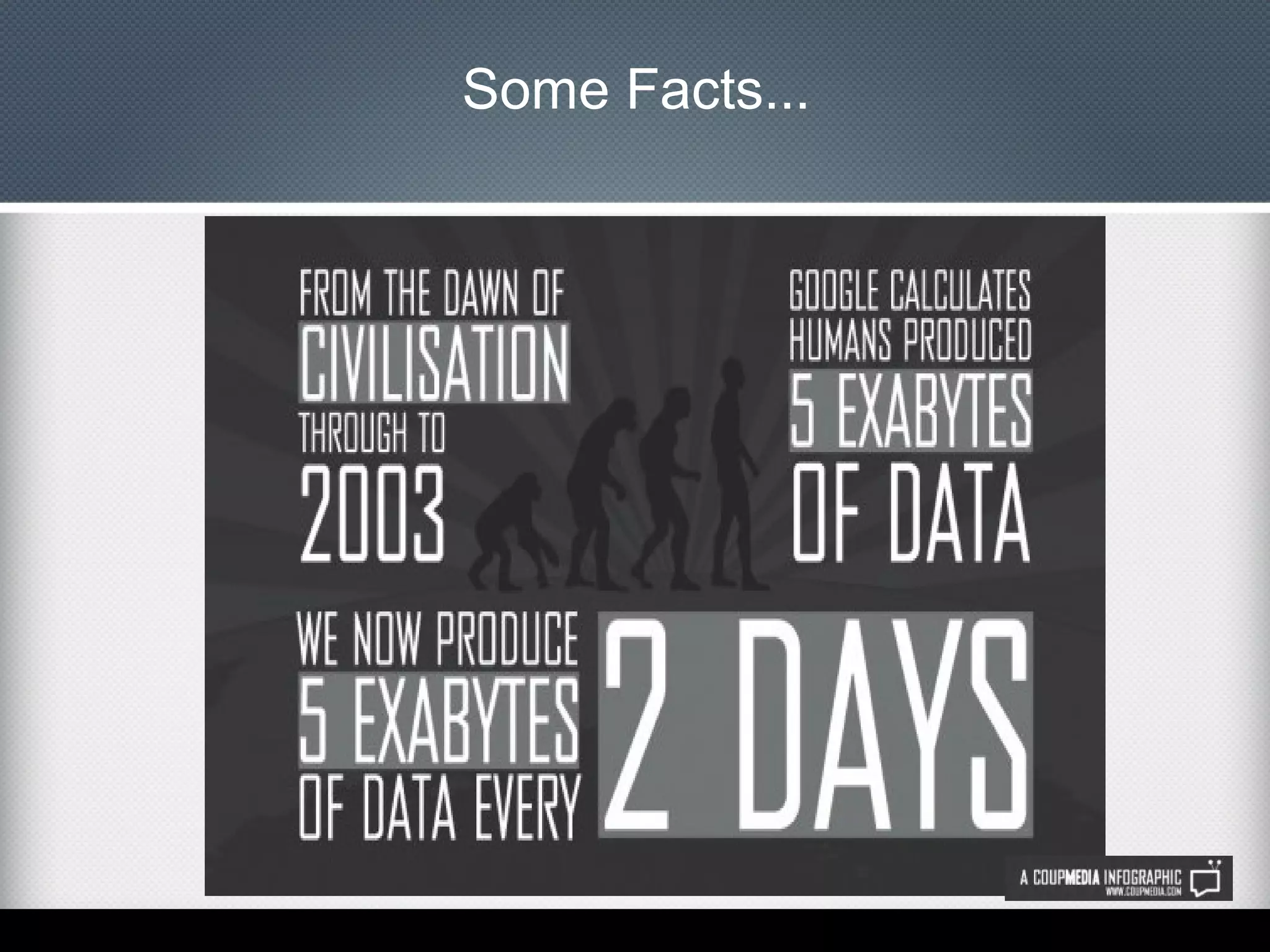
Some Facts...
Big Data Driving Forces • • • • Continued growth of Internet usage, social networks, and smartphones The falling costs of the technology for information creation, capturing and storage Migration from analog TV to digital TV Growth of machine-to-machine communication
Main Producer • • Machine-generated data is a key factor behind expansion Growth from 11% of the digital universe in 2005 to more than 40% in 2020 – – – – – Machine logs RFID readers Sensor networks Vehicle GPS traces Retail transactions
The Analysis Gap Currently only 3% of the potentially useful data is tagged, and even less is analyzed
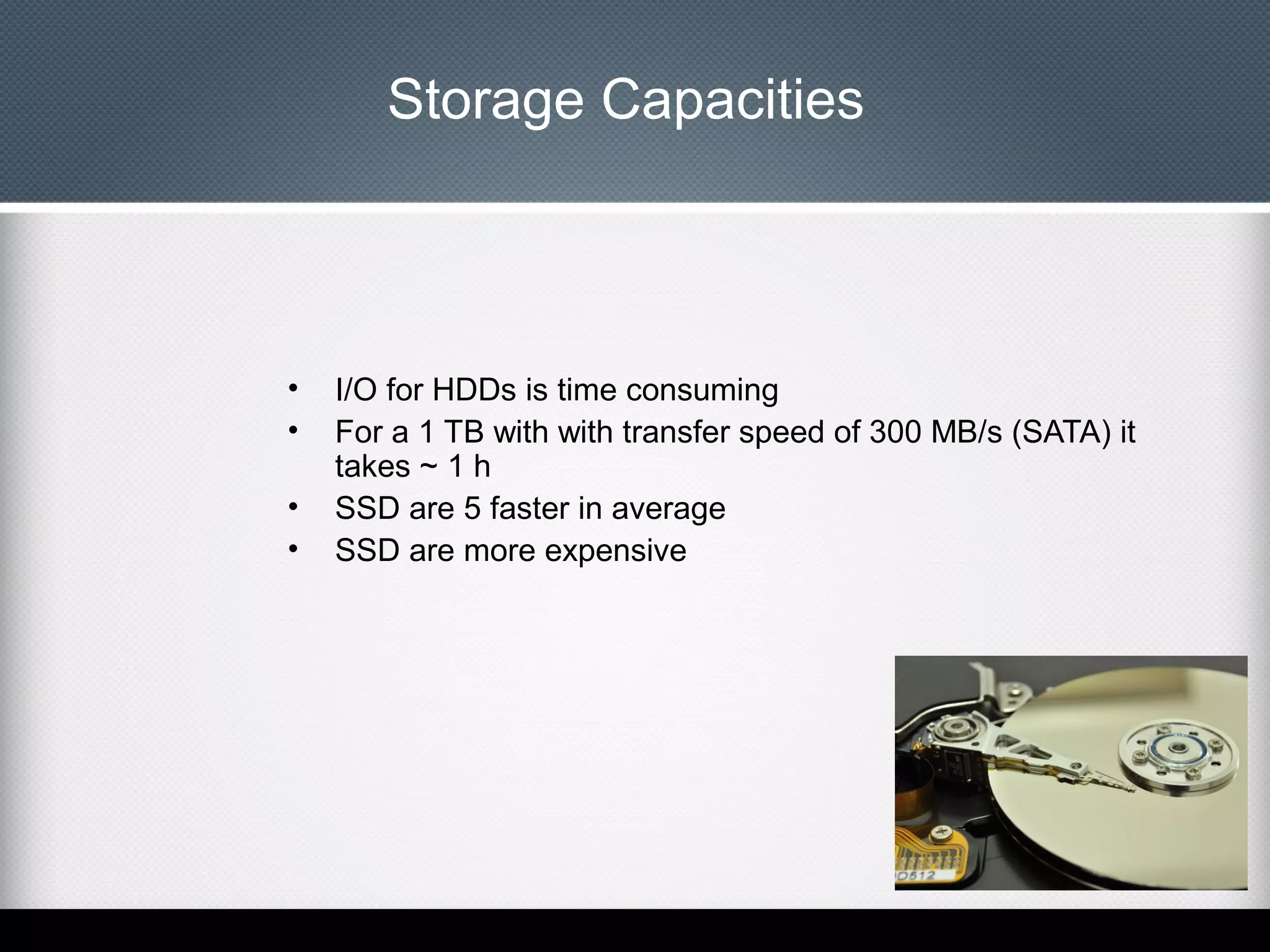
Storage Capacities • • • • I/O for HDDs is time consuming For a 1 TB with with transfer speed of 300 MB/s (SATA) it takes ~ 1 h SSD are 5 faster in average SSD are more expensive
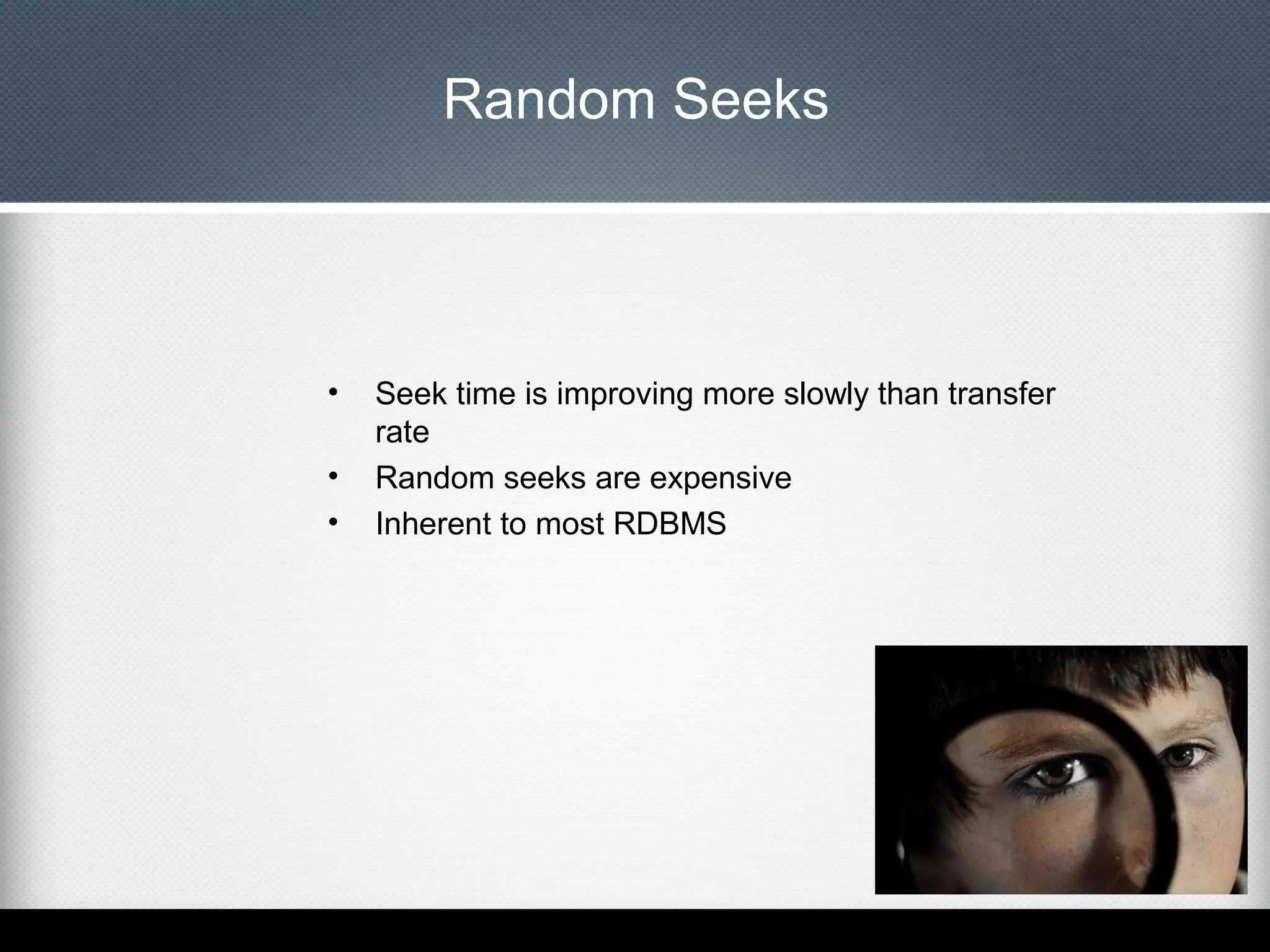
Random Seeks • • • Seek time is improving more slowly than transfer rate Random seeks are expensive Inherent to most RDBMS
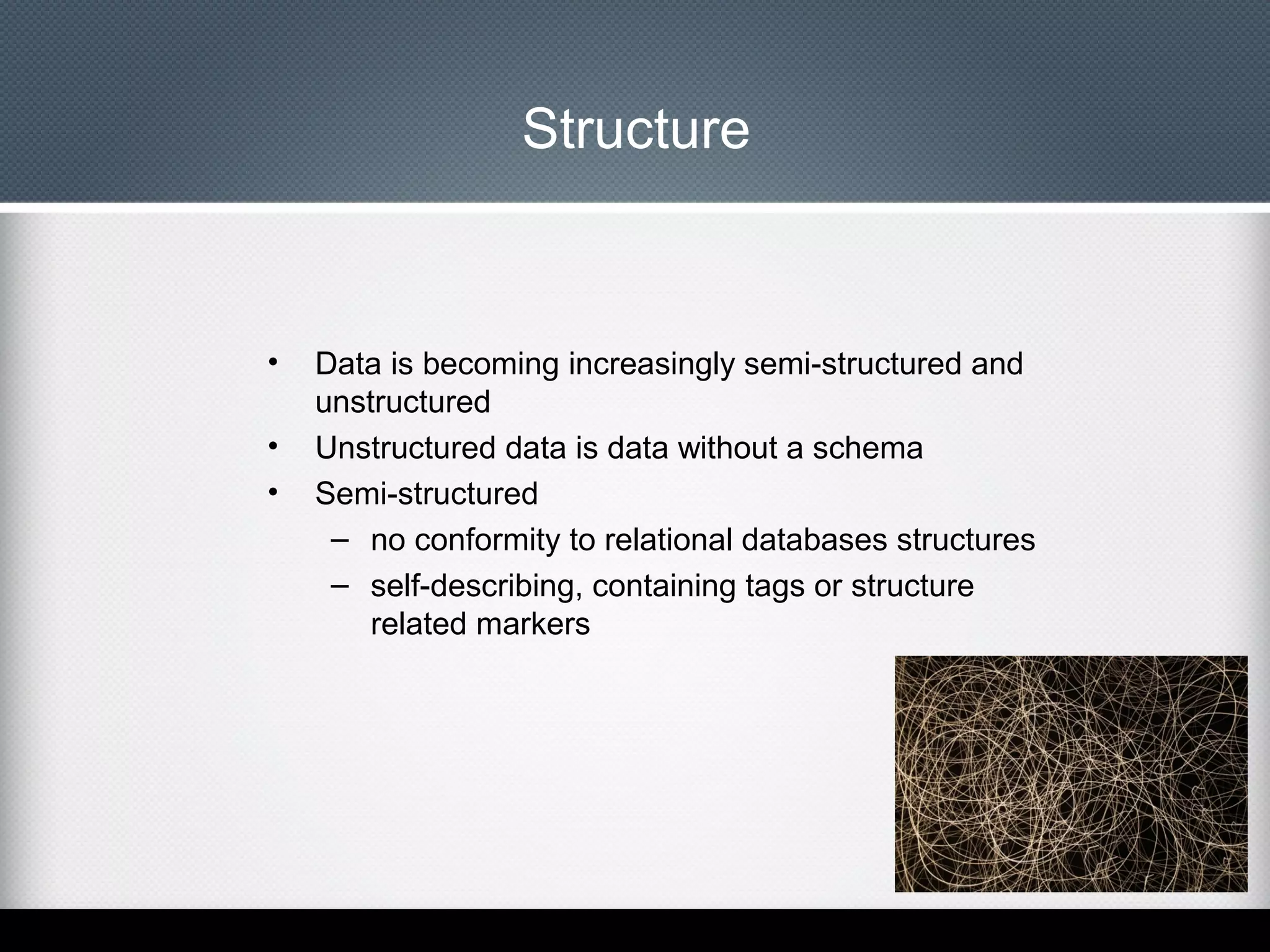
Structure • • • Data is becoming increasingly semi-structured and unstructured Unstructured data is data without a schema Semi-structured – no conformity to relational databases structures – self-describing, containing tags or structure related markers
Limitations of RDBMS • • • • • • Up-front schema declaration is needed Referential integrity is necessary Use mainly B-Tree indexes Non-Liniar scaling Are build around OLTP and OLAP approaches Many solutions are really expensive
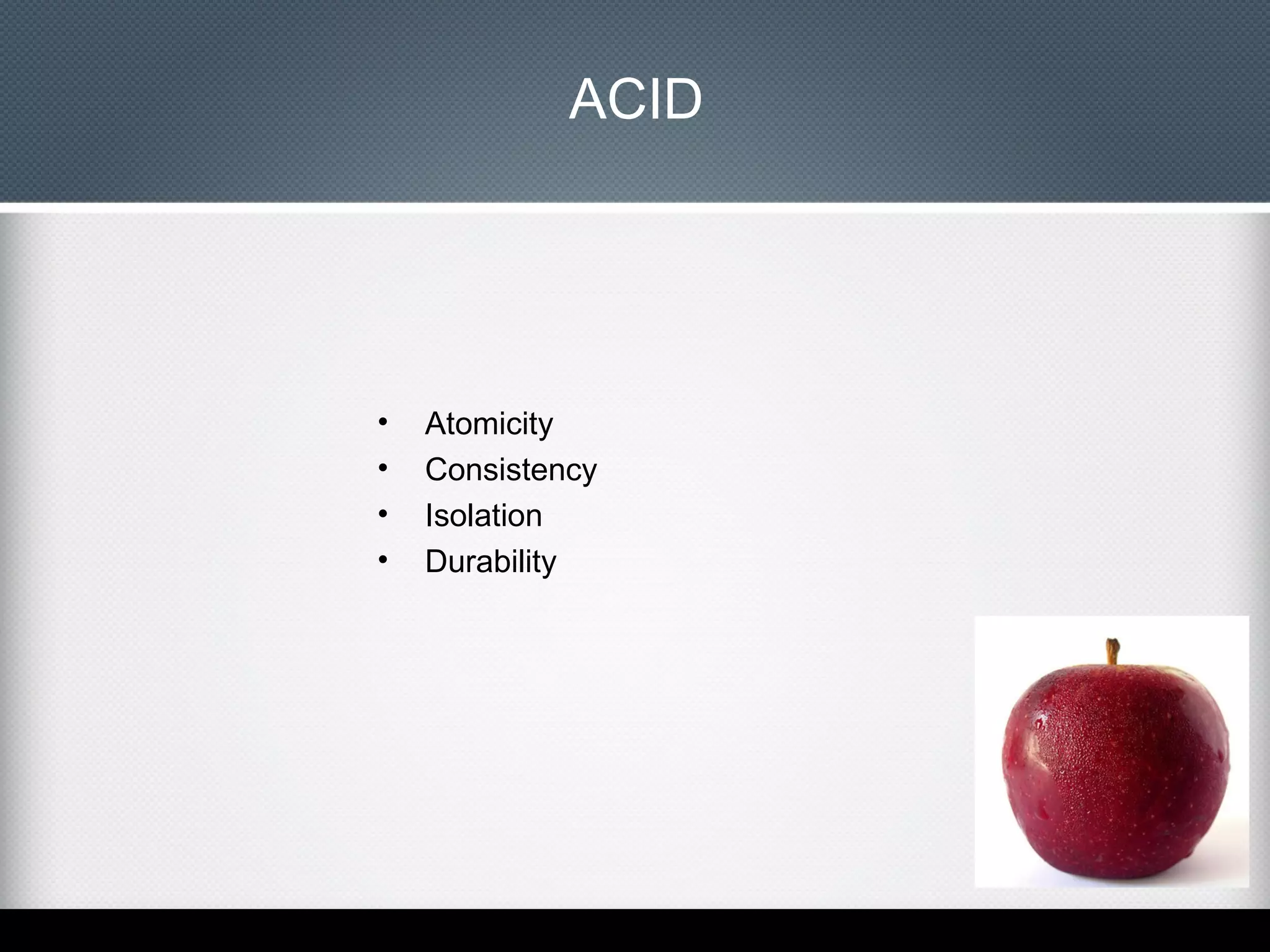
ACID • • • • Atomicity Consistency Isolation Durability
Isolation Levels • • • • Read Uncommitted Read Committed Repeatable Read Serializable
ACID in Destributed Systems • • Two-phase commit (2PC) Two-phase locking (2PL)
Roadmap • • • • • Parallel Processing Sharding and shared-nothing architecture Reliability through replication Advanced algorithms for parallel processing Advanced storage structures addressing seek problem
NoSQL
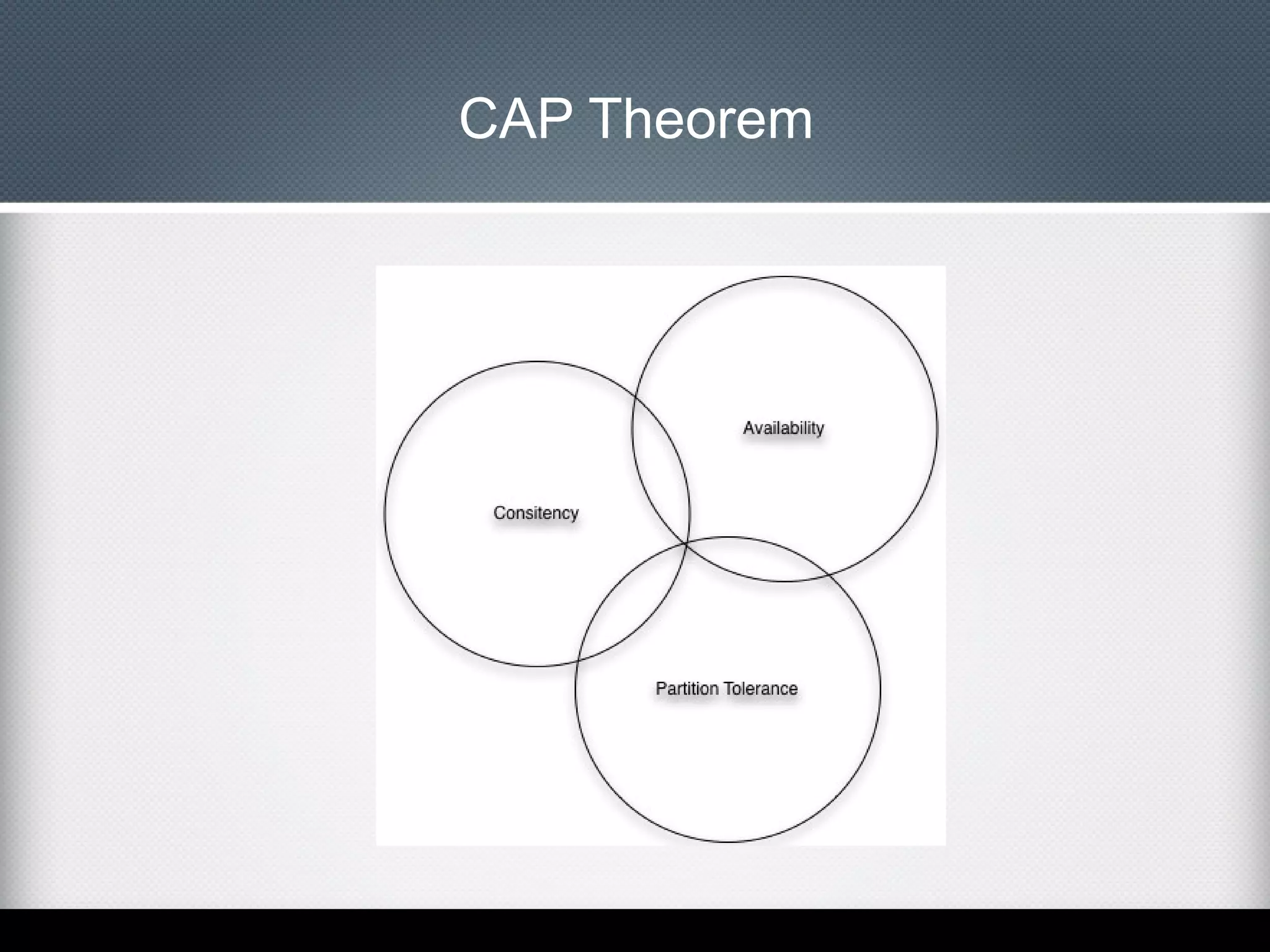
CAP Theorem
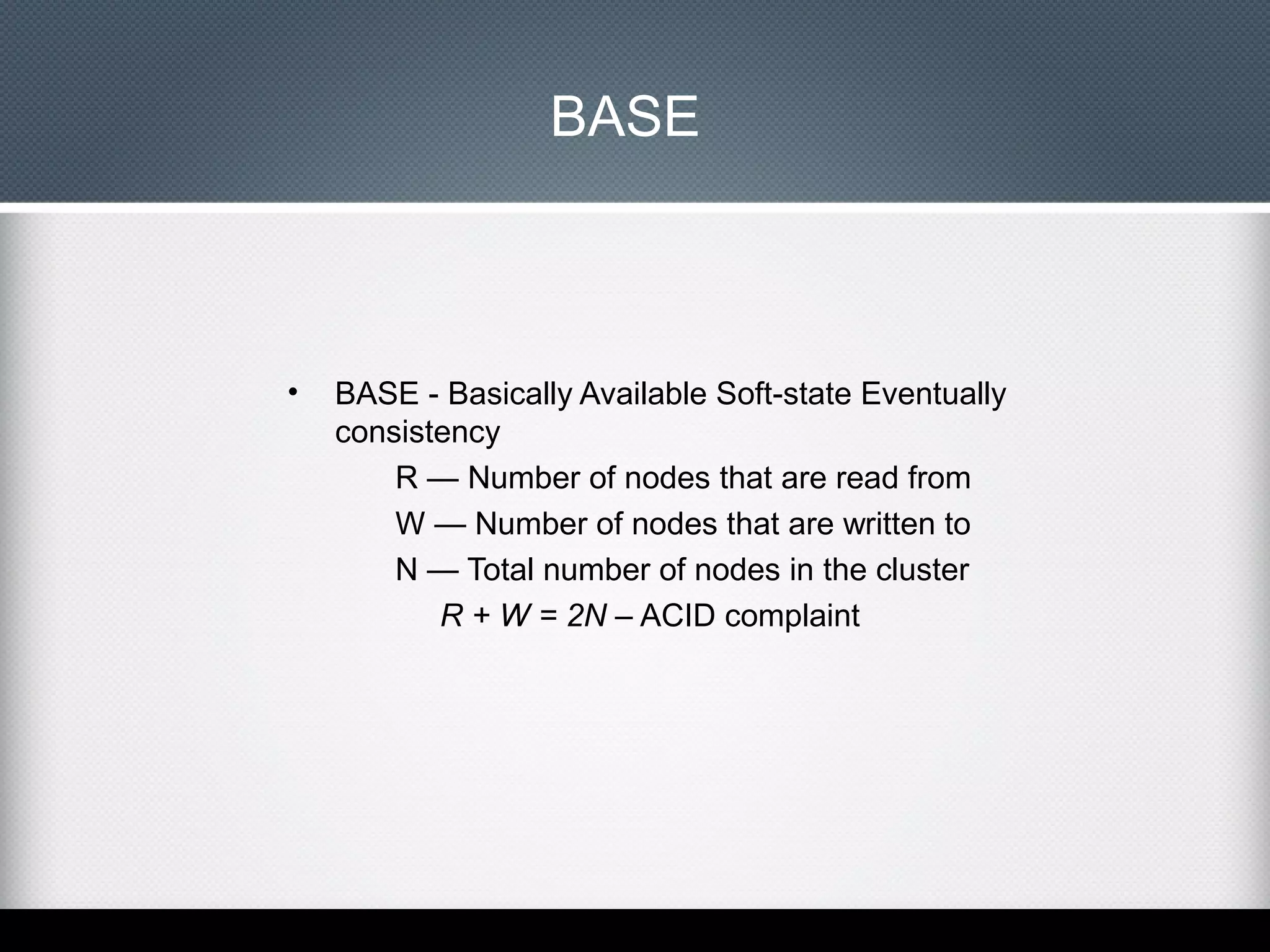
BASE • BASE - Basically Available Soft-state Eventually consistency R — Number of nodes that are read from W — Number of nodes that are written to N — Total number of nodes in the cluster R + W = 2N – ACID complaint
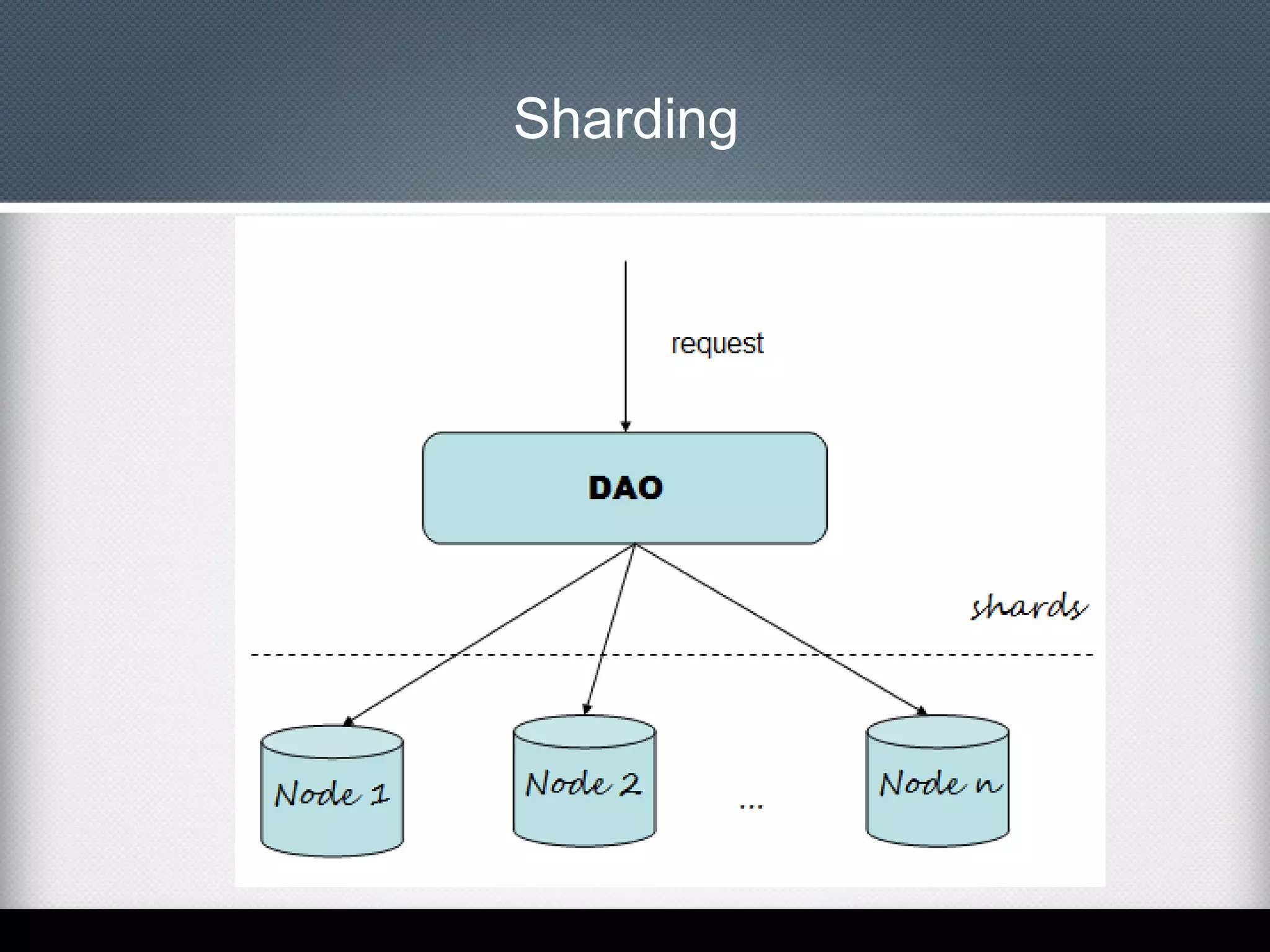
Sharding
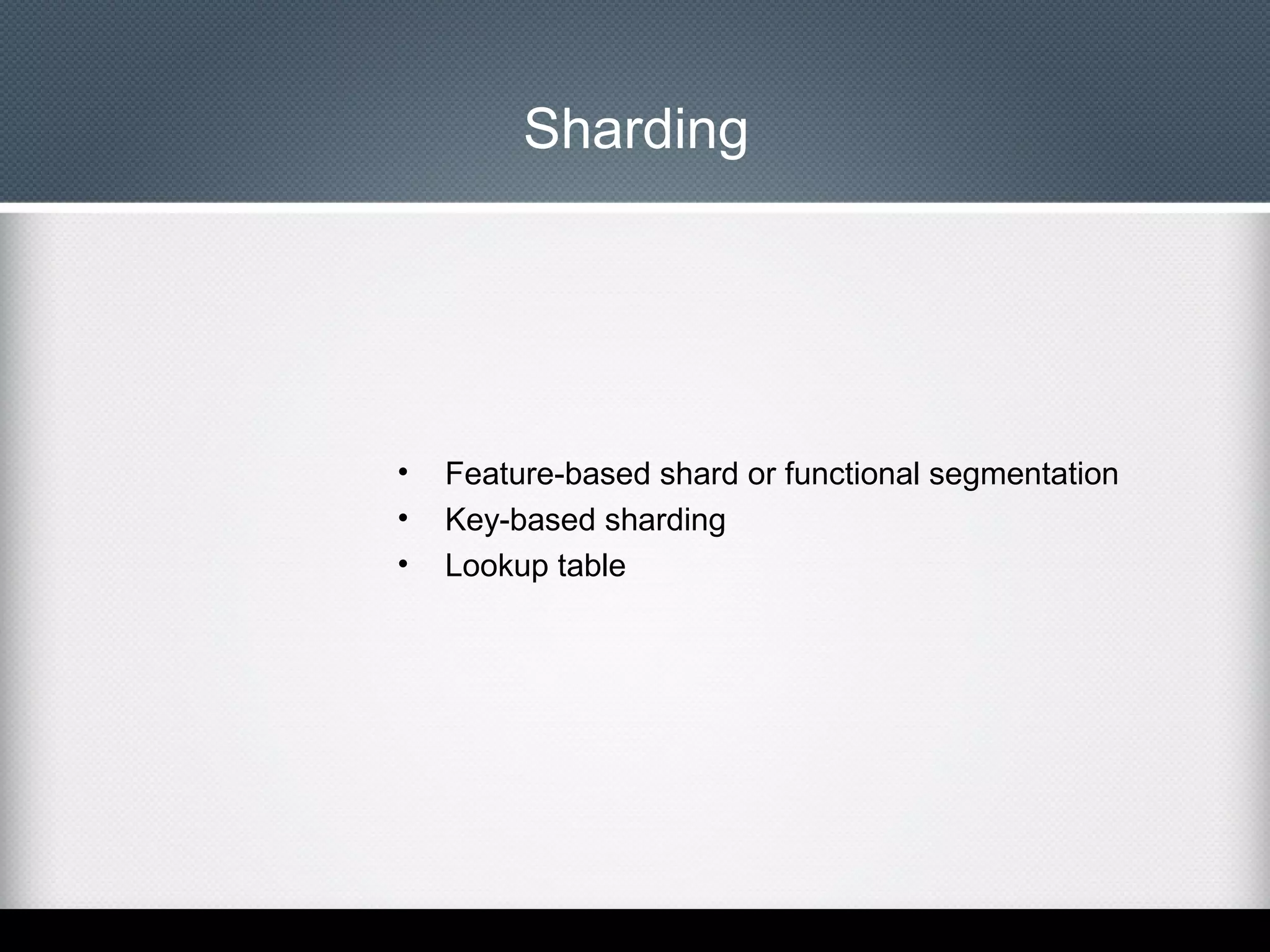
Sharding • • • Feature-based shard or functional segmentation Key-based sharding Lookup table
Setting Context • • • • „The Google File System”, October 2003 “MapReduce: Simplified Data Processing on Large Clusters”, December 2004 “Bigtable: A Distributed Storage System for Structured Data”, November 2006 “The Chubby Lock Service for Loosely-Coupled Distributed Systems”, November 2006
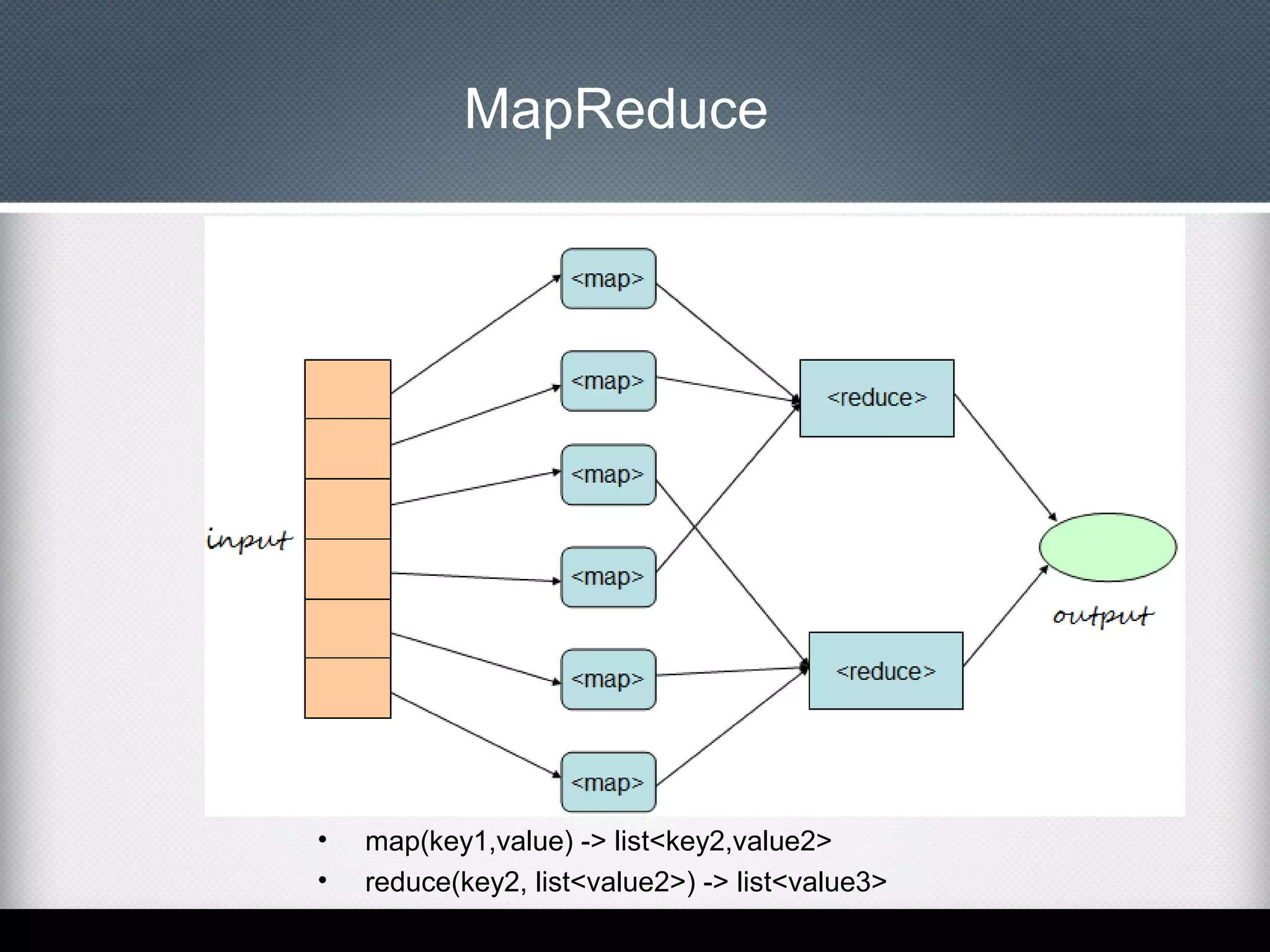
MapReduce • • • • • • Created by Google Parallel processing model Data locality Allows distributed processing on large data sets in cluster Derives its ideas from functional programming Works with semi-structured data
MapReduce • • map(key1,value) -> list<key2,value2> reduce(key2, list<value2>) -> list<value3>
Amazon Dynamo • • • • “Dynamo: Amazon’s Highly Available Key/value Store”, October 2007 Introduction of notion of eventual consistency There could be small intervals of inconsistency between replicated nodes Eventual consistency does not mean inconsistency
Amazon Dynamo • • • • Masterless Physical nodes are peers and organized into a ring Automatically partitioning mechanism Written in Java
Apache Hadoop • • • 2004—Initial versions of Hadoop Distributed Filesystem and Map-Reduce implemented January 2006—Doug Cutting joins Yahoo! February 2006—Apache Hadoop project officially started
NoSQL Features • • • • • • Advocated horizontal scalability in favor of vertical scalability Promises linear scalability Uses new advanced technologies for parallel processing Often uses custom file system implementation or advanced storage techniques Optionally schema-free No the concept of locking or locking is a choice by design
NoSQL Databases Classification • • • • Sorted Ordered Column-Oriented Stores Key/Value Stores Document Databases Graph Databases
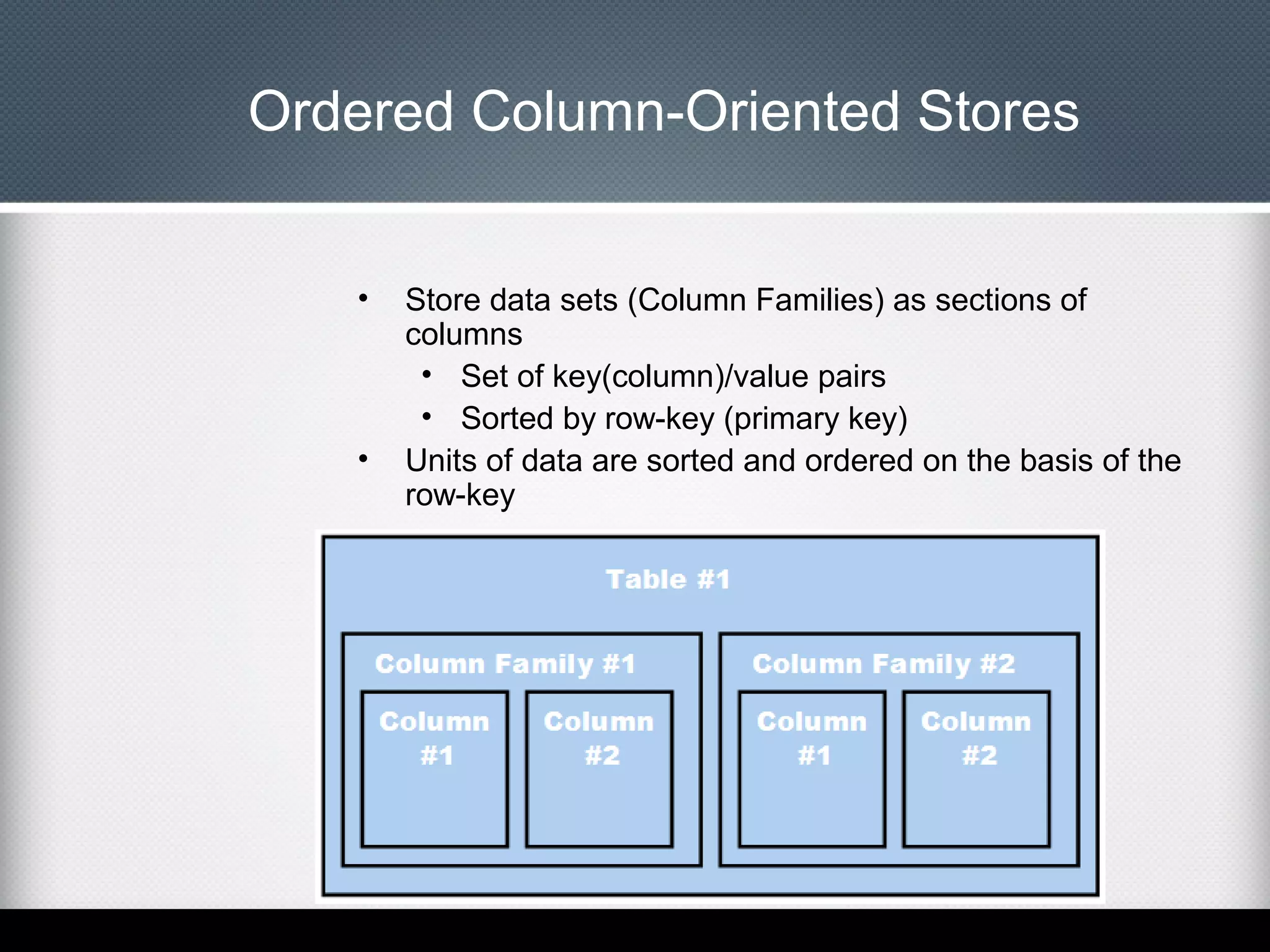
Ordered Column-Oriented Stores • • Store data sets (Column Families) as sections of columns • Set of key(column)/value pairs • Sorted by row-key (primary key) Units of data are sorted and ordered on the basis of the row-key
Column-Oriented Stores
Key/Value Stores • • • Idea – HashMap – fast O(1) access The key of a key/value pair is a unique value in the set and can be easily looked up to access the data Eventual consistency
Products
Document Databases • • • Keep documents as loosely structured sets of key/value pairs, typically JSON (JavaScript Object Notation) Treat document as a whole and avoid splitting a document into its constituent name/value pairs Allow indexing of documents on the basis of not only its primary identifier but also its properties
Products
Graph Databases
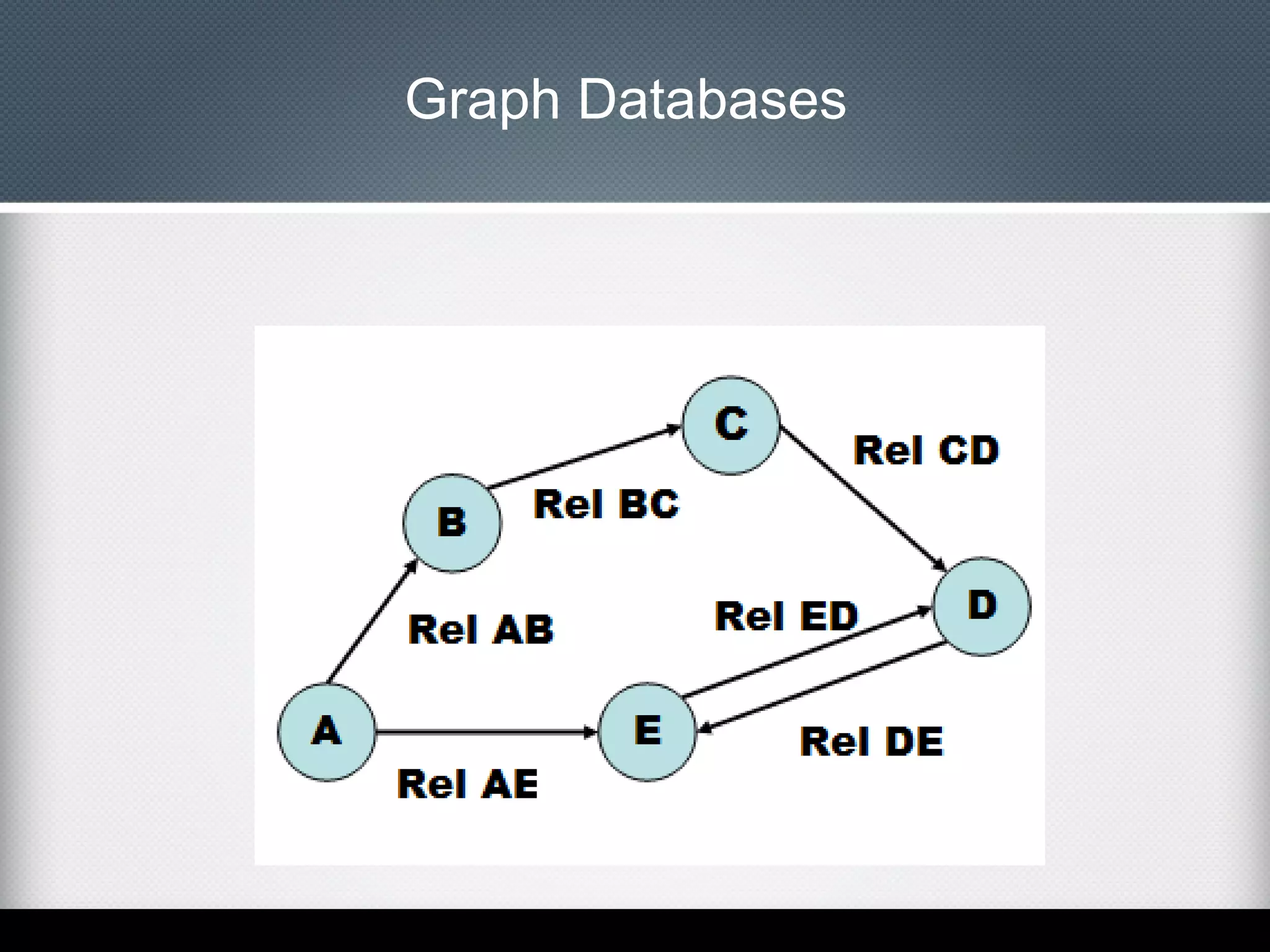
Graph Databases • • • • • Use graph structures with nodes, edges, and properties to represent and store data Are based on graph theory Are faster for associative data sets Don’t not require expensive join operations Best suitable for graph-like queries
Products
Apache CassandraTM
History • • • • • Originated at Facebook in 2007 to solve company’s inbox search problem July 2008, open source Google Code project March 2009, Apache Incubator project February 2010, top level Apache Project November 2013, version 2.0.3 was released
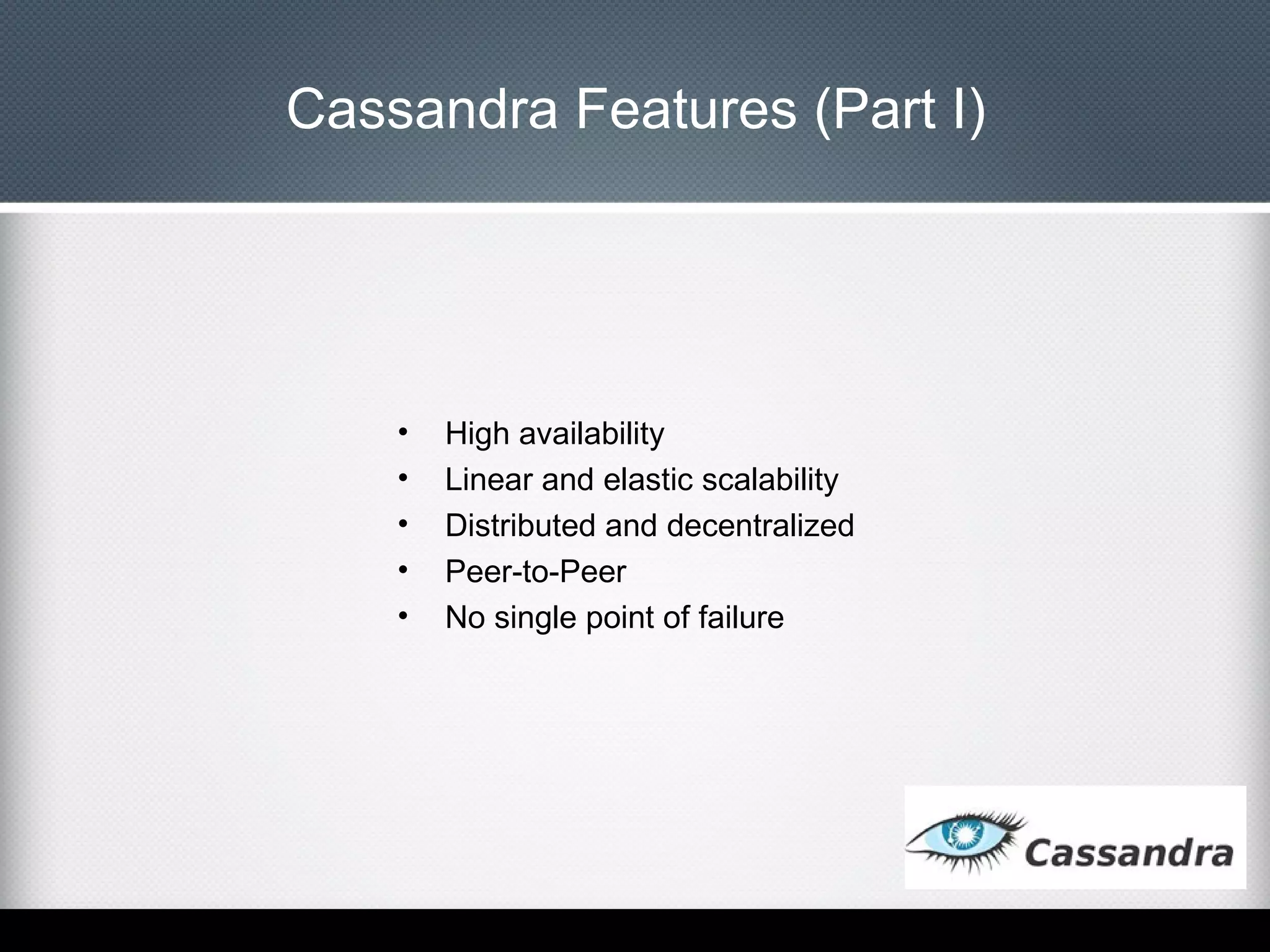
Cassandra Features (Part I) • • • • • High availability Linear and elastic scalability Distributed and decentralized Peer-to-Peer No single point of failure
Cassandra Features (Part II) • • • • • Fault tolerance and built-in failure detection Tunable consistency Supports basic subset of SQL via CQL A command-line access to the store Basic security support
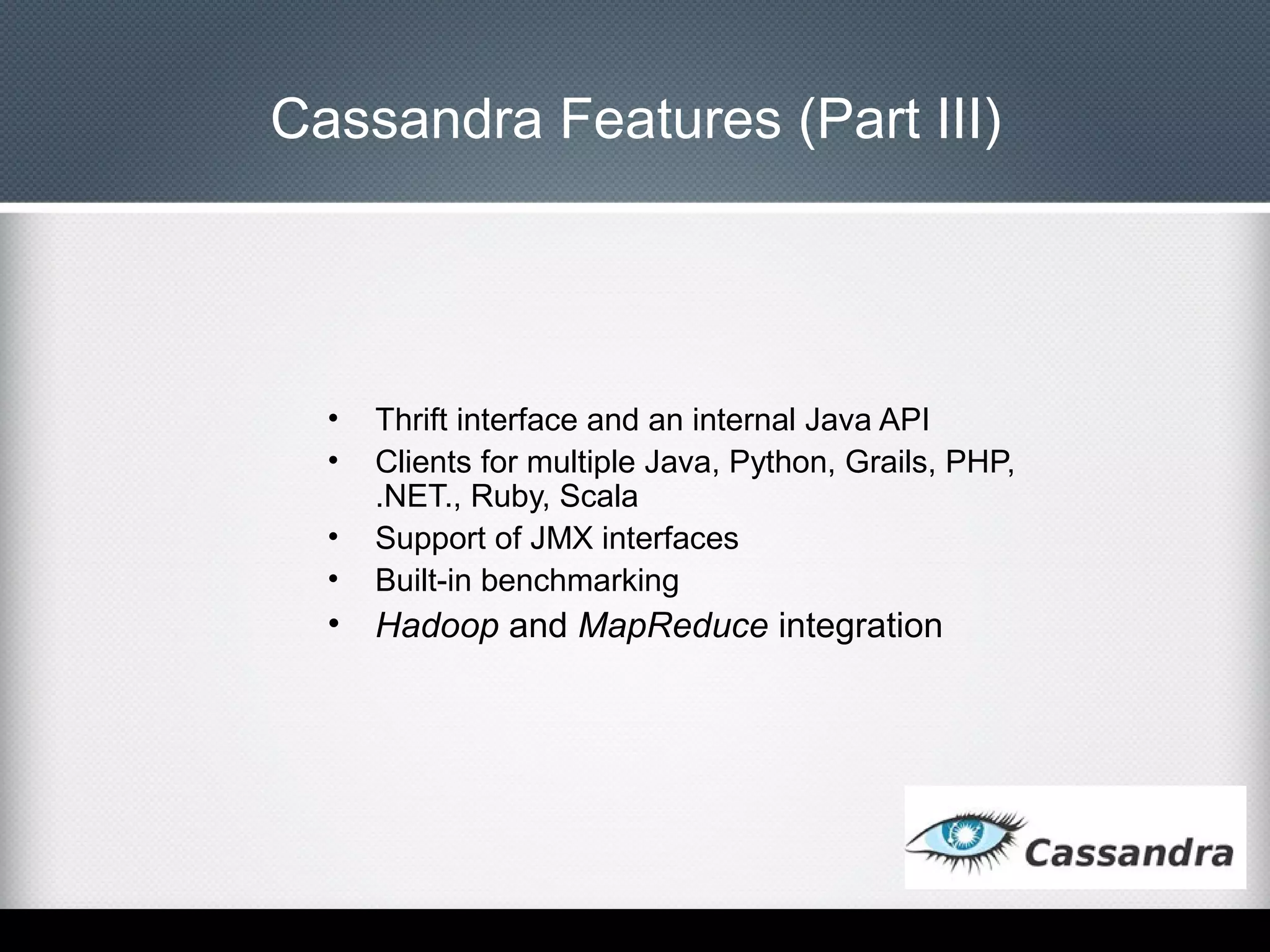
Cassandra Features (Part III) • • • • Thrift interface and an internal Java API Clients for multiple Java, Python, Grails, PHP, .NET., Ruby, Scala Support of JMX interfaces Built-in benchmarking • Hadoop and MapReduce integration
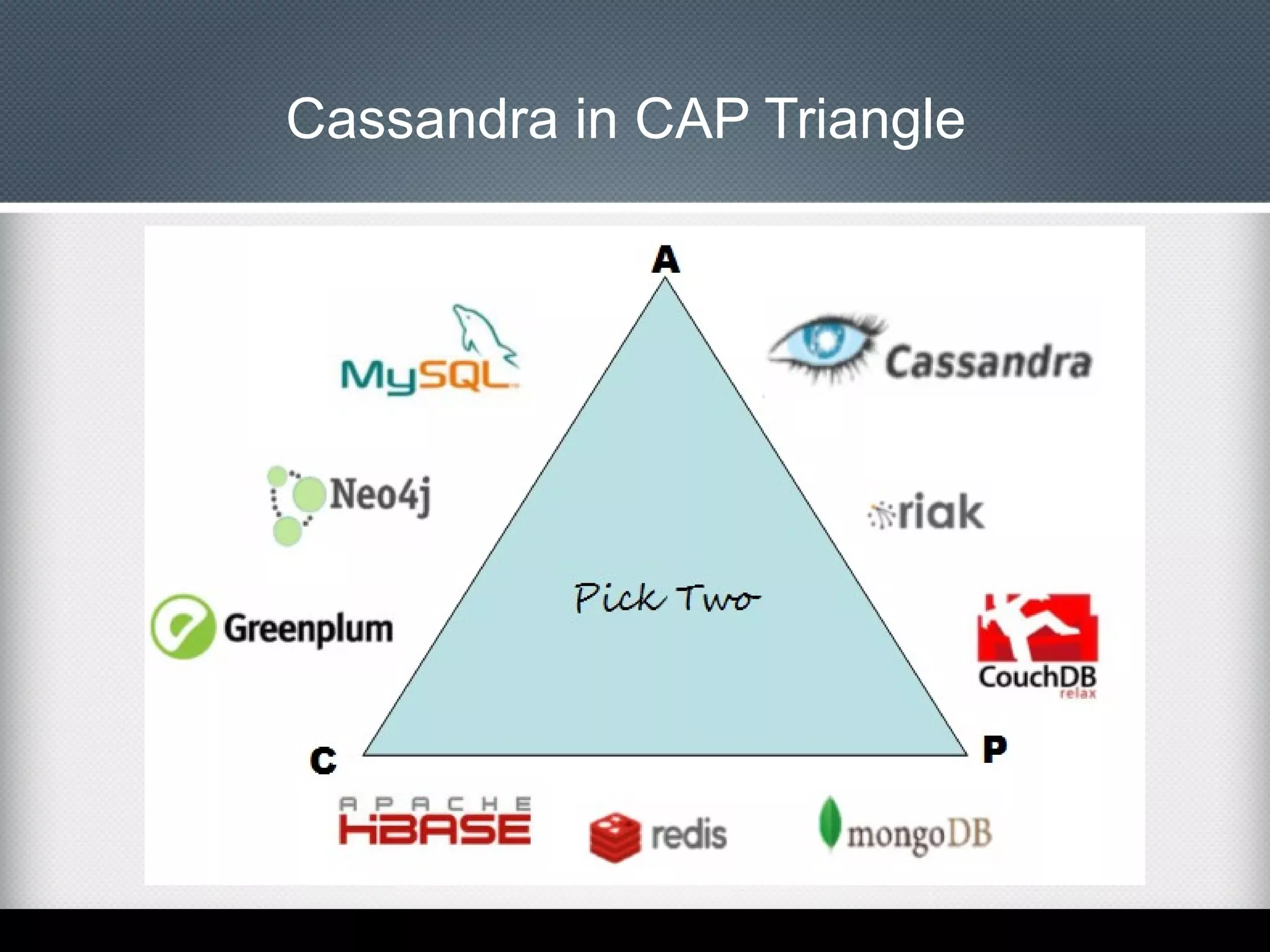
Cassandra in CAP Triangle
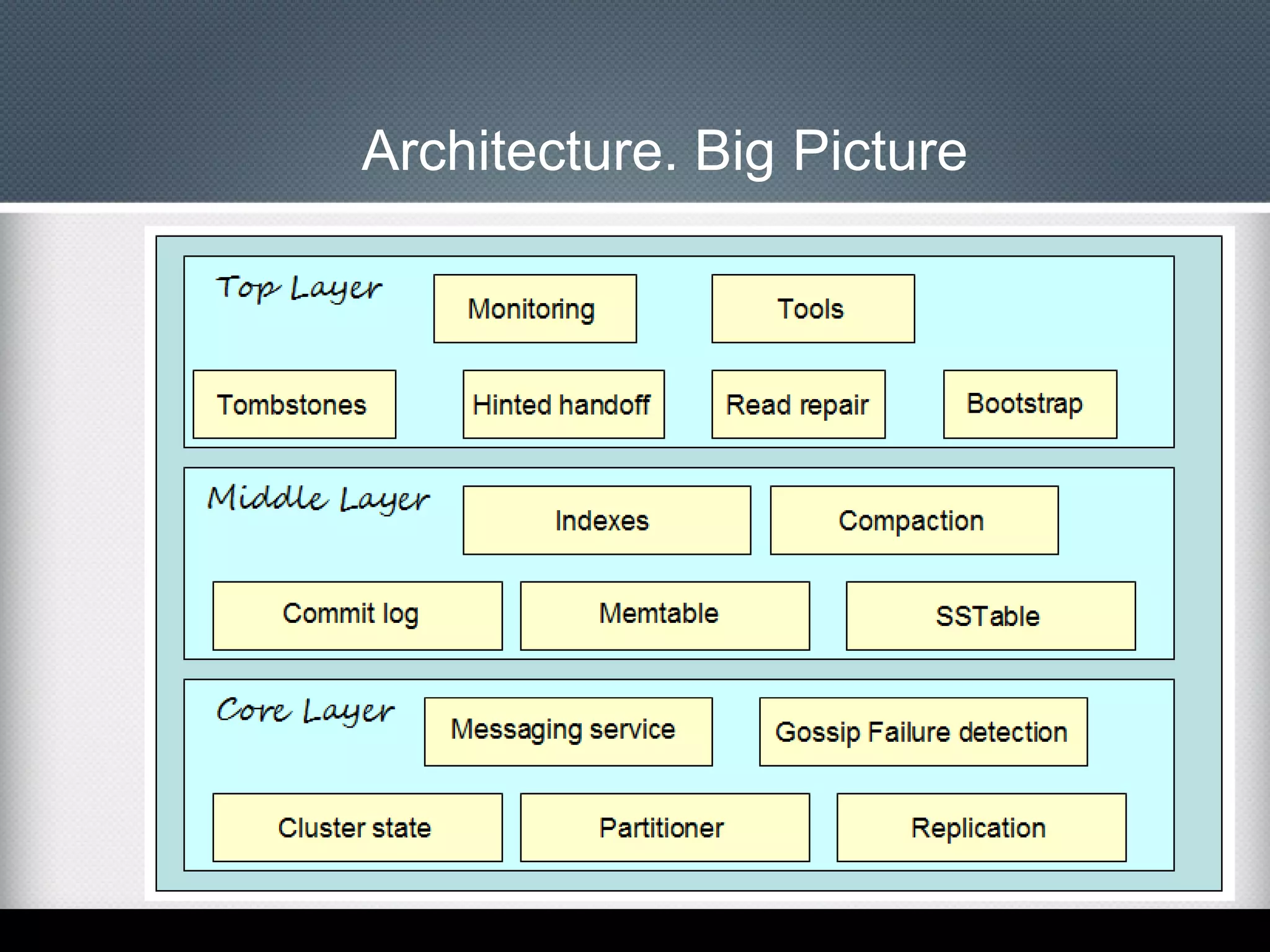
Architecture. Big Picture
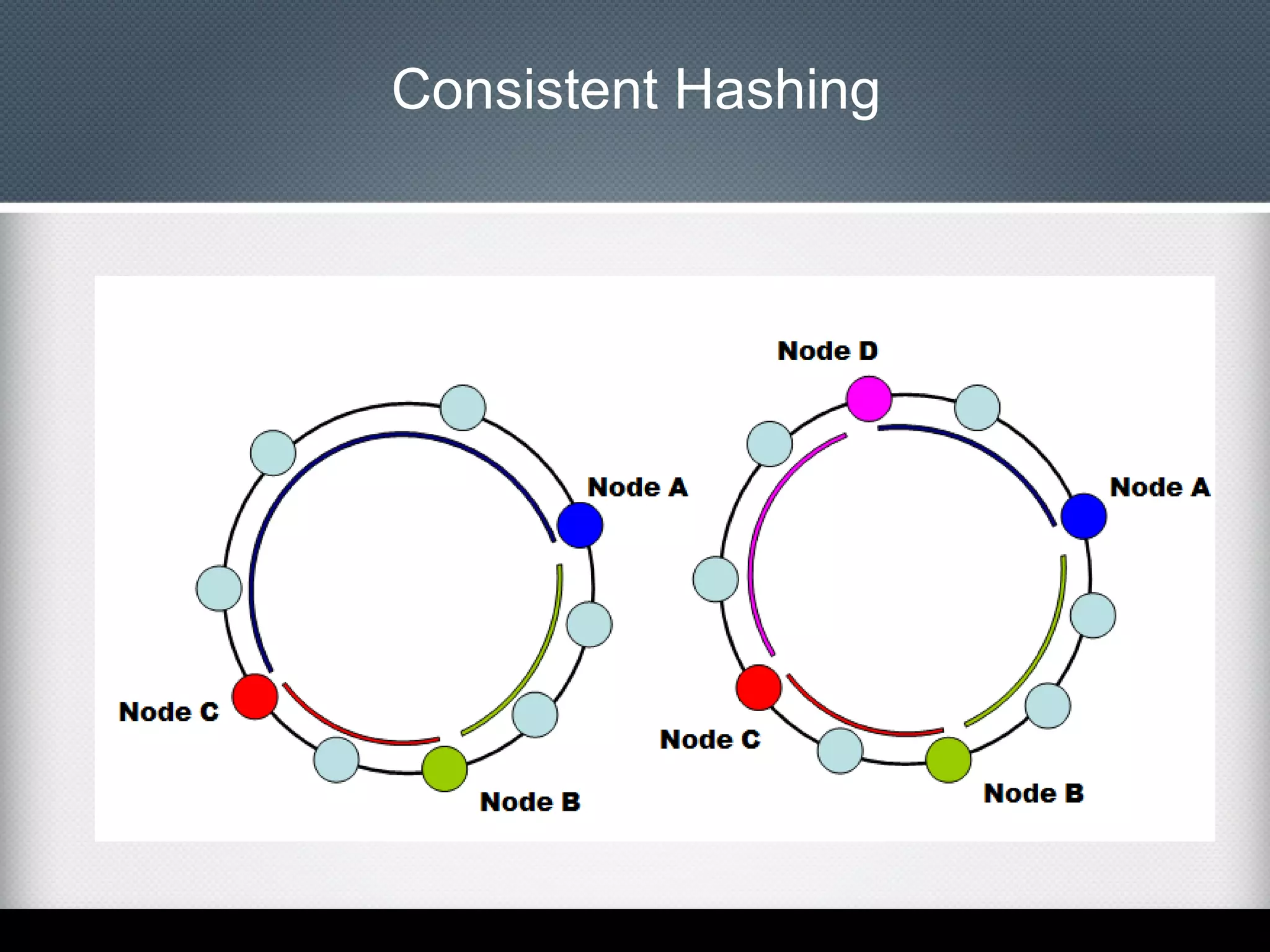
Architecture Components. Part I • • • • • Consistent hashing Virtual nodes Gossip and failure detection Hinted handoff Anti-Entropy and read repair
Architecture Components. Part II • • • • • Ring topology Staged Event-Driven Architecture (SEDA) Compaction Tombstones Memtables, SSTables, and commit logs
Architecture Components. Part III • • • • • Row and key caches Bloom filters Merkle trees Compression Atomic batches
Tunable Consistency • • • Replication Factor (RF) Quorum – R+W > RF – Quorum = (RF/2) +1 Consistency for read and write on operation basis
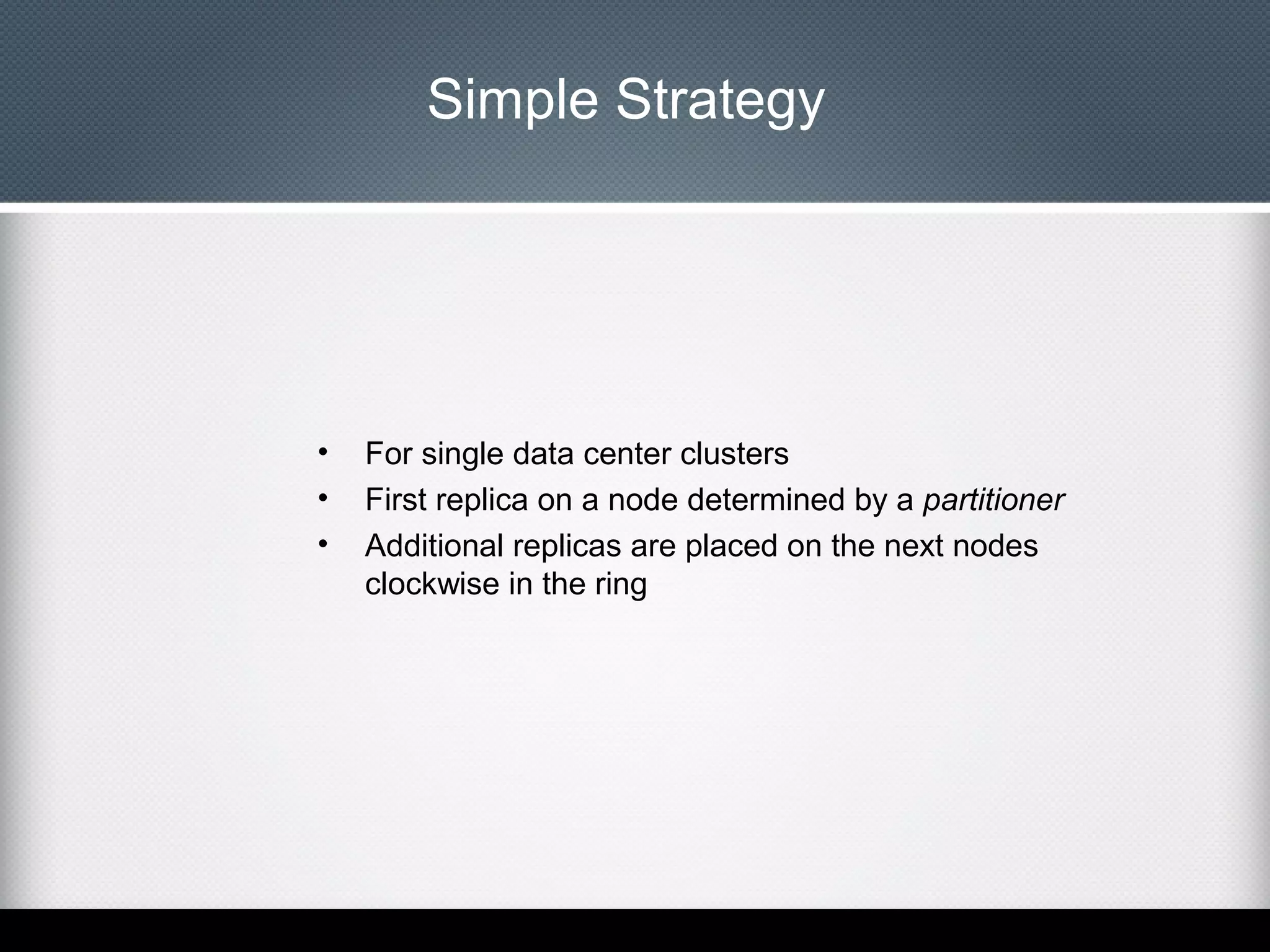
Replication Strategy • • • SimpleStrategy NetworkTopologyStrategy Created for a keyspace with replica placement strategy
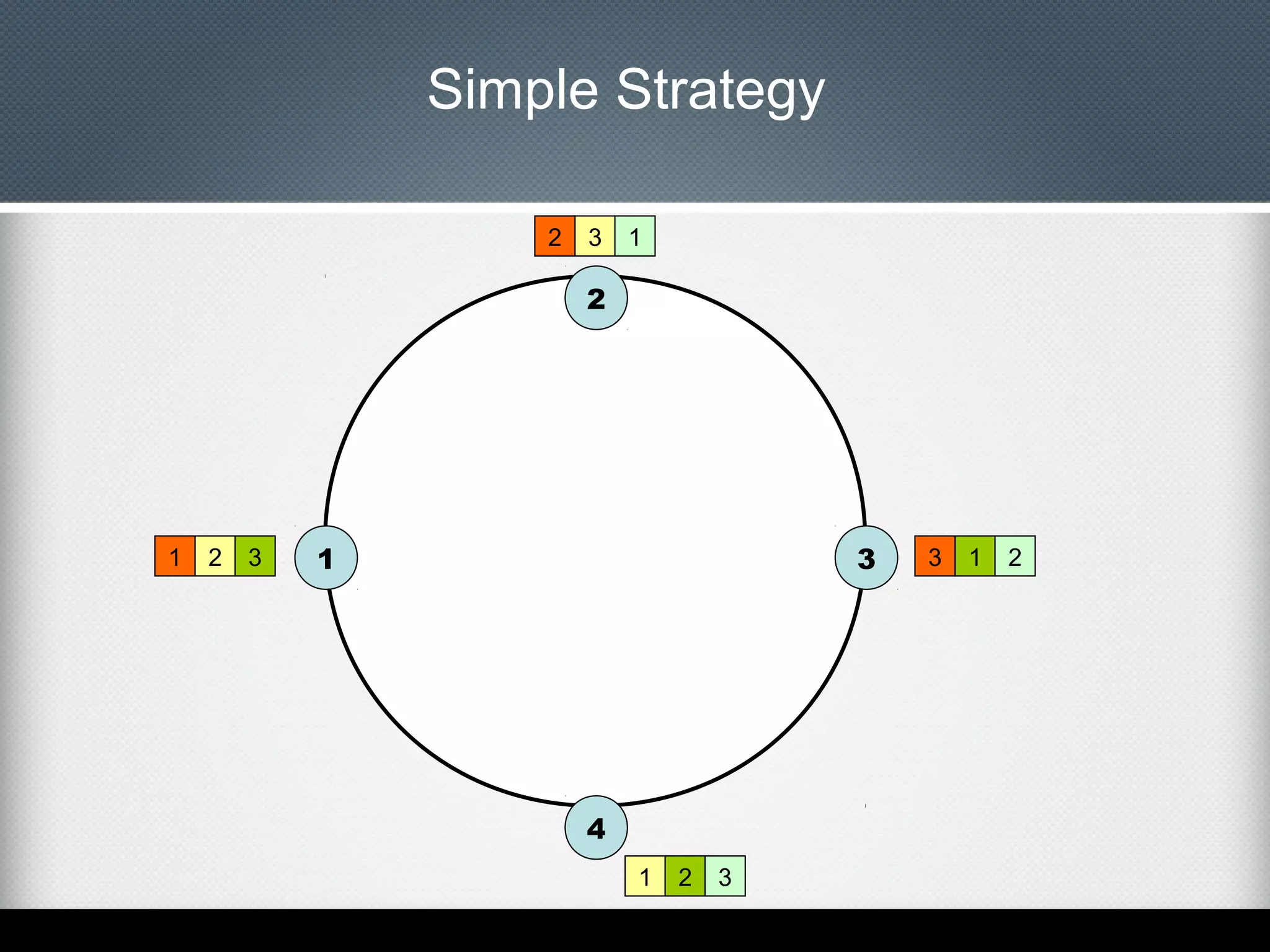
Simple Strategy • • • For single data center clusters First replica on a node determined by a partitioner Additional replicas are placed on the next nodes clockwise in the ring
Simple Strategy 2 3 1 2 1 2 3 1 3 4 1 2 3 3 1 2
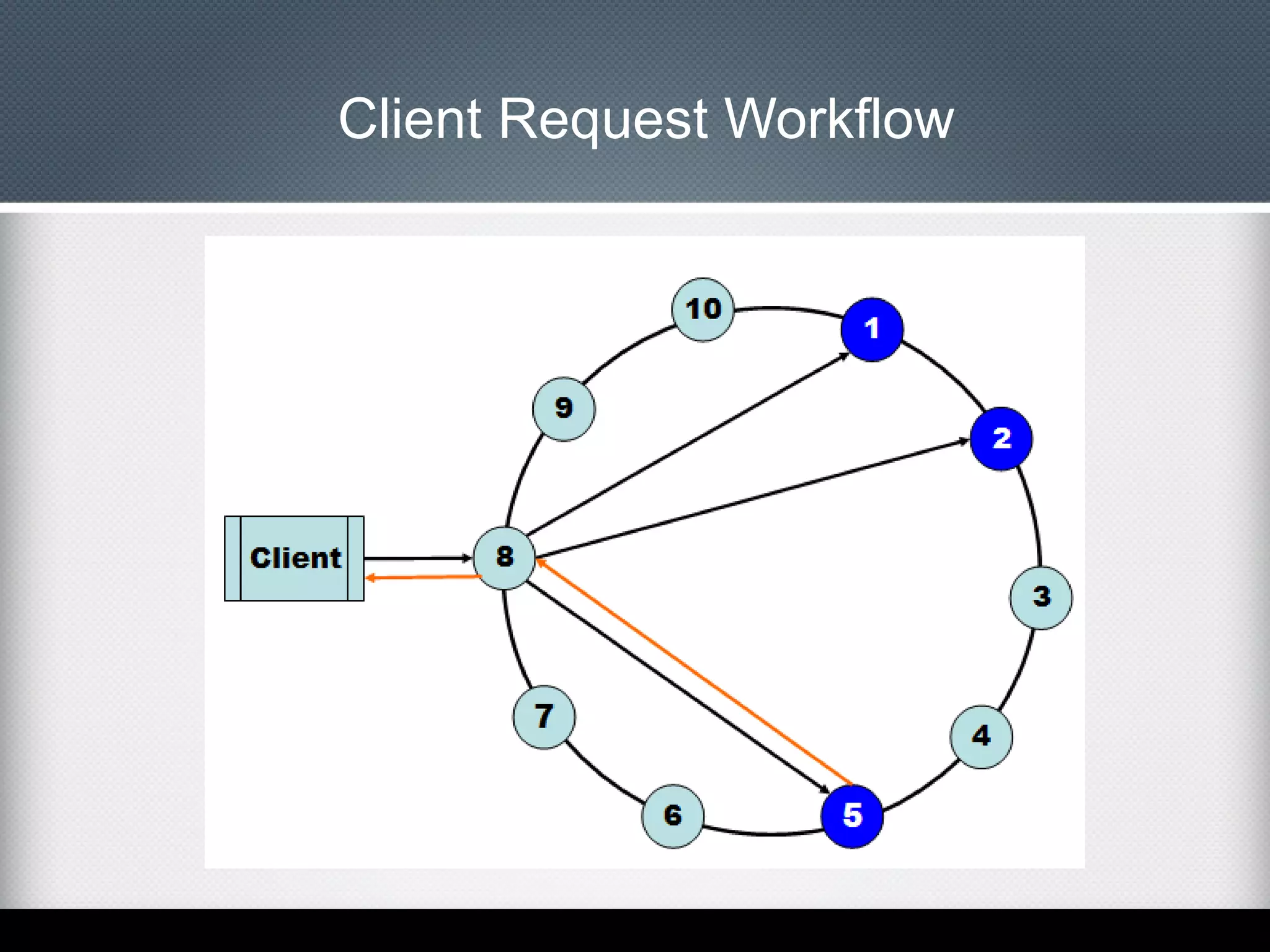
Data Distribution and Replication • How does Cassandra data distribution and replication work?
Consistent Hashing
Client Request Workflow
Network Topology • • • Data center - grouping of nodes configured together for replication purposes Rack - similar physical grouping of nodes Snitch maps IPs to racks and data centers – All nodes in a cluster must use the same snitch configuration
Cassandra Client API • • • • • Cassandra CLI, Thrift based CQL3, native protocol Cqlsh with Python dependency Multiple languages drivers Java: CQL3 via DataStax 1.0 driver
DataStax Java Driver • • • • • • Works only with CQL3 Layered architecture Relies on Netty to provide non-blocking I/O for providing a fully asynchronous architecture Connection pooling, node discovery Automatic failover, load balancing Prepared statements are supported
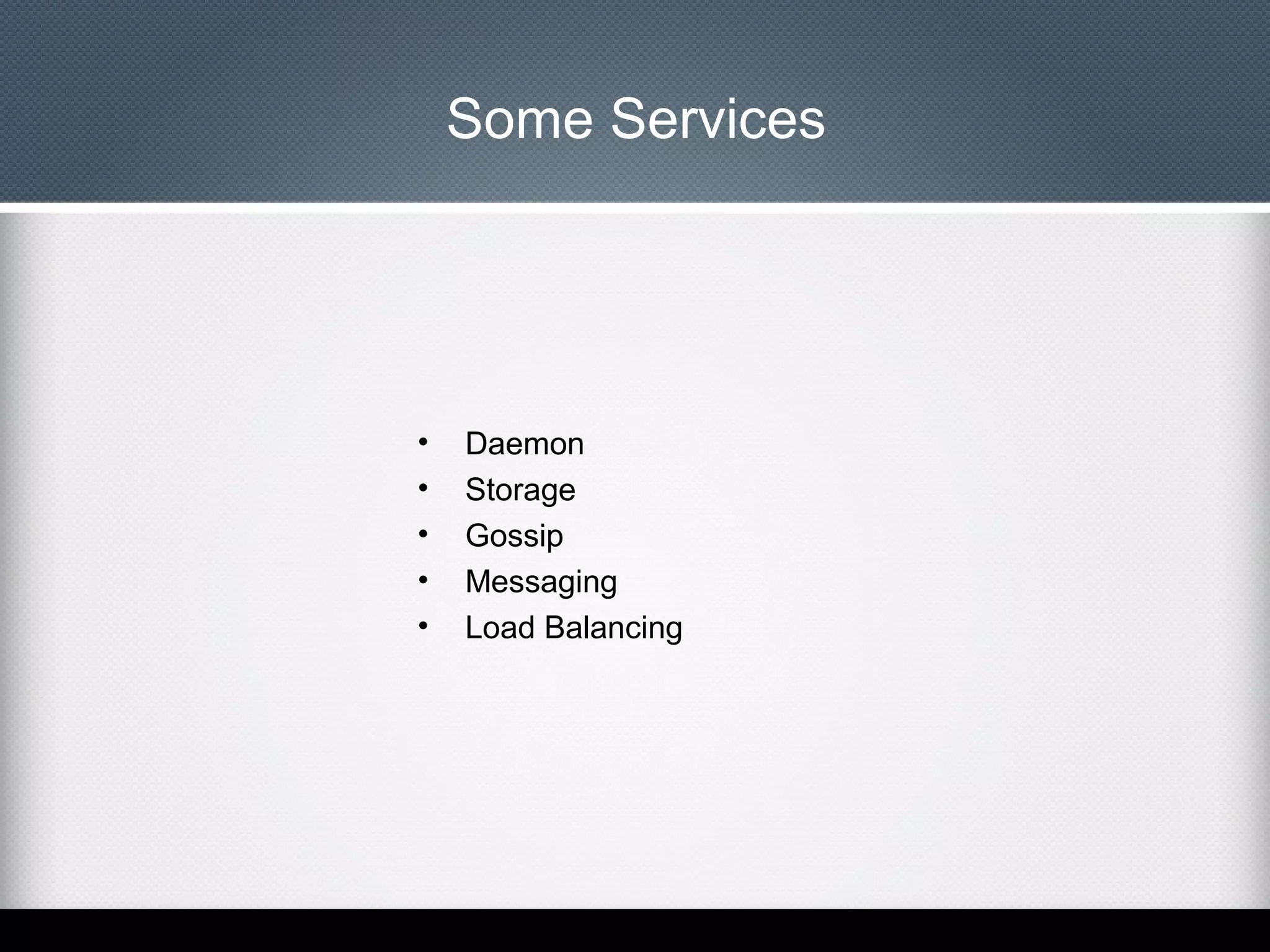
Some Services • • • • • Daemon Storage Gossip Messaging Load Balancing
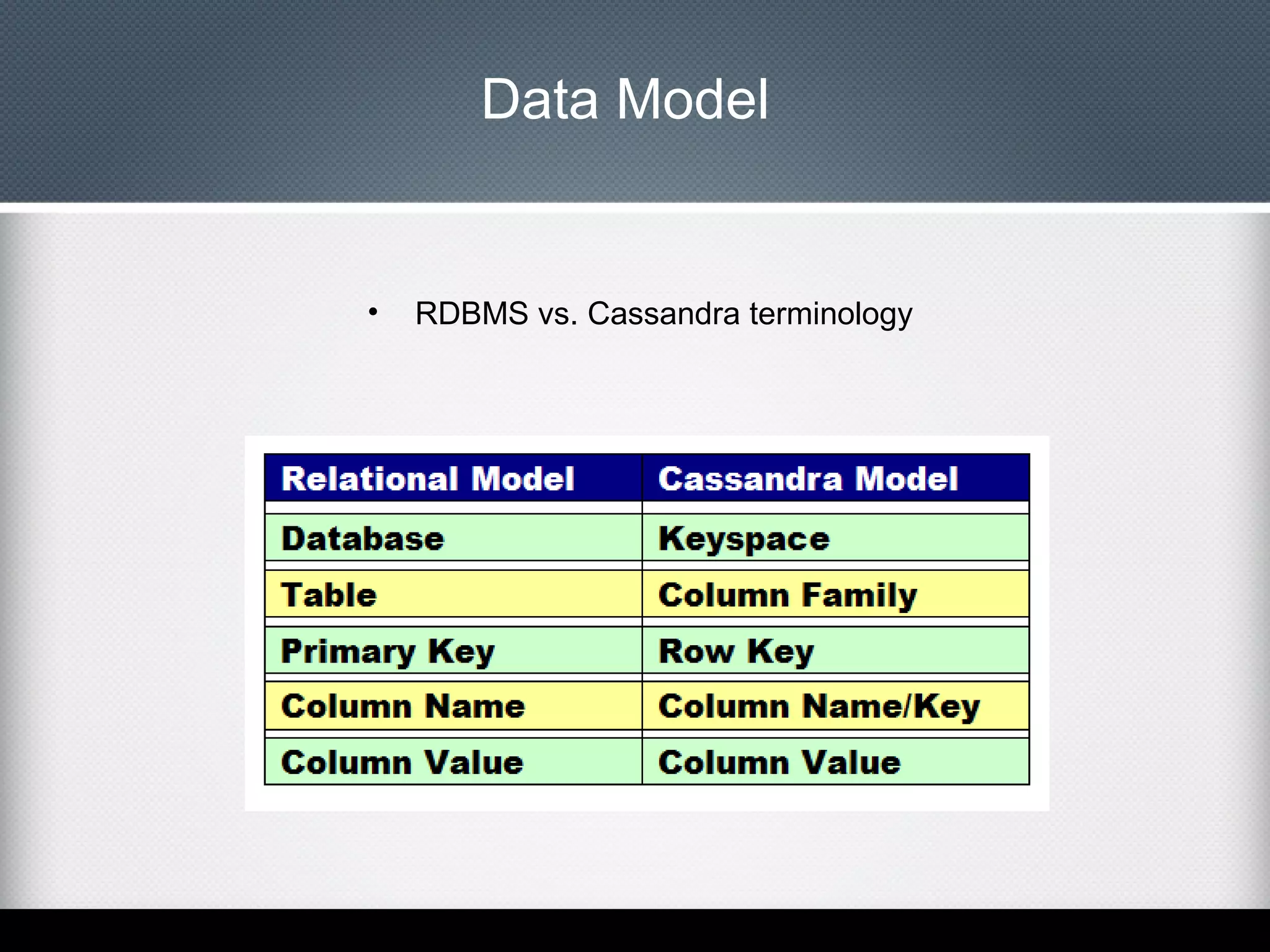
Data Model • RDBMS vs. Cassandra terminology
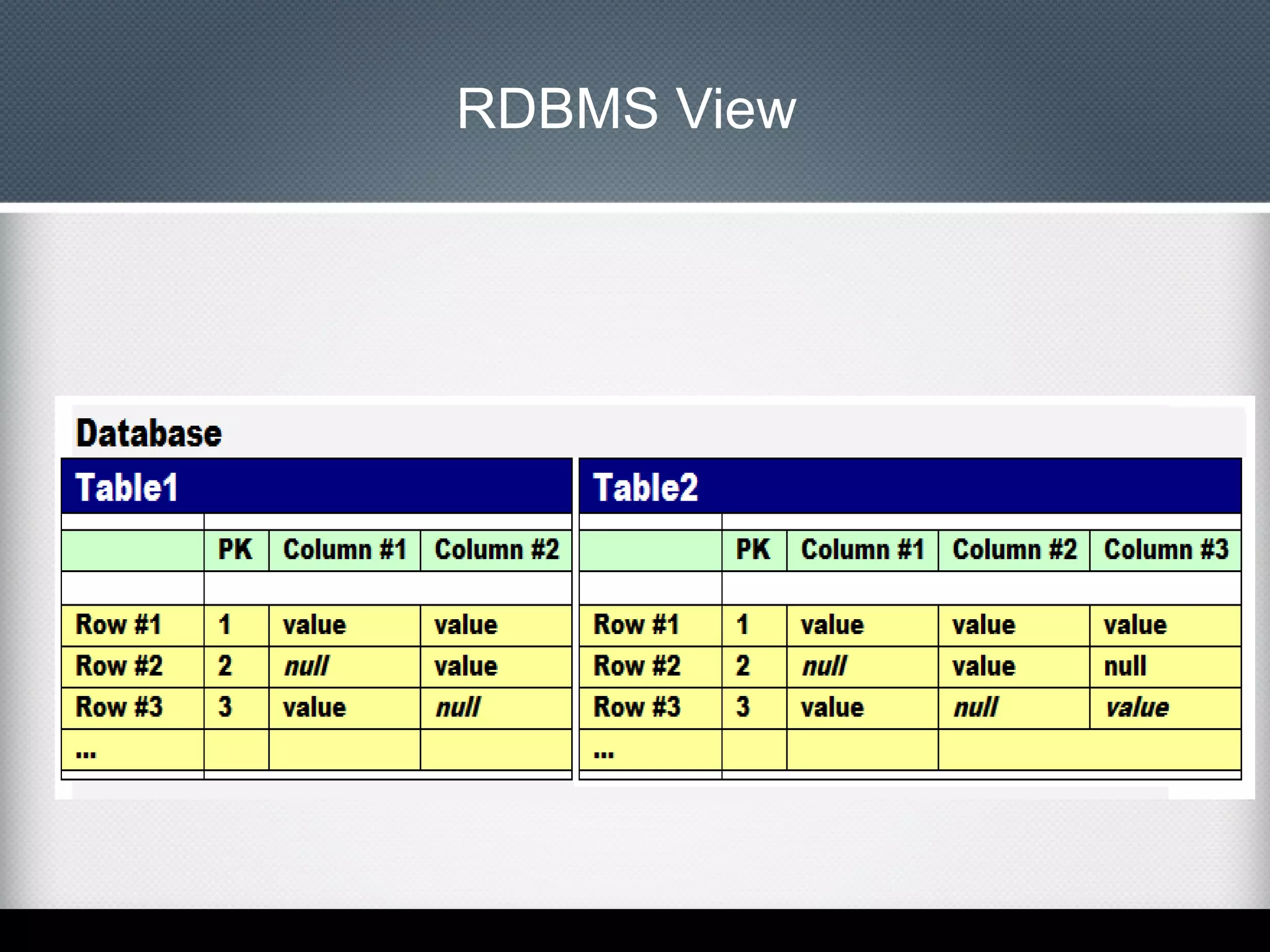
RDBMS View
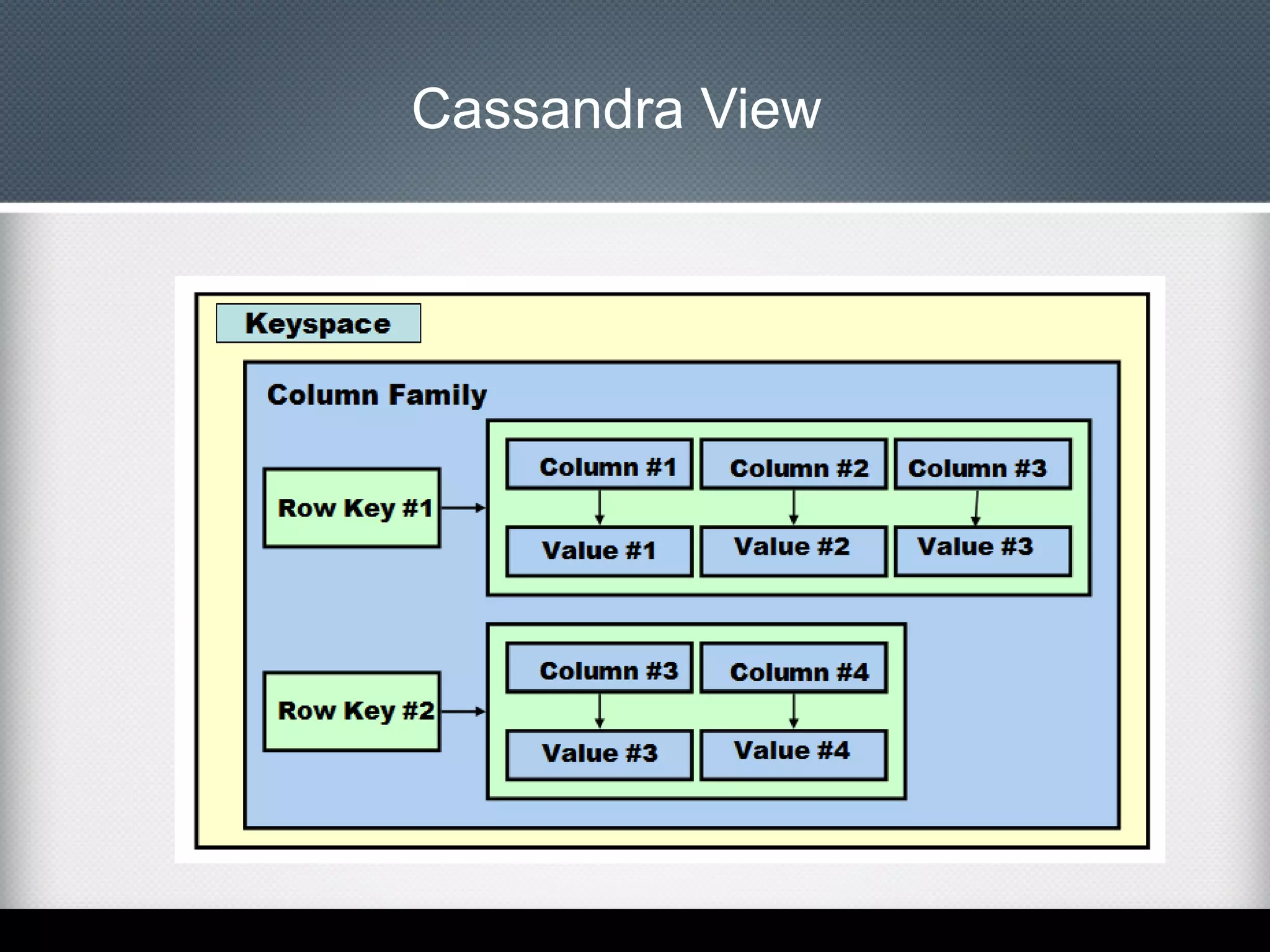
Cassandra View
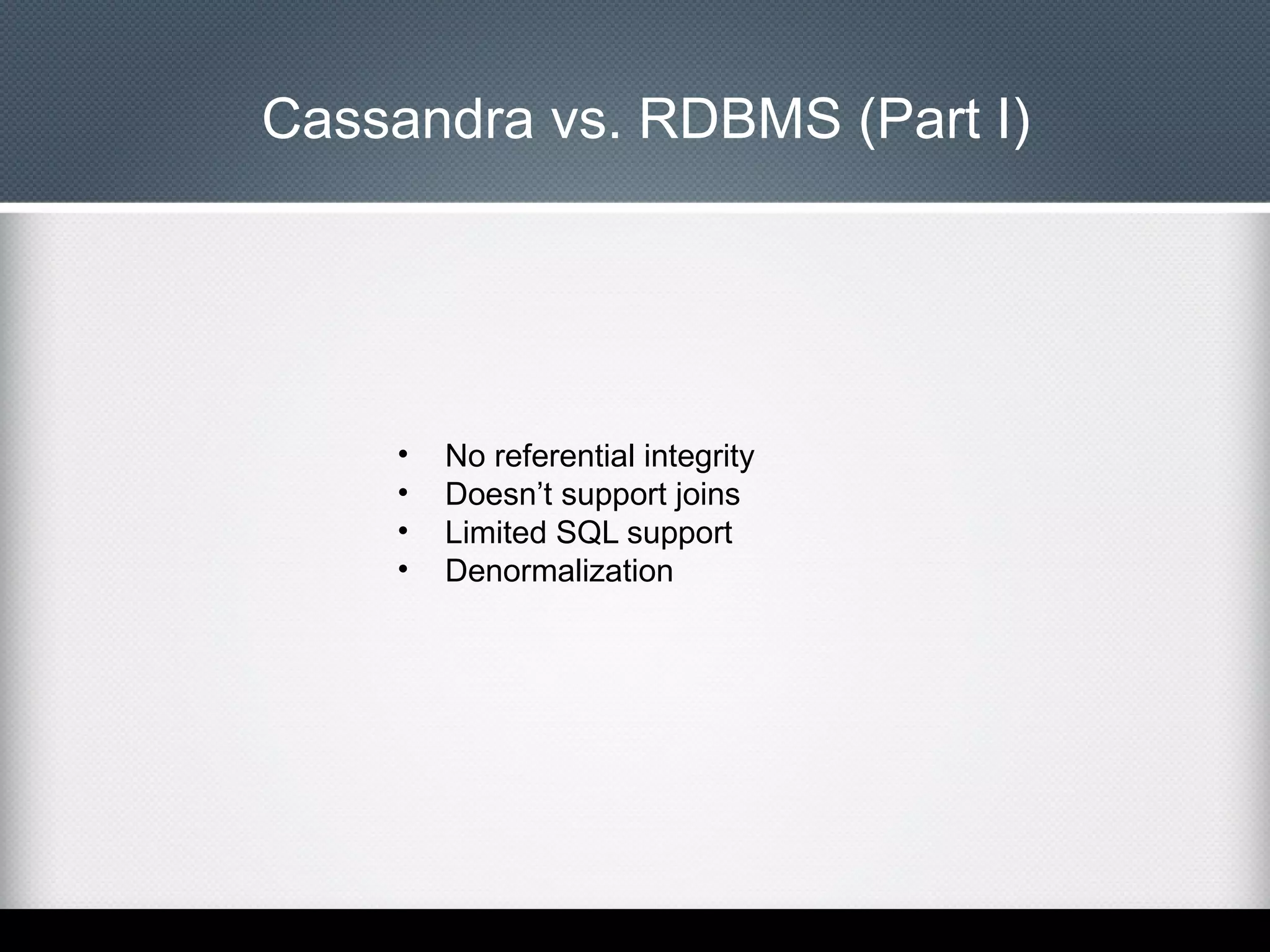
Cassandra vs. RDBMS (Part I) • • • • No referential integrity Doesn’t support joins Limited SQL support Denormalization
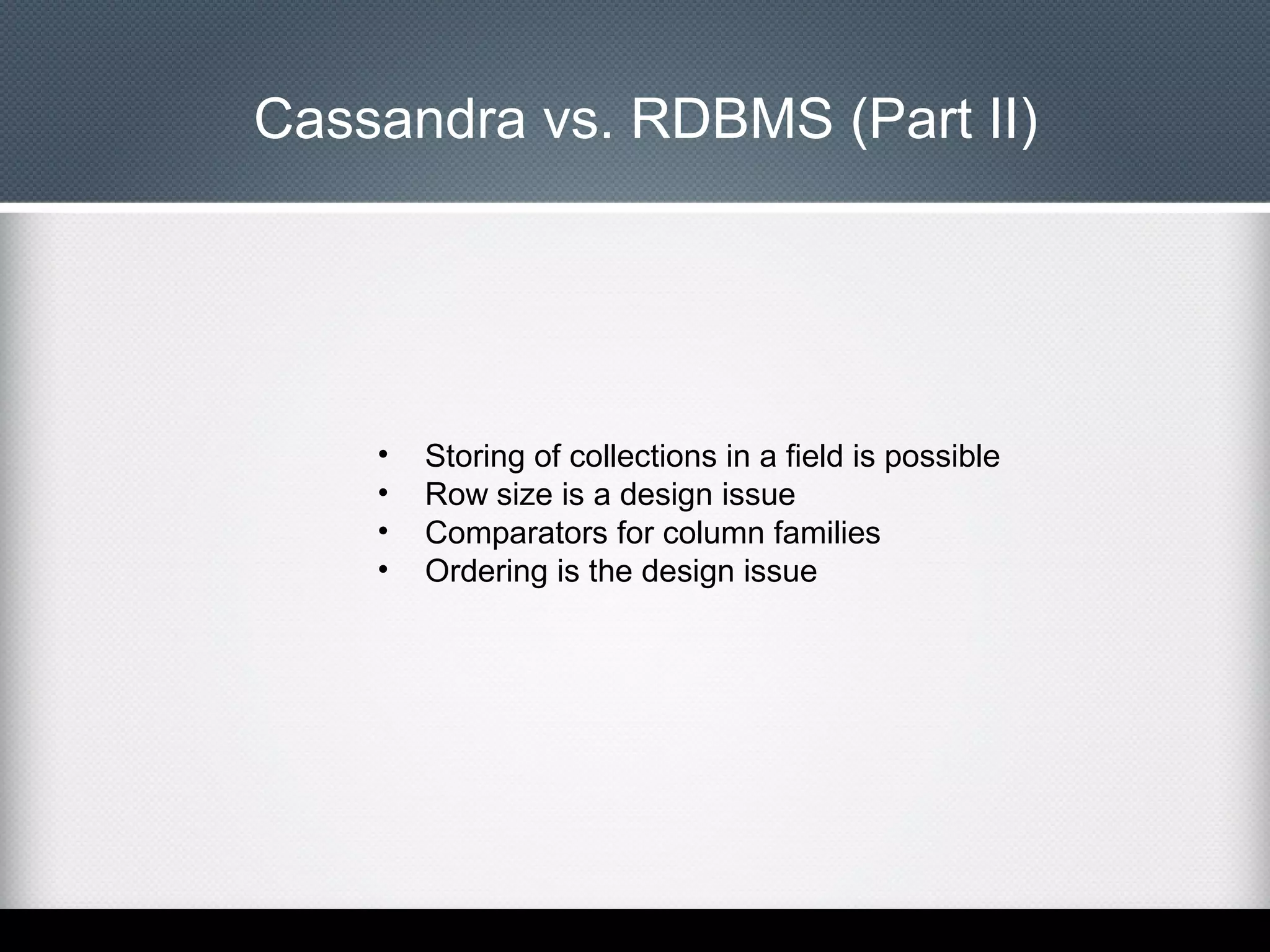
Cassandra vs. RDBMS (Part II) • • • • Storing of collections in a field is possible Row size is a design issue Comparators for column families Ordering is the design issue
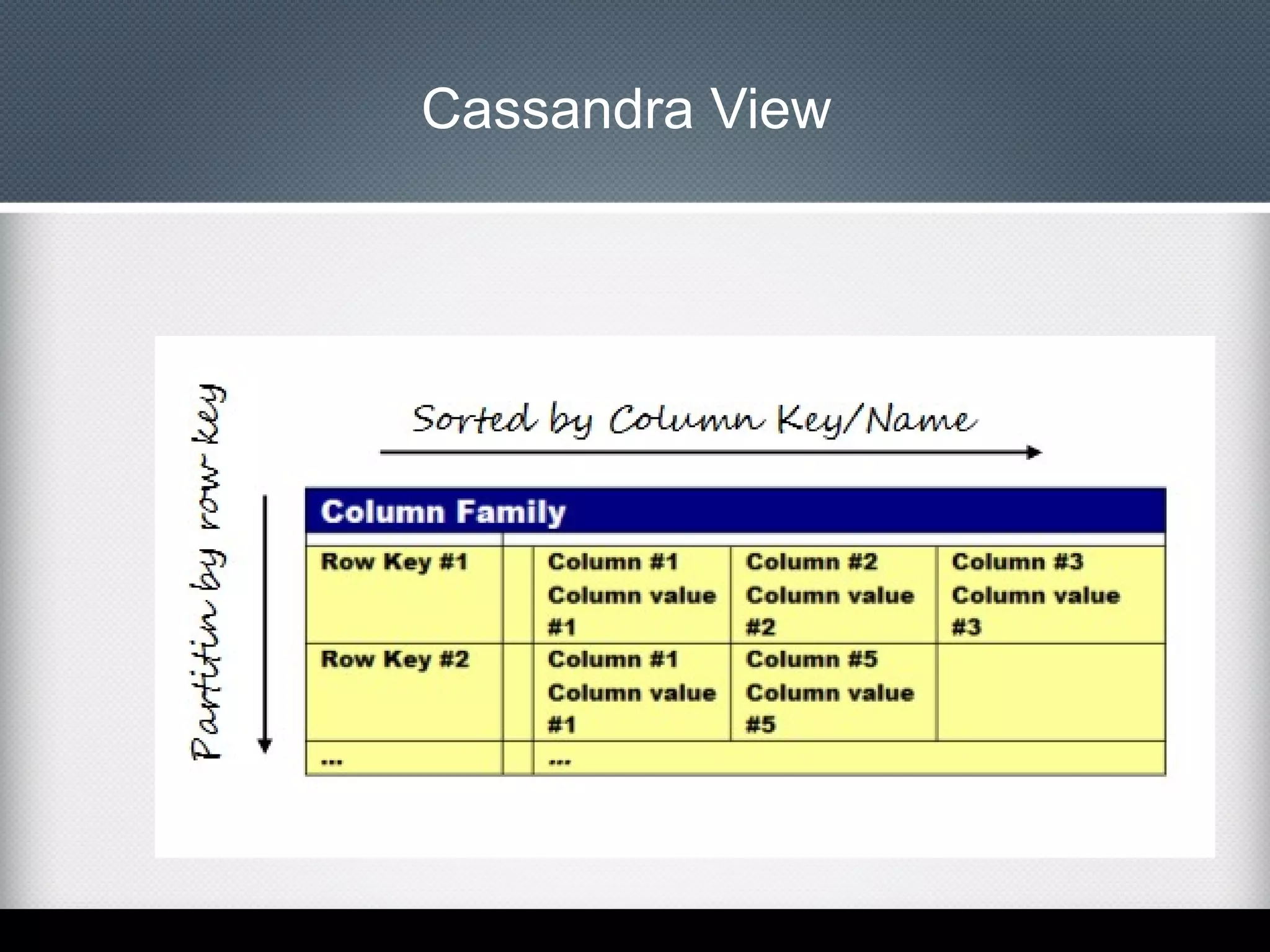
Cassandra View
Keyspaces • • • • Replication factor Replica placement strategy Column families Usually one keyspace per application
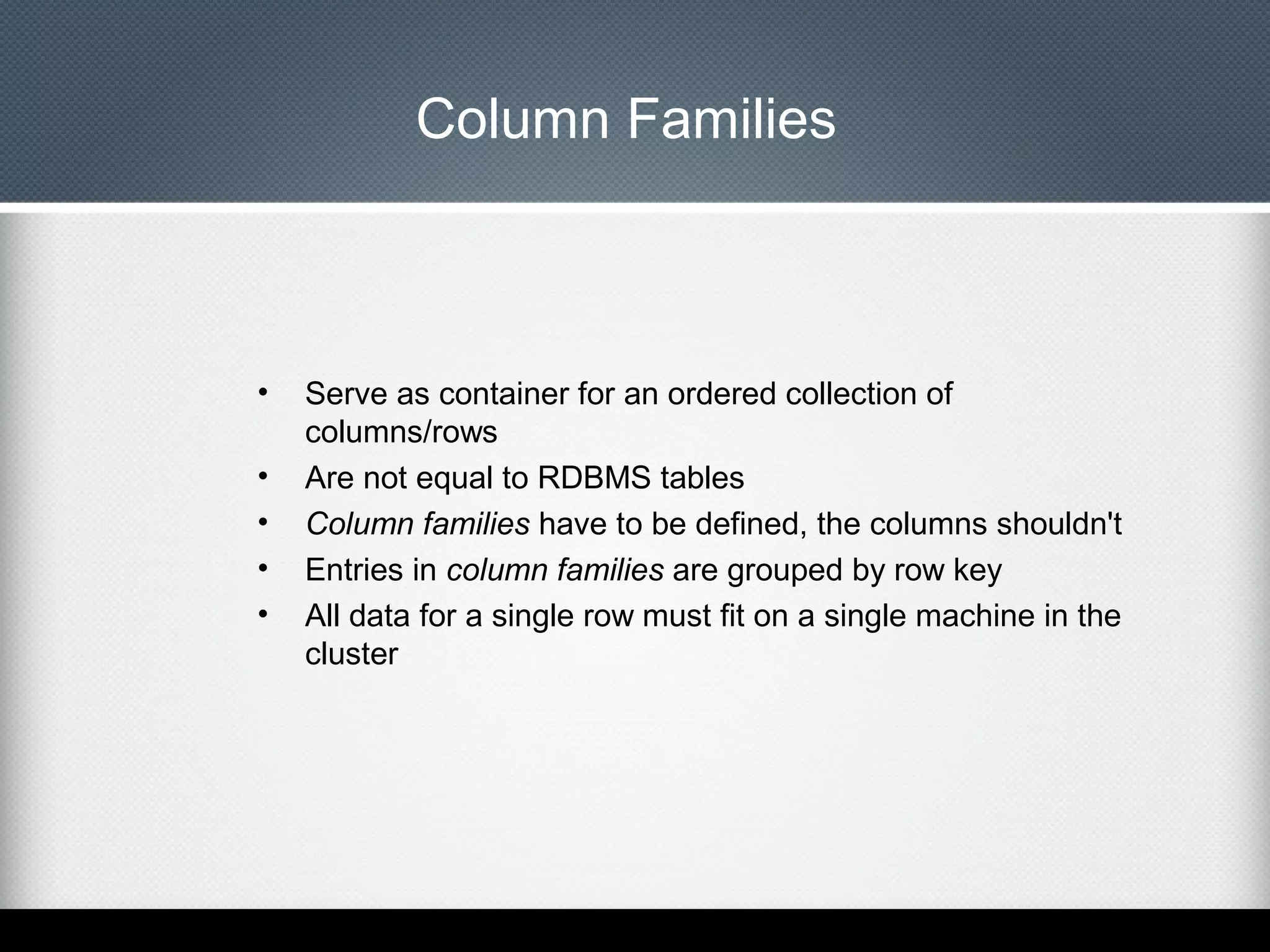
Column Families • • • • • Serve as container for an ordered collection of columns/rows Are not equal to RDBMS tables Column families have to be defined, the columns shouldn't Entries in column families are grouped by row key All data for a single row must fit on a single machine in the cluster
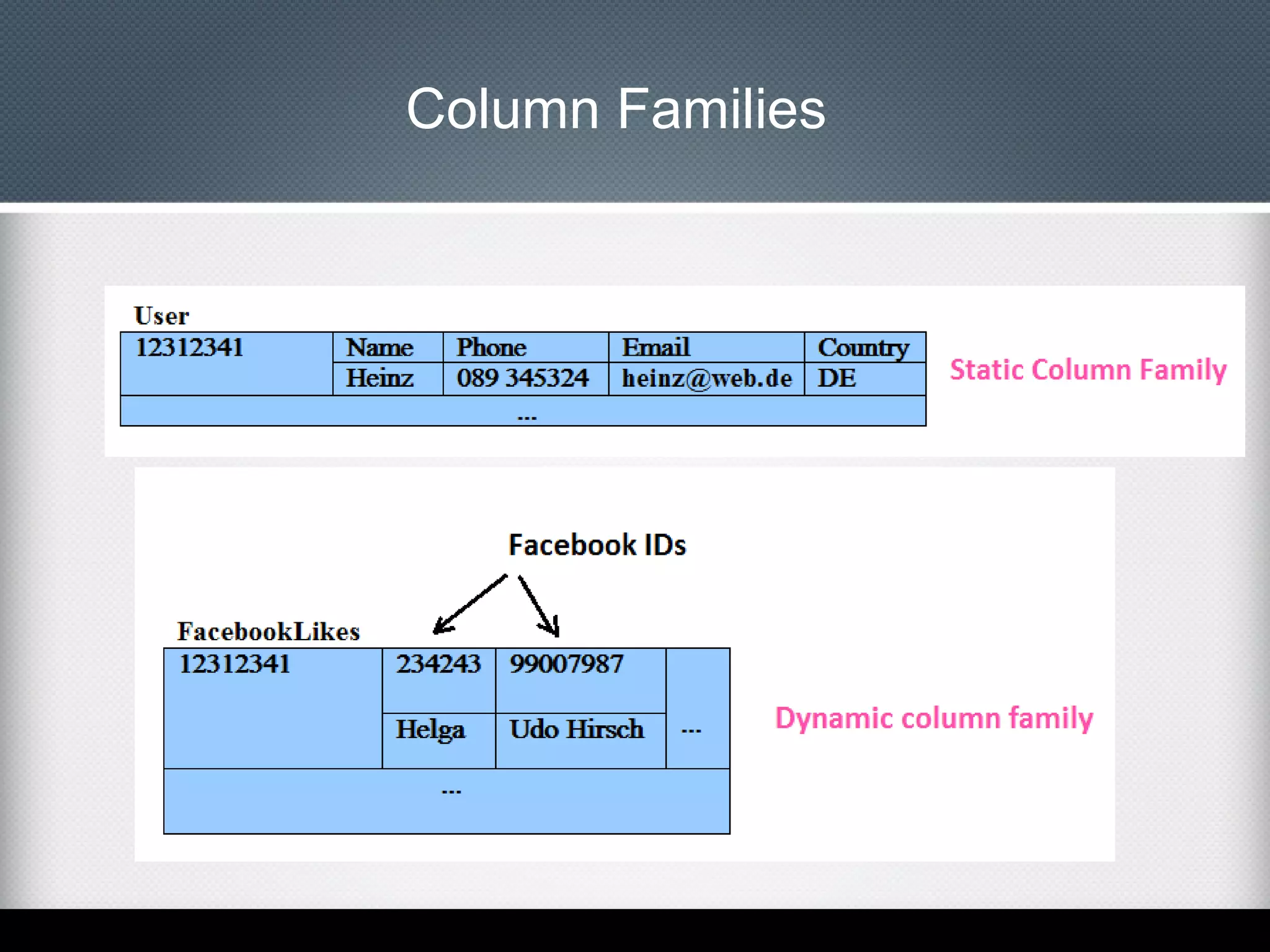
Column Families
Static Column Families • • • Use a relatively static set of column names Are more similar to a relational database table Have metadata definition for individual columns
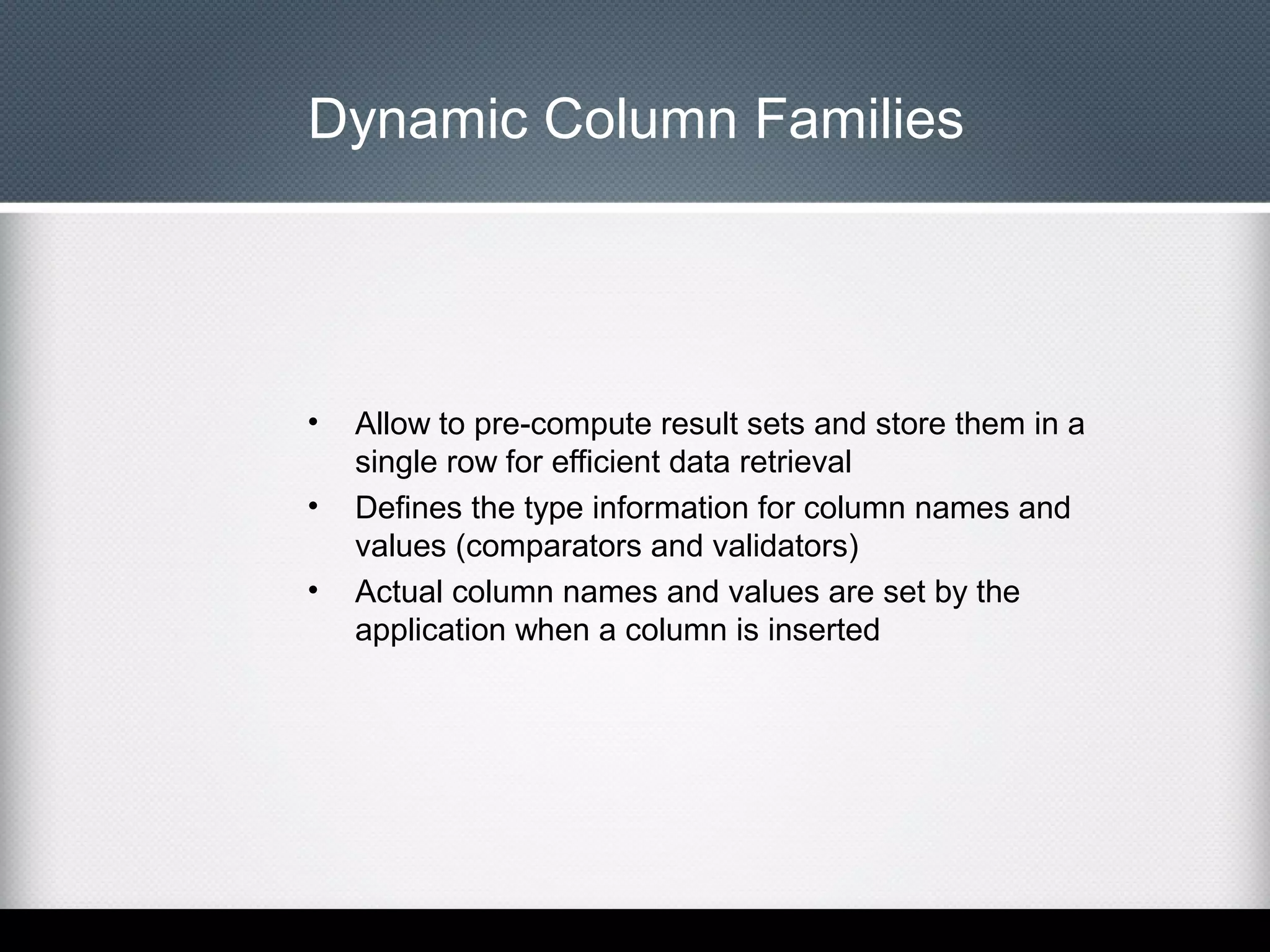
Dynamic Column Families • • • Allow to pre-compute result sets and store them in a single row for efficient data retrieval Defines the type information for column names and values (comparators and validators) Actual column names and values are set by the application when a column is inserted
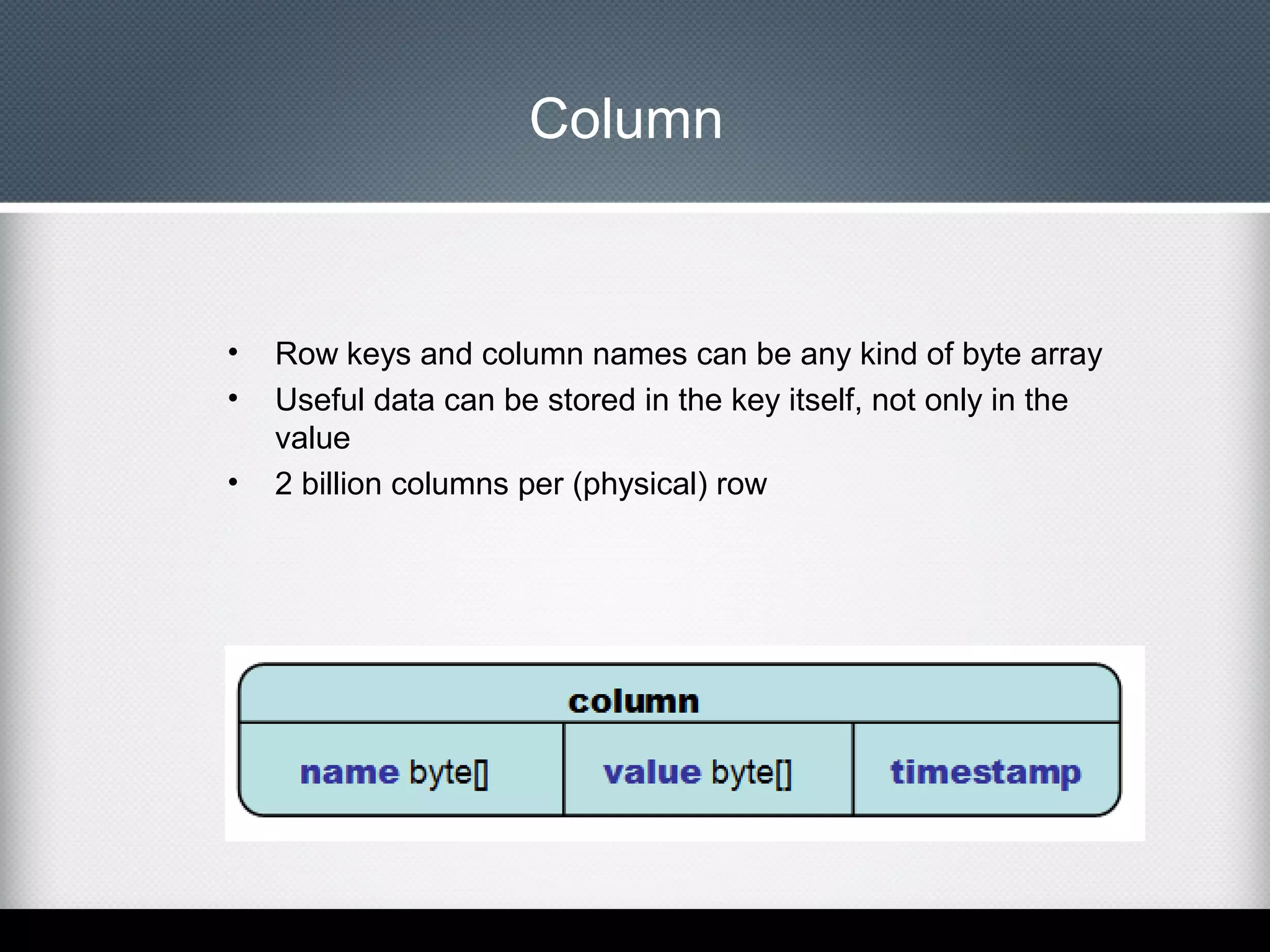
Column • • • Row keys and column names can be any kind of byte array Useful data can be stored in the key itself, not only in the value 2 billion columns per (physical) row
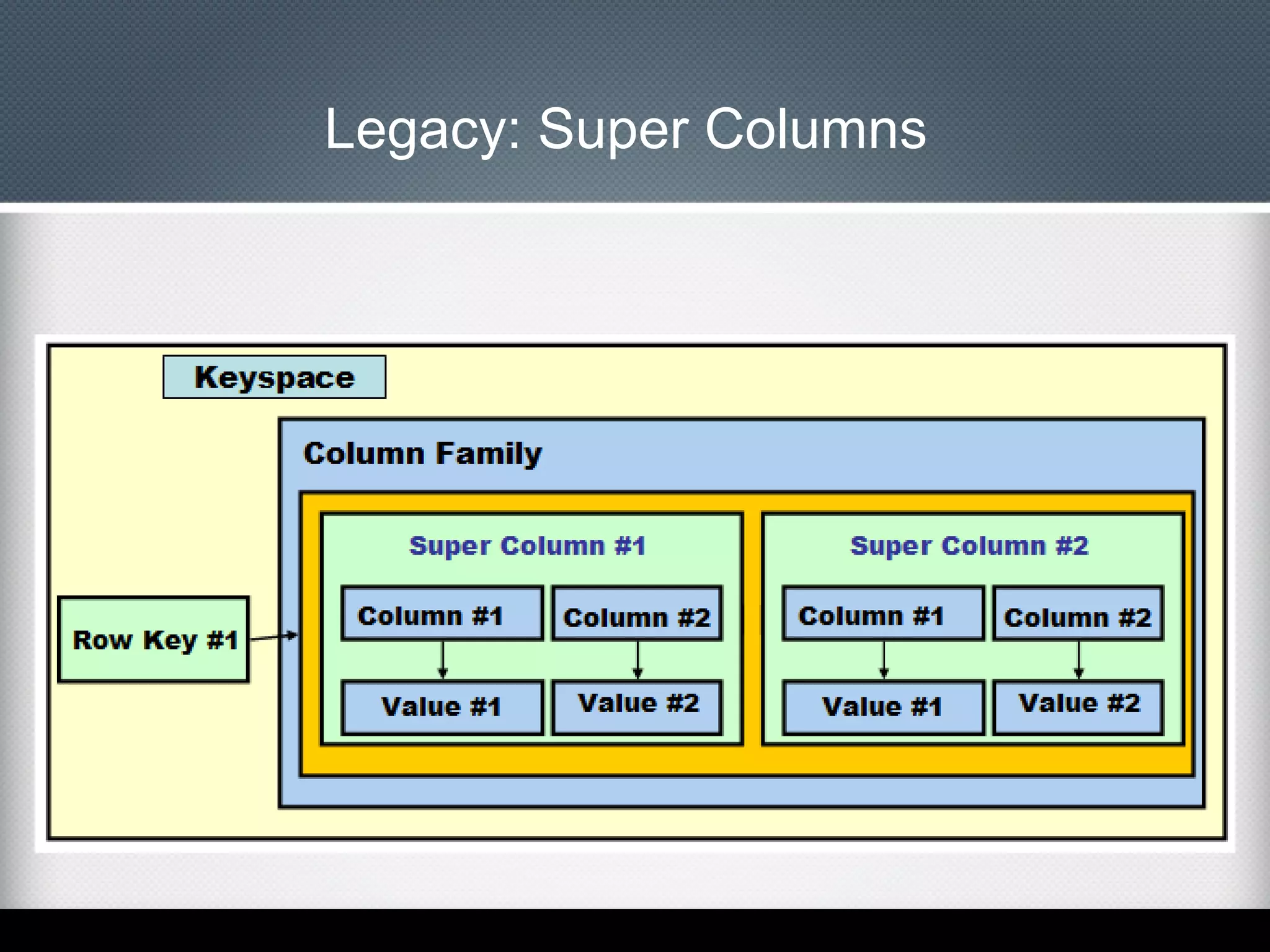
Legacy: Super Columns
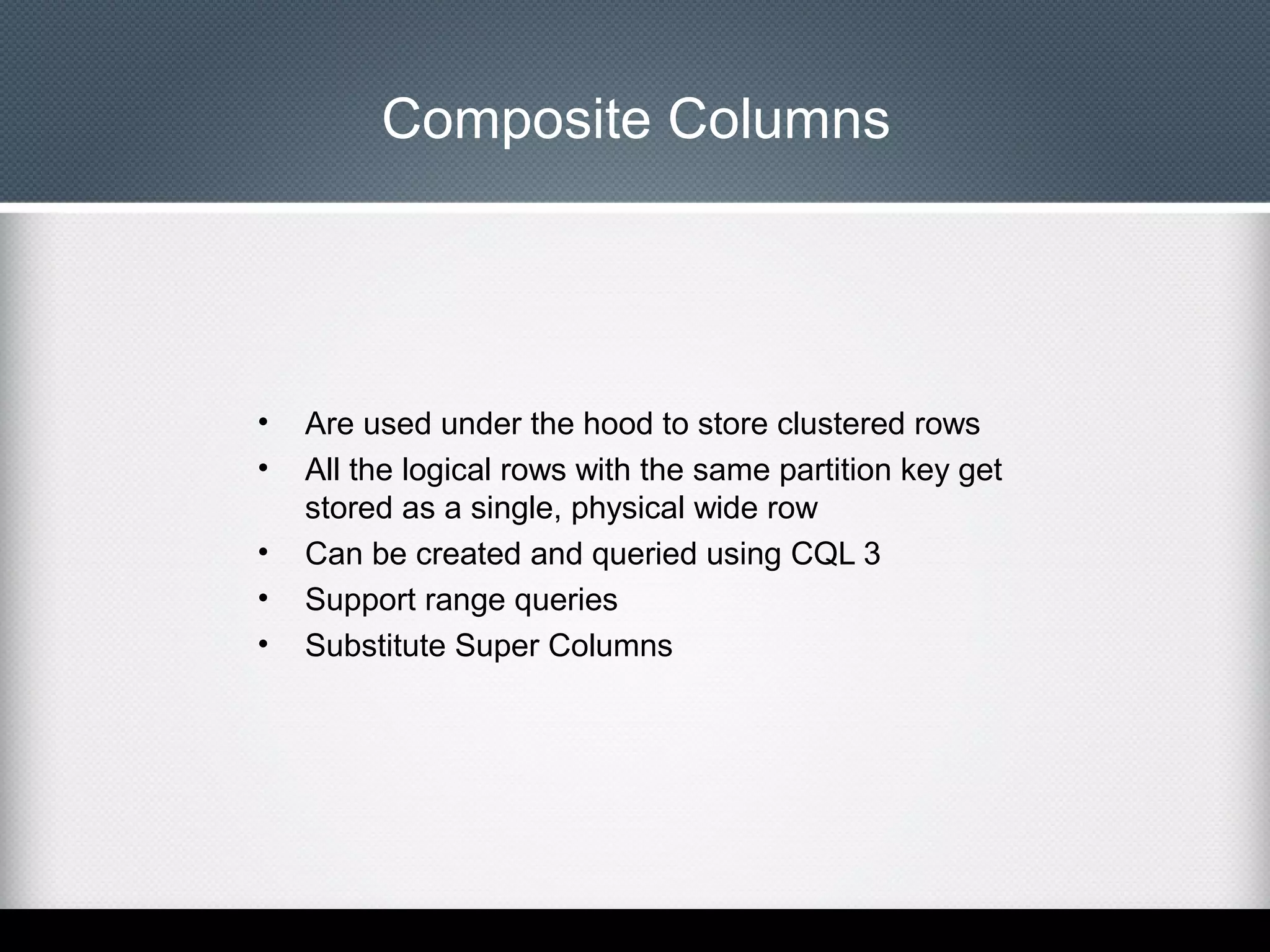
Composite Columns • • • • • Are used under the hood to store clustered rows All the logical rows with the same partition key get stored as a single, physical wide row Can be created and queried using CQL 3 Support range queries Substitute Super Columns
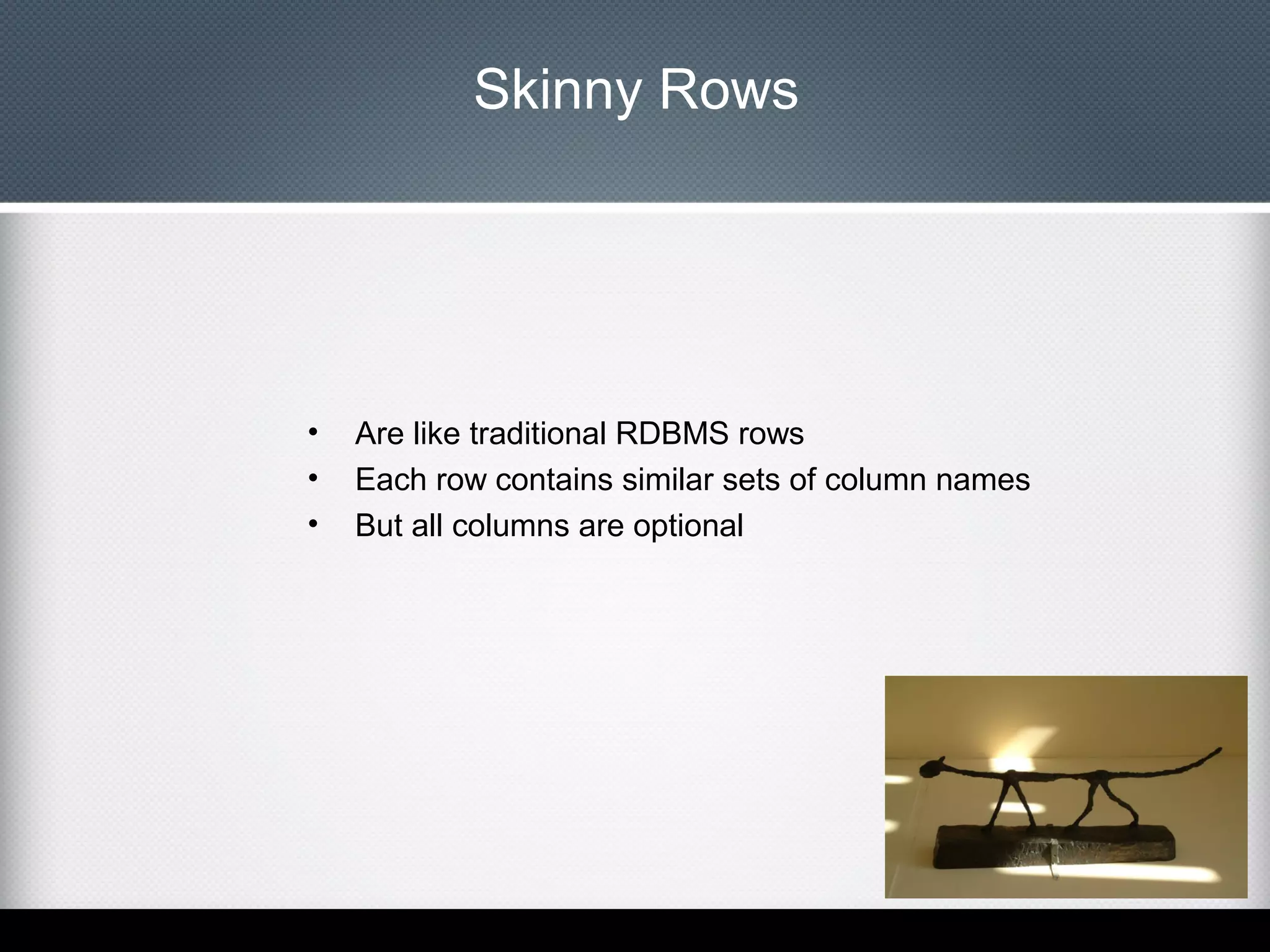
Skinny Rows • • • Are like traditional RDBMS rows Each row contains similar sets of column names But all columns are optional
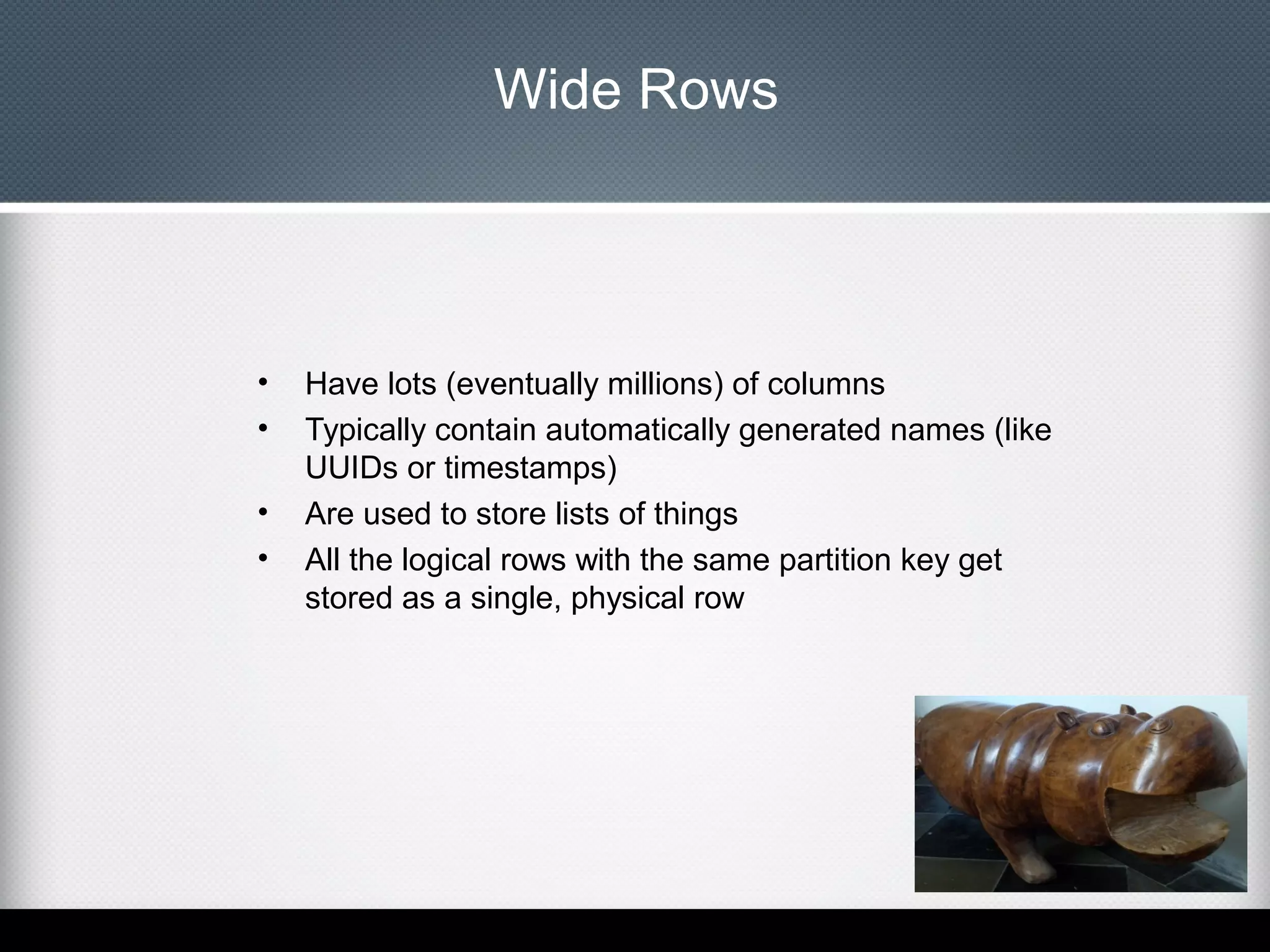
Wide Rows • • • • Have lots (eventually millions) of columns Typically contain automatically generated names (like UUIDs or timestamps) Are used to store lists of things All the logical rows with the same partition key get stored as a single, physical row
Practice Drive
Download and Install • • • • • Cassandra requires minimum version of Java 1.7 JDK (http://www.oracle.com/technetwork/java/javase/downloa ds/index.html) Download from http://cassandra.apache.org/download/ Extract in some directory Customize cassandra.yaml in the /conf directory Start with bin/cassandra -f
Create Schema • • • • • • cassandra-cli -host localhost -port 9160 create keyspace TestsDataStore; show keyspaces; use TestsDataStore; create column family Cars with comparator = UTF8Type; update column family Cars with column_metadata = [ {column_name: make, validation_class: UTF8Type}, {column_name: model, validation_class: UTF8Type}, ];
Populate With Data • • • • • • • • • assume Cars keys as utf8; set Cars['Cabrio']['make'] = 'bmw' set Cars['Cabrio']['model'] = '640i'; set Cars['Corolla']['make'] = 'toyota'; set Cars['Corolla']['model'] = 'le'; set Cars['fit']['make'] = 'honda'; set Cars['fit']['model'] = 'fit sport'; set Cars['focus']['make'] = 'ford'; set Cars['focus']['model'] = 'sel';
Data Manipulation • • • • • • • • get Cars['Cabrio']; get Cars['Cabrio']['make']; update column family Cars with comparator=UTF8Type and column_metadata=[{column_name: make, validation_class: UTF8Type, index_type: KEYS}, {column_name: model, validation_class: UTF8Type}]; del Cars['Cabrio']['bmw']; drop column family Cars; drop keyspace TestsDataStore; show keyspaces;
Agile Development with Cassandra • • • • Facilitates agile development providing schema free data model and query first paradigm Makes TDD easier providing build in test tools Is built around multiple design patterns, facilitating Clean Code approach Decentralized nature makes distributed work easier (including geographical distribution)
Use Cases • • • • • Large deployments Lots of writes, statistics, and analysis Geographical distribution Very large data volumes High reliability requirements for data storage
Some Users

Apache Cassandra training. Overview and Basics