Abhishek Gudipalli & Ramashri Tirumala International Journal of Image Processing (IJIP), Volume (6) : Issue (5) : 2012 297 Comprehensive Infrared Image Edge Detection Algorithm Abhishek Gudipalli abhishek.g@vit.ac.in Assistant Professor/School of Electrical Engineering VIT University Vellore,632014, India Dr.Ramashri Tirumala rama.jaypee@gmail.com Associate Professor/Dept of Electronics & Communication Engineering Sri Venkateswara University College of Engineering Tirupati,517501,India Abstract Edge detection is one of the most powerful image analysis tools for enhancing and detecting edges. Indeed, identifying and localizing edges are a low level task in a variety of applications such as 3-D reconstruction, shape recognition, image compression, enhancement, and restoration. This paper introduces a new algorithm for detecting edges based on color space models. In this RGB image is taken as an input image and transforming the RGB image to color models such as YUV, YCbCr and XYZ. The edges have been detected for each component in color models separately and compared with the original image of that particular model. In order to measure the quality assessment between images, SSIM (Structural Similarity Index Method) and VIF (Visual Information Fidelity) has been calculated. The results have shown that XYZ color model is having high SSIM value and VIF value. In the previous papers, edge detection based on RGB color model has low SSIM and VIF values. So by converting the images into different color models shows a significant improvement in detection of edges. Keywords: Edge detection, Color models, SSIM, VIF. 1. INTRODUCTION The important image processing tool that is used as a fundamental pre-processing step in many image processing applications is edge detection. Edges map have a significant role in application such as image categorization, image registration, feature extraction, and pattern recognition. An edge detector can be defined as a mathematical operator that responds to the spatial change and discontinuities in gray levels of pixels set in an image. Each industry will use its suitable color model. For example, the RGB color model is used in computer graphics, YUV is used in video systems, PhotoCD production and so on. Edge detection in color images requires several approaches of different complexity already exist. In image processing edge detection is an important process, color images provides more detailed edge information than gray value images, and color edge detection becomes vital for edge based image segmentation or edge- based stereo matching. Edges will not be detected in gray value images when neighboring objects have different hues but equal intensities. Additionally, the common shortcomings of the RGB image edge detection arithmetic are the low speed and the color losses after the each component of the image is processed. Thus, color edge detection is proposed based on changing the domain of the edge detection. The RGB image is transformed to YUV, YCbCr and XYZ color models. The quality assessment metrics such that SSIM and VIF have been applied to the above models and found that in XYZ color model is providing more detailed edge information than the other color models.
Abhishek Gudipalli & Ramashri Tirumala International Journal of Image Processing (IJIP), Volume (6) : Issue (5) : 2012 298 2. DIFFERENT COLOR SPACES 2.1 RGB color model In the RGB model, each color appears as a combination of red, green, and blue. This model is called additive, and the colors are called primary colors. The primary colors can be added to produce the secondary colors of light (see Figure "Primary and Secondary Colors for RGB ") - magenta (red plus blue), cyan (green plus blue), and yellow (red plus green). The combination of red, green, and blue at full intensities makes white. The color subspace of interest is a cube shown in Figure "RGB Color Model" (RGB values are normalized to 0..1)[1], in which RGB values are at three corners; cyan, magenta, and yellow are the three other corners, black is at their origin; and white is at the corner farthest from the origin. The gray scale extends from black to white along the diagonal joining these two points. The colors are the points on or inside the cube, defined by vectors extending from the origin. Thus, images in the RGB color model consist of three independent image planes, one for each primary color. The importance of the RGB color model is that it relates very closely to the way that the human eye perceives color. RGB is a basic color model for computer graphics because color displays use red, green, and blue to create the desired color. Therefore, the choice of the RGB color space simplifies the architecture and design of the system. Besides, a system that is designed using the RGB color space can take advantage of a large number of existing software routines, because this color space has been around for a number of years. However, RGB is not very efficient when dealing with real-world images. To generate any color within the RGB color cube, all three RGB components need to be of equal pixel depth and display resolution. Also, any modification of the image requires modification of all three planes[1]. FIGURE 1: RGB Colour model. 2.2 YCbCr and YUV color model In the YCbCr color space is used for component digital video is a scaled and offset version of the YUV color space. The YUV color model is the basic color model used in analogue color TV broadcasting. Initially YUV is the re-coding of RGB for transmission efficiency (minimizing bandwidth) and for downward compatibility with black-and white television. The YUV color space is “derived” from the RGB space. It comprises the luminance (Y) and two color difference (U, V) components. The luminance can be computed as a weighted sum of red, green and blue components; the color difference, or chrominance, components are formed by subtracting luminance from blue and from red. The principal advantage of the YUV model in image processing is decoupling of luminance and color information. The importance of this decoupling is that the luminance component of an image can be processed without affecting its color component. For example, the histogram equalization of the color image in the YUV format may be performed simply by applying histogram equalization to its Y component. There are many combinations of YUV values from nominal ranges that result in invalid RGB values, because the possible RGB colors occupy only part of the YUV space limited by these ranges. For example,
Abhishek Gudipalli & Ramashri Tirumala International Journal of Image Processing (IJIP), Volume (6) : Issue (5) : 2012 299 the histogram equalization of the color image in the YUV format may be performed simply by applying histogram equalization to its Y component. There are many combinations of YUV values from nominal ranges that result in invalid RGB values, because the possible RGB colors occupy only part of the YUV space limited by these ranges. Figure " YUV Color Model" shows the valid color block in the YUV space that corresponds to the RGB color cube RGB values are normalized to [0..1])[1]. The Y’U’V’ notation means that the components are derived from gamma-corrected R’G’B’. Weighted sum of these non-linear components forms a signal representative of luminance that is called luma Y’. (Luma is often loosely referred to as luminance, so you need to be careful to determine whether a particular author assigns a linear or non-linear interpretation to the term luminance)[1].The YCbCr color space is used for component digital video is a scaled and offset version of the YUV color space. The position of the block of RGB-representable colors in the YCbCr space is shown in Figure2.1 RGB Colors Cube in the YCbCr Color Model [1]. Conversion between RGB and YCbCr models: Y’ = 0.257*R' + 0.504*G' + 0.098*B' + 16 Cb' = -0.148*R' - 0.291*G' + 0.439*B' + 128 Cr' = 0.439*R' - 0.368*G' - 0.071*B' + 128 Conversion between RGB and YUV models: Y'= 0.299*R' + 0.587*G' + 0.114*B' U'= -0.147*R' - 0.289*G' + 0.436*B' = 0.492*(B'- Y') V'= 0.615*R' - 0.515*G' - 0.100*B' = 0.877*(R'- Y') FIGURE 2: YCbCr and YUV color models. 2.3 XYZ color model The XYZ color space is an international standard developed by the CIE (Commission Internationale de l’Eclairage). This model is based on three hypothetical primaries, XYZ, and all visible colors can be represented by using only positive values of X, Y, and Z. The CIE XYZ primaries are hypothetical because they do not correspond to any real light wavelengths. The Y primary is intentionally defined to match closely to luminance, while X and Z primaries give color information. The main advantage of the CIE XYZ space (and any color space based on it) is that this space is completely device-independent. The position of the block of RGB-representable colors in the XYZ space is shown in Figure 3 XYZ Color model [1]. Conversion between RGB and XYZ models: X = 0.412453*R’ + 0.35758 *G’ + 0.180423*B’
Abhishek Gudipalli & Ramashri Tirumala International Journal of Image Processing (IJIP), Volume (6) : Issue (5) : 2012 300 Y = 0.212671*R’ + 0.71516 *G’ + 0.072169*B’ Z = 0.019334*R’ + 0.119193*G’ + 0.950227*B’ FIGURE 3: XYZ color model. 2.4 Infrared Imaging Infrared (IR) light is electromagnetic radiation with a wavelength longer than that of visible light, measured from the nominal edge of visible red light at 0.74µm, and extending conventionally to 300µm. These wavelengths correspond to a frequency range of approximately 1 to 400 THz and include most of the thermal radiation emitted by objects near room temperature. Microscopically, IR light is typically emitted or absorbed by molecules when they change their rotational and vibration movements. Infrared imaging is used extensively for military and civilian purposes. Military applications include target acquisition, surveillance, night vision, homing and tracking. Non-military uses include thermal efficiency analysis, environmental monitoring, industrial facility inspections, remote temperature sensing, short-ranged wireless communication, spectroscopy, and weather forecasting[2]. Infrared astronomy uses sensor-equipped telescopes to penetrate dusty regions of space, such as molecular clouds; detect objects such as planets, and to view highly red-shifted objects from the early days of the universe. Humans at normal body temperature radiate chiefly at wavelengths around 12 µm, at the atomic level infrared energy elicits vibration modes in a molecule through a change in the dipole moment, making it a useful frequency range for study of these energy states for molecules of the proper symmetry. Infrared spectroscopy examines absorption and transmission of photons in the infrared energy range, based on their frequency and intensity [2]. 3. EVALUATION METRICS In image processing applications, the measurement of image quality plays main role. Image quality assessment algorithms are classified into three categories: FullReference (FR), Reduced- Reference (RR), and No-Reference (NR) algorithms. True No Reference algorithms are difficult to design and little progress has been made [3]. Full Reference algorithms are easier to design and The SSIM index is a full reference metric. In this, the measurement of image quality is based on reference image of perfect quality. SSIM is designed to improve Peak Signal-to-Noise Ratio (PSNR) and Mean Squared Error (MSE), which is proved to be inconsistent with human eye perception[4]. However, in RR or NR quality assessment, partial or no reference information is available. The SSIM index is defined as[4]: SSIMሺx,yሻ= σxy+C1 σxσy+C1 . 2µx µy + C2 µx 2+µy 2+ C2 . 2σxσy+ C3 σx 2 +σy 2 + C3 Let x an y be the two discrete non-negative signals extracted from the same spatial location from two images being compared, respectivelyߤ௫, ߪ௫ ଶ and ߪ௫௬ be the mean of x ,the variance of x and the covariance of x and y, respectively. ߤ௫ and ߪ௫ gives the information on luminance and contrast of x. ߪ௫௬ measures the structural similarity.where C1, C2 and C3 are small constants given by C1 = (K1 L) 2 ; C2 = (K2 L) 2 and C3 = C2 / 2; respectively. L is the dynamic range of the pixel
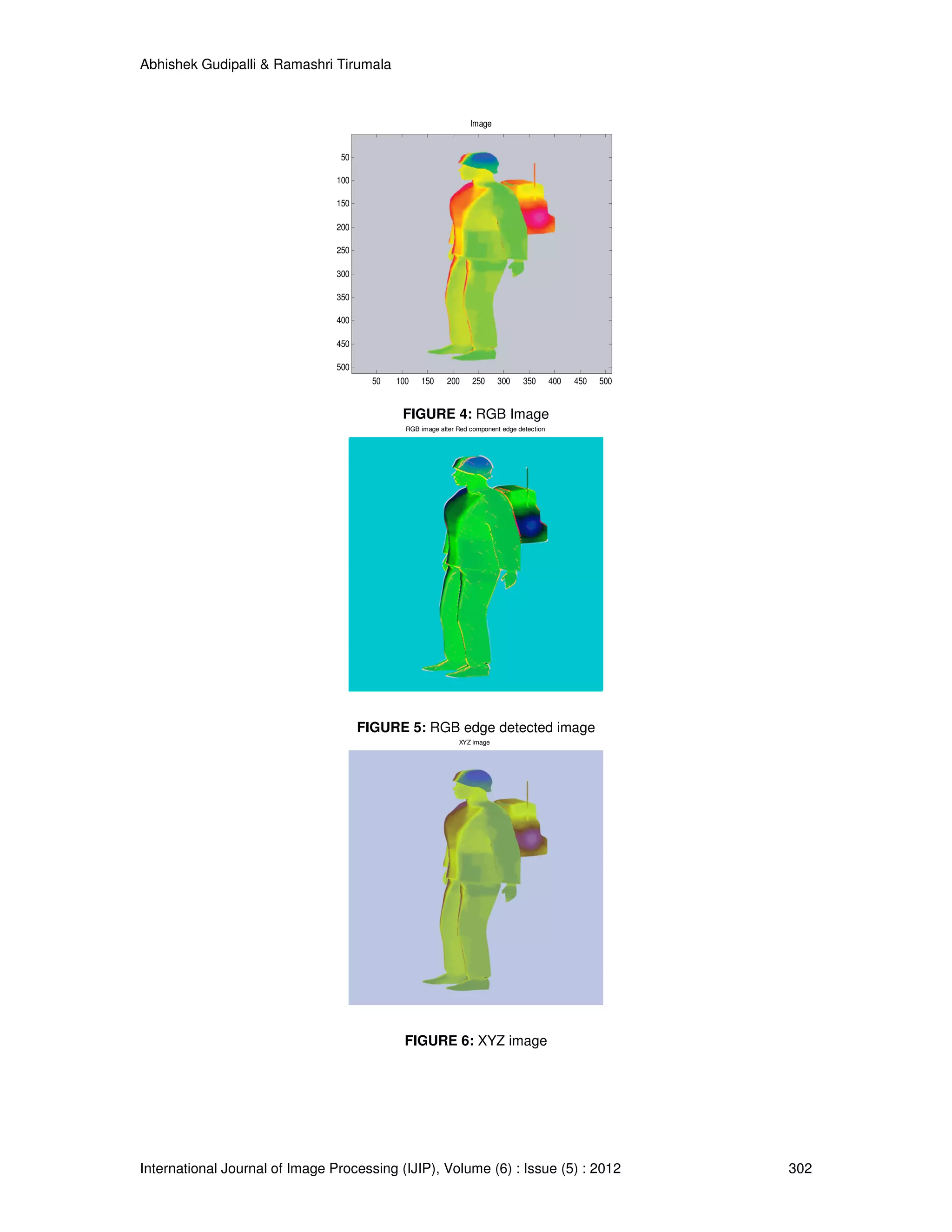
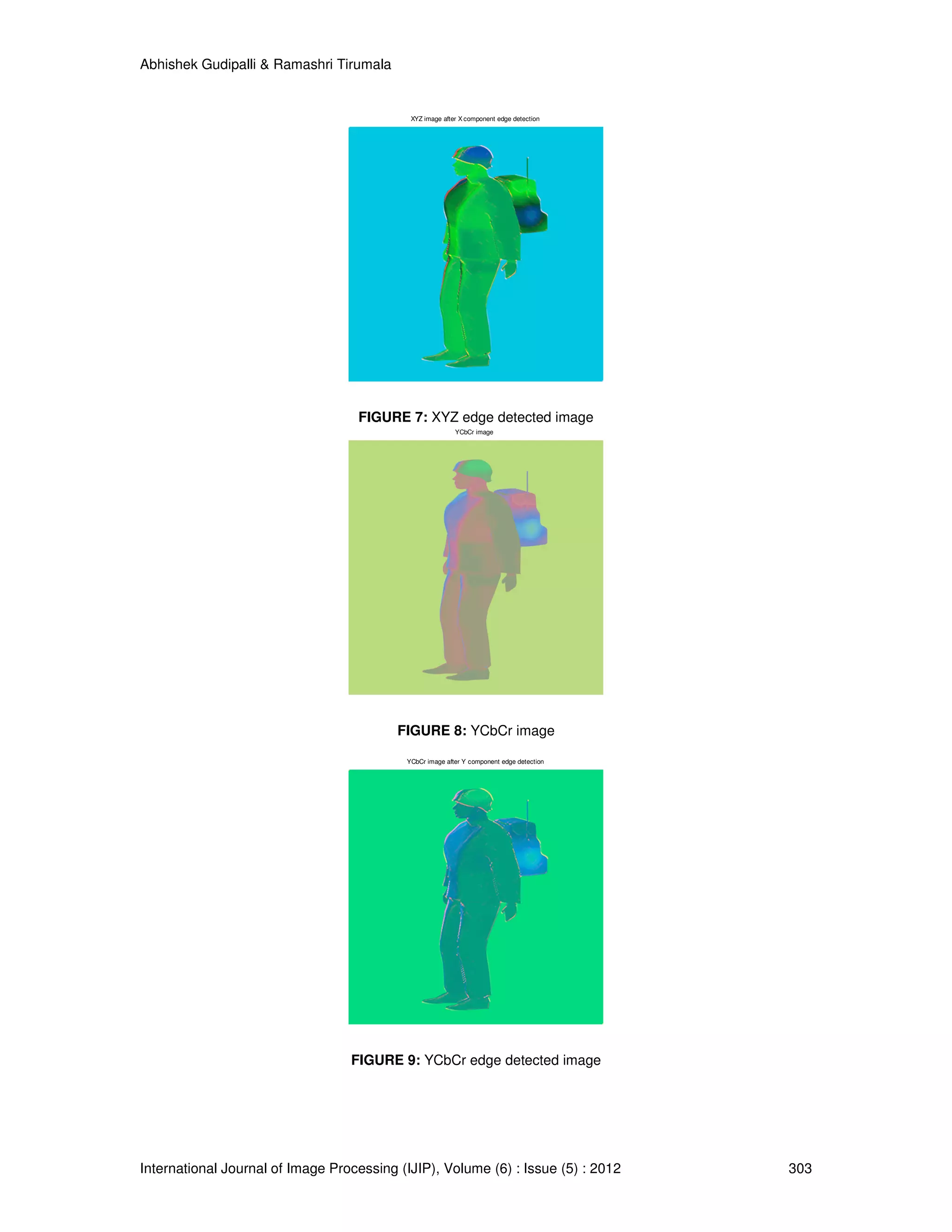
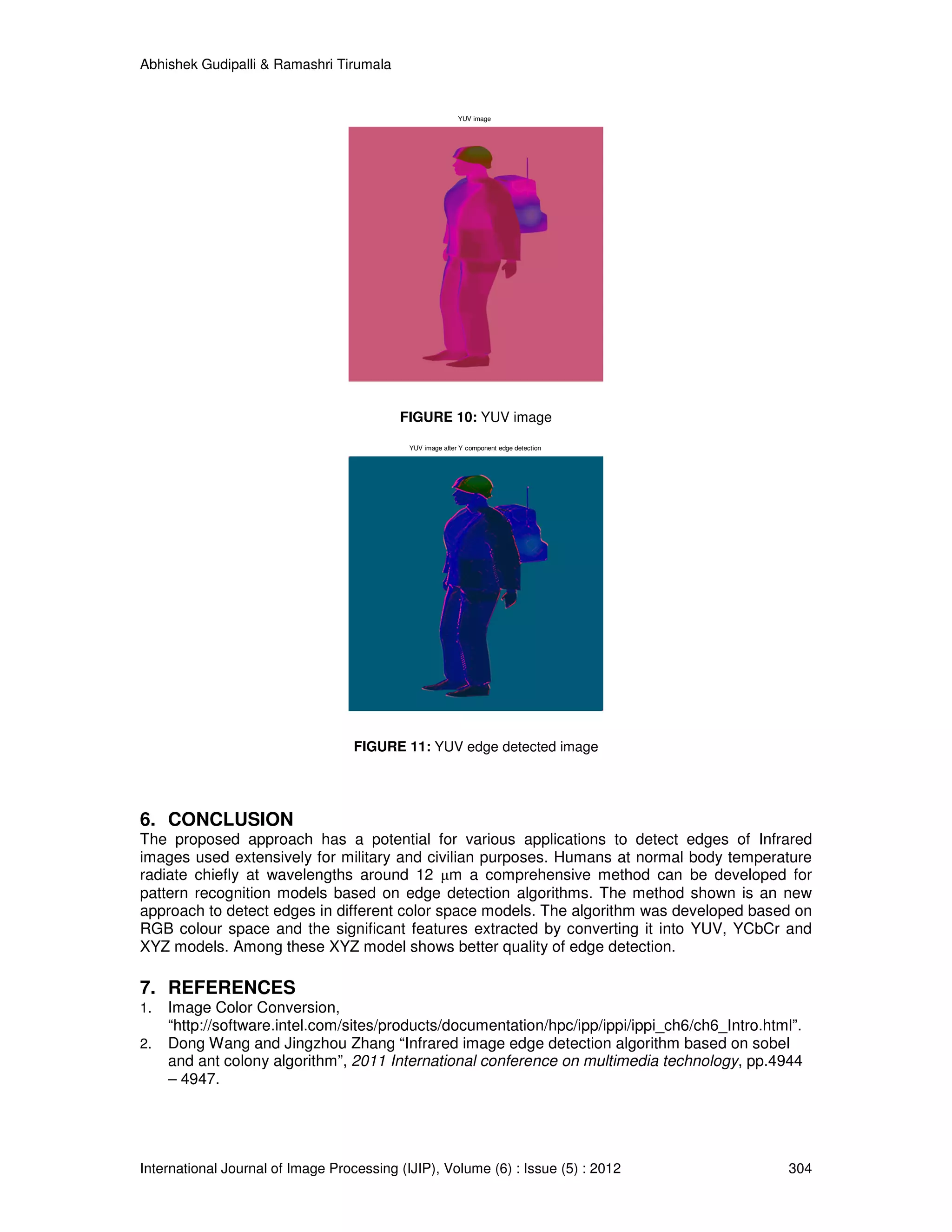
Abhishek Gudipalli & Ramashri Tirumala International Journal of Image Processing (IJIP), Volume (6) : Issue (5) : 2012 301 values (L = 255 for 8 bits/pixel gray scale images), and K1 < 1 and K2 < 1 are two scalar constants [4]. Sheikh and Bovik (2006) developed a visual information fidelity (VIF) index for Full Reference measurement of quality of image. VIF is calculated between the reference image and its copy[5]. For ideal image, VIF is exactly unity. For distorted image types, VIF lies in between interval [0, 1]. Let e=c+n be the reference image, and n zero-mean normal distribution N (0, ߪ௡ ଶ I ) noise. Also, let f=d+n′= gc+v′+ n′ be the test image, where g represents the blur, v′ the additive zero-mean Gaussian white noise with covariance ߪ௩ ଶ I , and n′ the zeromean normal distribution N(0,σ n2I ) noise[3]. Then, VIF can be computed as the ratio of the mutual information between c and f, and the mutual information between c and e for all wavelet subbands except the lowest approximation subband[4]. VIF= ΣI(c ;f|z) ΣI(c ;e|z) 4. PROPOSED EDGE DETECTION ALGORITHM The proposed algorithm can be explained in seven steps Step 1: The RGB image is sub divided into R, G and B layers of the image. Step 2: A 3X3 Laplacian mask is convolved with the R component of the image. Step 3: The edge detected R and the G, B layers of the image are concatenated to obtain edge detected image Step 4: SSIM and VIF values are calculated between the R edge detected image and RGB image. Step 5: Repeat steps 2 to 4 to calculate the SSIM and VIF values between G edge detected image and RGB image Step 6: Repeat steps 2 to 4 to calculate the SSIM and VIF values between B edge detected image and RGB image Step 7: The SSIM and VIF values of individual components are averaged. Step 8: R, G and B values of the image are transformed into its YCbCr, YUV and XYZ Intensity values using the conversion formulas. Step 9: Repeat steps 1 to 8 to calculate SSIM and VIF values for YCbCr, YUV and XYZ images. 5. EXPERIMENTAL RESULTS The Proposed algorithm has been applied to RGB, YCbCr, YUV and XYZ images and SSIM &VIF values are computed for a set of edge detected images and dataset is formed and tabulated in Table 1. The property of infrared images is that intensity value depends on temperature, object surface, surface direction, wavelength, etc. based up on these, for RGB color model, The SSIM value range is around 0.57 and VIF value range is around 0.21. For YCbCr color model, The SSIM value range is around 0.58 and VIF value range is around 0.13. For YUV color model, The SSIM value range is around 0.49 and VIF value range is around 0.16. For XYZ color model, The SSIM value range is around 0.61 and VIF value range is around 0.33.from the dataset, XYZ model shows better quality of edge detection than the other color models. The original and edge detected RGB, YCbCr, YUV and XYZ images are shown below. Color model SSIM VIF RGB 0.5730 0.2147 XYZ 0.6156 0.3306 YCbCr 0.5790 0.1316 YUV 0.4907 0.1675 TABLE 1: SSIM and VIF Values for RGB, XYZ, YCbCr and YUV images.
Abhishek Gudipalli & Ramashri Tirumala International Journal of Image Processing (IJIP), Volume (6) : Issue (5) : 2012 302 FIGURE 4: RGB Image FIGURE 5: RGB edge detected image FIGURE 6: XYZ image Image 50 100 150 200 250 300 350 400 450 500 50 100 150 200 250 300 350 400 450 500 RGB image after Red component edge detection XYZ image
Abhishek Gudipalli & Ramashri Tirumala International Journal of Image Processing (IJIP), Volume (6) : Issue (5) : 2012 303 FIGURE 7: XYZ edge detected image FIGURE 8: YCbCr image FIGURE 9: YCbCr edge detected image XYZ image after X component edge detection YCbCr image YCbCr image after Y component edge detection
Abhishek Gudipalli & Ramashri Tirumala International Journal of Image Processing (IJIP), Volume (6) : Issue (5) : 2012 304 FIGURE 10: YUV image FIGURE 11: YUV edge detected image 6. CONCLUSION The proposed approach has a potential for various applications to detect edges of Infrared images used extensively for military and civilian purposes. Humans at normal body temperature radiate chiefly at wavelengths around 12 µm a comprehensive method can be developed for pattern recognition models based on edge detection algorithms. The method shown is an new approach to detect edges in different color space models. The algorithm was developed based on RGB colour space and the significant features extracted by converting it into YUV, YCbCr and XYZ models. Among these XYZ model shows better quality of edge detection. 7. REFERENCES 1. Image Color Conversion, “http://software.intel.com/sites/products/documentation/hpc/ipp/ippi/ippi_ch6/ch6_Intro.html”. 2. Dong Wang and Jingzhou Zhang “Infrared image edge detection algorithm based on sobel and ant colony algorithm”, 2011 International conference on multimedia technology, pp.4944 – 4947. YUV image YUV image after Y component edge detection
Abhishek Gudipalli & Ramashri Tirumala International Journal of Image Processing (IJIP), Volume (6) : Issue (5) : 2012 305 3. Sheikh, H. R., Bovik, A. C. and Cormack, L., “Noreference quality assessment using natural scene statistics: JPEG2000”, IEEE Transactions on Image Processing, 14(11), 2005, pp. 1918-1927. 4. S Qian, G Chen “Four reduced-reference metrics for measuring hyperspectral images after spatial resolution enhancement” In: Wagner W., Székely, B. (eds.): ISPRS TC VII Symposium – 100 Years ISPRS, Vienna, Austria, July 5–7, 2010, IAPRS, Vol. XXXVIII, Part 7A 5. Sheikh, H. R. and Bovik, A. C, “Image information and visual quality”, IEEE Transactions on Image Processing, 15(2), 2006, pp. 430-444. 6. Chen, G. Y. and Qian, S. E, “Evaluation and comparison of dimensionality reduction methods and band selection”, Canadian Journal of Remote Sensing, 34(1), 2008a, pp. 26-32. 7. Li, Q. and Wang, Z., “Reduced-reference image quality assessment using divisive normalization-based image representation”, IEEE Journal of Selected Topics in Signal Processing, Special issue on Visual Media Quality Assessment, 3(2), 2009,pp. 202-211. 8. S K Naik , C A Murthy, “Standardization of edge magnitude in color images”, IEEE Transactions on Image Processing , 2006 , 15(9) : 2588 —2595. 9. C L Novak, S A Shafer “Color edge detection”, Proc of DARPA Image Understanding Workshop. 1987, pp:35 -37 10. R C Gonzalez,R E Woods, “Digital Image Processing” (Second Edition).New York : Prentice Hall , 2003 pp.300-450. 11. P E Trahanias , A N Venetsanopoulos, “Color Edge Detection Using Vector Order Statistics”, IEEE Transactions on Image Processing ,1993 , 2 (2) : 259 -264. 12. J Fan , W GAref , M Hacid , et al. “An improved automatic isotropic color edge detection technique”, Pattern Recognition Letters,2001,22(3):1419-1429 13. A. Koschan, “A comparative study on color edge detection,” in Proceedings of the 2nd Asian Conference on Computer Vision ACCV’95, pp. 574-578, Singapore, 1995. 14. A. N. Evans and X. U. Liu, “A morphological gradient approach to color edge detection,” IEEE Transactions on Image Processing, vol. 15, no. 6, pp.1454-1463, 2006. 15. X. W. Li and X. R. Zhang, “A perceptual color edge detection algorithm,” International Conference on Computer Science and Software Engineering, vol. 1, pp.297-300, 2008. 16. Yajun Fang, Keiichi Yamadac, Yoshiki Ninomiya, Berthold Horn, Ichiro Masaki “Comparison between infrared image based and visible image based approaches for pedestrian detection”, IEEE Intelligent Vehicles Symposium, pp.505-510,2003. 17. Kenji Omasa, Fumiki Hosoi and Atsumi Konishi,” 3D lidar imaging for detecting and understanding Plant responses and canopy structure”, Journal of Experimental Botany, Vol. 58, No. 4, pp. 881–898, 2007.

Comprehensive Infrared Image Edge detection Algorithm

  • 1.
    Abhishek Gudipalli &Ramashri Tirumala International Journal of Image Processing (IJIP), Volume (6) : Issue (5) : 2012 297 Comprehensive Infrared Image Edge Detection Algorithm Abhishek Gudipalli abhishek.g@vit.ac.in Assistant Professor/School of Electrical Engineering VIT University Vellore,632014, India Dr.Ramashri Tirumala rama.jaypee@gmail.com Associate Professor/Dept of Electronics & Communication Engineering Sri Venkateswara University College of Engineering Tirupati,517501,India Abstract Edge detection is one of the most powerful image analysis tools for enhancing and detecting edges. Indeed, identifying and localizing edges are a low level task in a variety of applications such as 3-D reconstruction, shape recognition, image compression, enhancement, and restoration. This paper introduces a new algorithm for detecting edges based on color space models. In this RGB image is taken as an input image and transforming the RGB image to color models such as YUV, YCbCr and XYZ. The edges have been detected for each component in color models separately and compared with the original image of that particular model. In order to measure the quality assessment between images, SSIM (Structural Similarity Index Method) and VIF (Visual Information Fidelity) has been calculated. The results have shown that XYZ color model is having high SSIM value and VIF value. In the previous papers, edge detection based on RGB color model has low SSIM and VIF values. So by converting the images into different color models shows a significant improvement in detection of edges. Keywords: Edge detection, Color models, SSIM, VIF. 1. INTRODUCTION The important image processing tool that is used as a fundamental pre-processing step in many image processing applications is edge detection. Edges map have a significant role in application such as image categorization, image registration, feature extraction, and pattern recognition. An edge detector can be defined as a mathematical operator that responds to the spatial change and discontinuities in gray levels of pixels set in an image. Each industry will use its suitable color model. For example, the RGB color model is used in computer graphics, YUV is used in video systems, PhotoCD production and so on. Edge detection in color images requires several approaches of different complexity already exist. In image processing edge detection is an important process, color images provides more detailed edge information than gray value images, and color edge detection becomes vital for edge based image segmentation or edge- based stereo matching. Edges will not be detected in gray value images when neighboring objects have different hues but equal intensities. Additionally, the common shortcomings of the RGB image edge detection arithmetic are the low speed and the color losses after the each component of the image is processed. Thus, color edge detection is proposed based on changing the domain of the edge detection. The RGB image is transformed to YUV, YCbCr and XYZ color models. The quality assessment metrics such that SSIM and VIF have been applied to the above models and found that in XYZ color model is providing more detailed edge information than the other color models.
  • 2.
    Abhishek Gudipalli &Ramashri Tirumala International Journal of Image Processing (IJIP), Volume (6) : Issue (5) : 2012 298 2. DIFFERENT COLOR SPACES 2.1 RGB color model In the RGB model, each color appears as a combination of red, green, and blue. This model is called additive, and the colors are called primary colors. The primary colors can be added to produce the secondary colors of light (see Figure "Primary and Secondary Colors for RGB ") - magenta (red plus blue), cyan (green plus blue), and yellow (red plus green). The combination of red, green, and blue at full intensities makes white. The color subspace of interest is a cube shown in Figure "RGB Color Model" (RGB values are normalized to 0..1)[1], in which RGB values are at three corners; cyan, magenta, and yellow are the three other corners, black is at their origin; and white is at the corner farthest from the origin. The gray scale extends from black to white along the diagonal joining these two points. The colors are the points on or inside the cube, defined by vectors extending from the origin. Thus, images in the RGB color model consist of three independent image planes, one for each primary color. The importance of the RGB color model is that it relates very closely to the way that the human eye perceives color. RGB is a basic color model for computer graphics because color displays use red, green, and blue to create the desired color. Therefore, the choice of the RGB color space simplifies the architecture and design of the system. Besides, a system that is designed using the RGB color space can take advantage of a large number of existing software routines, because this color space has been around for a number of years. However, RGB is not very efficient when dealing with real-world images. To generate any color within the RGB color cube, all three RGB components need to be of equal pixel depth and display resolution. Also, any modification of the image requires modification of all three planes[1]. FIGURE 1: RGB Colour model. 2.2 YCbCr and YUV color model In the YCbCr color space is used for component digital video is a scaled and offset version of the YUV color space. The YUV color model is the basic color model used in analogue color TV broadcasting. Initially YUV is the re-coding of RGB for transmission efficiency (minimizing bandwidth) and for downward compatibility with black-and white television. The YUV color space is “derived” from the RGB space. It comprises the luminance (Y) and two color difference (U, V) components. The luminance can be computed as a weighted sum of red, green and blue components; the color difference, or chrominance, components are formed by subtracting luminance from blue and from red. The principal advantage of the YUV model in image processing is decoupling of luminance and color information. The importance of this decoupling is that the luminance component of an image can be processed without affecting its color component. For example, the histogram equalization of the color image in the YUV format may be performed simply by applying histogram equalization to its Y component. There are many combinations of YUV values from nominal ranges that result in invalid RGB values, because the possible RGB colors occupy only part of the YUV space limited by these ranges. For example,
  • 3.
    Abhishek Gudipalli &Ramashri Tirumala International Journal of Image Processing (IJIP), Volume (6) : Issue (5) : 2012 299 the histogram equalization of the color image in the YUV format may be performed simply by applying histogram equalization to its Y component. There are many combinations of YUV values from nominal ranges that result in invalid RGB values, because the possible RGB colors occupy only part of the YUV space limited by these ranges. Figure " YUV Color Model" shows the valid color block in the YUV space that corresponds to the RGB color cube RGB values are normalized to [0..1])[1]. The Y’U’V’ notation means that the components are derived from gamma-corrected R’G’B’. Weighted sum of these non-linear components forms a signal representative of luminance that is called luma Y’. (Luma is often loosely referred to as luminance, so you need to be careful to determine whether a particular author assigns a linear or non-linear interpretation to the term luminance)[1].The YCbCr color space is used for component digital video is a scaled and offset version of the YUV color space. The position of the block of RGB-representable colors in the YCbCr space is shown in Figure2.1 RGB Colors Cube in the YCbCr Color Model [1]. Conversion between RGB and YCbCr models: Y’ = 0.257*R' + 0.504*G' + 0.098*B' + 16 Cb' = -0.148*R' - 0.291*G' + 0.439*B' + 128 Cr' = 0.439*R' - 0.368*G' - 0.071*B' + 128 Conversion between RGB and YUV models: Y'= 0.299*R' + 0.587*G' + 0.114*B' U'= -0.147*R' - 0.289*G' + 0.436*B' = 0.492*(B'- Y') V'= 0.615*R' - 0.515*G' - 0.100*B' = 0.877*(R'- Y') FIGURE 2: YCbCr and YUV color models. 2.3 XYZ color model The XYZ color space is an international standard developed by the CIE (Commission Internationale de l’Eclairage). This model is based on three hypothetical primaries, XYZ, and all visible colors can be represented by using only positive values of X, Y, and Z. The CIE XYZ primaries are hypothetical because they do not correspond to any real light wavelengths. The Y primary is intentionally defined to match closely to luminance, while X and Z primaries give color information. The main advantage of the CIE XYZ space (and any color space based on it) is that this space is completely device-independent. The position of the block of RGB-representable colors in the XYZ space is shown in Figure 3 XYZ Color model [1]. Conversion between RGB and XYZ models: X = 0.412453*R’ + 0.35758 *G’ + 0.180423*B’
  • 4.
    Abhishek Gudipalli &Ramashri Tirumala International Journal of Image Processing (IJIP), Volume (6) : Issue (5) : 2012 300 Y = 0.212671*R’ + 0.71516 *G’ + 0.072169*B’ Z = 0.019334*R’ + 0.119193*G’ + 0.950227*B’ FIGURE 3: XYZ color model. 2.4 Infrared Imaging Infrared (IR) light is electromagnetic radiation with a wavelength longer than that of visible light, measured from the nominal edge of visible red light at 0.74µm, and extending conventionally to 300µm. These wavelengths correspond to a frequency range of approximately 1 to 400 THz and include most of the thermal radiation emitted by objects near room temperature. Microscopically, IR light is typically emitted or absorbed by molecules when they change their rotational and vibration movements. Infrared imaging is used extensively for military and civilian purposes. Military applications include target acquisition, surveillance, night vision, homing and tracking. Non-military uses include thermal efficiency analysis, environmental monitoring, industrial facility inspections, remote temperature sensing, short-ranged wireless communication, spectroscopy, and weather forecasting[2]. Infrared astronomy uses sensor-equipped telescopes to penetrate dusty regions of space, such as molecular clouds; detect objects such as planets, and to view highly red-shifted objects from the early days of the universe. Humans at normal body temperature radiate chiefly at wavelengths around 12 µm, at the atomic level infrared energy elicits vibration modes in a molecule through a change in the dipole moment, making it a useful frequency range for study of these energy states for molecules of the proper symmetry. Infrared spectroscopy examines absorption and transmission of photons in the infrared energy range, based on their frequency and intensity [2]. 3. EVALUATION METRICS In image processing applications, the measurement of image quality plays main role. Image quality assessment algorithms are classified into three categories: FullReference (FR), Reduced- Reference (RR), and No-Reference (NR) algorithms. True No Reference algorithms are difficult to design and little progress has been made [3]. Full Reference algorithms are easier to design and The SSIM index is a full reference metric. In this, the measurement of image quality is based on reference image of perfect quality. SSIM is designed to improve Peak Signal-to-Noise Ratio (PSNR) and Mean Squared Error (MSE), which is proved to be inconsistent with human eye perception[4]. However, in RR or NR quality assessment, partial or no reference information is available. The SSIM index is defined as[4]: SSIMሺx,yሻ= σxy+C1 σxσy+C1 . 2µx µy + C2 µx 2+µy 2+ C2 . 2σxσy+ C3 σx 2 +σy 2 + C3 Let x an y be the two discrete non-negative signals extracted from the same spatial location from two images being compared, respectivelyߤ௫, ߪ௫ ଶ and ߪ௫௬ be the mean of x ,the variance of x and the covariance of x and y, respectively. ߤ௫ and ߪ௫ gives the information on luminance and contrast of x. ߪ௫௬ measures the structural similarity.where C1, C2 and C3 are small constants given by C1 = (K1 L) 2 ; C2 = (K2 L) 2 and C3 = C2 / 2; respectively. L is the dynamic range of the pixel
  • 5.
    Abhishek Gudipalli &Ramashri Tirumala International Journal of Image Processing (IJIP), Volume (6) : Issue (5) : 2012 301 values (L = 255 for 8 bits/pixel gray scale images), and K1 < 1 and K2 < 1 are two scalar constants [4]. Sheikh and Bovik (2006) developed a visual information fidelity (VIF) index for Full Reference measurement of quality of image. VIF is calculated between the reference image and its copy[5]. For ideal image, VIF is exactly unity. For distorted image types, VIF lies in between interval [0, 1]. Let e=c+n be the reference image, and n zero-mean normal distribution N (0, ߪ௡ ଶ I ) noise. Also, let f=d+n′= gc+v′+ n′ be the test image, where g represents the blur, v′ the additive zero-mean Gaussian white noise with covariance ߪ௩ ଶ I , and n′ the zeromean normal distribution N(0,σ n2I ) noise[3]. Then, VIF can be computed as the ratio of the mutual information between c and f, and the mutual information between c and e for all wavelet subbands except the lowest approximation subband[4]. VIF= ΣI(c ;f|z) ΣI(c ;e|z) 4. PROPOSED EDGE DETECTION ALGORITHM The proposed algorithm can be explained in seven steps Step 1: The RGB image is sub divided into R, G and B layers of the image. Step 2: A 3X3 Laplacian mask is convolved with the R component of the image. Step 3: The edge detected R and the G, B layers of the image are concatenated to obtain edge detected image Step 4: SSIM and VIF values are calculated between the R edge detected image and RGB image. Step 5: Repeat steps 2 to 4 to calculate the SSIM and VIF values between G edge detected image and RGB image Step 6: Repeat steps 2 to 4 to calculate the SSIM and VIF values between B edge detected image and RGB image Step 7: The SSIM and VIF values of individual components are averaged. Step 8: R, G and B values of the image are transformed into its YCbCr, YUV and XYZ Intensity values using the conversion formulas. Step 9: Repeat steps 1 to 8 to calculate SSIM and VIF values for YCbCr, YUV and XYZ images. 5. EXPERIMENTAL RESULTS The Proposed algorithm has been applied to RGB, YCbCr, YUV and XYZ images and SSIM &VIF values are computed for a set of edge detected images and dataset is formed and tabulated in Table 1. The property of infrared images is that intensity value depends on temperature, object surface, surface direction, wavelength, etc. based up on these, for RGB color model, The SSIM value range is around 0.57 and VIF value range is around 0.21. For YCbCr color model, The SSIM value range is around 0.58 and VIF value range is around 0.13. For YUV color model, The SSIM value range is around 0.49 and VIF value range is around 0.16. For XYZ color model, The SSIM value range is around 0.61 and VIF value range is around 0.33.from the dataset, XYZ model shows better quality of edge detection than the other color models. The original and edge detected RGB, YCbCr, YUV and XYZ images are shown below. Color model SSIM VIF RGB 0.5730 0.2147 XYZ 0.6156 0.3306 YCbCr 0.5790 0.1316 YUV 0.4907 0.1675 TABLE 1: SSIM and VIF Values for RGB, XYZ, YCbCr and YUV images.
  • 6.
    Abhishek Gudipalli &Ramashri Tirumala International Journal of Image Processing (IJIP), Volume (6) : Issue (5) : 2012 302 FIGURE 4: RGB Image FIGURE 5: RGB edge detected image FIGURE 6: XYZ image Image 50 100 150 200 250 300 350 400 450 500 50 100 150 200 250 300 350 400 450 500 RGB image after Red component edge detection XYZ image
  • 7.
    Abhishek Gudipalli &Ramashri Tirumala International Journal of Image Processing (IJIP), Volume (6) : Issue (5) : 2012 303 FIGURE 7: XYZ edge detected image FIGURE 8: YCbCr image FIGURE 9: YCbCr edge detected image XYZ image after X component edge detection YCbCr image YCbCr image after Y component edge detection
  • 8.
    Abhishek Gudipalli &Ramashri Tirumala International Journal of Image Processing (IJIP), Volume (6) : Issue (5) : 2012 304 FIGURE 10: YUV image FIGURE 11: YUV edge detected image 6. CONCLUSION The proposed approach has a potential for various applications to detect edges of Infrared images used extensively for military and civilian purposes. Humans at normal body temperature radiate chiefly at wavelengths around 12 µm a comprehensive method can be developed for pattern recognition models based on edge detection algorithms. The method shown is an new approach to detect edges in different color space models. The algorithm was developed based on RGB colour space and the significant features extracted by converting it into YUV, YCbCr and XYZ models. Among these XYZ model shows better quality of edge detection. 7. REFERENCES 1. Image Color Conversion, “http://software.intel.com/sites/products/documentation/hpc/ipp/ippi/ippi_ch6/ch6_Intro.html”. 2. Dong Wang and Jingzhou Zhang “Infrared image edge detection algorithm based on sobel and ant colony algorithm”, 2011 International conference on multimedia technology, pp.4944 – 4947. YUV image YUV image after Y component edge detection
  • 9.
    Abhishek Gudipalli &Ramashri Tirumala International Journal of Image Processing (IJIP), Volume (6) : Issue (5) : 2012 305 3. Sheikh, H. R., Bovik, A. C. and Cormack, L., “Noreference quality assessment using natural scene statistics: JPEG2000”, IEEE Transactions on Image Processing, 14(11), 2005, pp. 1918-1927. 4. S Qian, G Chen “Four reduced-reference metrics for measuring hyperspectral images after spatial resolution enhancement” In: Wagner W., Székely, B. (eds.): ISPRS TC VII Symposium – 100 Years ISPRS, Vienna, Austria, July 5–7, 2010, IAPRS, Vol. XXXVIII, Part 7A 5. Sheikh, H. R. and Bovik, A. C, “Image information and visual quality”, IEEE Transactions on Image Processing, 15(2), 2006, pp. 430-444. 6. Chen, G. Y. and Qian, S. E, “Evaluation and comparison of dimensionality reduction methods and band selection”, Canadian Journal of Remote Sensing, 34(1), 2008a, pp. 26-32. 7. Li, Q. and Wang, Z., “Reduced-reference image quality assessment using divisive normalization-based image representation”, IEEE Journal of Selected Topics in Signal Processing, Special issue on Visual Media Quality Assessment, 3(2), 2009,pp. 202-211. 8. S K Naik , C A Murthy, “Standardization of edge magnitude in color images”, IEEE Transactions on Image Processing , 2006 , 15(9) : 2588 —2595. 9. C L Novak, S A Shafer “Color edge detection”, Proc of DARPA Image Understanding Workshop. 1987, pp:35 -37 10. R C Gonzalez,R E Woods, “Digital Image Processing” (Second Edition).New York : Prentice Hall , 2003 pp.300-450. 11. P E Trahanias , A N Venetsanopoulos, “Color Edge Detection Using Vector Order Statistics”, IEEE Transactions on Image Processing ,1993 , 2 (2) : 259 -264. 12. J Fan , W GAref , M Hacid , et al. “An improved automatic isotropic color edge detection technique”, Pattern Recognition Letters,2001,22(3):1419-1429 13. A. Koschan, “A comparative study on color edge detection,” in Proceedings of the 2nd Asian Conference on Computer Vision ACCV’95, pp. 574-578, Singapore, 1995. 14. A. N. Evans and X. U. Liu, “A morphological gradient approach to color edge detection,” IEEE Transactions on Image Processing, vol. 15, no. 6, pp.1454-1463, 2006. 15. X. W. Li and X. R. Zhang, “A perceptual color edge detection algorithm,” International Conference on Computer Science and Software Engineering, vol. 1, pp.297-300, 2008. 16. Yajun Fang, Keiichi Yamadac, Yoshiki Ninomiya, Berthold Horn, Ichiro Masaki “Comparison between infrared image based and visible image based approaches for pedestrian detection”, IEEE Intelligent Vehicles Symposium, pp.505-510,2003. 17. Kenji Omasa, Fumiki Hosoi and Atsumi Konishi,” 3D lidar imaging for detecting and understanding Plant responses and canopy structure”, Journal of Experimental Botany, Vol. 58, No. 4, pp. 881–898, 2007.