©2013 DataStax Confidential. Do not distribute without consent. Jon Haddad, Luke Tillman Technical Evangelists, DataStax @rustyrazorblade, @LukeTillman Introduction to Apache Cassandra 1
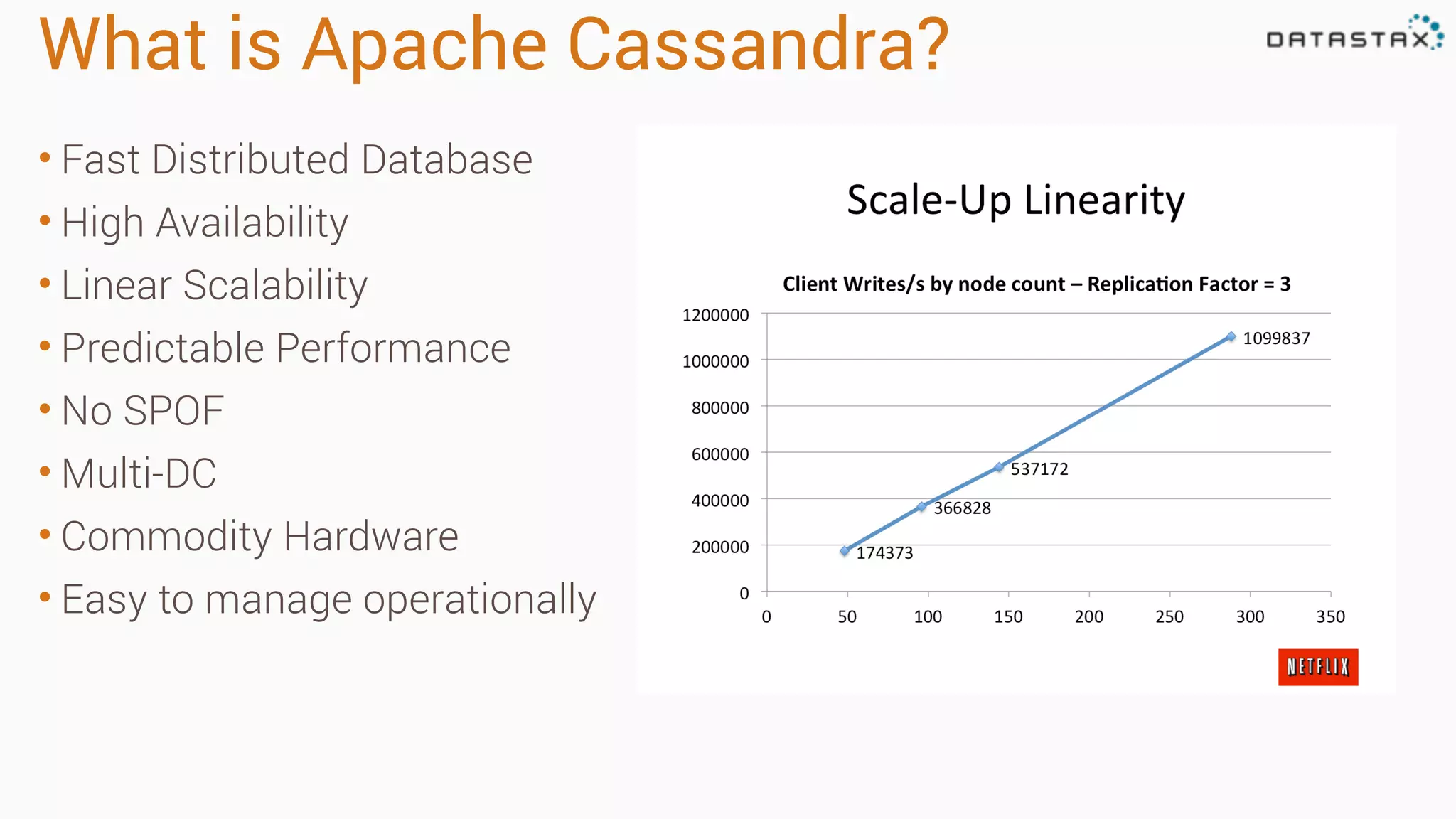
What is Apache Cassandra? • Fast Distributed Database • High Availability • Linear Scalability • Predictable Performance • No SPOF • Multi-DC • Commodity Hardware • Easy to manage operationally
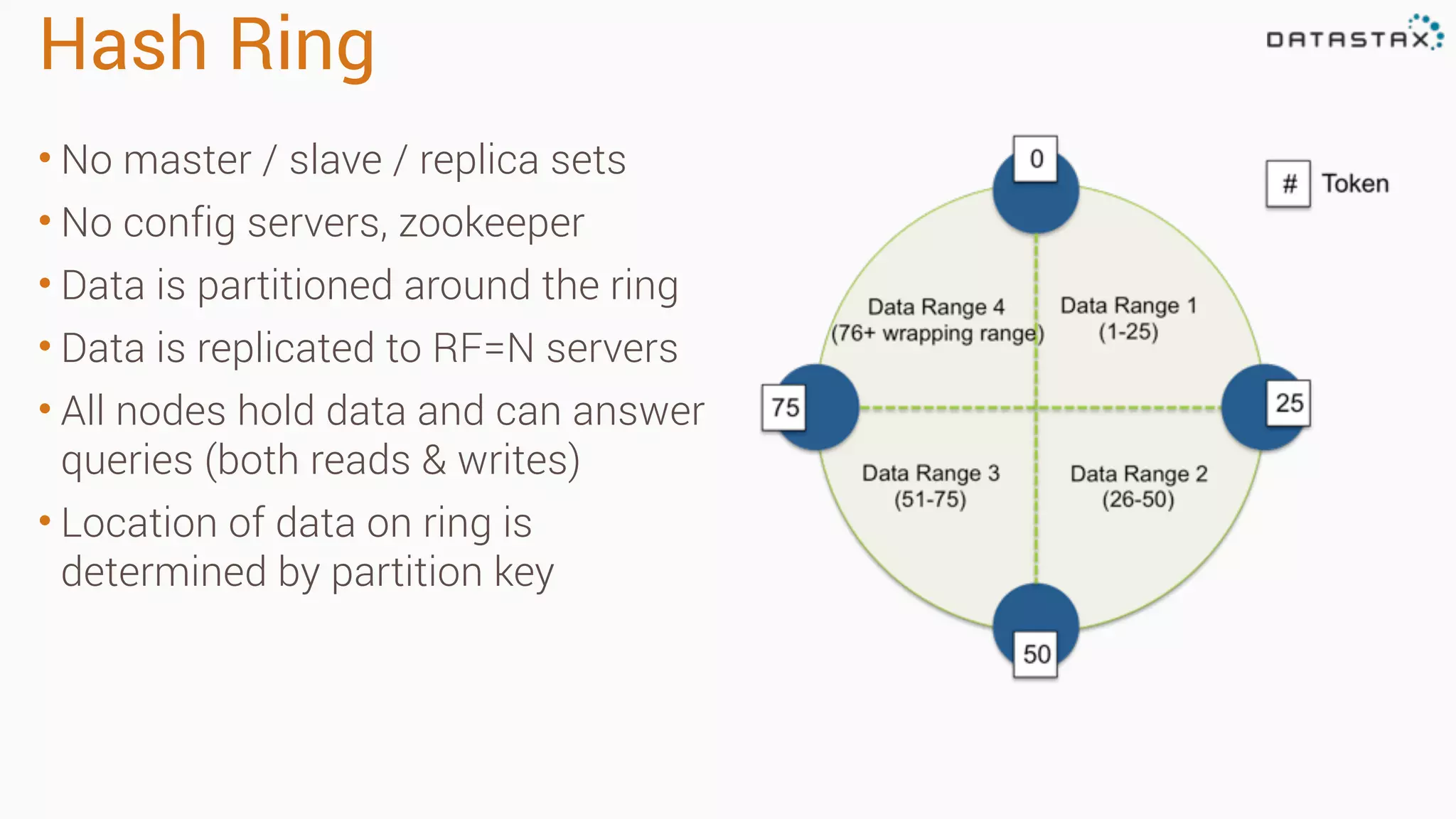
Hash Ring • No master / slave / replica sets • No config servers, zookeeper • Data is partitioned around the ring • Data is replicated to RF=N servers • All nodes hold data and can answer queries (both reads & writes) • Location of data on ring is determined by partition key
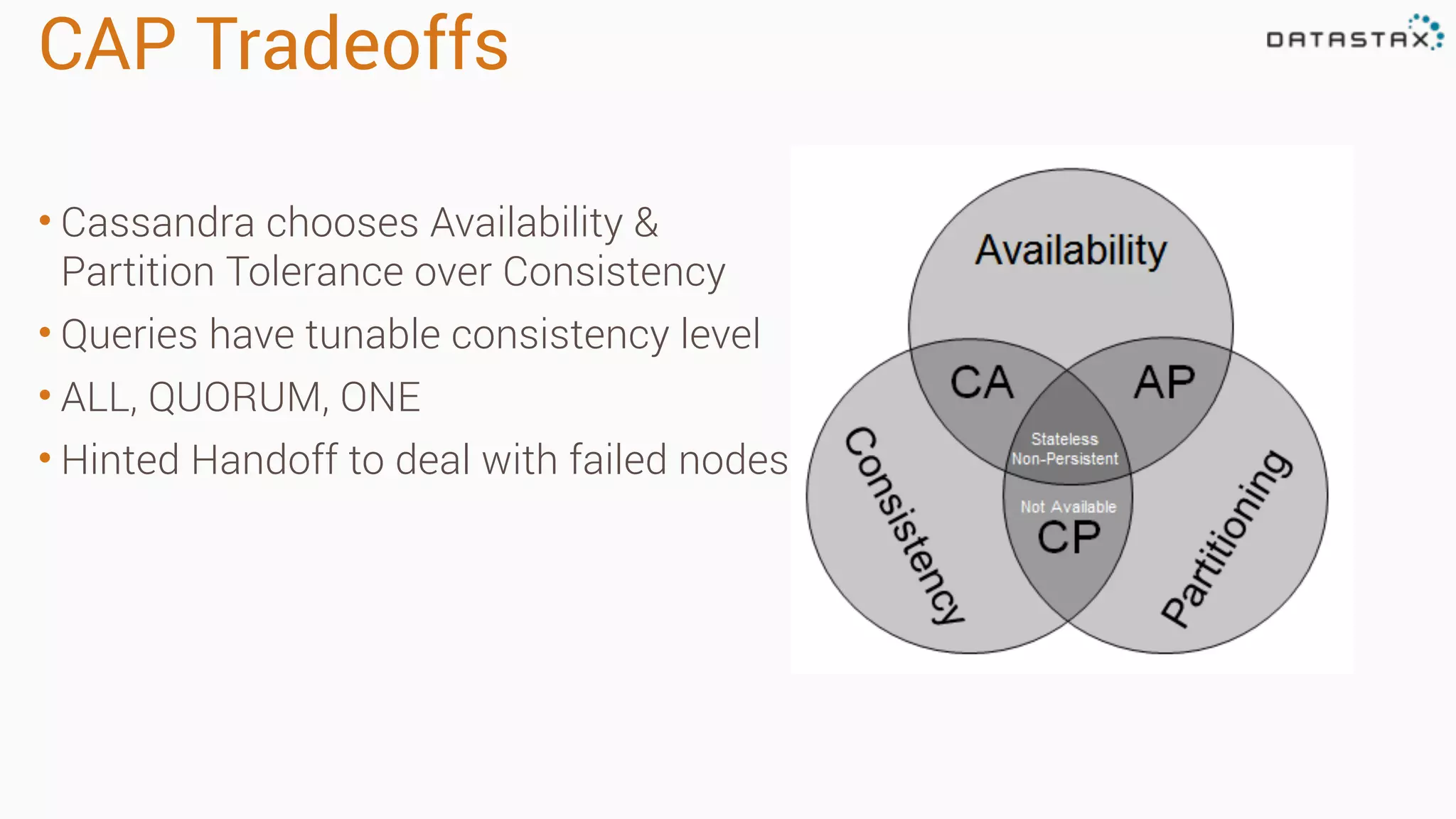
CAP Tradeoffs • Cassandra chooses Availability & Partition Tolerance over Consistency • Queries have tunable consistency level • ALL, QUORUM, ONE • Hinted Handoff to deal with failed nodes
Data Modeling
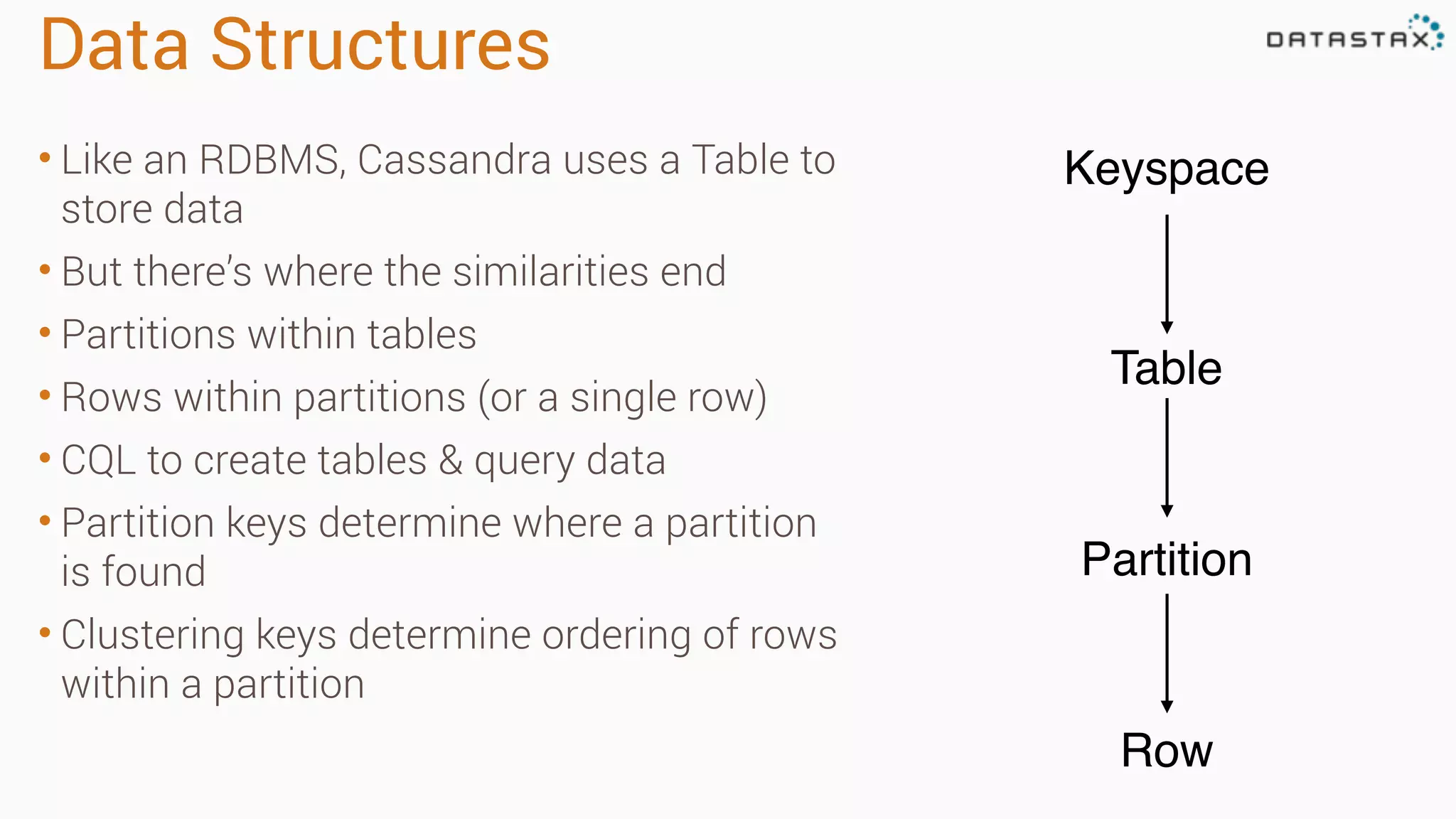
Data Structures • Like an RDBMS, Cassandra uses a Table to store data • But there’s where the similarities end • Partitions within tables • Rows within partitions (or a single row) • CQL to create tables & query data • Partition keys determine where a partition is found • Clustering keys determine ordering of rows within a partition Table Partition Row Keyspace
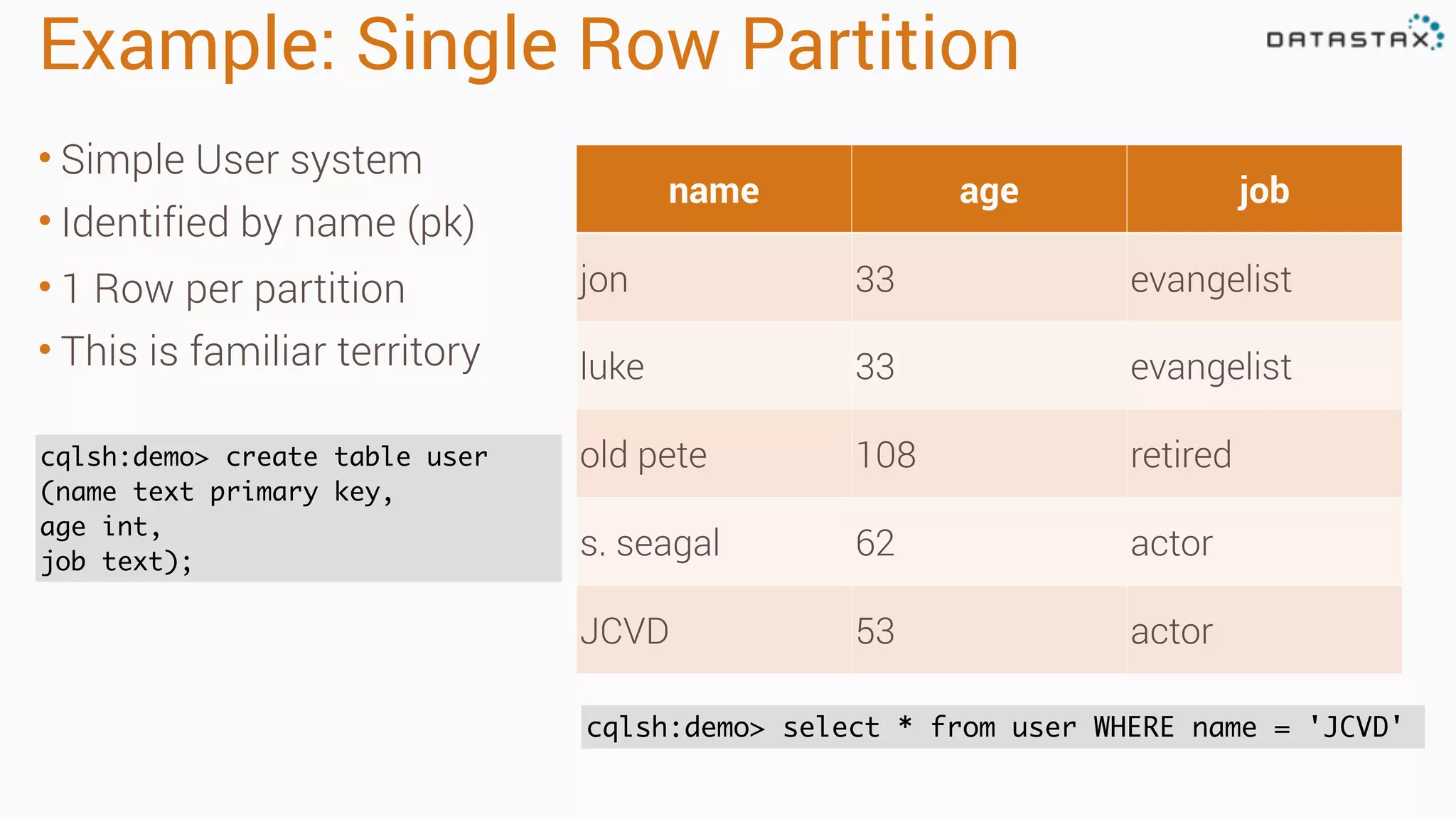
Example: Single Row Partition • Simple User system • Identified by name (pk) • 1 Row per partition • This is familiar territory name age job jon 33 evangelist luke 33 evangelist old pete 108 retired s. seagal 62 actor JCVD 53 actor cqlsh:demo> select * from user WHERE name = 'JCVD' cqlsh:demo> create table user (name text primary key, age int, job text);
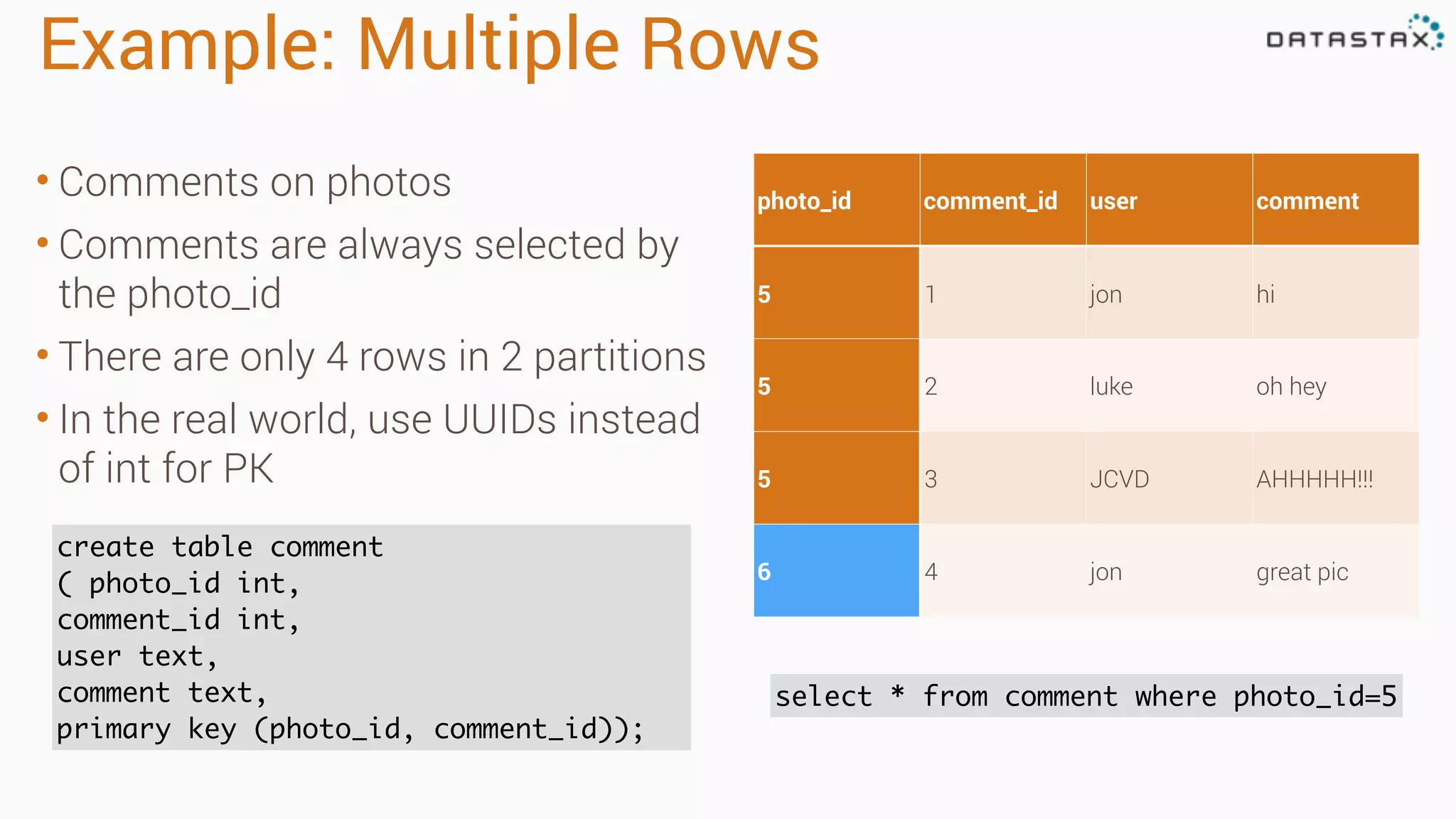
Example: Multiple Rows • Comments on photos • Comments are always selected by the photo_id • There are only 4 rows in 2 partitions • In the real world, use UUIDs instead of int for PK photo_id comment_id user comment 5 1 jon hi 5 2 luke oh hey 5 3 JCVD AHHHHH!!! 6 4 jon great pic select * from comment where photo_id=5 create table comment ( photo_id int, comment_id int, user text, comment text, primary key (photo_id, comment_id));
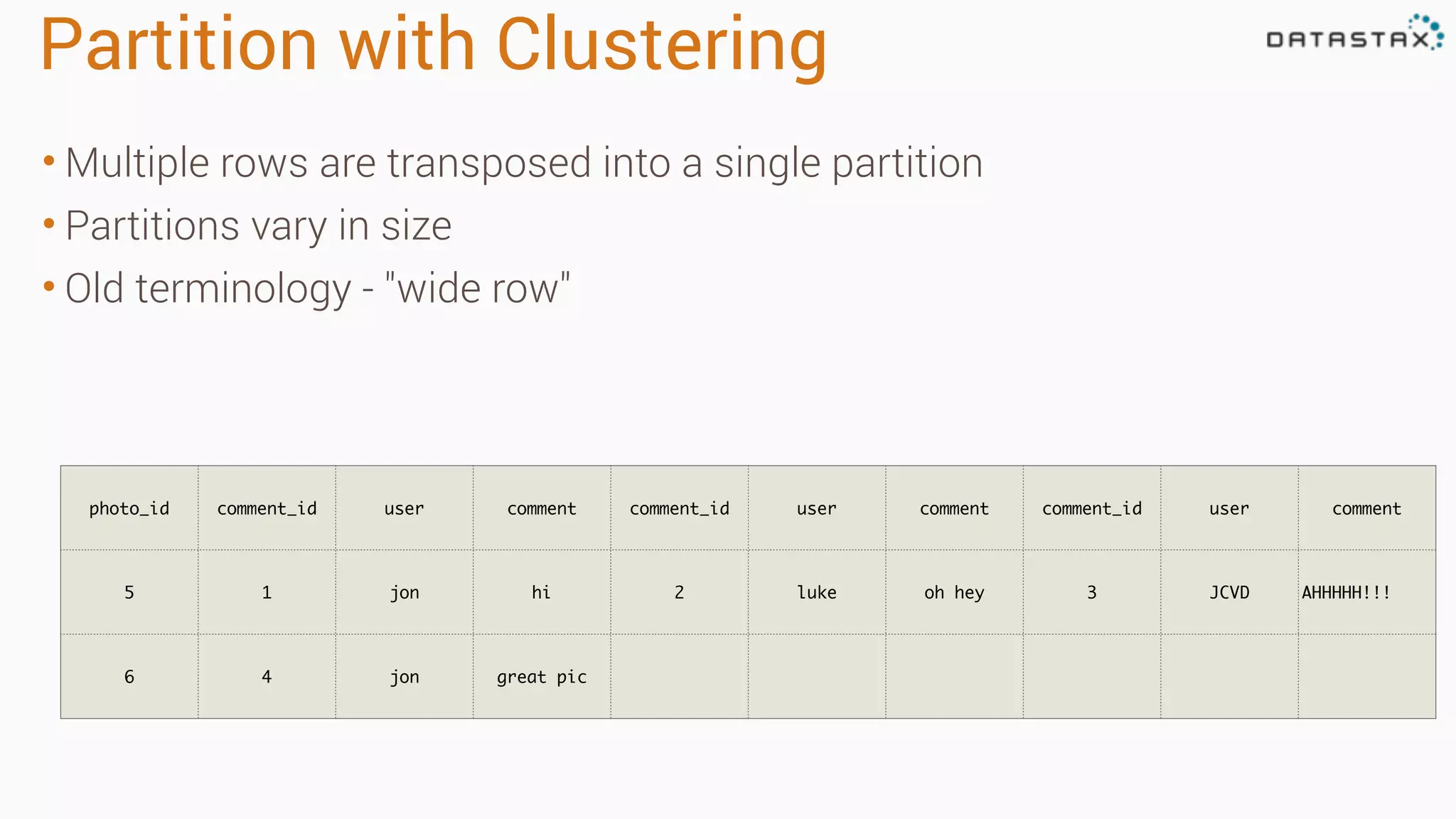
Partition with Clustering photo_id comment_id user comment comment_id user comment comment_id user comment 5 1 jon hi 2 luke oh hey 3 JCVD AHHHHH!!! 6 4 jon great pic • Multiple rows are transposed into a single partition • Partitions vary in size • Old terminology - "wide row"
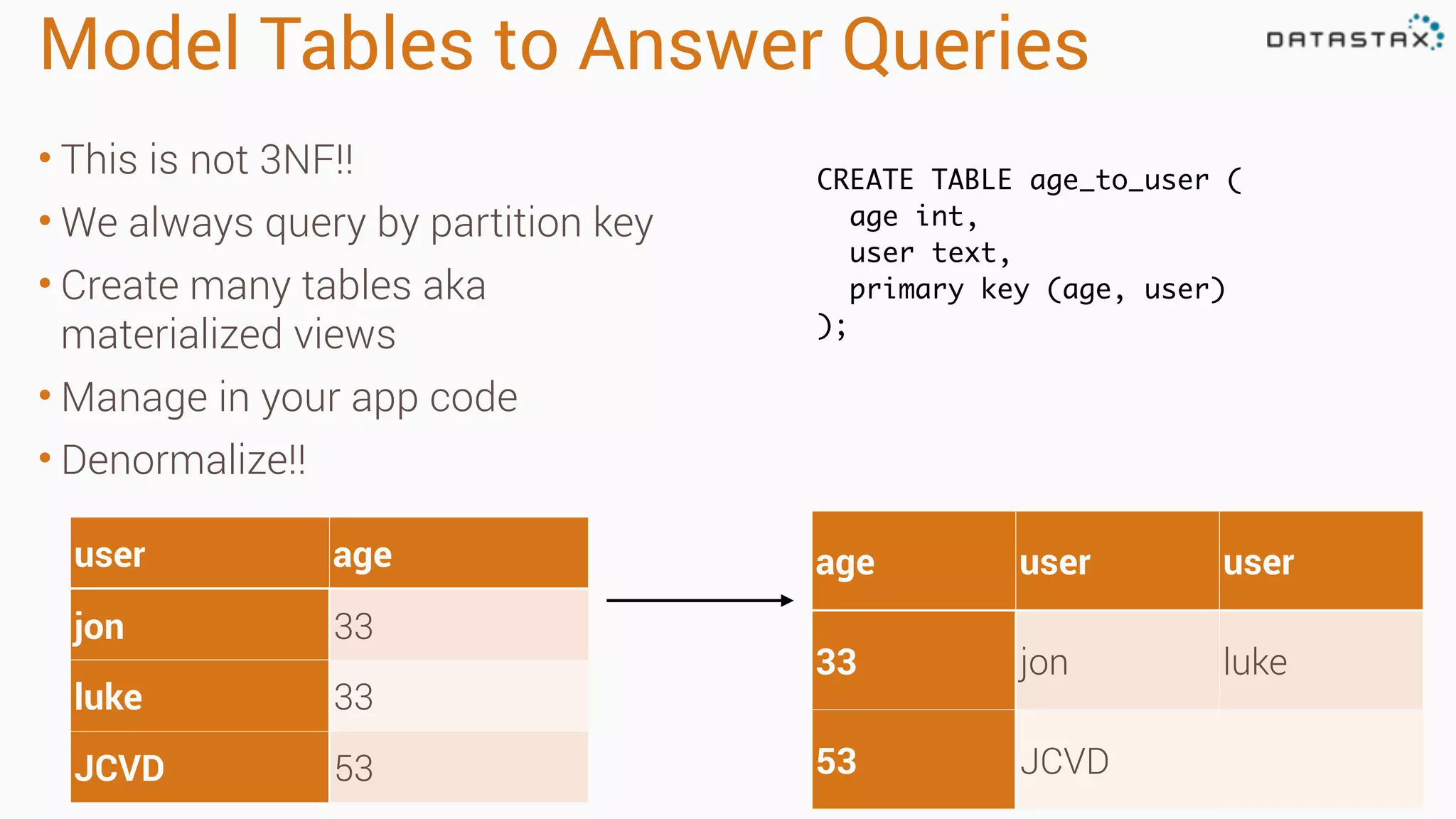
Model Tables to Answer Queries • This is not 3NF!! • We always query by partition key • Create many tables aka materialized views • Manage in your app code • Denormalize!! user age jon 33 luke 33 JCVD 53 age user user 33 jon luke 53 JCVD CREATE TABLE age_to_user ( age int, user text, primary key (age, user) );
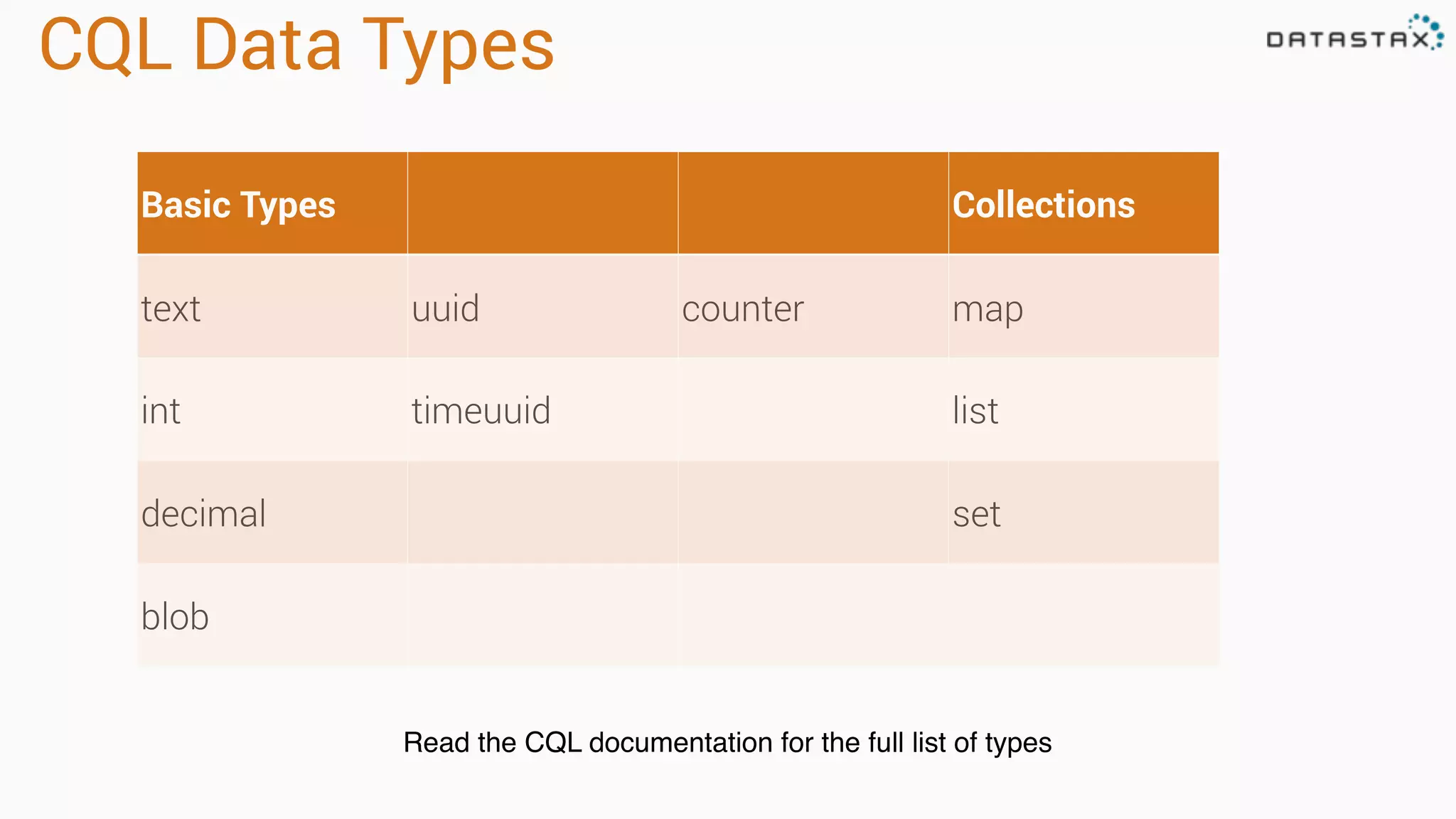
CQL Data Types Basic Types Collections text uuid counter map int timeuuid list decimal set blob Read the CQL documentation for the full list of types
Reads & Writes
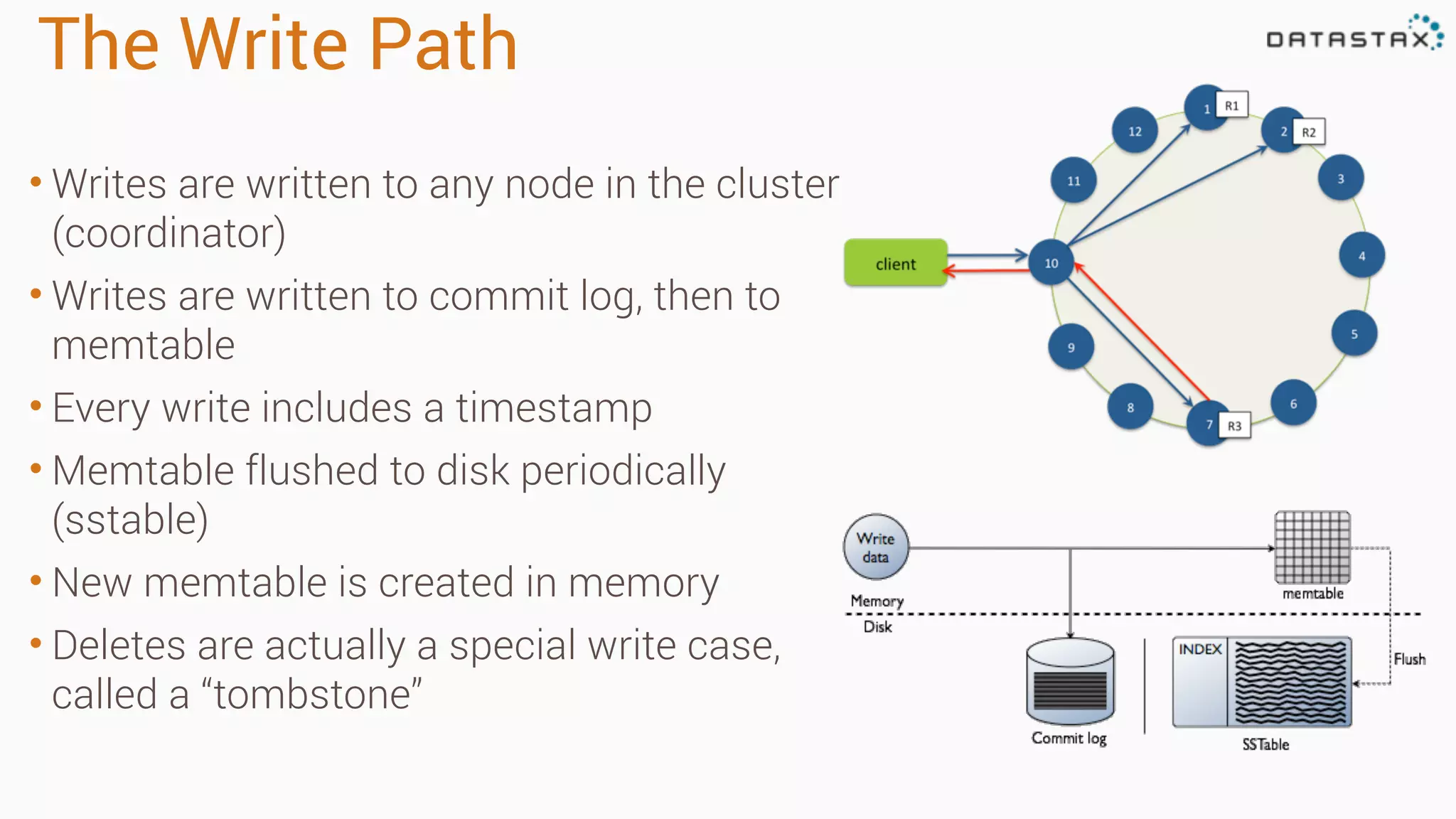
The Write Path • Writes are written to any node in the cluster (coordinator) • Writes are written to commit log, then to memtable • Every write includes a timestamp • Memtable flushed to disk periodically (sstable) • New memtable is created in memory • Deletes are actually a special write case, called a “tombstone”
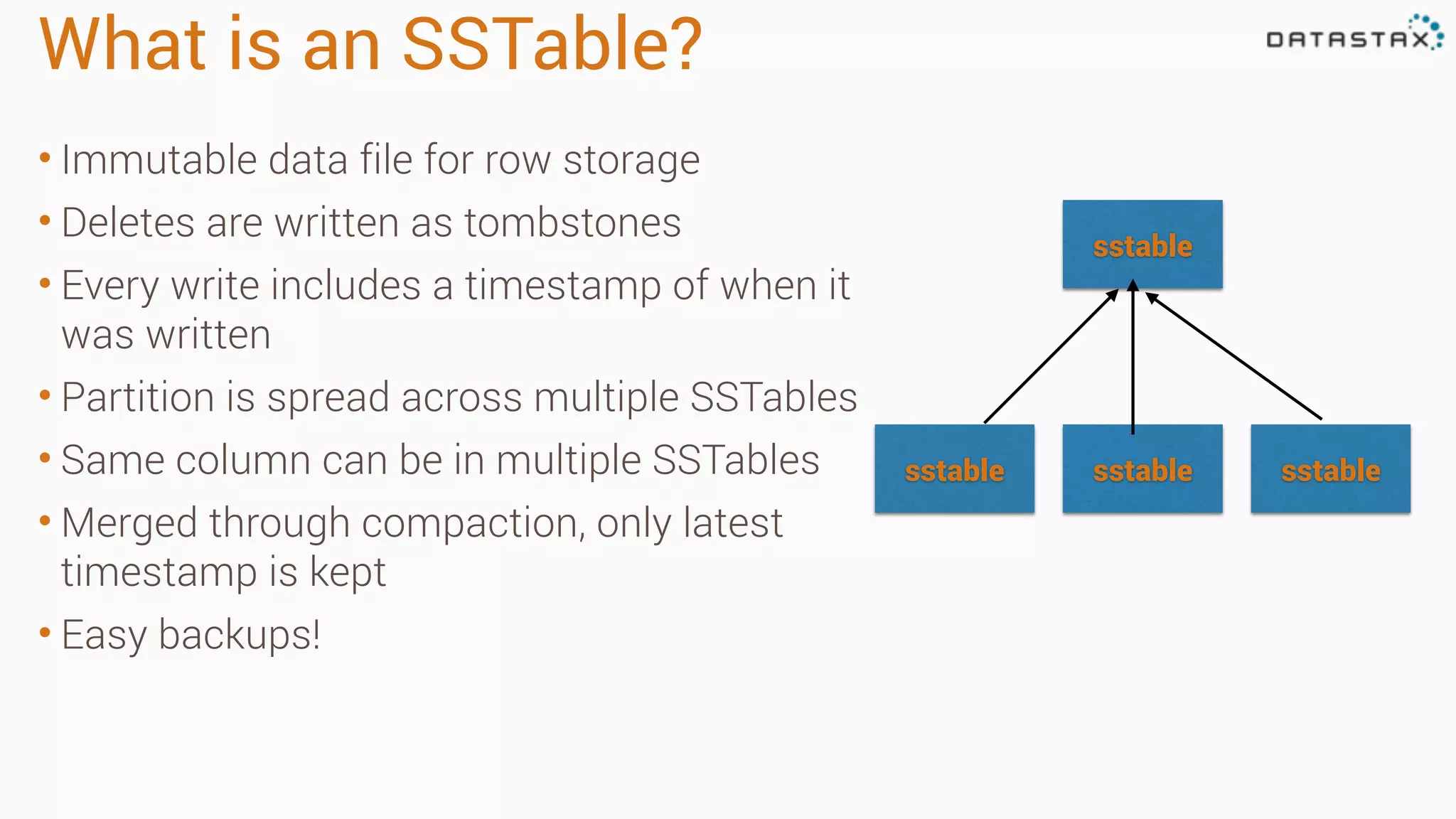
What is an SSTable? • Immutable data file for row storage • Deletes are written as tombstones • Every write includes a timestamp of when it was written • Partition is spread across multiple SSTables • Same column can be in multiple SSTables • Merged through compaction, only latest timestamp is kept • Easy backups! sstable sstable sstable sstable
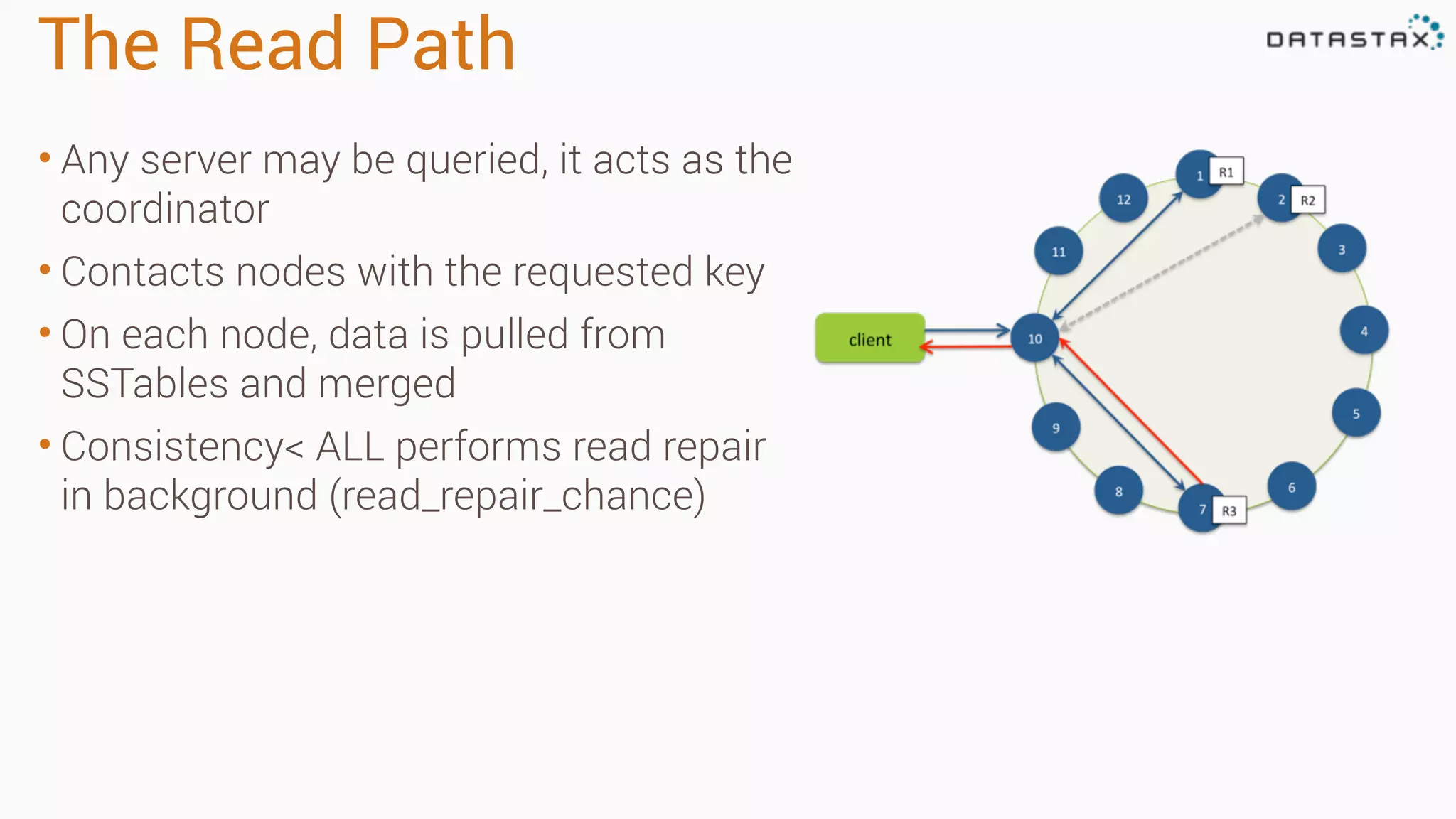
The Read Path • Any server may be queried, it acts as the coordinator • Contacts nodes with the requested key • On each node, data is pulled from SSTables and merged • Consistency< ALL performs read repair in background (read_repair_chance)
Analytics with Spark
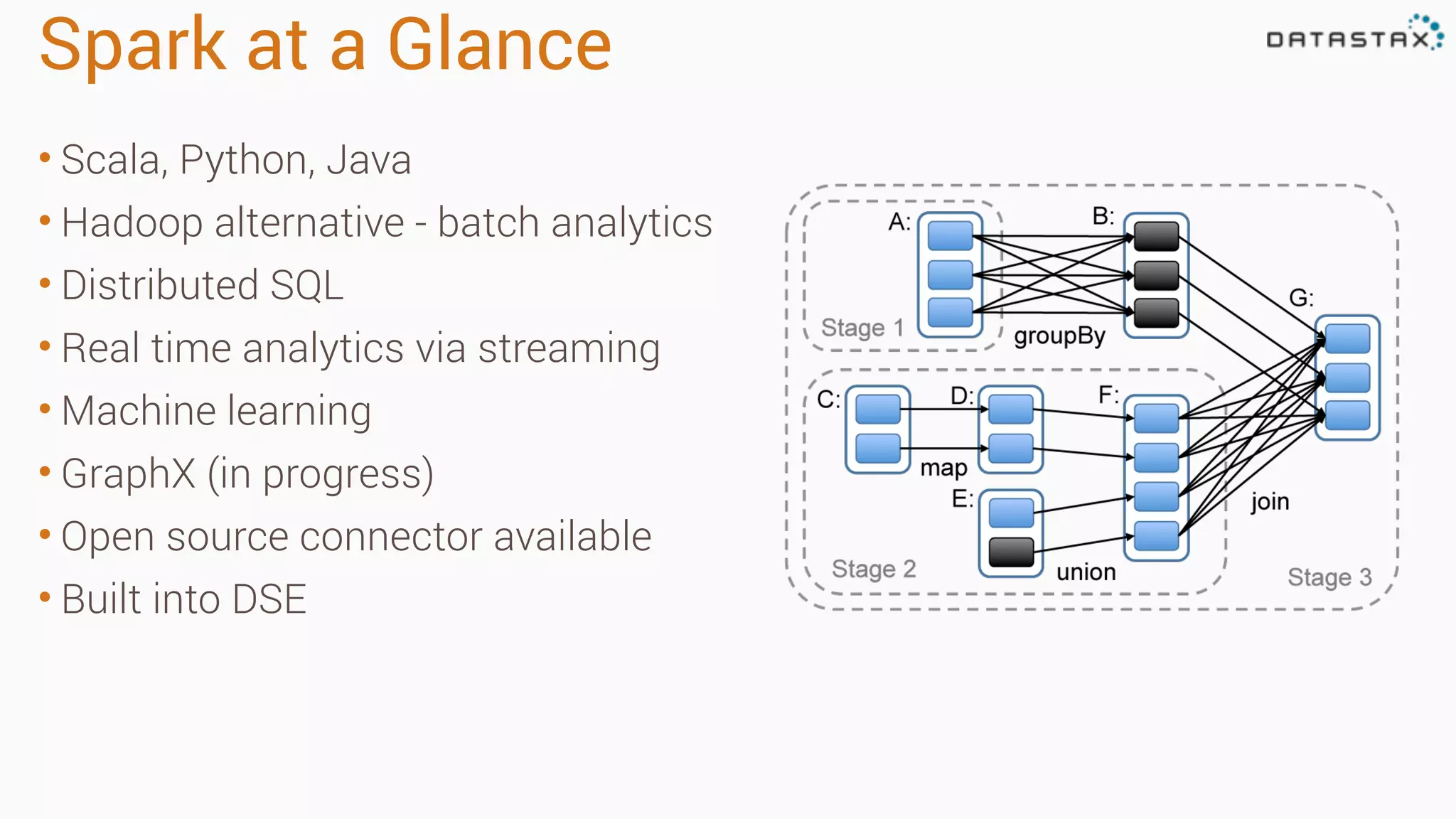
Spark at a Glance • Scala, Python, Java • Hadoop alternative - batch analytics • Distributed SQL • Real time analytics via streaming • Machine learning • GraphX (in progress) • Open source connector available • Built into DSE
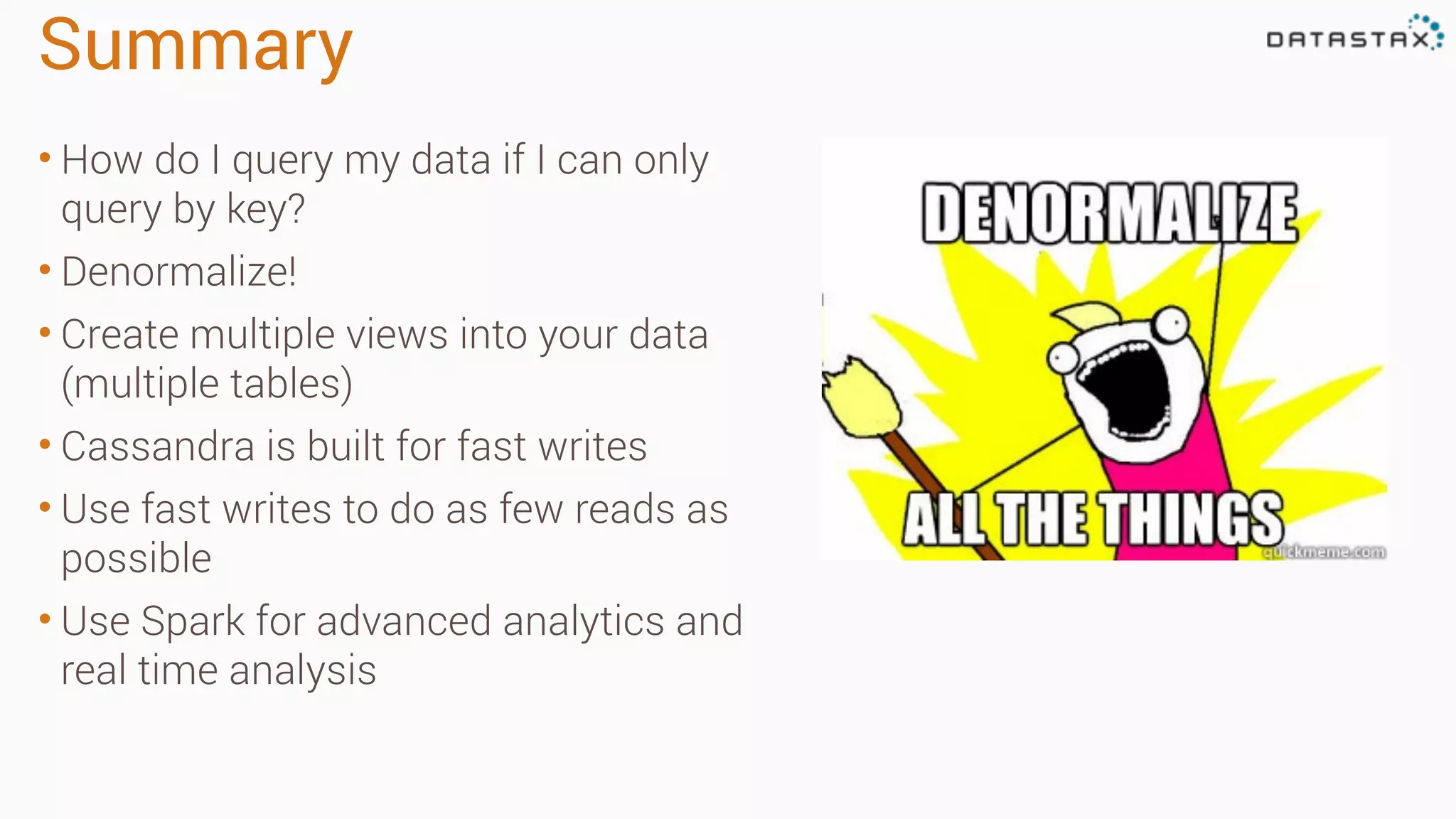
Summary • How do I query my data if I can only query by key? • Denormalize! • Create multiple views into your data (multiple tables) • Cassandra is built for fast writes • Use fast writes to do as few reads as possible • Use Spark for advanced analytics and real time analysis
©2013 DataStax Confidential. Do not distribute without consent. 19

Cassandra Day Atlanta 2015: Introduction to Apache Cassandra & DataStax Enterprise

  • 1.
    ©2013 DataStax Confidential.Do not distribute without consent. Jon Haddad, Luke Tillman Technical Evangelists, DataStax @rustyrazorblade, @LukeTillman Introduction to Apache Cassandra 1
  • 2.
    What is ApacheCassandra? • Fast Distributed Database • High Availability • Linear Scalability • Predictable Performance • No SPOF • Multi-DC • Commodity Hardware • Easy to manage operationally
  • 3.
    Hash Ring • Nomaster / slave / replica sets • No config servers, zookeeper • Data is partitioned around the ring • Data is replicated to RF=N servers • All nodes hold data and can answer queries (both reads & writes) • Location of data on ring is determined by partition key
  • 4.
    CAP Tradeoffs • Cassandrachooses Availability & Partition Tolerance over Consistency • Queries have tunable consistency level • ALL, QUORUM, ONE • Hinted Handoff to deal with failed nodes
  • 5.
  • 6.
    Data Structures • Likean RDBMS, Cassandra uses a Table to store data • But there’s where the similarities end • Partitions within tables • Rows within partitions (or a single row) • CQL to create tables & query data • Partition keys determine where a partition is found • Clustering keys determine ordering of rows within a partition Table Partition Row Keyspace
  • 7.
    Example: Single RowPartition • Simple User system • Identified by name (pk) • 1 Row per partition • This is familiar territory name age job jon 33 evangelist luke 33 evangelist old pete 108 retired s. seagal 62 actor JCVD 53 actor cqlsh:demo> select * from user WHERE name = 'JCVD' cqlsh:demo> create table user (name text primary key, age int, job text);
  • 8.
    Example: Multiple Rows •Comments on photos • Comments are always selected by the photo_id • There are only 4 rows in 2 partitions • In the real world, use UUIDs instead of int for PK photo_id comment_id user comment 5 1 jon hi 5 2 luke oh hey 5 3 JCVD AHHHHH!!! 6 4 jon great pic select * from comment where photo_id=5 create table comment ( photo_id int, comment_id int, user text, comment text, primary key (photo_id, comment_id));
  • 9.
    Partition with Clustering photo_idcomment_id user comment comment_id user comment comment_id user comment 5 1 jon hi 2 luke oh hey 3 JCVD AHHHHH!!! 6 4 jon great pic • Multiple rows are transposed into a single partition • Partitions vary in size • Old terminology - "wide row"
  • 10.
    Model Tables toAnswer Queries • This is not 3NF!! • We always query by partition key • Create many tables aka materialized views • Manage in your app code • Denormalize!! user age jon 33 luke 33 JCVD 53 age user user 33 jon luke 53 JCVD CREATE TABLE age_to_user ( age int, user text, primary key (age, user) );
  • 11.
    CQL Data Types BasicTypes Collections text uuid counter map int timeuuid list decimal set blob Read the CQL documentation for the full list of types
  • 12.
  • 13.
    The Write Path •Writes are written to any node in the cluster (coordinator) • Writes are written to commit log, then to memtable • Every write includes a timestamp • Memtable flushed to disk periodically (sstable) • New memtable is created in memory • Deletes are actually a special write case, called a “tombstone”
  • 14.
    What is anSSTable? • Immutable data file for row storage • Deletes are written as tombstones • Every write includes a timestamp of when it was written • Partition is spread across multiple SSTables • Same column can be in multiple SSTables • Merged through compaction, only latest timestamp is kept • Easy backups! sstable sstable sstable sstable
  • 15.
    The Read Path •Any server may be queried, it acts as the coordinator • Contacts nodes with the requested key • On each node, data is pulled from SSTables and merged • Consistency< ALL performs read repair in background (read_repair_chance)
  • 16.
  • 17.
    Spark at aGlance • Scala, Python, Java • Hadoop alternative - batch analytics • Distributed SQL • Real time analytics via streaming • Machine learning • GraphX (in progress) • Open source connector available • Built into DSE
  • 18.
    Summary • How doI query my data if I can only query by key? • Denormalize! • Create multiple views into your data (multiple tables) • Cassandra is built for fast writes • Use fast writes to do as few reads as possible • Use Spark for advanced analytics and real time analysis
  • 19.
    ©2013 DataStax Confidential.Do not distribute without consent. 19