Download as PDF, PPTX
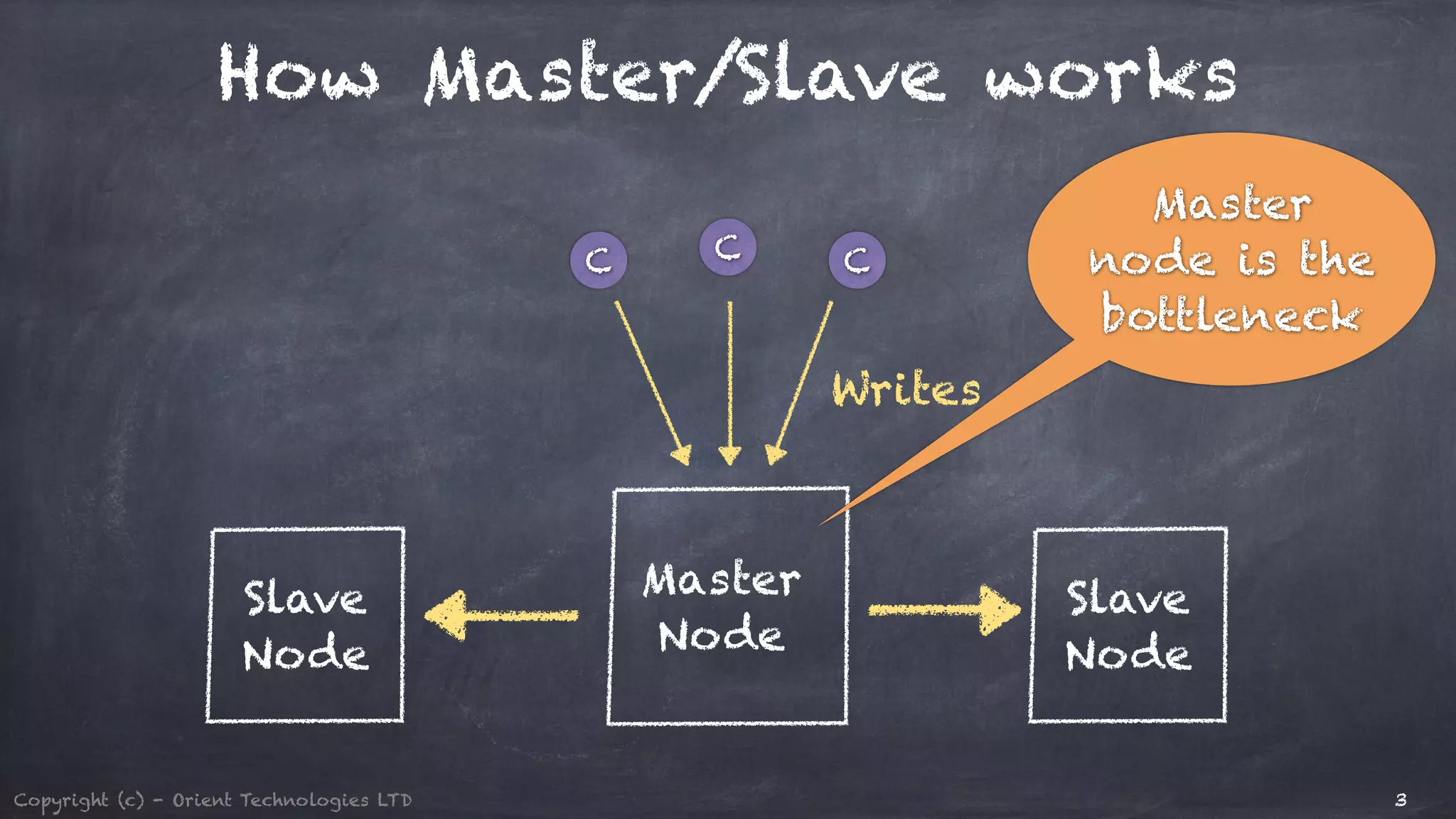
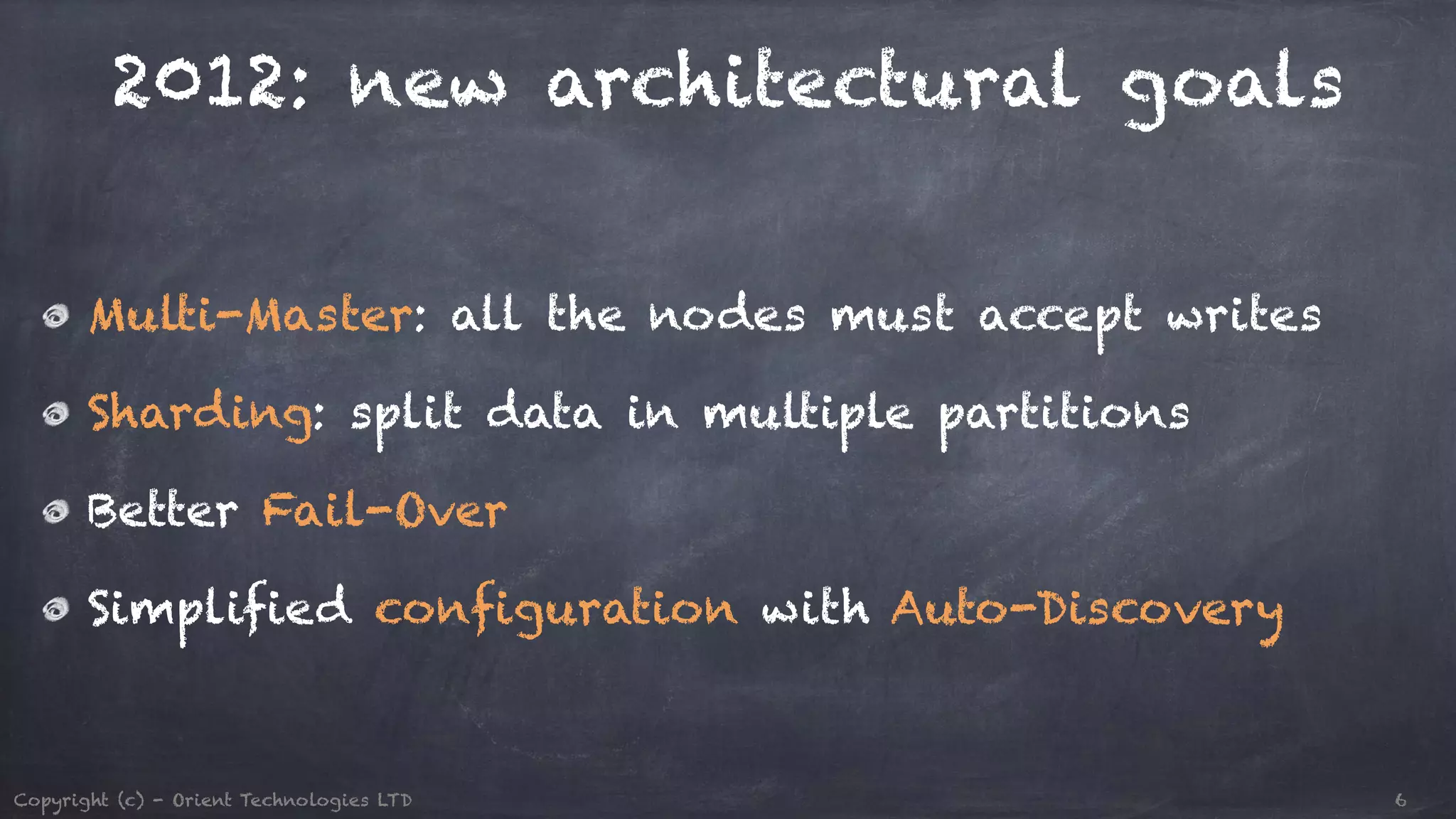
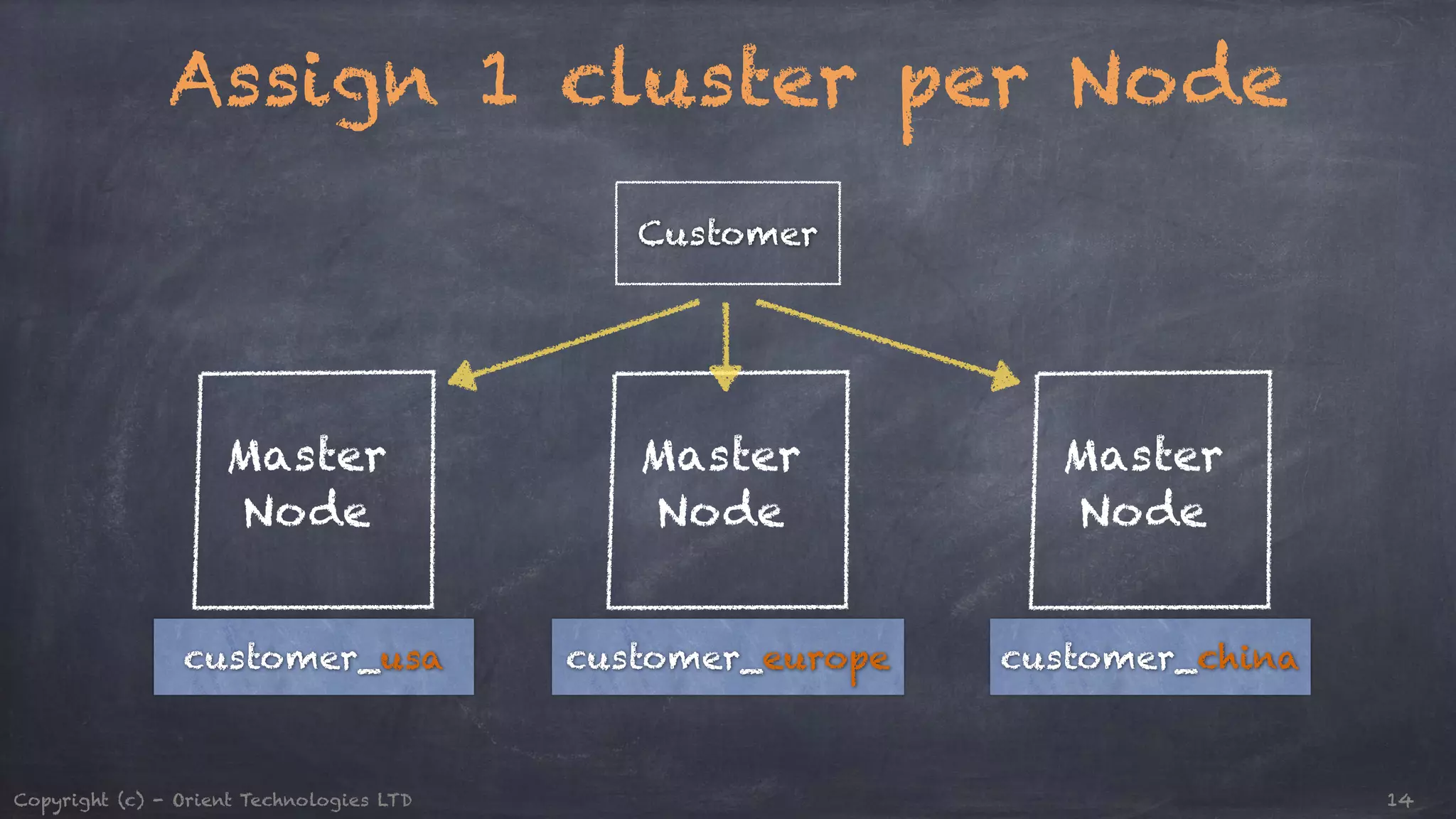


The document describes the evolution of OrientDB's database architecture from a master-slave model to a distributed, multi-master architecture. In the master-slave model, the single master node was a bottleneck for write operations. OrientDB's new architecture allows all nodes to accept writes, uses sharding to partition data across multiple nodes, and employs auto-discovery and replication techniques to improve scalability, availability, and failover. Hazelcast is used for distributed coordination and metadata storage.
Introduction to the concept of Distributed DBMS, which allows managing data across multiple nodes.
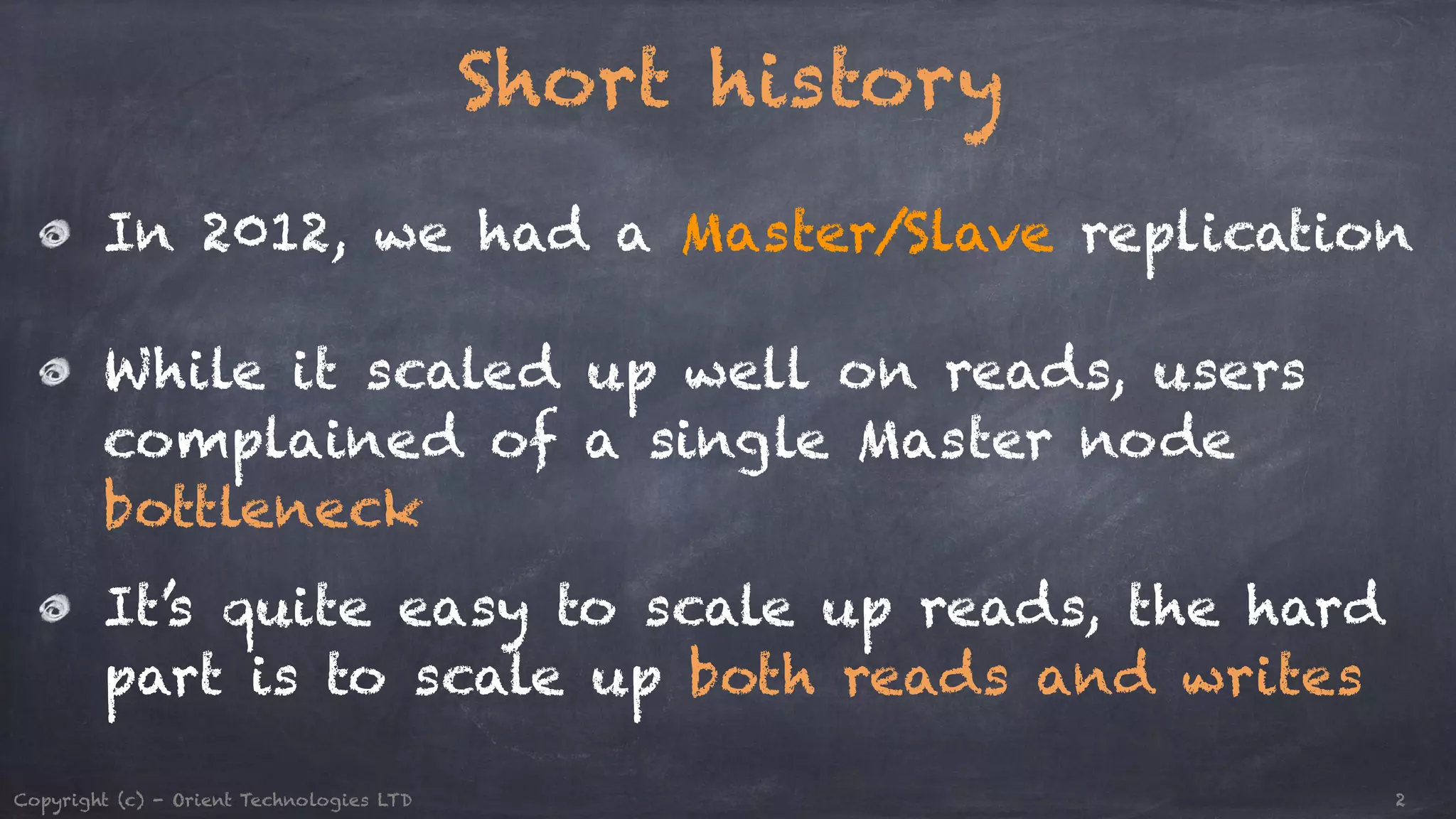
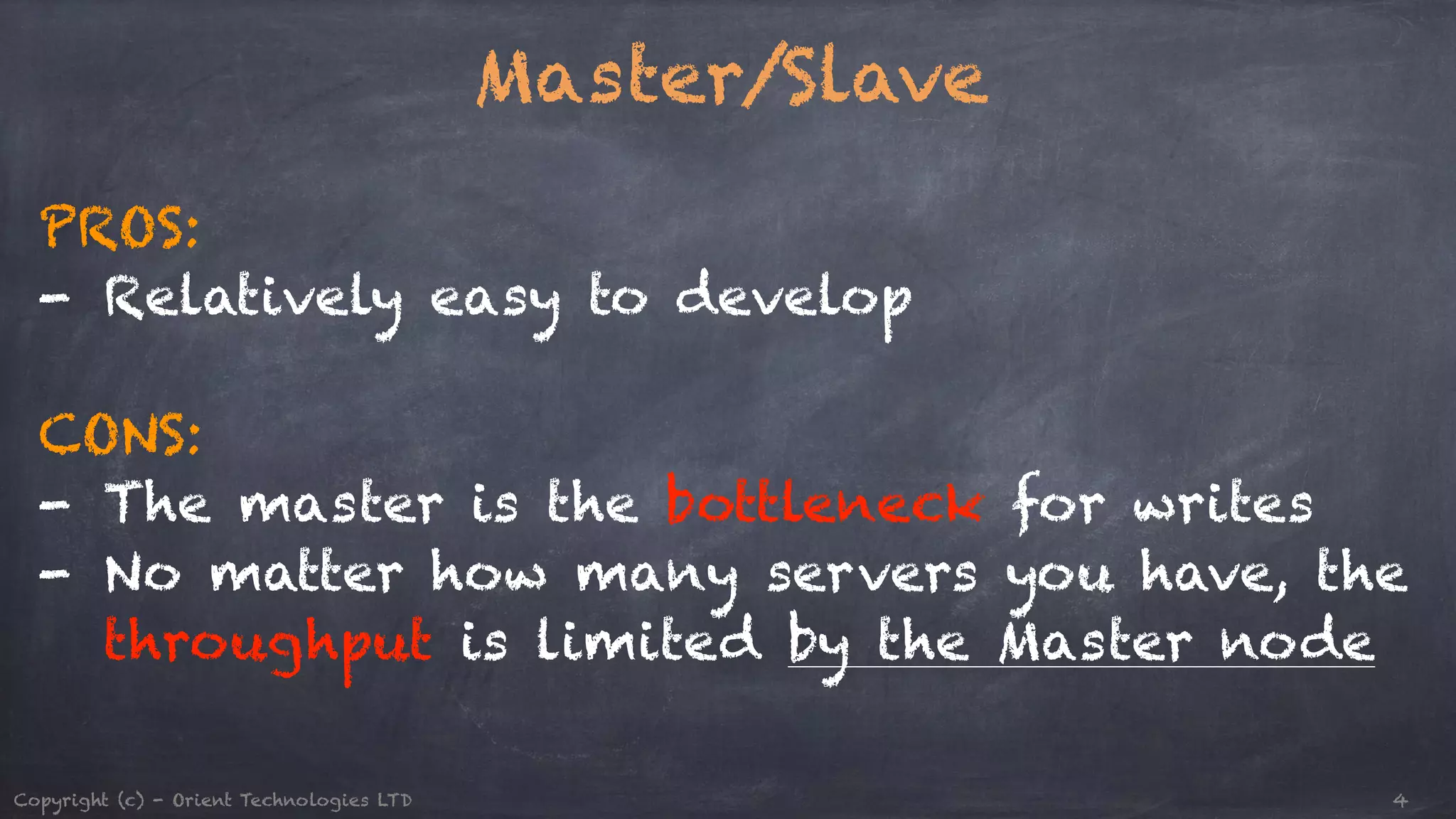
Discusses the history of Master/Slave replication, including its scalability issues and performance limitations.
Introduces updates for OrientDB's architecture focusing on Multi-Master setup, sharding, failover, and auto-discovery.
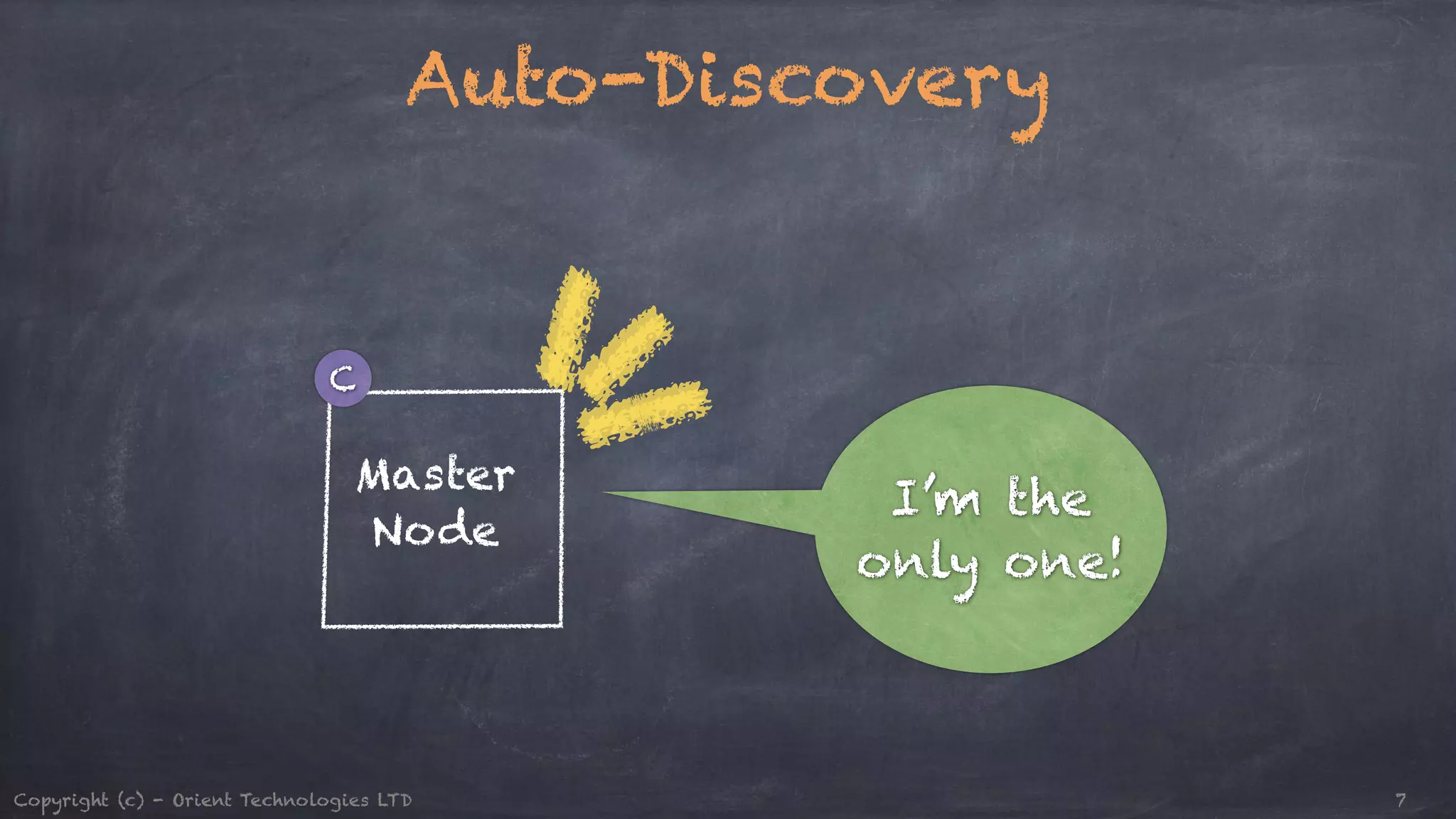
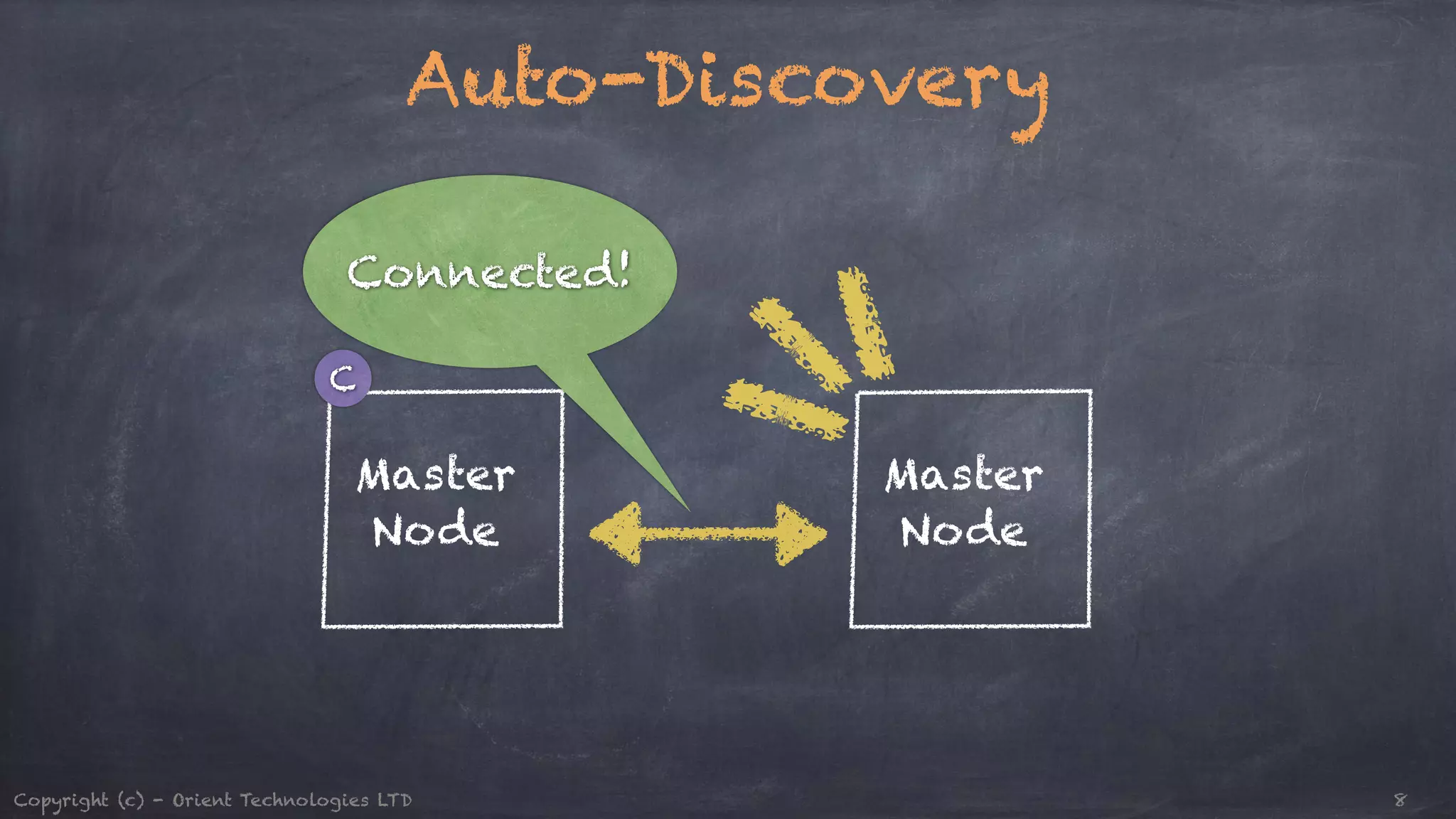
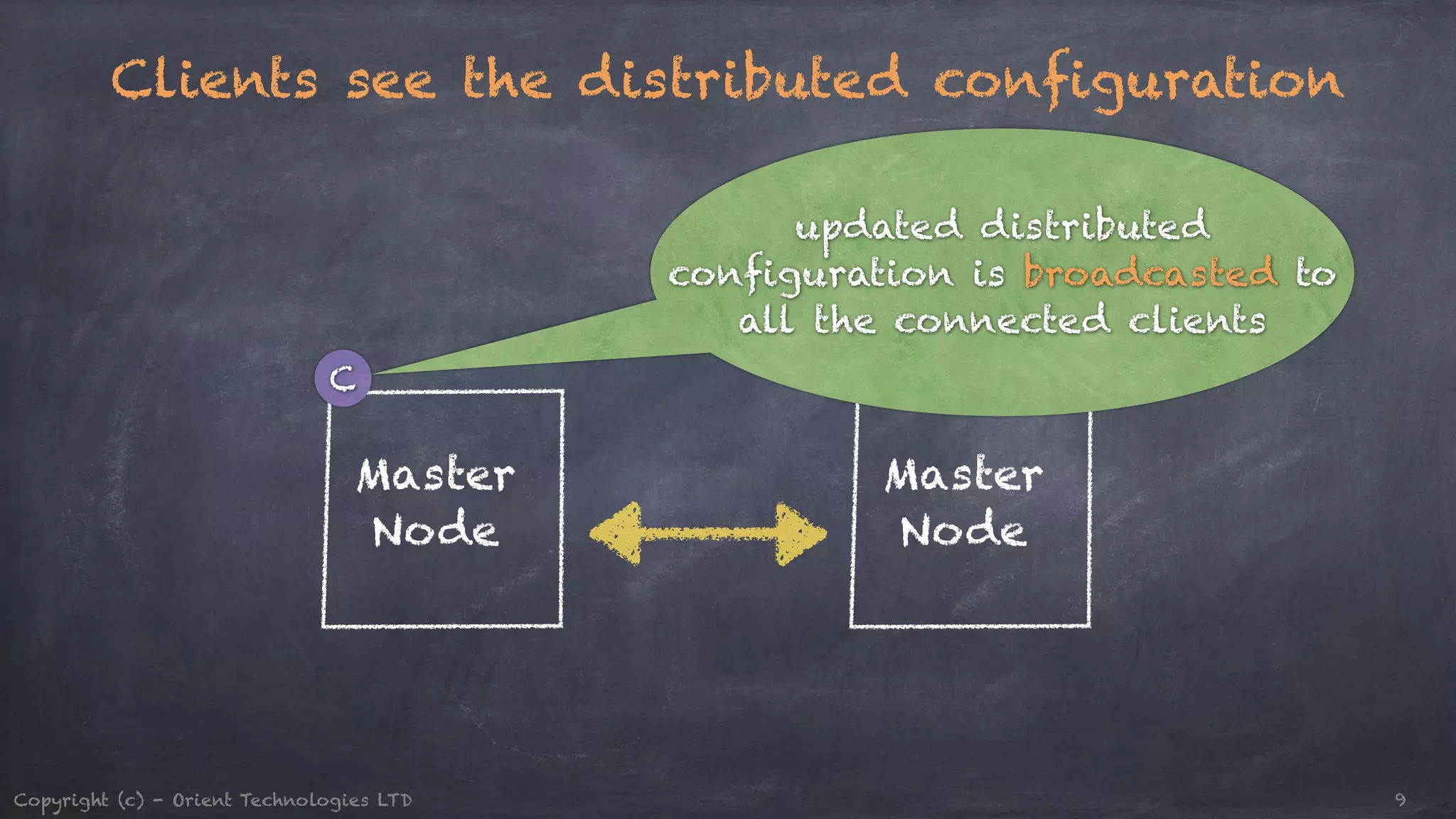
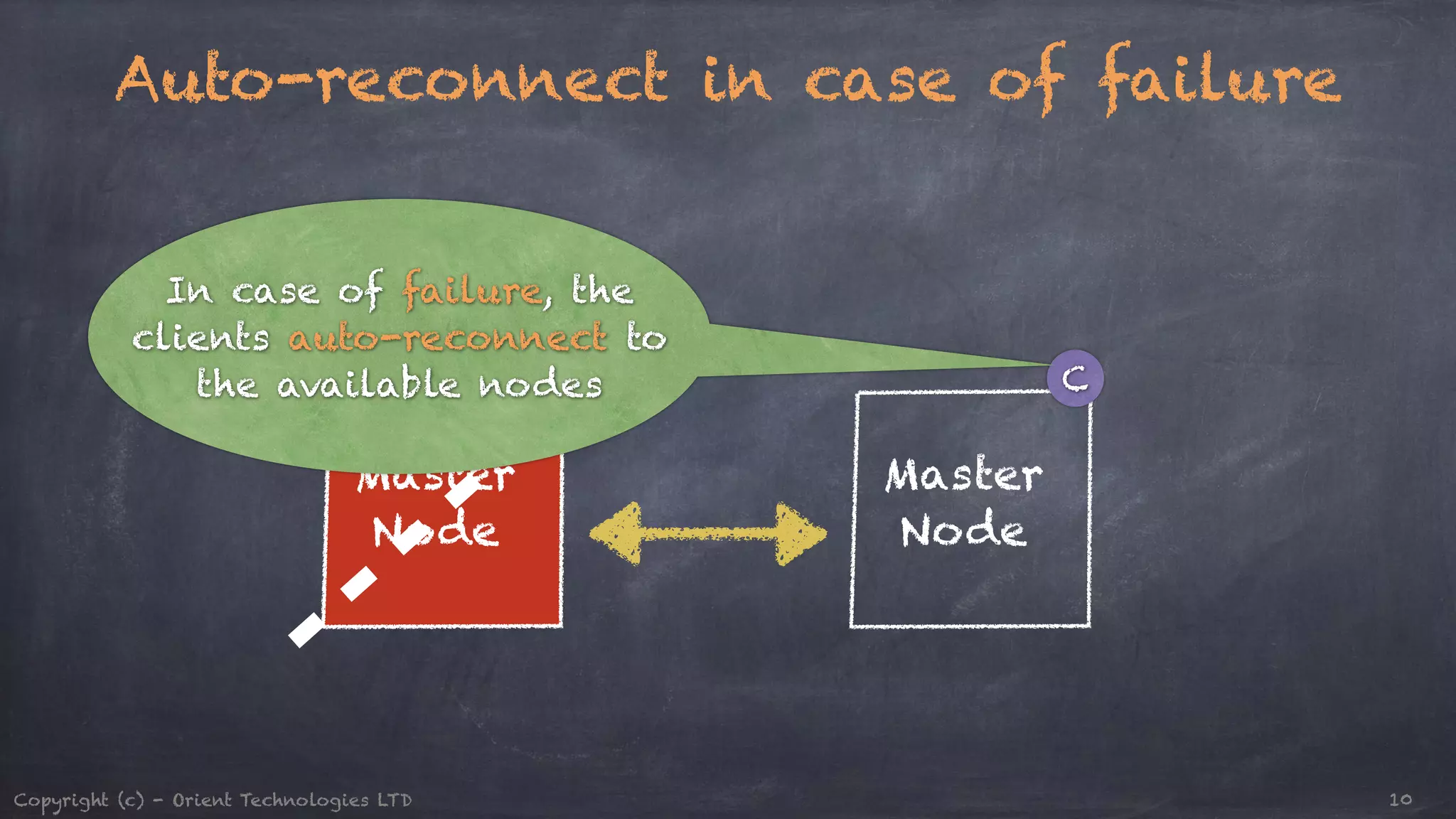
Explains the auto-discovery feature for nodes, broadcasting configurations, and client reconnections upon failures.
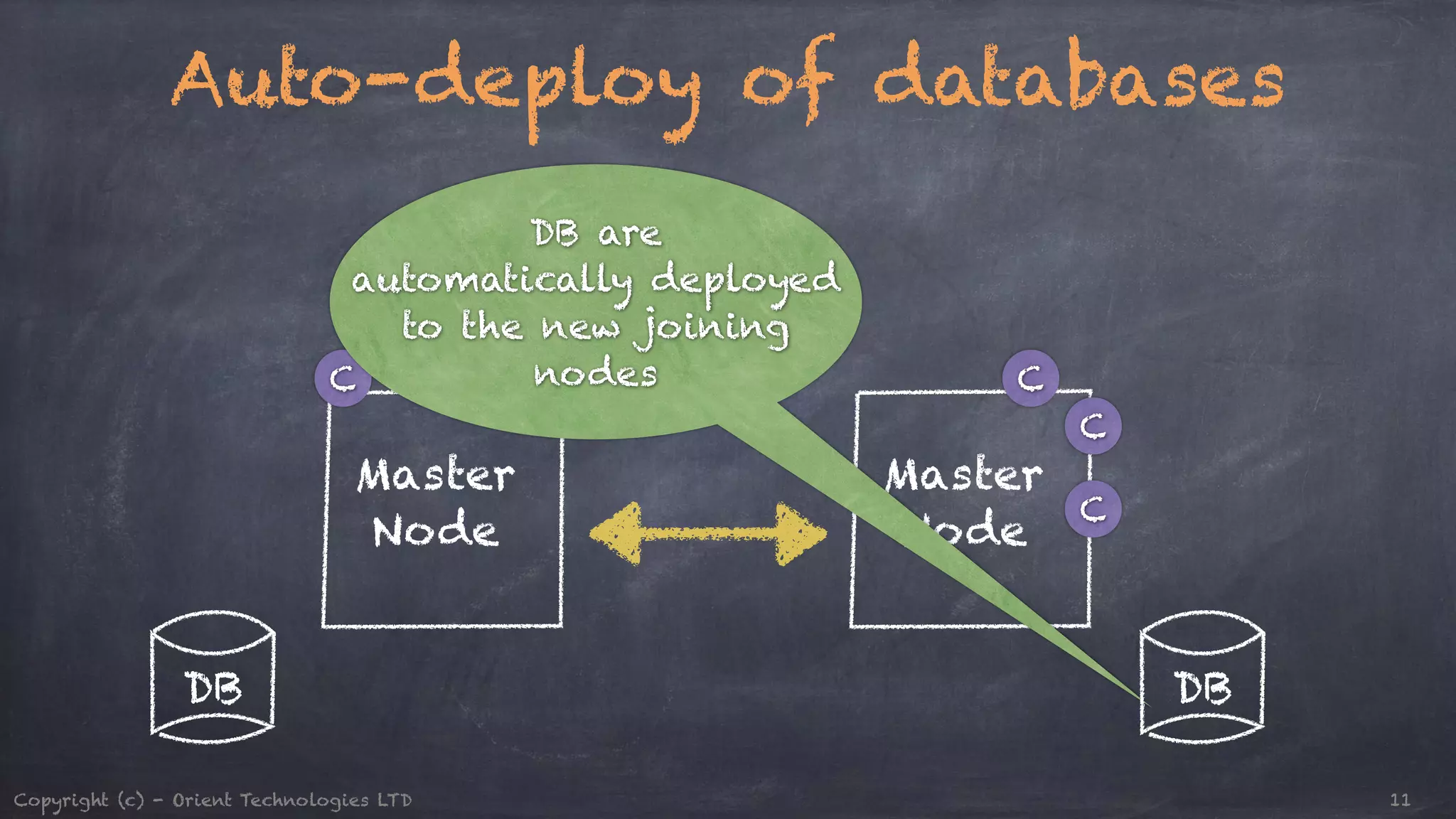
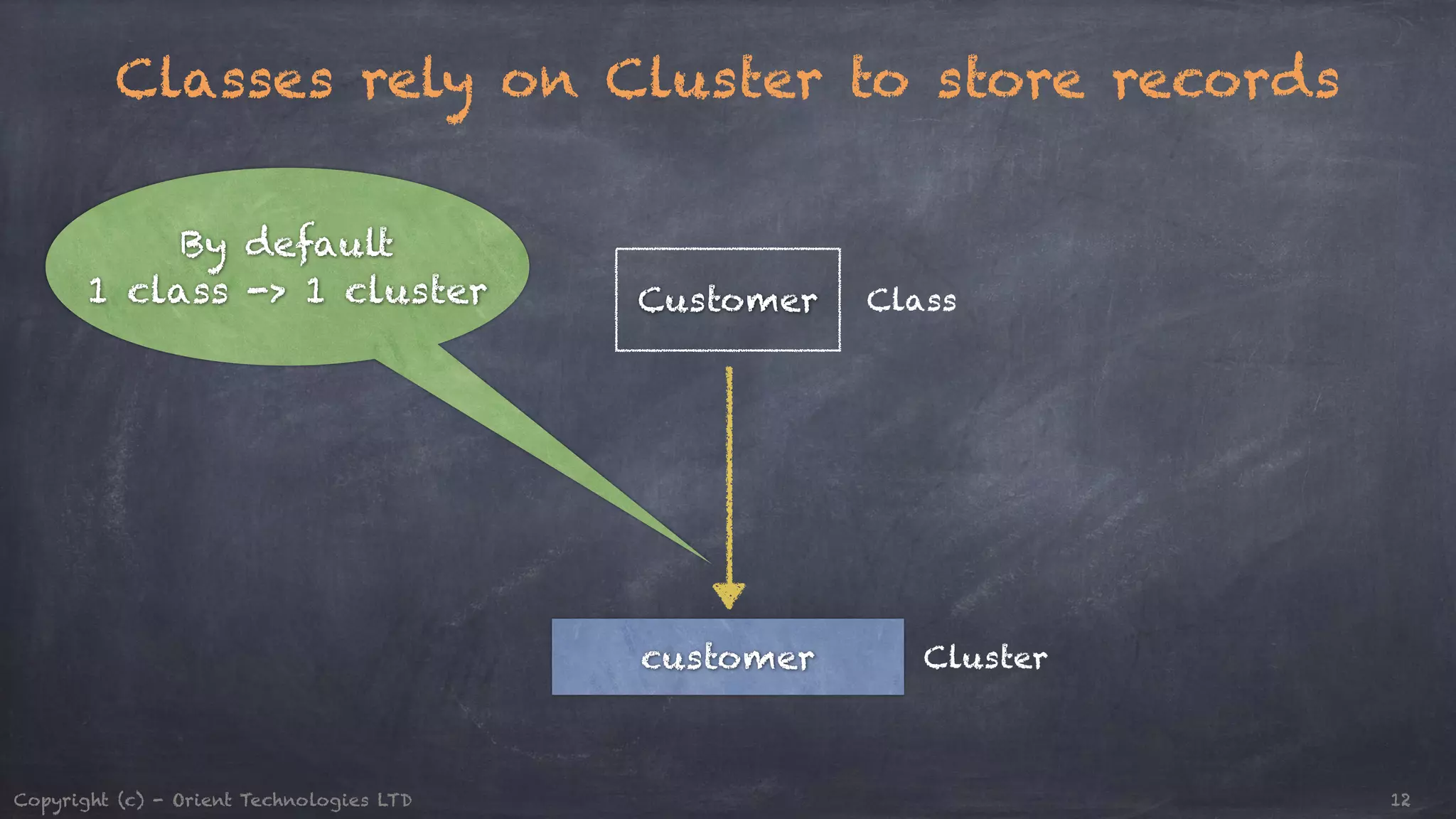
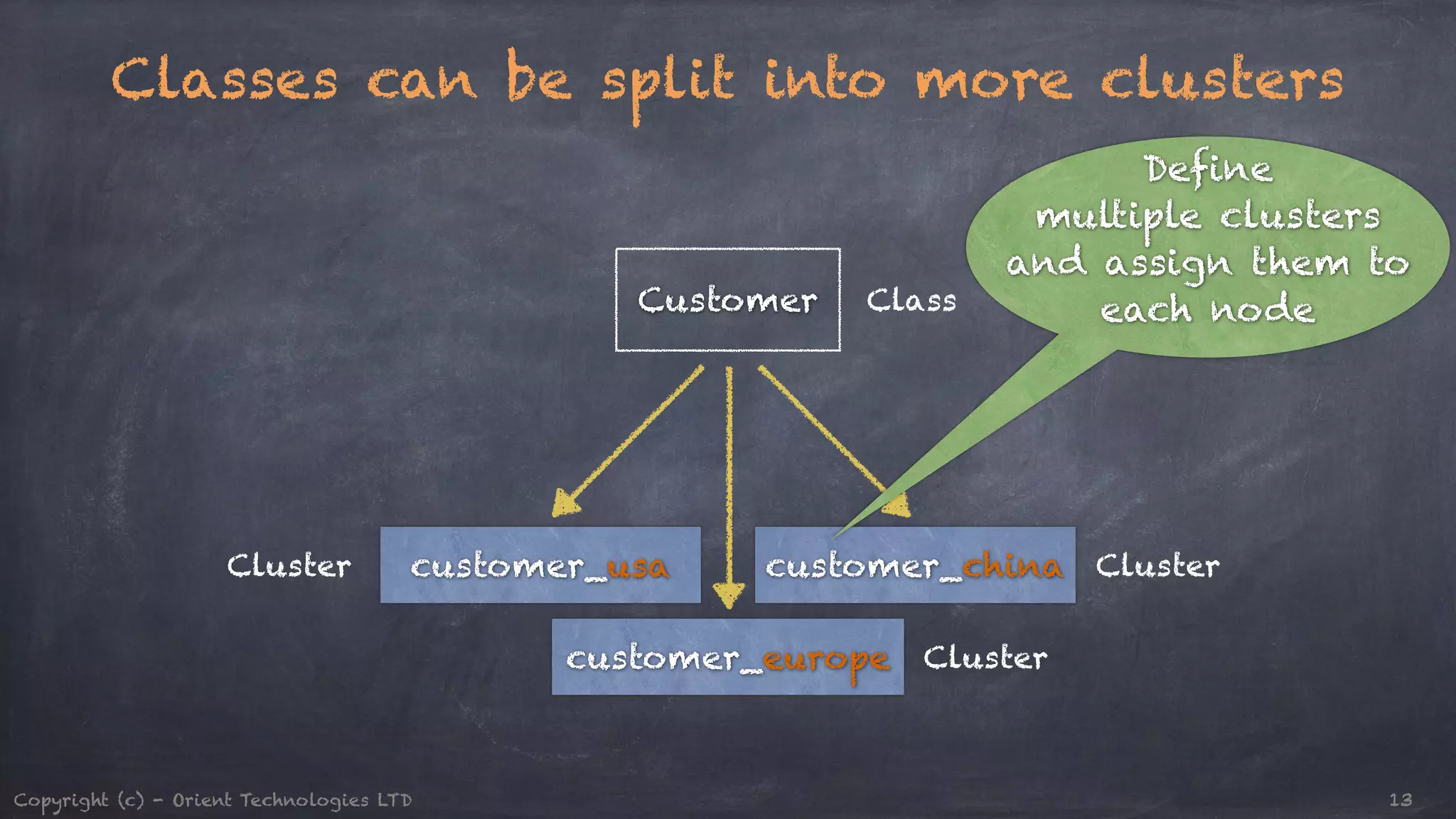
Details auto-deployment of databases and organizational structure of classes and clusters within the database.
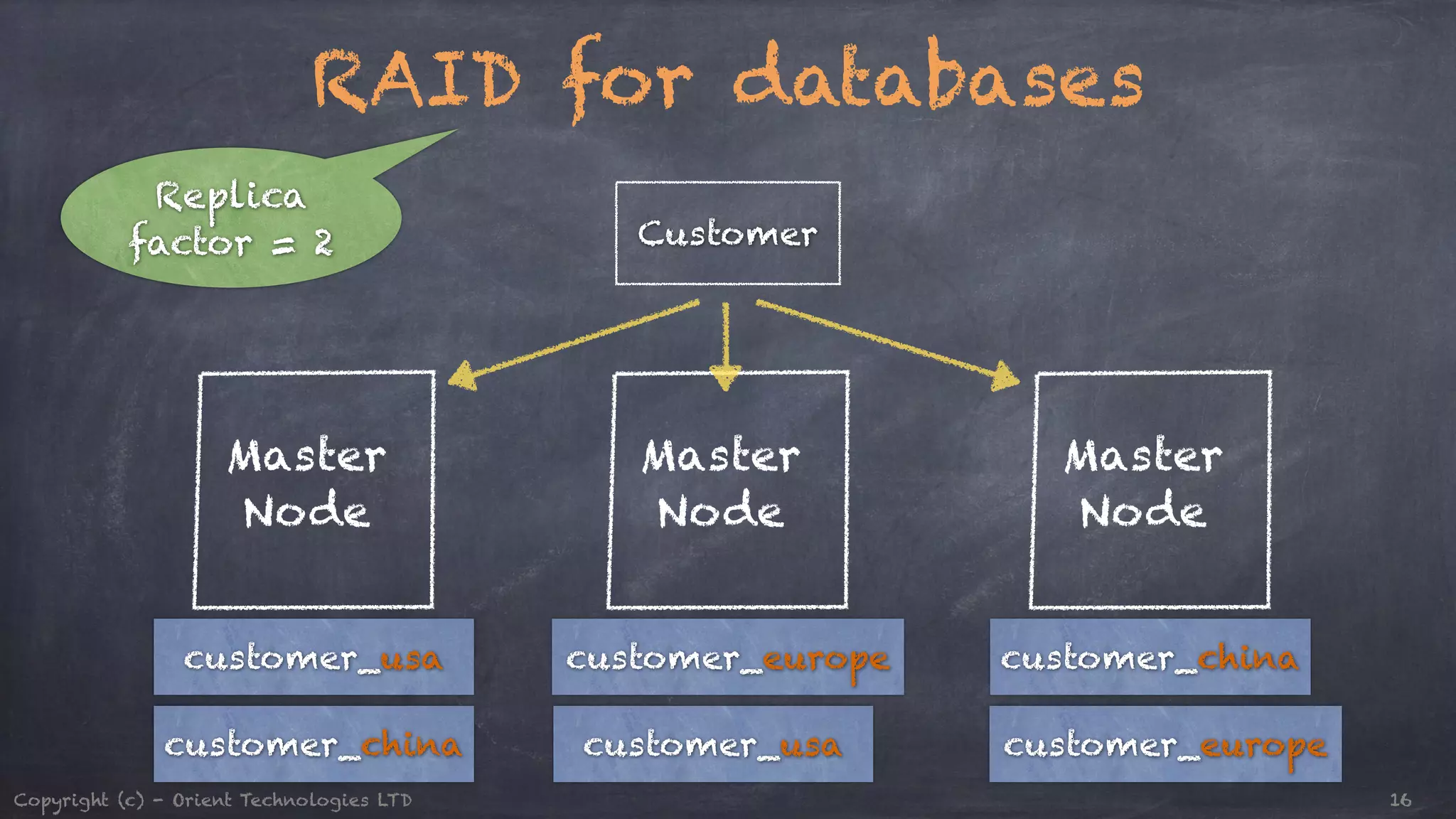
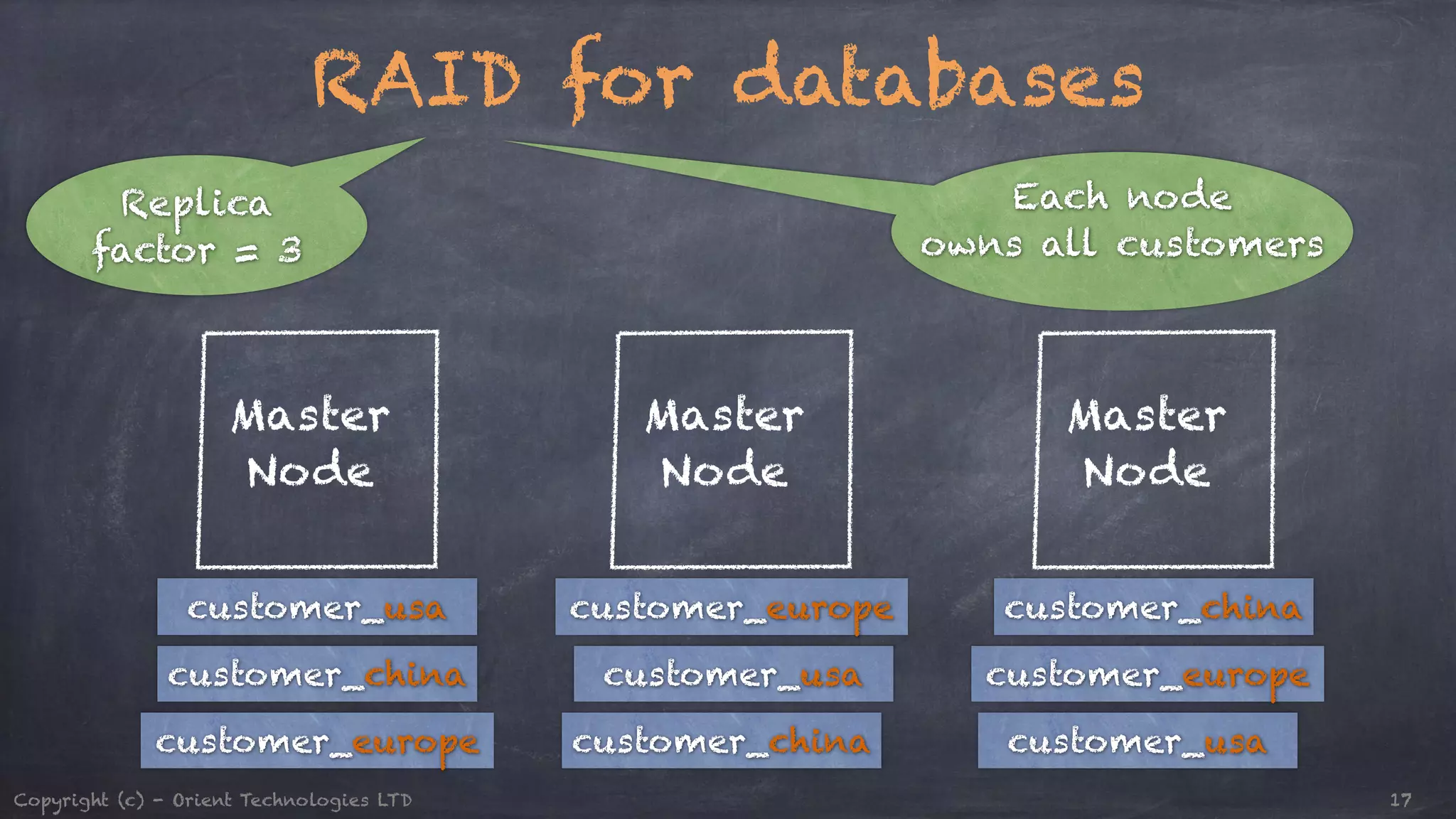
Explains the use of RAID concepts in databases to ensure redundancy and resilience in data management.
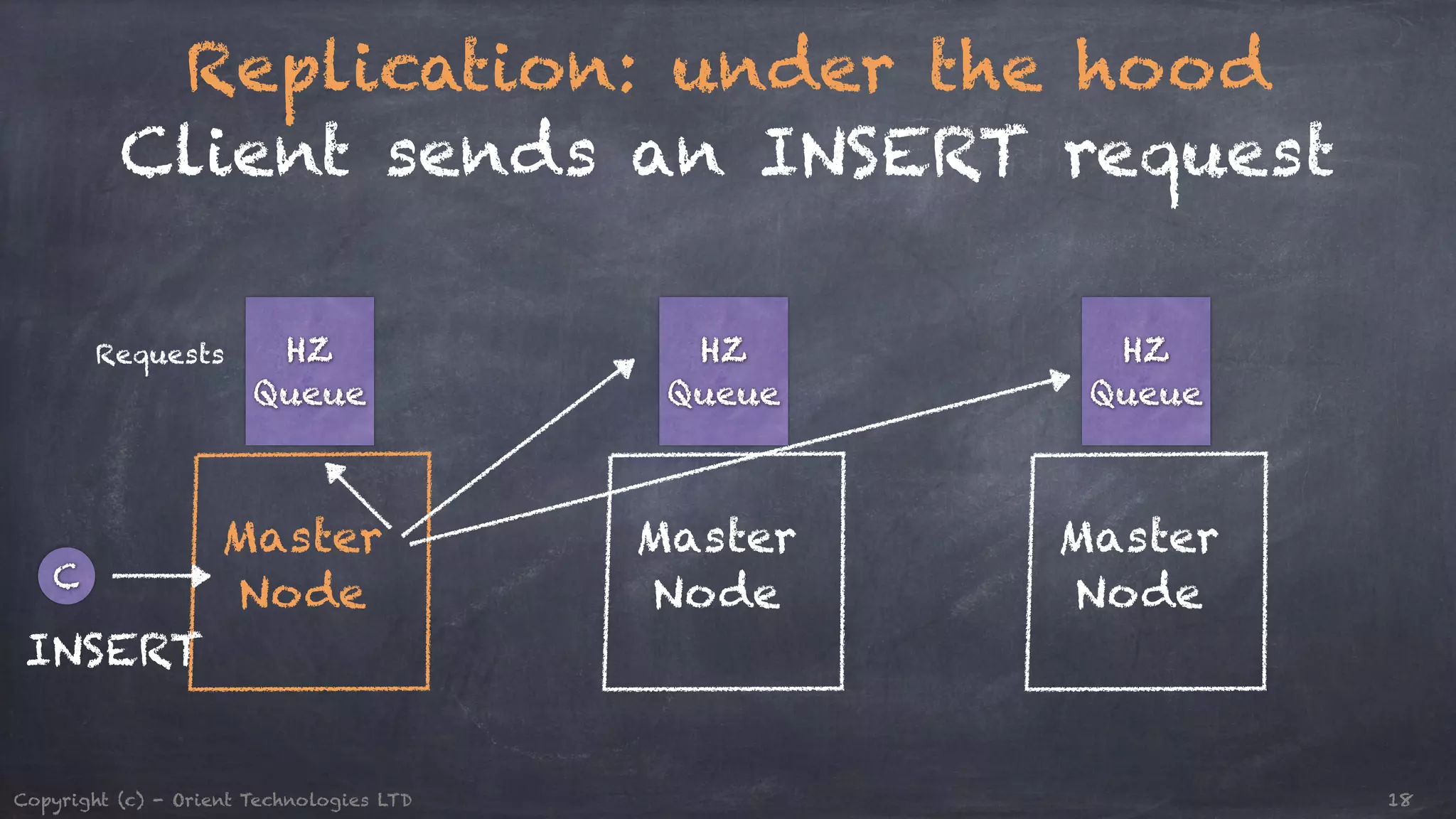
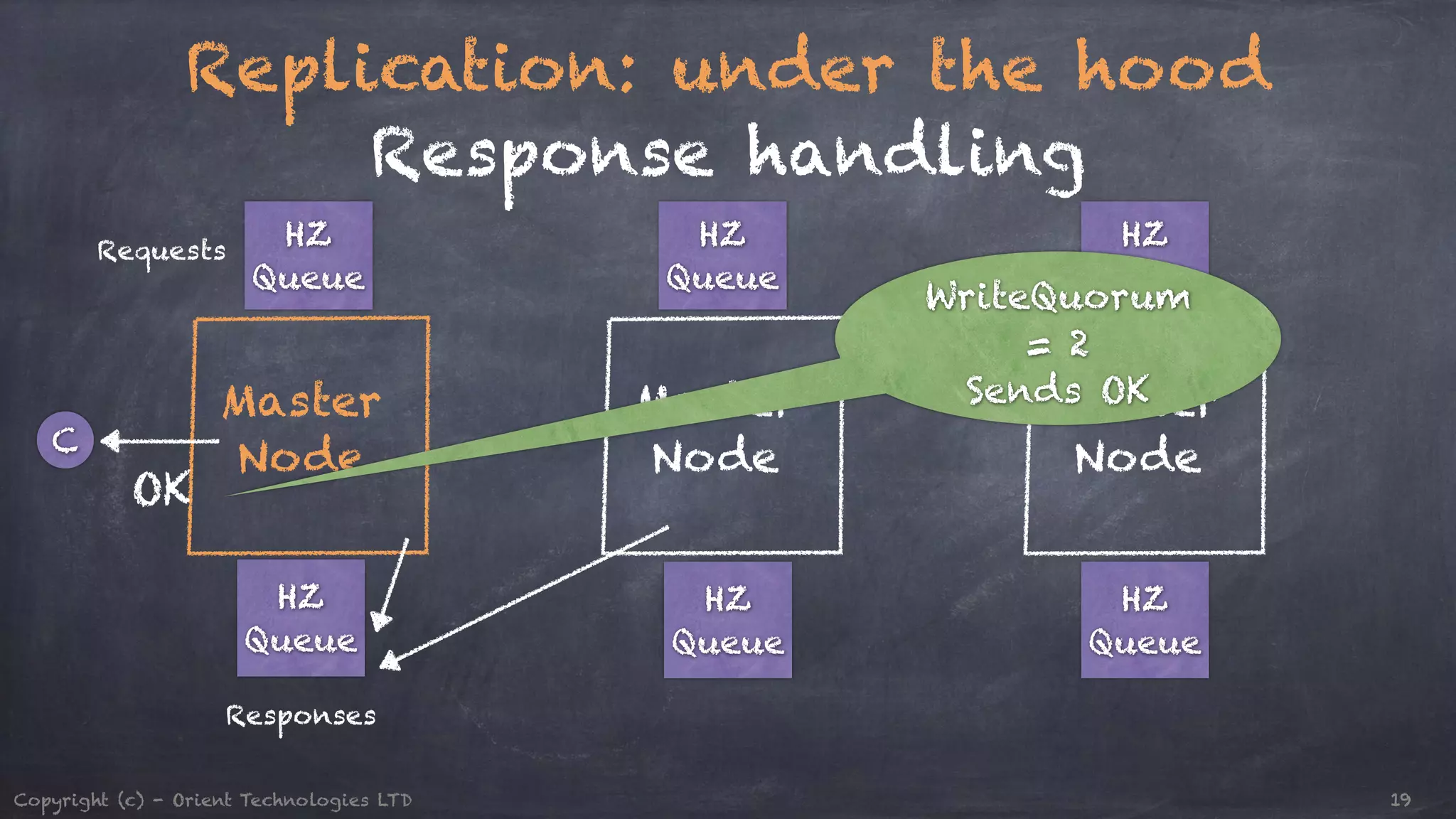
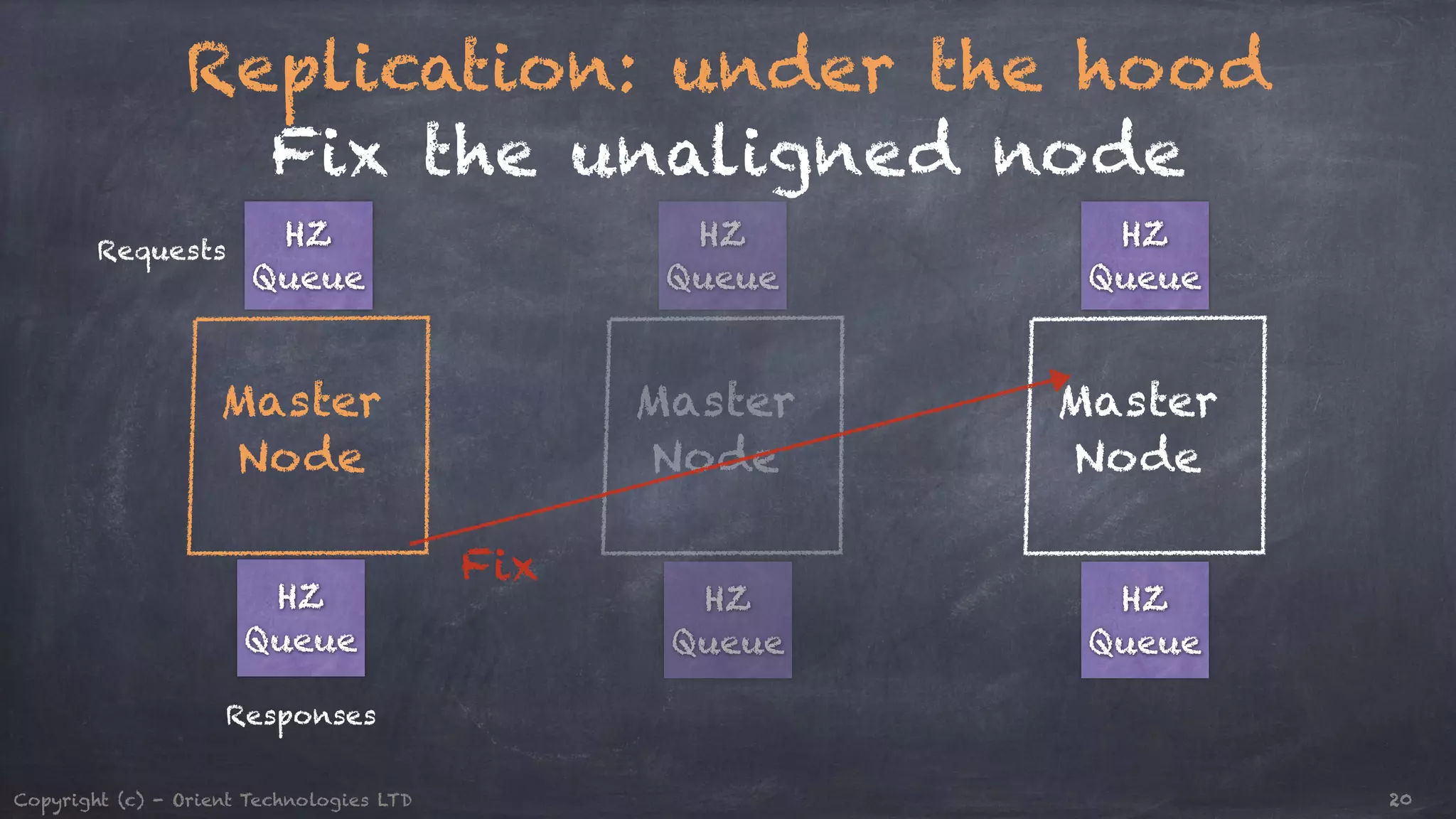
Outlines how replication works within the system, including request queues and response handling.
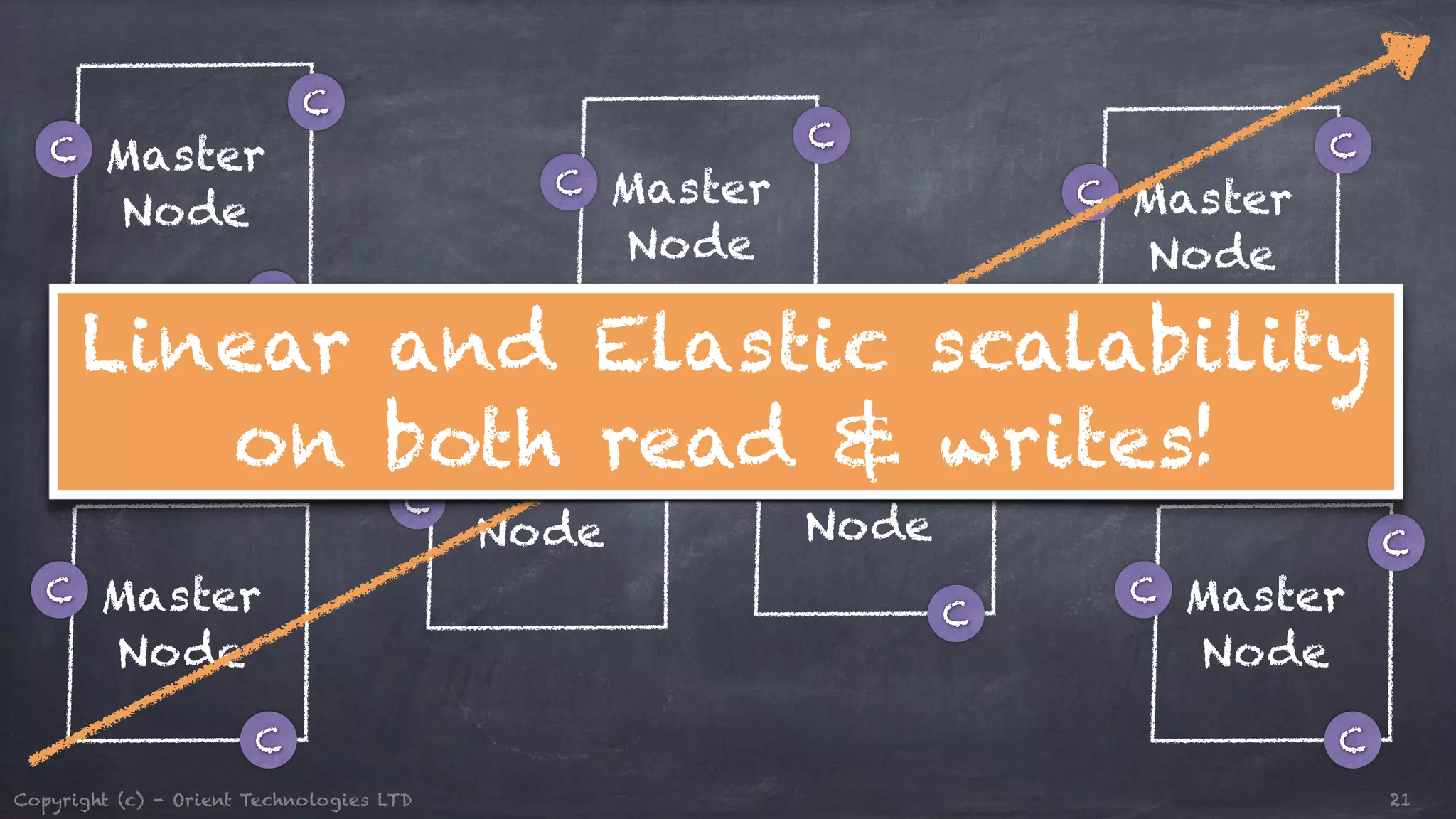
Highlights the significance of linear and elastic scalability in a distributed DBMS, accommodating both read and write operations.
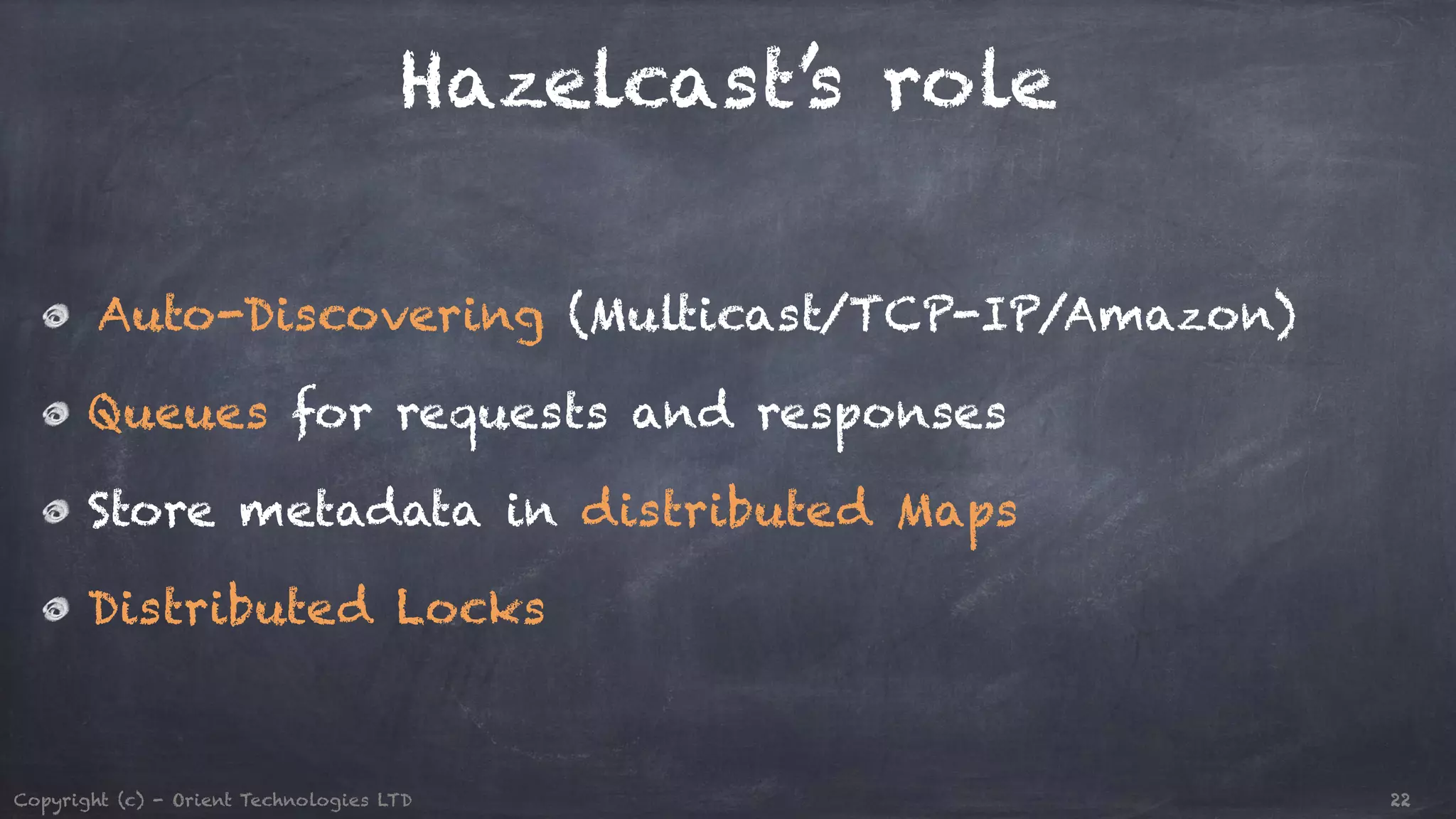
Describes Hazelcast's contributions, including auto-discovery, request handling, and management of distributed maps.
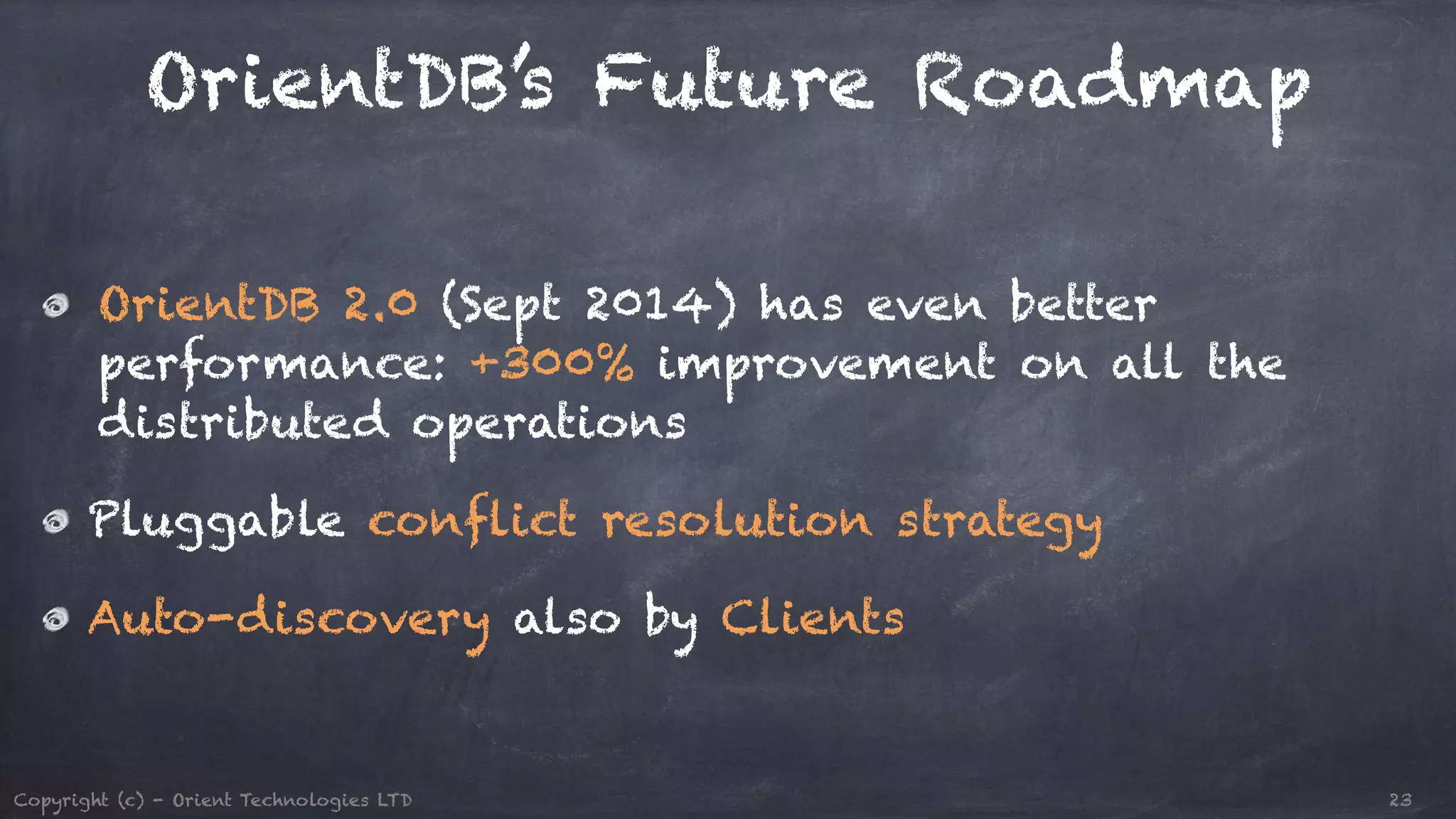
Preview of OrientDB 2.0 with performance improvements and enhanced features like conflict resolution and client auto-discovery.