AUTOMATIC RAILWAY platform gap filling
Project Synopsis: Railway safety is a crucial aspect of rail operation system worldwide. The purpose of our project is to design an AUTOMATIC RAIL CROSSING SYSTEM. This system is capable of closing the gate/barrier when a train is going to cross the road and the system will be restored to its initial condition after the train leaves. Thus it saves time and man power and reduces the chance of error.
1. Previously, no gate or barrier was used at rail crossings. 2. After some period, flagmen were posted to rail crossings to warn the traffic about the incoming train. Generally they used flag or lamp to do their job. 3. Later manually controlled barricades were introduced. The gates were intended to be a complete barrier against intrusion of any road traffic on the railway.
1. Manual rail crossings need a lot of man power to do the job of signaling and operating the barrier. 2. So manual rail crossing is not cost efficient. 3. Most of the time this procedure is not time efficient. Often train arrives a long time after the gate has been closed. 4. Manual system is erroneous, and can cause severe damage which may worth a heavy loss of life and capital.
To avoid human error and to enhance efficiency, railway crossing system can be controlled in an automated manner. In an automatic rail crossing system a train which approaches the gate is detected by a sensor, and also the speed of the train is noted. Then the time taken by the train to reach the road is calculated and the gate/barrier is closed down accordingly. Also the departure of the train is detected by another sensor and the gate/barrier is restored to its initial position.
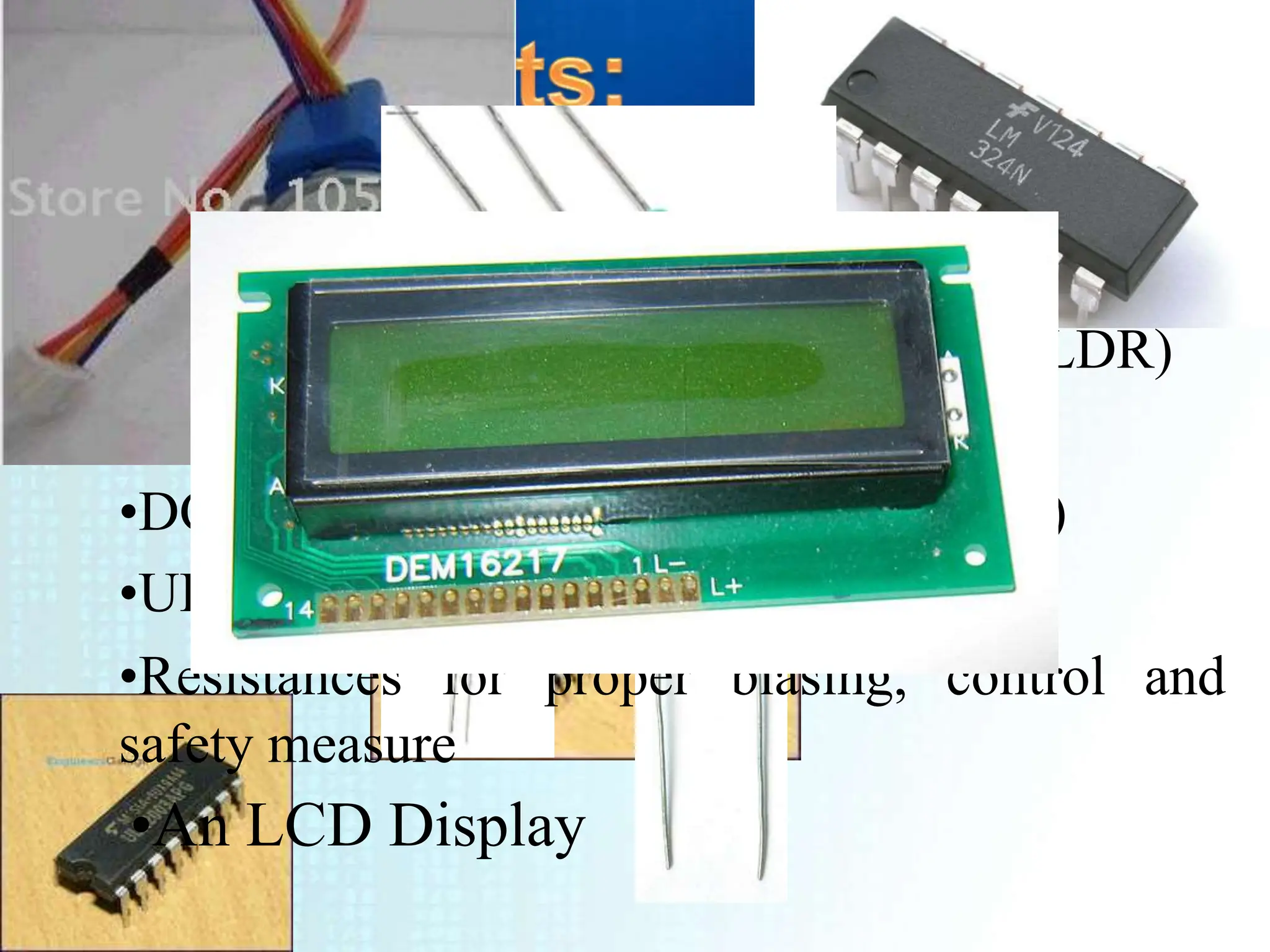
•Microcontroller Unit ATMEGA16 •LEDs AND Light Dependent Resistors(LDR) •LM324 OPAMP •DC Stepper Motor (5 wire unipolar type) •ULN2003A (motor driver) •Resistances for proper biasing, control and safety measure •An LCD Display
•Microcontroller Unit ATMEGA16 •LEDs AND Light Dependent Resistors(LDR) •LM324 OP-AMP •DC Stepper Gear Motor (5 wire unipolar type) •ULN2003A (motor driver) •Resistances for proper biasing, control and safety measure •An LCD Display
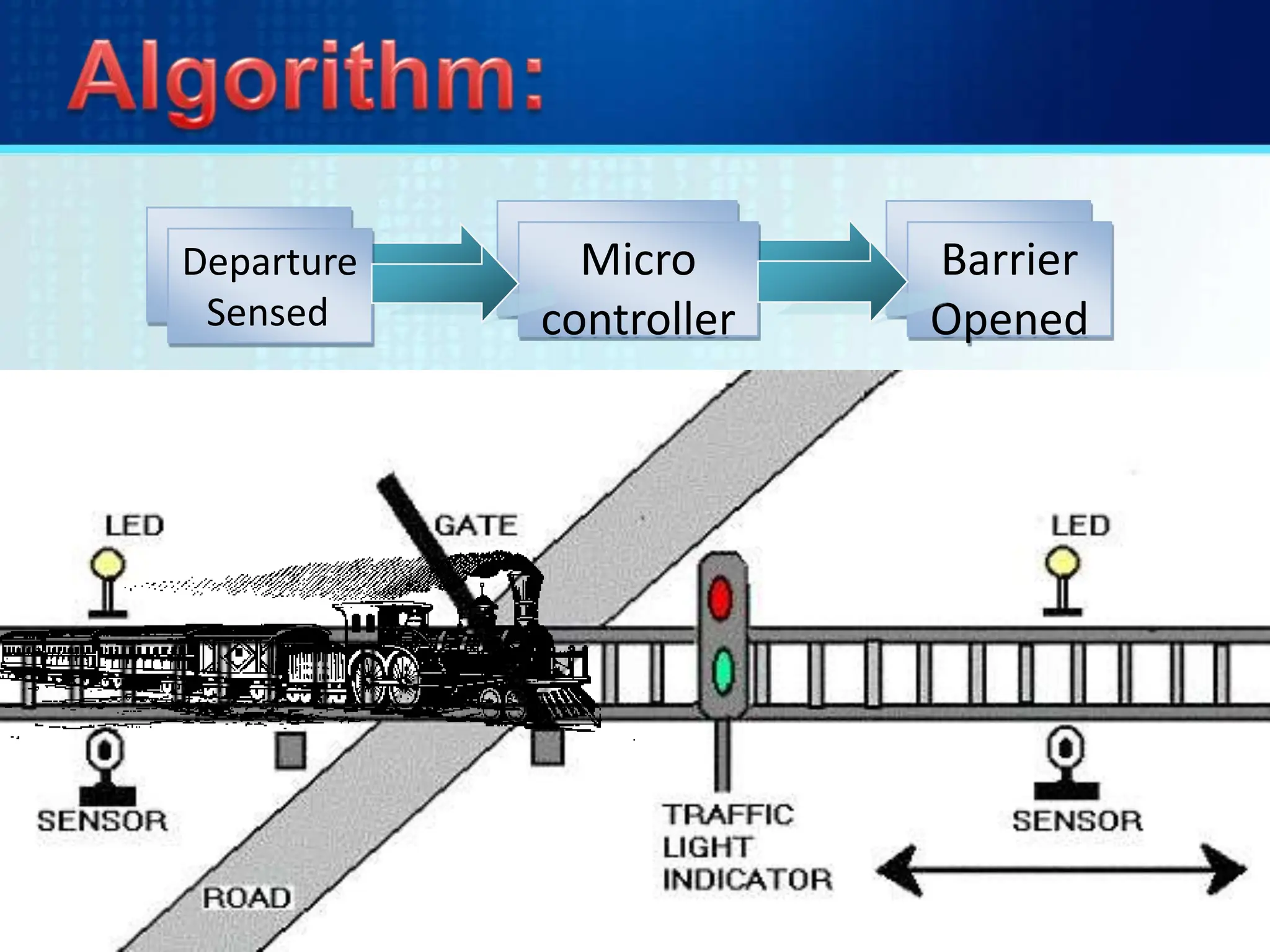
Train Sensed Micro controller Barrier Closed Departure Sensed Micro controller Barrier Opened
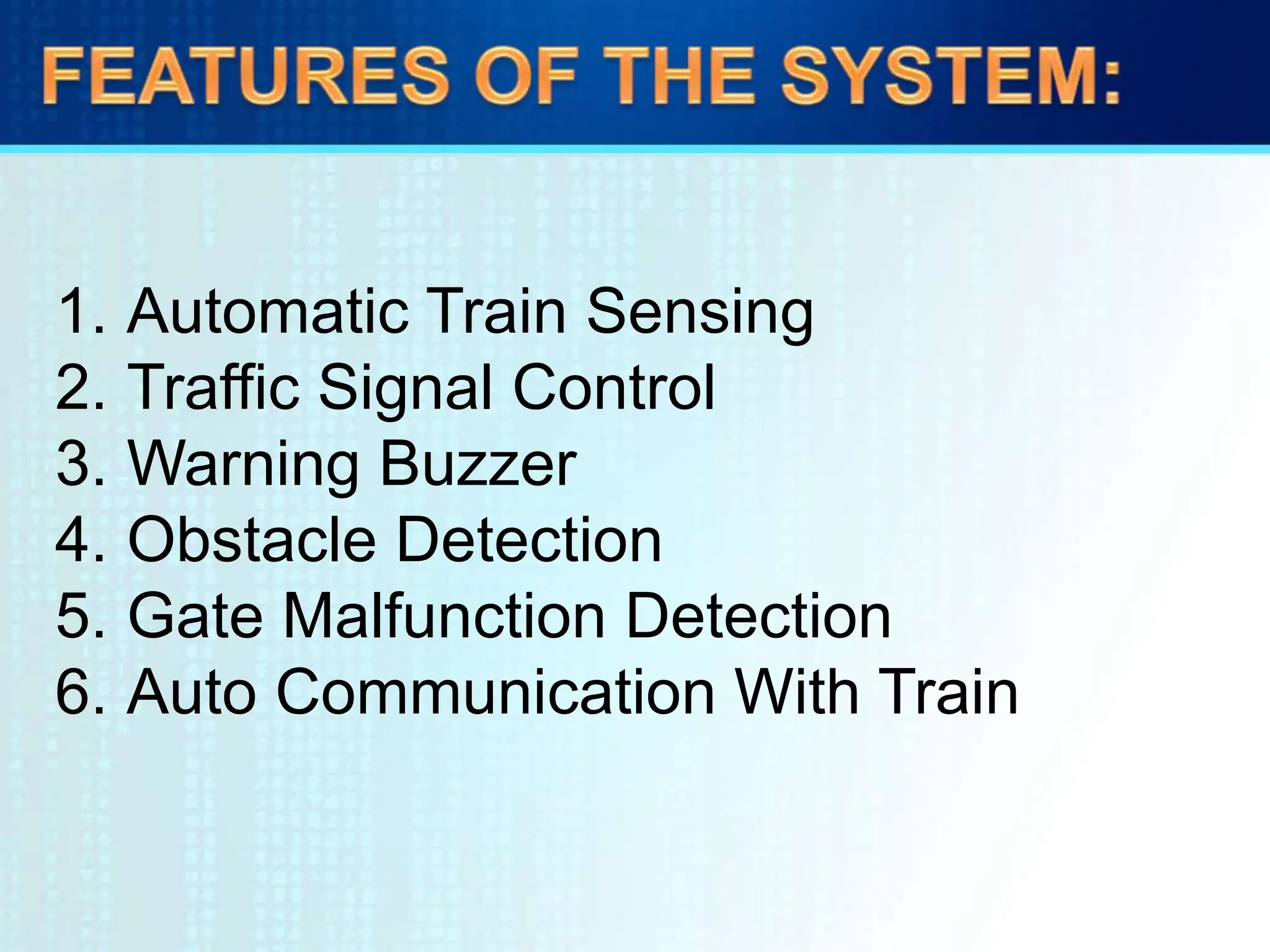
1. Automatic Train Sensing 2. Traffic Signal Control 3. Warning Buzzer 4. Obstacle Detection 5. Gate Malfunction Detection 6. Auto Communication With Train
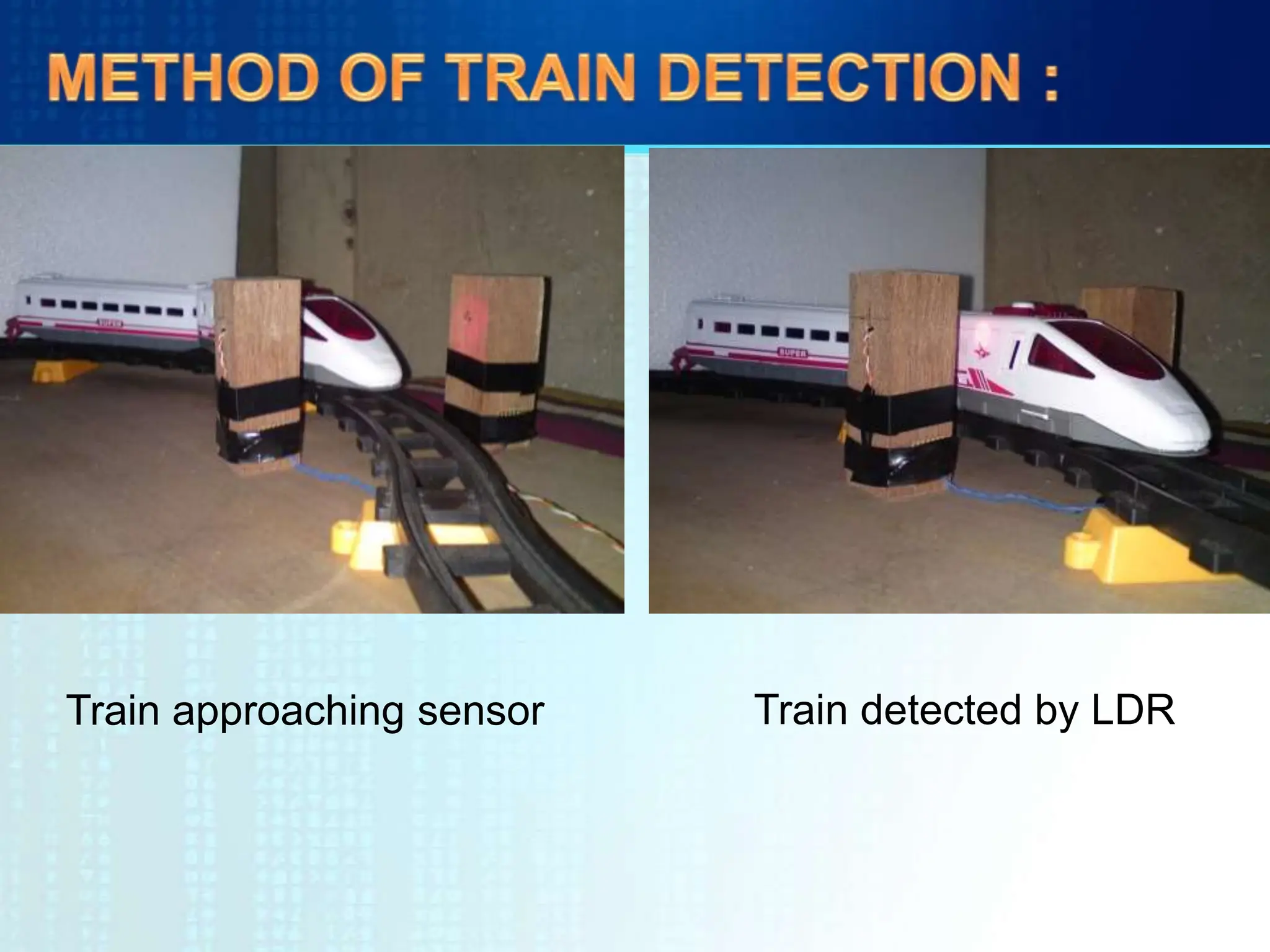
Train approaching sensor Train detected by LDR
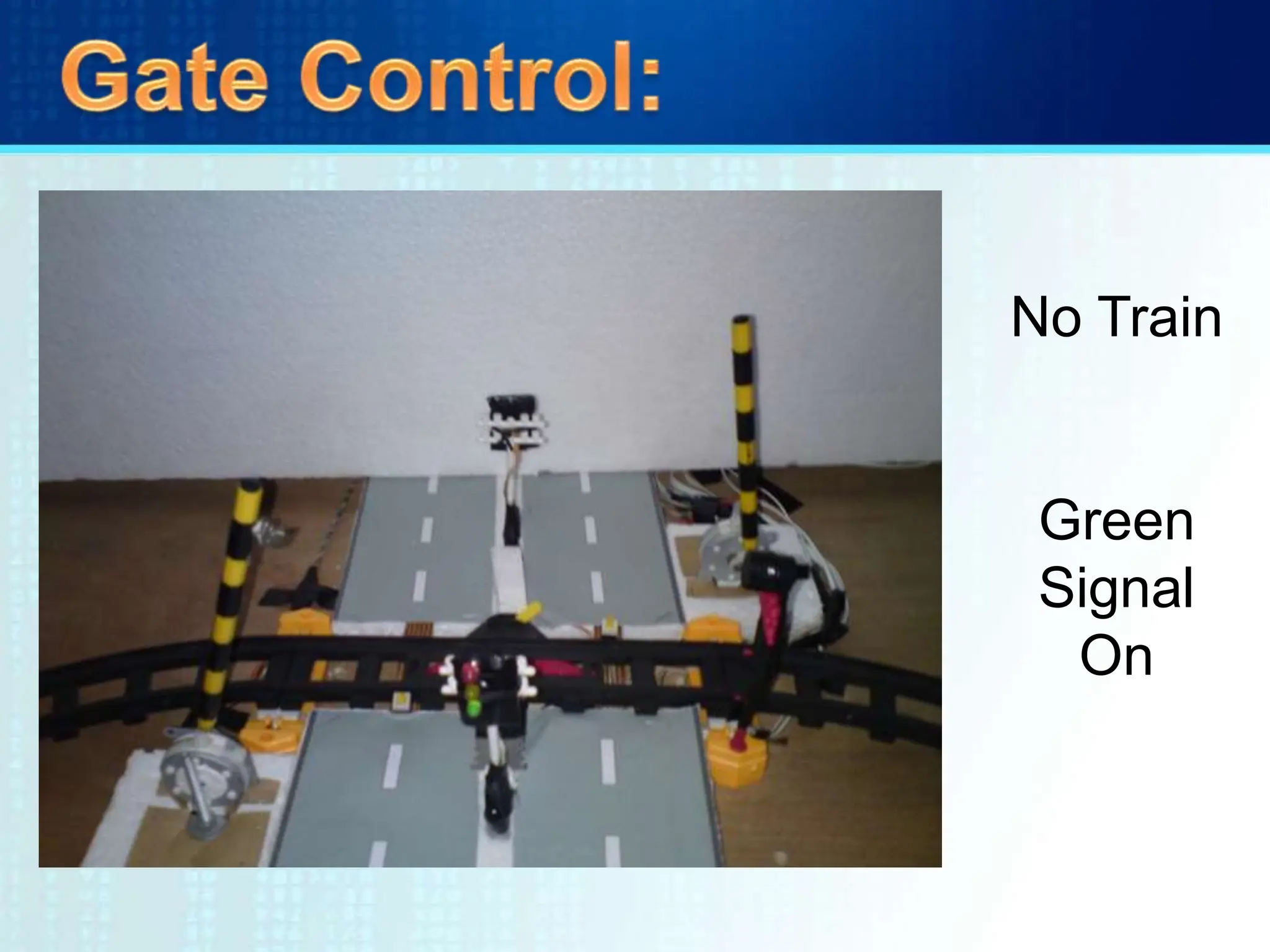
No Train Green Signal On
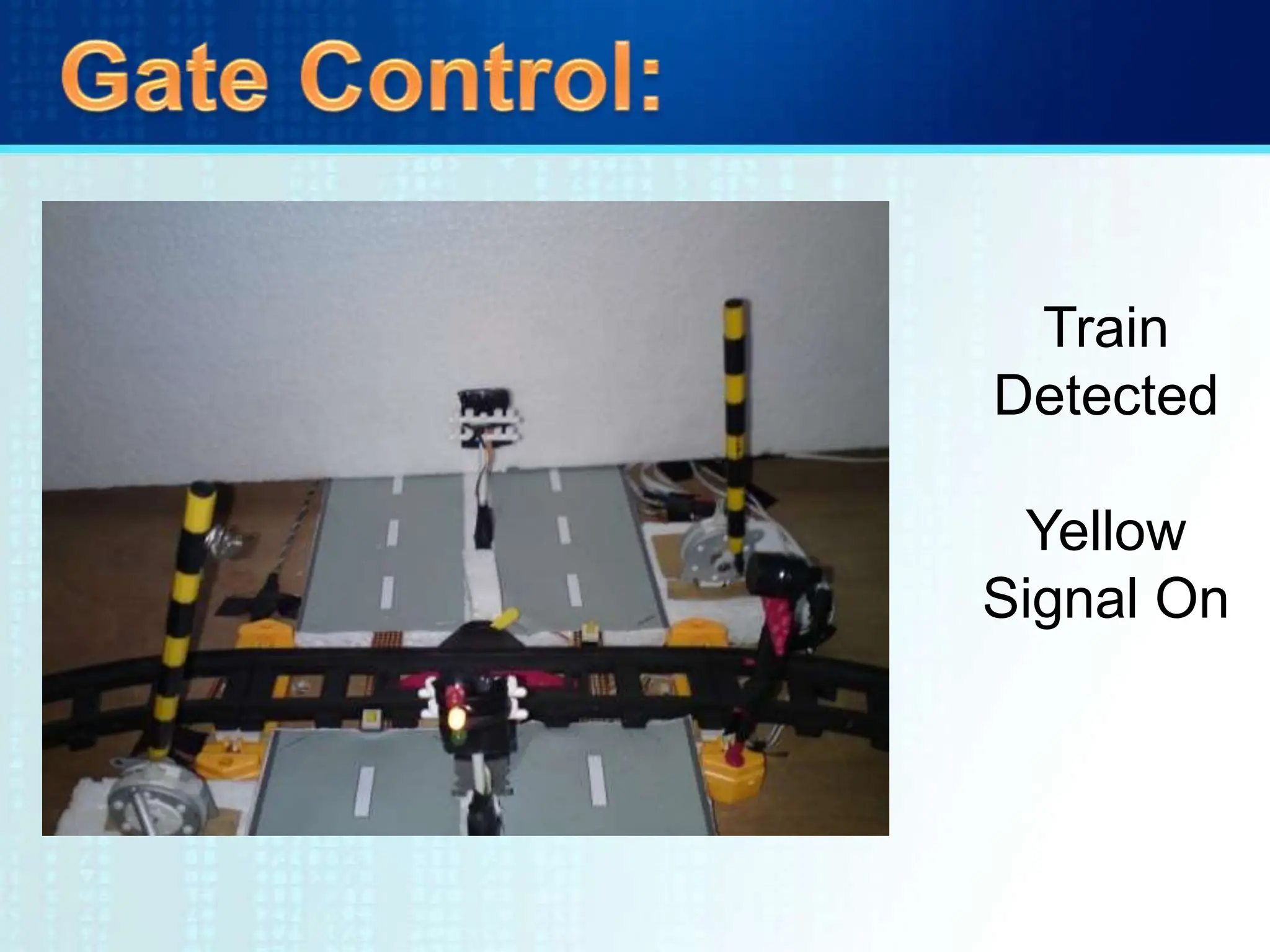
Train Detected Yellow Signal On
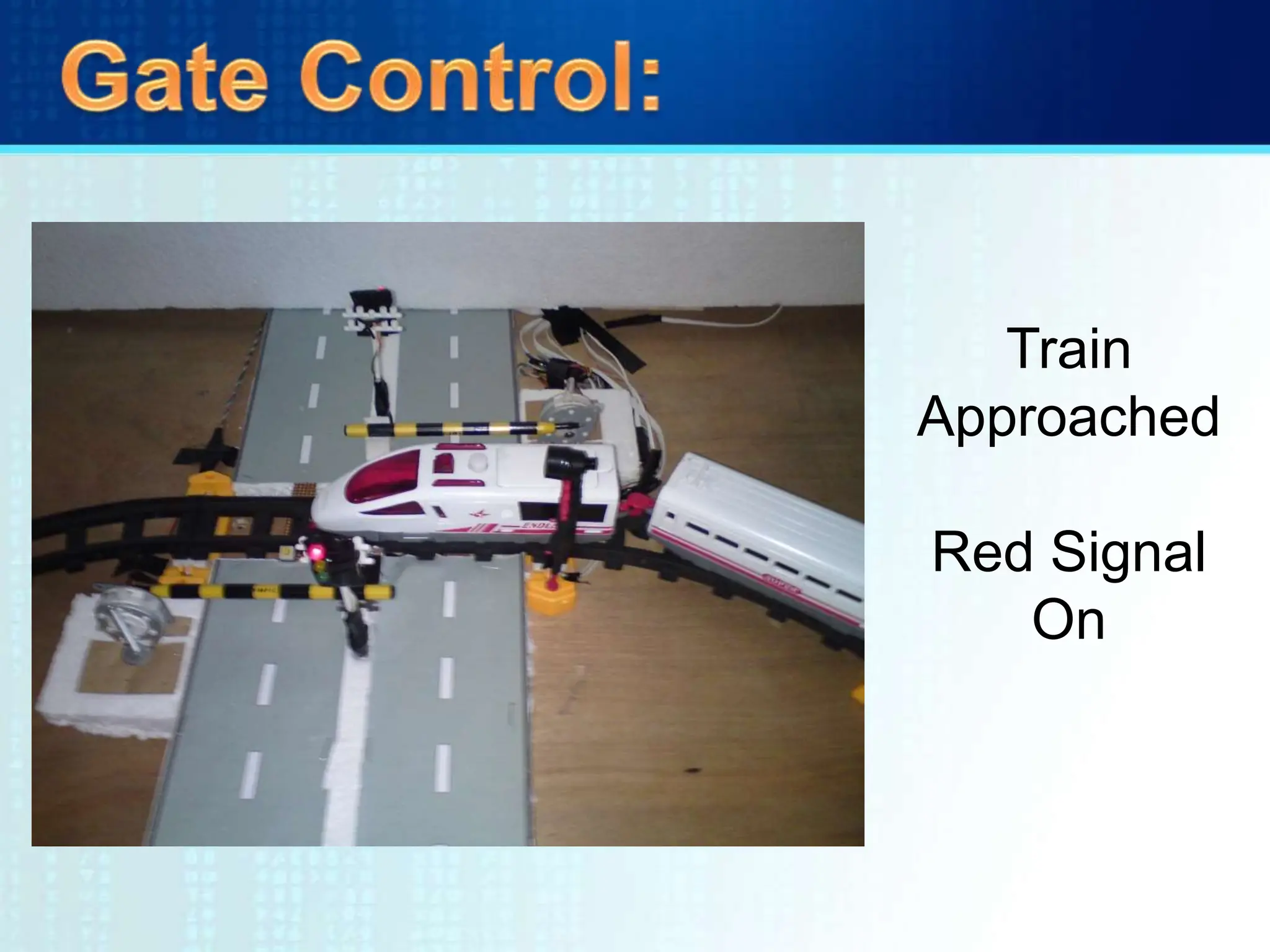
Train Approached Red Signal On
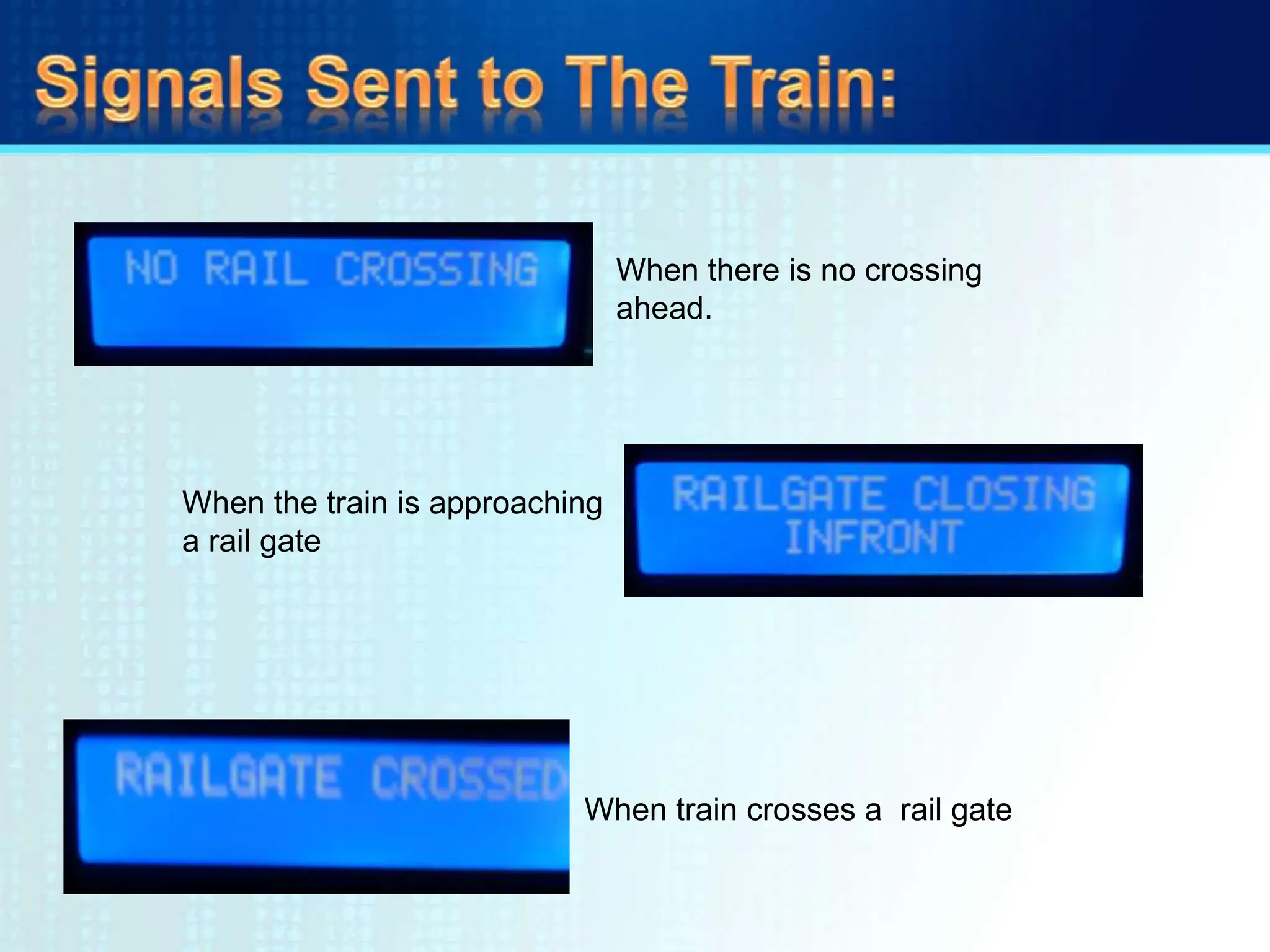
When there is no crossing ahead. When the train is approaching a rail gate When train crosses a rail gate
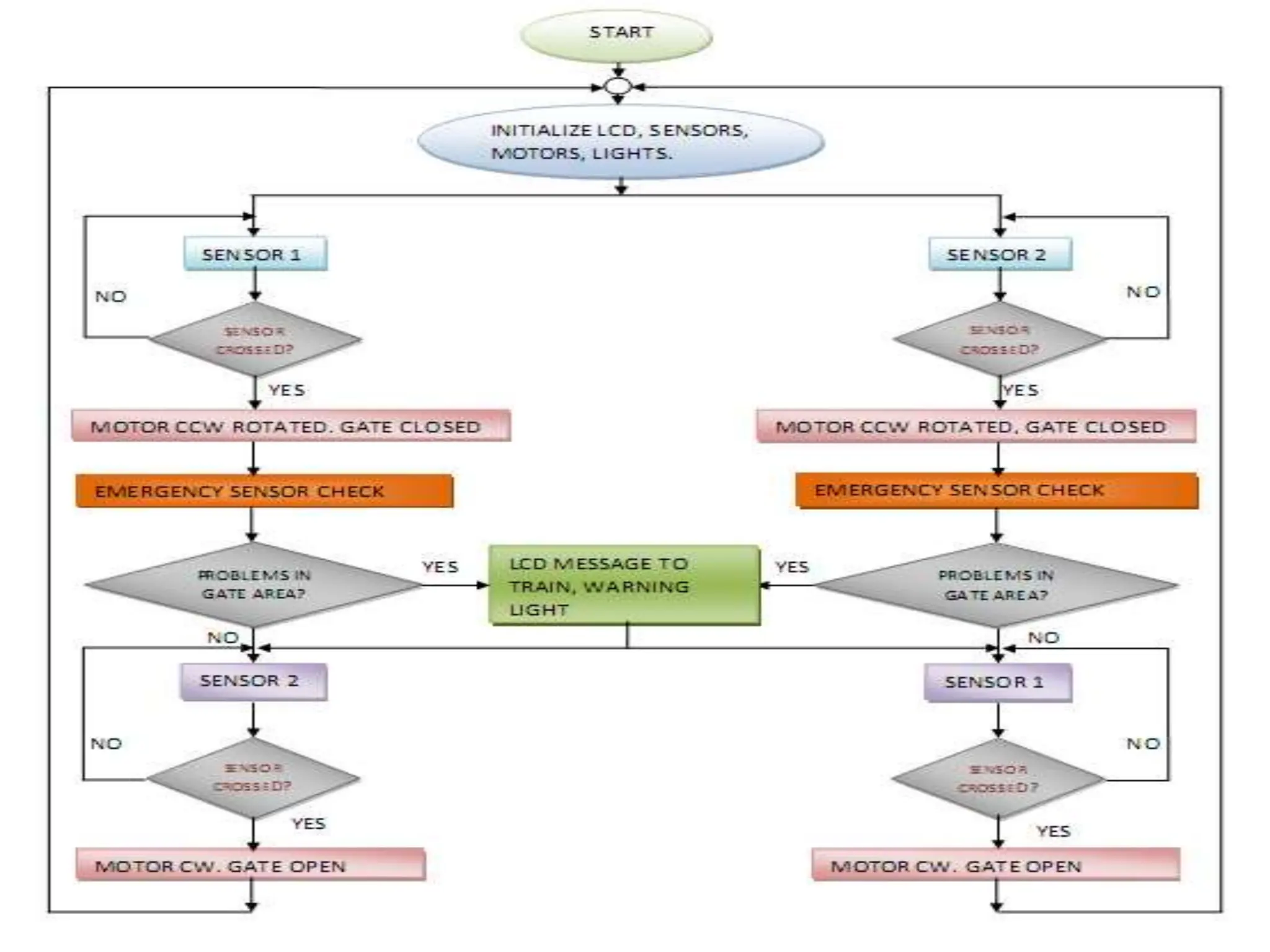
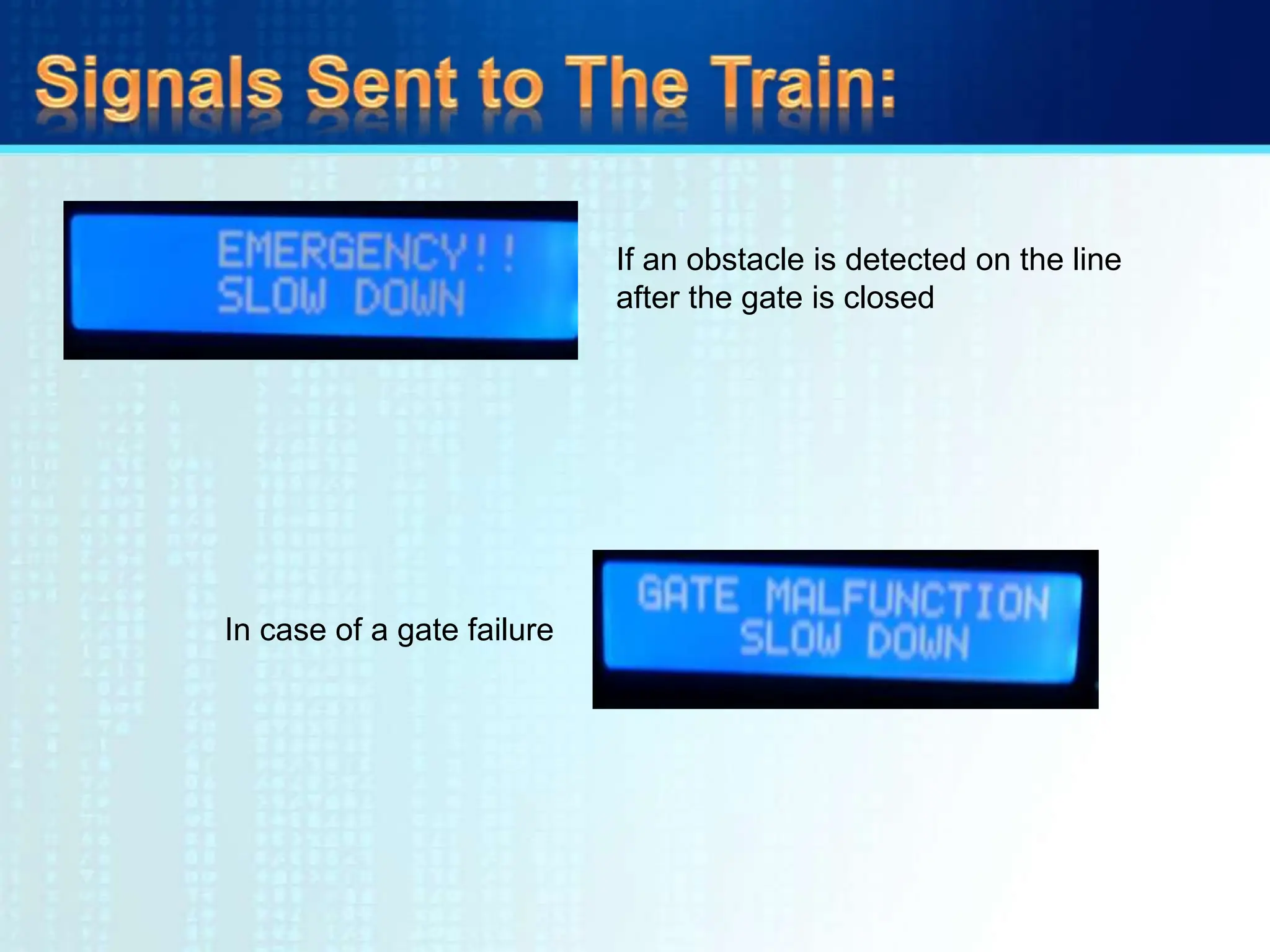
If an obstacle is detected on the line after the gate is closed In case of a gate failure
• Light Sensors were used. • No wireless communication with train is done in this project.
• Backup motor system can be added. • Automatic train deceleration. • Effective wireless communication.
Prepared by

railway gate using servo and arduino uno

  • 1.
  • 2.
    Project Synopsis: Railway safetyis a crucial aspect of rail operation system worldwide. The purpose of our project is to design an AUTOMATIC RAIL CROSSING SYSTEM. This system is capable of closing the gate/barrier when a train is going to cross the road and the system will be restored to its initial condition after the train leaves. Thus it saves time and man power and reduces the chance of error.
  • 3.
    1. Previously, nogate or barrier was used at rail crossings. 2. After some period, flagmen were posted to rail crossings to warn the traffic about the incoming train. Generally they used flag or lamp to do their job. 3. Later manually controlled barricades were introduced. The gates were intended to be a complete barrier against intrusion of any road traffic on the railway.
  • 4.
    1. Manual railcrossings need a lot of man power to do the job of signaling and operating the barrier. 2. So manual rail crossing is not cost efficient. 3. Most of the time this procedure is not time efficient. Often train arrives a long time after the gate has been closed. 4. Manual system is erroneous, and can cause severe damage which may worth a heavy loss of life and capital.
  • 5.
    To avoid humanerror and to enhance efficiency, railway crossing system can be controlled in an automated manner. In an automatic rail crossing system a train which approaches the gate is detected by a sensor, and also the speed of the train is noted. Then the time taken by the train to reach the road is calculated and the gate/barrier is closed down accordingly. Also the departure of the train is detected by another sensor and the gate/barrier is restored to its initial position.
  • 7.
    •Microcontroller Unit ATMEGA16 •LEDsAND Light Dependent Resistors(LDR) •LM324 OPAMP •DC Stepper Motor (5 wire unipolar type) •ULN2003A (motor driver) •Resistances for proper biasing, control and safety measure •An LCD Display
  • 8.
    •Microcontroller Unit ATMEGA16 •LEDsAND Light Dependent Resistors(LDR) •LM324 OP-AMP •DC Stepper Gear Motor (5 wire unipolar type) •ULN2003A (motor driver) •Resistances for proper biasing, control and safety measure •An LCD Display
  • 9.
  • 10.
    1. Automatic TrainSensing 2. Traffic Signal Control 3. Warning Buzzer 4. Obstacle Detection 5. Gate Malfunction Detection 6. Auto Communication With Train
  • 13.
    Train approaching sensorTrain detected by LDR
  • 14.
  • 15.
  • 16.
  • 17.
    When there isno crossing ahead. When the train is approaching a rail gate When train crosses a rail gate
  • 18.
    If an obstacleis detected on the line after the gate is closed In case of a gate failure
  • 19.
    • Light Sensorswere used. • No wireless communication with train is done in this project.
  • 20.
    • Backup motorsystem can be added. • Automatic train deceleration. • Effective wireless communication.
  • 21.