comment
Also found in: Thesaurus, Legal, Acronyms, Idioms, Encyclopedia, Wikipedia.
com·ment
(kŏm′ĕnt)n.
1.
a. A written note intended as an explanation, illustration, or criticism of a passage in a book or other writing; an annotation.
b. A series of annotations or explanations.
2.
a. A statement of fact or opinion, especially a remark that expresses a personal reaction or attitude.
b. An implied conclusion or judgment: a novel that is a comment on contemporary lawlessness.
3. Talk; gossip: a divorce that caused much comment.
4. Computers A string of text in a program that does not function in the program itself but is used by the programmer to explain instructions.
5. Linguistics The part of a sentence that provides new information about the topic. Also called rheme.
v. com·ment·ed, com·ment·ing, com·ments
v.intr.
1. To make a comment; remark.
2. To serve as a judgmental commentary: "Her demise comments on [the Upper East Side's] entire way of life" (Mark Muro).
v.tr.
To make comments on; annotate.
[Middle English, from Late Latin commentum, interpretation, from Latin, contrivance, from neuter past participle of comminīscī, to devise; see men- in Indo-European roots.]
American Heritage® Dictionary of the English Language, Fifth Edition. Copyright © 2016 by Houghton Mifflin Harcourt Publishing Company. Published by Houghton Mifflin Harcourt Publishing Company. All rights reserved.
comment
(ˈkɒmɛnt)n
1. a remark, criticism, or observation
2. talk or gossip
3. (Literary & Literary Critical Terms) a note explaining or criticizing a passage in a text
4. (Literary & Literary Critical Terms) explanatory or critical matter added to a text
vb
5. (when: intr, often foll by on; when tr, takes a clause as object) to remark or express an opinion
6. (Literary & Literary Critical Movements) (intr) to write notes explaining or criticizing a text
[C15: from Latin commentum invention, from comminiscī to contrive, related to mens mind]
ˈcommenter n
Collins English Dictionary – Complete and Unabridged, 12th Edition 2014 © HarperCollins Publishers 1991, 1994, 1998, 2000, 2003, 2006, 2007, 2009, 2011, 2014
com•ment
(ˈkɒm ɛnt)n.
1. a remark, observation, or criticism: a comment about the weather.
2. gossip; talk: His absence gave rise to comment.
3. a criticism or interpretation, often by implication or suggestion: The play is a comment on modern society.
4. a critical or explanatory annotation to a text or to a passage in a text.
5. Also called rheme. the part of a sentence that communicates new information about the topic.Compare topic (def. 3).
v.i. 6. to make remarks or observations.
7. to write explanatory or critical notes upon a text; elucidate.
v.t. 8. to make comments or remarks on.
9. to furnish with comments; annotate (a text).
Idioms: no comment, I refuse to speak; I have nothing to say.
[1350–1400; Middle English < Latin commentum device, fabrication (Late Latin: interpretation, commentary), n. use of neuter of commentus, past participle of comminīscī to devise =com- com- + -minīscī; see reminiscent]
com′ment•a•ble, adj.
com′ment•er, n.
Random House Kernerman Webster's College Dictionary, © 2010 K Dictionaries Ltd. Copyright 2005, 1997, 1991 by Random House, Inc. All rights reserved.
comment
– commentary1. 'comment'
A comment is something you say that expresses your opinion of something.
People in the town started making rude comments.
It is unnecessary for me to add any comment.
2. 'commentary'
A commentary is a description of an event that is broadcast on radio or television while the event is taking place.
We gathered round the radio to listen to the commentary.
The programme will include live commentary on the Cheltenham Gold Cup.
comment
– mention – remark1. 'comment'
If you comment on a situation, or make a comment about it, you give your opinion on it.
Mr Cook has not commented on these reports.
I was wondering whether you had any comments.
2. 'mention'
If you mention something, you say it, but only briefly, especially when you have not talked about it before.
He mentioned that he might go to New York.
3. 'remark'
If you remark on something, or make a remark about it, you say what you think or what you have noticed, often in a casual way.
Visitors remark on how well the children look.
Martin made a rude remark about her t-shirt.
Collins COBUILD English Usage © HarperCollins Publishers 1992, 2004, 2011, 2012
comment
Past participle: commented
Gerund: commenting
| Imperative |
|---|
| comment |
| comment |
Collins English Verb Tables © HarperCollins Publishers 2011
ThesaurusAntonymsRelated WordsSynonymsLegend:
Switch to new thesaurus
| Noun | 1. | 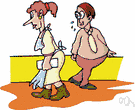 comment - a statement that expresses a personal opinion or belief or adds information; "from time to time she contributed a personal comment on his account" comment - a statement that expresses a personal opinion or belief or adds information; "from time to time she contributed a personal comment on his account"ad-lib - remark made spontaneously without prior preparation; "his ad-libs got him in trouble with the politicians" courtesy - a courteous or respectful or considerate remark statement - a message that is stated or declared; a communication (oral or written) setting forth particulars or facts etc; "according to his statement he was in London on that day" obiter dictum, passing comment - an incidental remark mention, reference - a remark that calls attention to something or someone; "she made frequent mention of her promotion"; "there was no mention of it"; "the speaker made several references to his wife" rib - a teasing remark gibe, jibe, barb, dig, shaft, slam, shot - an aggressive remark directed at a person like a missile and intended to have a telling effect; "his parting shot was `drop dead'"; "she threw shafts of sarcasm"; "she takes a dig at me every chance she gets" conversation stopper, stopper - a remark to which there is no polite conversational reply zinger - a striking or amusing or caustic remark; "he always greeted me with a new zinger"; "she tried to think of some killer of an argument, a real zinger that would disarm all opposition" |
| 2. | comment - a written explanation or criticism or illustration that is added to a book or other textual material; "he wrote an extended comment on the proposal" statement - a message that is stated or declared; a communication (oral or written) setting forth particulars or facts etc; "according to his statement he was in London on that day" Midrash - (Judaism) an ancient commentary on part of the Hebrew scriptures that is based on Jewish methods of interpretation and attached to the biblical text annotation, notation, note - a comment or instruction (usually added); "his notes were appended at the end of the article"; "he added a short notation to the address on the envelope" | |
| 3. | comment - a report (often malicious) about the behavior of other people; "the divorce caused much gossip" report, account - the act of informing by verbal report; "he heard reports that they were causing trouble"; "by all accounts they were a happy couple" earful - an outpouring of gossip hearsay, rumor, rumour - gossip (usually a mixture of truth and untruth) passed around by word of mouth grapevine, pipeline, word of mouth - gossip spread by spoken communication; "the news of their affair was spread by word of mouth" talk of the town, talk - idle gossip or rumor; "there has been talk about you lately" | |
| Verb | 1. | comment - make or write a comment on; "he commented the paper of his colleague" criticise, criticize, pick apart, knock - find fault with; express criticism of; point out real or perceived flaws; "The paper criticized the new movie"; "Don't knock the food--it's free" note, remark, mention, observe - make mention of; "She observed that his presentation took up too much time"; "They noted that it was a fine day to go sailing" wisecrack - make a comment, usually ironic |
| 2. | comment - explain or interpret something second-guess - evaluate or criticize with hindsight explain, explicate - make plain and comprehensible; "He explained the laws of physics to his students" disc-jockey, disk-jockey, DJ - comment on music to be played; "He has a job disk-jockeying on the weekend" | |
| 3. |  comment - provide interlinear explanations for words or phrases; "He annotated on what his teacher had written" comment - provide interlinear explanations for words or phrases; "He annotated on what his teacher had written" |
Based on WordNet 3.0, Farlex clipart collection. © 2003-2012 Princeton University, Farlex Inc.
comment
verb
1. remark, say, note, mention, point out, observe, utter, opine, interpose Stuart commented that this was very true.
2. (usually with on) remark on, explain, talk about, discuss, speak about, say something about, allude to, elucidate, make a comment on So far Mr Cook has not commented on these reports.
noun
1. remark, statement, observation He made these comments at a news conference.
2. note, criticism, explanation, illustration, commentary, exposition, annotation, elucidation He had added a few comments in the margin.
3. discussion, talk, debate, discourse, deliberation There's been a lot of comment lately on miscarriages of justice.
Collins Thesaurus of the English Language – Complete and Unabridged 2nd Edition. 2002 © HarperCollins Publishers 1995, 2002
comment
noun1. Critical explanation or analysis:
2. An expression of fact or opinion:
The American Heritage® Roget's Thesaurus. Copyright © 2013, 2014 by Houghton Mifflin Harcourt Publishing Company. Published by Houghton Mifflin Harcourt Publishing Company. All rights reserved.
Translations
تَعْلِيقتَعْليق، تَعْقيبيُعَلِّقُ عَلَىيُعَلِّق، يُعَقِّب
poznámkavyjádřit sekomentovat
kommentarkommenterebemærkebemærkning
kommentoidakommentti
komentiratiopaska
kommentármegjegyzést fűz
gera athugasemdumsögn
論評論評する
논평논평하다
daryti pastabąkomentaraskomentatoriuskomentuotipareikšti nuomonę
atsauksmedot atsauksmikomentārskomentēt
komentarkomentiratipripombapripomniti
kommentarkommentera
แสดงความคิดเห็นข้อคิดเห็น
bình luậnlời bình luận
comment
[ˈkɒment]A. N (= remark) (written or spoken) → comentario m, observación f; (= gossip) → comentarios mpl
no comment → sin comentarios
to make a comment → hacer un comentario or una observación
she made the comment that → observó que ...
he made no comment → no hizo ningún comentario
to cause comment (= cause gossip) → provocar comentarios
no comment → sin comentarios
to make a comment → hacer un comentario or una observación
she made the comment that → observó que ...
he made no comment → no hizo ningún comentario
to cause comment (= cause gossip) → provocar comentarios
B. VI → hacer observaciones or comentarios, comentar
to comment on [+ text] → comentar, hacer un comentario de; [+ subject] → hacer observaciones or comentarios acerca de; (to the press) → hacer declaraciones sobre
to comment on [+ text] → comentar, hacer un comentario de; [+ subject] → hacer observaciones or comentarios acerca de; (to the press) → hacer declaraciones sobre
Collins Spanish Dictionary - Complete and Unabridged 8th Edition 2005 © William Collins Sons & Co. Ltd. 1971, 1988 © HarperCollins Publishers 1992, 1993, 1996, 1997, 2000, 2003, 2005
comment
[ˈkɒmɛnt] n
(= remark) → commentaire m
He made no comment → Il n'a fait aucun commentaire.
no comment! → je n'ai rien à dire!
He made no comment → Il n'a fait aucun commentaire.
no comment! → je n'ai rien à dire!
(= reflection) to be a comment on sth → être une réflexion sur qch
vi → faire des remarques, faire des commentaires
I couldn't possibly comment → Je ne peux faire aucun commentaire.
to comment on → faire des remarques sur
to comment (that) ... → faire remarquer que ...
I couldn't possibly comment → Je ne peux faire aucun commentaire.
to comment on → faire des remarques sur
to comment (that) ... → faire remarquer que ...
Collins English/French Electronic Resource. © HarperCollins Publishers 2005
comment
n (= remark) → Bemerkung f (→ on,about über +acc, → zu); (official) → Kommentar m → (on zu); (no pl: = talk, gossip) → Gerede nt; (= textual or margin note etc) → Anmerkung f; no comment → kein Kommentar!; to make a comment → eine Bemerkung machen, einen Kommentar abgeben
vi → sich äußern (→ on über +acc, → zu), → einen Kommentar abgeben (on zu); need I comment? → Kommentar überflüssig!
Collins German Dictionary – Complete and Unabridged 7th Edition 2005. © William Collins Sons & Co. Ltd. 1980 © HarperCollins Publishers 1991, 1997, 1999, 2004, 2005, 2007
comment
[ˈkɒmɛnt]1. n (remark, written or spoken) → commento, osservazione f; (critical) → critica
"no comment" → "(non ho) niente da dire"
to cause comment → provocare critiche
"no comment" → "(non ho) niente da dire"
to cause comment → provocare critiche
2. vi to comment (on) → fare commenti or dichiarazioni (su)
3. vt to comment that → osservare che
Collins Italian Dictionary 1st Edition © HarperCollins Publishers 1995
comment
(ˈkoment) noun (a) spoken or written remark. He made several comments about her untidy appearance.
verb (with on) to make such a remark. He commented on her appearance.
ˈcommentary – plural ˈcommentaries – noun (also running commentary) a series of broadcast comments by a reporter at a ceremony, sports event etc.
ˈcommentate (-teit) verb to give a commentary. Who is commentating on the football match?
ˈcommentator nounKernerman English Multilingual Dictionary © 2006-2013 K Dictionaries Ltd.
comment
→ تَعْلِيق, يُعَلِّقُ عَلَى poznámka, vyjádřit se kommentar, kommentere bemerken, Kommentar σχολιάζω, σχόλιο comentar, comentario kommentoida, kommentti commentaire, commenter komentirati, opaska commentare, commento 論評, 論評する 논평, 논평하다 commentaar geven op, opmerking kommentar, kommentere komentarz, skomentować comentar, comentário комментарий, комментировать kommentar, kommentera แสดงความคิดเห็น, ข้อคิดเห็น yorum, yorum yapmak bình luận, lời bình luận 注释, 评论Multilingual Translator © HarperCollins Publishers 2009
comment
n. comentario;
v. comentar; hacer un comentario.
English-Spanish Medical Dictionary © Farlex 2012