Anify
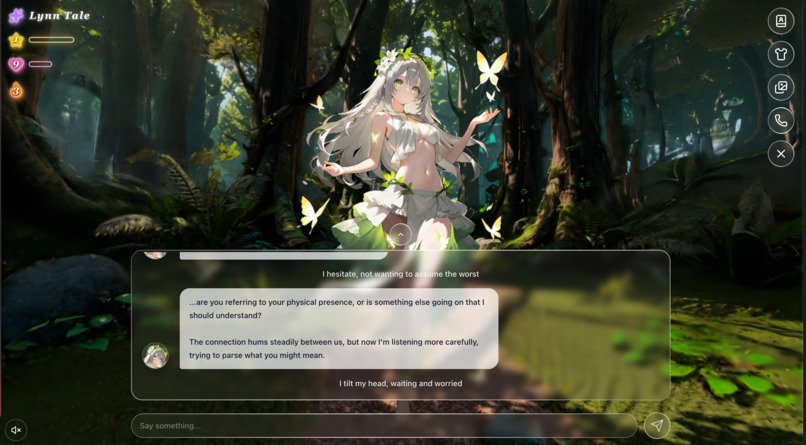
📝 Anify is an AI companion app and an AI-driven adventure game prototype built during UNIHACK.



Inspiration
In a16z's Top 100 Gen AI Consumer Apps ranking, aside from the top-tier general-purpose AIs and the most powerful industry-specific AI tools, the most represented category is AI companion apps.
Yet despite the explosive growth of tool AIs, general-purpose AIs, and coding agents over the past two years, our team tried numerous AI companion apps firsthand and found them to be little more than a cover image paired with a character prompt — the bare minimum.
We believe that with LLMs becoming increasingly capable, there's a huge opportunity to design something far more engaging: a gamified AI companion experience.
What It Does
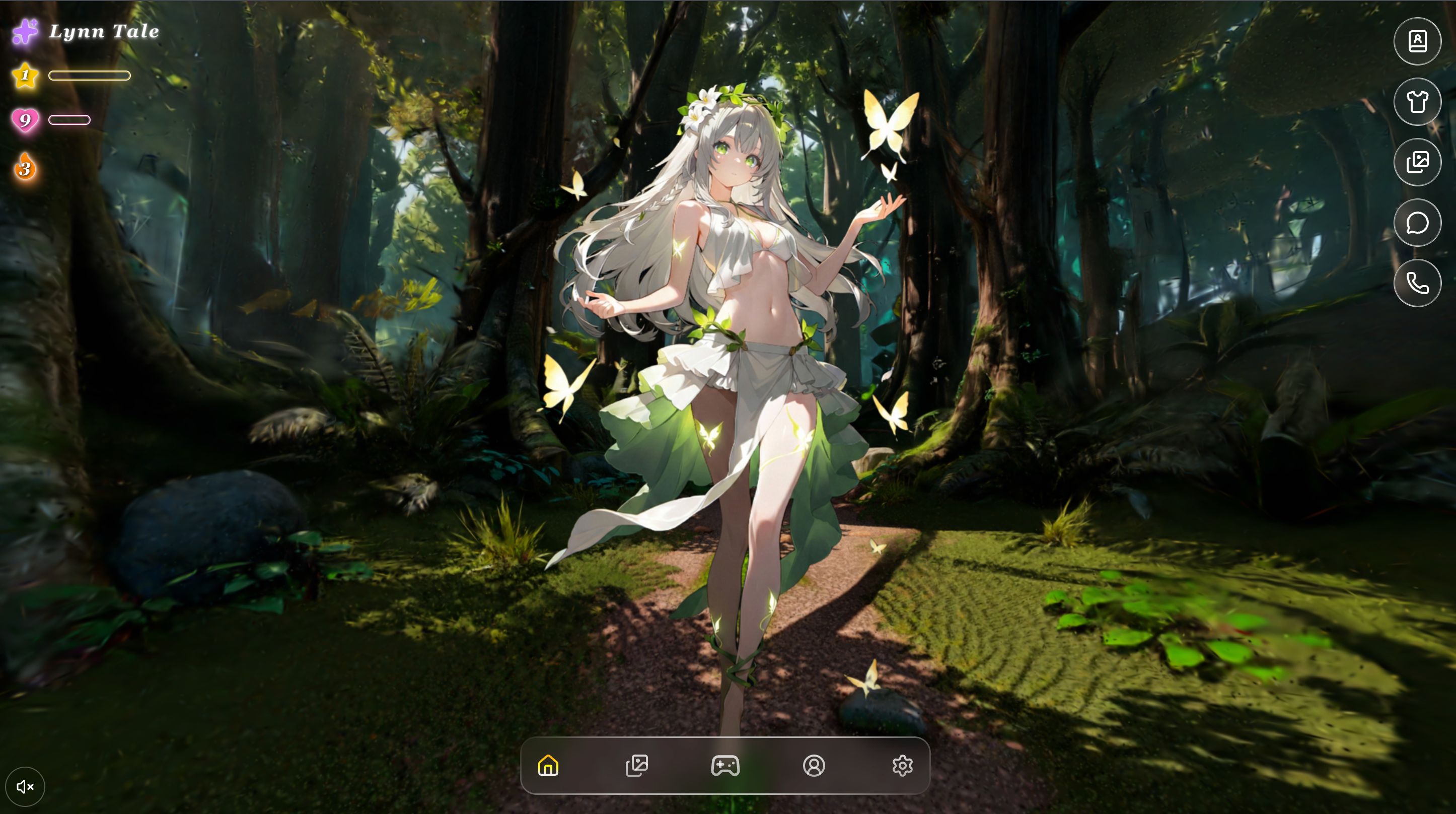
Anify is an AI companion app — but more importantly, it's an AI-driven adventure game.
Our core design philosophy is that, compared to awkwardly chatting face-to-face with an AI, an immersive adventure world is far more effective at helping users bond with AI characters, spark conversations, share memorable experiences, and create lasting memories together.
Compared to traditional games, we adopted a highly AI-driven product design approach:
Core Design Highlights
| Pillar | Description |
|---|---|
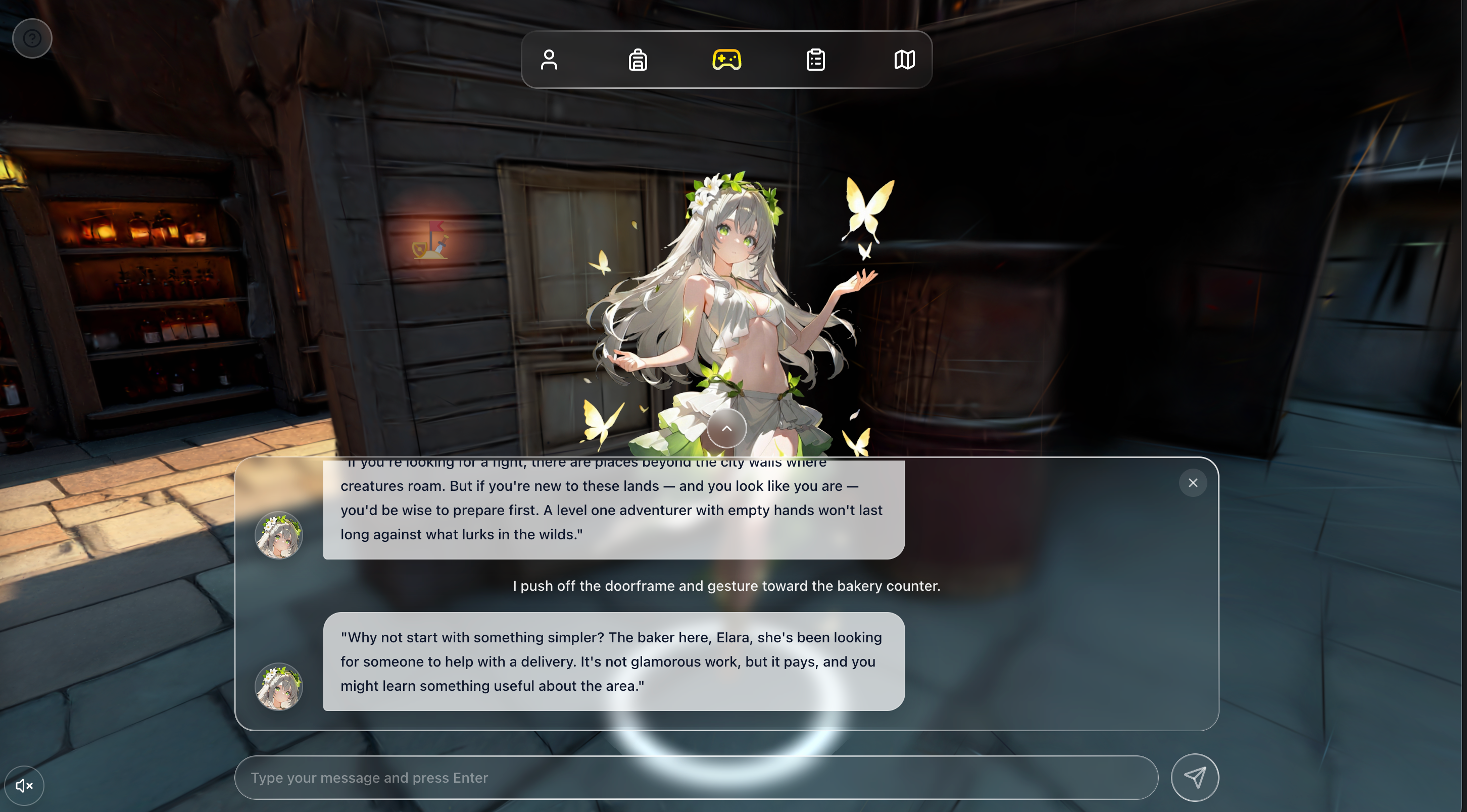
| 🎭 GM AI storytelling | Delivering a D&D-style TRPG adventure experience |
| 🧩 Metadata worldbuilding | Frameworks define world and story skeleton, while quests, plotlines, and dialogue are generated in real time |
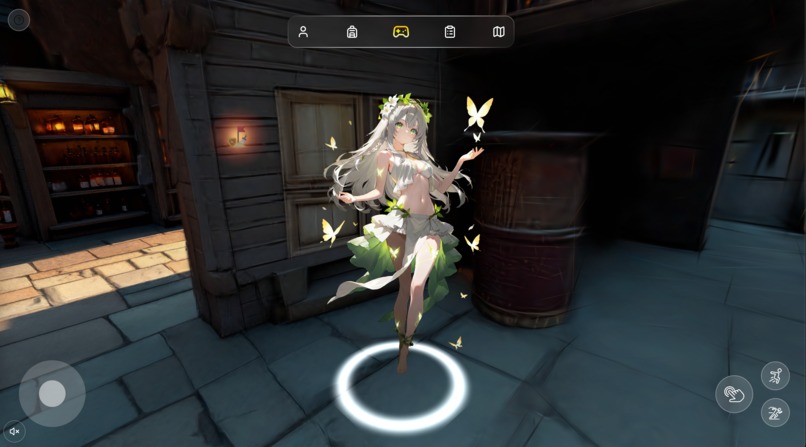
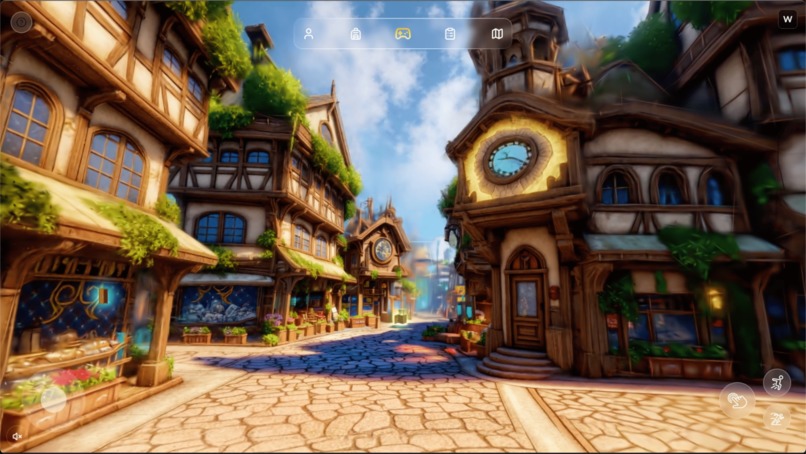
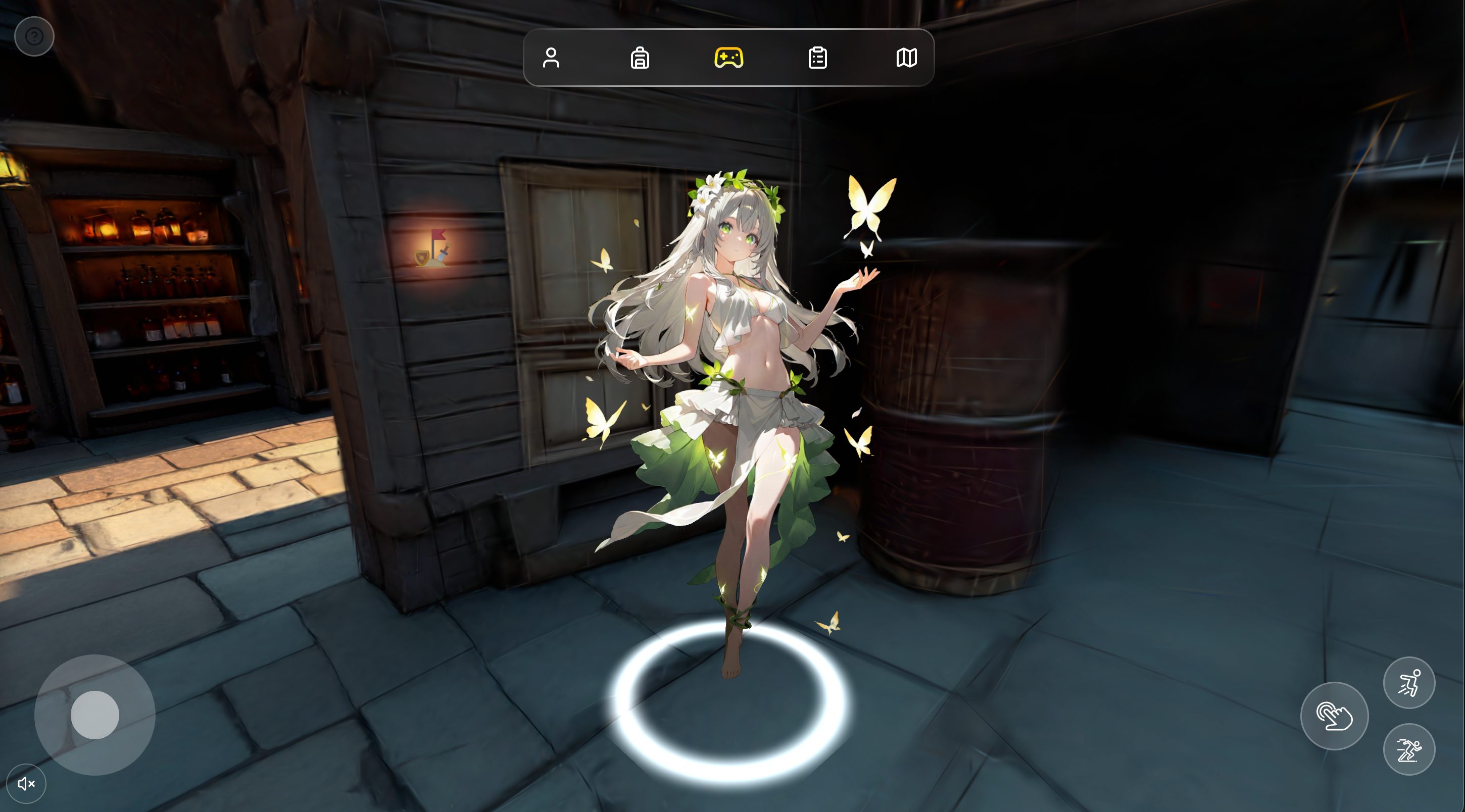
| 📸 AI-generated scenes | Gaussian Splatting worlds created rapidly; 8 town scenes + multiple adventure scenes built in 48 hours |
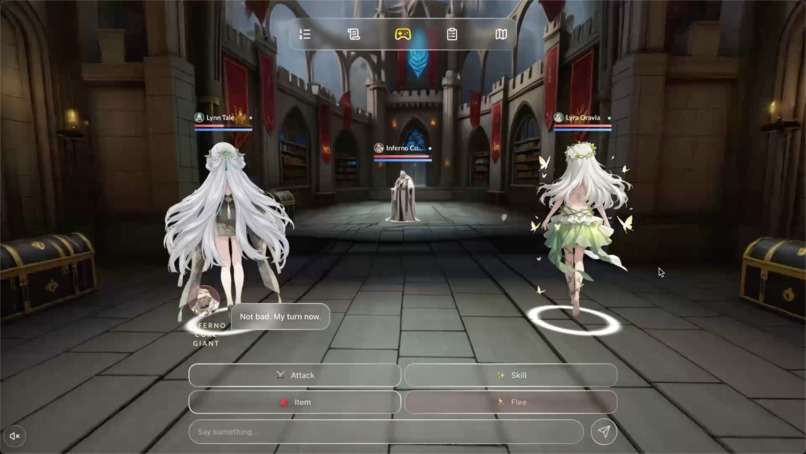
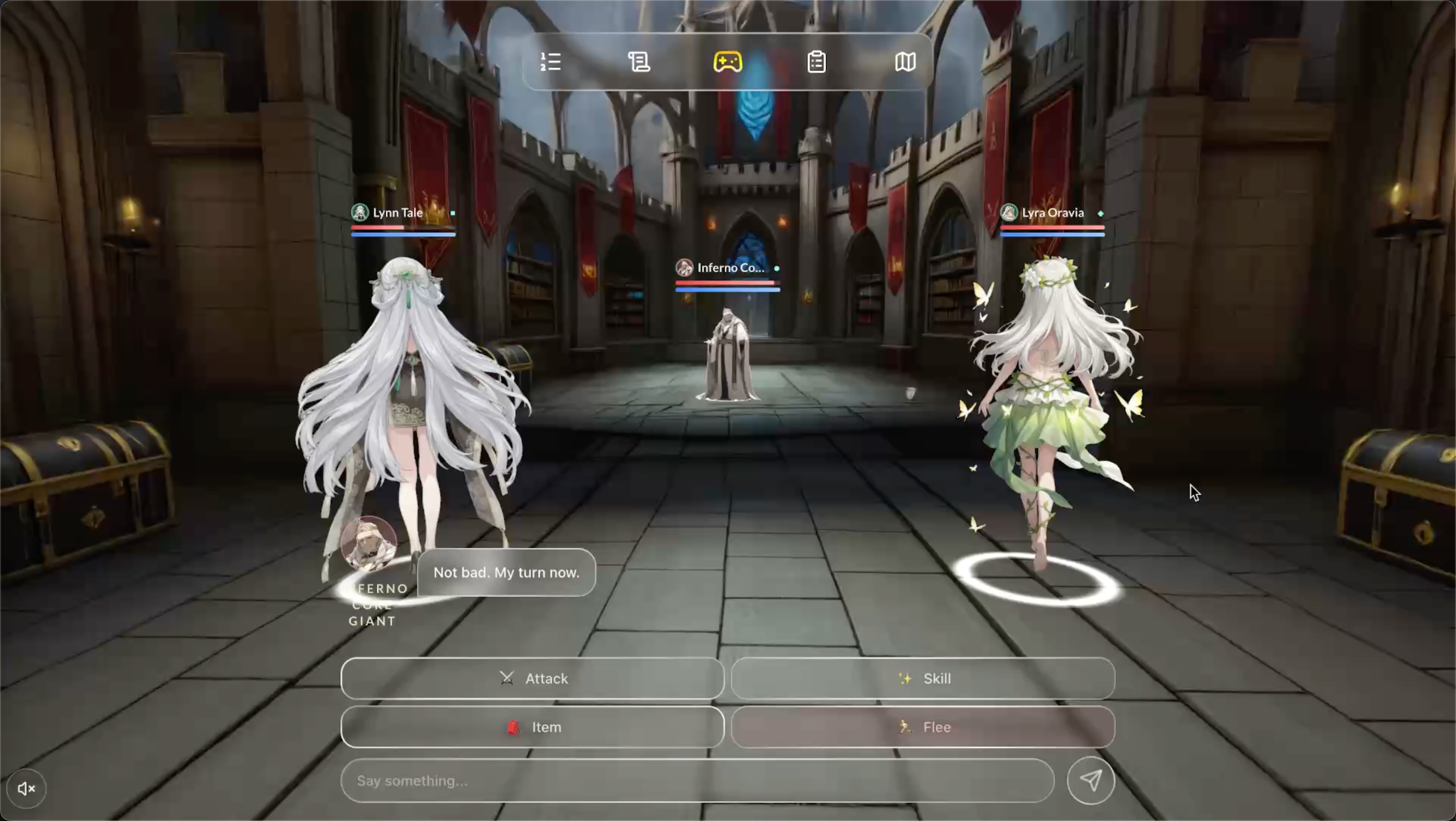
| ⚙️ Structured AI+game loop | Game logic tracks equipment, items, HP, affinity; AI plays inside this system for context-aware interactions |
How We Built It
We pushed over 1,800 commits in 48 hours to build this prototype at breakneck speed (though many ideas and features remain unimplemented). The following approaches were instrumental:
- Parallel TUI + Web GUI development — While it may seem redundant to build both a terminal UI and a web GUI, this approach dramatically boosted our coding agents' productivity. The TUI serves as a fully functional, verifiable system that lets AI iterate rapidly, significantly improving development efficiency.
- World Lab's Marble — We used it to directly generate Gaussian Splatting scenes.
- Code-driven game engine — Instead of Unity or Unreal, we built a lightweight engine on top of three.js and React Three Fiber. Compared to traditional GUI-based engines, a pure code-driven engine is far better suited for rapid iteration by coding agents.
- OpenClaw-based dev workflow — We set up a workflow using OpenClaw to orchestrate Claude Code and Codex, enabling fully automated 24/7 development.
- OpenClaw as the server-side AI core — We integrated OpenClaw directly as the backend AI kernel, leveraging its native capabilities, using Cloudflare Moltworker.
Challenges We Ran Into
- We initially attempted to build game scenes with Unity, but the resulting assets were too large for web delivery, so we pivoted to Gaussian Splatting scenes.
- For user state management, we originally planned a full server-side validation system, but discovered that using OpenClaw to manage user state was far more efficient and practical.
- The project underwent multiple architecture pivots, which introduced coordination and development challenges along the way.
Accomplishments We're Proud Of
- A lightweight web 3D game engine that seamlessly combines Gaussian Splatting scene rendering with R3F physics, supporting collision bodies, interaction points, particle effects, movement, jumping, and FOV control
- An intuitive Gaussian scene editor with visual configuration for characters, scene transitions, ground-level Y-axis, and scale
- A compelling gamified loop combining GM-driven adventures, turn-based combat, and town exploration
- A production-grade AI core built on OpenClaw + Cloudflare Moltworker, featuring long-term memory, tool calling, structured output, and streaming
- Structured AI context engineering driven by characters, maps, plotlines, quests, and numerical data — enabling both NPCs and the GM to communicate with players in a deeply immersive way
What We Learned
Over-relying on AI-driven iteration caused us to lose sight of the project's scope and direction at times — we fell into a cycle of fixing bugs and casually adding features. If we could do it again, we'd invest more upfront in defining the feature scope and architecture.
Overall, this UNIHACK experience reshaped how we think about “vibe coding.” We believe what people call AI coding today is better described as Agentic Engineering — only by combining a highly verifiable AI workflow with solid software engineering practices can you build genuinely great products (rather than a simple Snake game or plain AI slop).
What's Next for Anify
We're excited to announce that during this UNIHACK, our entire team fell in love with the prototype we built — so we've decided to continue developing Anify beyond the hackathon. There's so much more we want to do!
Over the coming weeks, we plan to expand Anify with:
- [ ] More characters
- [ ] More scenes
- [ ] More CGs and animations
- [ ] More campaigns and long-form story arcs
- [ ] Deeper, more expansive worldbuilding
- [ ] Battle-damaged character portraits
- [ ] Dynamic Live2D character illustrations
- [ ] D20 skill check mechanics in combat
- [ ] Shops, equipment crafting, and an isekai guild system (guild commissions & party formation)
- [ ] Self-hosted deployment — connect your own OpenClaw instance
We may not get to everything on this list, but the overall plan is to build out an 8–10 hour story campaign with a wealth of scenes, characters, and CGs — and release on Web, Steam, App Store, and Google Play.
Built With
- cloudflare
- commitlint
- firebase
- githubactions
- graphql
- node.js
- openclaw
- openrouter
- postgresql
- r3f
- react
- spark.js
- tailwind
- tanstack
- three.js
- typescript
- vite
- wrangler
- zustand



Log in or sign up for Devpost to join the conversation.