-
-
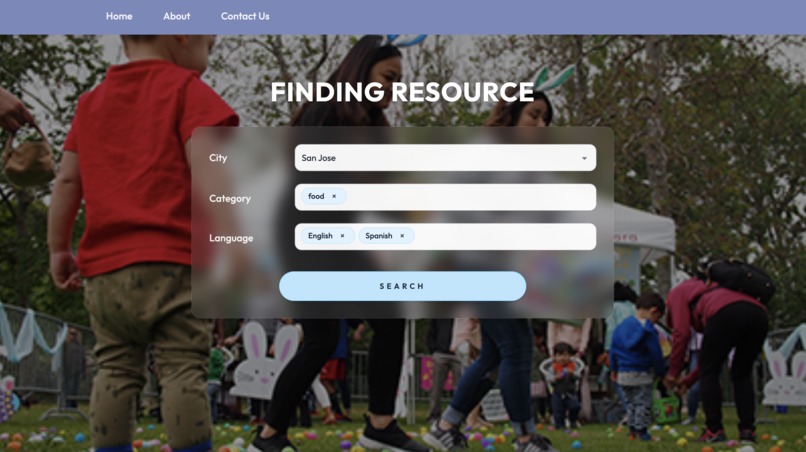
Search Page
-
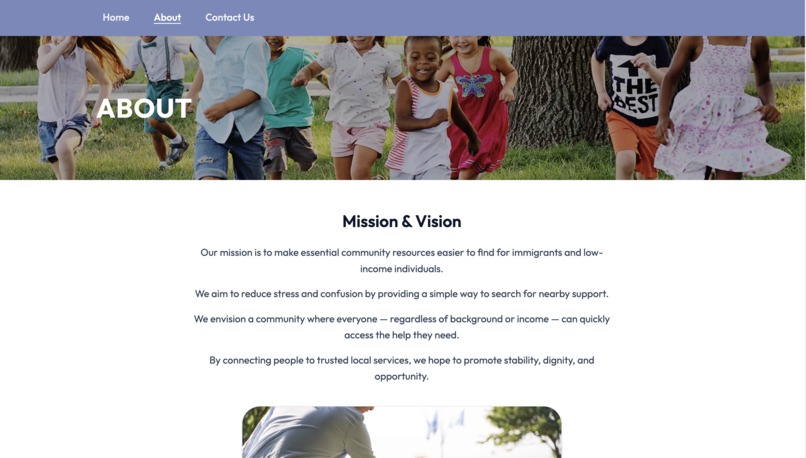
About Page (1)
-
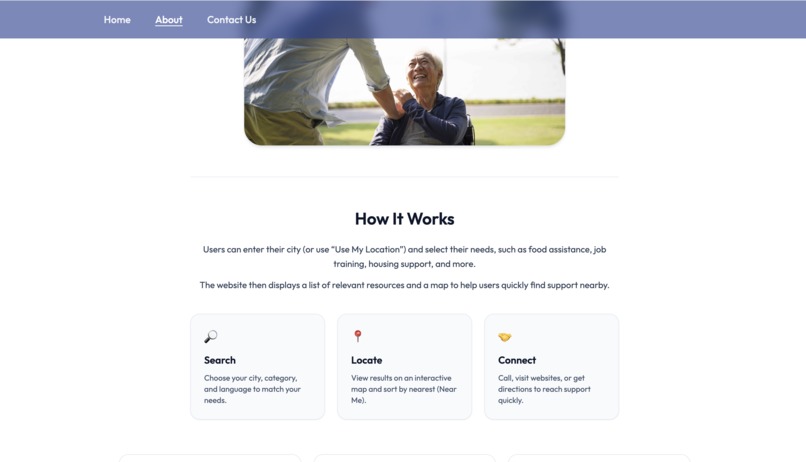
About Page (2)
-
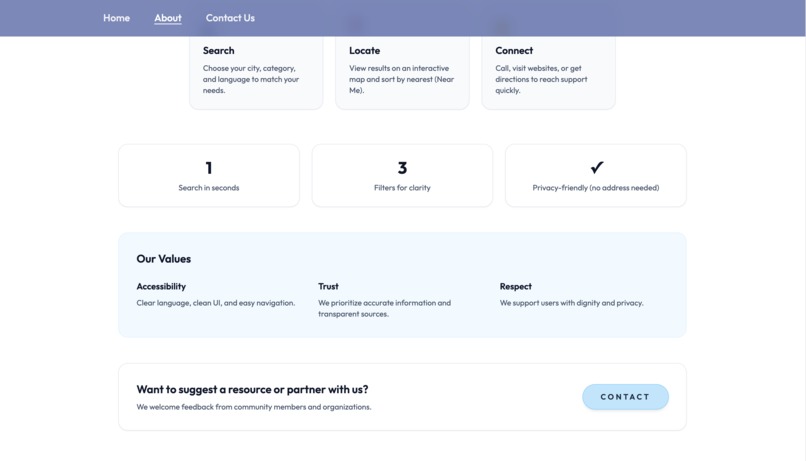
About Page (3)
-
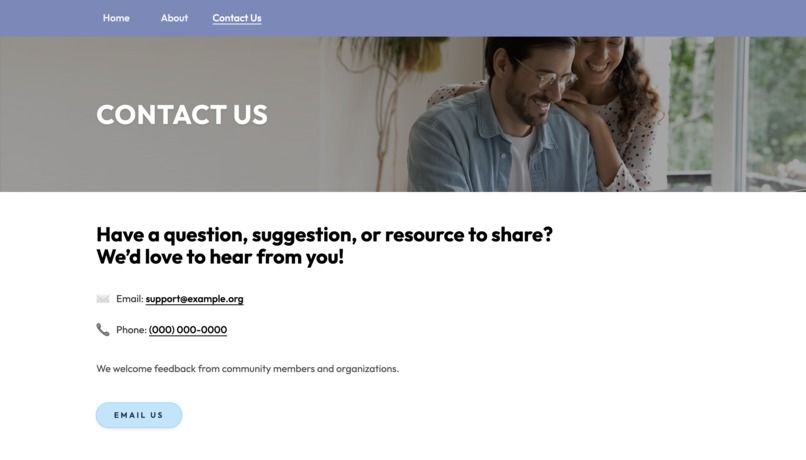
Contact Us Page
-
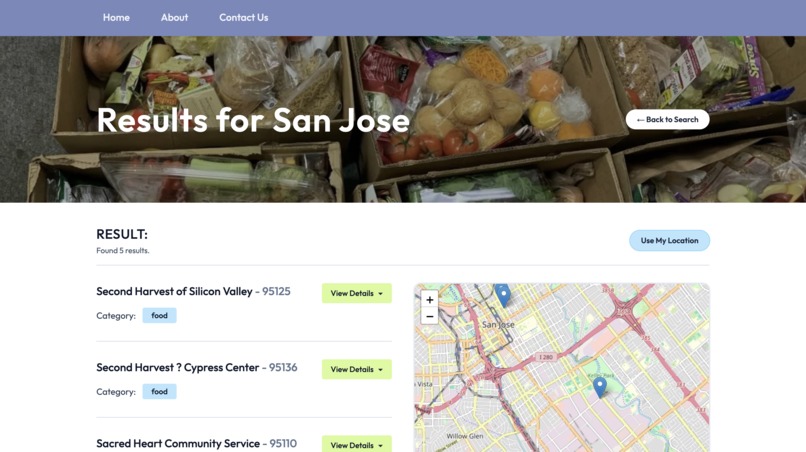
Result Page (1)
-
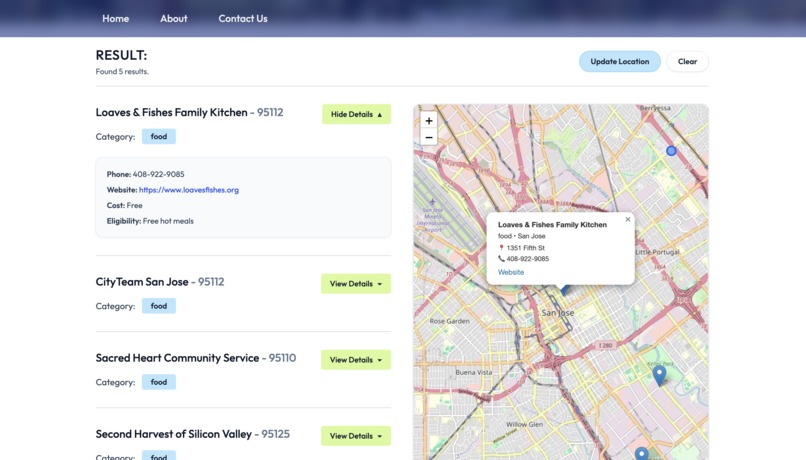
Result Page (2)
-
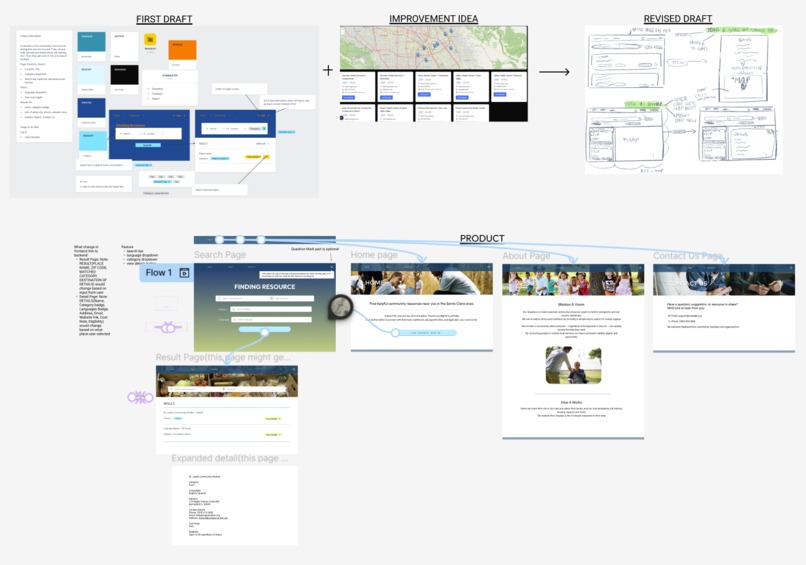
Figma Board
Inspiration
As students and community members, we recognized how stressful it can be to find reliable, local help quickly, especially for immigrants and low-income families. We wanted to build something simple, and supportive. That’s how SCC SupportFindr was born: a platform designed to make support visible, accessible, and closer than people think.
What it does
SCC SupportFindr is a web-based platform that helps users quickly locate essential community resources across Santa Clara County. Users can search by city, flter by category (food, health, shelter, jobs, legal support, etc.), by language, use a “Use My Location” feature to sort resources by distance, view results on an interactive map, click “View Details” to see contact information, cost notes, and eligibility requirements, highlight and navigate to the corresponding map marker
How we built it
We built SCC SupportFindr using: Next.js, React, TypeScript, Tailwind CSS, Leaflet, a structured CSV dataset of Santa Clara County community resources. The architecture separates search, results, and map components to keep the code modular and maintainable.
Challenges we ran into
One major challenge was synchronizing the resource list and the map. Initially, clicking “View Details” did not interact with the map at all. We had to redesign our state management to track selected resources, open and close map popups, ensure sorting didn’t break resource indexing, handle marker references in React
Accomplishments that we're proud of
We’re especially proud of building a fully interactive map-list experience, distance-based sorting with real geolocation, designing a clean, accessible UI, handling edge cases like denied location permissions without breaking functionality, deploying a production-ready version on Vercel. Most importantly, we transformed scattered public resource data into something intuitive.
What we learned
Through this project, we learned how to properly structure client and server components in Next.js, manage complex UI state across components, work with geolocation APIs and map libraries, debug deployment and prerendering issues. The importance of designing for accessibility, not just functionality. We also learned that building technology for real people requires empathy as much as technical skill.
What's next for SCC SupportFindr
Our next steps include expanding the resource database across more counties, implementing real-time data validation with community partners, adding multilingual UI support, integrating directions and transportation routes, creating a mobile-optimized experience


Log in or sign up for Devpost to join the conversation.