A modular “MIDI → retro sound chip” platform in CircuitPython. Primary target: LOLIN ESP32-S2 Mini as a USB MIDI device.

The goal is a clean architecture that can run multiple chip emulators side-by-side (SN76489 first), with shared clock sync and strict pin/resource management.

- Functional Spec: FS-1.0.3 ✅
- Technical Design: TD-1.0.2 ✅
- Current release: v0.1.2 (platform skeleton + test mode + logging + MIDI clock spike)
Receives:
- Note On / Note Off
- Control Change
- MIDI Clock + Start / Stop / Continue
Routing rule:
- 1 MIDI channel = 1 chip instance
- CC123: All Notes Off (per channel/instance)
- CC120: All Sound Off (panic/mute per channel/instance)
- Transport
Stopusesstop_behavior:all_notes_offholdconfigurable_per_instance(per-instance override)
config.jsonis polled and applied at runtime- Atomic apply pattern: load → validate → plan → claim pins → apply → commit
- On failure: rollback to previous config (no crash)
A minimal “is PWM alive on this pin?” test you can measure on a scope:
test_mode.mode="square"(DEFAULT): lowest CPU, easiest to validatetest_mode.mode="sine": PWM duty modulation with LUT (more CPU)
Frequency selection:
freq_hzoverrides everything- otherwise parse
notelikeC2,F#3,Bb1 - parsing failure falls back to
C2and logs a warning
Defaults & clamps (per FS-1.0.3 / TD-1.0.2):
sample_rate_hz(sine only): default 8000, clamp 4000..20000pwm_carrier_hz(sine only): default 62500, clamp 20000..100000duration_s: 0 = continuous, >0 auto stop + pin release
- Levels:
OFF,LIGHT,VERBOSE - Console logging + optional file logging
- File logging is capped (
max_bytes, default ~30KB) via tail-truncate

-
AudioService
Main scheduler loop; orchestrates MIDI, clock, chips, test mode, metrics. -
MidiService
Receives USB MIDI messages (notes/CC/clock/transport). -
ClockService
Tracks MIDI clock, provides BPM estimate and run state. -
ChipManager
Instantiates chip instances from JSON, routes MIDI by channel, applies stop behavior, enforces exclusive pin claims. -
PinAllocator
Owns pin claiming and prevents collisions across instances and test mode. -
ChipInstance interface
Common contract for chip emulators (SN76489 now, others later).
- Flash CircuitPython 10 to the board.
- Copy the project to
CIRCUITPY(keep folder structure). - Ensure
adafruit_midiis present in/lib. - Edit
config.jsonand enable test mode:
"test_mode": { "enabled": true, "pin": "A01", "mode": "square", "note": "C2", "duration_s": 0 }5. Reboot the board. 
6. Verify the PWM signal on the chosen pin with an oscilloscope. 7. Optional: route the pin through a small amplifier module to headphones for a rough audible check. 
⸻
Configuration overview
Key fields in config.json:
• stop_behavior • logging (level + file cap) • test_mode (PWM test signal) • instances[] (chip instances: type, midi_channel, pins, stop_behavior override) See:
• docs/FS-1.0.3.md • docs/TD-1.0.2.md • docs/JSON-SCHEMA.md ⸻
We work in explicit cycles: 1. Functional Spec (FS) 2. FS Review 3. FS Refinement 4. Decision: proceed to Technical Design (TD) or iterate
Same pattern applies for TD → code skeleton → tested release.
⸻
Versioning & traceability
• FS versions: FS-X.Y.Z • TD versions: TD-X.Y.Z • Code releases: vX.Y.Z Each approved FS/TD is traceable to Git commits/tags. Each release gets Markdown release notes under docs/releases/.
⸻
Lead/Owner: Michiel Erasmus
This project is learning-driven and builds on the wider community: • YouTube tutorials on MIDI, PWM audio, and chip emulation concepts • Open-source projects and emulator authors on GitHub
⸻
• v0.2.x: SN76489 dual-mono PWM audio-out (first end-to-end audible output) • v0.3.x: Web UI (status + config editor) • v0.4.x: MIDI file playback via web UI • Future: additional chip emulators (SID/6589 style, OPL2/YM3812 style) 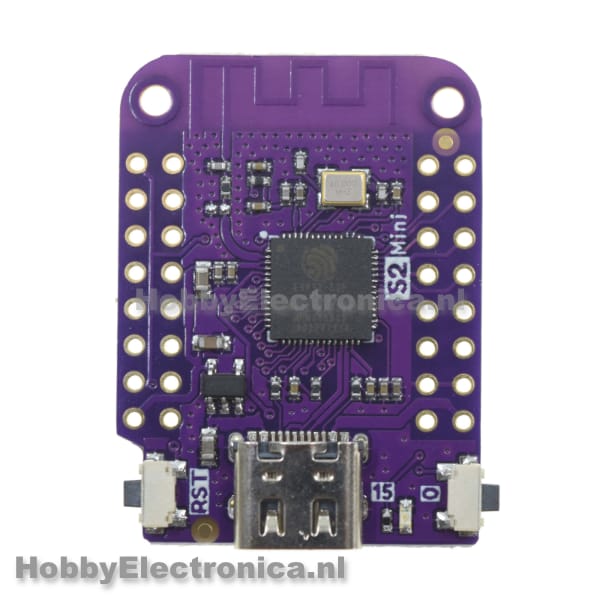
⸻
### Snelle commands om dit te commit ```bash cd "/Volumes/data1/michiele/Programmering/Python/python_normaal/uitprobeersels/Muziek_algemeen/midi_chip_platform" nano README.md # plak die nuwe teks git add README.md git commit -m "docs: refresh README (FS-1.0.3 / TD-1.0.2 / v0.1.2 overview)" git pushSê vir my net hierdie 4 dinge (kort antwoorde is genoeg): 1. Wil jy die README hoofsaaklik Engels hou, of Afrikaans? 2. Moet liewer neutraal (“engineering workflow”)? 3. Watter 3–10 YouTube links en 3–10 GitHub repos moet ek in “Credits” hard insit? 4. Wil jy License nou op MIT/Apache-2.0 sit, of nog TBD?
Daarna vra ek jou: wil jy volgende stap doen as (a) v0.2 SN76489 audio-out, of (b) ’n FS iterasie vir web UI / MIDI-file playback.