This is the Nerves software for the Goatmire EU 2025 digital name badge.


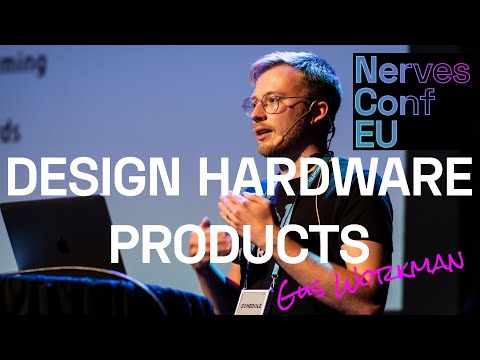
My conference talk about the badges is available on YouTube:
If you already have a badge, you can get started by following these instructions to load a firmware on your device. For those without the hardware, you can still join in on the fun by using the simulator to create new screens. See more information about the simulator below
If you have a device, it should already have usable firmware on it. That means, you should be able to connect to it via SSH over a USB connection.
To test if this is the case, do the following:
- Plug a USB-C cable from your computer to the badge
- Turn off the device via the slide switch
- Ensure the red or green LED immediately to the left of the USB port is on
- Turn on the device via the slide switch
- Wait for the device to boot
- On your machine, run
ssh wisteria.local- The default SSH password is
nerves - If you are having trouble connecting to the device, please check your network settings and verify that a USB Ethernet device is attached to your machine.
- If the issue still persists, reboot the device
- The default SSH password is
Once you are connected, you can upload the latest firmware .fw file from the releases section of this page. To upload, run:
cat path/to/release.fw | ssh -s wisteria.local fwup
The device will automatically reboot after uploading the firmware file
The getting started guide above shows how to load pre-built firmware on the device. For advanced topics, please see the guides below:
Building firmware from source requires several dependencies:
Recommended way to install Erlang/Elixir is with mise. After installing mise, install the required versions of Erlang and Elixir by running mise install.
Nerves is a framework for building embedded systems with Elixir. It provides a set of tools and libraries to help you develop, build, and deploy your firmware. To install Nerves, follow the instructions in the docs:
https://hexdocs.pm/nerves/installation.html
Thanks to Matthias Männich for contributing the simulator! Here's what it looks like:

To run the simulator, use the following command:
MIX_TARGET=host iex -S mixThis will start a Phoenix LiveView on localhost:4000. It should automatically open your browser page on launch.
Tip
When changing code while using the simulator, you can type recompile at the IEx prompt. The running code will be updated (you may need to navigate to a different screen or refresh the browser page to see the changes).
Warning
If you build for the simulator, then build a firmware for your device, you may see an error message like the following:
scrub-otp-release.sh: ERROR: Unexpected executable format for '/Users/gus/Projects/elixir/name_badge/_build/trellis_dev/_nerves-tmp/rootfs_overlay/srv/erlang/lib/typst-0.1.7/priv/native/libtypst_nif-v0.1.7-nif-2.15-x86_64-apple-darwin.so' Got: file:Mach-O 64-bit dynamically linked shared library x86_64 Expecting: readelf:ARM;0x5000400, Version5 EABI, hard-float ABI This file was compiled for the host or a different target and probably will not work. To fix the error, run:
mix deps.clean dither mix deps.clean typst MIX_TARGET=trellis mix deps.getFrom here you can compile a firmware and upload as normal.
The name badge runs snake! Here's a preview:

Thanks Peter Ullrich for the contribution!
The badge can display your Google Calendar events on an e-ink screen with three views: Day, Week, and Month (7x6 grid). Events are fetched from a read-only iCal secret address.
- Go to Google Calendar on your computer.
- Click Settings (gear icon) > Settings for my calendars.
- Select the calendar you want to sync.
- Click Integrate calendar.
- Copy the Secret address in iCal format.
Warning
This URL grants read-only access to your calendar. Treat it like a password and do not commit it to version control.
Set the CALENDAR_URL environment variable before building the firmware:
CALENDAR_URL="https://calendar.google.com/calendar/ical/YOUR_SECRET_ADDRESS/basic.ics" \ MIX_TARGET=trellis mix firmwareOr for the simulator:
CALENDAR_URL="https://calendar.google.com/calendar/ical/YOUR_SECRET_ADDRESS/basic.ics" \ MIX_TARGET=host iex -S mixYou can also customize the refresh interval (default is 5 minutes / 300000 ms):
CALENDAR_URL="https://..." CALENDAR_REFRESH_INTERVAL="600000" MIX_TARGET=trellis mix firmwareThe calendar feature is entirely disabled. The "Calendar" option will not appear in the main menu, the CalendarService process will not start, and the badge will function normally without any calendar-related overhead.
| Button | Action |
|---|---|
| A (single press) | Next day / week / month (depending on current view) |
| B (single press) | Previous day / week / month (depending on current view) |
| A (long press) | Cycle views: Day -> Week -> Month |
| B (long press) | Navigate back to main menu |
The repo for the hardware design can be found here. This includes schematics, layout and case design files.
The hardware was custom-made for Goatmire 2025, and there was only a limited supply of devices. It is technically possible to build your own from the resources in this repository. However, I do not recommend it as some of the components (e-ink display, wifi module, etc) were custom ordered from the manufacturer and will be difficult to obtain in low quantities.
I am working on a new revision of the hardware design with some nice upgrades - a 5.8" display, low power mode, additional sensors, and more. It will hopefully be available for purchase in early 2026. Stay tuned for updates!
If you have an interest in using these devices at a wide scale at an event, please get in touch - I would consider producing more units or designing custom versions of the hardware for the right event.
Special thanks to Lars Wikman for encouraging this crazy idea at Goatmire 2025, finding a sponsor to cover the cost of the hardware, brainstorming badge features with me, and so much more.
Another huge shout out to Frank Hunleth, Benjamin Milde, and Flora and Tom Petterson for helping me assemble the badges at midnight, less than 8 hours before the Goatmire conference started.
This is a project by Protolux Electronics, the small Nerves-focused consultancy that I run. We do custom hardware and software for IoT, industrial automation, and more. If you have a project in mind, let's get in touch!