


Dypsis
| Dypsis | |
|---|---|
 | |
| Dypsis rivularis | |
Scientific classification  | |
| Kingdom: | Plantae |
| Clade: | Tracheophytes |
| Clade: | Angiosperms |
| Clade: | Monocots |
| Clade: | Commelinids |
| Order: | Arecales |
| Family: | Arecaceae |
| Subfamily: | Arecoideae |
| Tribe: | Areceae |
| Subtribe: | Dypsidinae |
| Genus: | Dypsis Noronha ex Mart.[1] |
| Synonyms[1] | |
| |
Dypsis is a genus of flowering plants in the family Arecaceae. They are slender, evergreen palms with yellow flowers carried in panicles amongst the pinnate leaves. Many Dypsis species have aerial branching (above the main trunk), a rare growth habit among palms.[2] Some have marcescent leaves that remain attached after death and trap litter for nutrients.[3] Several species previously placed here have been returned to the restored genera Chrysalidocarpus (including the type species Chrysalidocarpus lutescens) and Vonitra.
Etymology
[edit]The etymology is obscure but may be related to the Greek dypto 'I dive' or dyptes 'diver'.[4] The species are native to Tanzania, Madagascar, and various islands in the Indian Ocean (Mauritius and Comoros). A few are naturalized in other regions, especially in the Caribbean.[5]
Species
[edit]As of February 2026[update], Plants of the World Online accepts the following 107 species:[1]
- Dypsis acaulis J.Dransf.
- Dypsis ambilaensis J.Dransf.
- Dypsis andapae Beentje
- Dypsis andilamenensis Rakotoarin. & J.Dransf.
- Dypsis angusta Jum.
- Dypsis angustifolia (H.Perrier) Beentje & J.Dransf.
- Dypsis anjae Rakotoarin. & J.Dransf.
- Dypsis aquatilis Beentje
- Dypsis aurantiaca Eiserhardt & Rakotoarin.
- Dypsis beentjei J.Dransf.
- Dypsis bernieriana (Baill.) Beentje & J.Dransf.
- Dypsis betamponensis (Jum.) Beentje & J.Dransf.
- Dypsis betsimisarakae Rakotoarin. & J.Dransf.
- Dypsis boiviniana Baill.
- Dypsis bonsai Beentje
- Dypsis bosseri J.Dransf.
- Dypsis brevicaulis (Guillaumet) Beentje & J.Dransf.
- Dypsis brittiana Rakotoarin.
- Dypsis catatiana (Baill.) Beentje & J.Dransf.
- Dypsis caudata Beentje
- Dypsis commersoniana (Baill.) Beentje & J.Dransf.
- Dypsis concinna Baker
- Dypsis confusa Beentje
- Dypsis cookei J.Dransf.
- Dypsis coriacea Beentje
- Dypsis corniculata (Becc.) Beentje & J.Dransf.
- Dypsis coursii Beentje
- Dypsis culminis Rakotoarin. & J.Dransf.
- Dypsis curtisii Baker
- Dypsis delicatula Britt & J.Dransf.
- Dypsis digitata (Becc.) Beentje & J.Dransf.
- Dypsis dracaenoides Rakotoarin. & J.Dransf.
- Dypsis elegans Beentje
- Dypsis eriostachys J.Dransf.
- Dypsis faneva Beentje
- Dypsis fanjana Beentje
- Dypsis fasciculata Jum.
- Dypsis forficifolia Noronha ex Mart.
- Dypsis furcata J.Dransf.
- Dypsis gautieri Rakotoarin. & J.Dransf.
- Dypsis glabrescens (Becc.) Becc.
- Dypsis gronophyllum Rakotoarin. & J.Dransf.
- Dypsis henrici J.Dransf., Beentje & Govaerts
- Dypsis heterophylla Baker
- Dypsis hiarakae Beentje
- Dypsis hildebrandtii (Baill.) Becc.
- Dypsis humbertii H.Perrier
- Dypsis humilis M.S.Trudgen, Rakotoarin. & W.J.Baker
- Dypsis integra (Jum.) Beentje & J.Dransf.
- Dypsis intermedia Beentje
- Dypsis interrupta J.Dransf.
- Dypsis jeremiei Rakotoarin. & J.Dransf.
- Dypsis jumelleana Beentje & J.Dransf.
- Dypsis laevis J.Dransf.
- Dypsis lantzeana Baill.
- Dypsis lanuginosa J.Dransf.
- Dypsis lilacina J.Dransf. & Rakotoarin.
- Dypsis linearis Jum.
- Dypsis lokohoensis J.Dransf.
- Dypsis louvelii Jum. & H.Perrier
- Dypsis lucens (Jum.) Beentje & J.Dransf.
- Dypsis lutea (Jum.) Beentje & J.Dransf.
- Dypsis mahia Beentje
- Dypsis makirae Rakotoarin. & Britt
- Dypsis mangorensis (Jum.) Beentje & J.Dransf.
- Dypsis marojejyi Beentje
- Dypsis mcdonaldiana Beentje
- Dypsis metallica Rakotoarin. & J.Dransf.
- Dypsis minuta Beentje
- Dypsis mirabilis J.Dransf.
- Dypsis mocquerysiana (Becc.) Becc.
- Dypsis monostachya Jum.
- Dypsis montana (Jum.) Beentje & J.Dransf.
- Dypsis nodifera Mart.
- Dypsis occidentalis (Jum.) Beentje & J.Dransf.
- Dypsis pachyramea J.Dransf.
- Dypsis paludosa J.Dransf.
- Dypsis pervillei (Baill.) Beentje & J.Dransf.
- Dypsis pinnatifrons Mart.
- Dypsis plurisecta Jum.
- Dypsis poivreana (Baill.) Beentje & J.Dransf.
- Dypsis procera Jum.
- Dypsis procumbens (Jum. & H.Perrier) J.Dransf., Beentje & Govaerts
- Dypsis pulchella J.Dransf.
- Dypsis pustulata J.Dransf. & Rakotoarin.
- Dypsis rakotonasoloi Rakotoarin.
- Dypsis ramentacea J.Dransf.
- Dypsis reflexa Rakotoarin. & J.Dransf.
- Dypsis remotiflora J.Dransf.
- Dypsis rivularis (Jum. & H.Perrier) Beentje & J.Dransf.
- Dypsis rosea J.Dransf., Hodel & Marcus
- Dypsis sahanofensis (Jum. & H.Perrier) Beentje & J.Dransf.
- Dypsis sancta Rakotoarin. & J.Dransf.
- Dypsis scandens J.Dransf.
- Dypsis schatzii Beentje
- Dypsis scottiana (Becc.) Beentje & J.Dransf.
- Dypsis simianensis (Jum.) Beentje & J.Dransf.
- Dypsis singularis Beentje
- Dypsis soanieranae Beentje
- Dypsis spicata J.Dransf.
- Dypsis subacaulis J.Dransf. & Rakotoarin.
- Dypsis tenuissima Beentje
- Dypsis thermarum J.Dransf.
- Dypsis thiryana (Becc.) Beentje & J.Dransf.
- Dypsis trapezoidea J.Dransf.
- Dypsis turkii J.Dransf.
- Dypsis viridis Jum.
Moved to restored genus Chrysalidocarpus
[edit]- Dypsis ambanjae
- Dypsis ambositrae
- Dypsis ampasindavae (Chrysalidocarpus loucoubensis)
- Dypsis andrianatonga
- Dypsis ankirindro
- Dypsis arenarum
- Dypsis baronii
- Dypsis basilonga
- Dypsis bejofo
- Dypsis canaliculata
- Dypsis canescens
- Dypsis carlsmithii
- Dypsis ceracea
- Dypsis decaryi
- Dypsis decipiens
- Dypsis heteromorpha
- Dypsis hovomantsina
- Dypsis ifanadianae
- Dypsis lanceolata
- Dypsis ligulata
- Dypsis lutescens
- Dypsis nauseosa
- Dypsis madagascariensis
- Dypsis malcomberi
- Dypsis mananjarensis
- Dypsis pembana
- Dypsis pilulifera
- Dypsis prestoniana
- Dypsis psammophila
- Dypsis saintelucei
- Dypsis serpentina
- Dypsis onilahensis
- Dypsis oreophila
- Dypsis oropedionis
- Dypsis ovobontsira
- Dypsis tsaratananensis
- Dypsis tsaravoasira
- Dypsis antanambensis
- Dypsis crinita
- Dypsis dransfieldii
- Dypsis nossibensis
- Dypsis perrieri
- Dypsis utilis
Gallery
[edit]Accepted species
[edit]


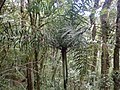
Moved to Chrysalidocarpus
[edit].jpg/120px-Starr-120522-6339-Dypsis_ambositrae-habit-Iao_Tropical_Gardens_of_Maui-Maui_(25117180316).jpg)


.jpg/120px-Starr-110330-3778-Chrysalidocarpus_lutescens-habit-Garden_of_Eden_Keanae-Maui_(24987407001).jpg)
.jpg/120px-Starr-110330-4172-Dypsis_madagascariensis-habit-Garden_of_Eden_Keanae-Maui_(24963191872).jpg)


Moved to Vonitra
[edit]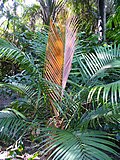

References
[edit]- ^ a b c "Dypsis Noronha ex Mart". Plants of the World Online. Royal Botanic Gardens, Kew. 2026. Retrieved 26 February 2026.
- ^ Johnson, Dennis V. (2010). "Introduction". Tropical palms. 2010 revision. FAO Technical Papers. Rome: Food and Agriculture Organization of the United Nations (FAO). p. 2. ISBN 978-92-5-106742-0.
- ^ Bramwell, David; Caujapé-Castells, Juli (2011-07-21). The Biology of Island Floras. Cambridge University Press. p. 189. ISBN 978-1-139-49780-0.
- ^ Quattrocchi, Umberto (1999). CRC World Dictionary of Plant Names. CRC Press. p. 45. ISBN 978-0-8493-2675-2.
- ^ Kew World Checklist of Selected Plant Families
