Ukrainian kamikaze unmanned aircraft operators have in the past three months intensified their country’s bombardment of Russia to hit targets at a record pace with denser swarms, using robot aircraft carrying bigger warheads against air defenses increasingly less capable of stopping the drones.
Ukrainian drones carried out 40 major attacks against targets in a 50-250 kilometer (31-155 miles) range envelope distance from the front lines in the first half of March, a study published on Wednesday by the Ukrainian defense research group Oboronka said. That strike rate is about 50% more intense than the record count of Ukrainian drone strikes against mid- and long-range targets in Russia for the entire war: 57 attacks in December 2025.
Kyiv Post tracking of Ukrainian drone attacks against all Russian targets at all ranges (not including frontline, tactical drone attacks) likewise showed Ukrainian drone attacks against Russia are accelerating. On average, per those records, each day in November and December 2025, Ukraine carried out on average two long-range drone strikes against targets inside Russian territory, with some drone raiders flying thousands of kilometers to hit targets as far away as the Caspian Sea and western Siberia.
In January to March 2026, the pace of attacks had effectively doubled to around four separate targets attacked every night, and what was more, the number of unmanned aerial vehicles (UAVs) crossing into Russian airspace had on average more than doubled as well: from 50-70 unmanned aircraft in the last months of 2025 to 100-200 air-raiding drones in the past six weeks.

Moldova Loses Key Power Link With Europe After Russian Strikes in Ukraine
From Feb. 1 to March 18, 2026, according to Kyiv Post records, Ukrainian forces launched at least 110 drone strike packages against individual Russian targets ranging from energy infrastructure to military units, and from ammunition dumps to factories producing military electronics, explosives, and munitions.
Perhaps tellingly, during March 2026, Ukraine’s drone bombardment campaign of Russia delivered another first: For the first time in the war, in rough terms, the number of long-range drones launched by Russia at Ukraine was on par, and on some nights even less, than the number of long-range drones Ukraine launched at targets in Russia.
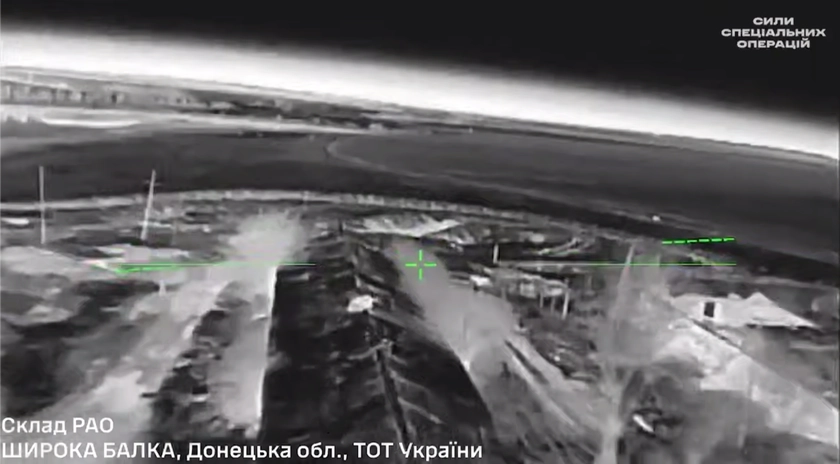
Observers have pointed to a campaign by Ukraine’s drone forces to hunt down and destroy Russian air defense systems capable of intercepting drones, as a big factor in Kyiv’s ability to hit more targets with larger numbers of drones. Although some attacks have been opportunistic, many take-downs of Russian surface-to-air missile and guns systems, and their radars, have been complex strike operations combining air force manned aircraft, on-the-ground spies, Western satellite intelligence and waves of Ukrainian drones attacking from unexpected directions or attempting to overwhelm defenses with raw numbers.
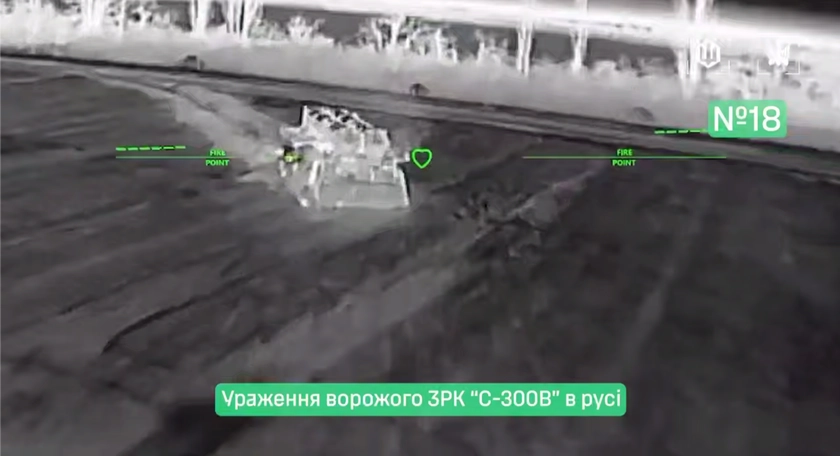
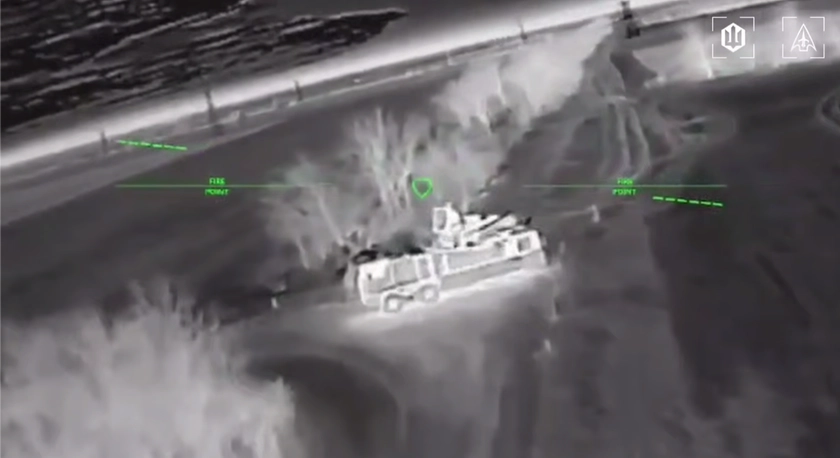
Overnight on March 6-7, Ukrainian Unmanned Systems Forces (USF) teams, in one such attack, employed FP-2 drones armed with enhanced 100+ kilogram warheads to destroy four Russian systems in one night across occupied Zaporizhzhia and Kherson: including three medium-range missile launchers (identified in the USF video as Buk, Tor and S-300V systems) and a single Pantsir-S1 short-range missile-cannon system.
The Panstir SA-1 (NATO: SA-22 “Greyhound”), a mobile truck-mounted point defense system, has become possibly the highest priority target for Ukraine’s anti-air defense effort, notwithstanding that it was designed specifically to detect and destroy low-flying drones, and advertised by Moscow as the world’s best system for that military task.
According to Armed Forces of Ukraine (AFU) statements, picked pilots and technicians from Ukraine’s military Main Intelligence Directorate (HUR), the special forces commando group (SSO), the National Security Agency (SBU), and the USF have all been flying airstrikes targeting Russian air defenses.
In February 2026 the SBU’s Alpha unit stated that its operators in 2025 and early 2026 had neutralized approximately half of Russia’s operational Pantsir stockpile (each system costing $15 to 20 million). Attacks accelerated in February and March 2026 with naval, special operations, and USF forces all claiming their drone raiders had blown up Russian Pantsir systems. Defense analyst James Marinero, commenting to Medium on the attacks in February, called the damage to Russian capacity to stop Ukrainian drones a “fundamental shift” and “strategic masterstroke” that is “reshaping the conflict’s dynamics.”
“The systematic destruction of SAMs and radar stations is happening at such a pace that the Russian military-industrial complex does not have time to compensate for the losses by producing new systems, which is why it is necessary to leave the rear without cover,” the Oboronka article said.
By March, the snowballing pace of Ukrainian drone assaults and the gaps torn in Russian air defenses was being acknowledged by no less than the Kremlin.
Sergei Shoigu, Secretary of Russia’s Security Council, in March 16 comments published by TASS and others spelled out the problem: “The dynamics of development for strikes systems [used by Ukraine], most of all by unmanned aircraft, the sophistication of the tactics of their use are such that not a single region in Russia can consider itself safe… Just recently the Ural region was unreachable by air strikes from the territory of Ukraine, and now that region is firmly in the zone of constant threat.”
Russian State Duma Deputy Andrei Gurulyov (a retired lieutenant general and pro-Kremlin figure often commenting on military matters), in comments reported in mainstream media on March 18, said Russia is “too massive” to fully defend against Ukrainian deep drone strikes and that Russia “lacks the air defense forces needed to create a continuous protective shield…(forces) are stretched too thin.”
Availability of useful numbers of precision-guided kamikaze drones able to reach hundreds of kilometers into Russian territory has allowed Ukraine, in recent months, to set another new record: numbers of drones launched in a single nightly raid.
One of the biggest swarms of the entire war took to the air overnight Wednesday-Thursday with a reported 250-300 kamikaze aircraft penetrating Russian airspace according to Ukrainian military information platforms.
Russia’s Defense Ministery partially confirming the size of the raid with a claim it had shot 238 of the Ukrainian drones down, predominantly over southwestern Russia, the eastern Black Sea and the Sea of Azov and the Russia-occupied Crimea peninsula.
Confirmed targets hit, overnight March 17-18, were a chemical/explosives factory in Russia’s southern Stavropol region, a military electronics factory in the Russia-occupied city of Sevastopol, and a Russian troop base near the occupied city of Mariupol.
The night before that, an aircraft repair plant near Novgorod, a parachute troops base near Pskov, an oil refinery near Krasnodar, and an unidentified target near the occupied city Melitopol were hit by Ukrainian drones.
And another night before that, a Krasnodar region oil storage site near the city Labinsk and an Ural region heavy cargo aircraft repair factory were attacked. Satellite images showed damaged aircraft on the tarmac and maintenance buildings with holes in the roof.
On Thursday, according to Russian news reports and official statements, the Labinsk oil storage reservoirs set on fire by Ukrainian kamikaze drones on Tuesday, were still burning fiercely.
You can also highlight the text and press Ctrl + Enter