Downloaded 78 times
![CAP theorem It is impossible for a distributed computer system to simultaneously provide all three of the following guarantees: • Consistency (all nodes see the same data at the same time) • Availability (every request received by a nonfailing [database] node in the system must result in a [nonerror] response) • Partition tolerance (the system continues to operate despite arbitrary partitioning due to network failures)](https://image.slidesharecdn.com/distributedsystemsintroandcaptheorem16x9-170303102955/75/CAP-theorem-and-distributed-systems-15-2048.jpg)
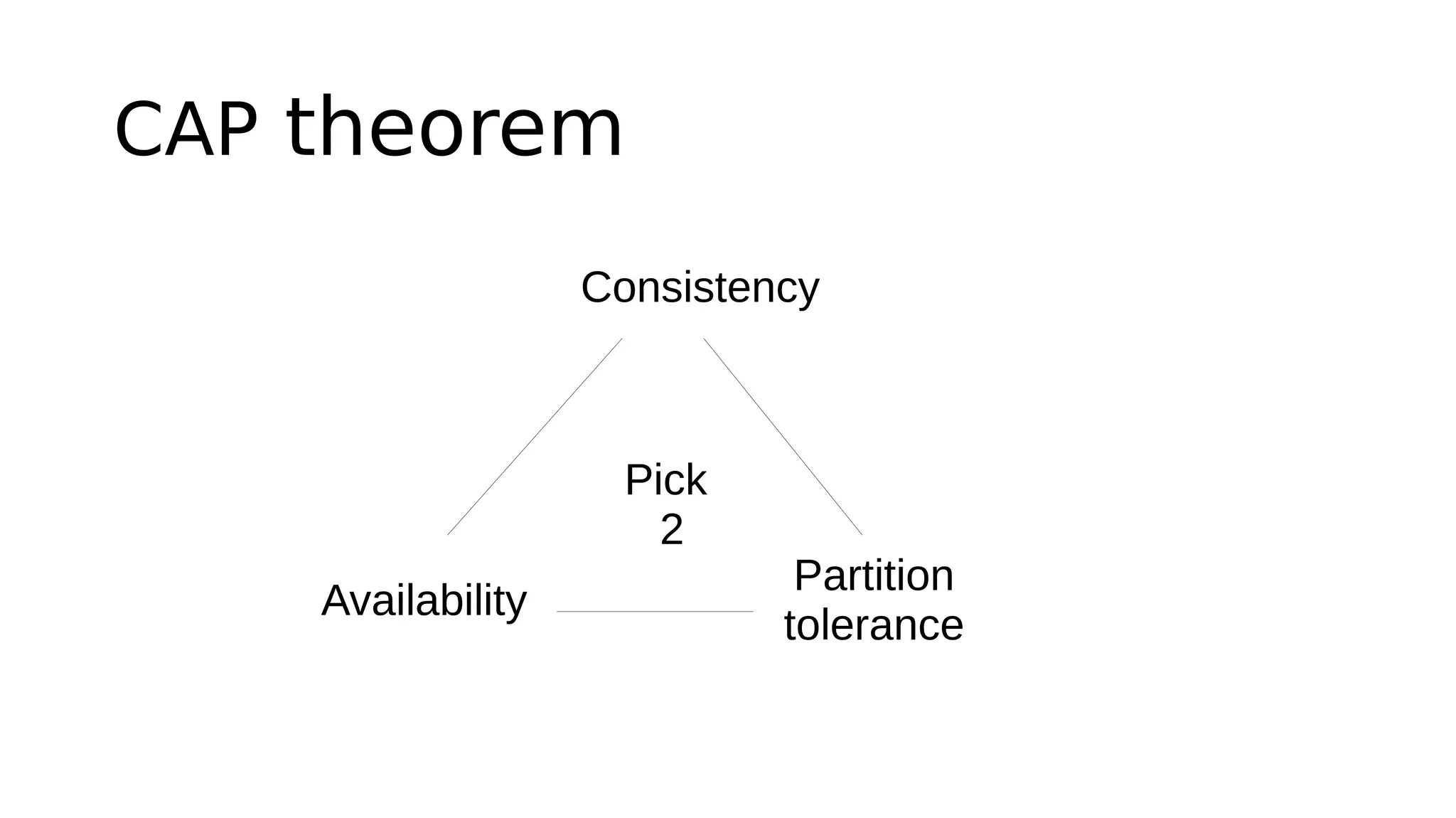
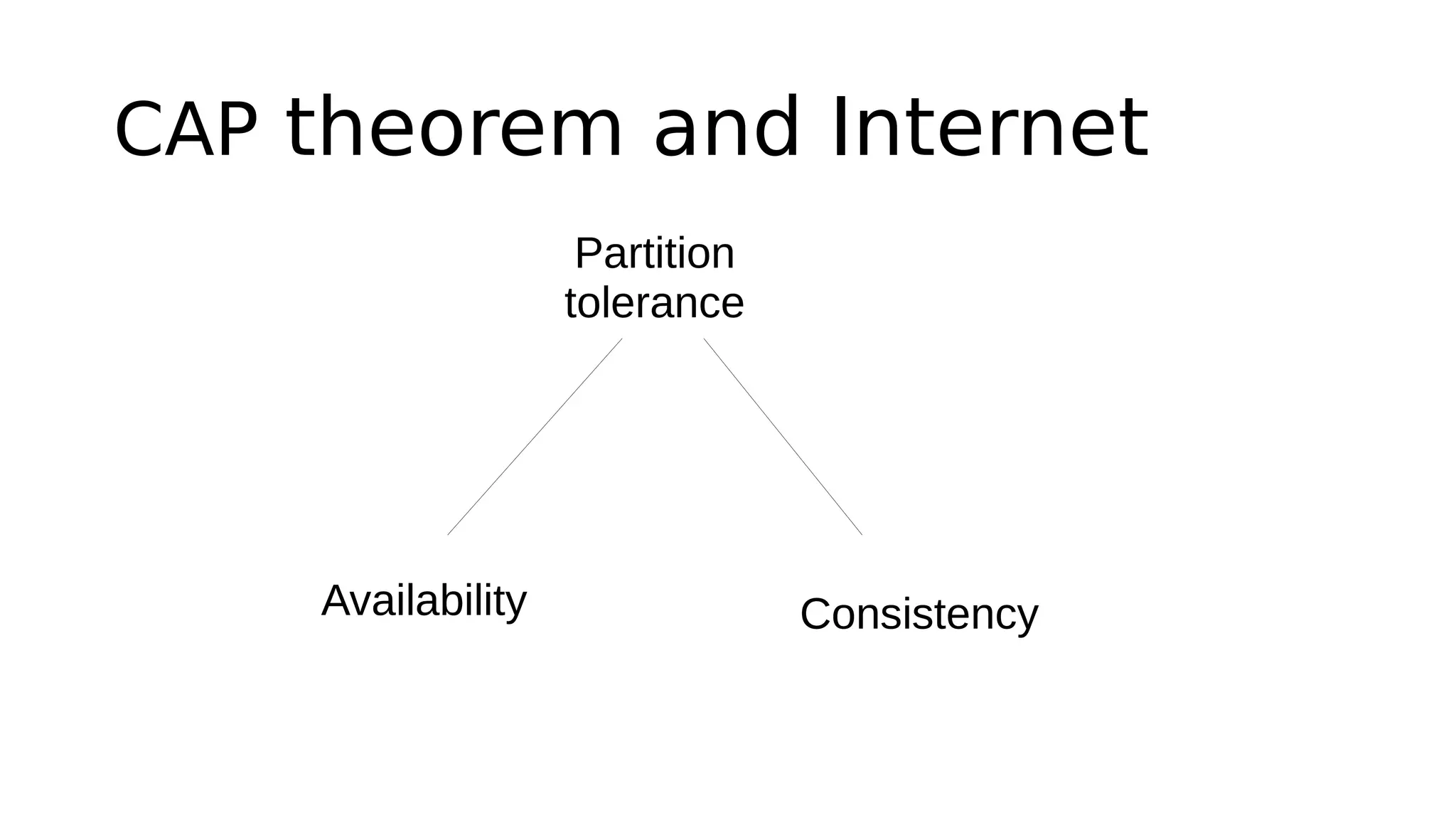
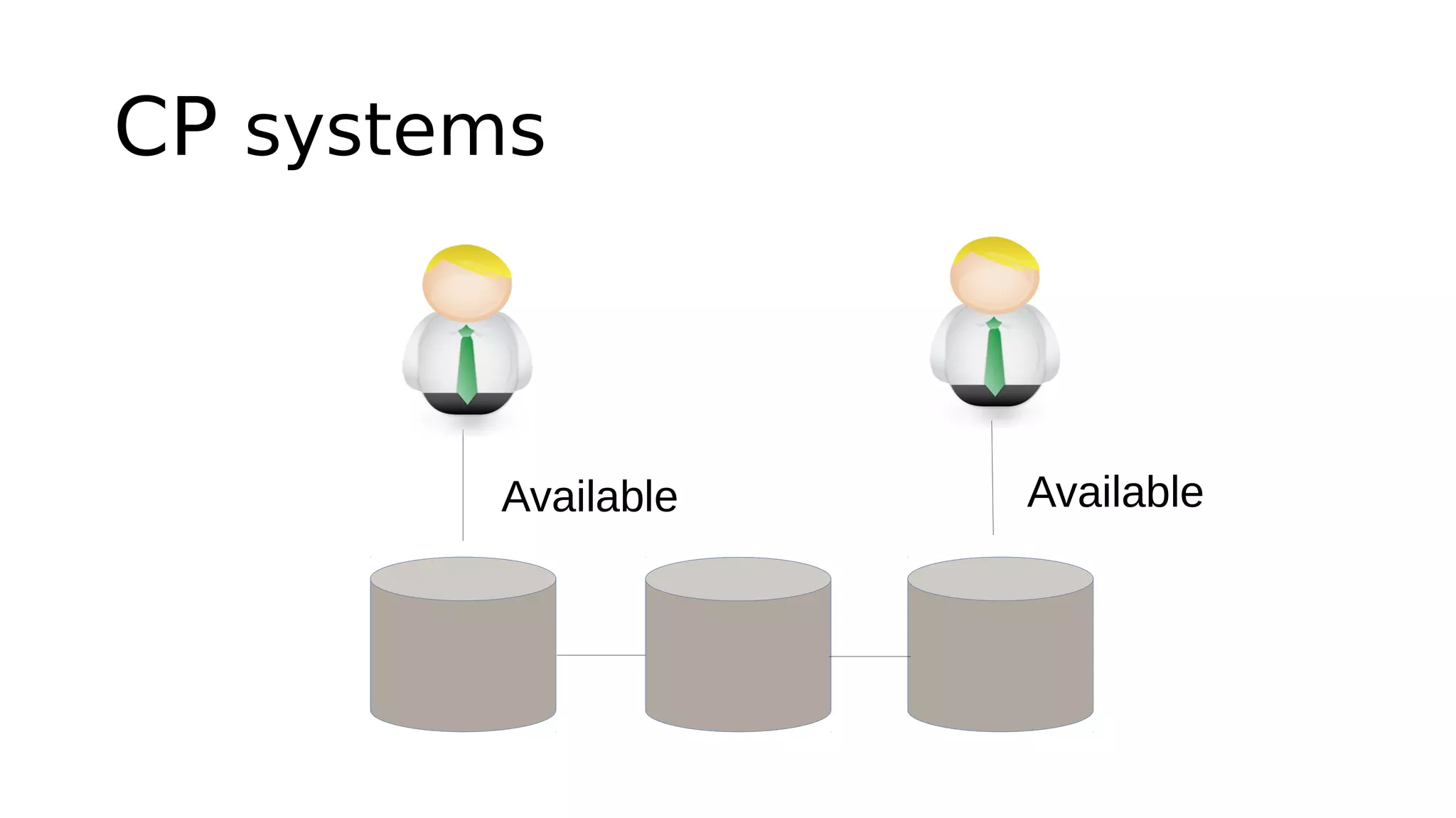
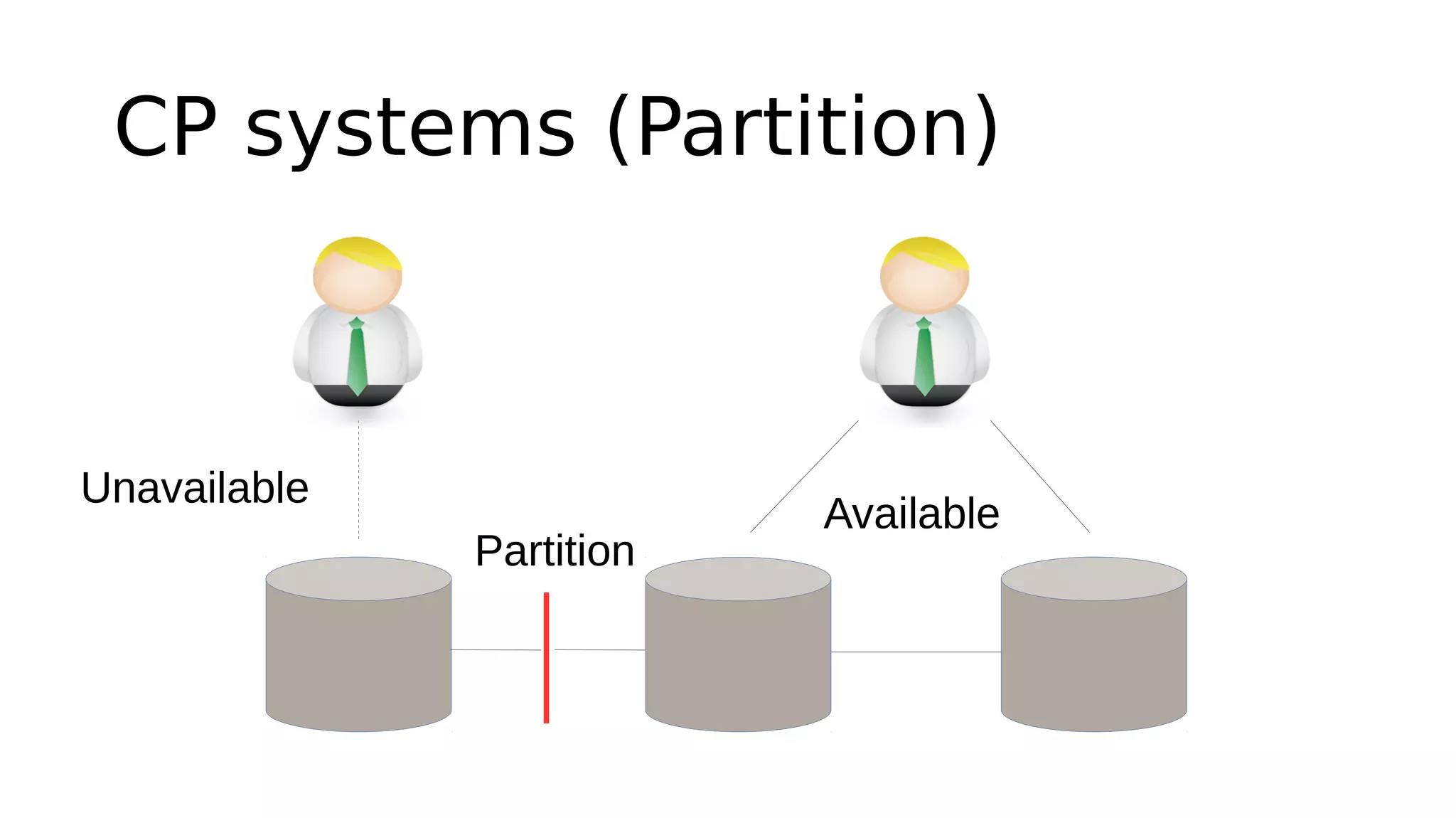
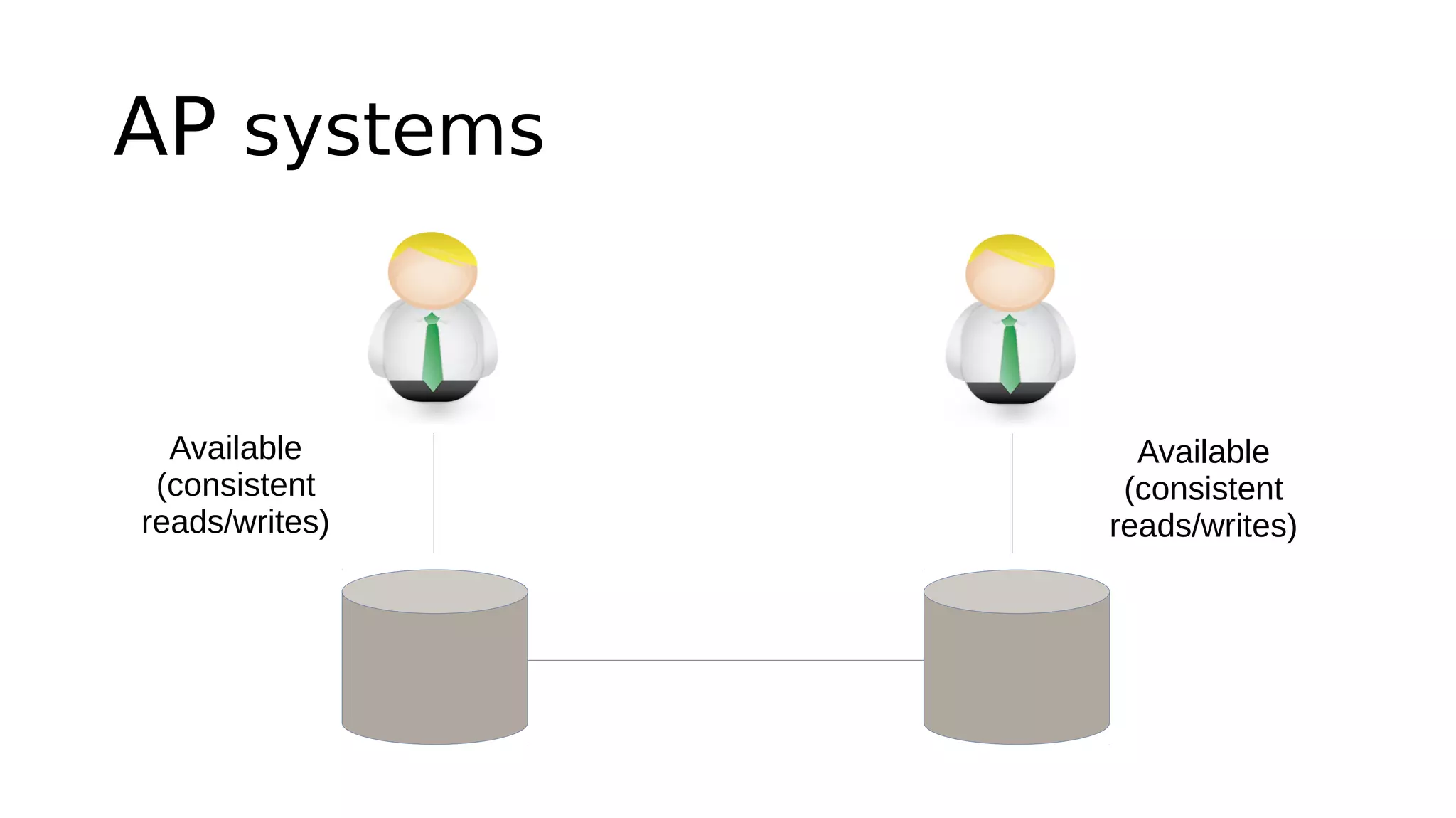
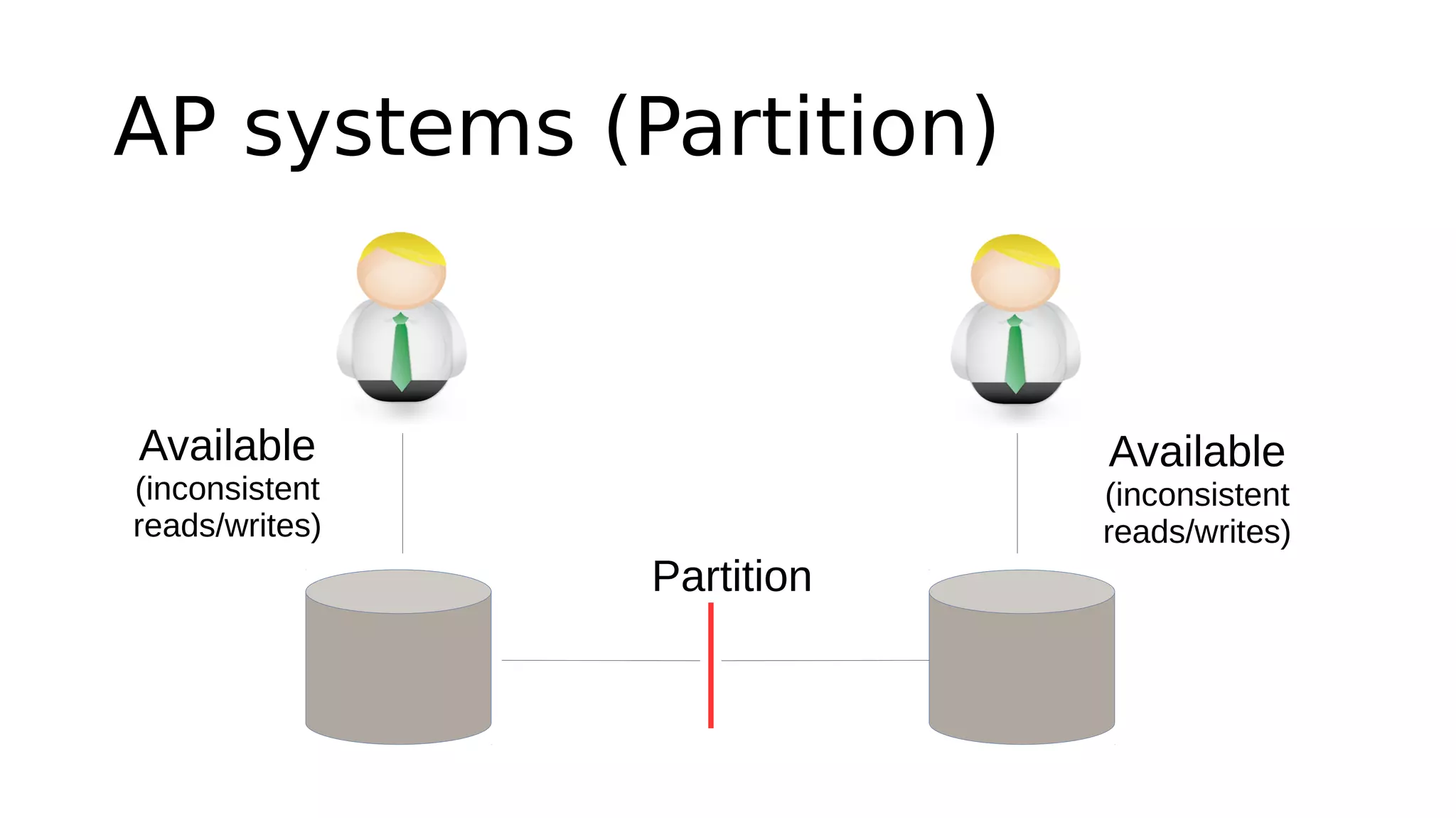
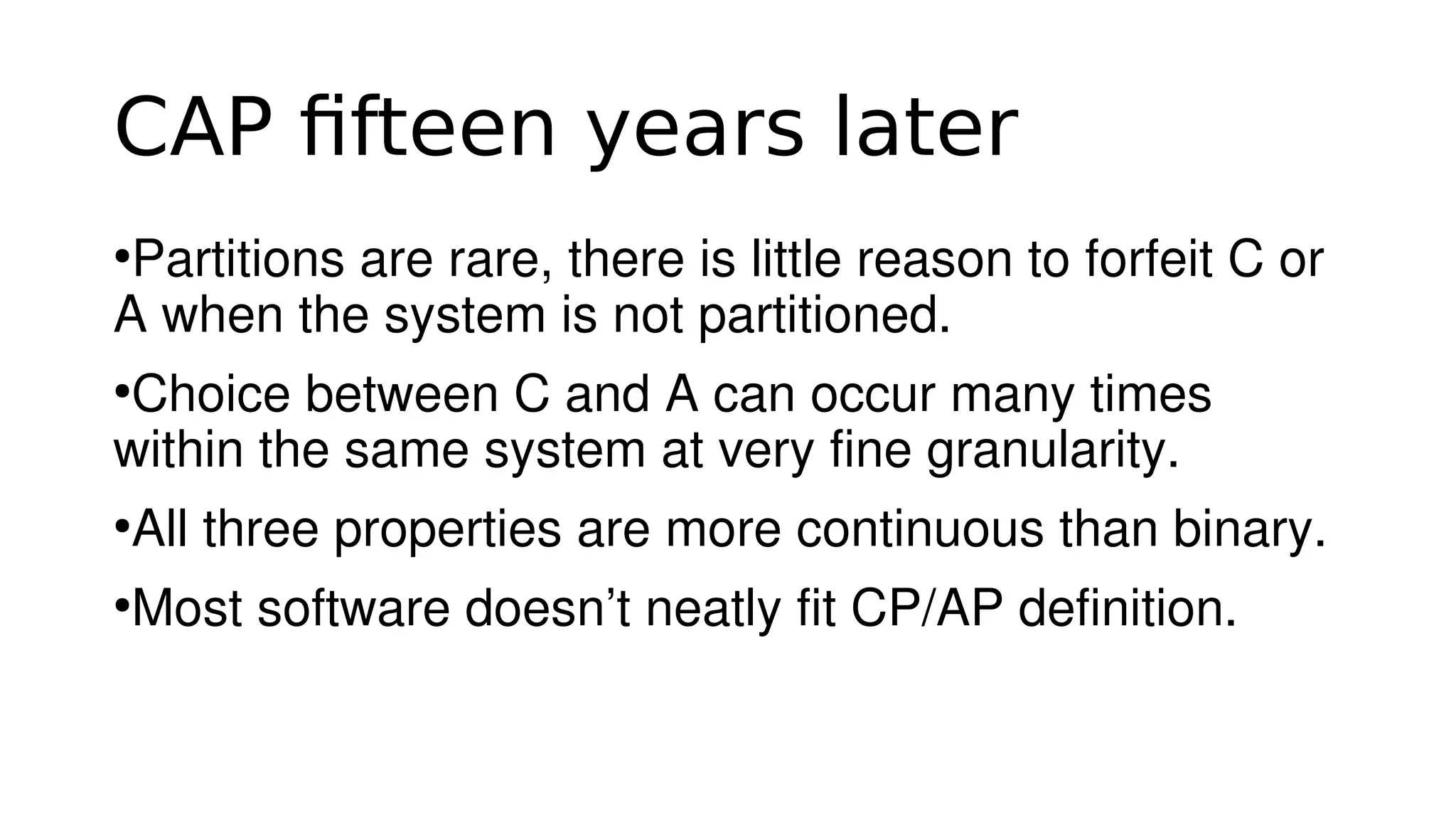

The document discusses the CAP theorem which states that it is impossible for a distributed computer system to simultaneously provide consistency, availability, and partition tolerance. It defines these terms and explores how different systems address the tradeoffs. Consistency means all nodes see the same data at the same time. Availability means every request results in a response. Partition tolerance means the system continues operating despite network failures. The CAP theorem says a system can only choose two of these properties. The document discusses how different types of systems, like CP and AP systems, handle partitions and trade off consistency and availability. It also notes the CAP theorem is more nuanced in reality with choices made at fine granularity within systems.
Overview of the CAP theorem and definition of distributed systems focusing on network communication.
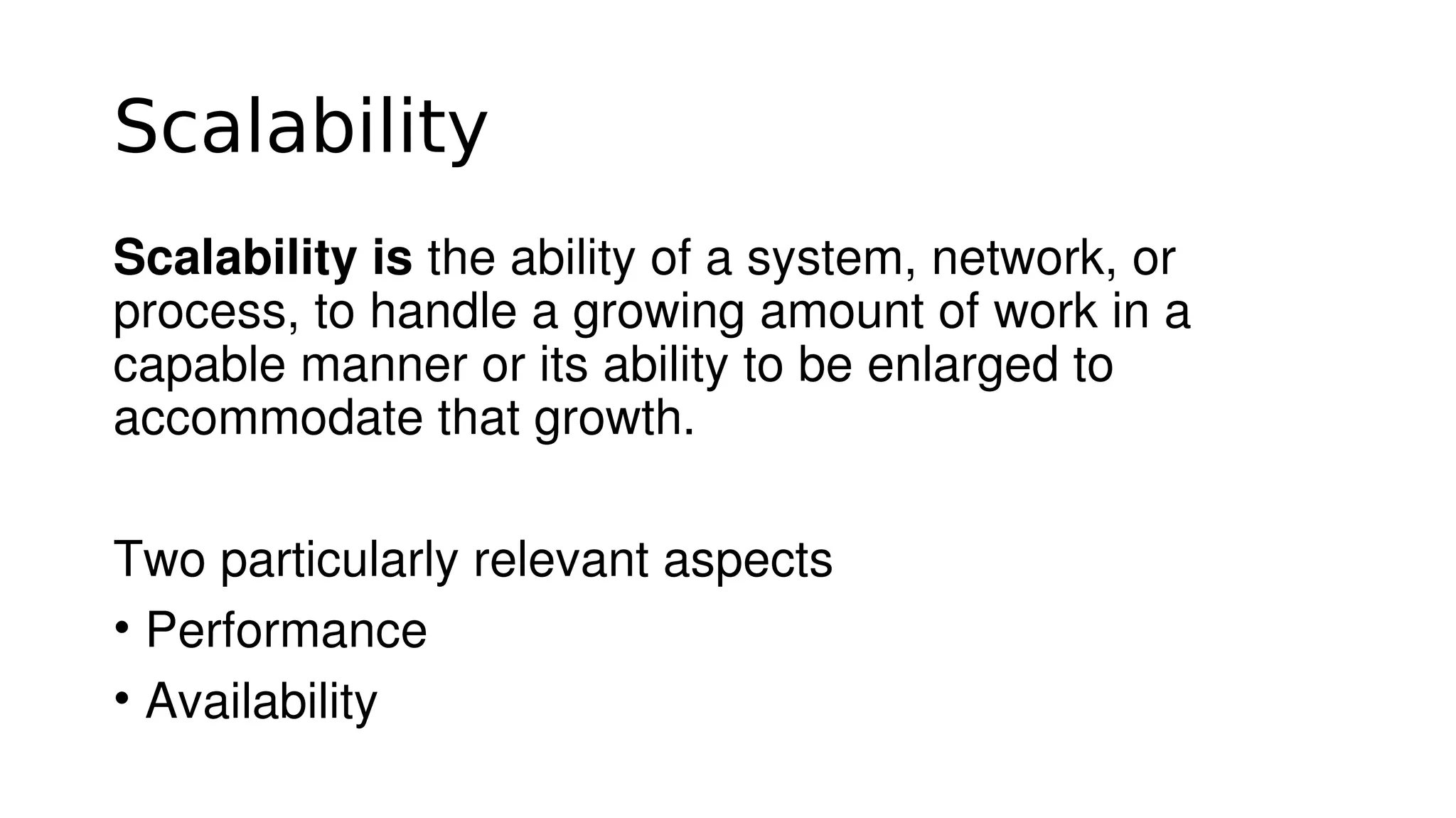
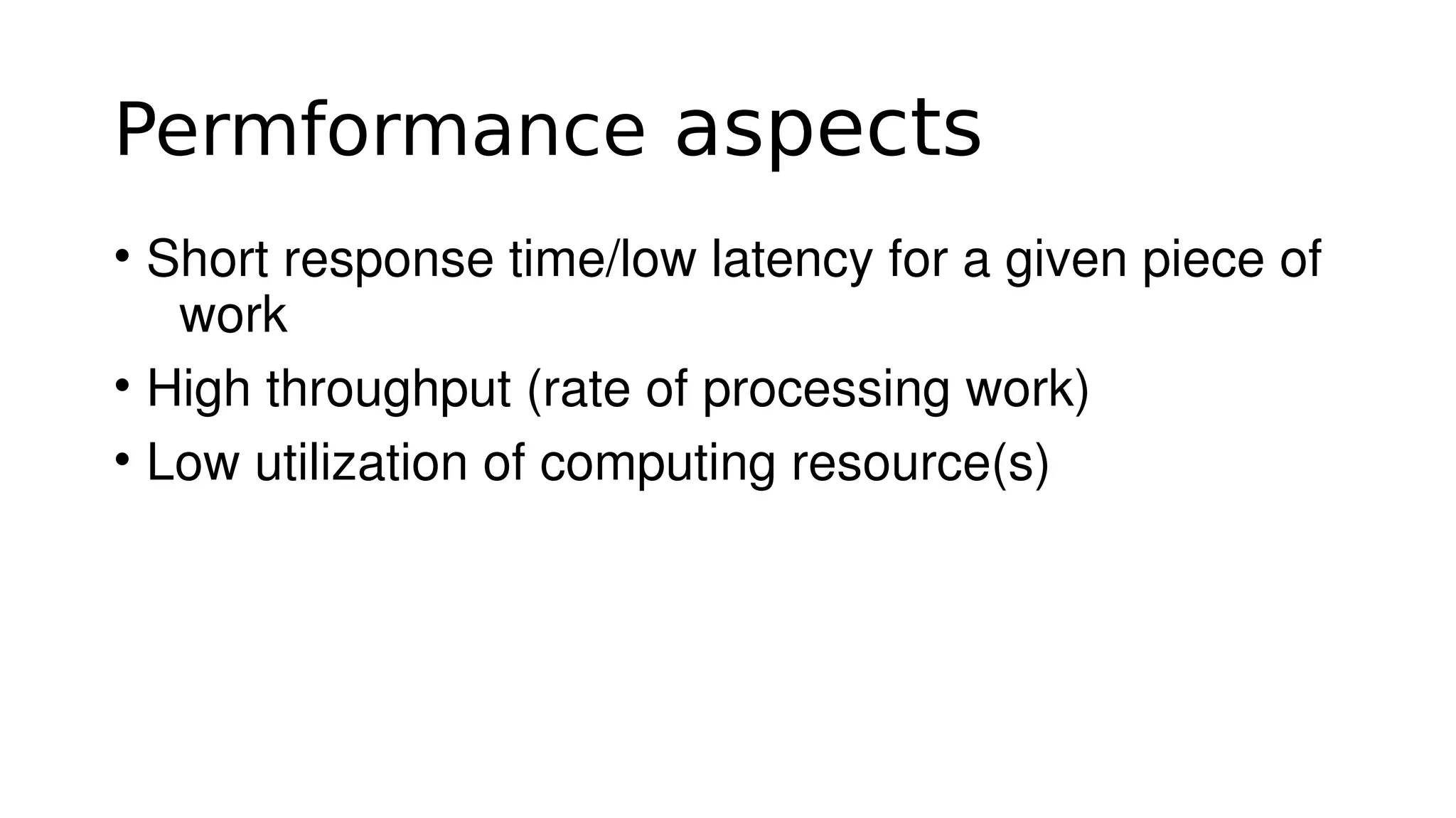
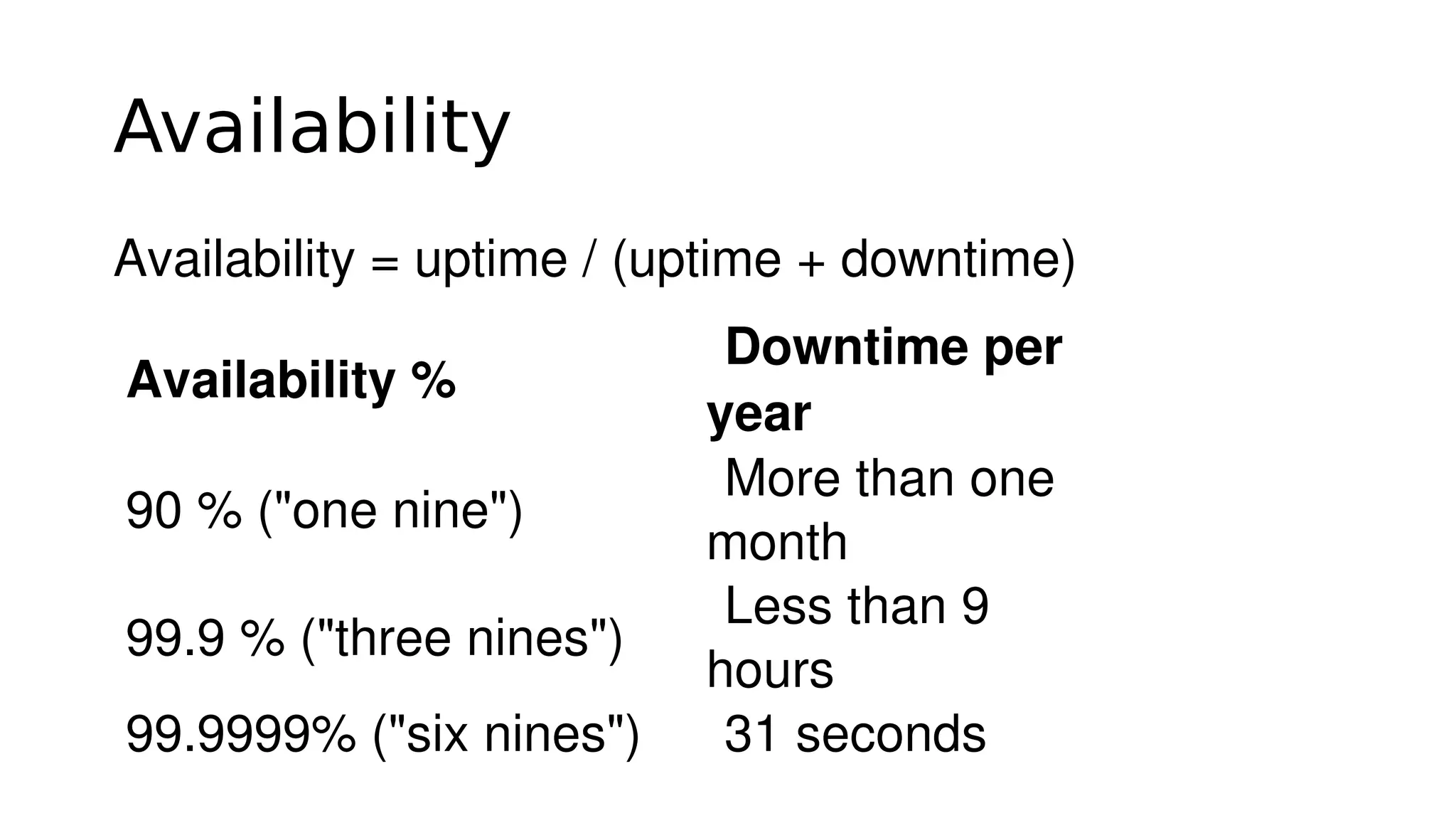
Explains scalability and its relevance with performance (response time, throughput) and availability metrics.
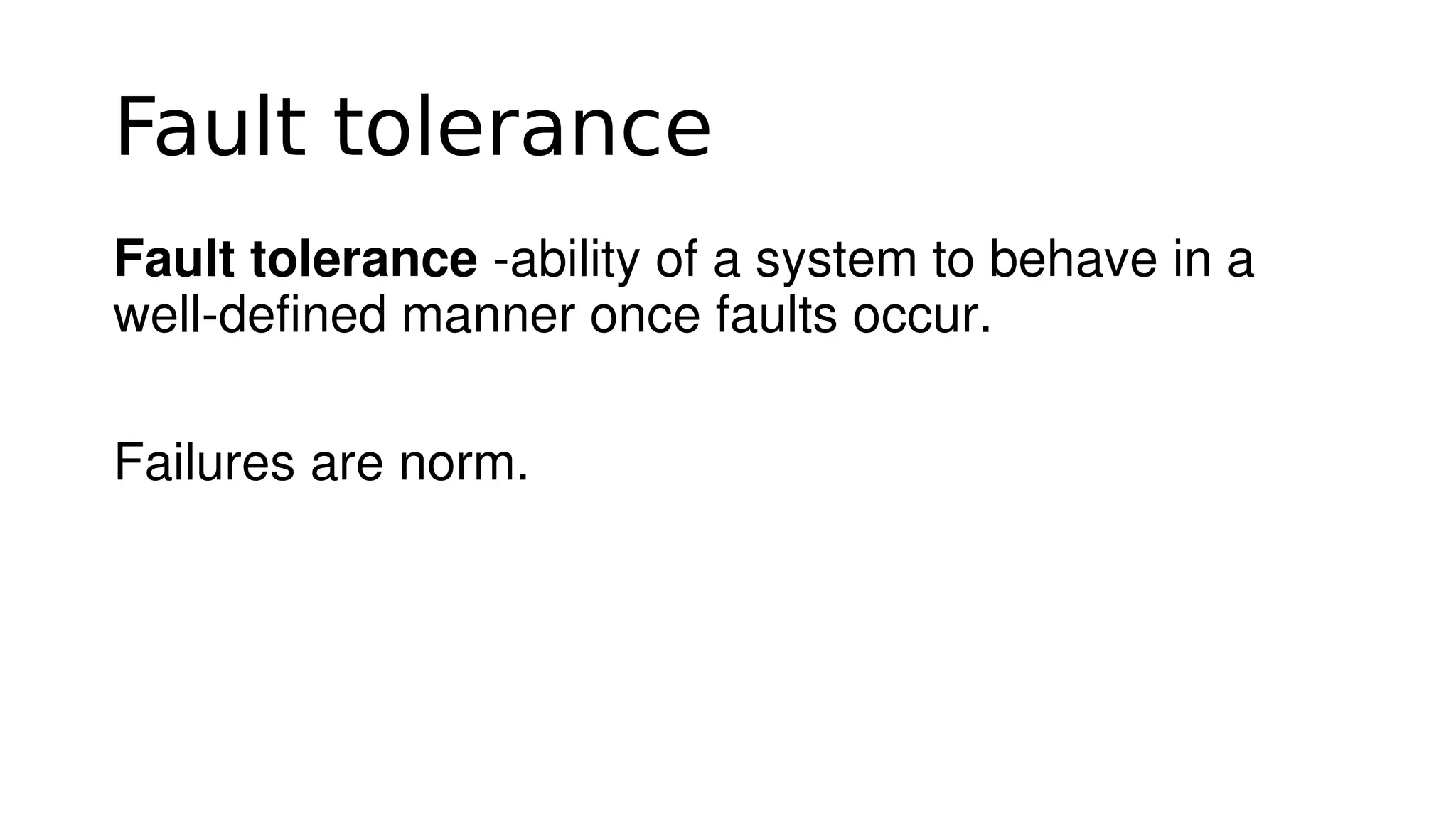
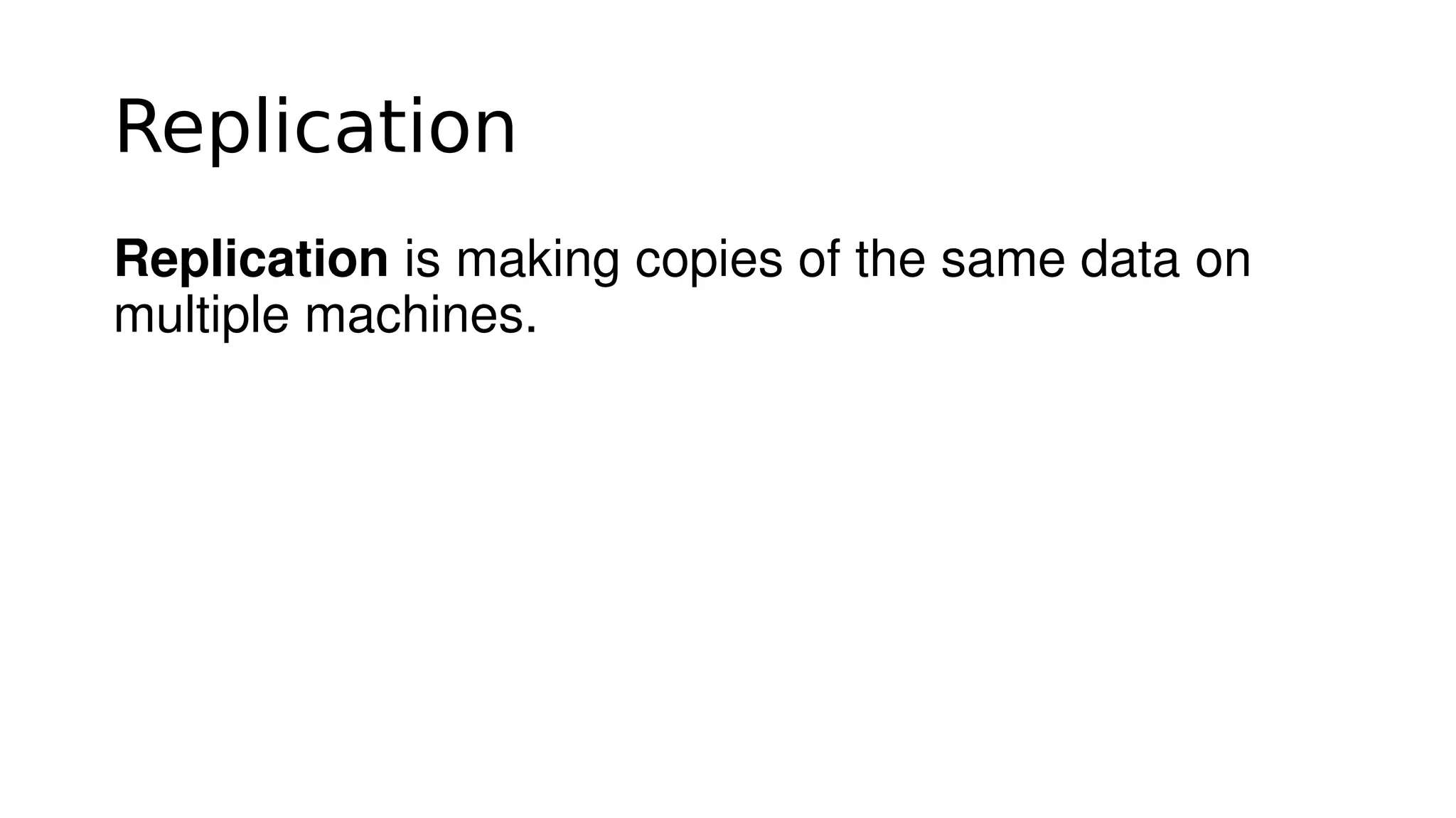
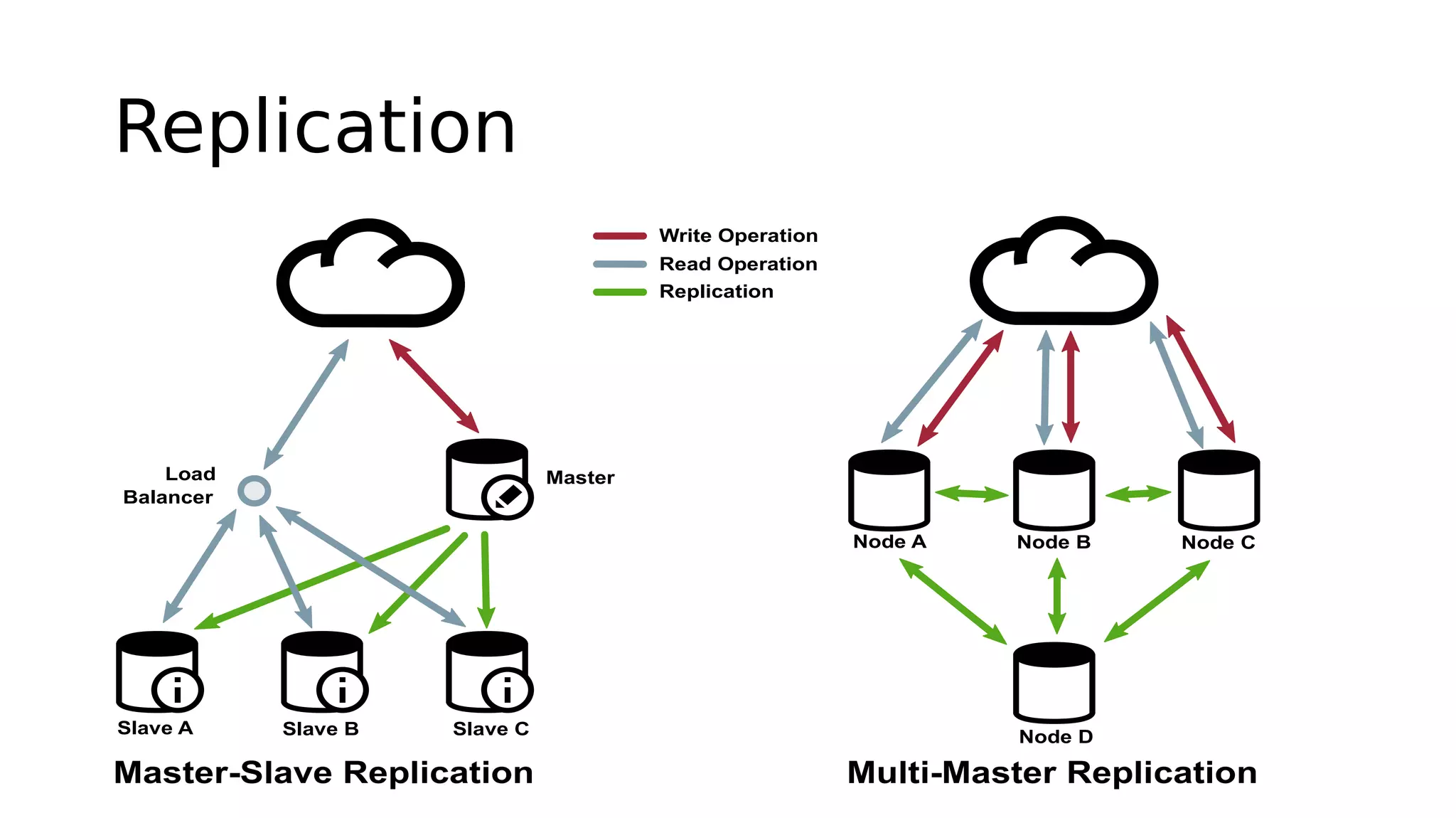
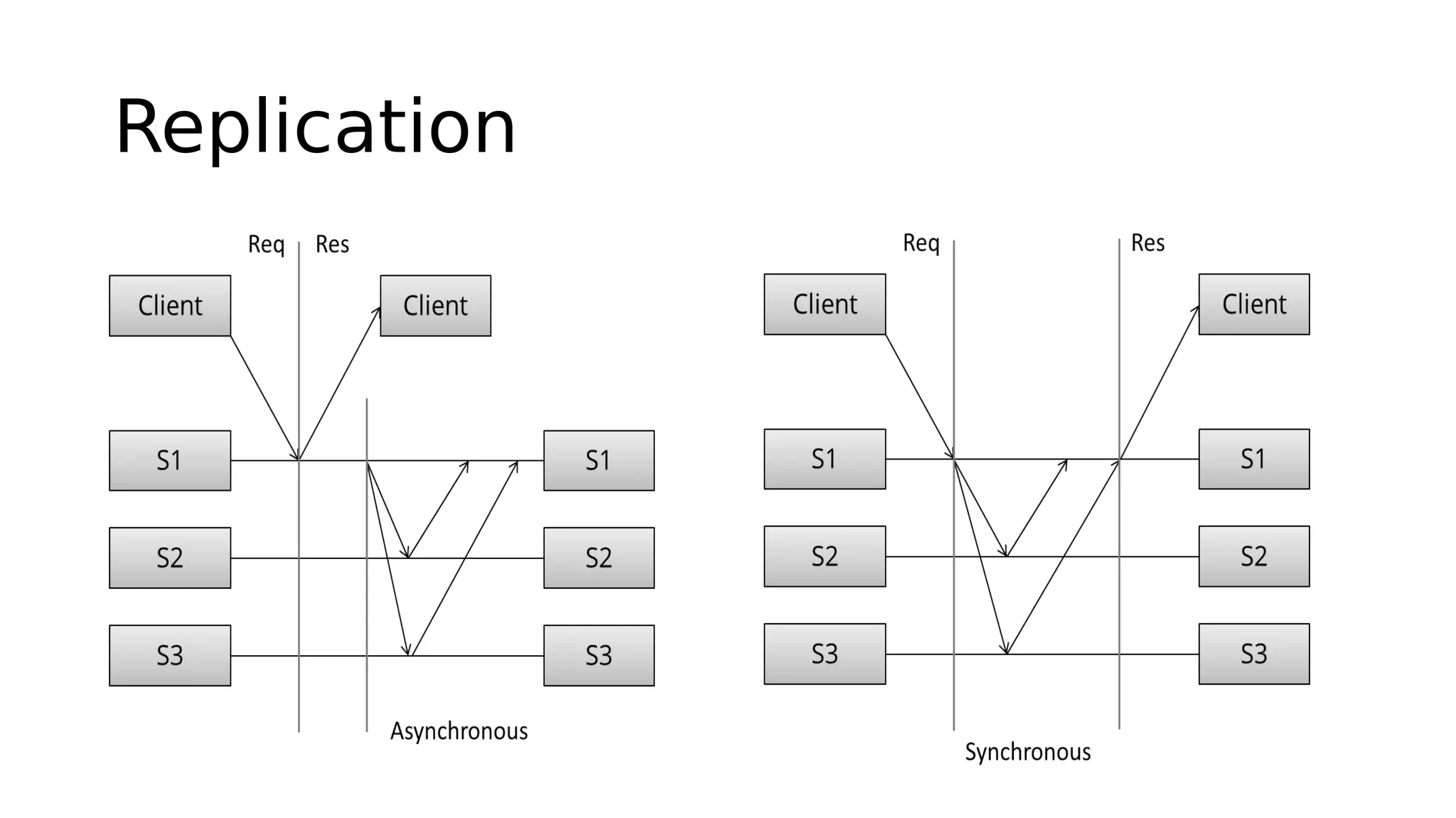
Discusses fault tolerance in systems and the concept of data replication across machines for reliability.
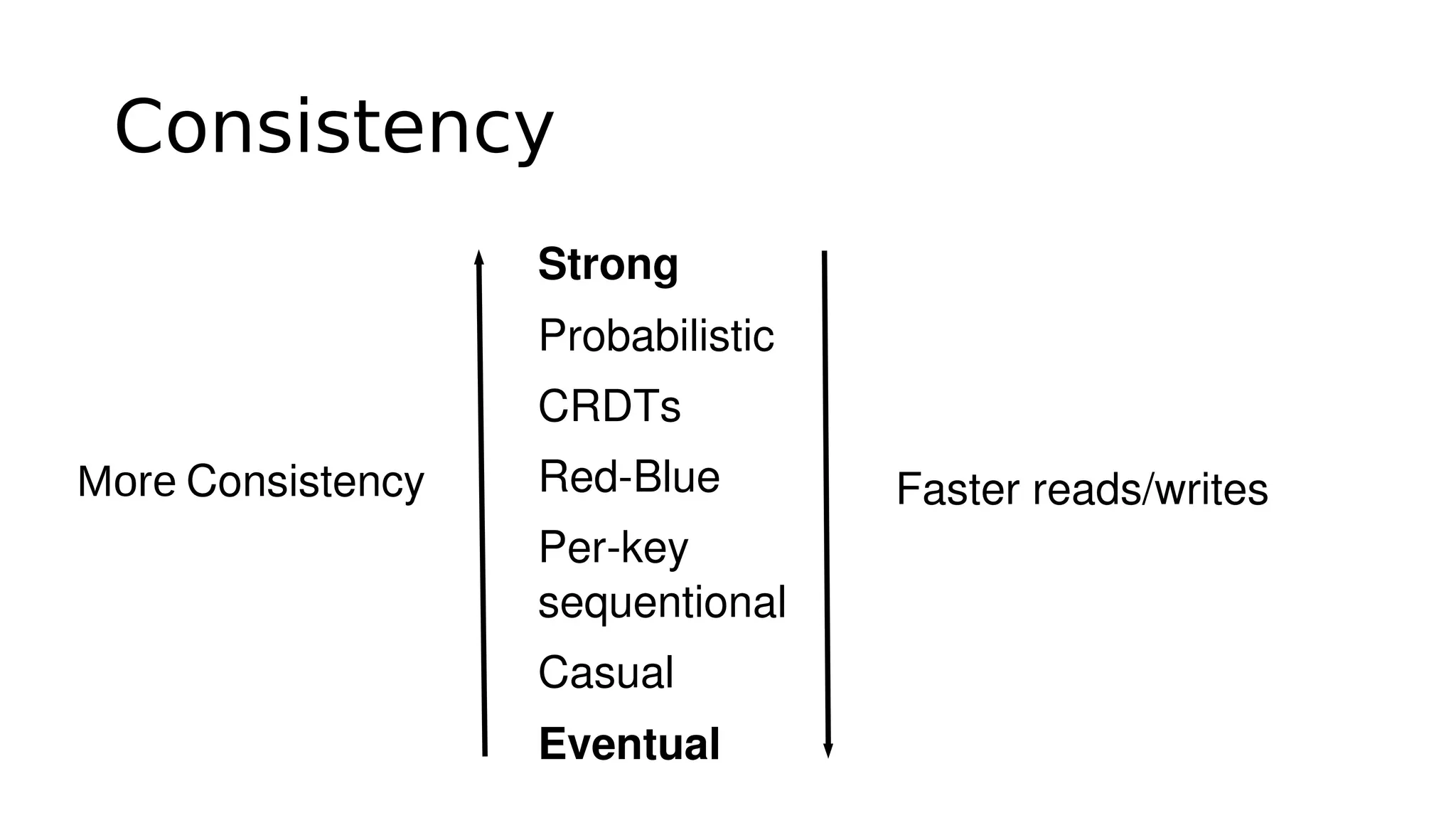
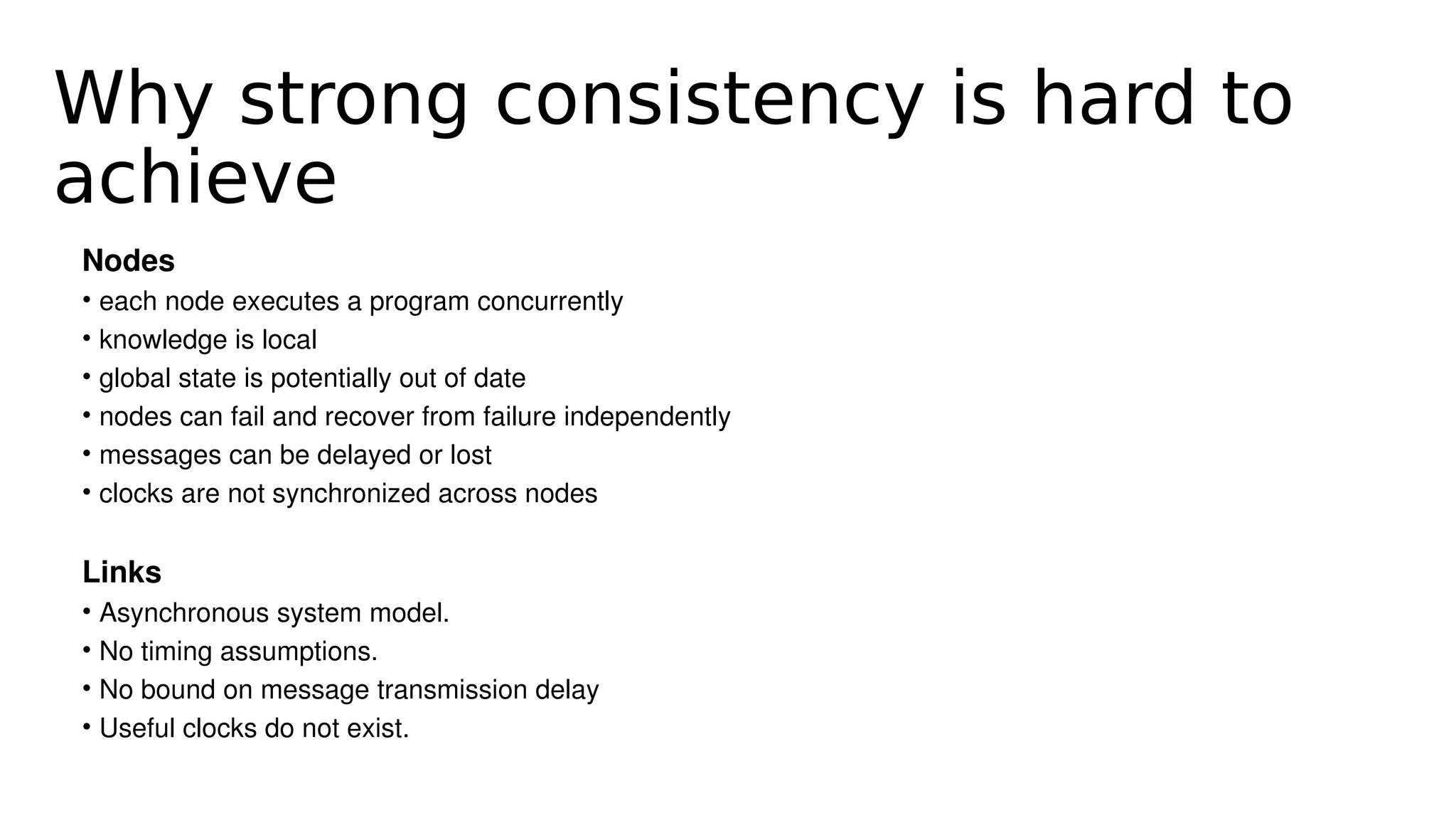
Explains trade-offs between consistency and performance, challenges in achieving strong consistency in distributed systems.
Differences between ACID (Atomicity, Consistency, Isolation, Durability) and BASE (Basic Availability, Soft-state, Eventual consistency) models in databases.
Introduces the CAP theorem's three key elements: consistency, availability, partition tolerance, and the inherent trade-offs.
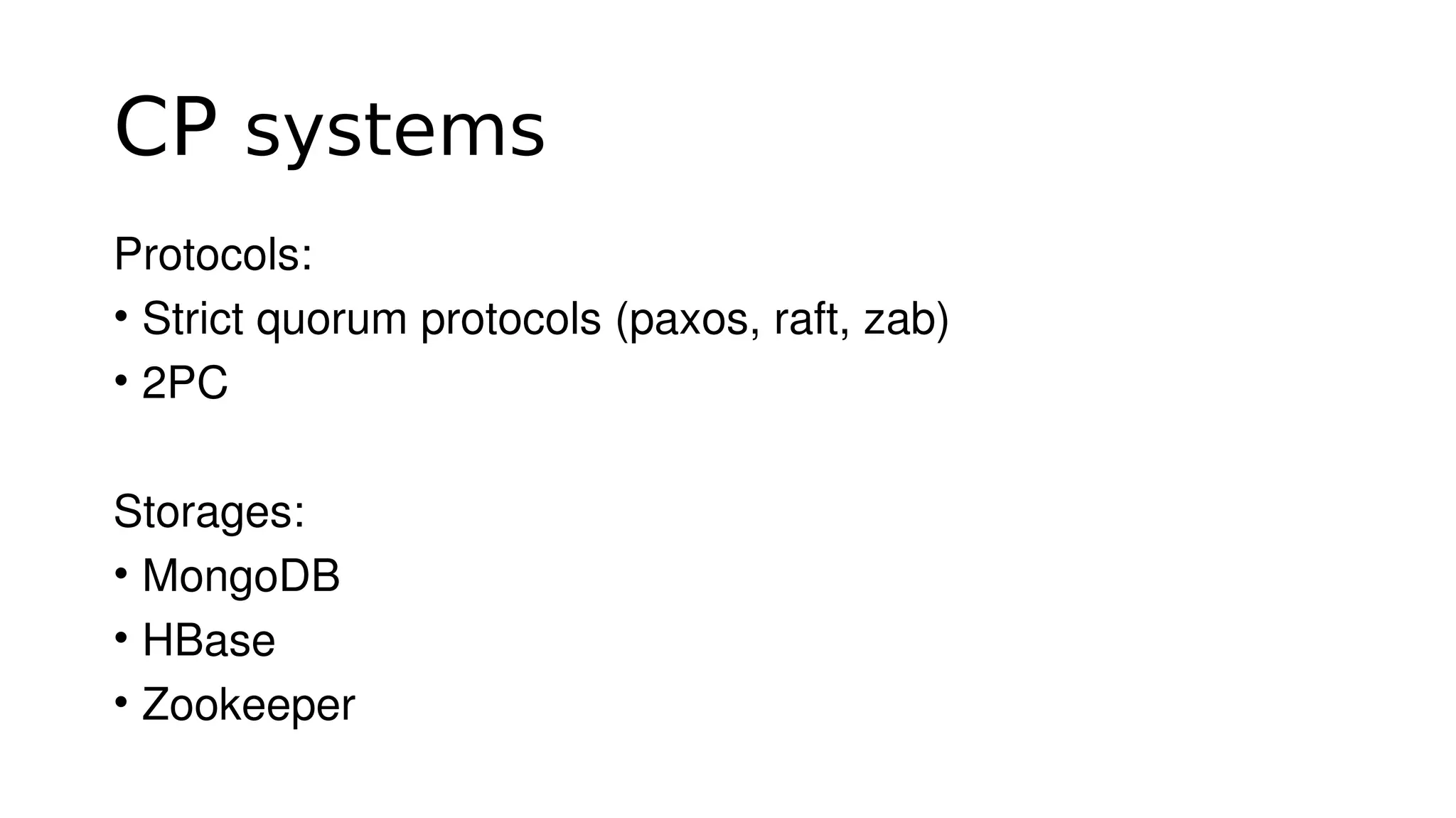
Details of CP (Consistency and Partition tolerance) systems, their protocols, and storage solutions (e.g., MongoDB, HBase).
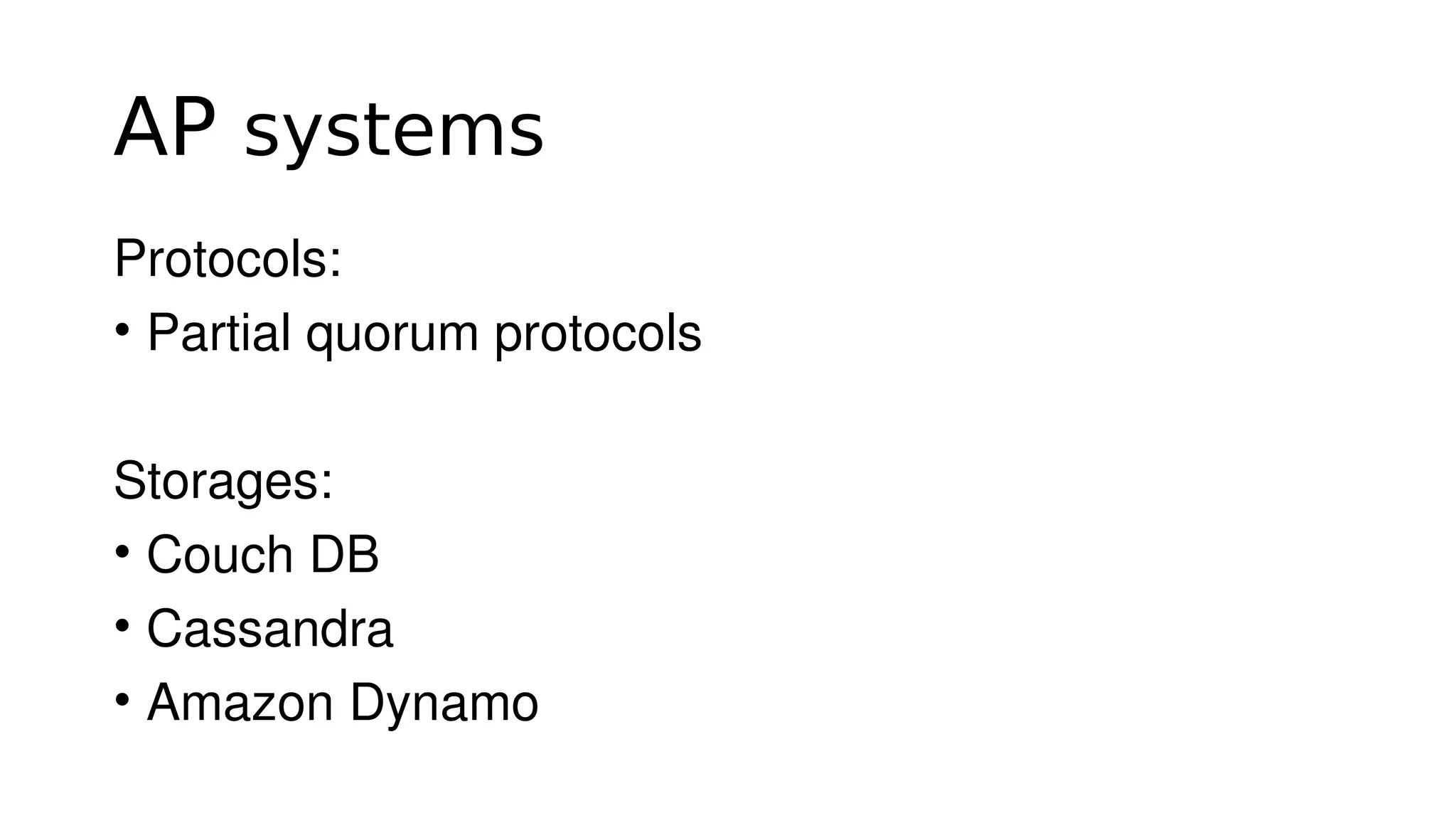
Details of AP (Availability and Partition) systems, protocols, and storage solutions (e.g., Couch DB, Cassandra).
Discussion on how partitions are rare, nuanced choices between consistency and availability have emerged, and the properties are more continuous.
Closing remarks and an invitation for questions from the audience.