Software Requirements to System Design This presentation will guide you through the process of capturing software requirements and arriving at a robust system design. by Mohammed Fazuluddin
Problem Statement and Requirements Functional Requirements What the system should do. (e.g., User authentication, data storage, reporting) Non-Functional Requirements How the system should perform. (e.g., security, performance, scalability, availability)
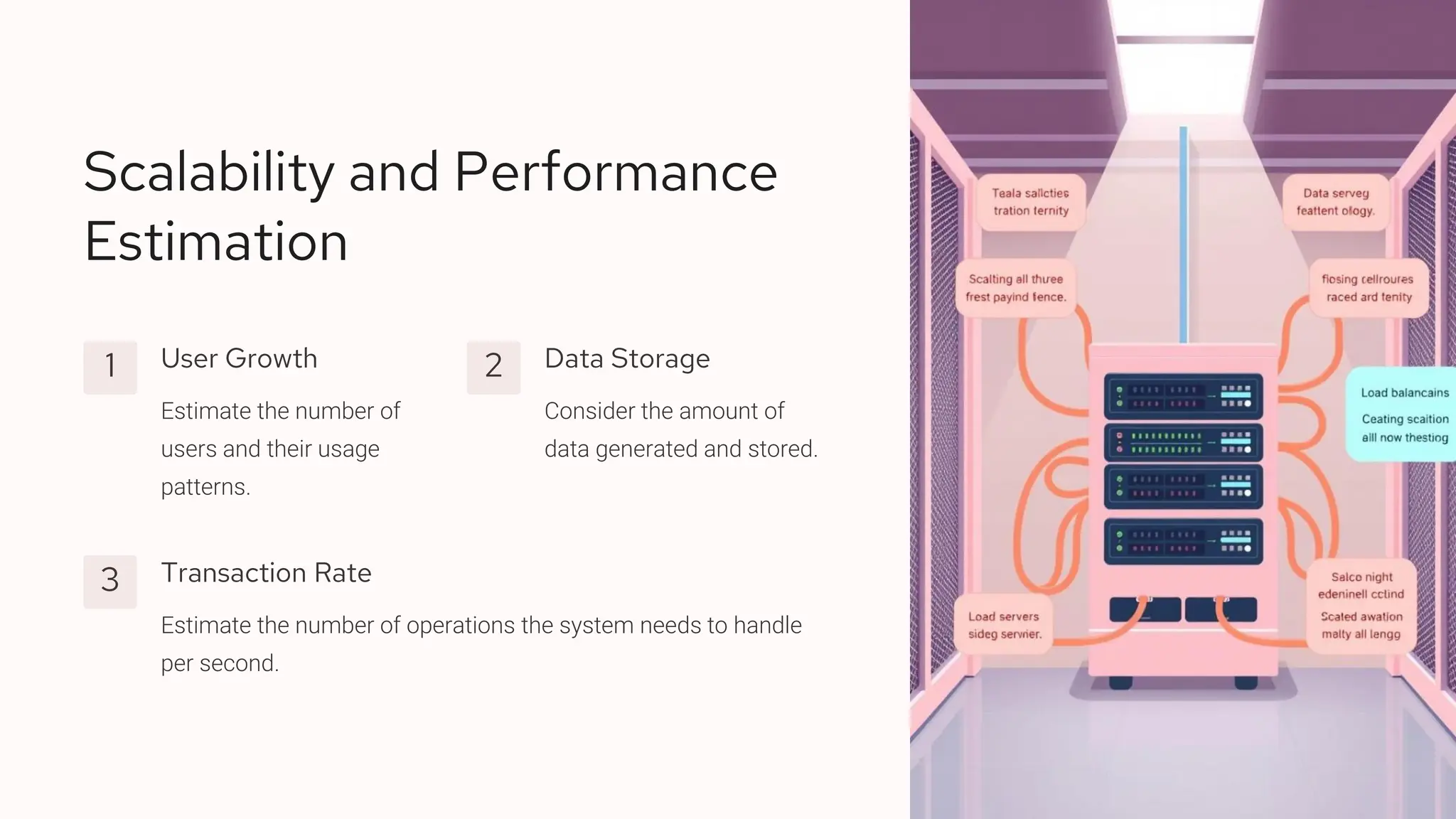
Scalability and Performance Estimation 1 User Growth Estimate the number of users and their usage patterns. 2 Data Storage Consider the amount of data generated and stored. 3 Transaction Rate Estimate the number of operations the system needs to handle per second.
API Design and Data Representation API Structure RESTful API design (e.g., GET, POST, PUT, DELETE requests) Data Format JSON, XML, or other data formats
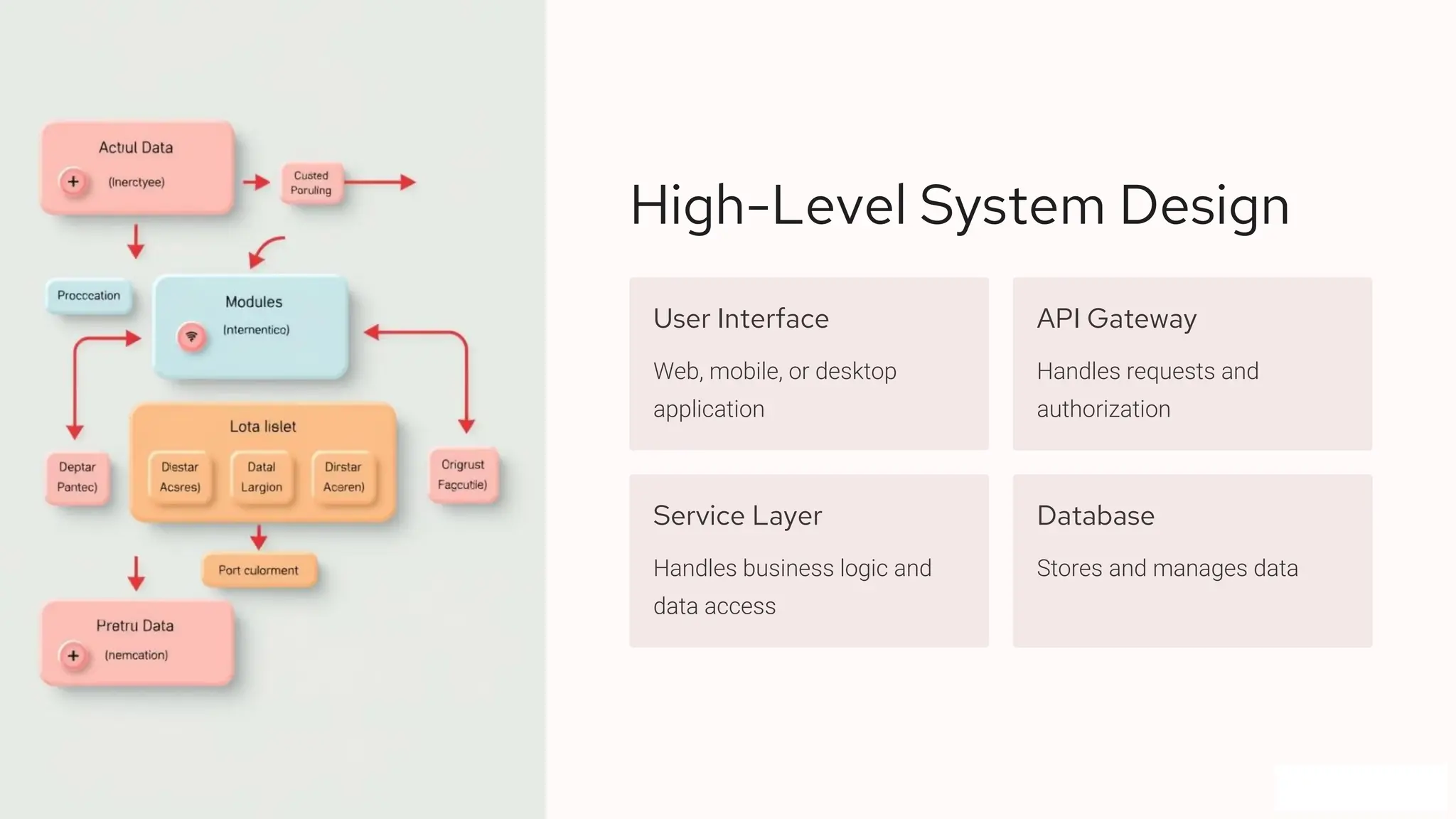
High-Level System Design User Interface Web, mobile, or desktop application API Gateway Handles requests and authorization Service Layer Handles business logic and data access Database Stores and manages data
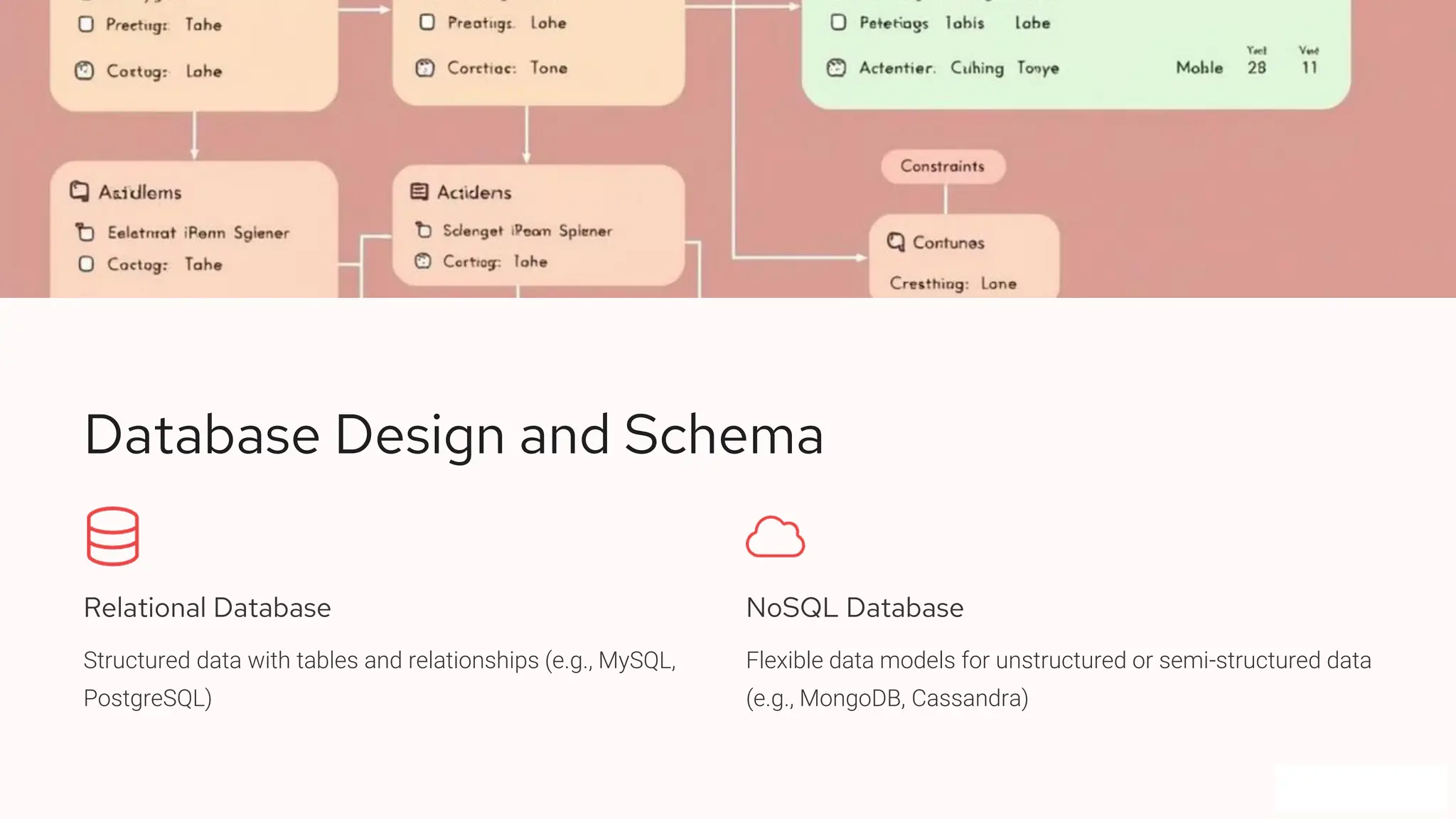
Database Design and Schema Relational Database Structured data with tables and relationships (e.g., MySQL, PostgreSQL) NoSQL Database Flexible data models for unstructured or semi-structured data (e.g., MongoDB, Cassandra)
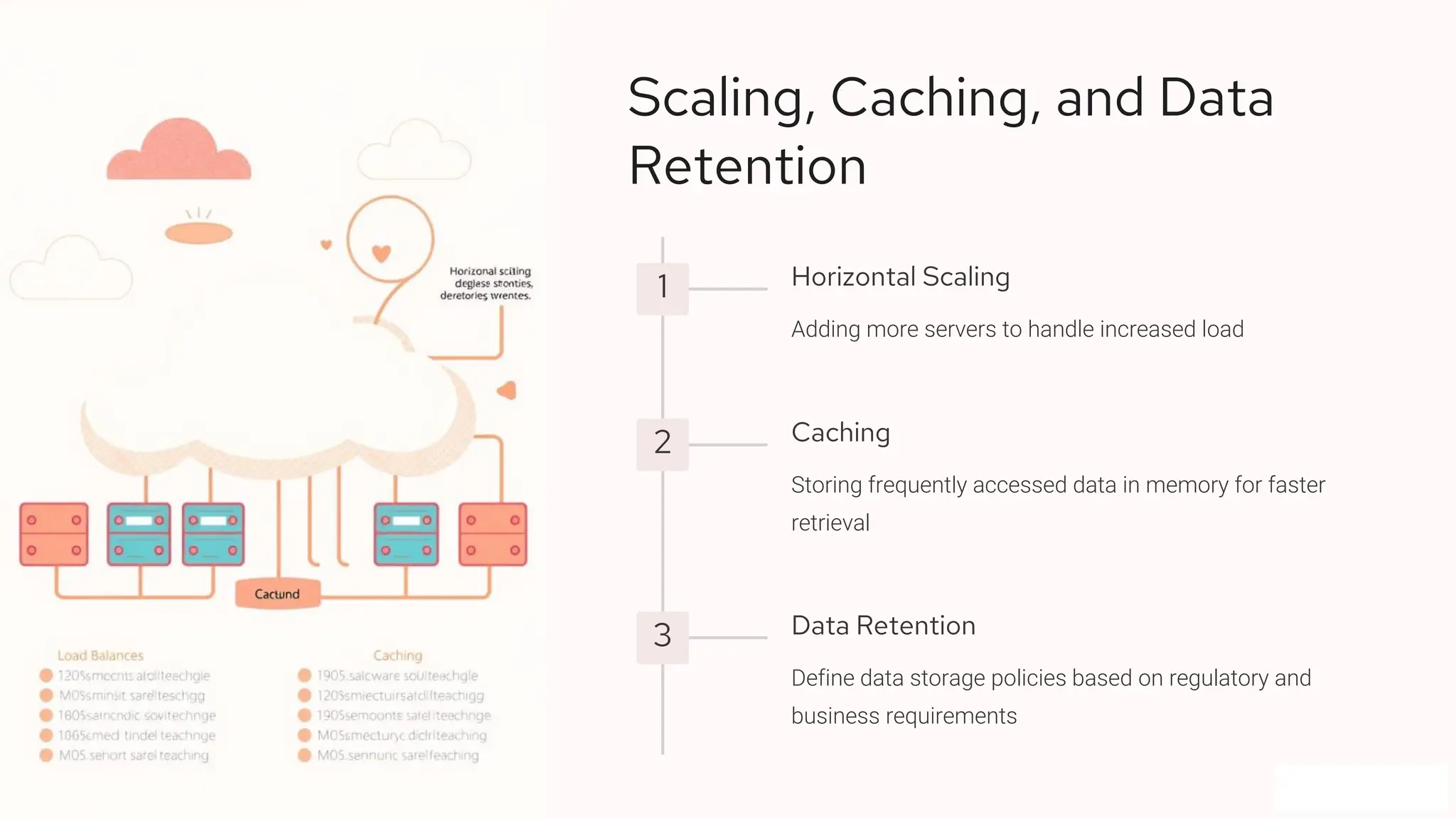
Scaling, Caching, and Data Retention 1 Horizontal Scaling Adding more servers to handle increased load 2 Caching Storing frequently accessed data in memory for faster retrieval 3 Data Retention Define data storage policies based on regulatory and business requirements
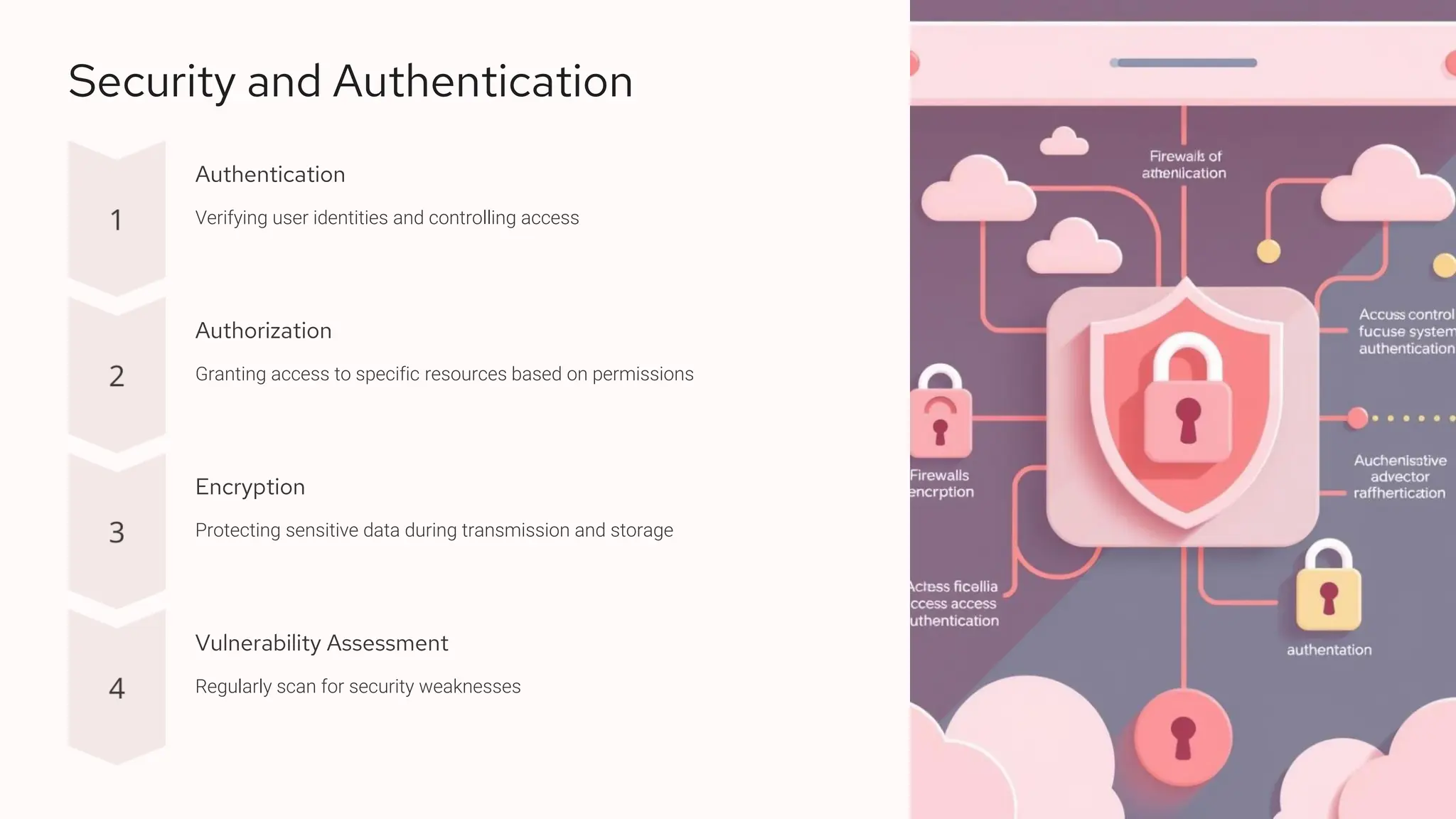
Security and Authentication Authentication Verifying user identities and controlling access Authorization Granting access to specific resources based on permissions Encryption Protecting sensitive data during transmission and storage Vulnerability Assessment Regularly scan for security weaknesses
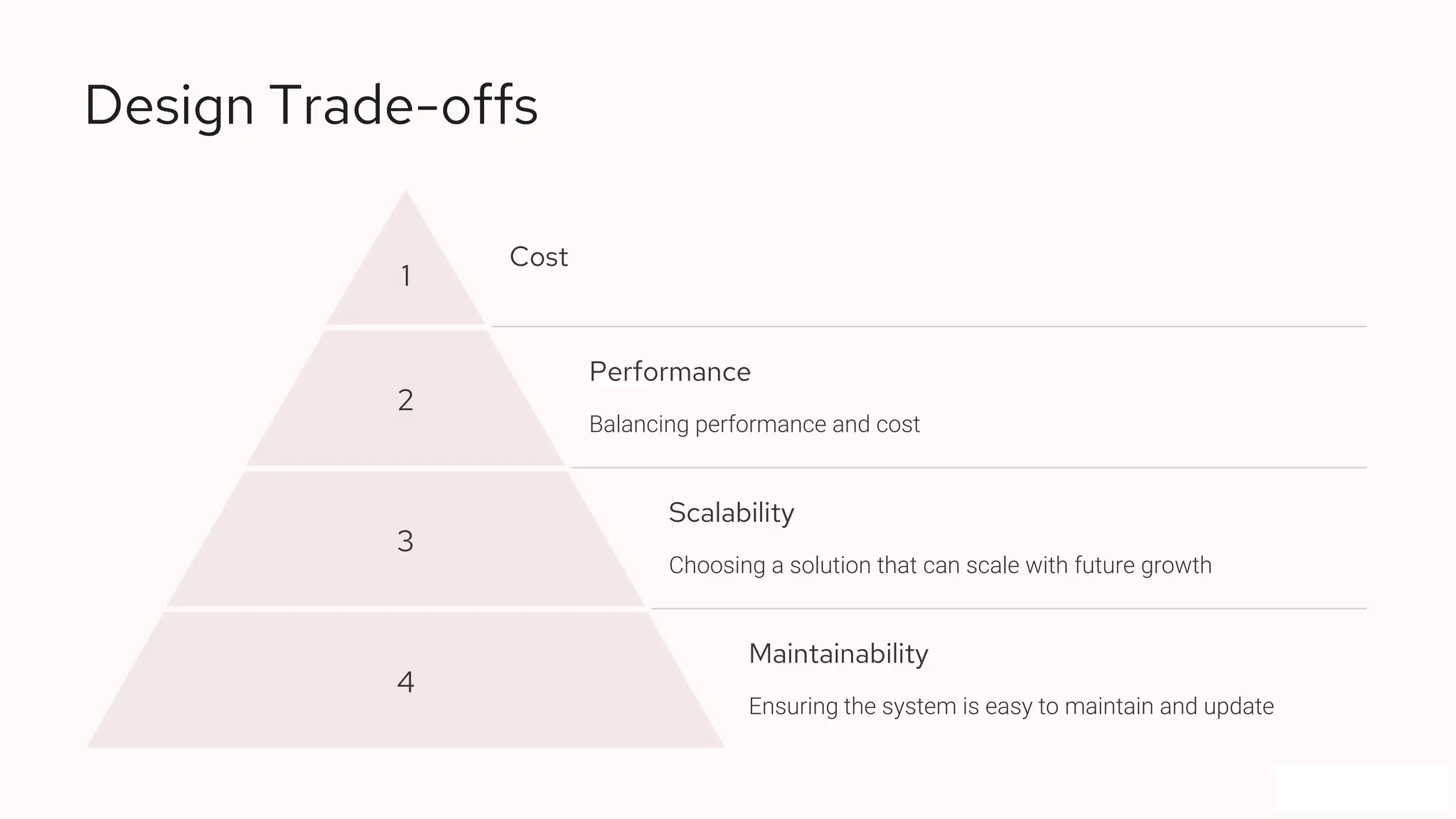
Design Trade-offs 1 Cost 2 Performance Balancing performance and cost 3 Scalability Choosing a solution that can scale with future growth 4 Maintainability Ensuring the system is easy to maintain and update
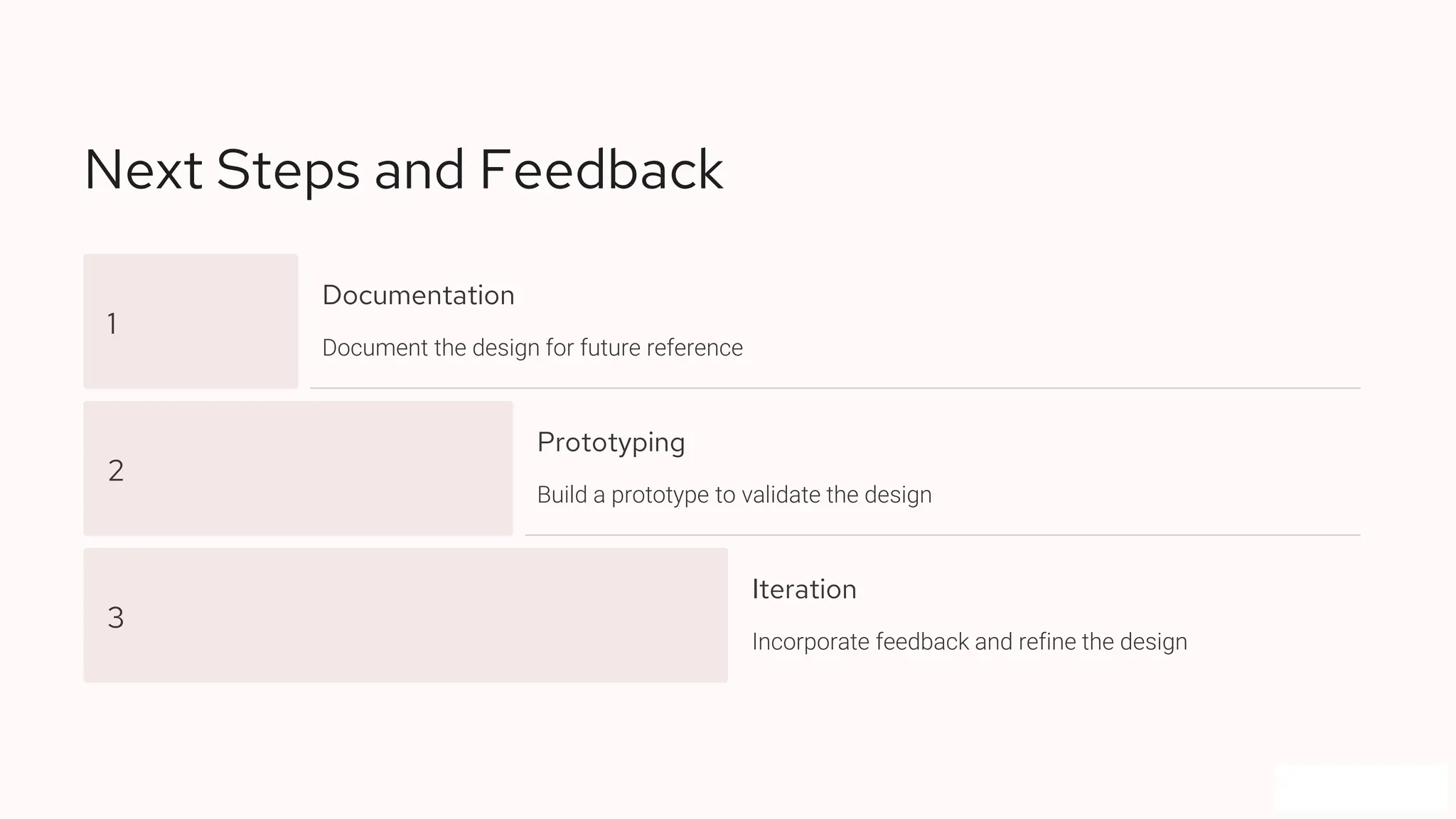
Next Steps and Feedback 1 Documentation Document the design for future reference 2 Prototyping Build a prototype to validate the design 3 Iteration Incorporate feedback and refine the design
THANKS

Software-Requirements-to-System-Design Basics

  • 1.
    Software Requirements to SystemDesign This presentation will guide you through the process of capturing software requirements and arriving at a robust system design. by Mohammed Fazuluddin
  • 2.
    Problem Statement andRequirements Functional Requirements What the system should do. (e.g., User authentication, data storage, reporting) Non-Functional Requirements How the system should perform. (e.g., security, performance, scalability, availability)
  • 3.
    Scalability and Performance Estimation 1User Growth Estimate the number of users and their usage patterns. 2 Data Storage Consider the amount of data generated and stored. 3 Transaction Rate Estimate the number of operations the system needs to handle per second.
  • 4.
    API Design andData Representation API Structure RESTful API design (e.g., GET, POST, PUT, DELETE requests) Data Format JSON, XML, or other data formats
  • 5.
    High-Level System Design UserInterface Web, mobile, or desktop application API Gateway Handles requests and authorization Service Layer Handles business logic and data access Database Stores and manages data
  • 6.
    Database Design andSchema Relational Database Structured data with tables and relationships (e.g., MySQL, PostgreSQL) NoSQL Database Flexible data models for unstructured or semi-structured data (e.g., MongoDB, Cassandra)
  • 7.
    Scaling, Caching, andData Retention 1 Horizontal Scaling Adding more servers to handle increased load 2 Caching Storing frequently accessed data in memory for faster retrieval 3 Data Retention Define data storage policies based on regulatory and business requirements
  • 8.
    Security and Authentication Authentication Verifyinguser identities and controlling access Authorization Granting access to specific resources based on permissions Encryption Protecting sensitive data during transmission and storage Vulnerability Assessment Regularly scan for security weaknesses
  • 9.
    Design Trade-offs 1 Cost 2 Performance Balancing performanceand cost 3 Scalability Choosing a solution that can scale with future growth 4 Maintainability Ensuring the system is easy to maintain and update
  • 10.
    Next Steps andFeedback 1 Documentation Document the design for future reference 2 Prototyping Build a prototype to validate the design 3 Iteration Incorporate feedback and refine the design
  • 11.