intellect
Also found in: Thesaurus, Medical, Encyclopedia, Wikipedia.
in·tel·lect
(ĭn′tl-ĕkt′)n.
1.
a. The ability to learn and reason; the capacity for knowledge and understanding: "Opinion is ultimately determined by the feelings, and not by the intellect" (Herbert Spencer).
b. A person's individual ability to think and reason: "[His] humanitarianism could never overcome the rigidities of his intellect or the shortcomings of his temperament" (Michael B. Stoff).
2. A person of great intellectual ability: "Gifted as both an athlete and an intellect, [he] received help from teachers who recognized his talents" (Anita Silvey).
[Middle English, from Old French intellecte, from Latin intellēctus, perception, from past participle of intellegere, to perceive; see intelligent.]
American Heritage® Dictionary of the English Language, Fifth Edition. Copyright © 2016 by Houghton Mifflin Harcourt Publishing Company. Published by Houghton Mifflin Harcourt Publishing Company. All rights reserved.
intellect
(ˈɪntɪˌlɛkt)n
1. (Psychology) the capacity for understanding, thinking, and reasoning, as distinct from feeling or wishing
2. a mind or intelligence, esp a brilliant one: his intellect is wasted on that job.
3. informal a person possessing a brilliant mind; brain
4. those possessing the greatest mental power: the intellect of a nation.
[C14: from Latin intellectus comprehension, intellect, from intellegere to understand; see intelligence]
ˌintelˈlective adj
ˌintelˈlectively adv
Collins English Dictionary – Complete and Unabridged, 12th Edition 2014 © HarperCollins Publishers 1991, 1994, 1998, 2000, 2003, 2006, 2007, 2009, 2011, 2014
in•tel•lect
(ˈɪn tlˌɛkt)n.
1. the faculty of the mind by which one knows or understands, as distinguished from that by which one feels or wills; capacity for thinking and acquiring knowledge.
2. capacity for thinking and acquiring knowledge of a high or complex order.
3. a particular mind or intelligence, esp. of a high order.
4. a person possessing a great capacity for thought and knowledge.
5. minds collectively.
[1350–1400; Middle English < Latin intellēctus percerption, n. use of past participle of intelleg(ere) to understand; see intelligent]
in`tel•lec′tive, adj.
in`tel•lec′tive•ly, adv.
syn: See mind.
Random House Kernerman Webster's College Dictionary, © 2010 K Dictionaries Ltd. Copyright 2005, 1997, 1991 by Random House, Inc. All rights reserved.
intellect
- heart - As the seat of feeling and intellect, heart has been used since around 825.
- intellect, intelligent - Intellect and intelligent come from Latin intelligere, "perceive" or "understand."
- intelligible - Means "understandable through the intellect."
- inwit - Usually means "an inner sense of right or wrong," but its more general meaning is "reason, intellect, understanding, or wisdom."
Farlex Trivia Dictionary. © 2012 Farlex, Inc. All rights reserved.
ThesaurusAntonymsRelated WordsSynonymsLegend:
Switch to new thesaurus
| Noun | 1. |  intellect - knowledge and intellectual ability; "he reads to improve his mind"; "he has a keen intellect" intellect - knowledge and intellectual ability; "he reads to improve his mind"; "he has a keen intellect"intelligence - the ability to comprehend; to understand and profit from experience |
| 2. |  intellect - the capacity for rational thought or inference or discrimination; "we are told that man is endowed with reason and capable of distinguishing good from evil" intellect - the capacity for rational thought or inference or discrimination; "we are told that man is endowed with reason and capable of distinguishing good from evil" | |
| 3. | 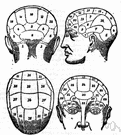 intellect - a person who uses the mind creatively intellect - a person who uses the mind creativelyindividual, mortal, person, somebody, someone, soul - a human being; "there was too much for one person to do" anomalist - someone who has a special interest in exceptional cases exponent - someone who expounds and interprets or explains alchemist - one who was versed in the practice of alchemy and who sought an elixir of life and a panacea and an alkahest and the philosopher's stone aphorist - someone who formulates aphorisms or who repeats aphorisms bel esprit - a witty or clever person with a fine mind clever clogs - an intellectual who is ostentatiously and irritatingly knowledgeable decipherer, decoder - the kind of intellectual who converts messages from a code to plain text egghead - an intellectual; a very studious and academic person; "in spite of her love of reading she denied being an egghead" brainiac, genius, mastermind, Einstein, brain - someone who has exceptional intellectual ability and originality; "Mozart was a child genius"; "he's smart but he's no Einstein" highbrow - a person of intellectual or erudite tastes bookman, scholar, scholarly person, student - a learned person (especially in the humanities); someone who by long study has gained mastery in one or more disciplines specifier - someone who draws up specifications giving details (as for obtaining a patent) subjectivist - a person who subscribes to subjectivism idealogue, theoretician, theoriser, theorist, theorizer - someone who theorizes (especially in science or art) thinker - someone who exercises the mind (usually in an effort to reach a decision) wonderer - someone who is curious about something |
Based on WordNet 3.0, Farlex clipart collection. © 2003-2012 Princeton University, Farlex Inc.
intellect
noun
1. intelligence, mind, reason, understanding, sense, brains (informal), judgment Do the emotions develop in parallel with the intellect?
2. (Informal) thinker, intellectual, genius, mind, brain (informal), intelligence, rocket scientist (informal, chiefly U.S.), egghead (informal) My boss isn't a great intellect.
Quotations
"We should take care not to make the intellect our god; it has, of course, powerful muscles, but no personality" [Albert Einstein Out of My Later Years]
"We should take care not to make the intellect our god; it has, of course, powerful muscles, but no personality" [Albert Einstein Out of My Later Years]
Collins Thesaurus of the English Language – Complete and Unabridged 2nd Edition. 2002 © HarperCollins Publishers 1995, 2002
intellect
noun1. The faculty of thinking, reasoning, and acquiring and applying knowledge:
Slang: smart (used in plural).
2. A person of great mental ability:
The American Heritage® Roget's Thesaurus. Copyright © 2013, 2014 by Houghton Mifflin Harcourt Publishing Company. Published by Houghton Mifflin Harcourt Publishing Company. All rights reserved.
Translations
عَقْل، فِكْر، القُوَّه العَقْلِيَّه
intelekt
intellekt
ajattelijaälyälykköjärki
vitsmunir; gáfur
intelektasintelektualinisprotinis
intelektsprāts
intelekt
razum
intellect
[ˈɪntɪlekt] N1. (= reasoning power) → intelecto m, inteligencia f
2. (= person) → cerebro m
Collins Spanish Dictionary - Complete and Unabridged 8th Edition 2005 © William Collins Sons & Co. Ltd. 1971, 1988 © HarperCollins Publishers 1992, 1993, 1996, 1997, 2000, 2003, 2005
intellect
[ˈɪntɪlɛkt] n (= thinking powers) → intellect m
(= cleverness) → intellect m, intelligence f
a woman of keen intellect → une femme d'une vive intelligence
a woman of keen intellect → une femme d'une vive intelligence
Collins English/French Electronic Resource. © HarperCollins Publishers 2005
intellect
n
→ Intellekt m; a man of keen intellect → ein Mensch m → mit einem scharfen Intellekt; his powers of intellect → seine intellektuellen Fähigkeiten
Collins German Dictionary – Complete and Unabridged 7th Edition 2005. © William Collins Sons & Co. Ltd. 1980 © HarperCollins Publishers 1991, 1997, 1999, 2004, 2005, 2007
Collins Italian Dictionary 1st Edition © HarperCollins Publishers 1995
intellect
(ˈintilekt) noun the thinking power of the mind. He was a person of great intellect.
ˌintelˈlectual (-ˈlektʃuəl) adjective of, or appealing to, the intellect. He does not play football – his interests are mainly intellectual.
Kernerman English Multilingual Dictionary © 2006-2013 K Dictionaries Ltd.