Advanced Manufacturing and Materials Engineering
A Multidisciplinary Approach to Manufacturing
The scope of our Advanced Manufacturing and Materials Engineering includes additive manufacturing, material development, systems design, design optimization and implementation, and specialized manufacturing capabilities not available outside of the Laboratory.
Our multidisciplinary approach enables the rapid invention and development of advanced materials and the creation of revolutionary manufacturing processes, all with a cost-effective, low-waste ethos. From running experiments to testing new designs to spearheading new ways to fabricate components, our teams transform cutting-edge concepts into reality in pursuit of Lawrence Livermore National Laboratory’s mission-driven science and technology.
Our research and development spans a range of efforts such as:
- Creating innovative materials for energy generation or storage
- Architecting materials with previously unachievable properties
- Inventing revolutionary new additive manufacturing processes and feedstock materials
- Advancing nondestructive characterization
- Engineering biomaterials for bioresilience
- Building advanced optics used in satellites and telescopes
- Machining high precision parts and conducting dimensional inspection to confirm their specifications
- Designing and fabricating components and materials for extreme environments, including high-power laser facilities, nuclear reactors, and aerospace applications
Please do not alter or edit this area. This generates the skewed image boxes.
border-box-0
border-box-1
border-box-2
Project Highlights
From revolutionary 3D-printing and liquid metal jetting droplet-on-demand techniques to microcapsules that capture carbon, LLNL’s work in advanced manufacturing and materials engineering is changing the face of fabrication.
Cellular Fluidics
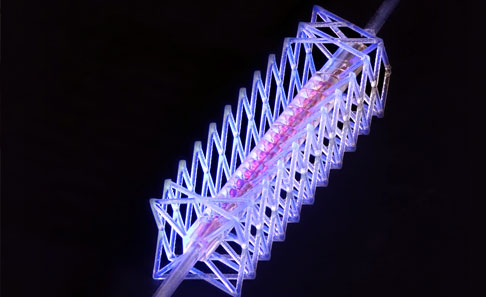
Inspired by the way plants absorb and distribute water and nutrients, researchers have developed a groundbreaking method for transport via a 3D-printed lattice and capillary action. Read Full Article
Cellular Fluidics
Inspired by the way plants absorb and distribute water and nutrients, researchers have developed a groundbreaking method for transport via a 3D-printed lattice and capillary action.
“Cellular fluidics” is an architected materials concept developed by scientists and engineers at LLNL that passively allows for directed transport of liquids through an open cell lattice for applications such multiphase reactions. Fabrication of these structures is via a light-driven 3D printing technology called projection microstereolithography.
In a paper published in Nature and featured on its cover, LLNL researchers describe 3D-printed micro-architected structures capable of containing and flowing fluids to create extensive and controlled interfaces between liquids and gases. The ordered, porous and open-cell structures facilitate surface tension-driven capillary action (the movement of liquid though small pores due to adhesion and cohesion forces) in the unit cells—akin to a tree pulling water from soil or a paper towel soaking up a spill—and enable liquid and gas transport throughout the structures.
Researchers said the breakthrough technique could have transformative and broad-ranging impacts on numerous fields involving multiphase (gas/liquid/solid) processes, including electrochemical or biological reactors used to convert carbon dioxide or methane to energy, advanced microfluidics, solar desalination, air filtration, heat transfer, transpiration cooling and the delivery of fluids in low- or zero-gravity environments.
Other Project Highlights

Liquid Crystal Elastomers show promise as programmable materials
Engineers at LLNL have expanded stimuli-responsive materials abilities with a class of materials known as liquid crystal elastomers (LCEs). Through advances in 3D-printing technology, material chemistry, and design optimization, Livermore has demonstrated LCEs that respond in programmed ways to select stimuli, making possible responsive structures that can change and reverse their shape, wiggle similar to an organism, change colors, and more. Read full article
Carbon Capture Microcapsules
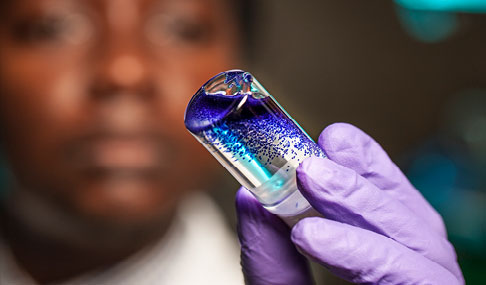
Using the same baking soda found in most grocery stores, LLNL scientists and engineers, along with colleagues from Harvard and the University of Illinois at Urbana-Champaign, created a significant advance in carbon dioxide capture technology, highlighted in the 2015 paper “Encapsulated liquid sorbents for carbon dioxide capture” and subsequent publications.
The team developed a new type of carbon capture media composed of core-shell microcapsules, which consist of a highly permeable polymer shell and a fluid (made up of sodium carbonate solution) that reacts with and absorbs carbon dioxide (CO2). Sodium carbonate is typically known as the main ingredient in baking soda. The capsules keep the liquid contained inside the core and allow the CO2 gas to pass back and forth through the capsule shell.
The aim of carbon capture is to prevent the release of large quantities of CO2—a greenhouse gas that traps heat and makes the planet warmer—into the atmosphere from fossil fuel use in power generation and other industries. Currently used methods, while successful, can be harmful to the environment. The ability to move away from caustic fluids to more environmentally benign ones, like carbonates, is a key attribute of the team’s research.
Since this advance in carbon capture, a 2019 collaboration between LLNL and biotech startup Artveoli has made use of it to clean the air indoors. By combining CO2-devouring photosynthetic algae and LLNL’s carbon capture microcapsules into a flat panel device, the capsules can be disguised as a work of digital or printed art and hung on the wall. This is just one among many industries exploring the use of the capsules, including beer-making.
Other Project Highlights
- Tiny capsules trap big climate menace
- Microcapsules capture carbon safely
- Art with a purpose: LLNL and startup company imagine the future of indoor carbon capture
- Lab-Corps experience inspires application of carbon capture technology to untapped industry
- Encapsulated liquid sorbents for carbon dioxide capture (in Nature Communications)

Engineers break speed and scale barriers in 3D nanofabrication
LLNL engineers and scientists, in collaboration with Stanford University, have demonstrated a breakthrough 3D nanofabrication approach that transforms two-photon lithography (TPL) from a slow, lab-scale technique into a wafer-scale manufacturing tool without sacrificing submicron precision. Read full article
Metal Jetting
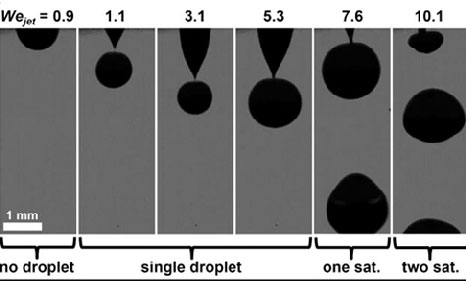
Liquid metal jetting (LMJ) droplet-on-demand (DoD) printing is a new method of additive manufacturing that can fabricate complex parts while reducing waste and allowing for low-intervention processing of a variety of materials with a brisk turnaround time.
LMJ DoD printing is done according to the same principles as liquid inkjet printing, but with the metal ink, which rapidly builds layers of connected, spherical droplets that are successively layered to create 3D structures. However, generating consistently stable droplets has been a complex problem for liquid metal printing due to the lack of viscosity in liquid metals that increases the likelihood of their fragmenting into “satellites,” or unwanted droplets that compromise the quality of the printed structures.
As a newer technology, LMJ DoD’s satellite-free printing window remains largely unexplored through systematic experimentation, but a 2021 paper by LLNL engineers— “Experimentally probing the extremes of droplet-on-demand printability via liquid metals”—suggests that previous data implying a set of universal limitations in DoD printing can be surmounted.
Other Project Highlights
Volumetric Additive Manufacturing
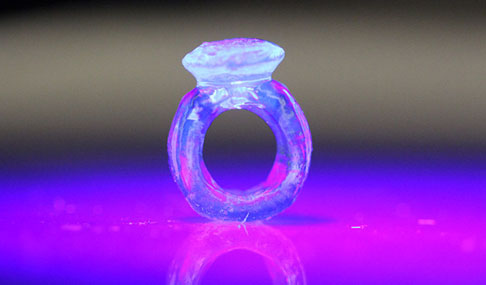
Researchers at LLNL, in collaboration with MIT, University of Rochester, and UC Berkeley, have invented 3D printing of an entire structure at once, or volumetrically, by using intersecting light beams to fabricate complex 3D polymer structures from photosensitive liquids. The new method revolutionizes 3D printing—also known as additive manufacturing—which is normally done in a layer-by-layer fashion rather than this new volume-at-once technique.Read Full Article
Volumetric Additive Manufacturing
Researchers at LLNL, in collaboration with MIT, University of Rochester, and UC Berkeley, have invented 3D printing of an entire structure at once, or volumetrically, by using intersecting light beams to fabricate complex 3D polymer structures from photosensitive liquids. The new method revolutionizes 3D printing—also known as additive manufacturing—which is normally done in a layer-by-layer fashion rather than this new volume-at-once technique.
In traditional 3D printing, parts are constructed layer by layer using a nozzle, beam, or 2D light pattern to deposit, melt, or polymerize material into a desired flat pattern. However, this layering technique has drawbacks: it is slow, taking hours or even days to build a finished structure; and, it often leaves undesirable jagged edges. The types of structures are also limited by the printing process, prohibiting the creation of overhangs or other disconnected free-floating structures.
Computed Axial Lithography (CAL), a variation of volumetric additive manufacturing jointly invented with UC Berkeley, produces objects by delivering 2D-patterned light energy from multiple angles into a spinning vial of photosensitive resin akin to computed tomography as described in the paper “Volumetric additive manufacturing via tomographic reconstruction” which appeared in the journal Science in 2019. As the vial spins, the light creates a 3D energy pattern within the resin to cure the liquid into a solid 3D structure without any layering or the associated undesirable artifacts. The uncured resin is drained, leaving behind a printed object in a matter of seconds to minutes, significantly faster than layer-by-layer assembly, which can take from 30 minutes up to days. The uncured material can also be re-used, reducing material waste.
Other Project Highlights
James Webb Space Telescope Grating Prism
NASA’s James Webb Space Telescope (JWST) has captured unprecedented and detailed views of the universe, with the release of its first full-color images and spectroscopic data.Read Full Article
James Webb Space Telescope Grating Prism
NASA’s James Webb Space Telescope (JWST) has captured unprecedented and detailed views of the universe, with the release of its first full-color images and spectroscopic data.
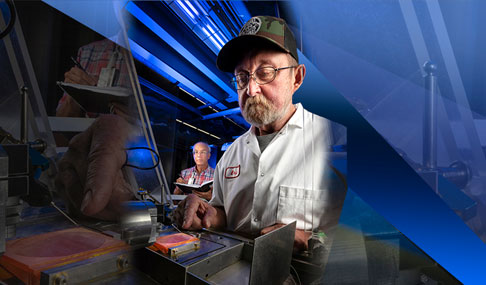
LLNL Engineering was critical to those efforts, developing a grism (also known as a grating prism, which is a combination of a prism and grating arranged so that light at a chosen central wavelength passes straight through).
A team of LLNL engineers diamond-machined a zinc selenide grism for the Near Infrared Imager and Slitless Spectrograph, a Canadian instrument onboard JWST. The grism operates over the wavelength range of 0.6 to 3.0 micrometers, with a primary science goal of performing exoplanet transit spectroscopy.
The resulting images provide unparalleled resolution and detail along with capturing details about the infrared spectrum of exoplanets like Wasp 96B. A spectrum can directly identify the material composition of objects that we cannot directly access. Much of what we know about the composition of astronomical objects has been gained through spectroscopy. The element helium was first observed in the spectrum of the sun before its existence was discovered on Earth.
Related Facilities and Centers
Advanced Manufacturing Laboratory
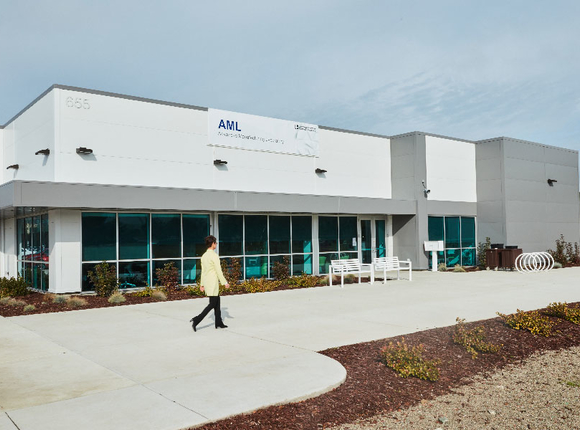
The Advanced Manufacturing Laboratory (AML) is part of the Livermore Valley Open Campus (LVOC)—a 110-acre open and unclassified innovation hub for stimulating collaborative projects with external partners in government, industry, and academia. LVOC is a joint initiative of the NNSA, LLNL, and Sandia National Laboratories.
Advanced Manufacturing Laboratory
The Advanced Manufacturing Laboratory (AML) is part of the Livermore Valley Open Campus (LVOC)—a 110-acre open and unclassified innovation hub for stimulating collaborative projects with external partners in government, industry, and academia. LVOC is a joint initiative of the NNSA, LLNL, and Sandia National Laboratories.
The Center for Bioengineering applies its tools and principles to complex, biological systems. Our mission challenge is to enable transformational solutions to counter biological threats and increase national resilience.

The Center for Bioengineering applies its tools and principles to complex, biological systems. Our mission challenge is to enable transformational solutions to counter biological threats and increase national resilience.
Center for Engineered Materials and Manufacturing
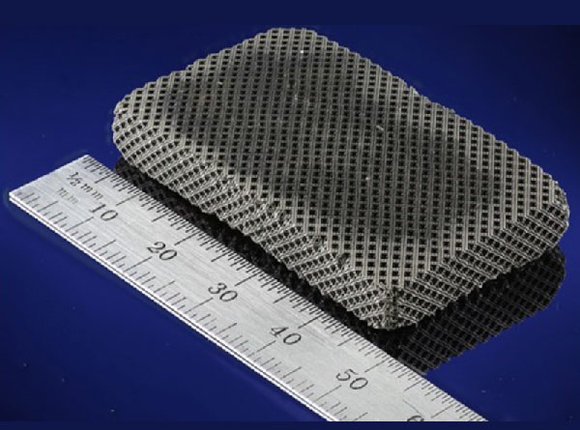
The Center for Engineered Materials and Manufacturing (CEMM) spans multiple laboratories, innovating additive manufacturing techniques to create structural and functional materials with novel capabilities. The center also serves as an incubator, training future additive manufacturing talents.
Center for Engineered Materials and Manufacturing
The Center for Engineered Materials and Manufacturing (CEMM) spans multiple laboratories, innovating additive manufacturing techniques to create structural and functional materials with novel capabilities. The center also serves as an incubator, training future additive manufacturing talents.
Center for Micro Nano Technology
The Center for Micro Nano Technology (CMNT) works with materials, devices, instruments, and systems that require microfabricated components, including microelectromechanical systems, electronics, photonics, micro- and nanostructures, bioimplantable devices, and micro- and nanoactuators.

Center for Micro Nano Technology
The Center for Micro Nano Technology (CMNT) works with materials, devices, instruments, and systems that require microfabricated components, including microelectromechanical systems, electronics, photonics, micro- and nanostructures, bioimplantable devices, and micro- and nanoactuators.
Nondestructive Characterization Institute
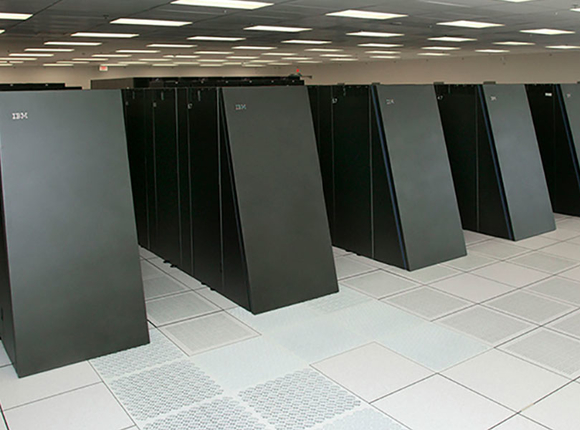
Nondestructive characterization aims to understand the internal physical properties of a material, component, or system without causing damage. The Nondestructive Characterization Institute advances the fields of non-destructive evaluation and characterization through collaborative research and development applied to real-world national security problems.
Nondestructive Characterization Institute
Nondestructive characterization aims to understand the internal physical properties of a material, component, or system without causing damage. The Nondestructive Characterization Institute advances the fields of non-destructive evaluation and characterization through collaborative research and development applied to real-world national security problems.

Take Your Place on the
Leading Edge
Our work is fundamentally transforming the field of advanced manufacturing and materials engineering. Learn more about what a career with LLNL Engineering might have in store for you.