A military drone that crashed in Lithuania originated from Ukraine and was intended to strike Russian oil export infrastructure before veering off course, the Lithuanian government said on Tuesday.
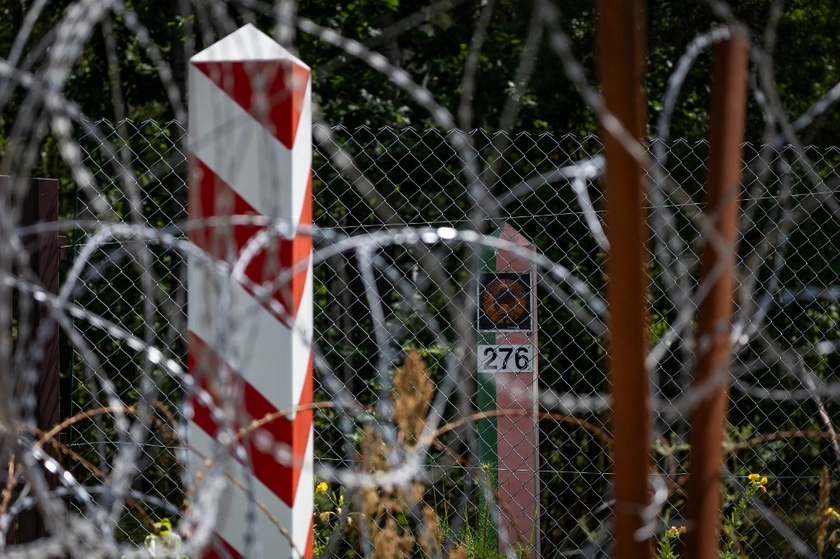
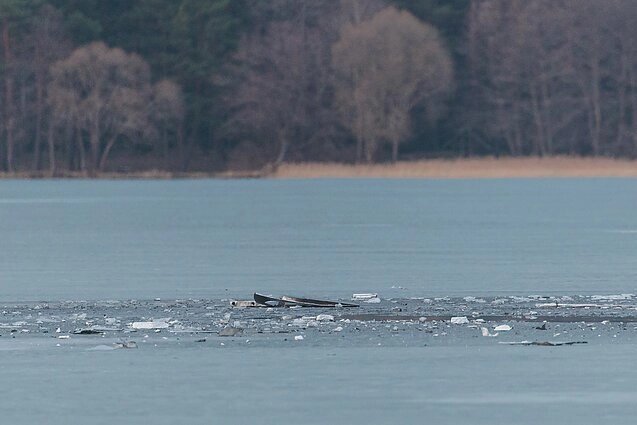
According to Reuters, the Lithuanian armed forces reported that the suspected drone entered the country’s airspace on Monday and crashed into an ice-covered lake about 20 kilometers (12 miles) from the Belarusian border.
JOIN US ON TELEGRAM
Follow our coverage of the war on the @Kyivpost_official.
The incident prompted an emergency response, with the Lithuanian government scheduling a National Security Commission meeting for Tuesday. Prime Minister Inga Ruginienė called for consultations to assess the situation.
According to officials, the drone was part of a broader Ukrainian operation targeting the Primorsk oil loading terminal – one of Russia’s key export hubs on the Baltic Sea – which was struck around the same time.
Ruginienė said Tuesday the incident highlights wider regional security risks stemming from Russia’s war against Ukraine.
“This is not a local incident, this is part of a wider security picture. Russian aggression against Ukraine creates additional risks for the whole region,” she said at a press conference.
On Monday, Lithuanian authorities reported that a suspect drone had entered the country’s airspace, most likely from Belarus.
No explosives were found at the site, Reuters reported, citing Lithuanian military spokesperson Gintautas Ciunis.

Massive Air Assault on Western Ukraine: Russian Drones Hit Historic Lviv Center, Ternopil
“We are very close to Belarus... The most likely assumption is it came from this country,” Ciunis said at the time.
Earlier concerns about regional airspace security had already been raised. Last year, Vilnius requested additional NATO air defense systems after drones from Belarus entered its territory on two separate occasions in July 2025.
On Feb. 23, Lithuanian Interior Minister Vladislav Kondratovič told Kyiv Post that Russian and Belarusian sabotage and hybrid threats posed growing risks, stressing the need for closer cooperation between Poland, Lithuania, and Ukraine as a security bulwark for Europe.
Ukrainian drones struck the port of Primorsk on the Baltic Sea in Russia’s Leningrad Oblast on March 23.
Primorsk is a key transshipment point for Russian oil and Euro-5 low-sulfur diesel, with a loading capacity of about 1 million barrels of oil and 300,000 barrels of diesel per day. The port was previously targeted in September 2025, when drone strikes reportedly disrupted operations.
Monitoring channel Exilenova+ described it as the largest oil port in this sector, with an annual capacity of up to 75 million tons, operated by Transneft.
“It is from here that the bulk of Urals crude oil is shipped, including via the ‘shadow fleet’ to circumvent sanctions,” the channel said, noting that damage could hit export revenues and logistics.
Satellite data cited by the channel indicated the fire affected a light petroleum product terminal, including gasoline, diesel, and jet fuel facilities.
The drone attack began late Sunday. By early Monday, more than 50 drones had been shot down, according to Drozdenko.
Russia’s Defense Ministry said 249 drones were intercepted overnight across multiple regions. Flight restrictions were briefly imposed at Pulkovo Airport.
Ukraine’s General Staff later confirmed the strike, saying both the tank farm and oil loading infrastructure at the Transneft-Port Primorsk terminal were hit, with a fire recorded at the site.
You can also highlight the text and press Ctrl + Enter