Computer Networks LEC #2 Communicating Over the Network Computer Networks LEC #2 Communicating Over the Network
Lecture Outlines  Layering Concept  Network Model OSI Model TCP / IP Architecture 2
Layering Concepts What is it ?  Building complex system is hard!  Approach: “Divide and overcome”.  Split job into smaller jobs or layers.  Basic Idea: each step dependent on the previous step but doesn’t need to be aware of how the previous step was done.
Layered Protocol Design Task of communication broken up into modules. Layering model is a solution to the problem of complexity in network protocols. The model divides the network protocols into layers, each of which solves part of the network communication problem. So, Layers are the different components that need to be designed or implemented when designing or implementing networks. Each layer has its own protocol and each of them responsible for a set of functions. Each layer implements a service to the next layer.
Layered network architecture • In layered architecture of Network Model, one whole network process is divided into small tasks. Each small task is then assigned to a particular layer which works dedicatedly to process the task only. • Types of Computer Network Models: OSI Model (created by the International Organization for Standardization (ISO) TCP / IP Architecture (called Internet Model) is the commercial architecture because it was used and tested extensively on the Internet.
The Open System Interconnection Model (OSI) The International Standards Organization (ISO) has developed a universal architecture for computer communications. This standard, Known as the open Systems Interconnection model, or OSI model. The purpose of OSI is to permit communications among devices made by manufacturers.
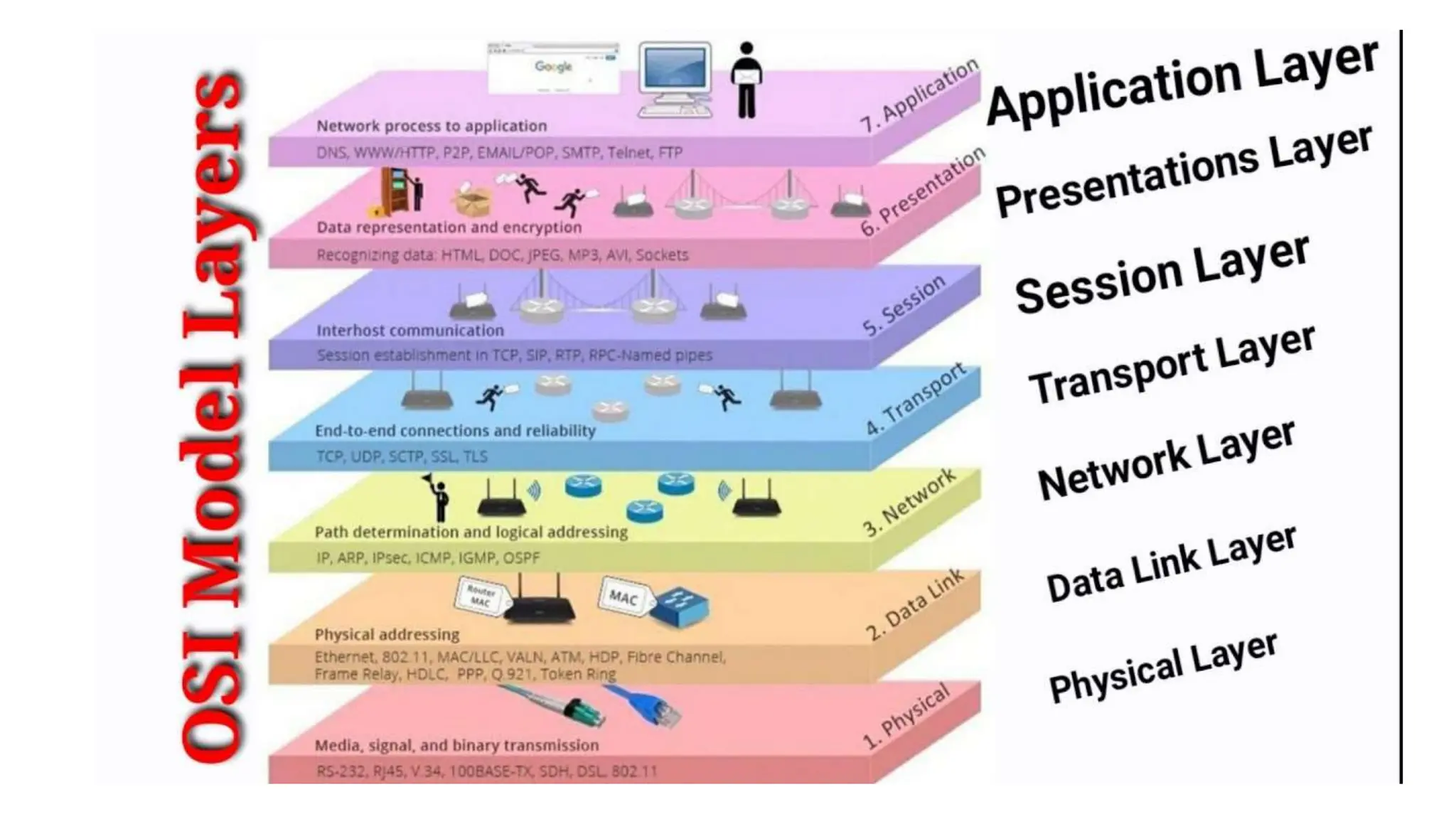
OSI Layers • OSI has seven layers. • Each layer represents a particular function. • Each function is preformed by a separate piece of hardware or software. Sometimes, a single program may perform the functions of several layers. • All layers are necessary for communications to occur.
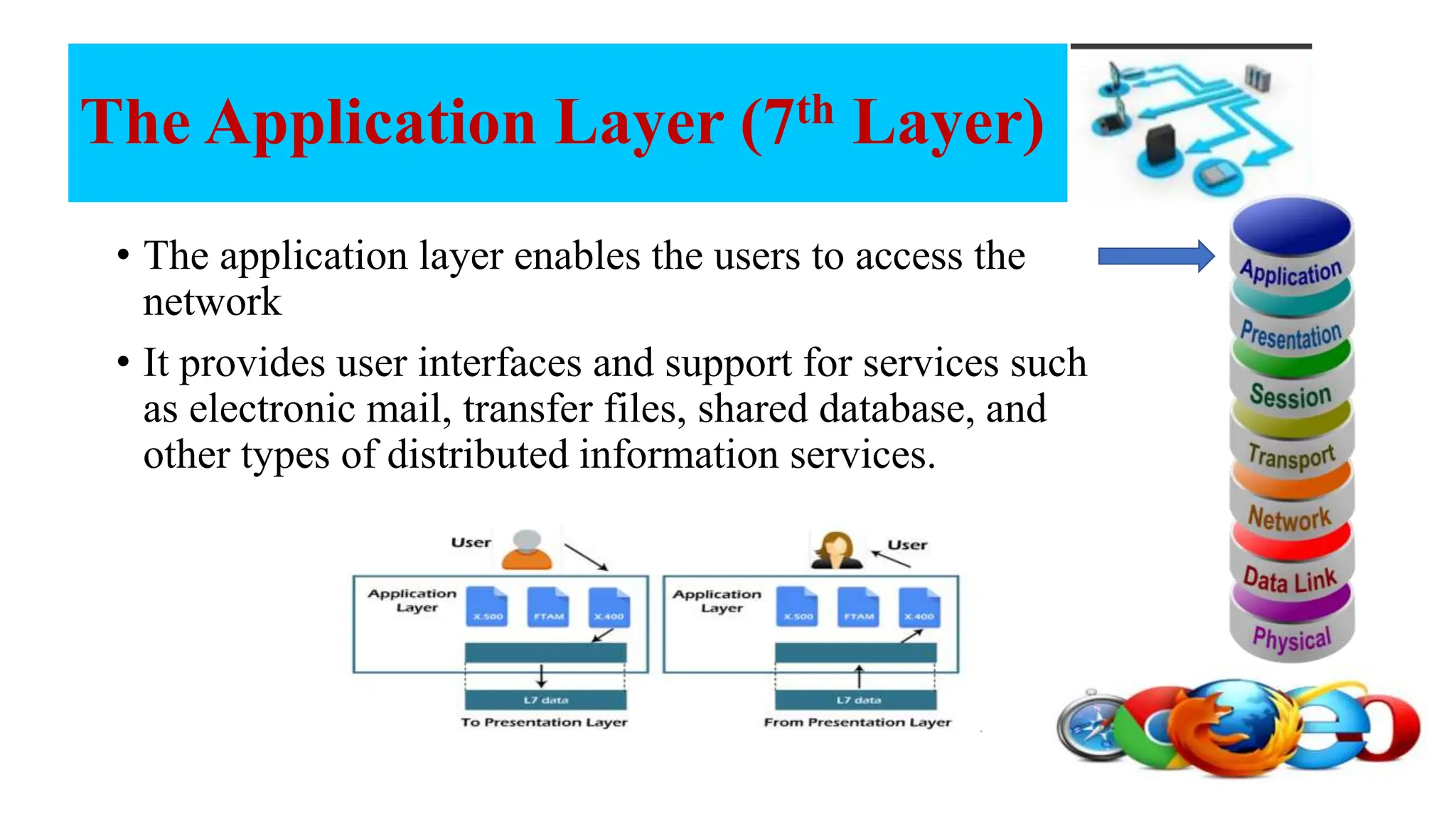
The Application Layer (7th Layer) • The application layer enables the users to access the network • It provides user interfaces and support for services such as electronic mail, transfer files, shared database, and other types of distributed information services.
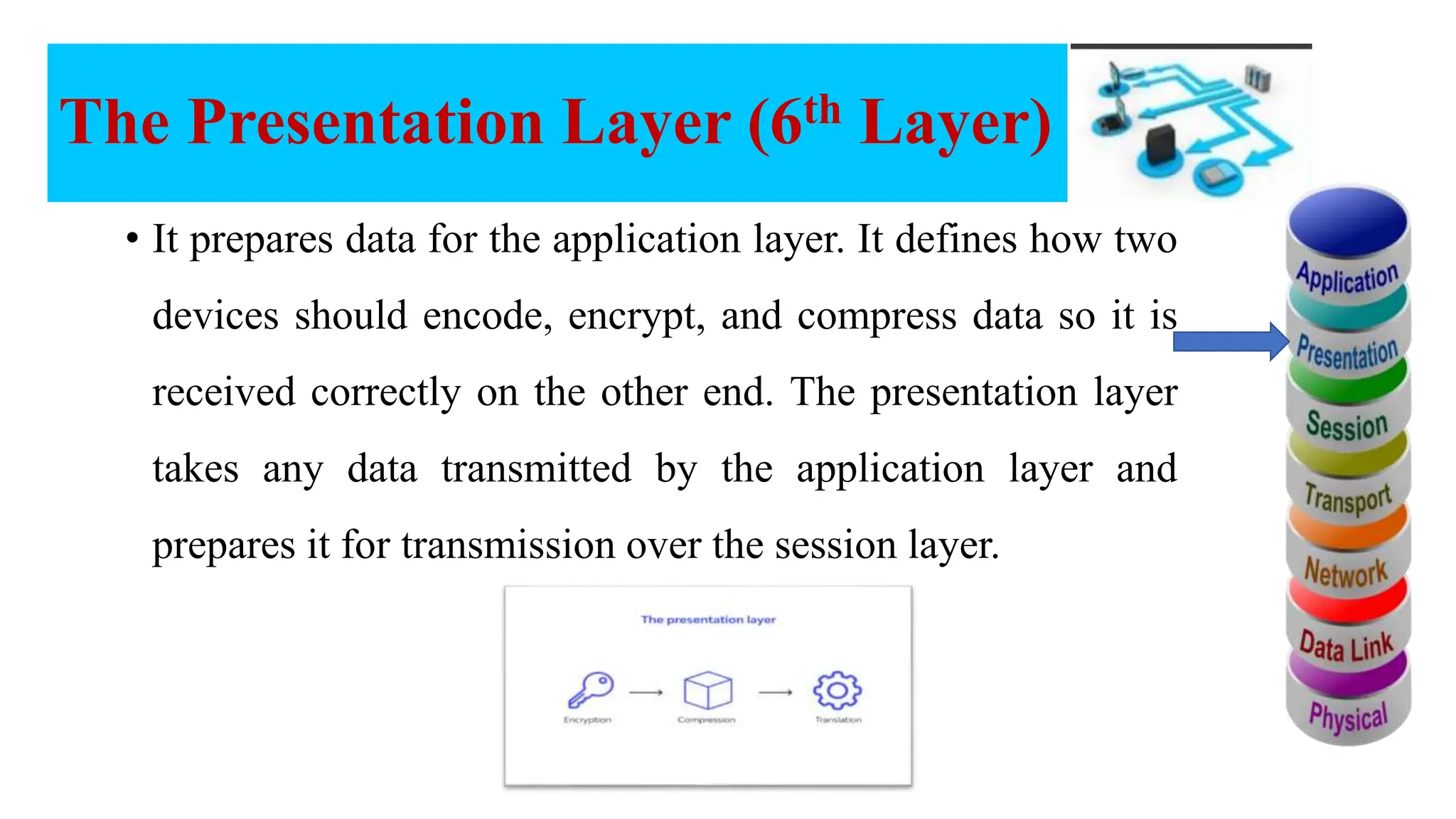
The Presentation Layer (6th Layer) • It prepares data for the application layer. It defines how two devices should encode, encrypt, and compress data so it is received correctly on the other end. The presentation layer takes any data transmitted by the application layer and prepares it for transmission over the session layer.
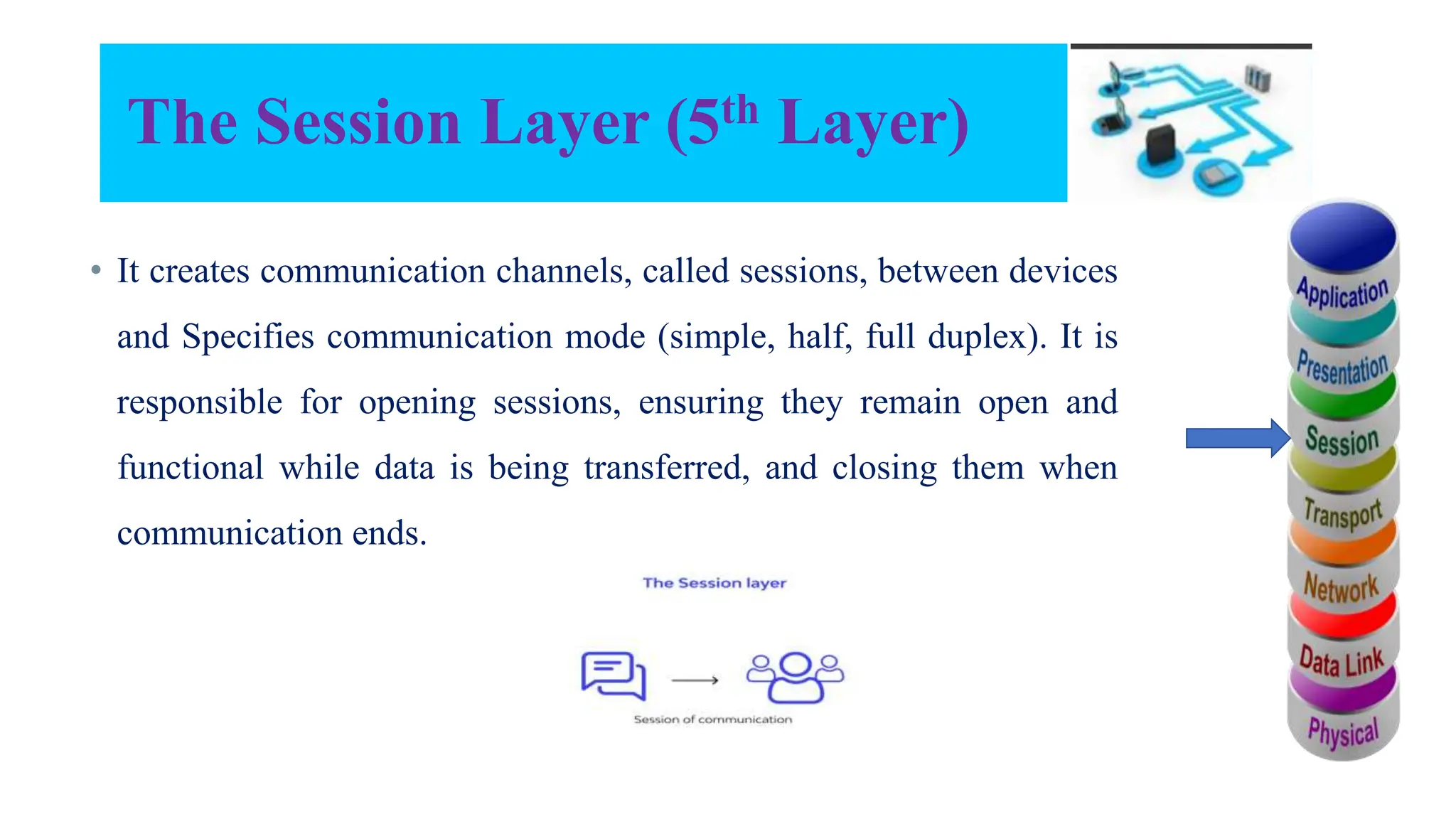
The Session Layer (5th Layer) • It creates communication channels, called sessions, between devices and Specifies communication mode (simple, half, full duplex). It is responsible for opening sessions, ensuring they remain open and functional while data is being transferred, and closing them when communication ends.
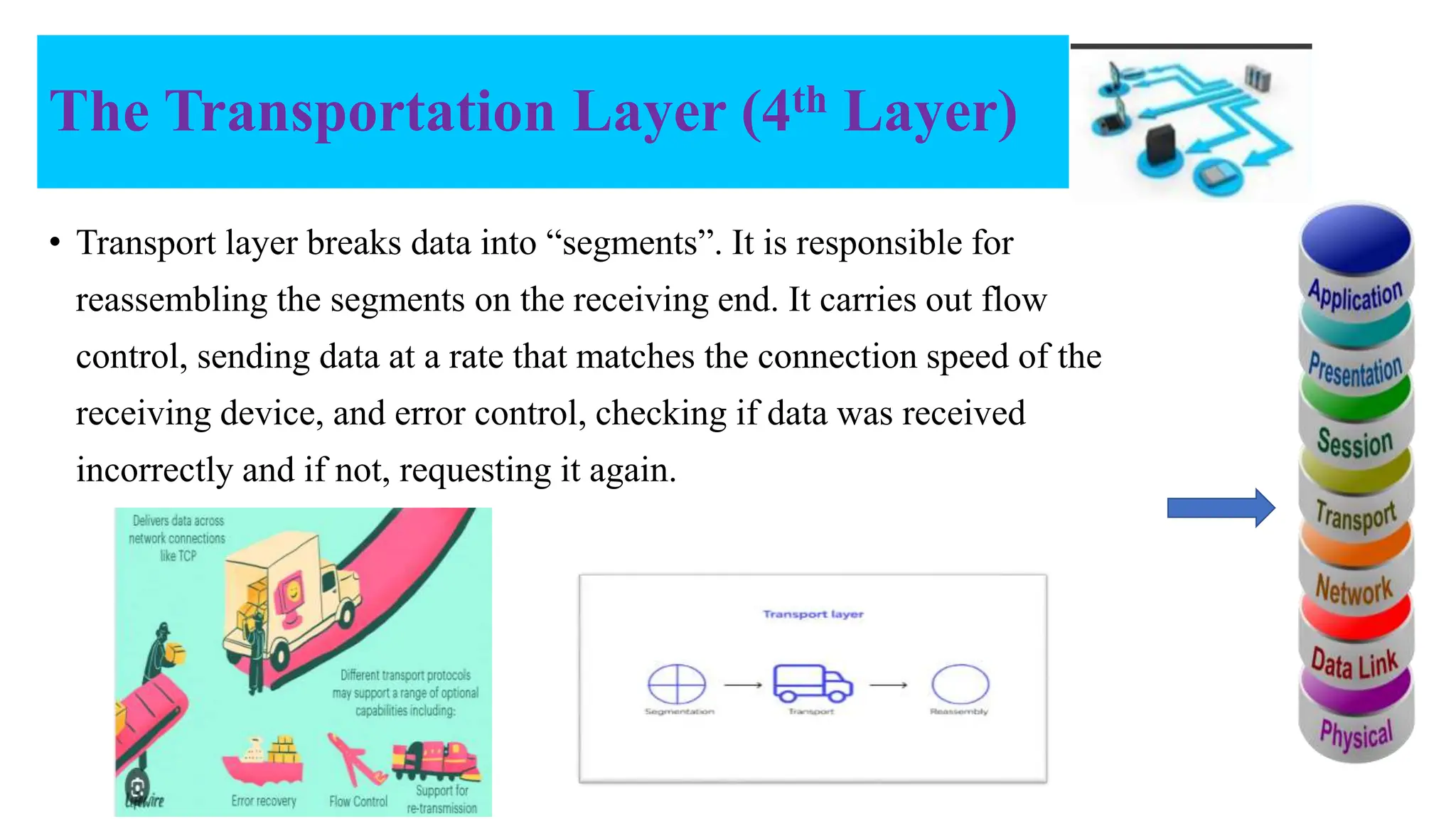
The Transportation Layer (4th Layer) • Transport layer breaks data into “segments”. It is responsible for reassembling the segments on the receiving end. It carries out flow control, sending data at a rate that matches the connection speed of the receiving device, and error control, checking if data was received incorrectly and if not, requesting it again.
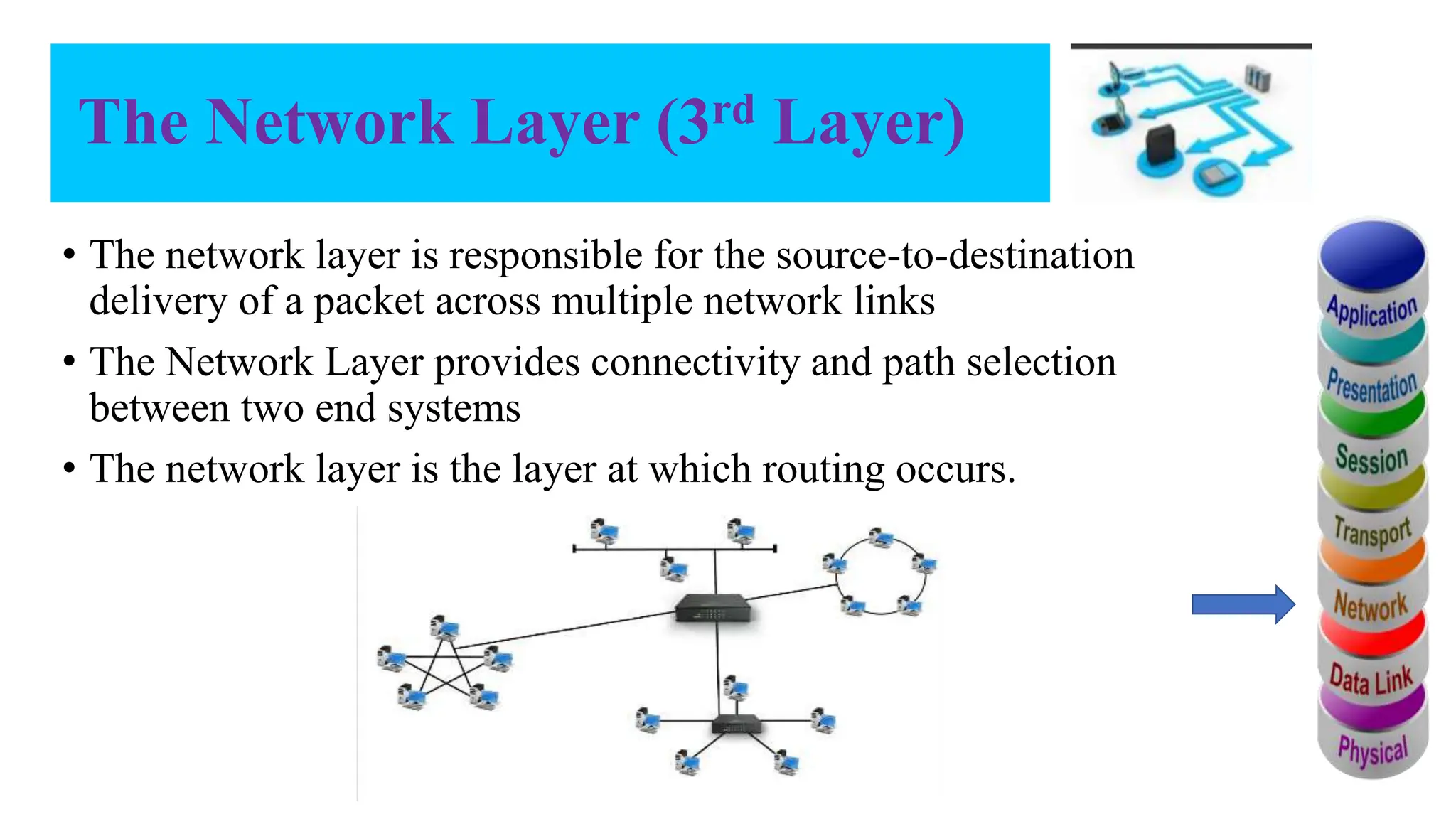
The Network Layer (3rd Layer) • The network layer is responsible for the source-to-destination delivery of a packet across multiple network links • The Network Layer provides connectivity and path selection between two end systems • The network layer is the layer at which routing occurs.
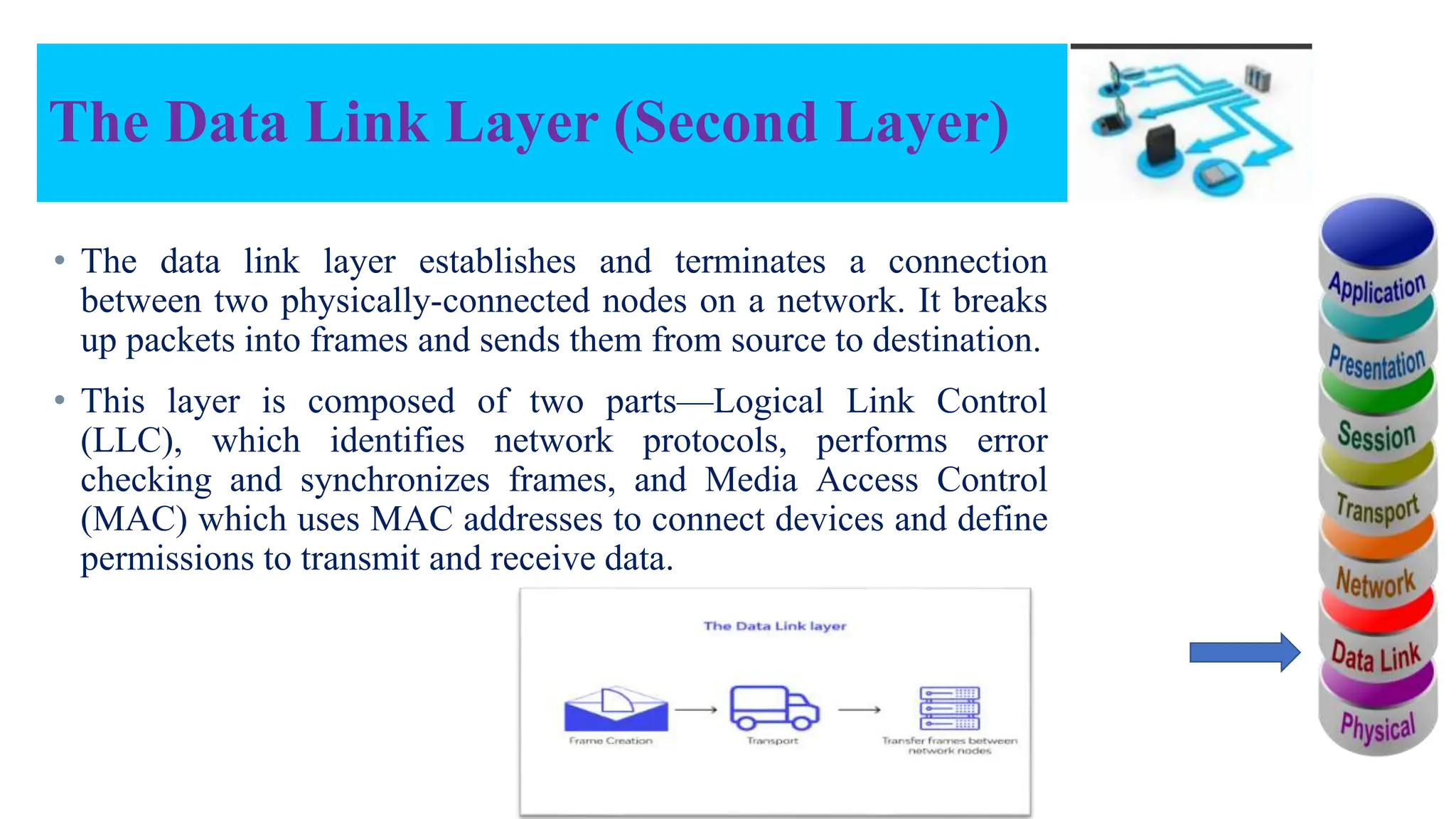
The Data Link Layer (Second Layer) • The data link layer establishes and terminates a connection between two physically-connected nodes on a network. It breaks up packets into frames and sends them from source to destination. • This layer is composed of two parts—Logical Link Control (LLC), which identifies network protocols, performs error checking and synchronizes frames, and Media Access Control (MAC) which uses MAC addresses to connect devices and define permissions to transmit and receive data.
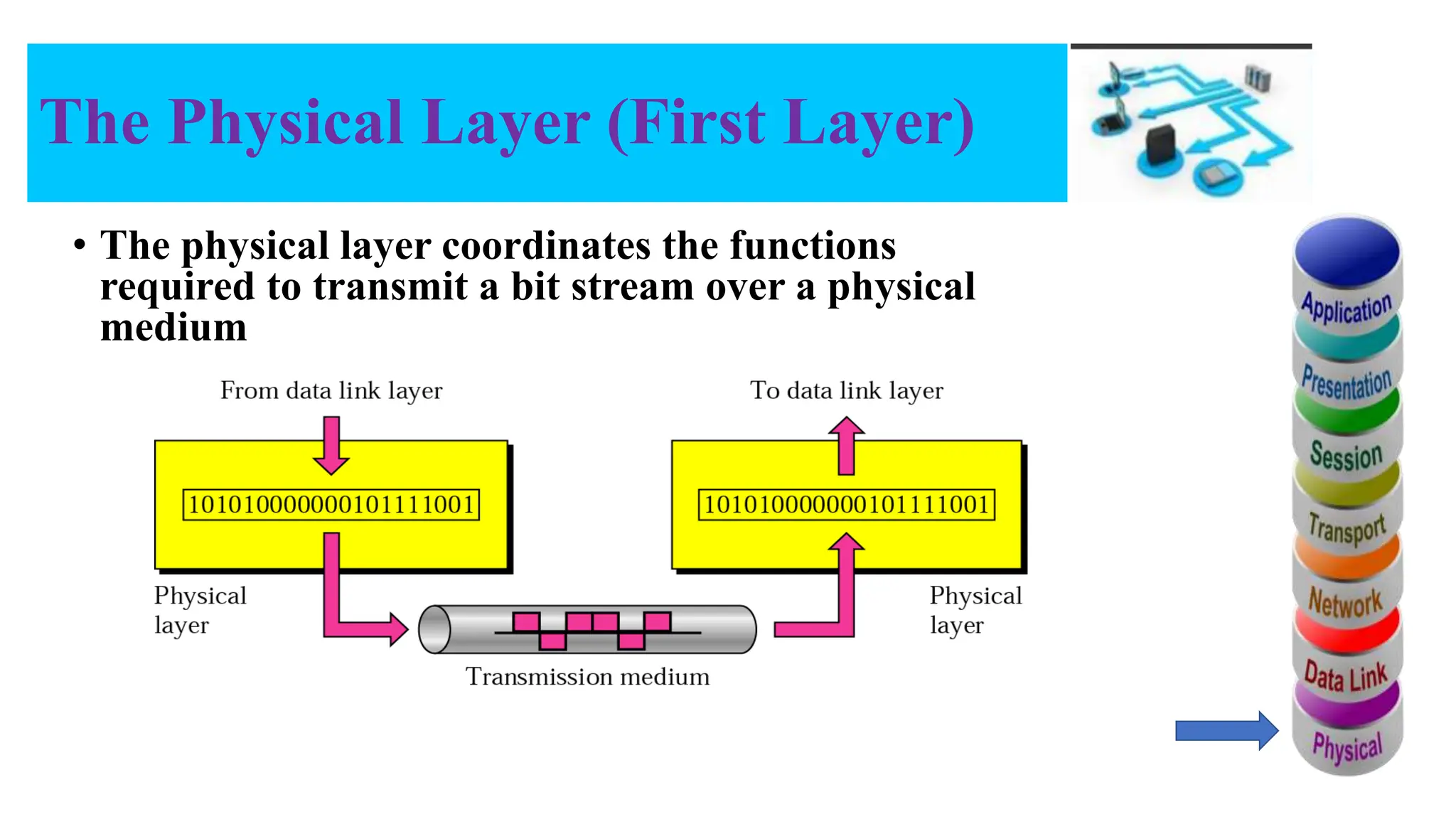
The Physical Layer (First Layer) • The physical layer coordinates the functions required to transmit a bit stream over a physical medium
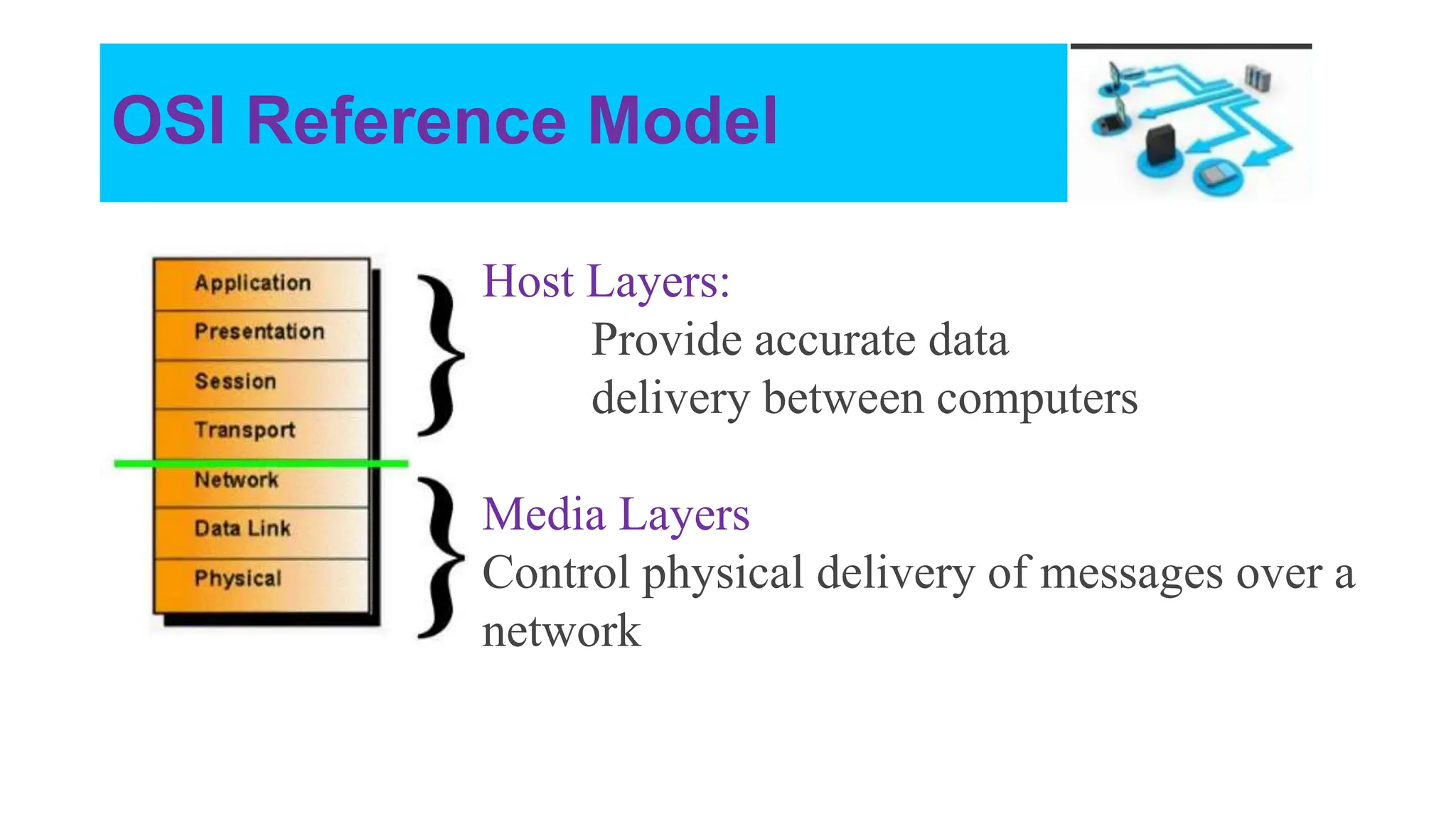
OSI Reference Model Host Layers: Provide accurate data delivery between computers Media Layers Control physical delivery of messages over a network
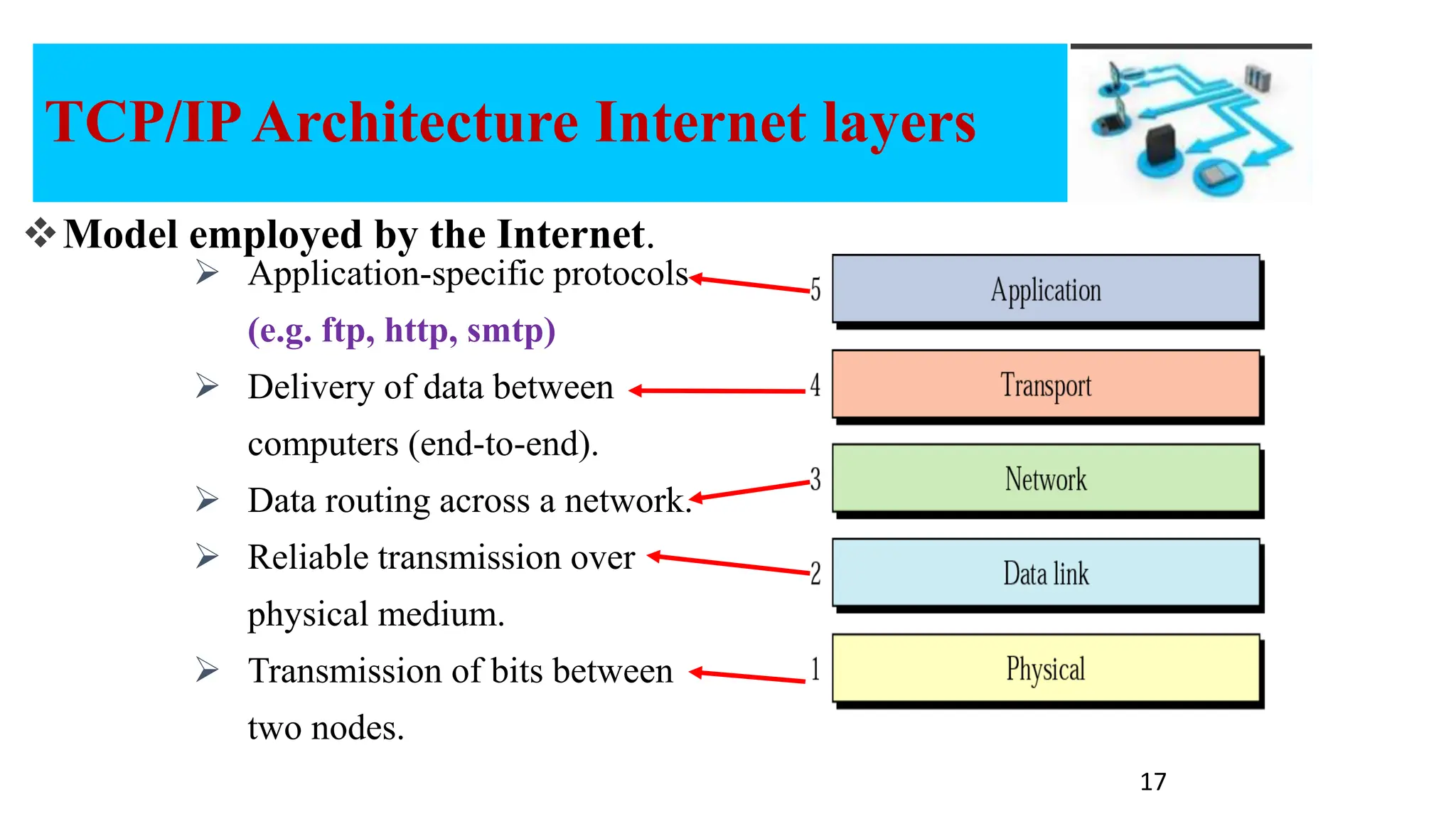
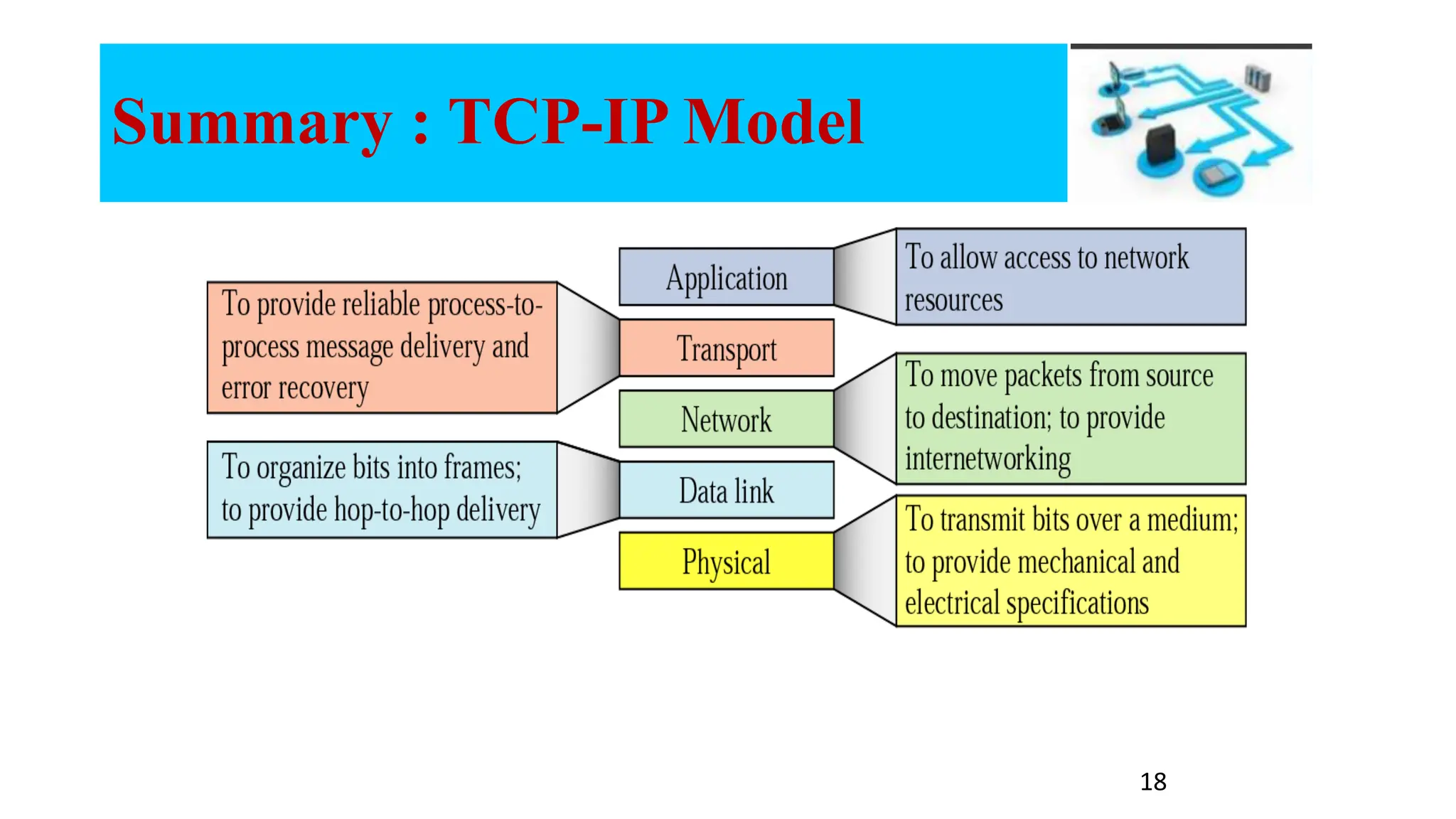
Model employed by the Internet.  Application-specific protocols (e.g. ftp, http, smtp)  Delivery of data between computers (end-to-end).  Data routing across a network.  Reliable transmission over physical medium.  Transmission of bits between two nodes. TCP/IPArchitecture Internet layers 17
Summary : TCP-IP Model 18
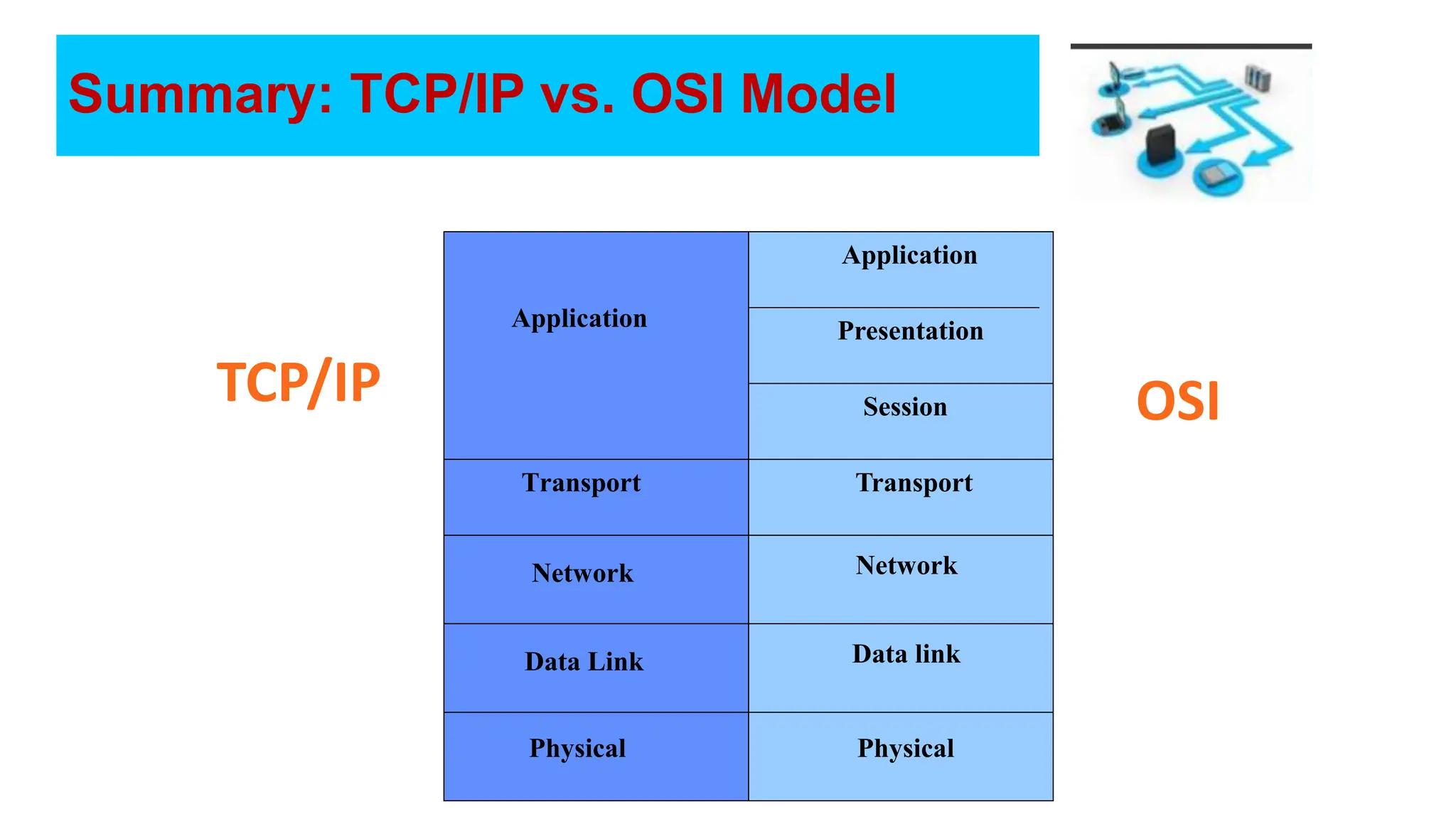
Summary: TCP/IP vs. OSI Model Physical Data link Network Transport Session Presentation Application Application Transport Network Data Link Physical TCP/IP OSI
Summary https://www.youtube.com/watch?v=vv4y_uOneC0 https://www.youtube.com/watch?v=vv4y_uOneC0
21

2- lec_2.pptxDesigning with Type, SpacingDesigning with Type, SpacingDesigning with Type, SpacingDesigning with Type, SpacingDesigning with Type, SpacingDesigning with Type, SpacingDesigning with Type, Spacing

  • 1.
    Computer Networks LEC #2 CommunicatingOver the Network Computer Networks LEC #2 Communicating Over the Network
  • 2.
    Lecture Outlines  LayeringConcept  Network Model OSI Model TCP / IP Architecture 2
  • 3.
    Layering Concepts What isit ?  Building complex system is hard!  Approach: “Divide and overcome”.  Split job into smaller jobs or layers.  Basic Idea: each step dependent on the previous step but doesn’t need to be aware of how the previous step was done.
  • 4.
    Layered Protocol Design Taskof communication broken up into modules. Layering model is a solution to the problem of complexity in network protocols. The model divides the network protocols into layers, each of which solves part of the network communication problem. So, Layers are the different components that need to be designed or implemented when designing or implementing networks. Each layer has its own protocol and each of them responsible for a set of functions. Each layer implements a service to the next layer.
  • 5.
    Layered network architecture •In layered architecture of Network Model, one whole network process is divided into small tasks. Each small task is then assigned to a particular layer which works dedicatedly to process the task only. • Types of Computer Network Models: OSI Model (created by the International Organization for Standardization (ISO) TCP / IP Architecture (called Internet Model) is the commercial architecture because it was used and tested extensively on the Internet.
  • 6.
    The Open System InterconnectionModel (OSI) The International Standards Organization (ISO) has developed a universal architecture for computer communications. This standard, Known as the open Systems Interconnection model, or OSI model. The purpose of OSI is to permit communications among devices made by manufacturers.
  • 7.
    OSI Layers • OSIhas seven layers. • Each layer represents a particular function. • Each function is preformed by a separate piece of hardware or software. Sometimes, a single program may perform the functions of several layers. • All layers are necessary for communications to occur.
  • 9.
    The Application Layer(7th Layer) • The application layer enables the users to access the network • It provides user interfaces and support for services such as electronic mail, transfer files, shared database, and other types of distributed information services.
  • 10.
    The Presentation Layer(6th Layer) • It prepares data for the application layer. It defines how two devices should encode, encrypt, and compress data so it is received correctly on the other end. The presentation layer takes any data transmitted by the application layer and prepares it for transmission over the session layer.
  • 11.
    The Session Layer(5th Layer) • It creates communication channels, called sessions, between devices and Specifies communication mode (simple, half, full duplex). It is responsible for opening sessions, ensuring they remain open and functional while data is being transferred, and closing them when communication ends.
  • 12.
    The Transportation Layer(4th Layer) • Transport layer breaks data into “segments”. It is responsible for reassembling the segments on the receiving end. It carries out flow control, sending data at a rate that matches the connection speed of the receiving device, and error control, checking if data was received incorrectly and if not, requesting it again.
  • 13.
    The Network Layer(3rd Layer) • The network layer is responsible for the source-to-destination delivery of a packet across multiple network links • The Network Layer provides connectivity and path selection between two end systems • The network layer is the layer at which routing occurs.
  • 14.
    The Data LinkLayer (Second Layer) • The data link layer establishes and terminates a connection between two physically-connected nodes on a network. It breaks up packets into frames and sends them from source to destination. • This layer is composed of two parts—Logical Link Control (LLC), which identifies network protocols, performs error checking and synchronizes frames, and Media Access Control (MAC) which uses MAC addresses to connect devices and define permissions to transmit and receive data.
  • 15.
    The Physical Layer(First Layer) • The physical layer coordinates the functions required to transmit a bit stream over a physical medium
  • 16.
    OSI Reference Model HostLayers: Provide accurate data delivery between computers Media Layers Control physical delivery of messages over a network
  • 17.
    Model employed bythe Internet.  Application-specific protocols (e.g. ftp, http, smtp)  Delivery of data between computers (end-to-end).  Data routing across a network.  Reliable transmission over physical medium.  Transmission of bits between two nodes. TCP/IPArchitecture Internet layers 17
  • 18.
  • 19.
    Summary: TCP/IP vs.OSI Model Physical Data link Network Transport Session Presentation Application Application Transport Network Data Link Physical TCP/IP OSI
  • 20.
  • 21.