7. Tree - Data Structures using C++ by Varsha Patil
The document discusses different types of trees and graphs as data structures. It defines trees as hierarchical data structures that can represent information in a flexible manner. Binary search trees allow rapid retrieval of data based on keys. Different types of trees are discussed including binary trees, ordered trees, rooted trees, and complete trees. Graphs are also covered as structures that can represent relationships between data items and support applications like social networks. Common graph terms like nodes, edges, directed/undirected graphs, and connectivity are defined.
Introduction to the subject of data structures, focusing on their significance and representation.
Explains trees for hierarchical data representation, definitions of Binary Search Trees, and their applications in data handling.
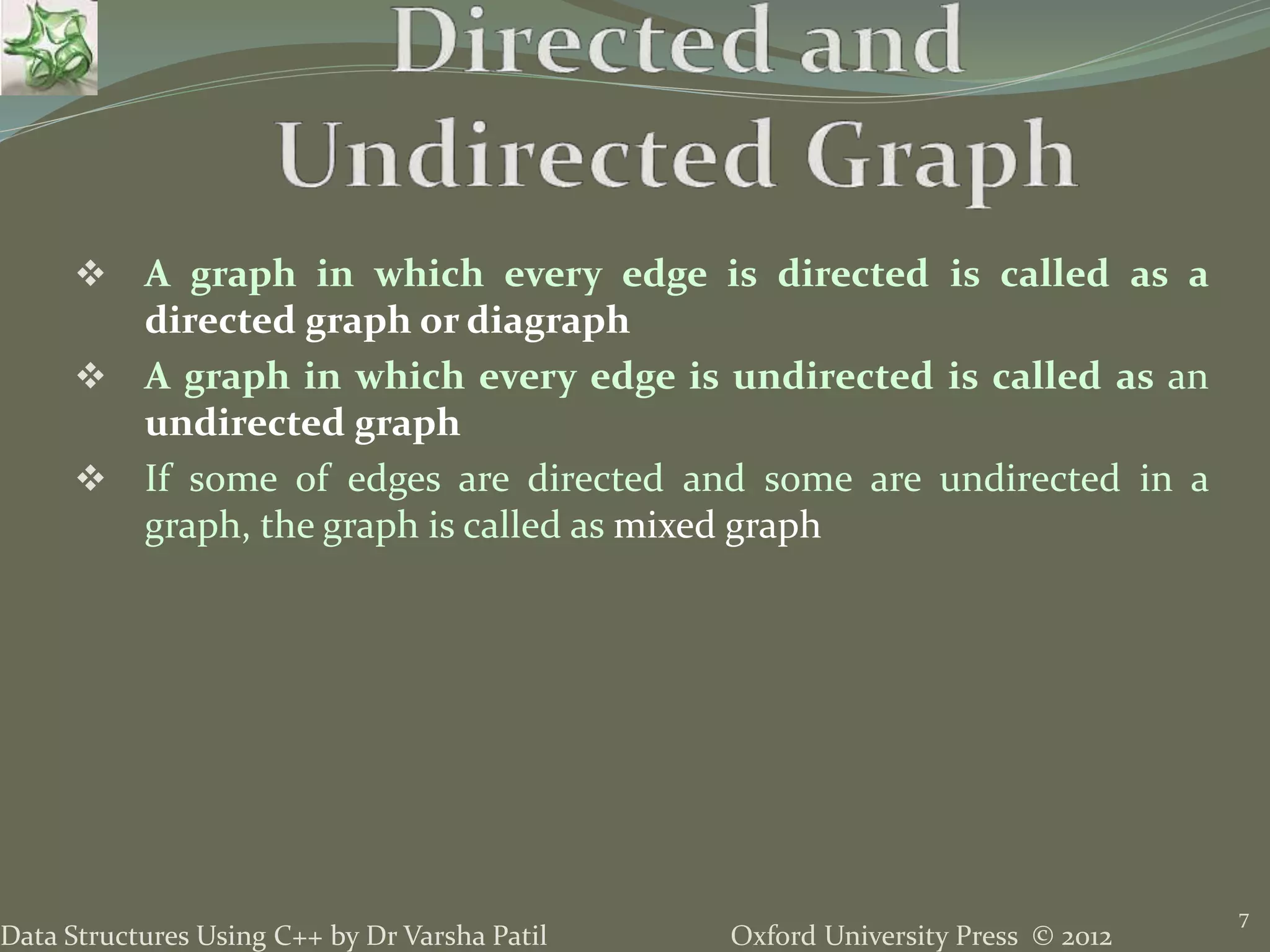
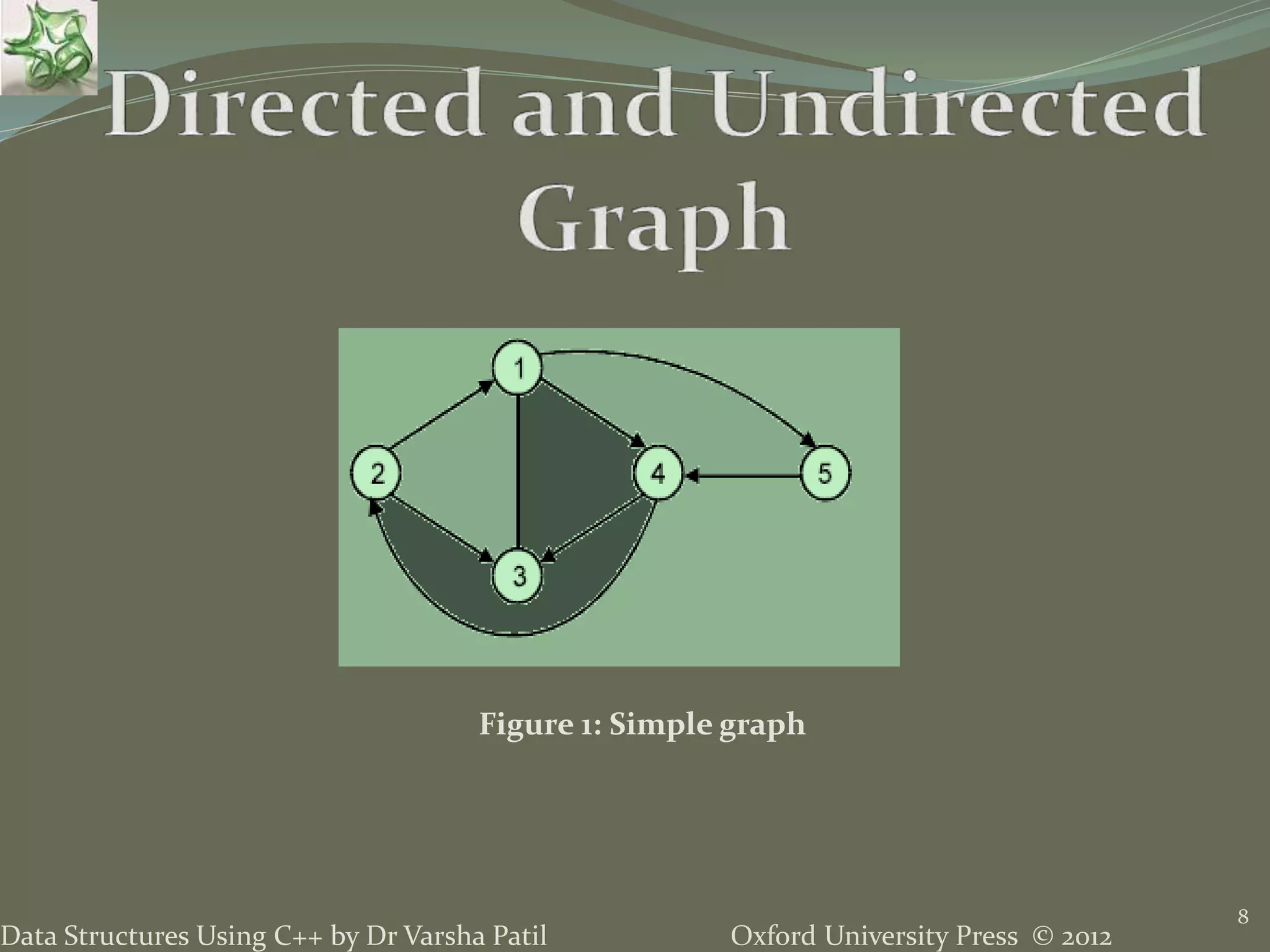
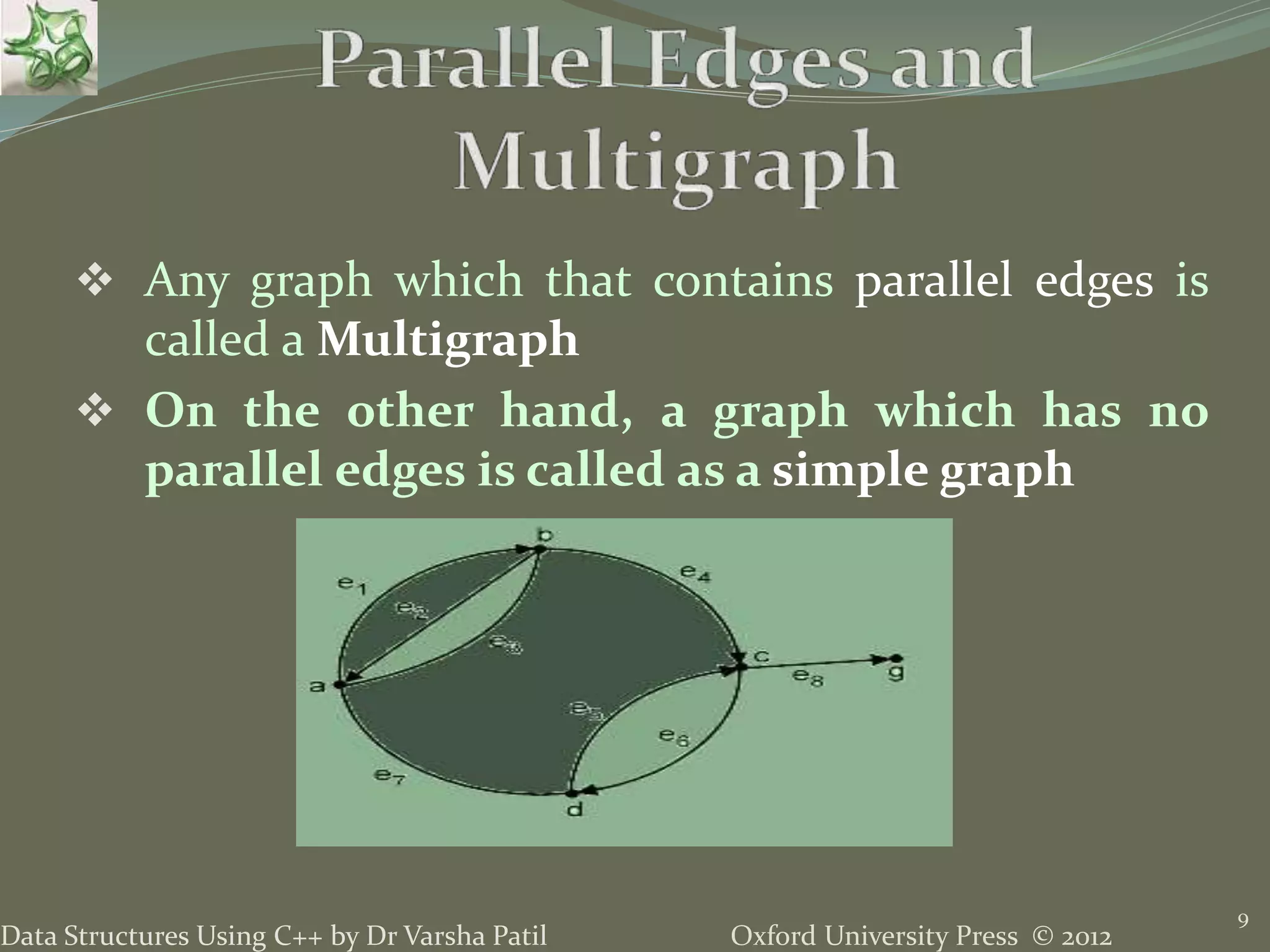
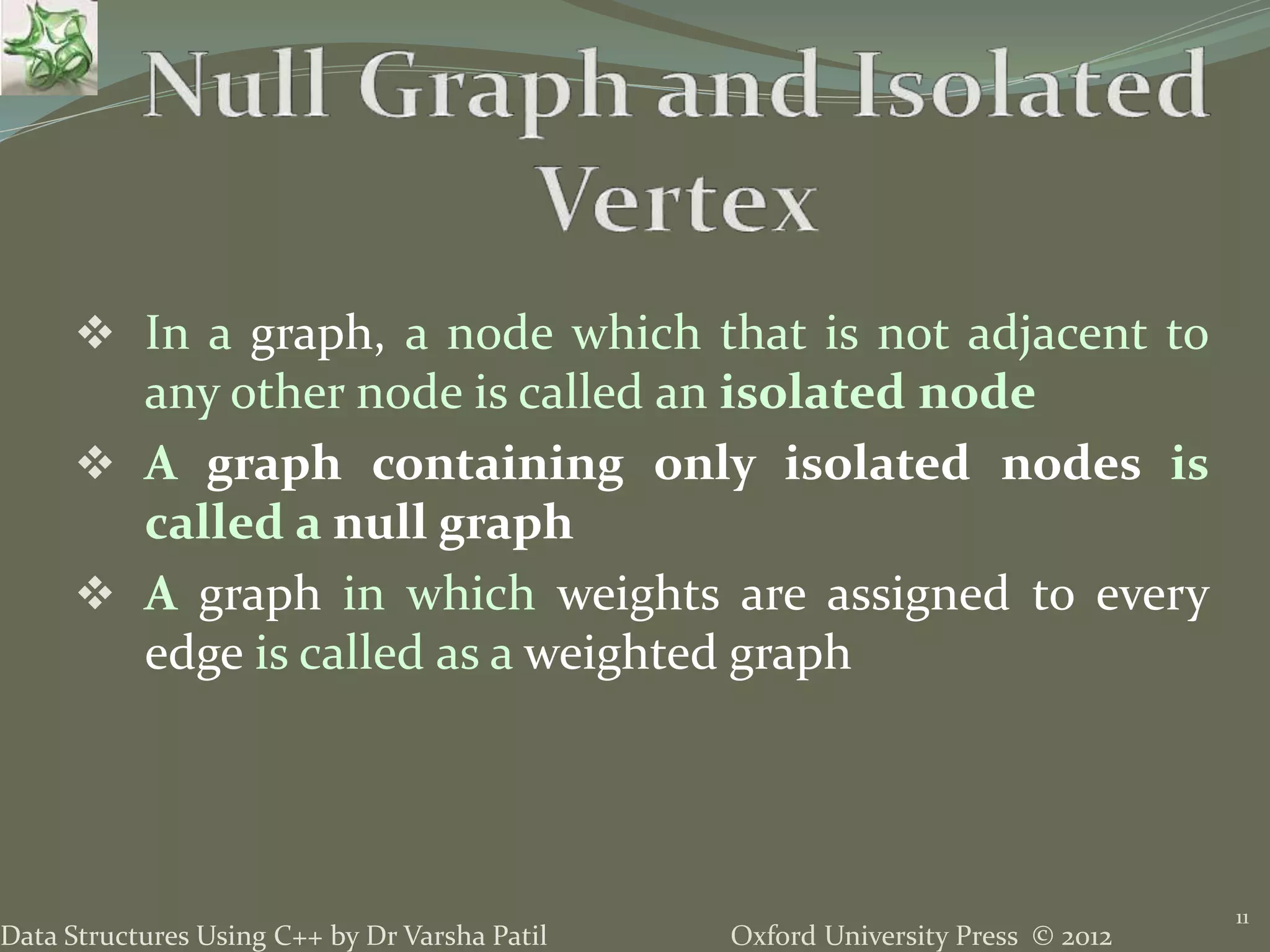
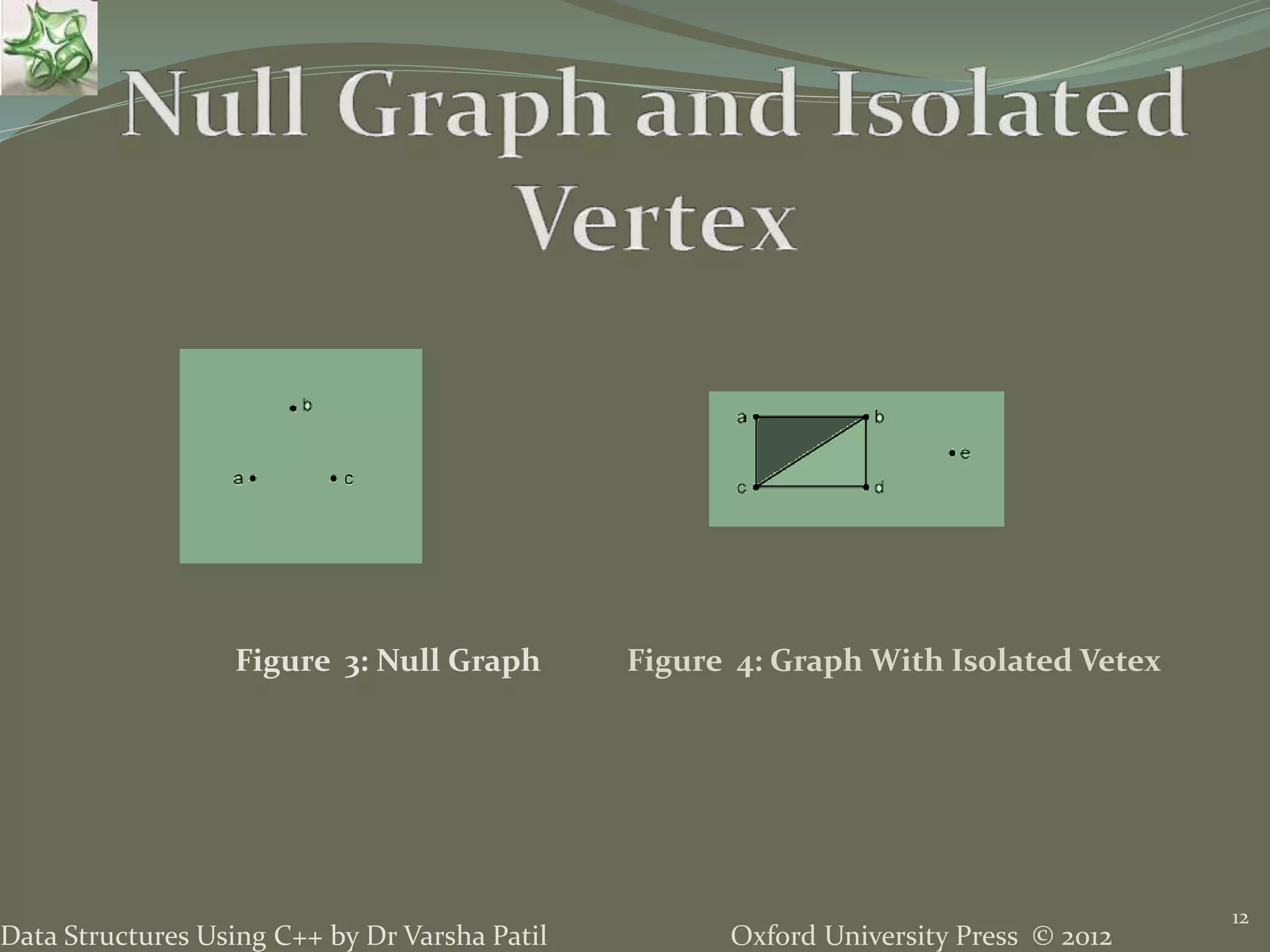
Defines graph concepts including adjacent nodes, directed/undirected graphs, multigraphs, and isolated nodes.
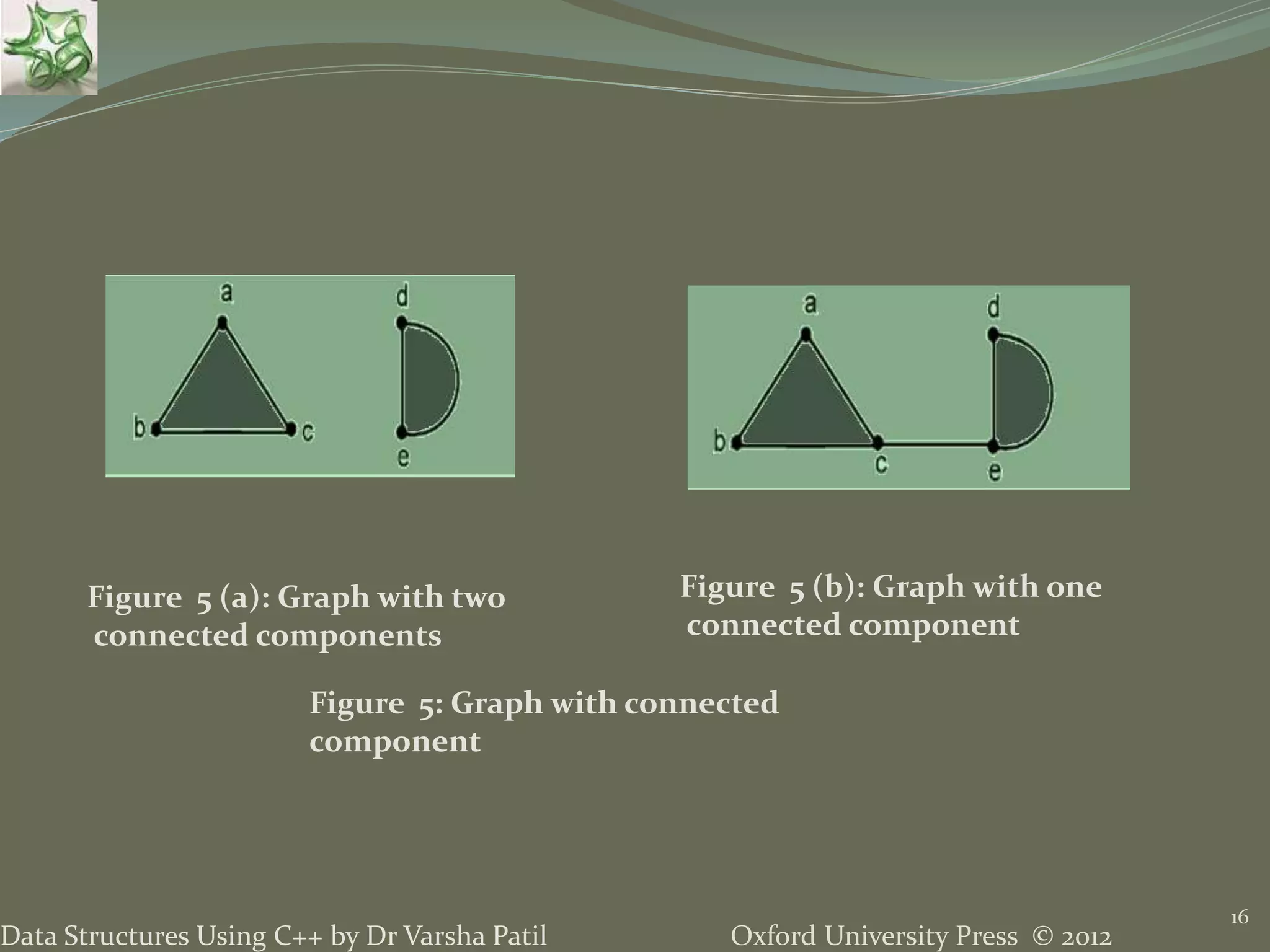
Introduces graph metrics such as outdegree, indegree, cycles, and connectivity among nodes.
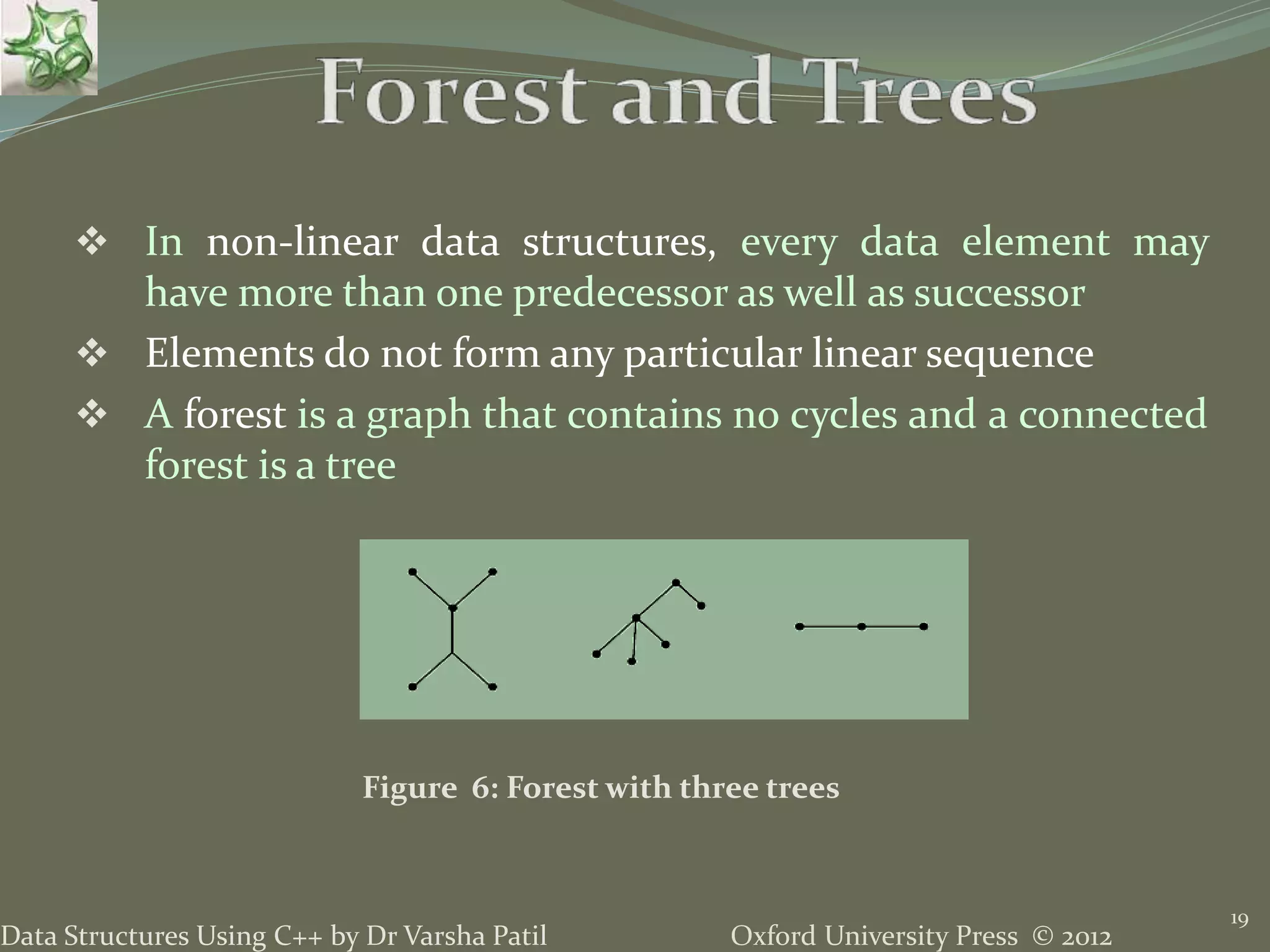
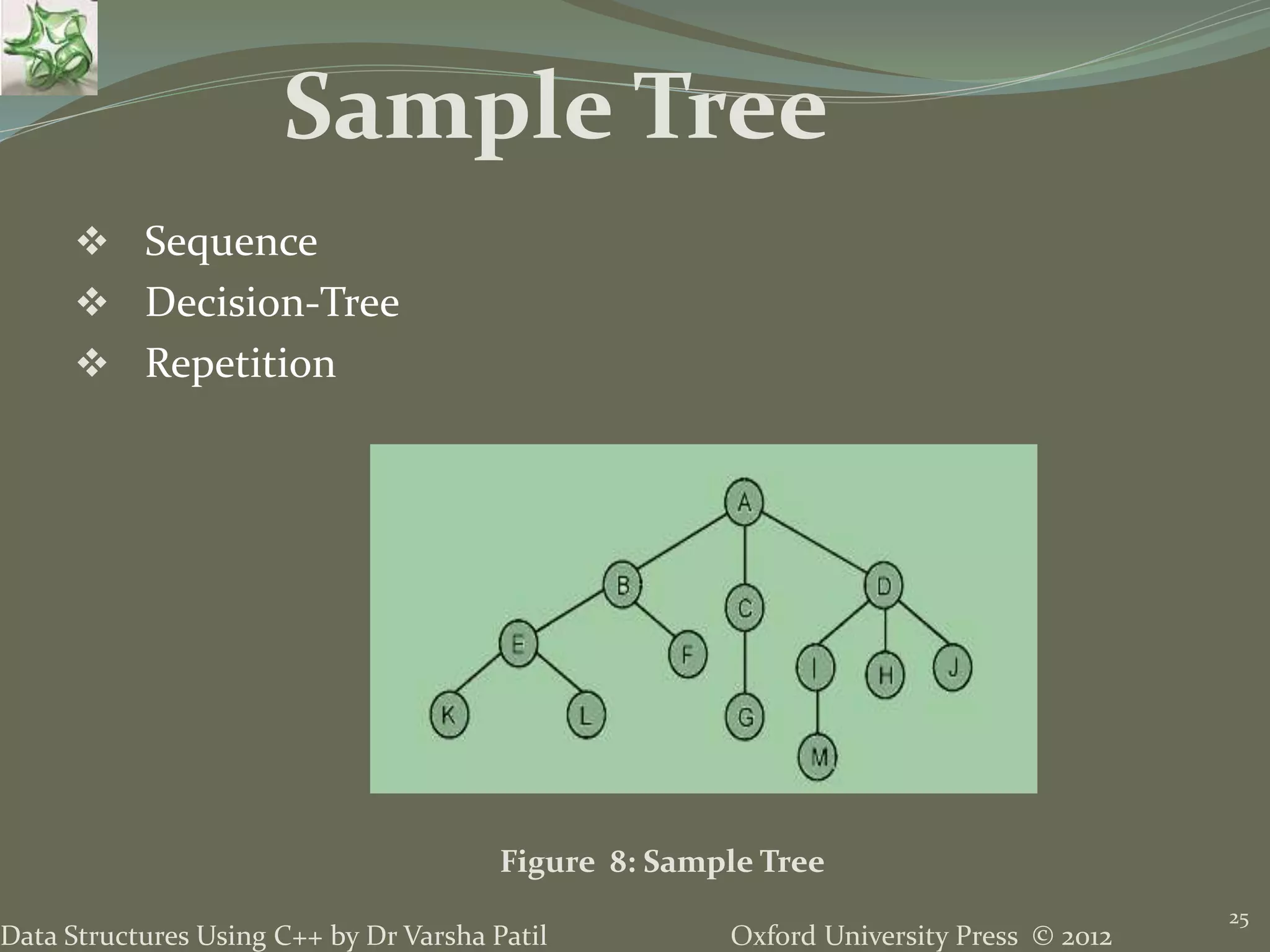
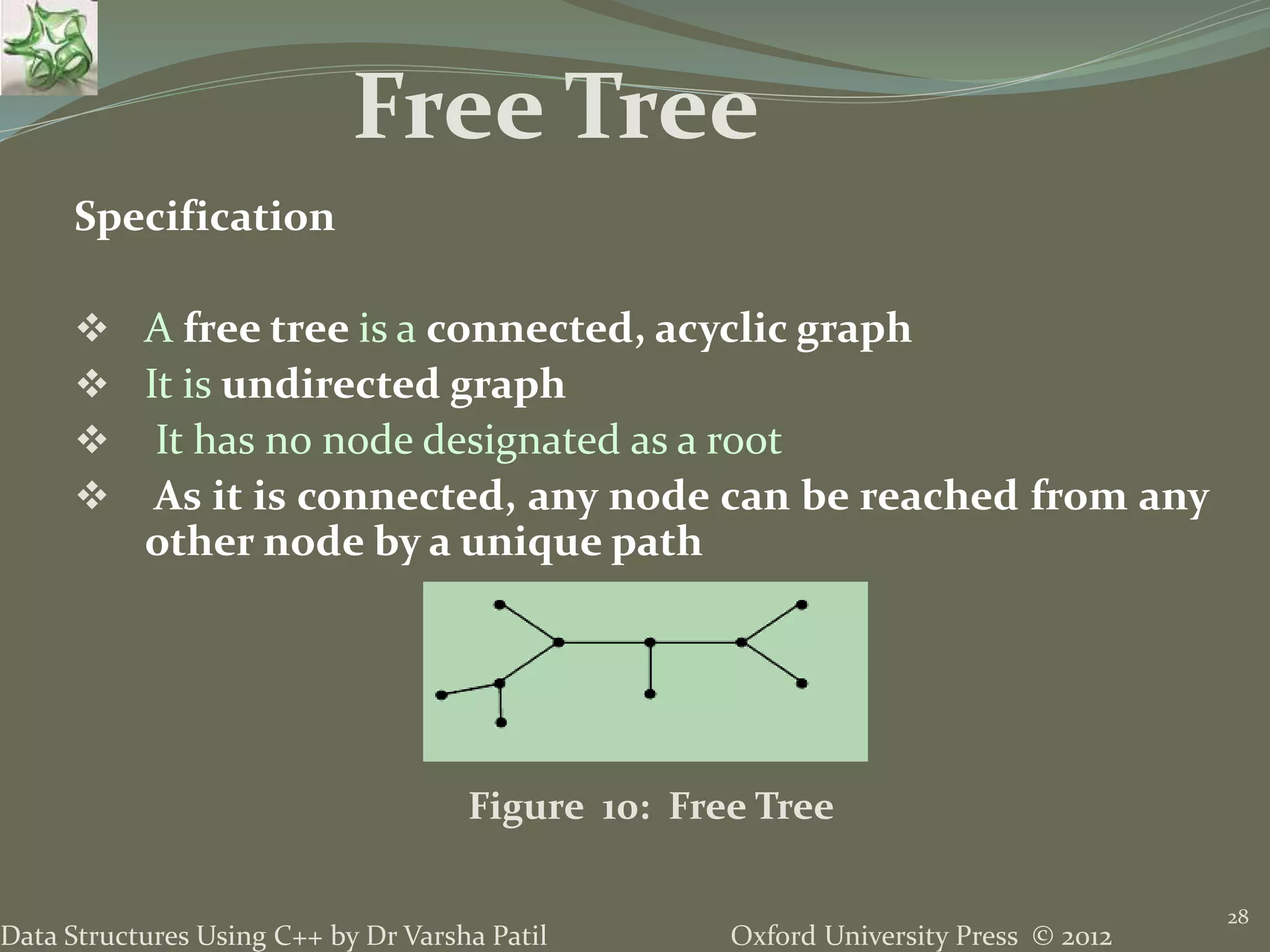
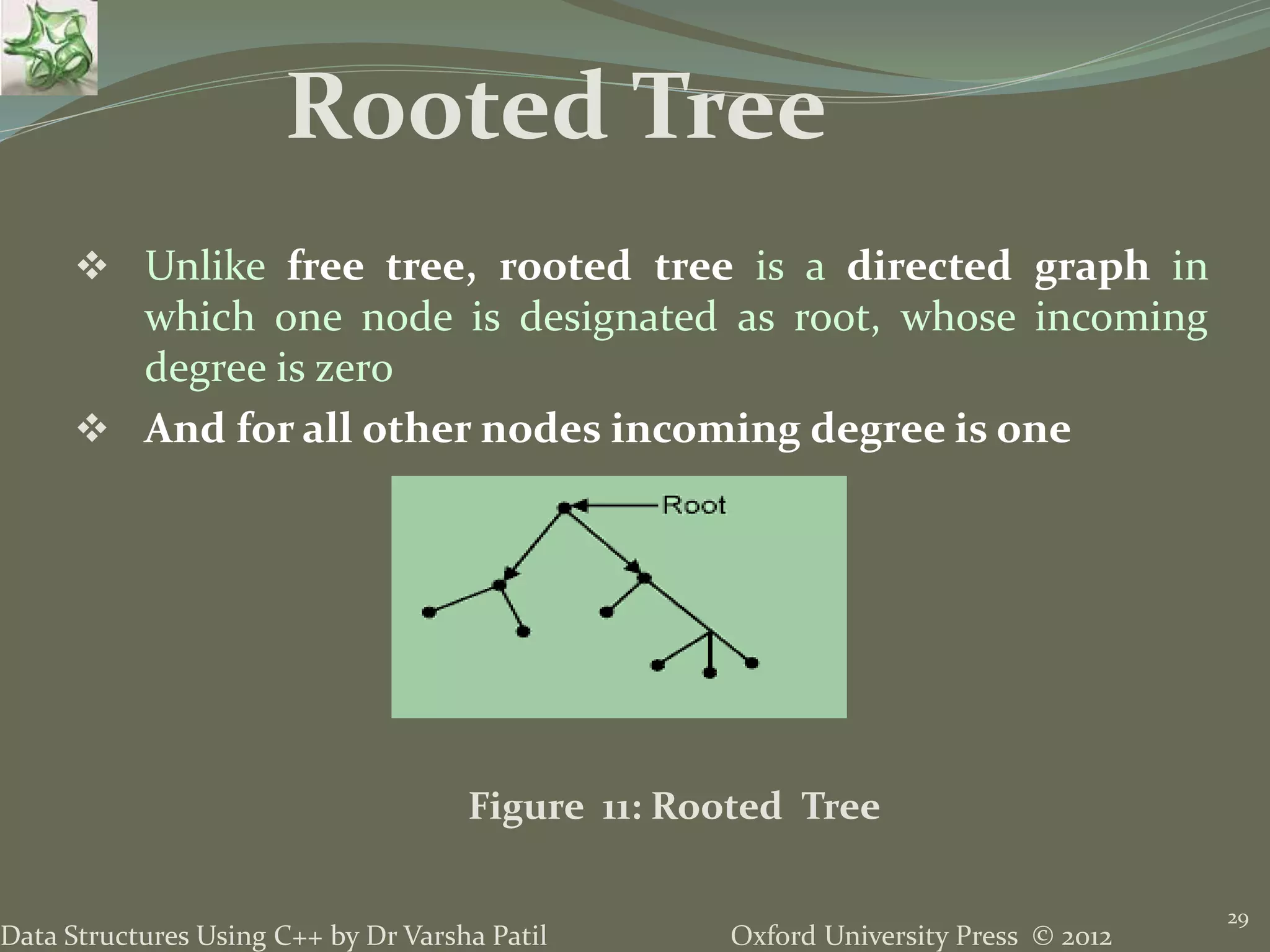
Describes the basics of trees, acyclic nature of graphs, and definitions including forests and directed trees.
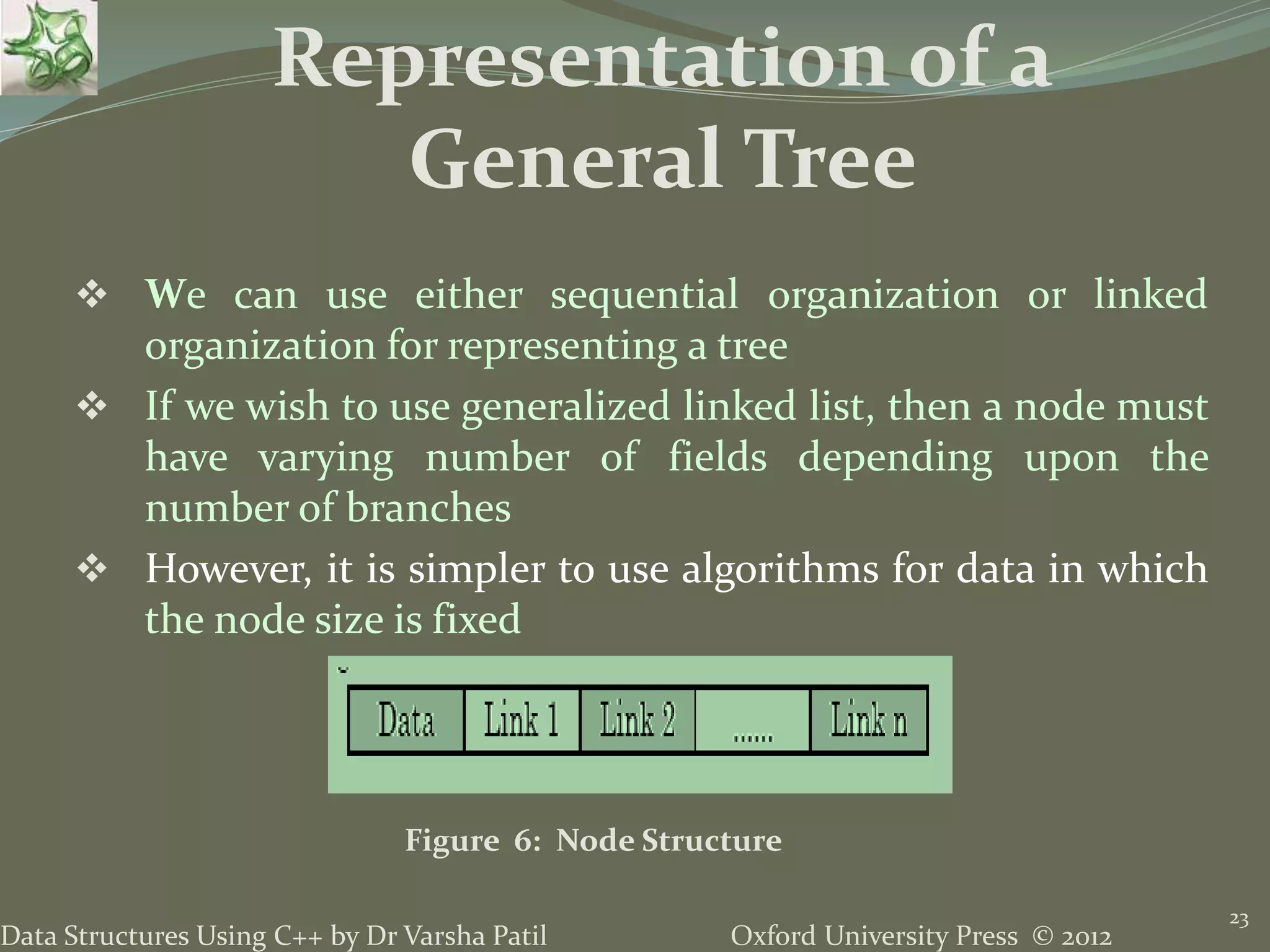
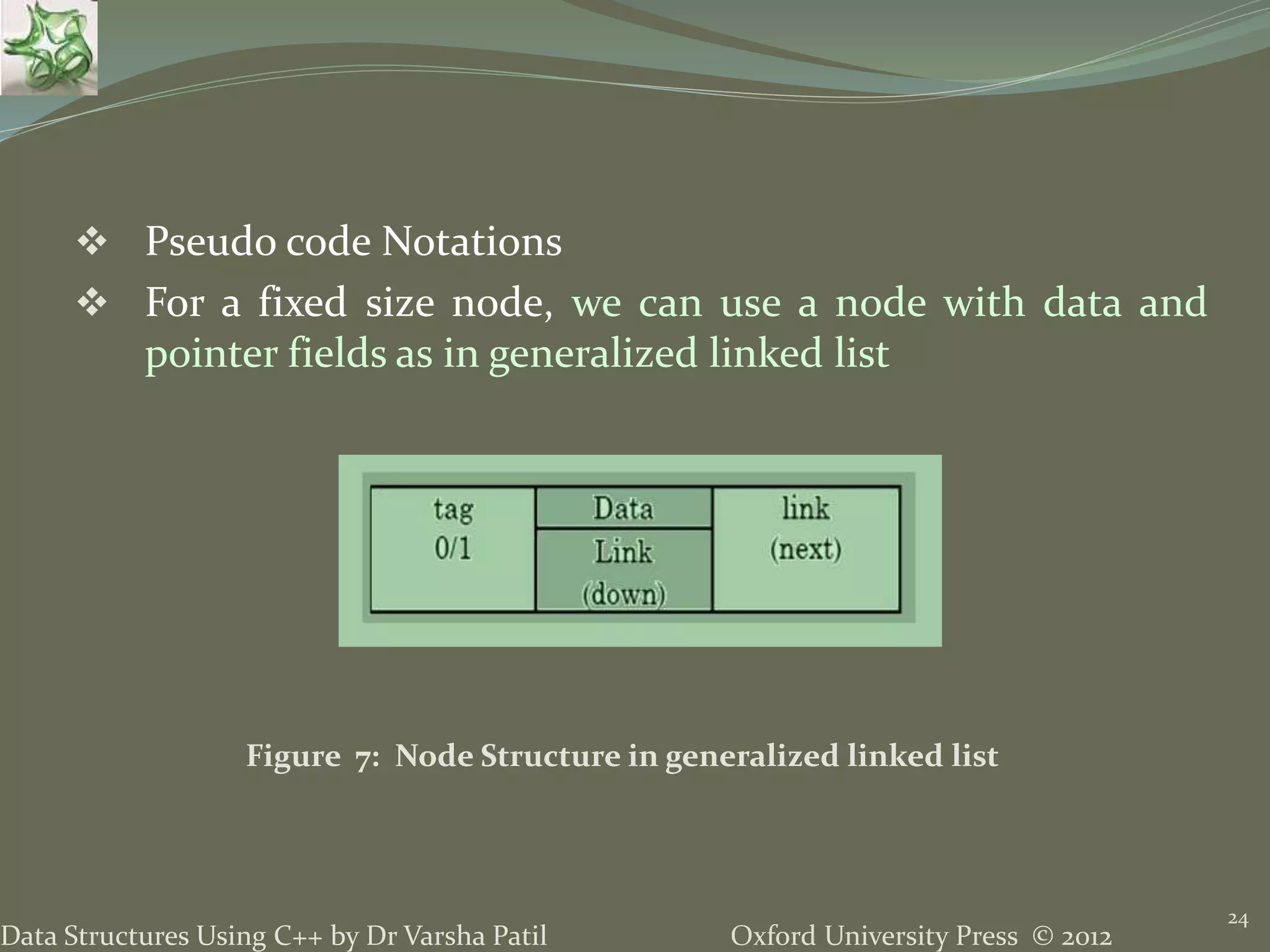
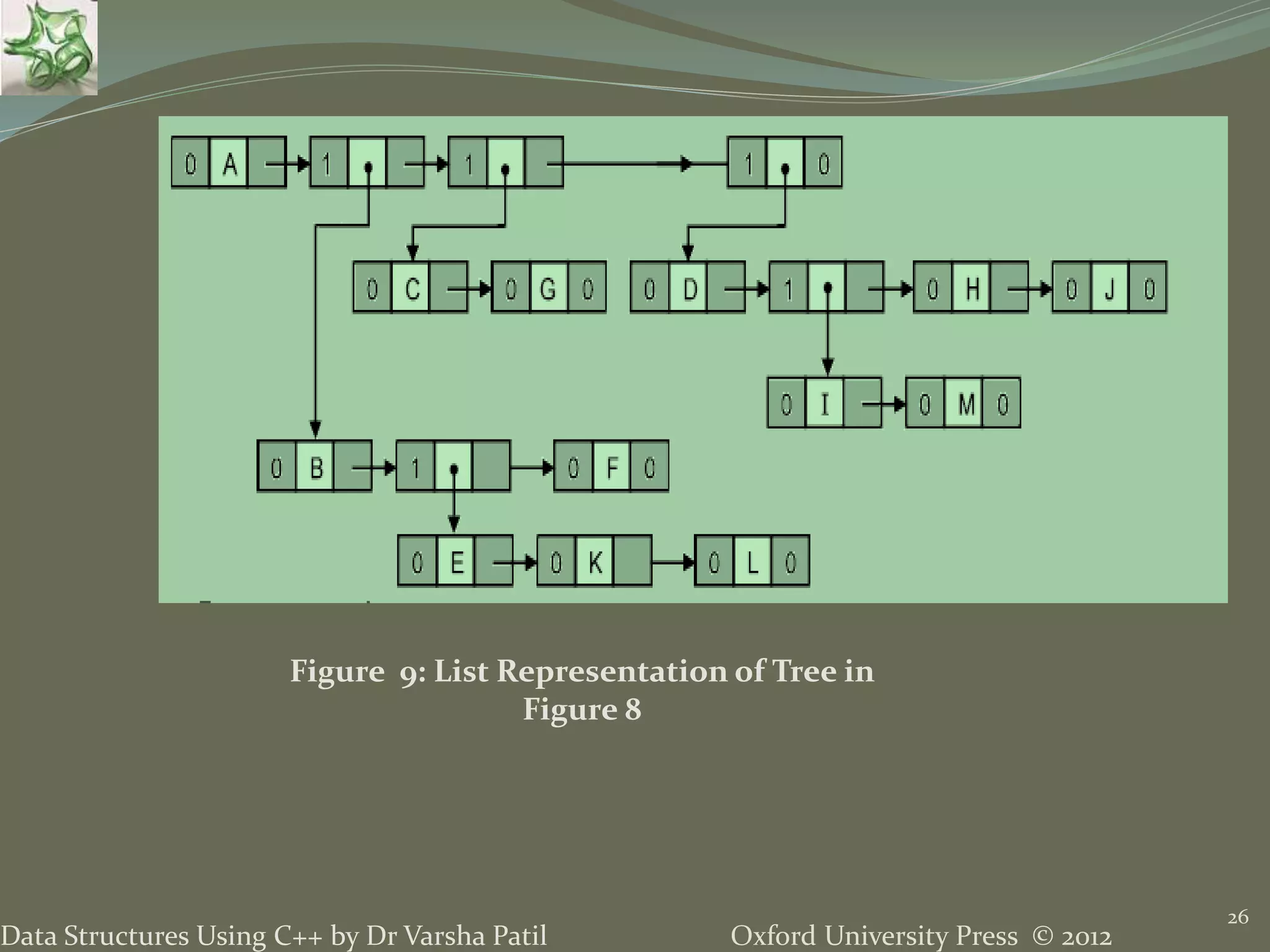
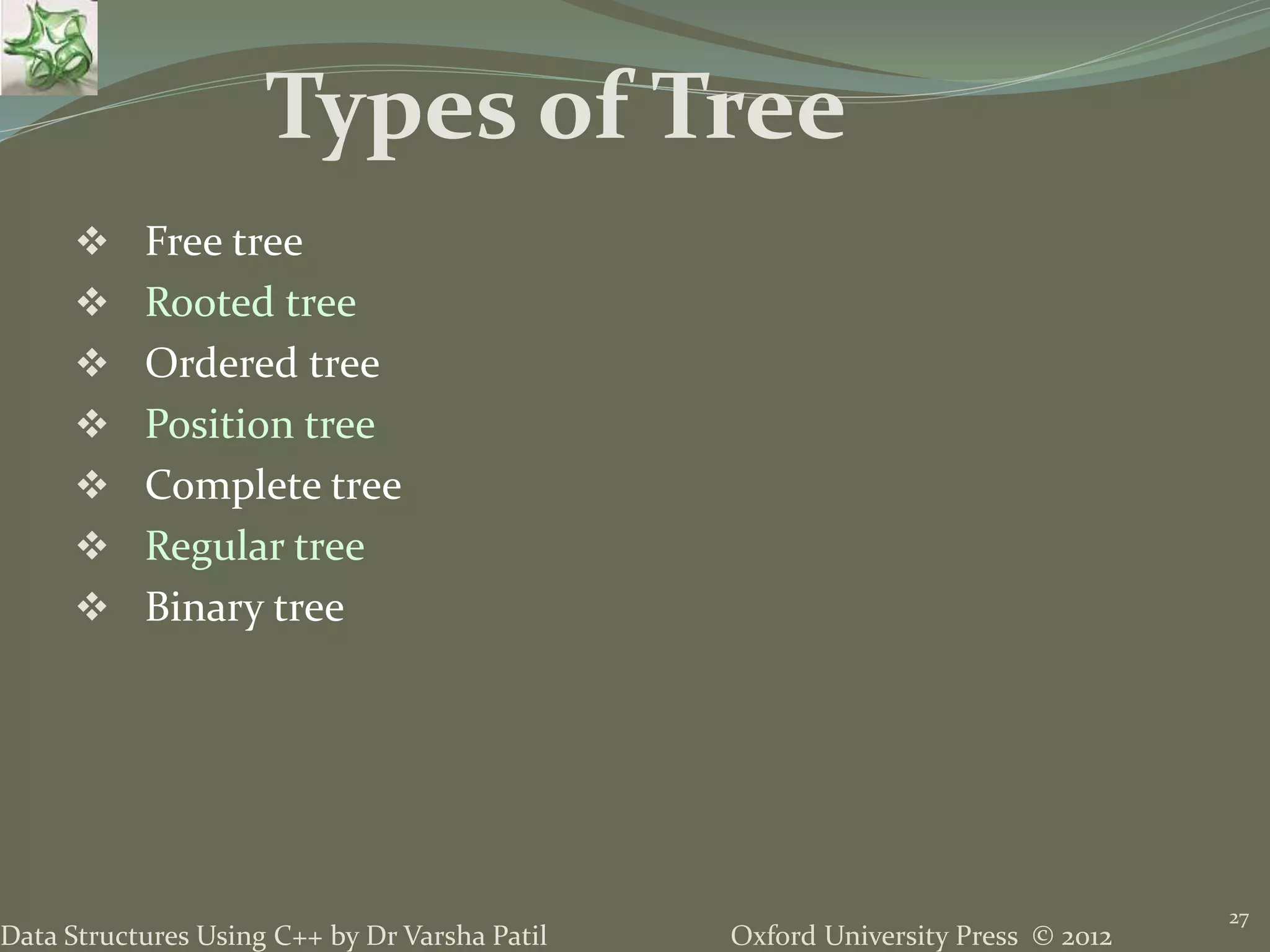
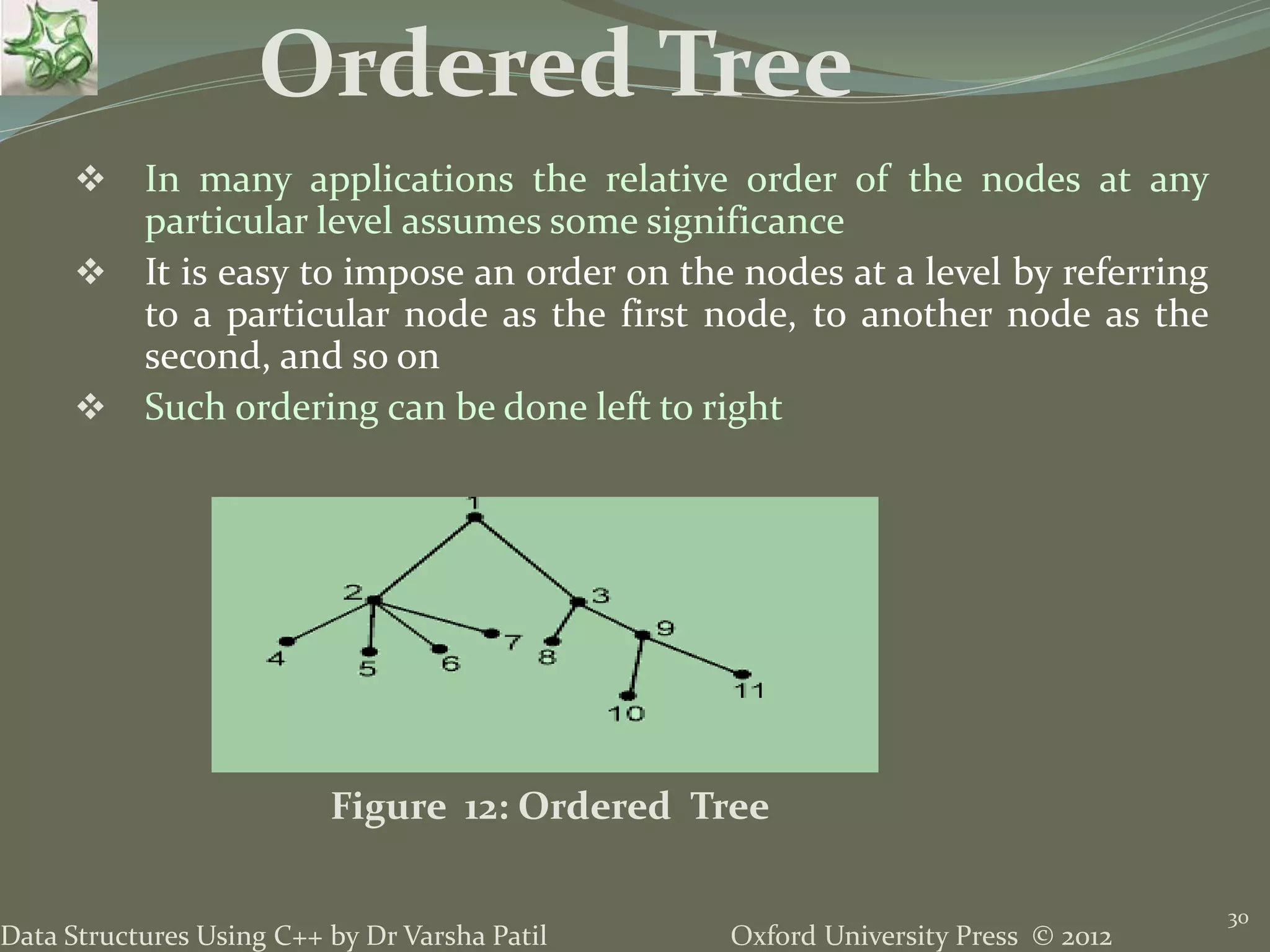
Defines types of trees (e.g., rooted, ordered, complete) and explains tree representation methods.
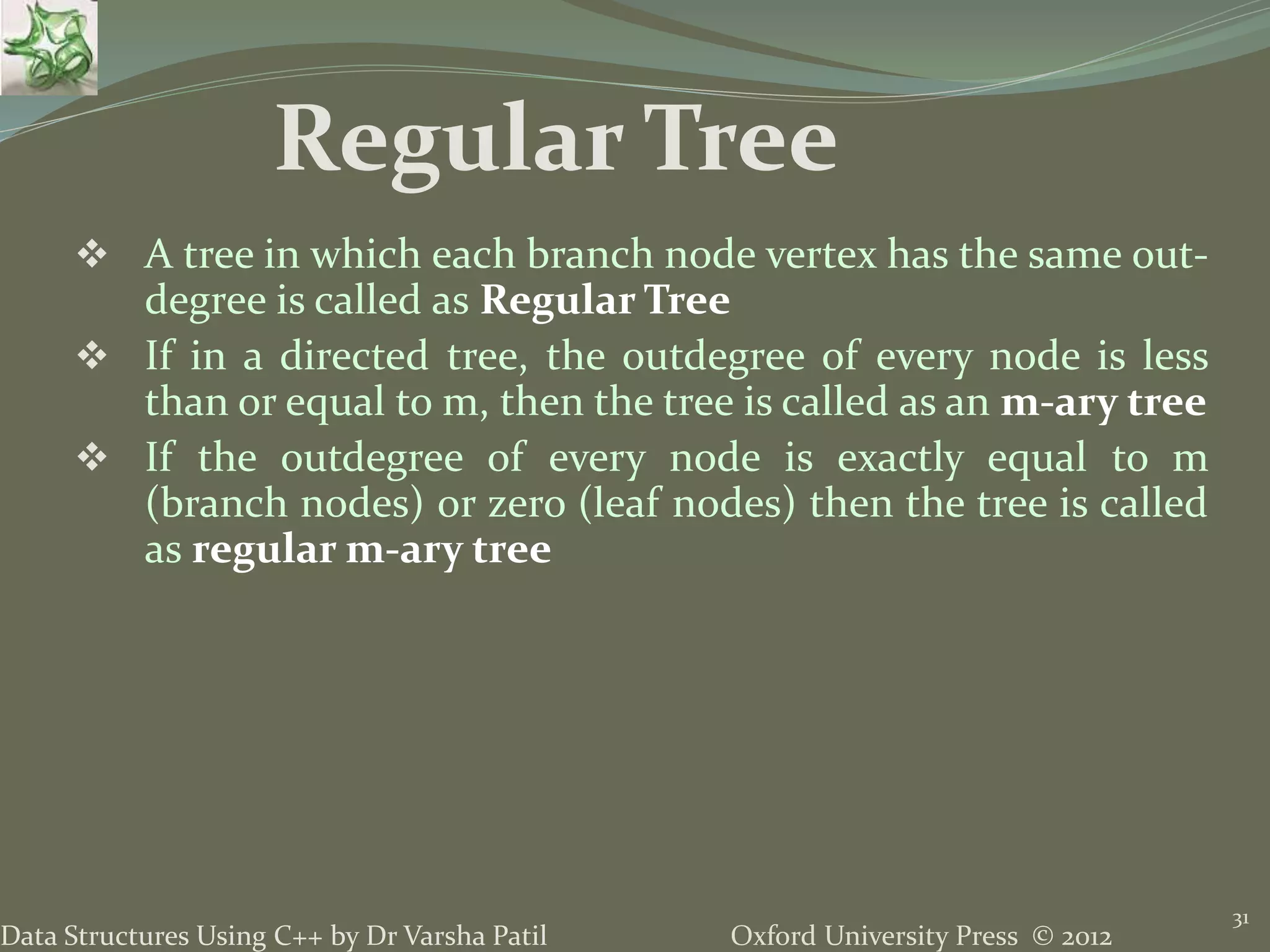
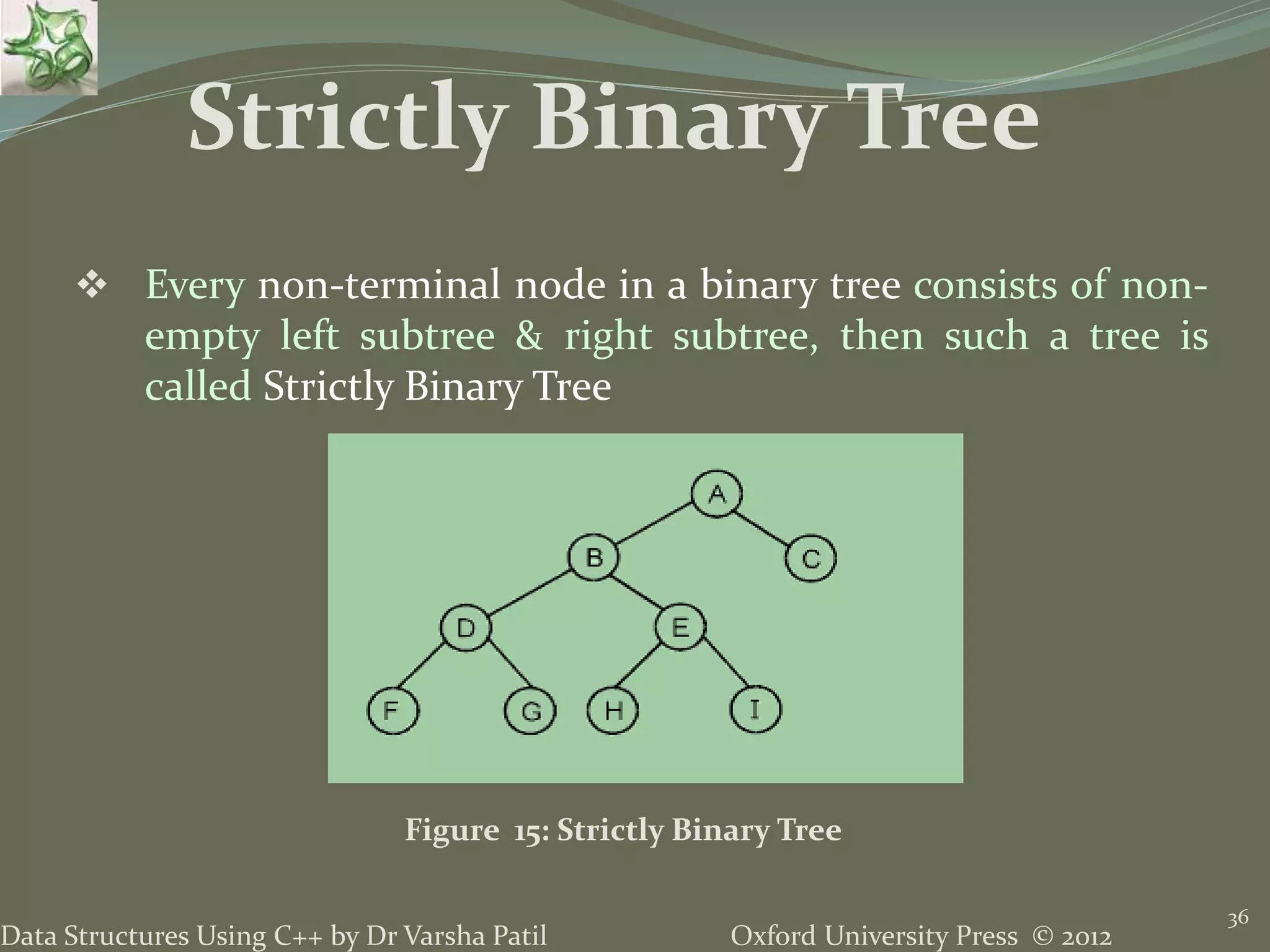
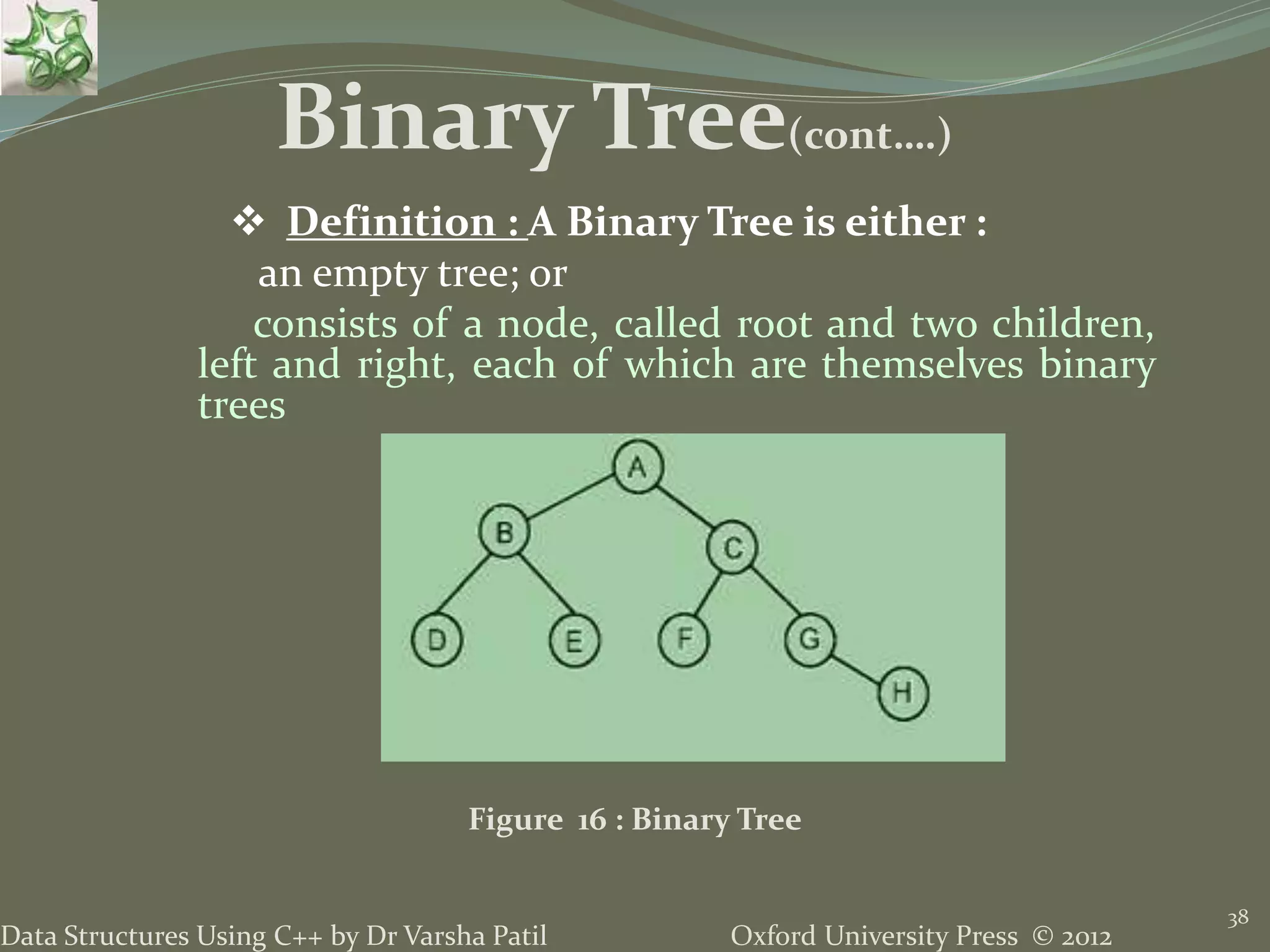
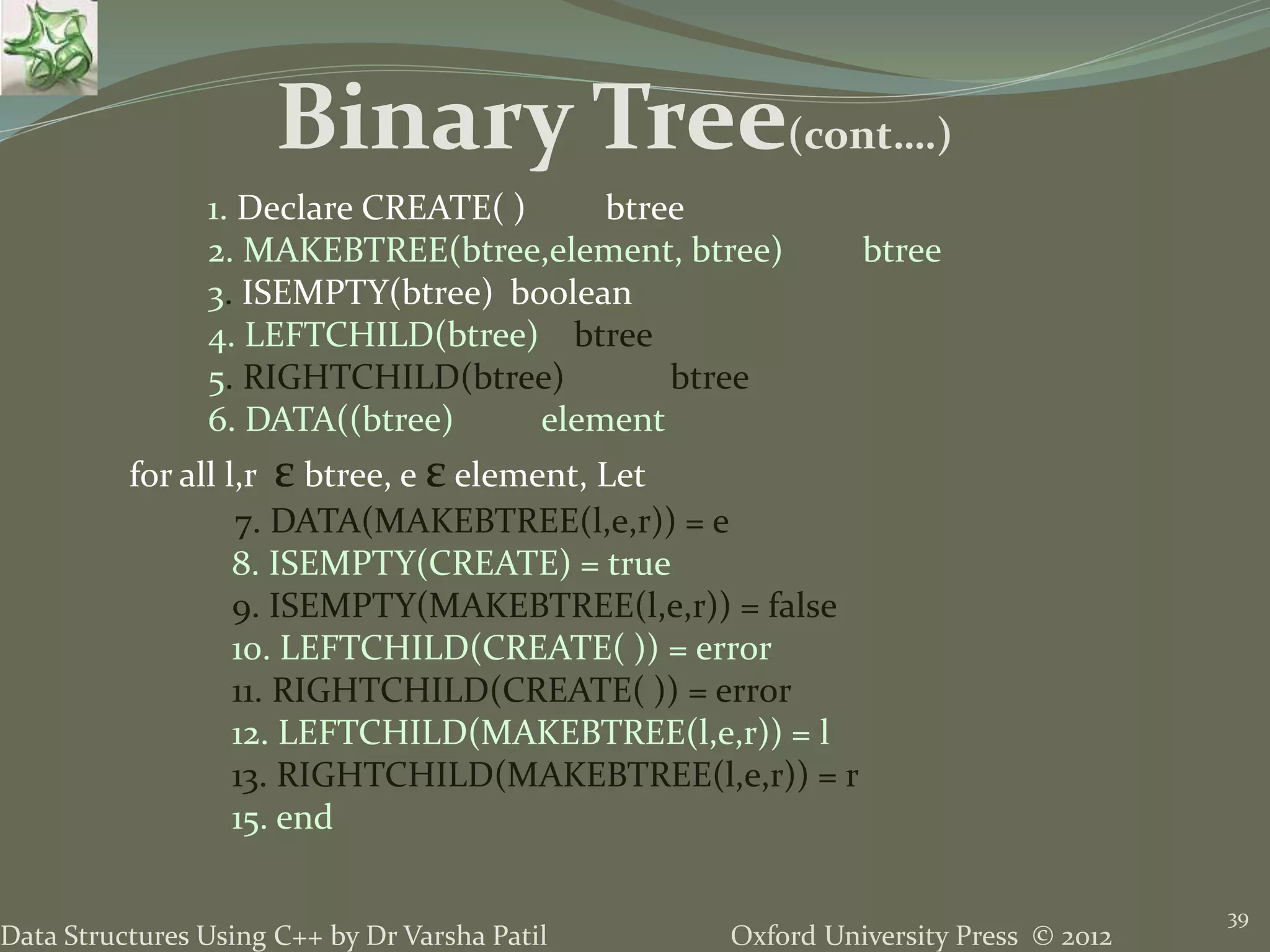
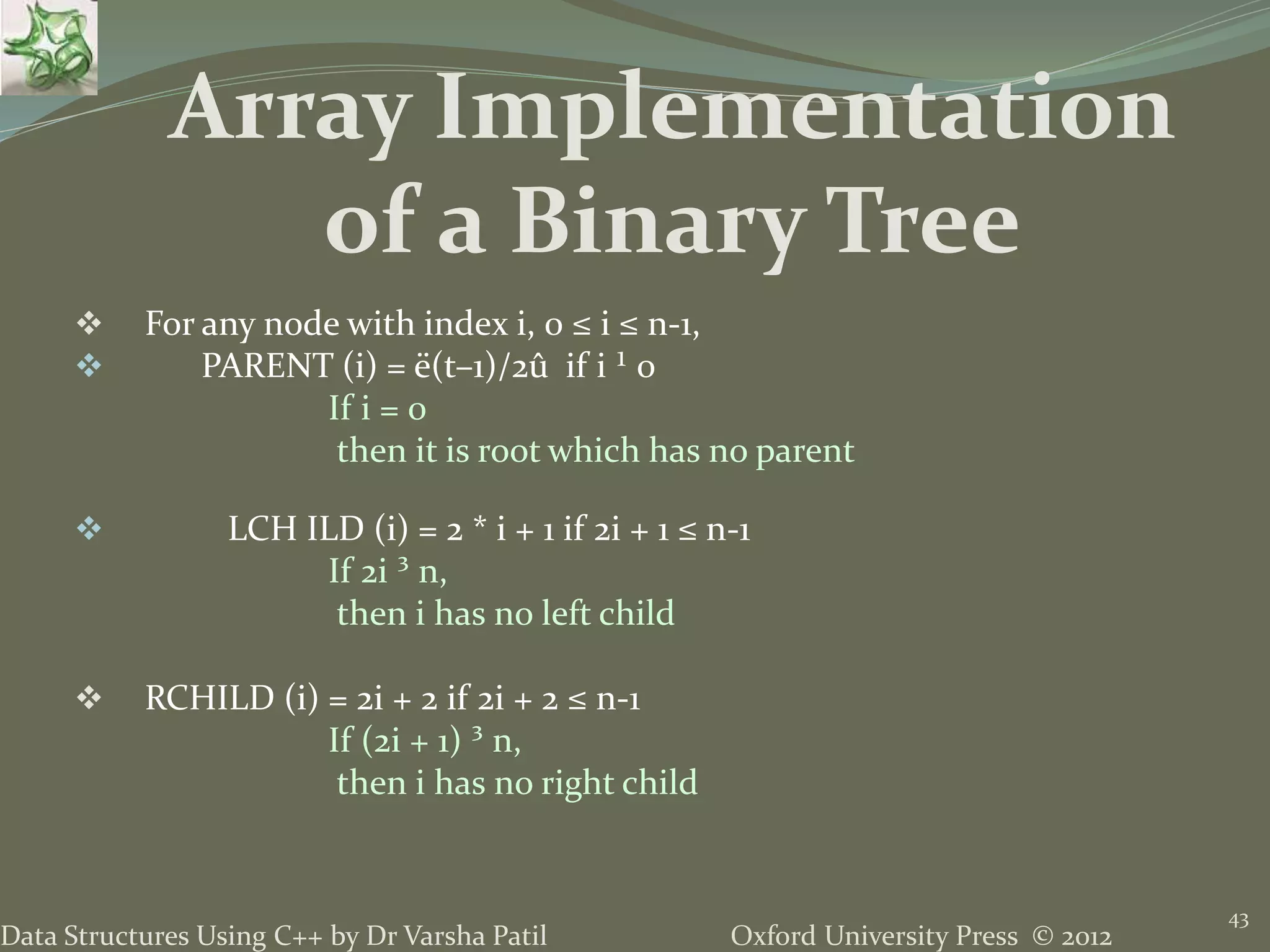
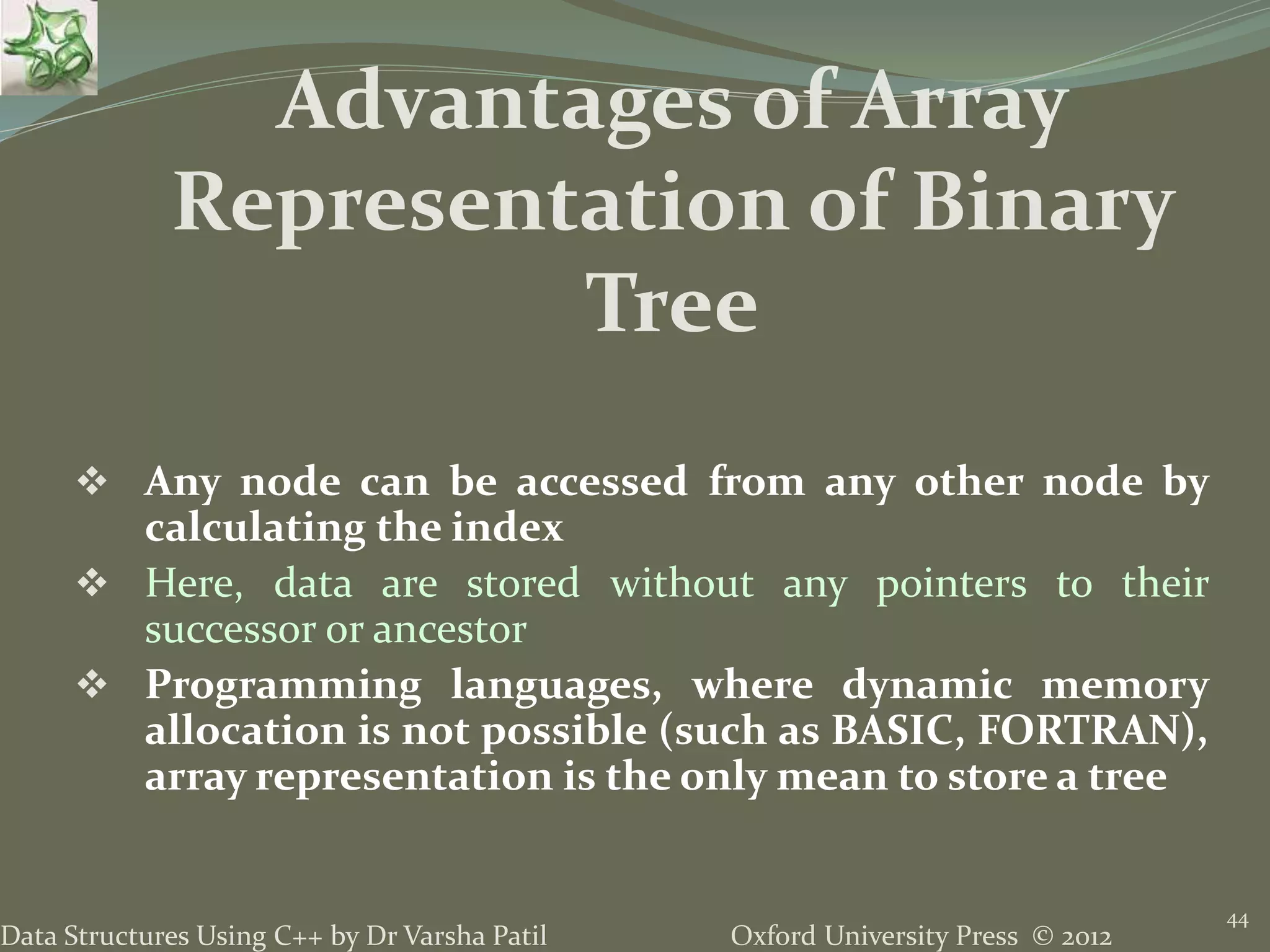
Outlines various types of trees, including binary trees and their specifications.
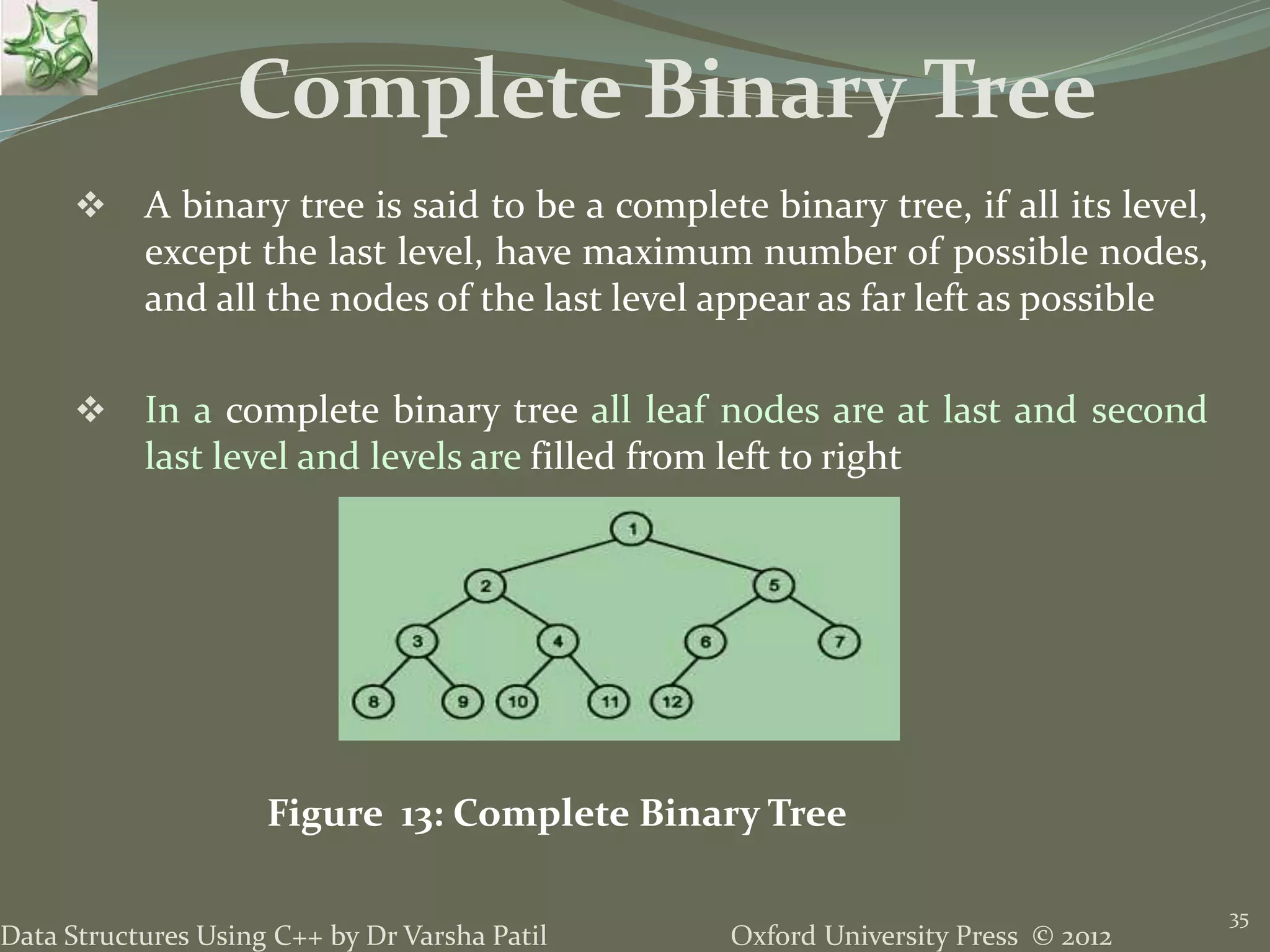
Delves into binary trees, including specific types like complete and full binary trees.
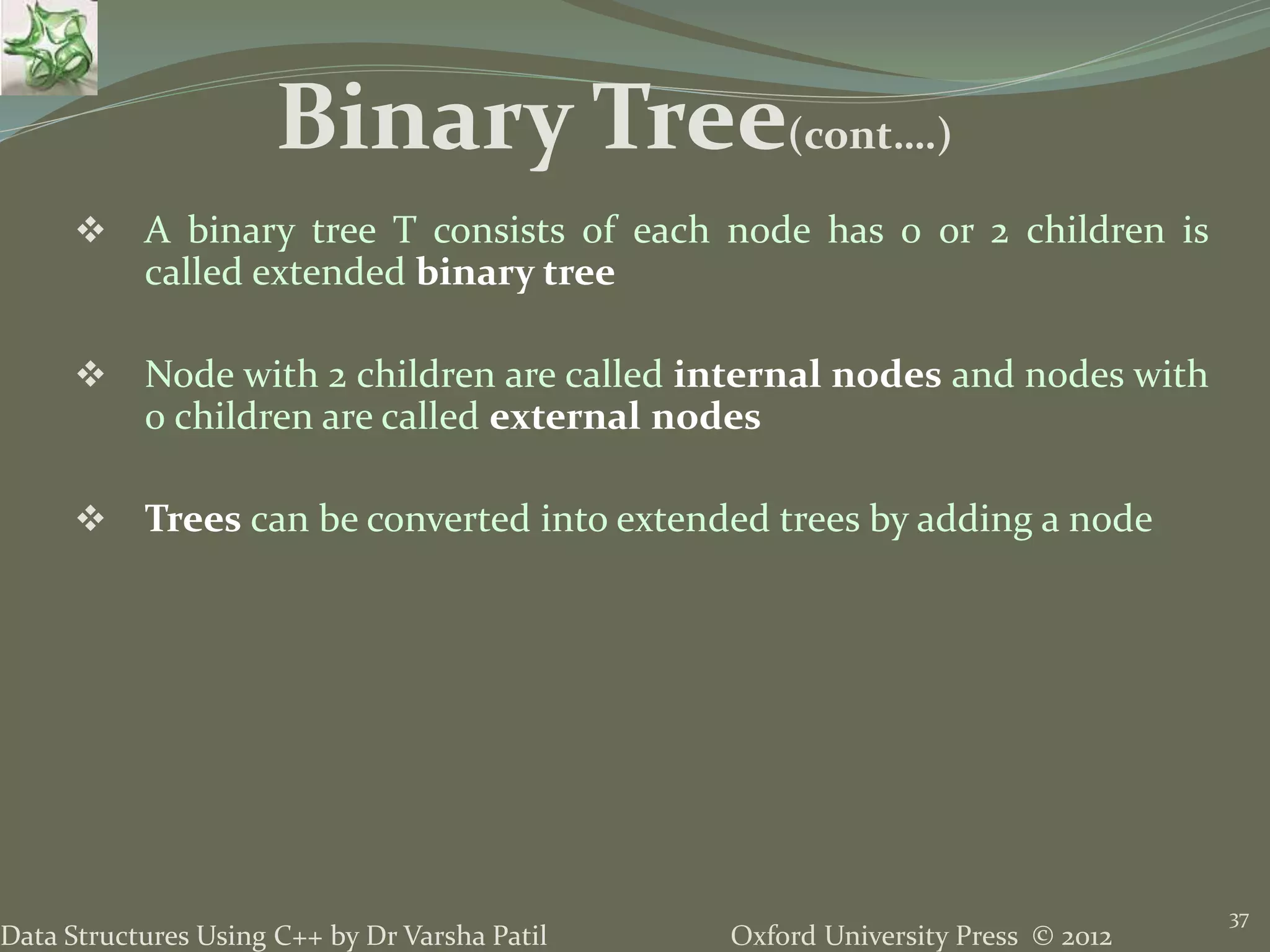
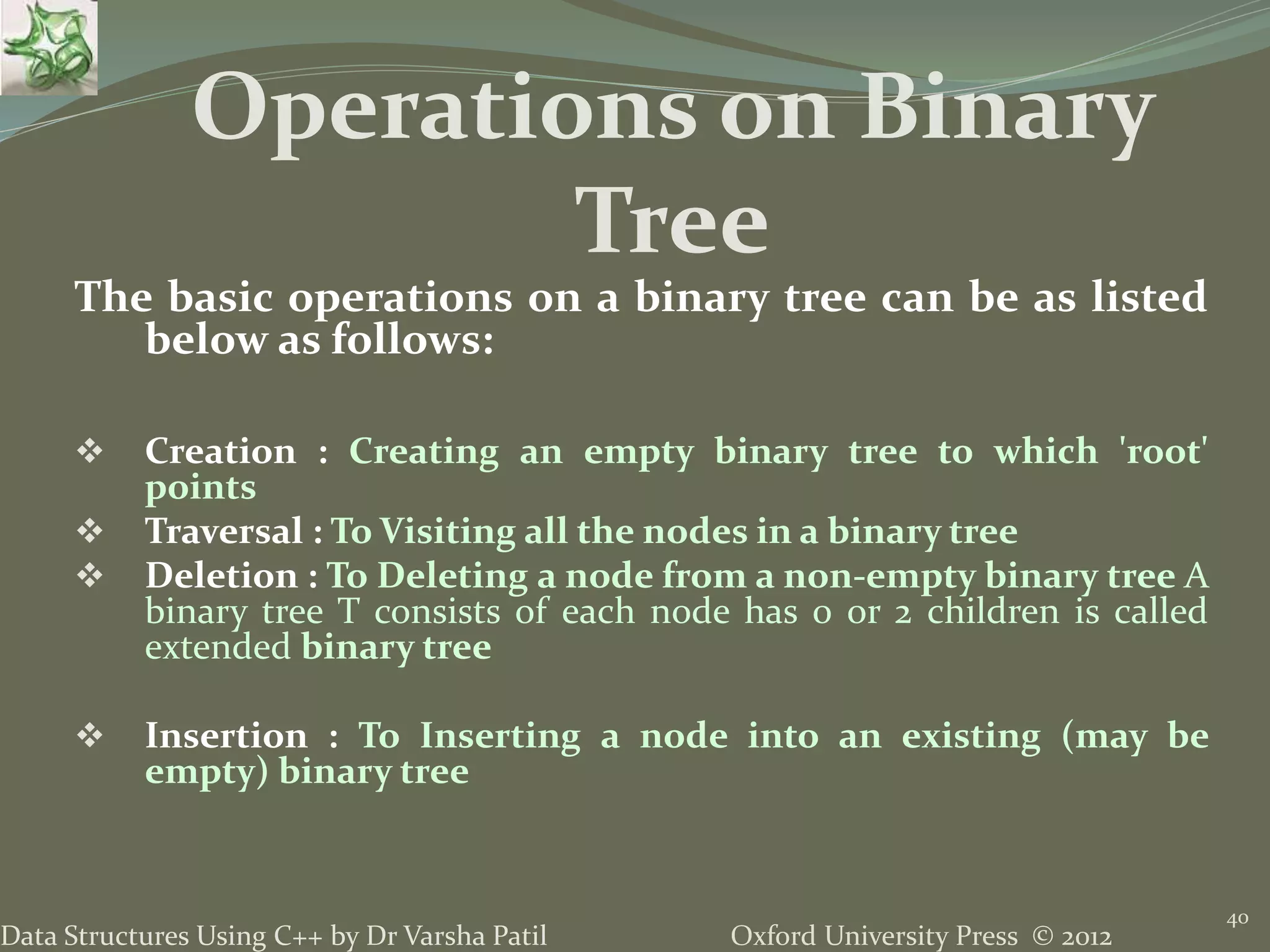
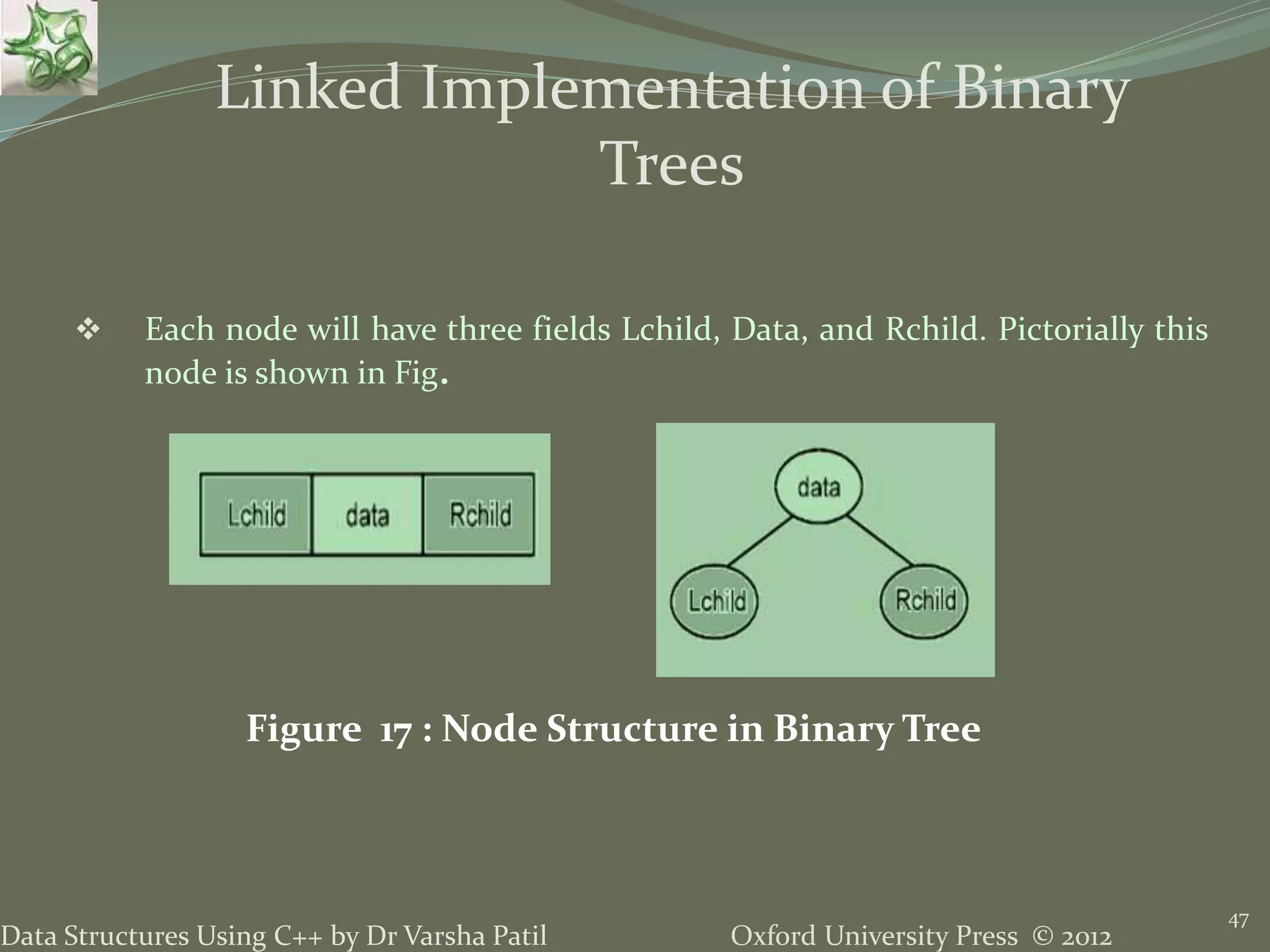
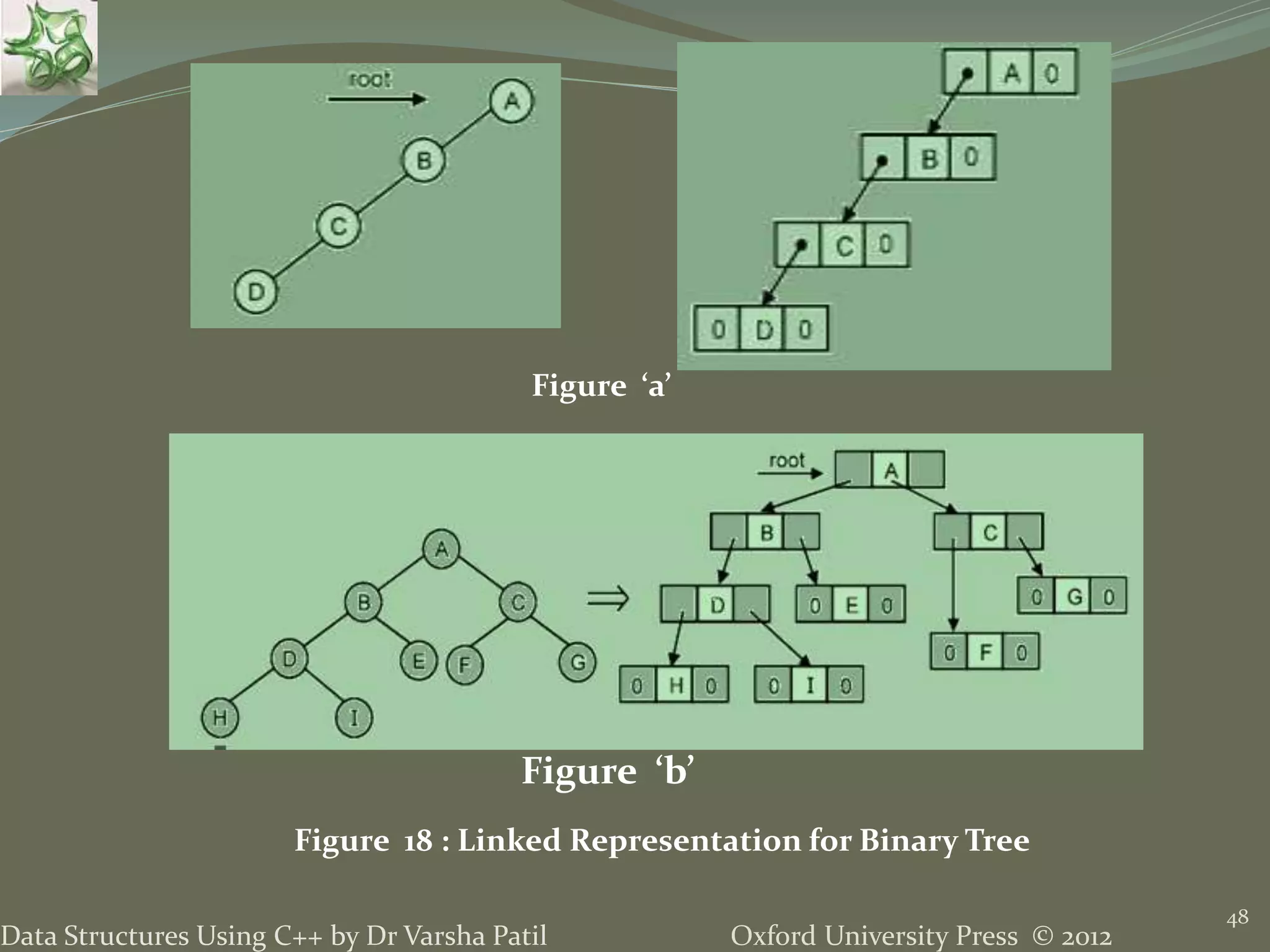
Discusses basic binary tree operations like creation, insertion, deletion, and traversals.
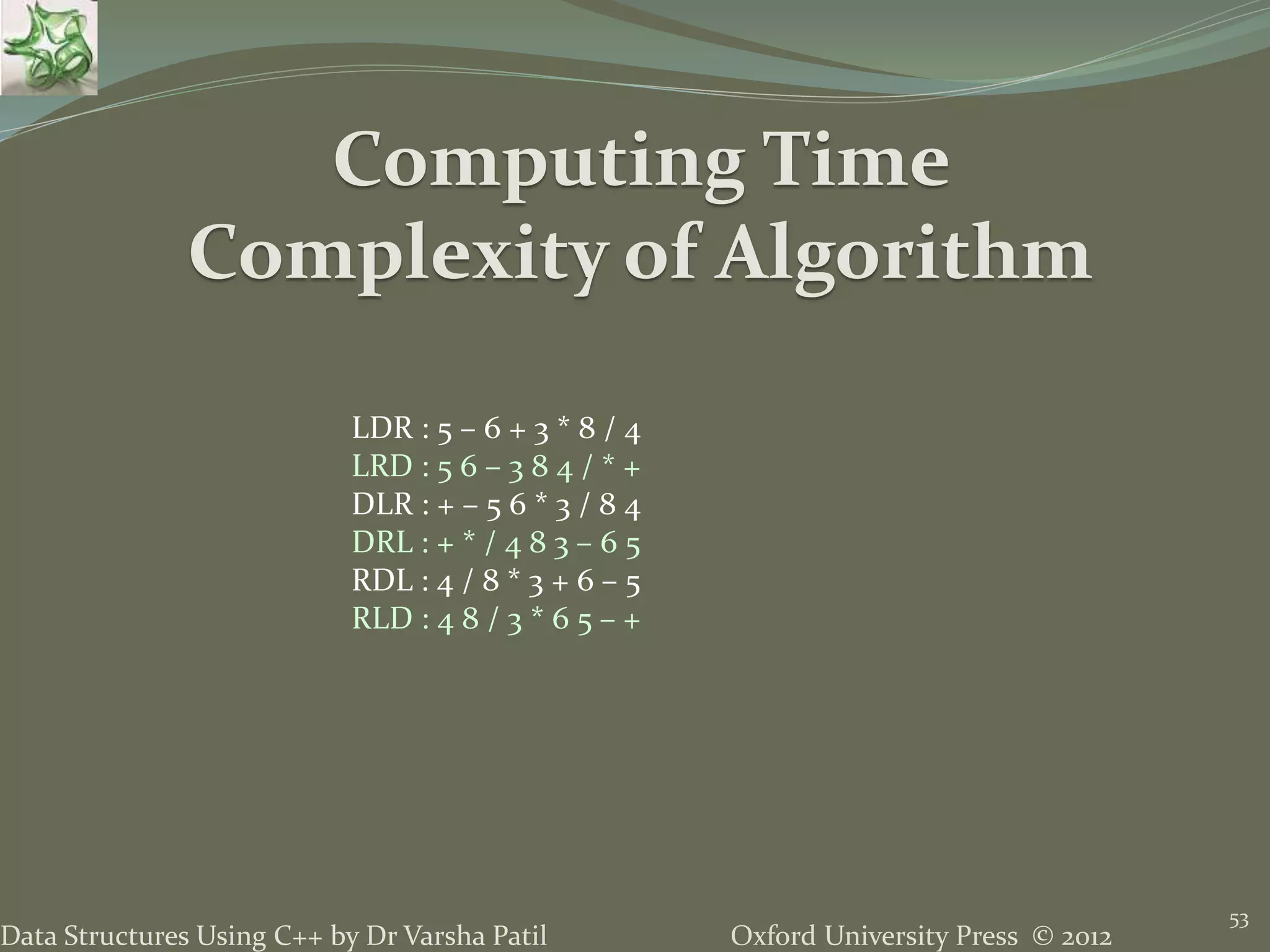
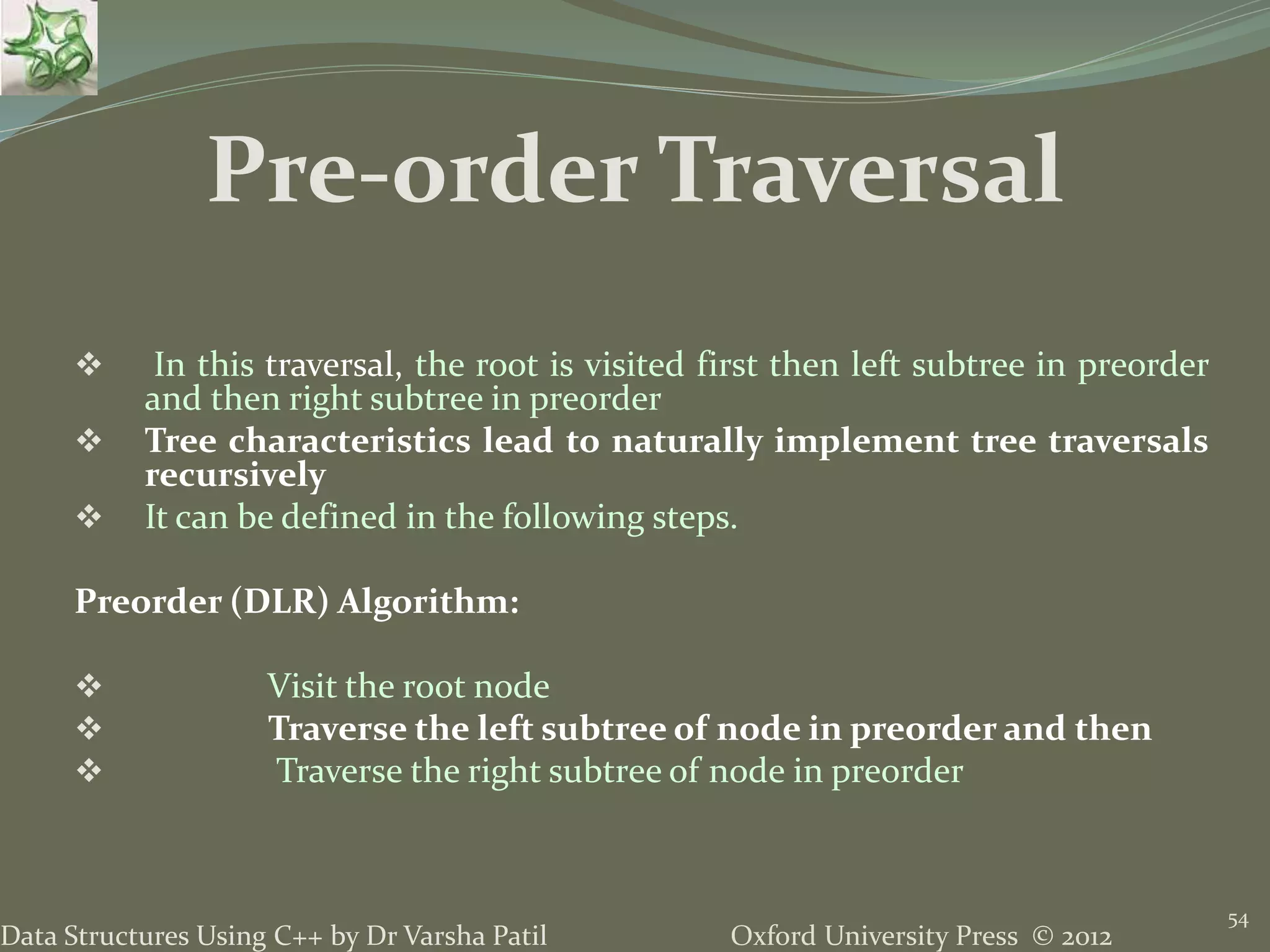
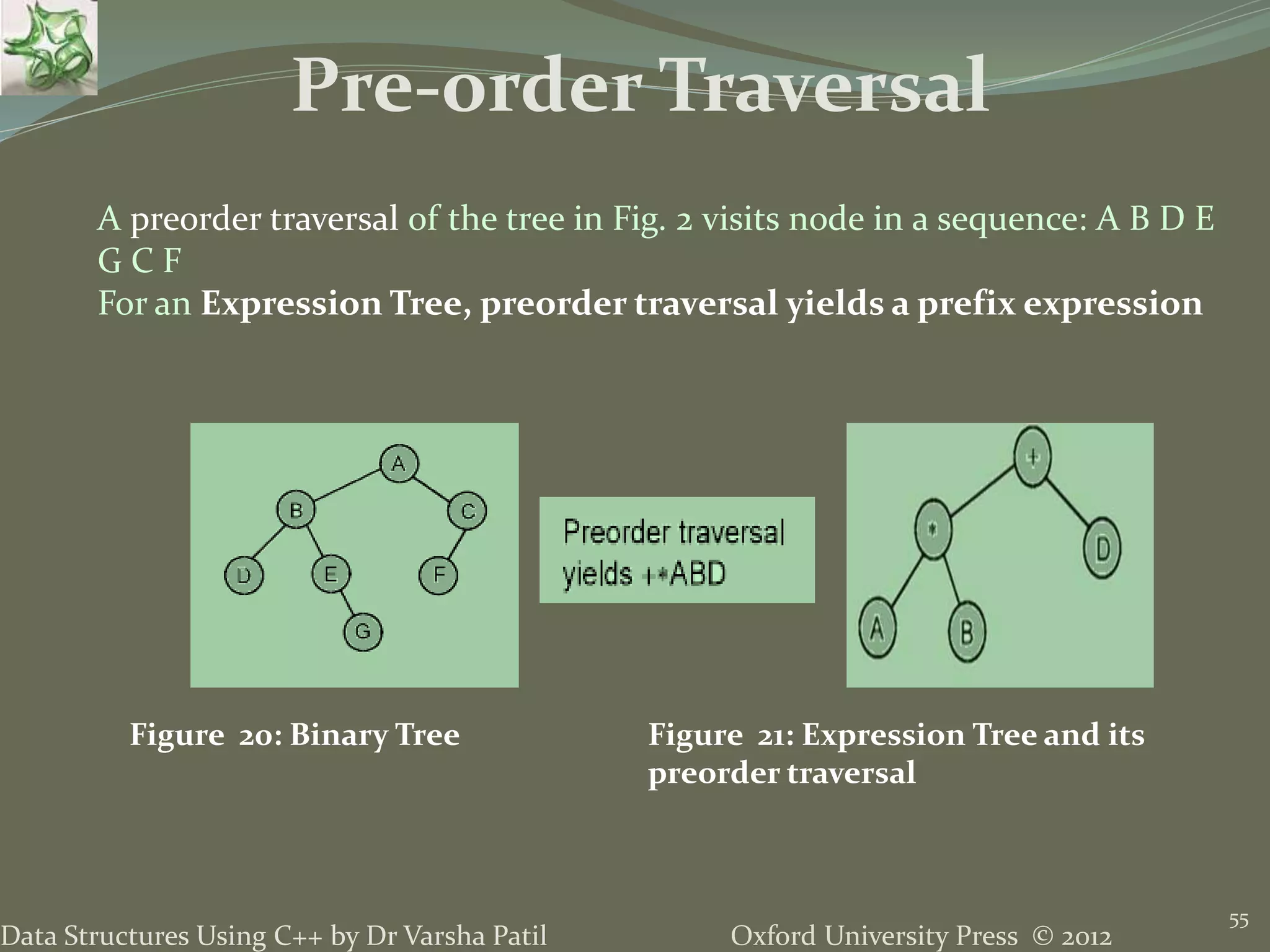
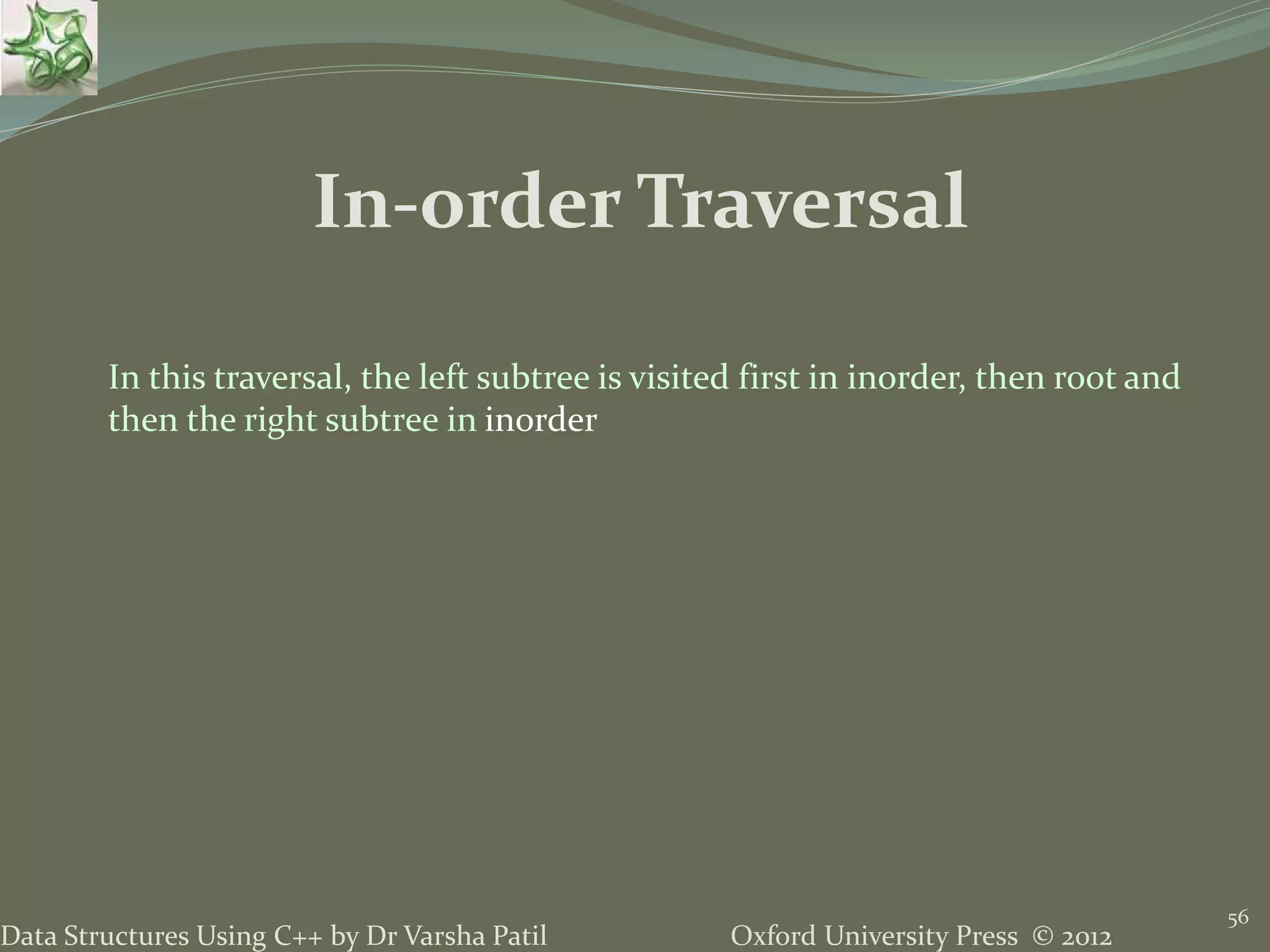
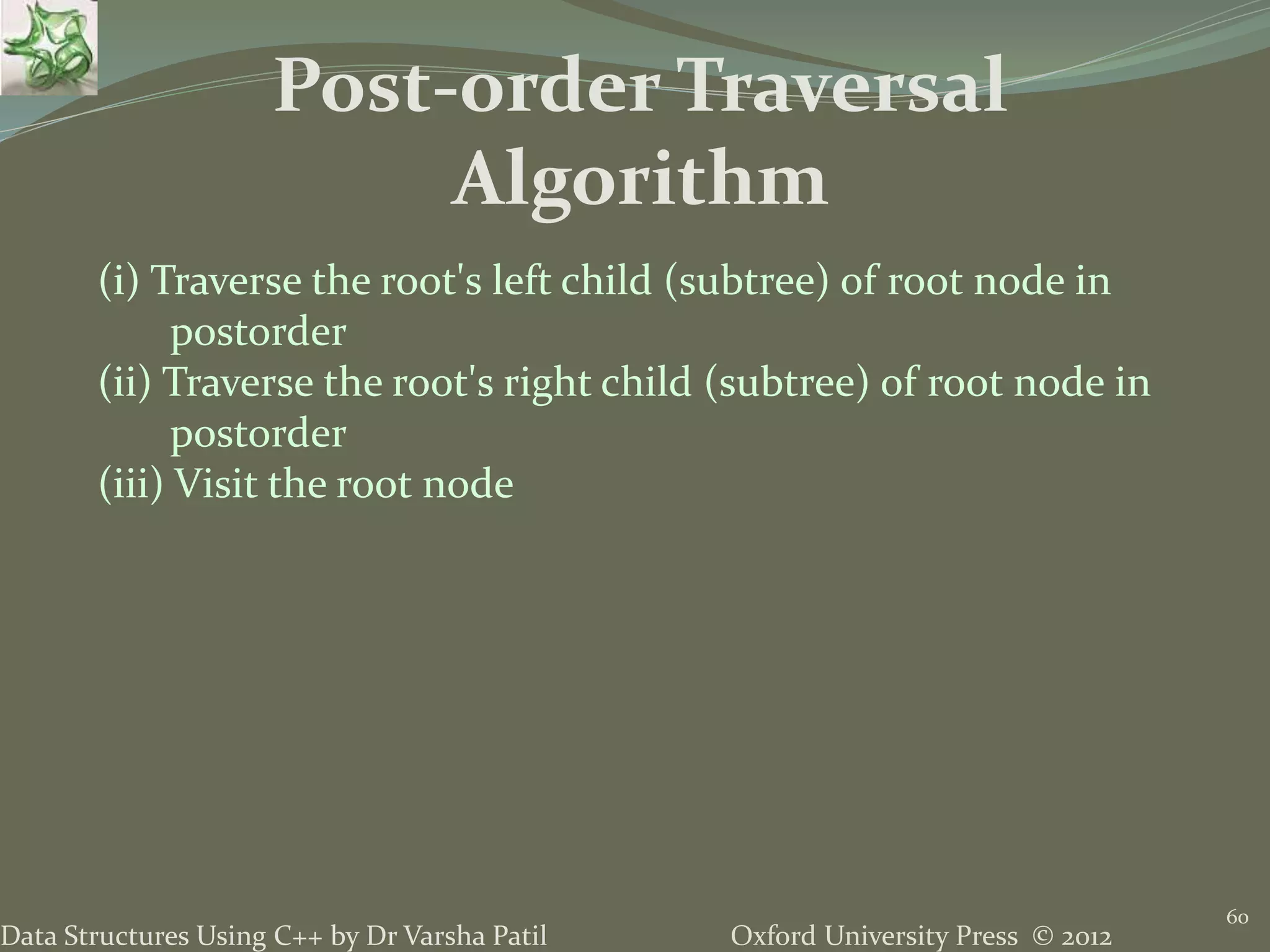
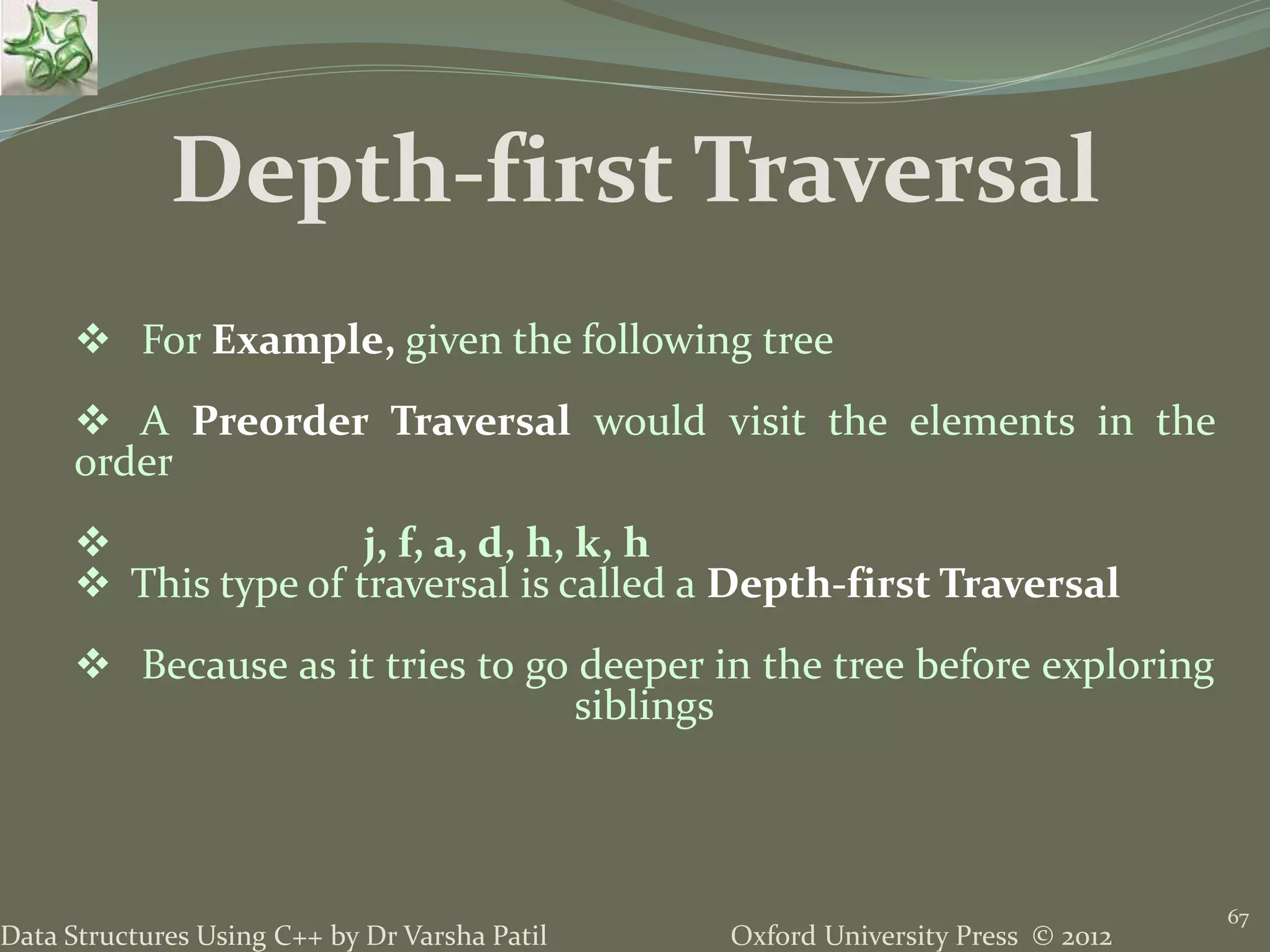
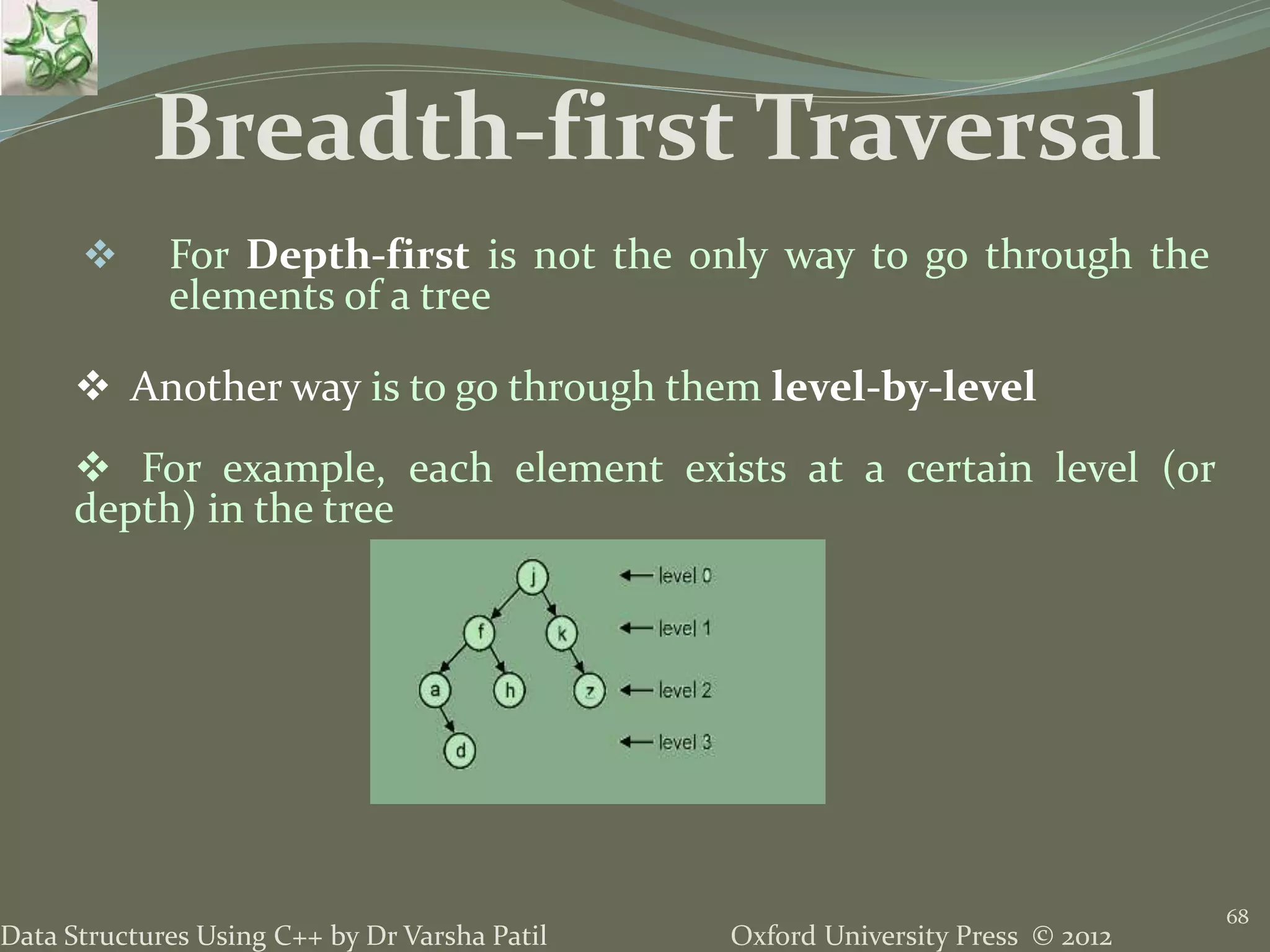
Examines traversal algorithms—pre-order, in-order, post-order, and their practical applications.
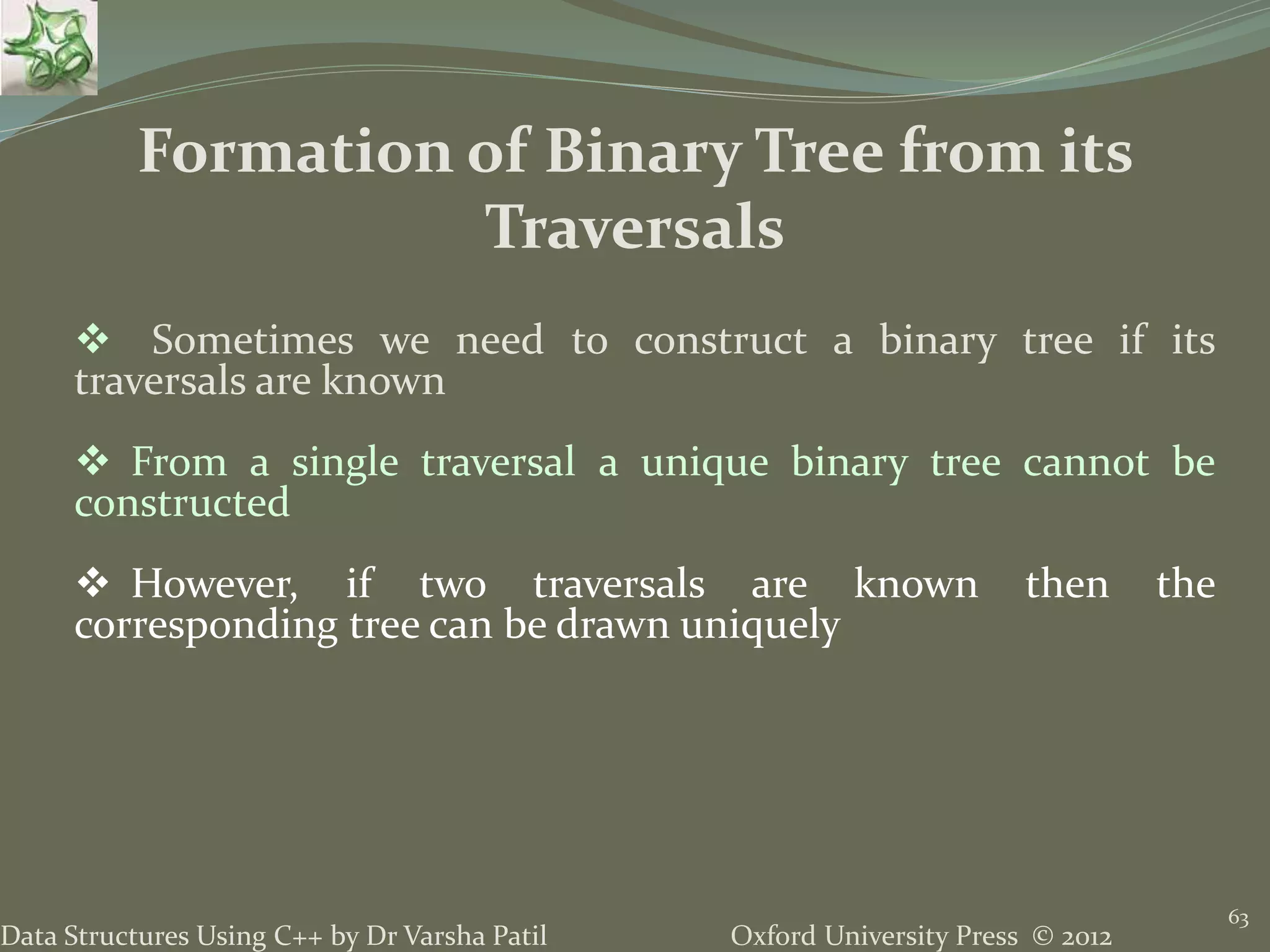
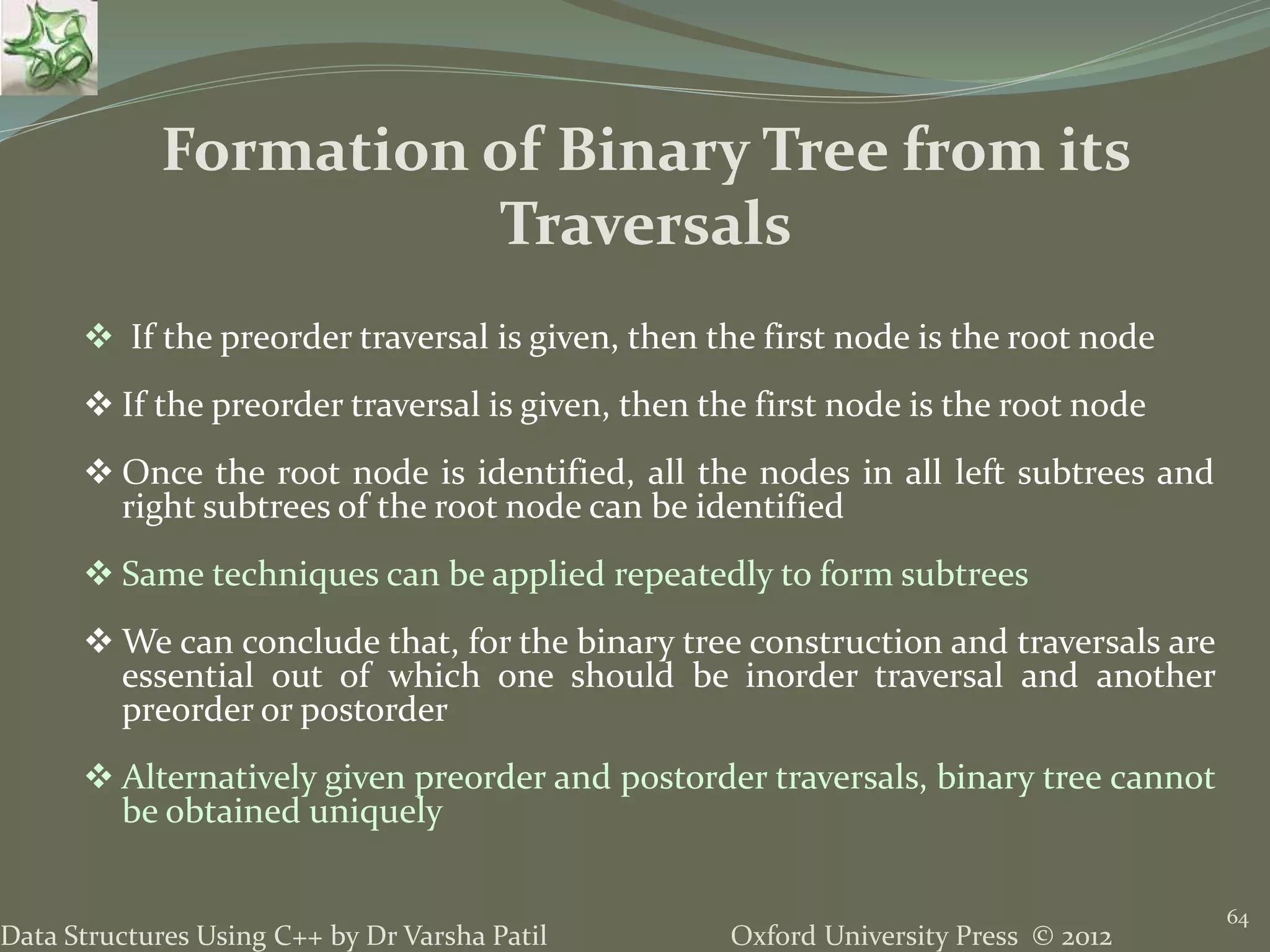
Describes forming binary trees from traversals and the structure of binary search trees.
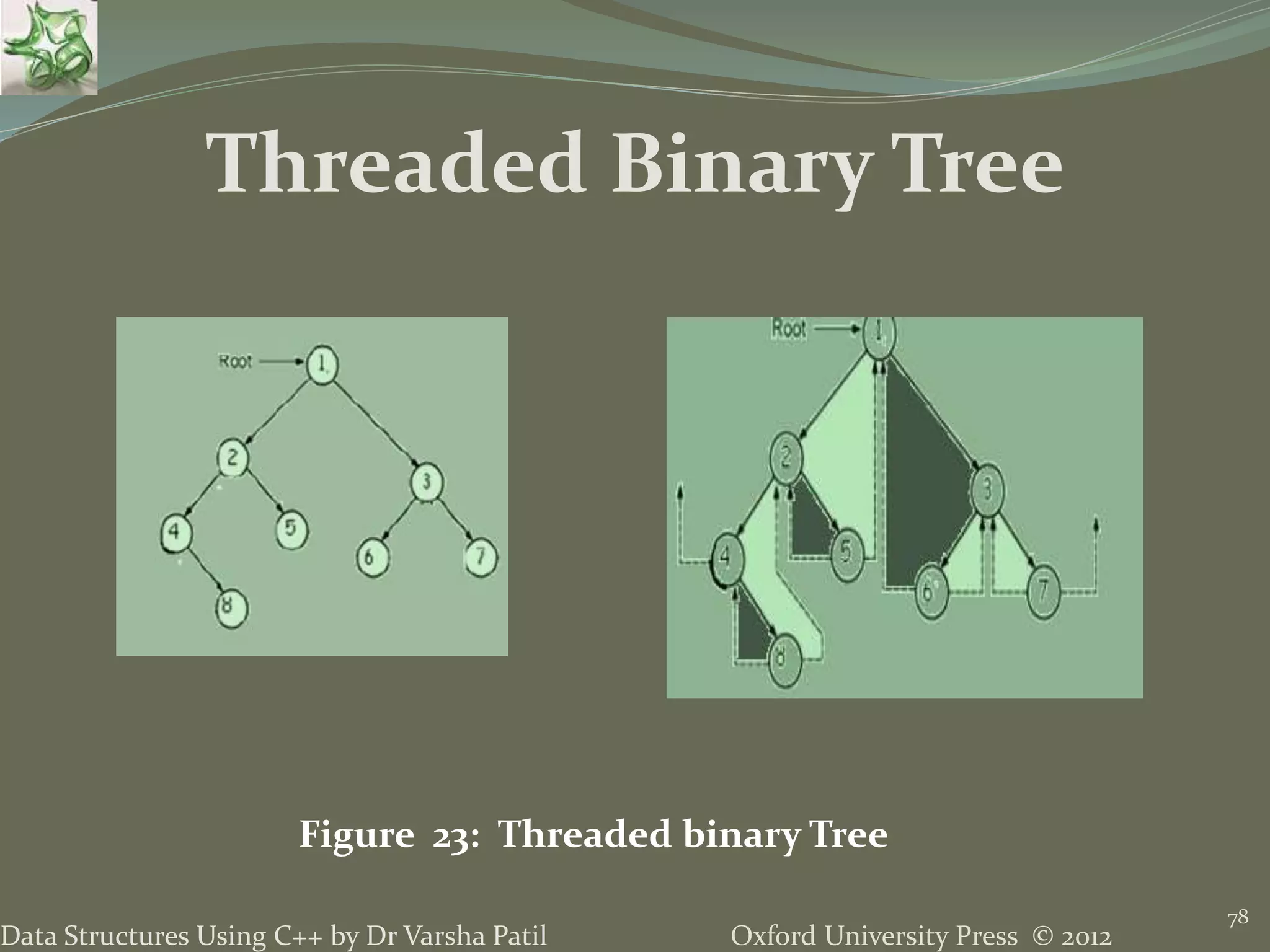
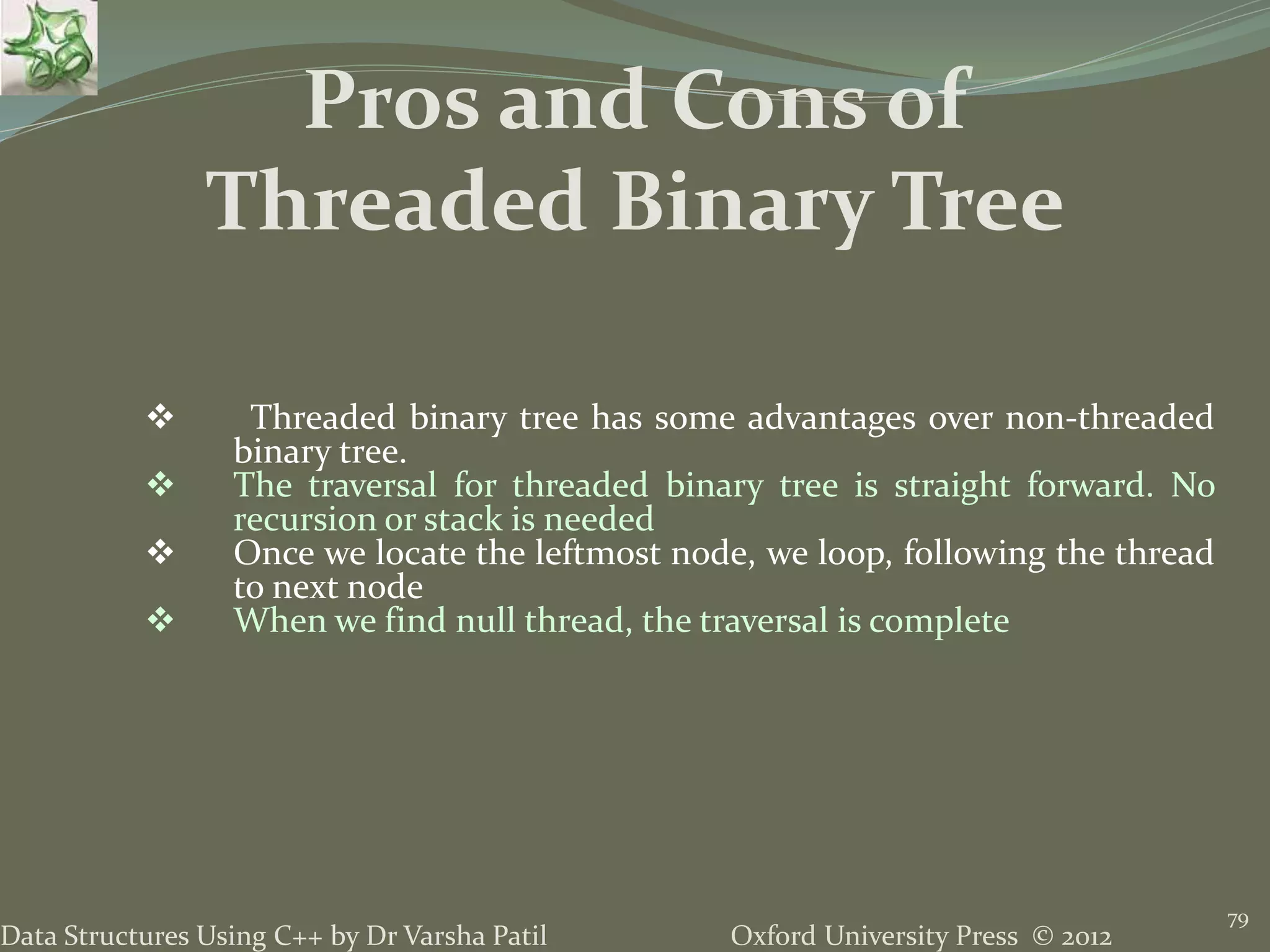
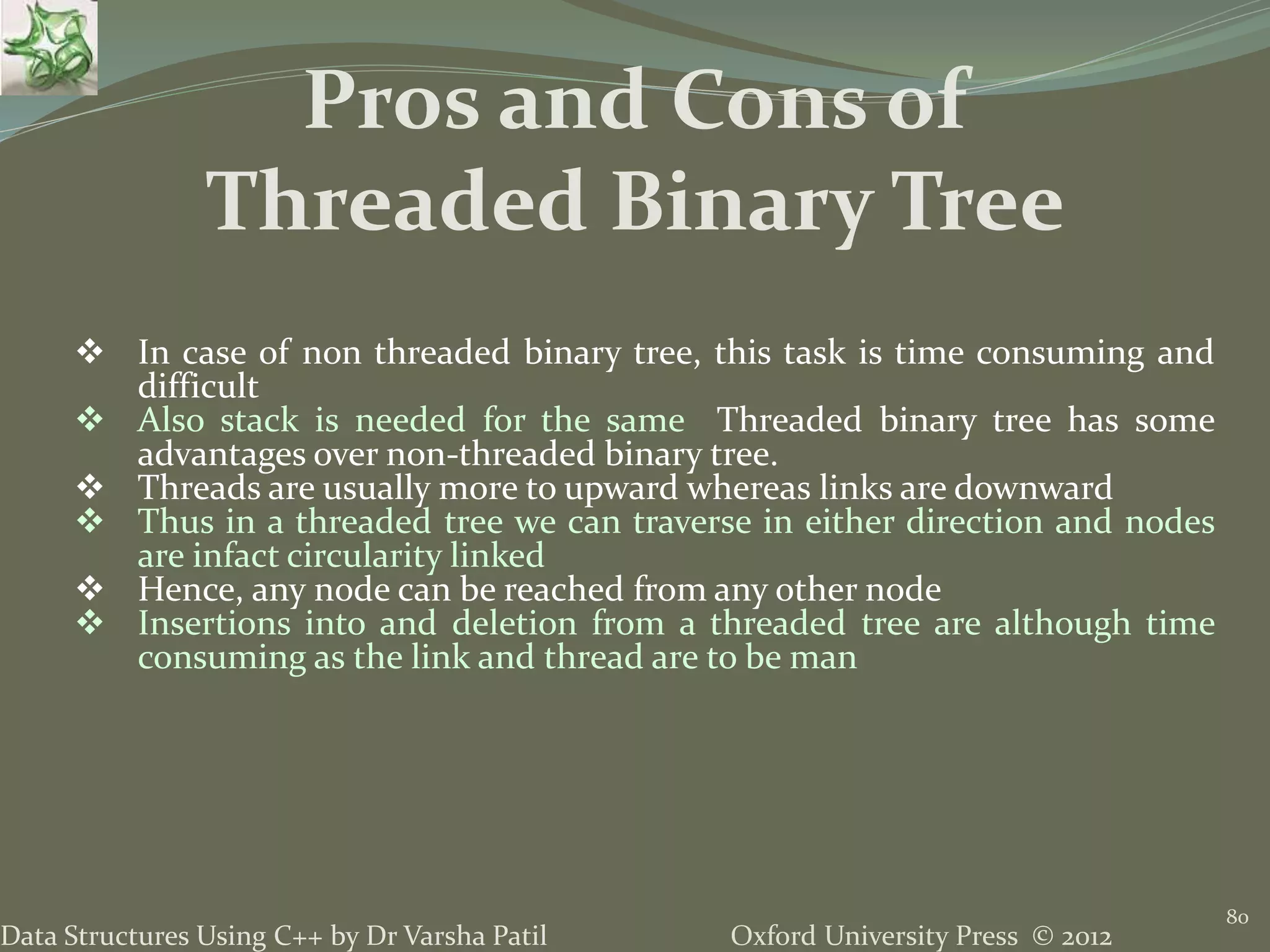
Introduces threaded binary trees, their advantages for traversal, and comparison with non-threaded trees.
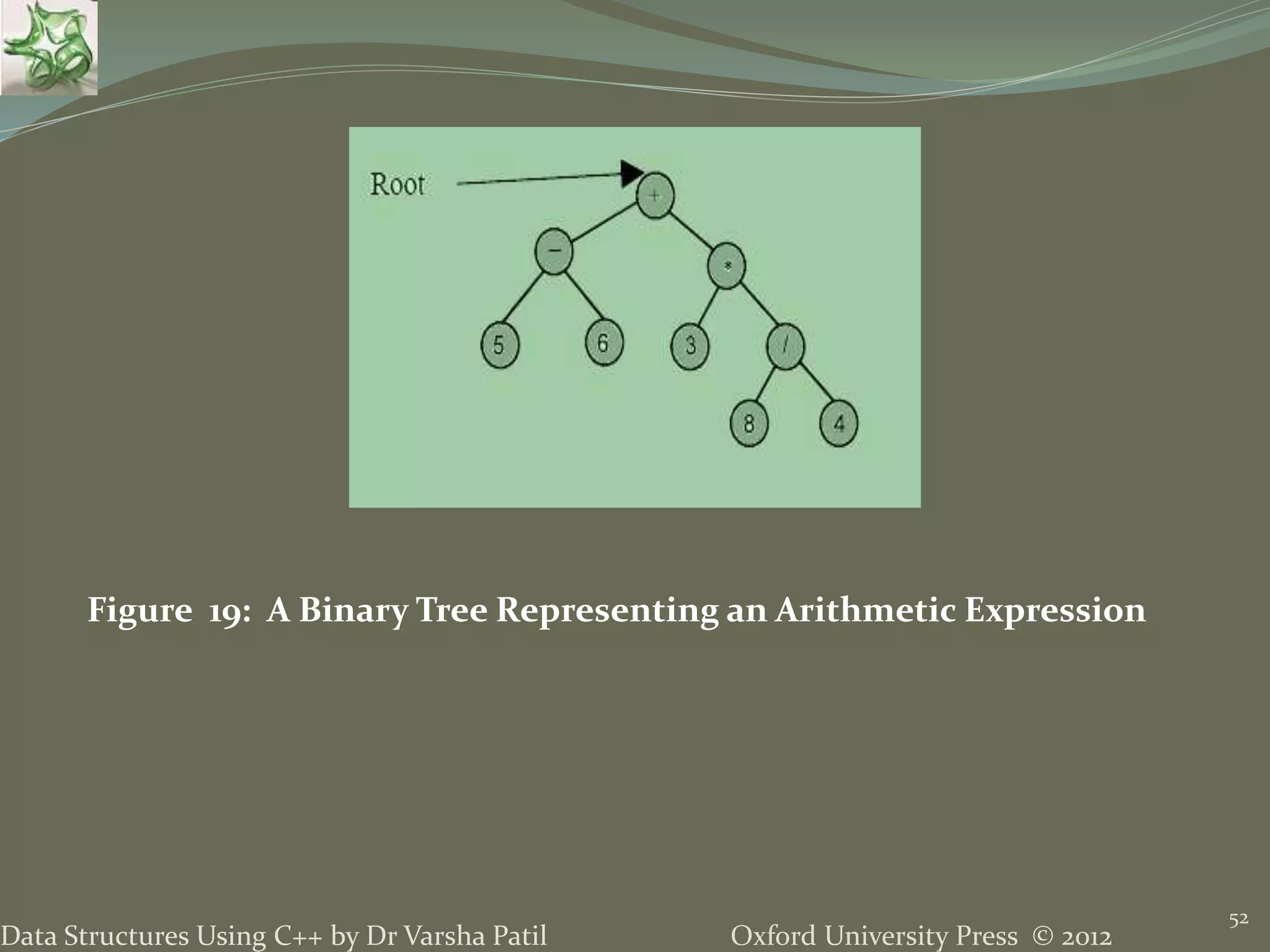
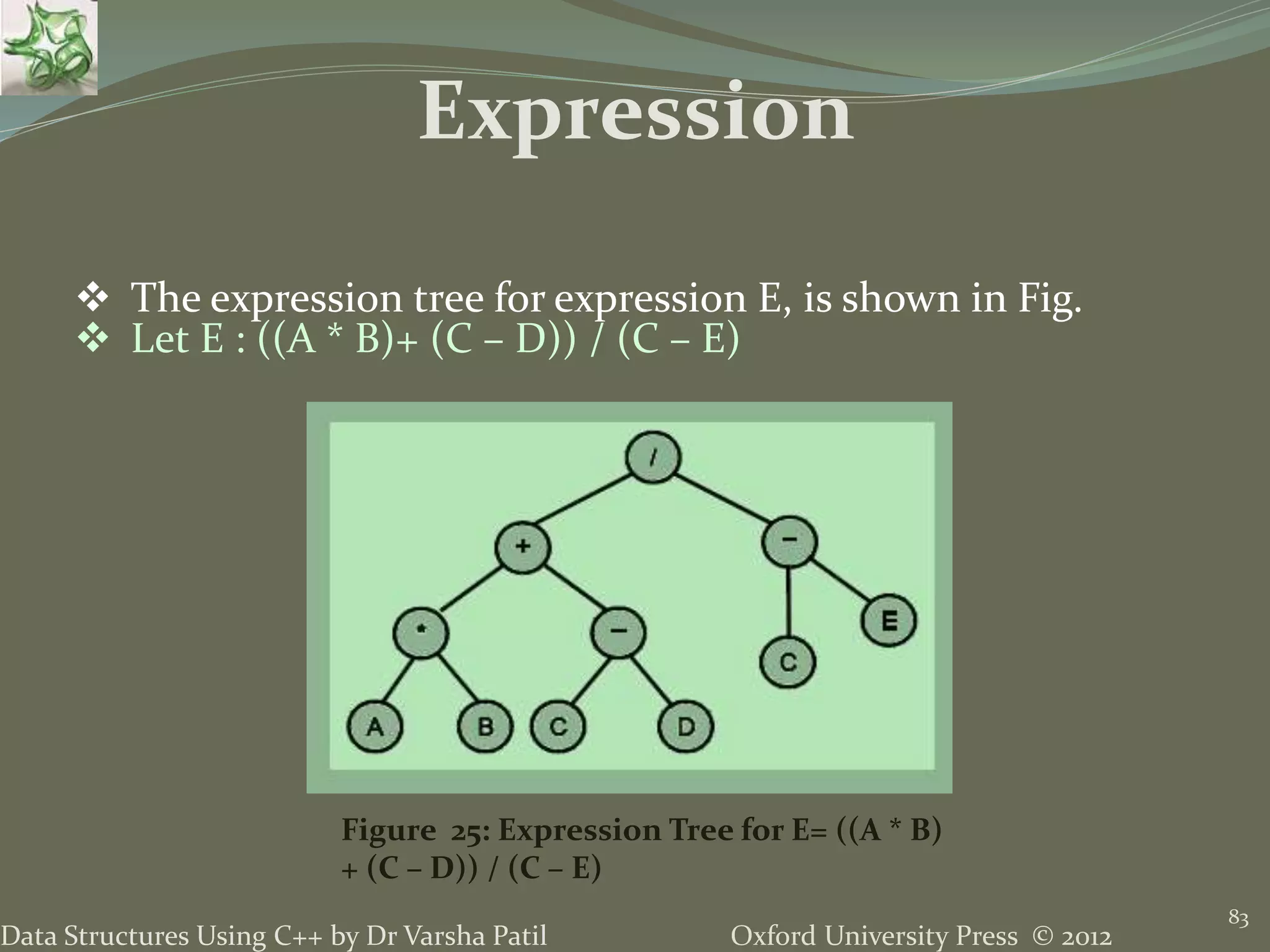
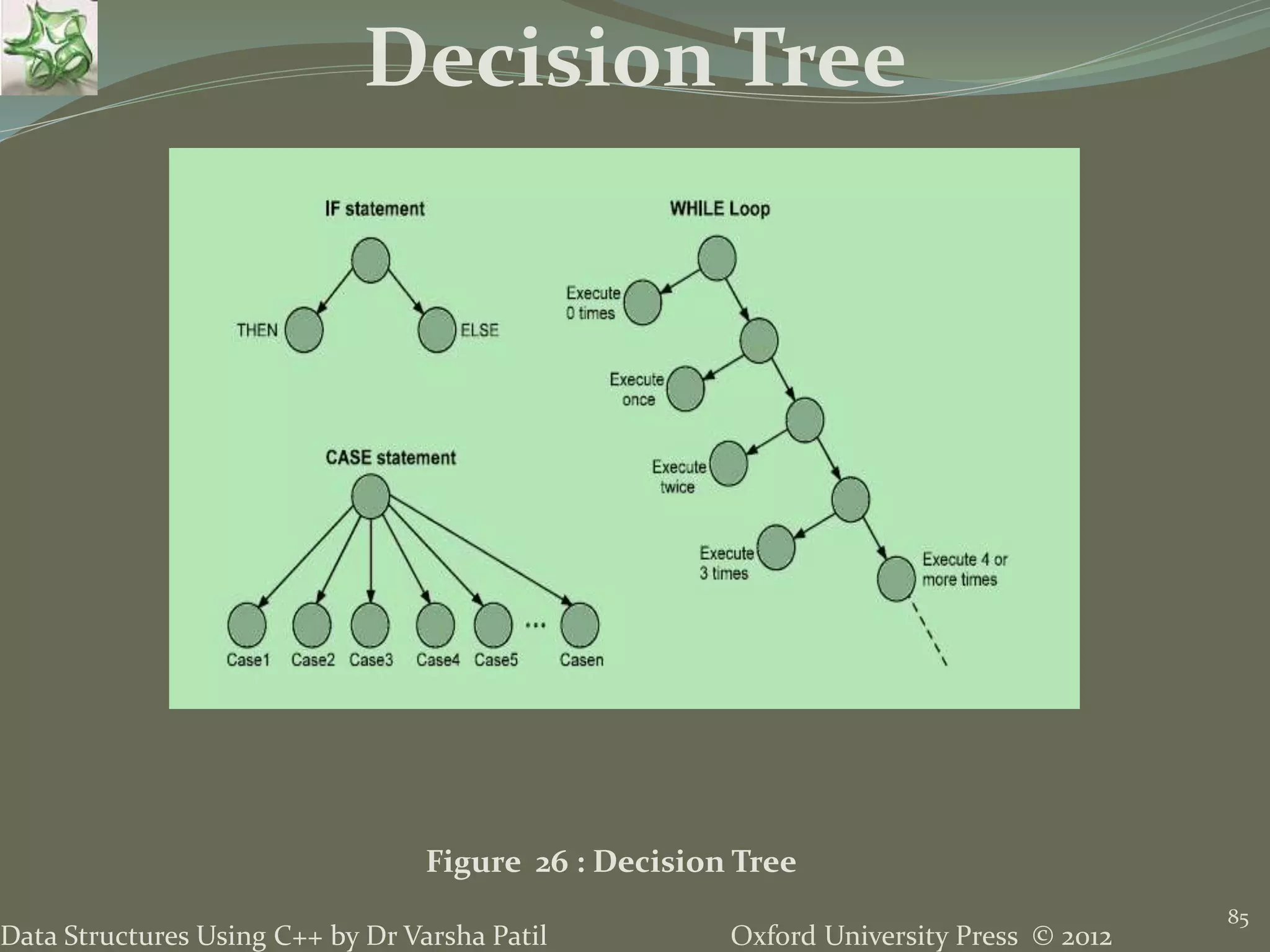
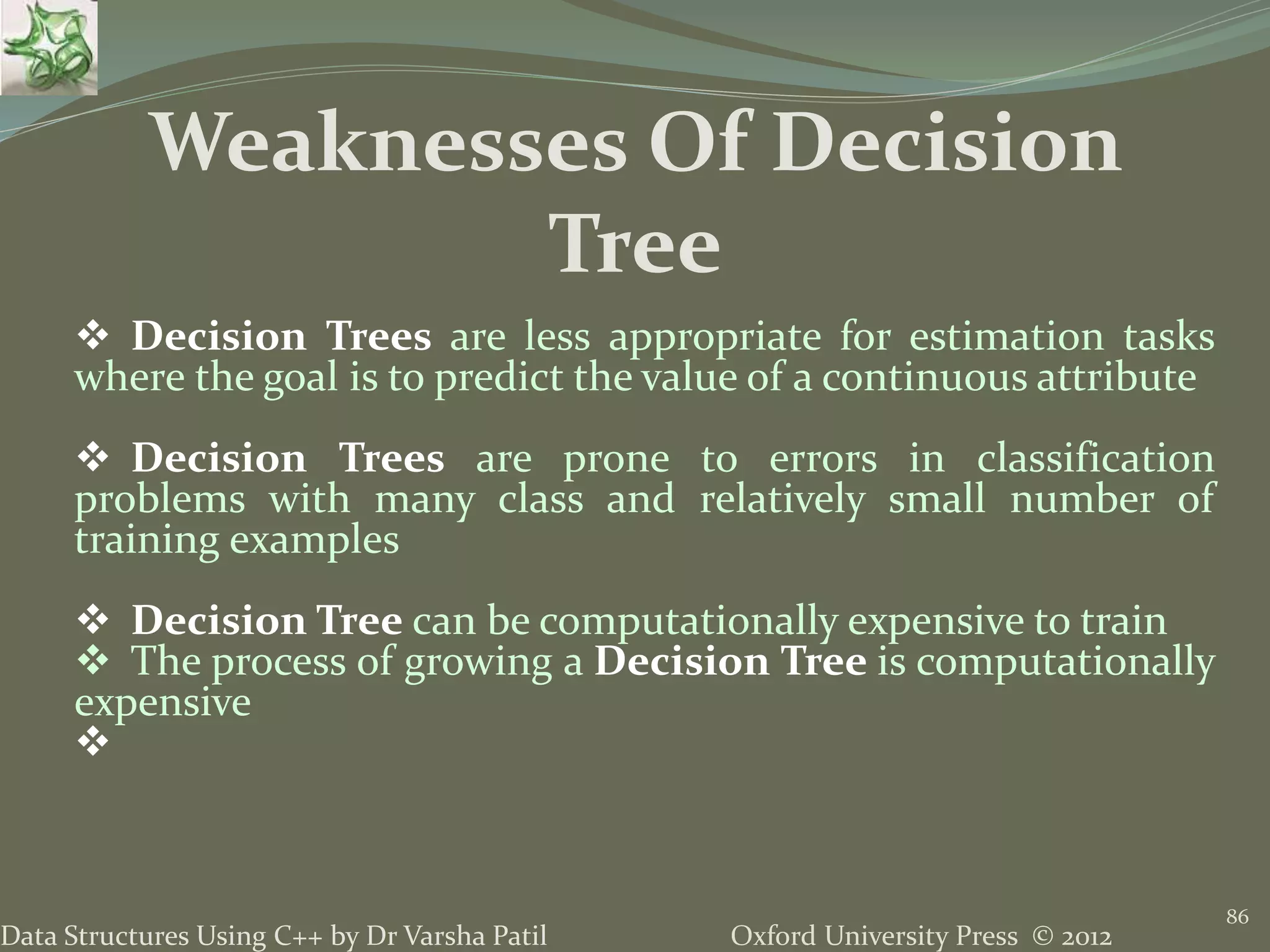
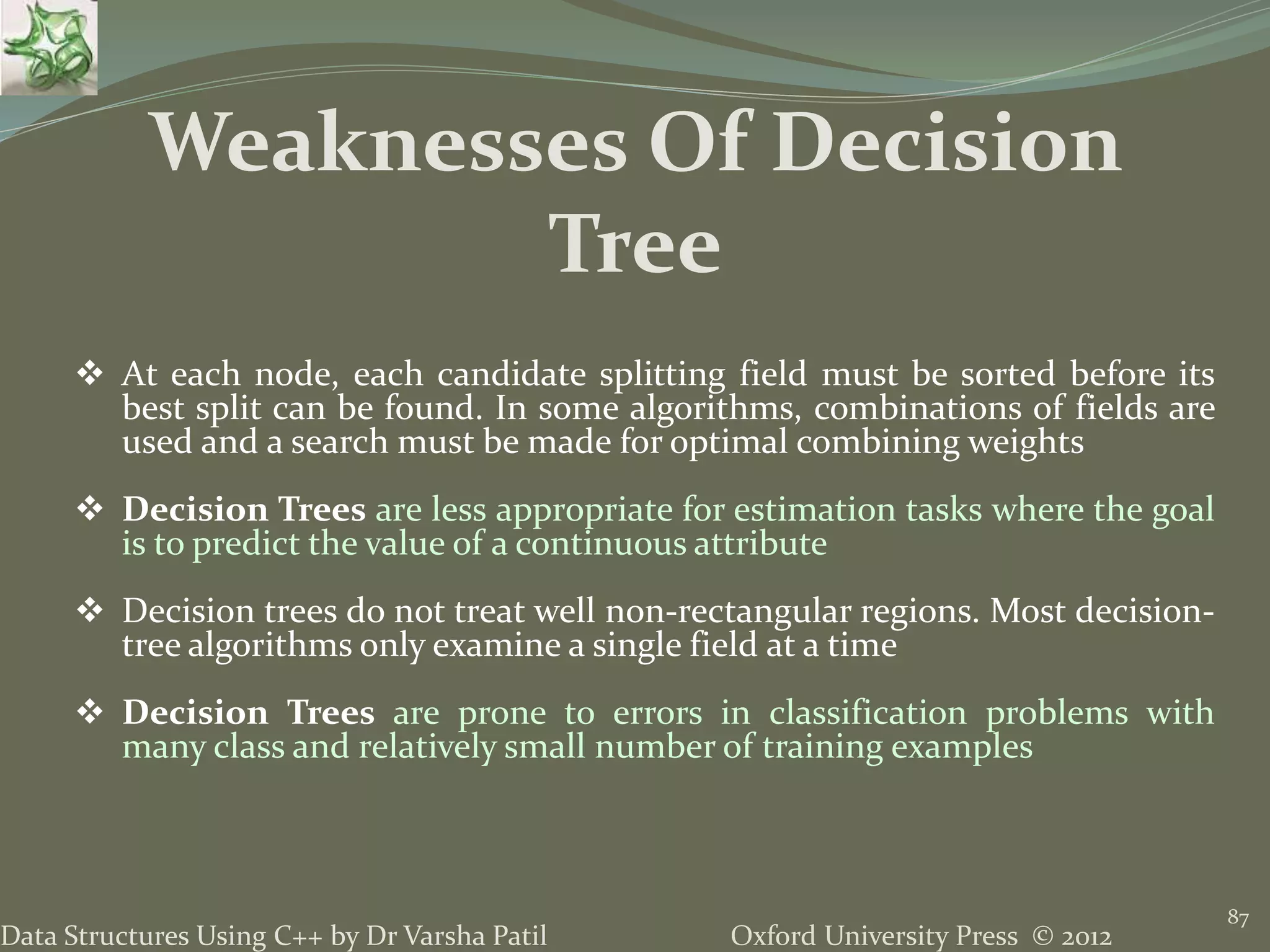
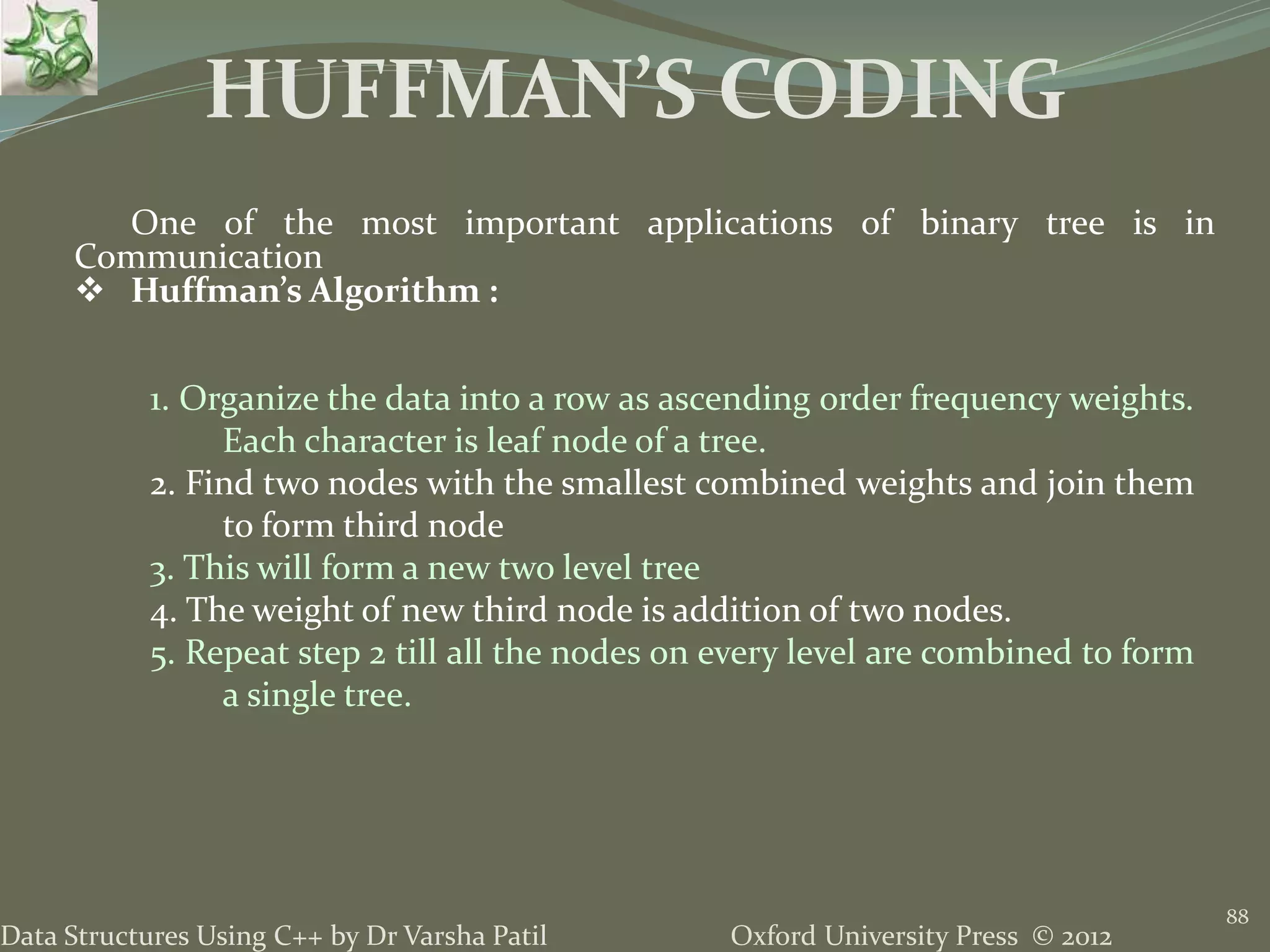
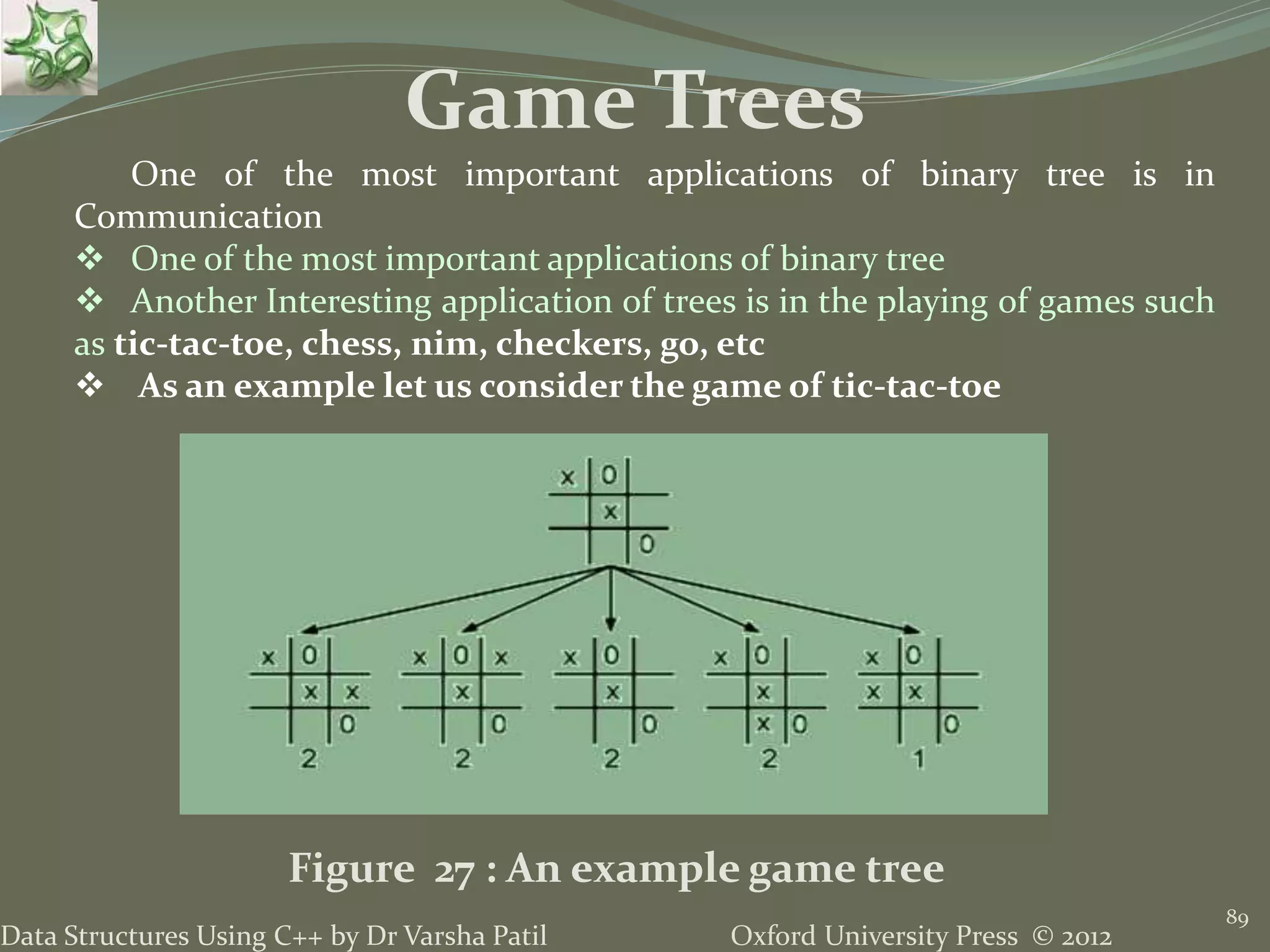
Highlights applications of binary trees in gaming, Huffman coding, and representing arithmetic expressions. Explains decision trees' functionalities, strengths, and weaknesses in computational tasks. Recaps the importance of binary trees in data organization, traversal methods, and their applications.