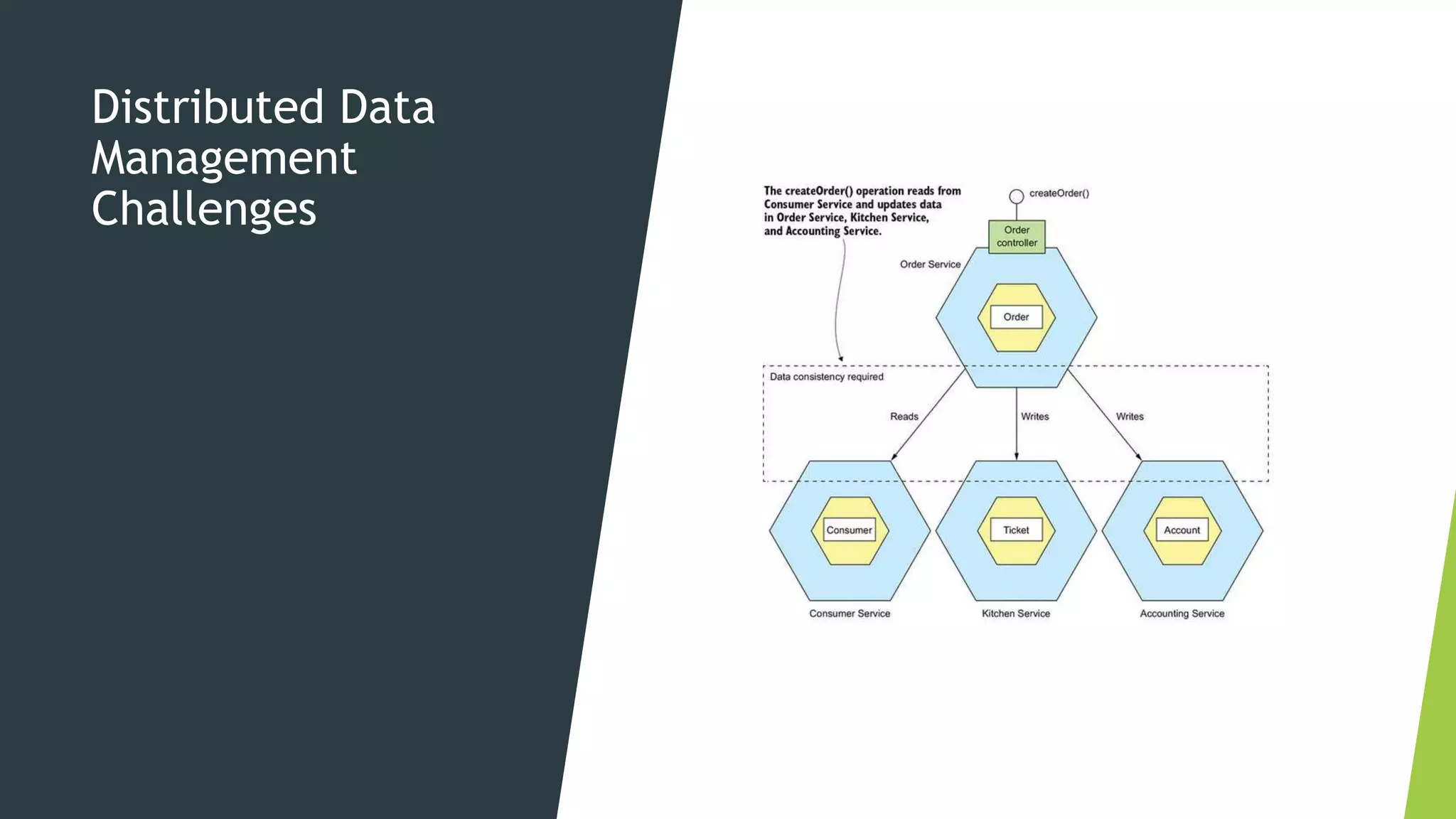
Distributed Data Management Challenges
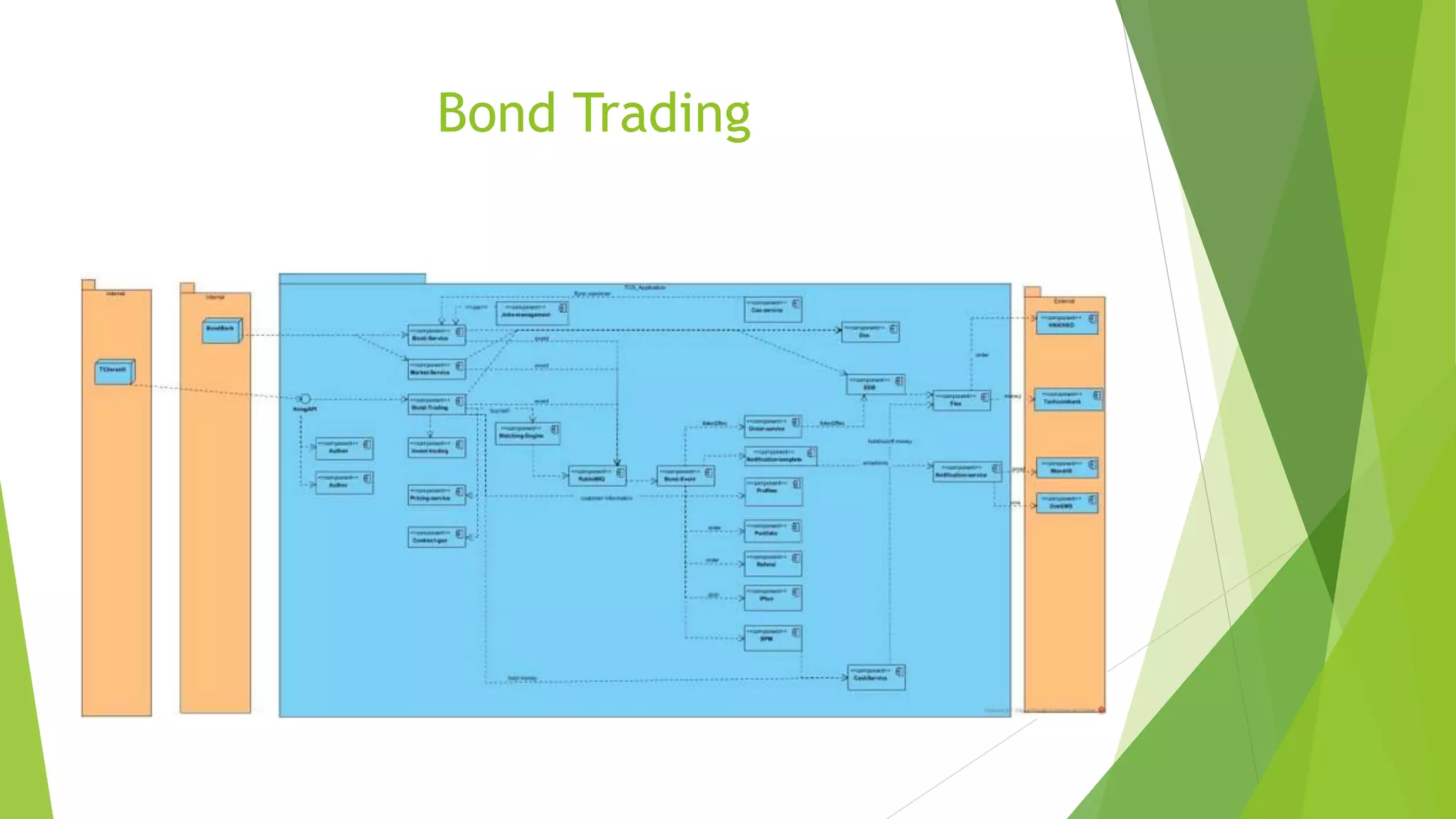
Bond Trading
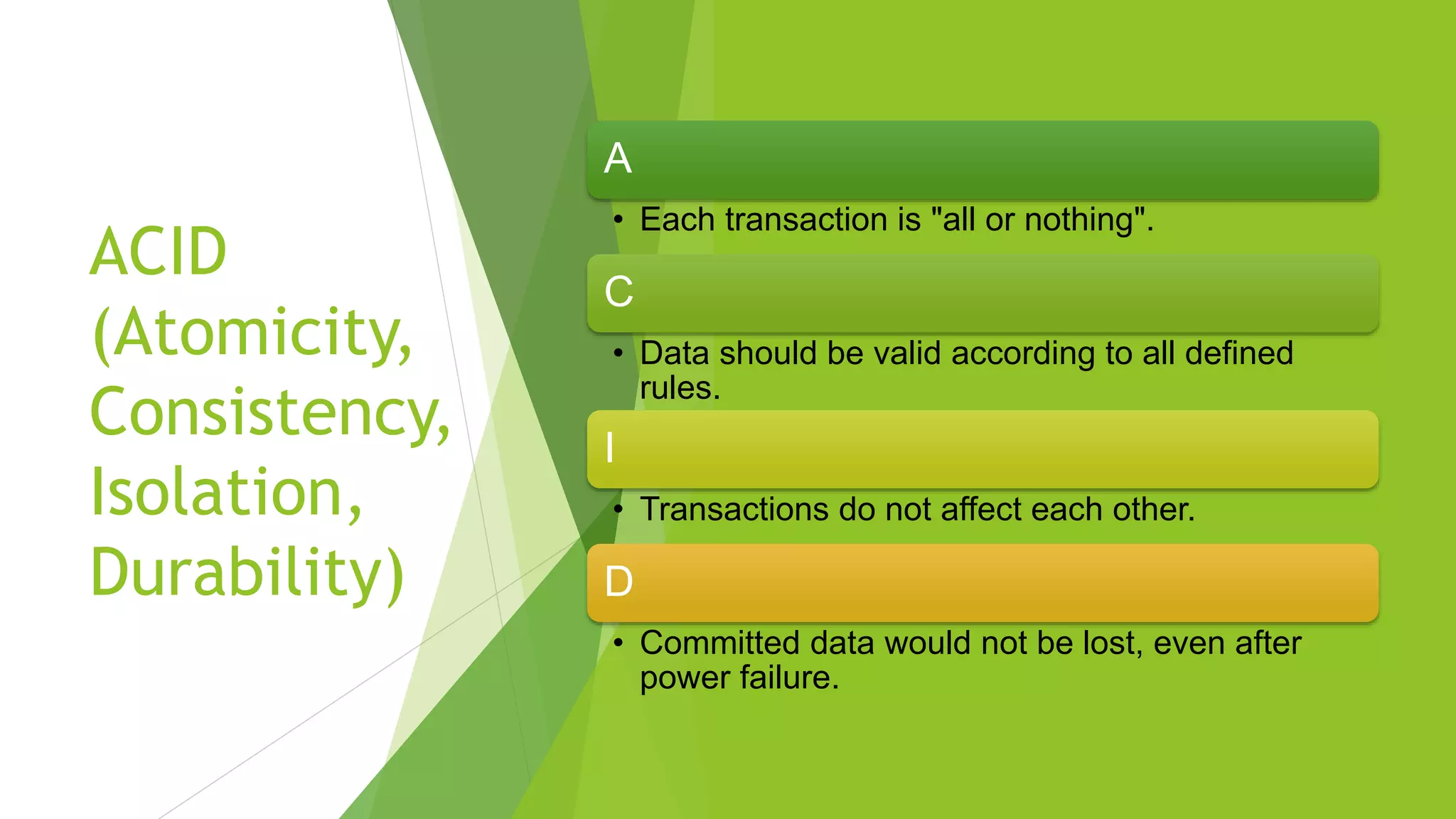
ACID (Atomicity, Consistency, Isolation, Durability) A • Each transaction is "all or nothing". C • Data should be valid according to all defined rules. I • Transactions do not affect each other. D • Committed data would not be lost, even after power failure.
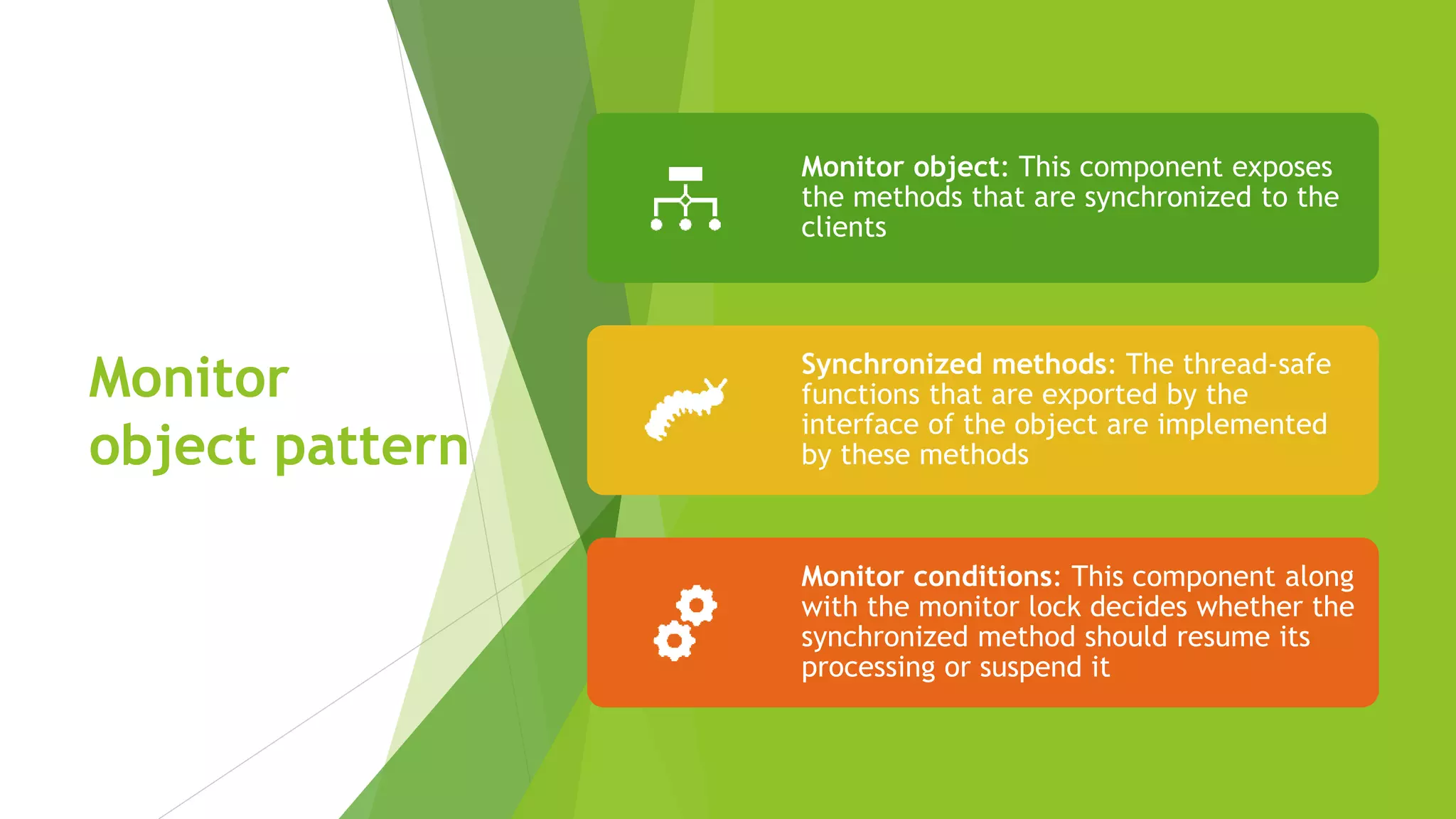
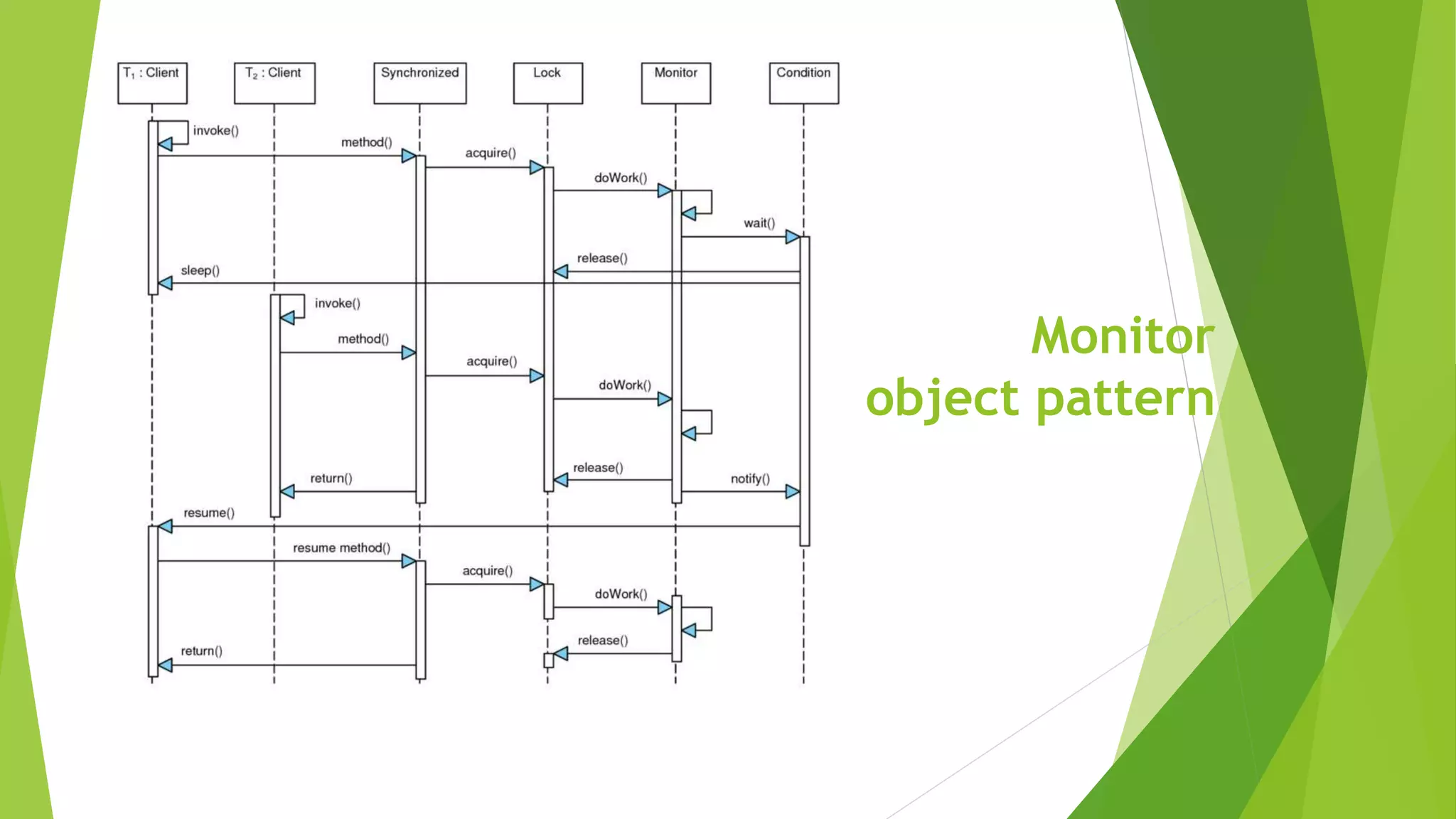
Monitor object pattern Monitor object: This component exposes the methods that are synchronized to the clients Synchronized methods: The thread-safe functions that are exported by the interface of the object are implemented by these methods Monitor conditions: This component along with the monitor lock decides whether the synchronized method should resume its processing or suspend it
Monitor object pattern
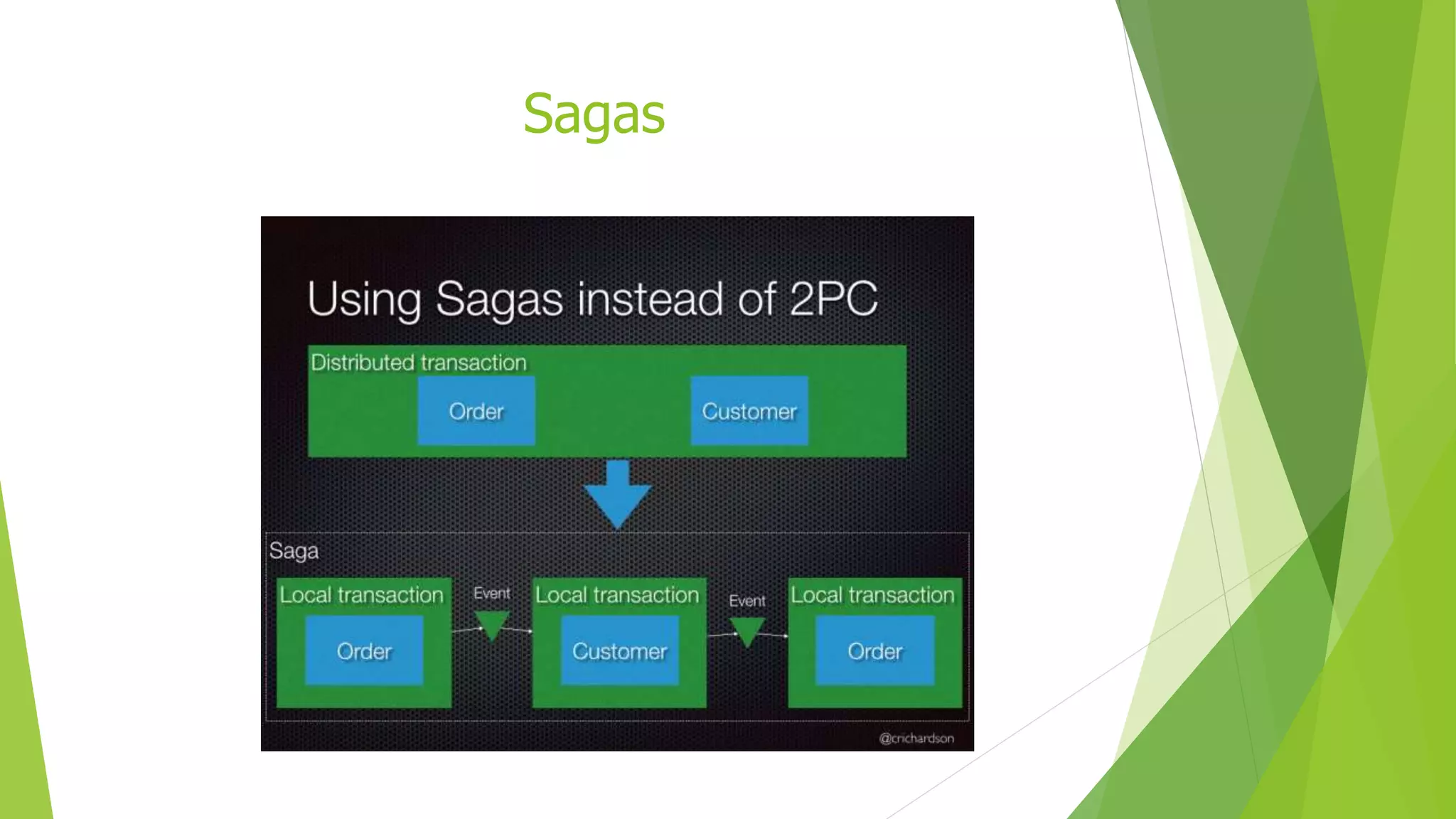
Sagas
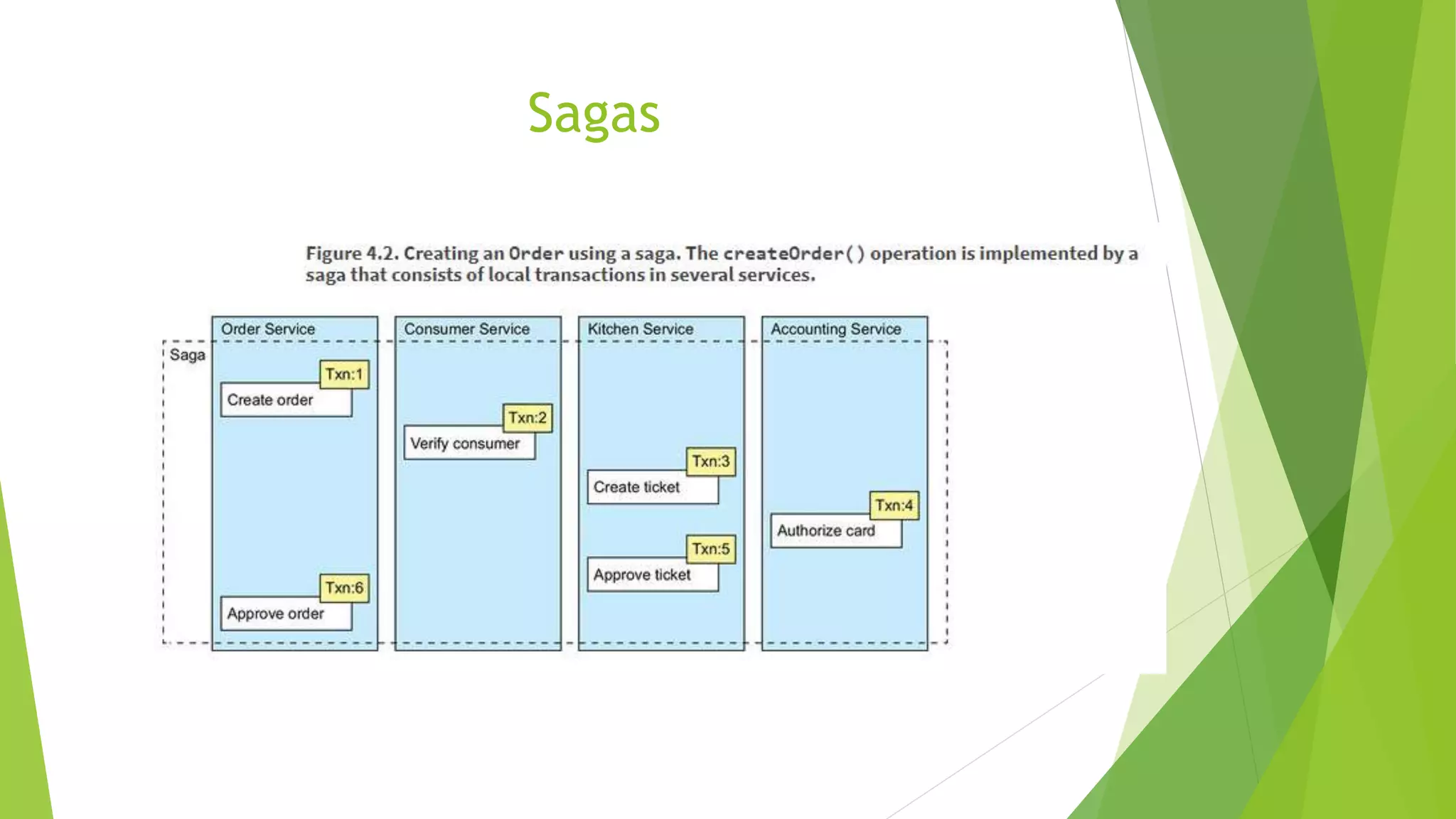
Sagas
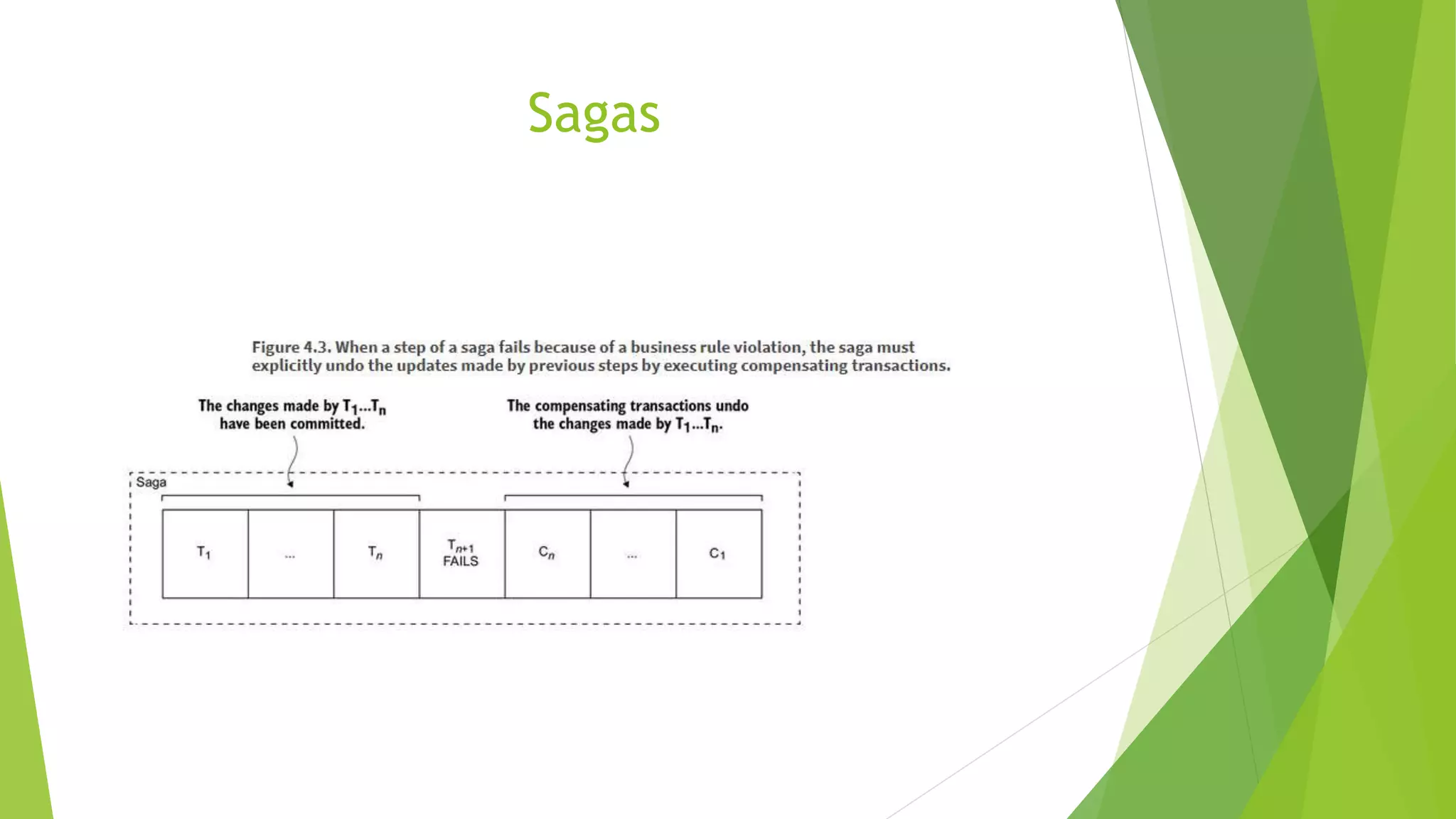
Sagas
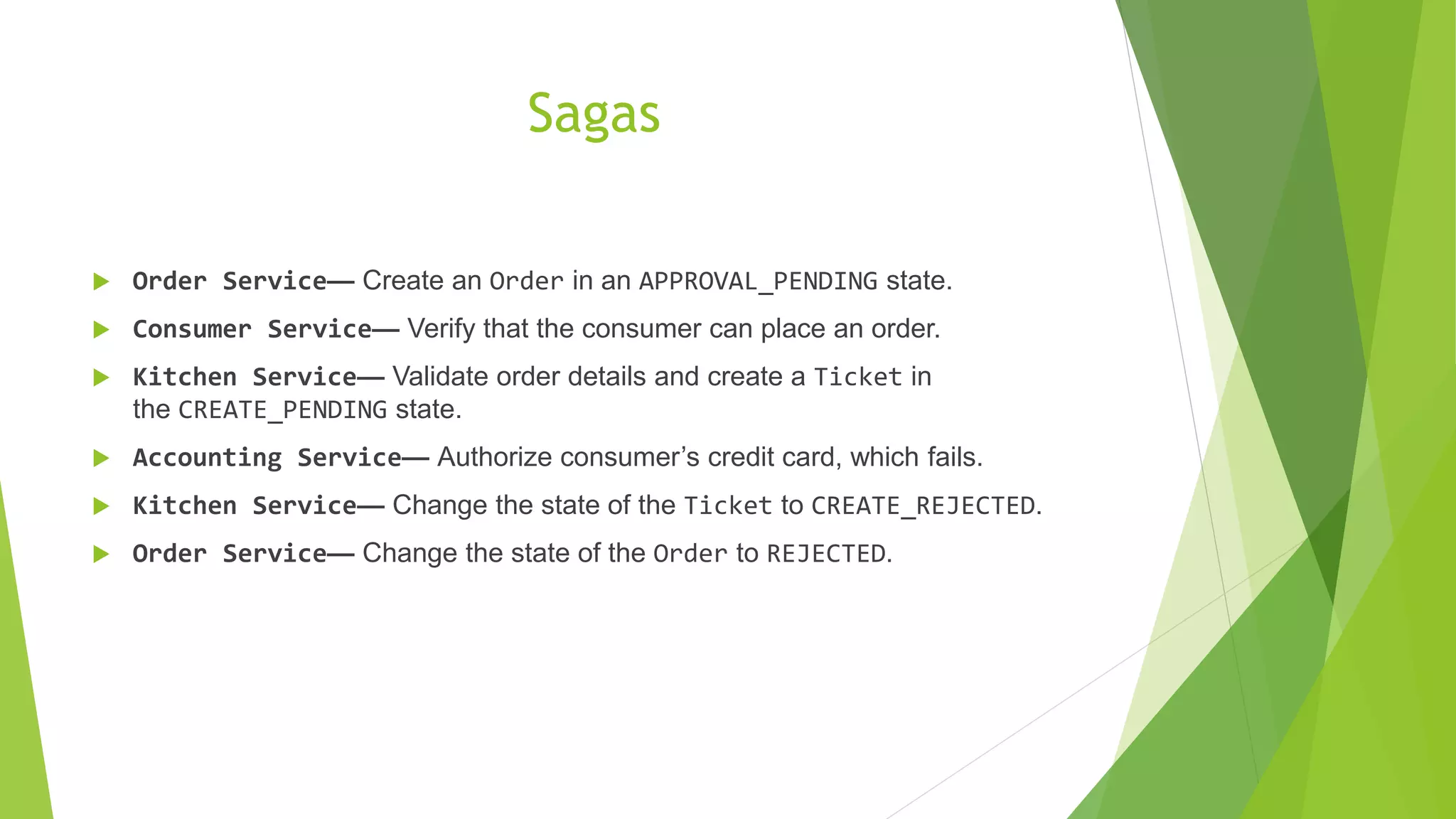
Sagas  Order Service— Create an Order in an APPROVAL_PENDING state.  Consumer Service— Verify that the consumer can place an order.  Kitchen Service— Validate order details and create a Ticket in the CREATE_PENDING state.  Accounting Service— Authorize consumer’s credit card, which fails.  Kitchen Service— Change the state of the Ticket to CREATE_REJECTED.  Order Service— Change the state of the Order to REJECTED.
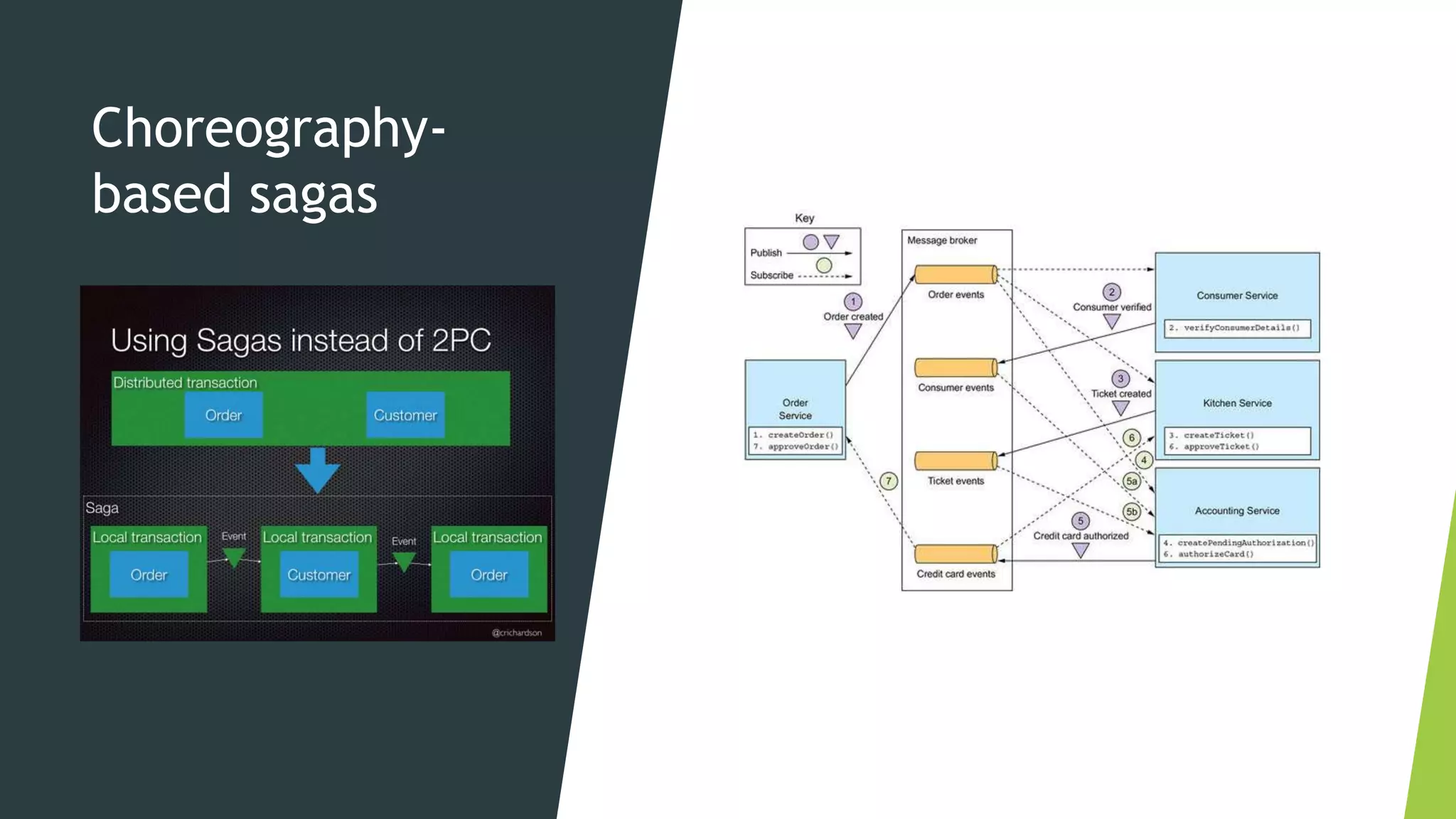
Choreography- based sagas
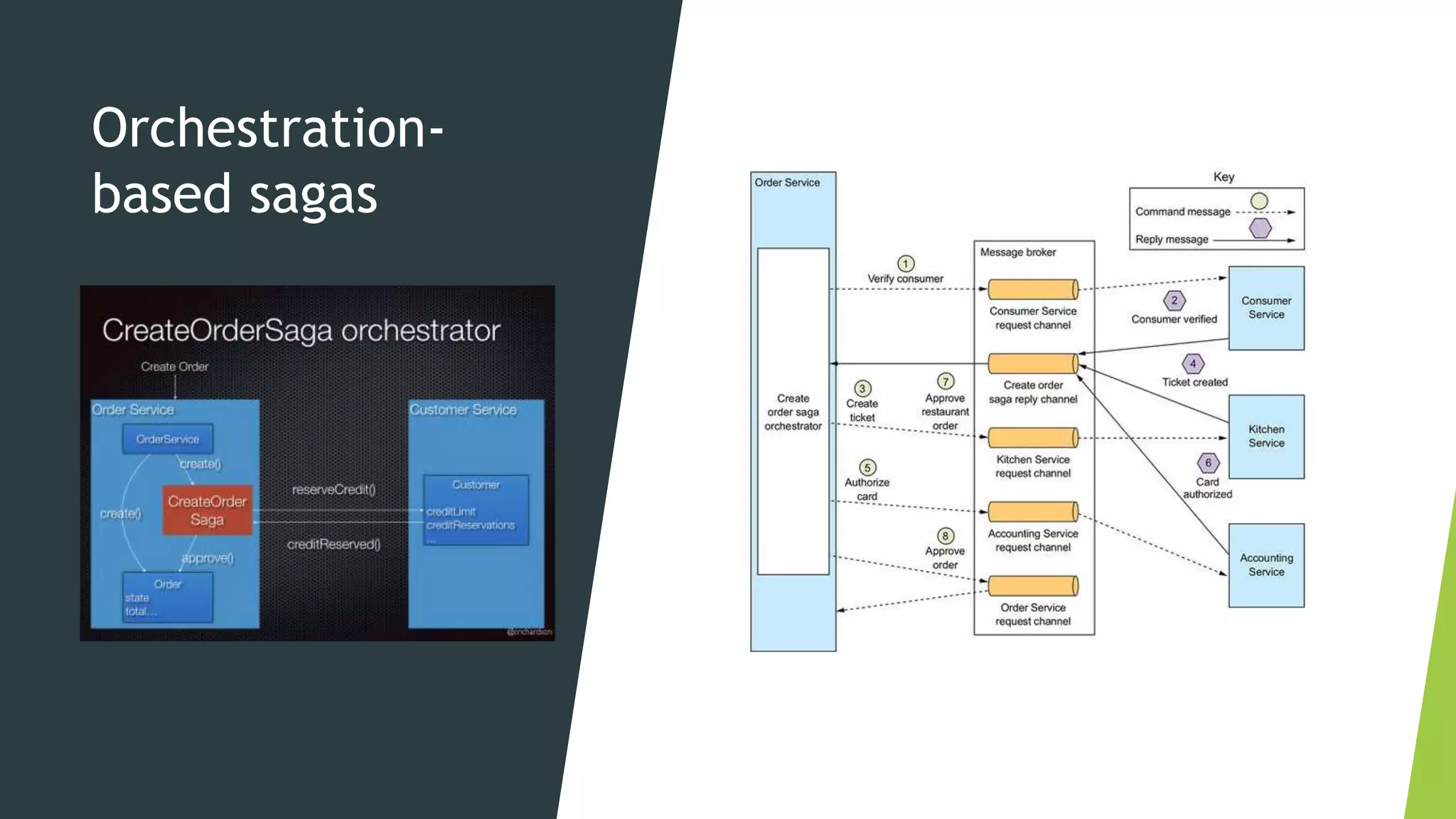
Orchestration- based sagas
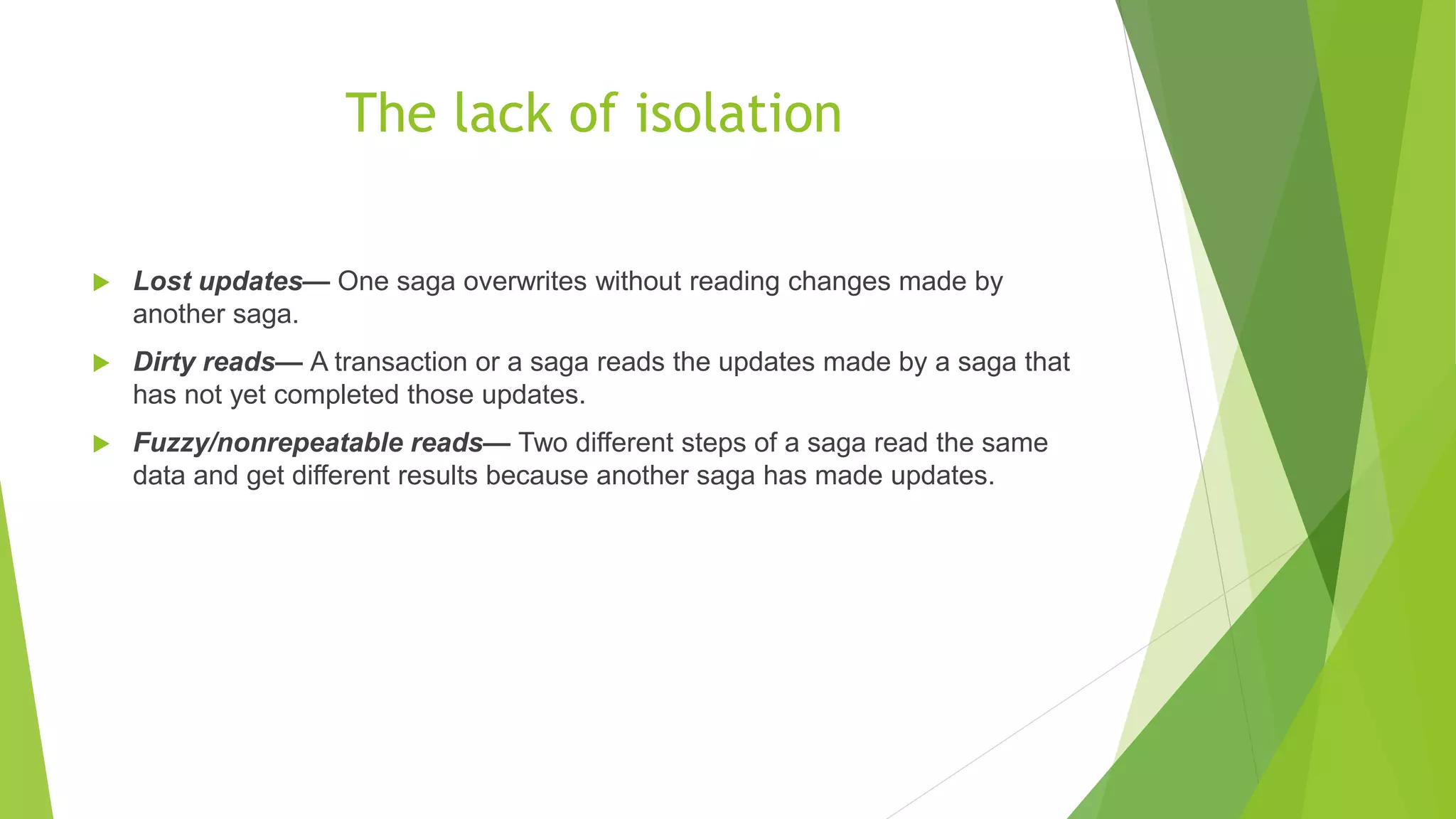
The lack of isolation  Lost updates— One saga overwrites without reading changes made by another saga.  Dirty reads— A transaction or a saga reads the updates made by a saga that has not yet completed those updates.  Fuzzy/nonrepeatable reads— Two different steps of a saga read the same data and get different results because another saga has made updates.
Countermeasures for handling the lack of isolation  Semantic lock— An application-level lock.  Commutative updates— Design update operations to be executable in any order.  Pessimistic view— Reorder the steps of a saga to minimize business risk.  Reread value— Prevent dirty writes by rereading data to verify that it’s unchanged before overwriting it.  Version file— Record the updates to a record so that they can be reordered.  By value— Use each request’s business risk to dynamically select the concurrency mechanism.
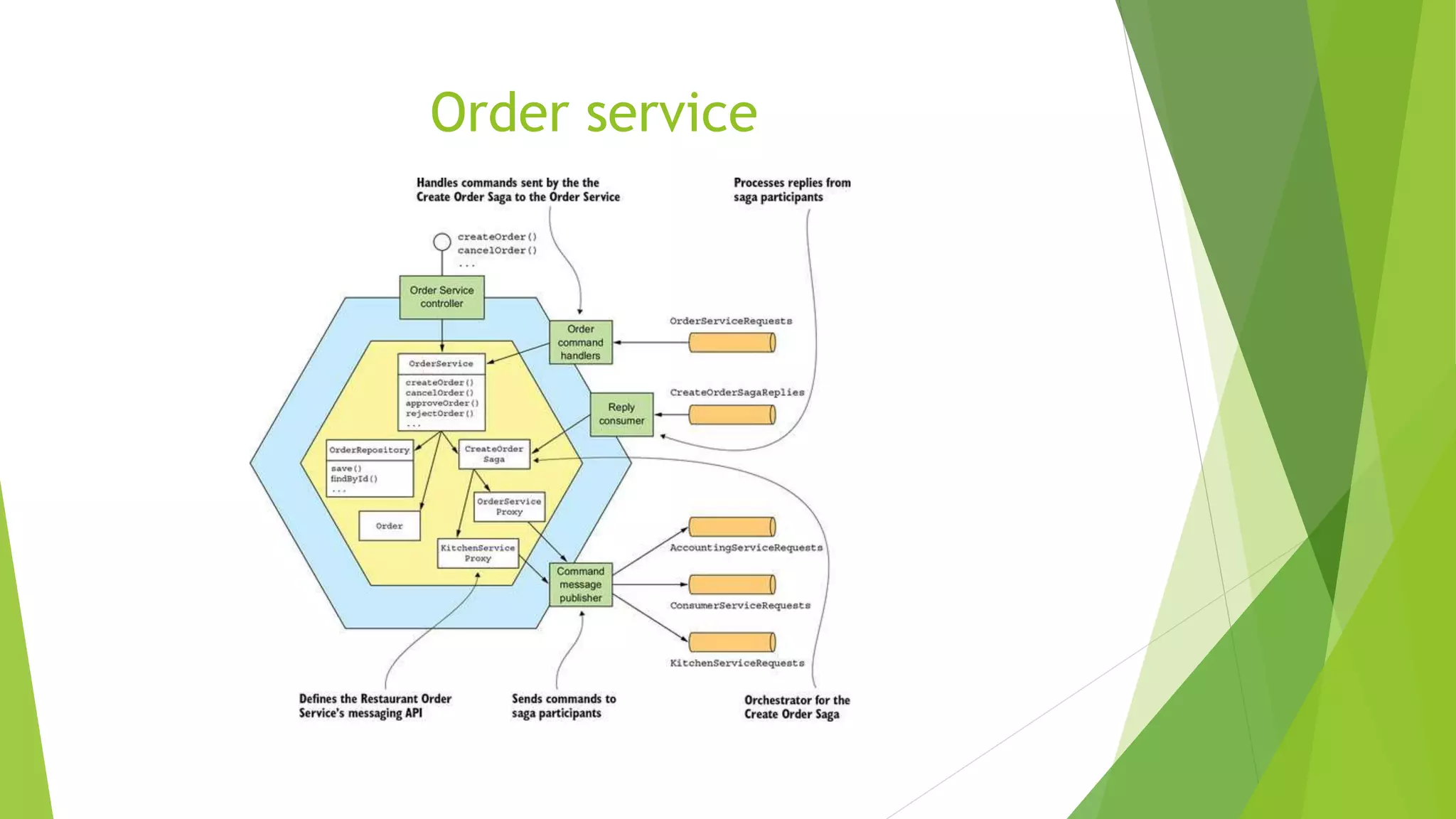
Order service

Distributed data management challenges

  • 1.
  • 2.
  • 3.
    ACID (Atomicity, Consistency, Isolation, Durability) A • Each transactionis "all or nothing". C • Data should be valid according to all defined rules. I • Transactions do not affect each other. D • Committed data would not be lost, even after power failure.
  • 4.
    Monitor object pattern Monitor object:This component exposes the methods that are synchronized to the clients Synchronized methods: The thread-safe functions that are exported by the interface of the object are implemented by these methods Monitor conditions: This component along with the monitor lock decides whether the synchronized method should resume its processing or suspend it
  • 5.
  • 6.
  • 7.
  • 8.
  • 9.
    Sagas  Order Service—Create an Order in an APPROVAL_PENDING state.  Consumer Service— Verify that the consumer can place an order.  Kitchen Service— Validate order details and create a Ticket in the CREATE_PENDING state.  Accounting Service— Authorize consumer’s credit card, which fails.  Kitchen Service— Change the state of the Ticket to CREATE_REJECTED.  Order Service— Change the state of the Order to REJECTED.
  • 10.
  • 11.
  • 12.
    The lack ofisolation  Lost updates— One saga overwrites without reading changes made by another saga.  Dirty reads— A transaction or a saga reads the updates made by a saga that has not yet completed those updates.  Fuzzy/nonrepeatable reads— Two different steps of a saga read the same data and get different results because another saga has made updates.
  • 13.
    Countermeasures for handlingthe lack of isolation  Semantic lock— An application-level lock.  Commutative updates— Design update operations to be executable in any order.  Pessimistic view— Reorder the steps of a saga to minimize business risk.  Reread value— Prevent dirty writes by rereading data to verify that it’s unchanged before overwriting it.  Version file— Record the updates to a record so that they can be reordered.  By value— Use each request’s business risk to dynamically select the concurrency mechanism.
  • 14.