The Unreal Engine is a game engine developed by Epic Games that is written in C++, making it highly portable. It has been used to create many popular first person shooter and other genre games since its first version in 1998. There have been four major versions of Unreal Engine released, each featuring technical improvements and expanded platform support. The current version, Unreal Engine 4, targets next generation consoles and devices and includes physically based rendering and improved development tools.
Introduction to Unreal Engine by Epic Games and its licensing. Highlights coding in C++, portability, and platform support for various operating systems and gaming consoles.
Details on the four versions released: Unreal Engine 1, 2, 3, and 4, covering their release years, key features, and advancements in rendering and compatibility.
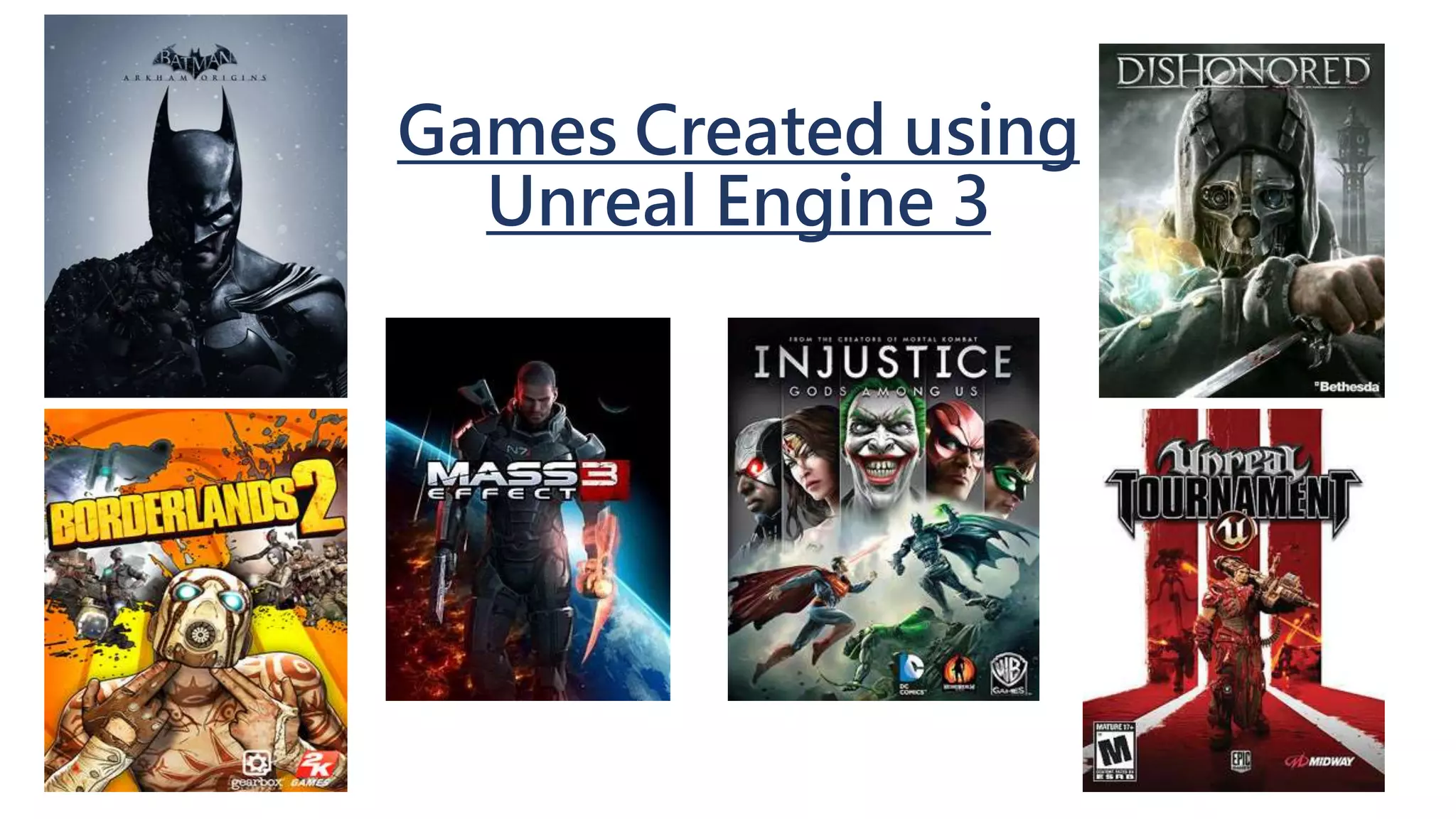
Showcases popular games created with each version of Unreal Engine, emphasizing major titles, including America’s Army. Also lists current developments with Unreal Engine.
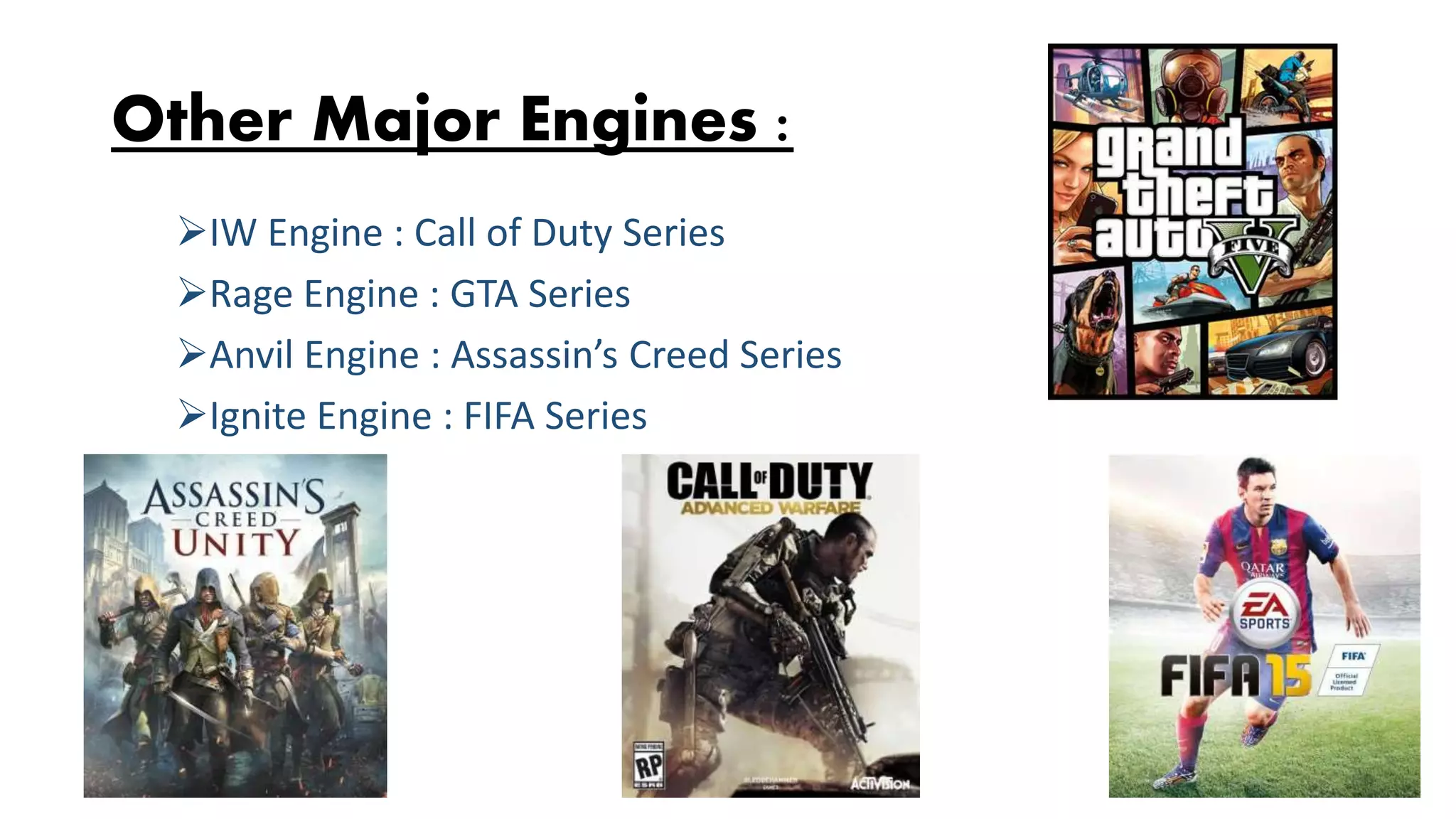
Brief mention of other significant game engines including IW Engine, Rage Engine, Anvil Engine, and Ignite Engine, and their associated game series.
Concludes the presentation with a 'Game Over' message and a 'Thank You' note.
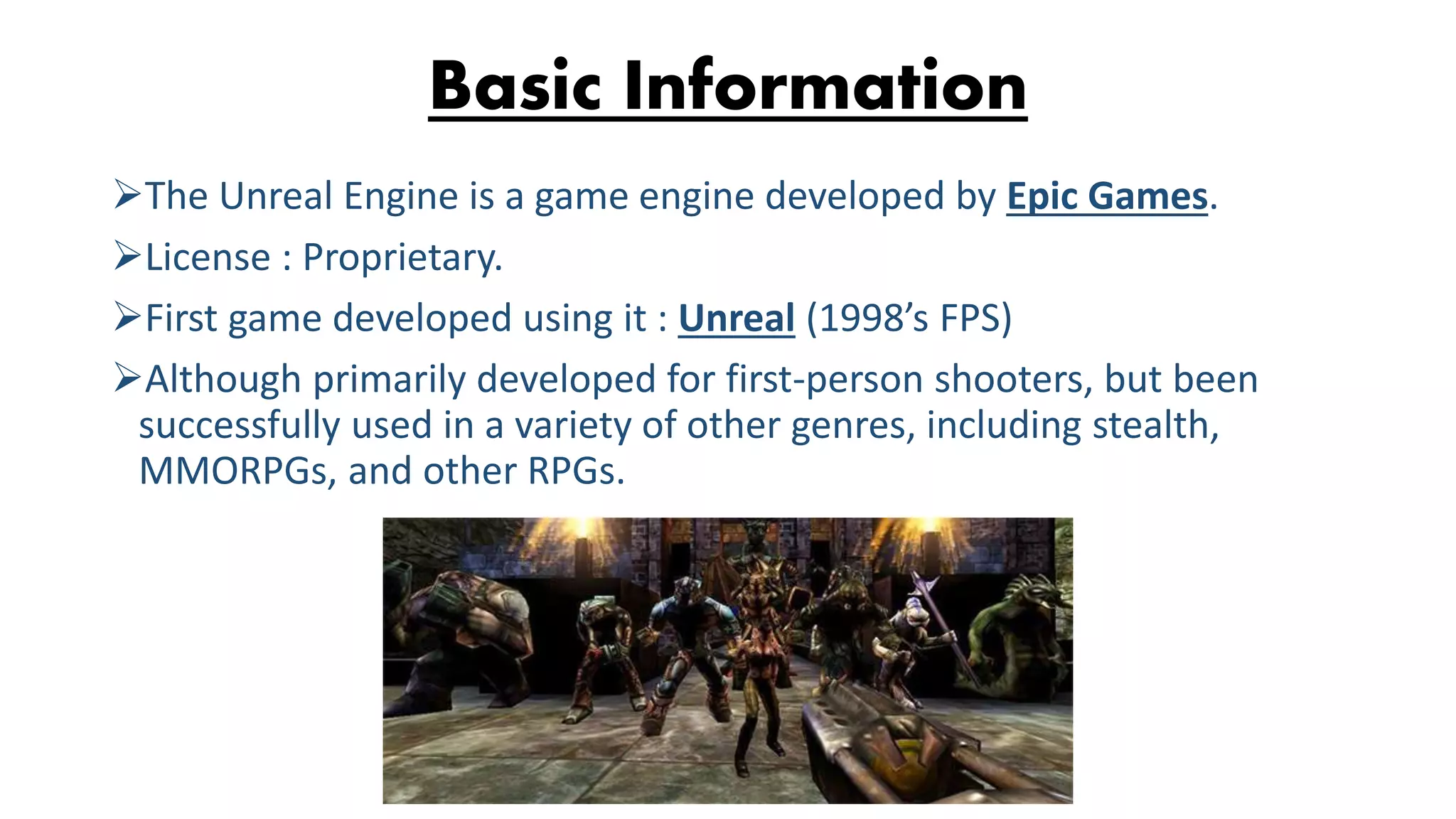
Basic Information The UnrealEngine is a game engine developed by Epic Games. License : Proprietary. First game developed using it : Unreal (1998’s FPS) Although primarily developed for first-person shooters, but been successfully used in a variety of other genres, including stealth, MMORPGs, and other RPGs.
3.
Coding and Platforms Withits code written in C++, the Unreal Engine features a high degree of portability and is one of the most widely used gaming engine. The current release is Unreal Engine 4, designed for Microsoft's DirectX 10-12 (for Microsoft Windows, Xbox One); OpenGL (for OS X, Linux, PlayStation 4, iOS, Android, and Windows XP); and JavaScript/WebGL (for HTML5 Web browsers).
4.
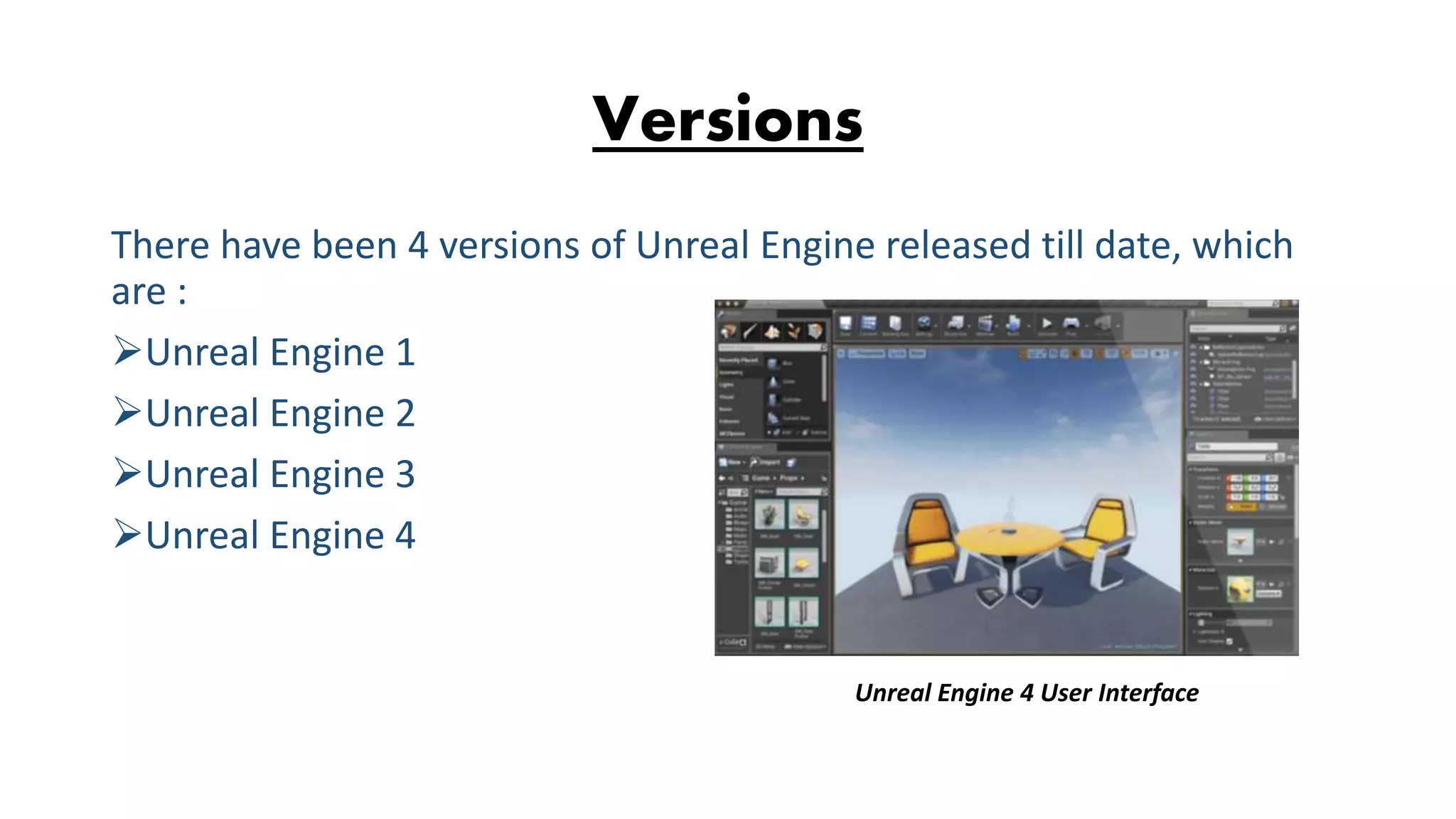
Versions There have been4 versions of Unreal Engine released till date, which are : Unreal Engine 1 Unreal Engine 2 Unreal Engine 3 Unreal Engine 4 Unreal Engine 4 User Interface
5.
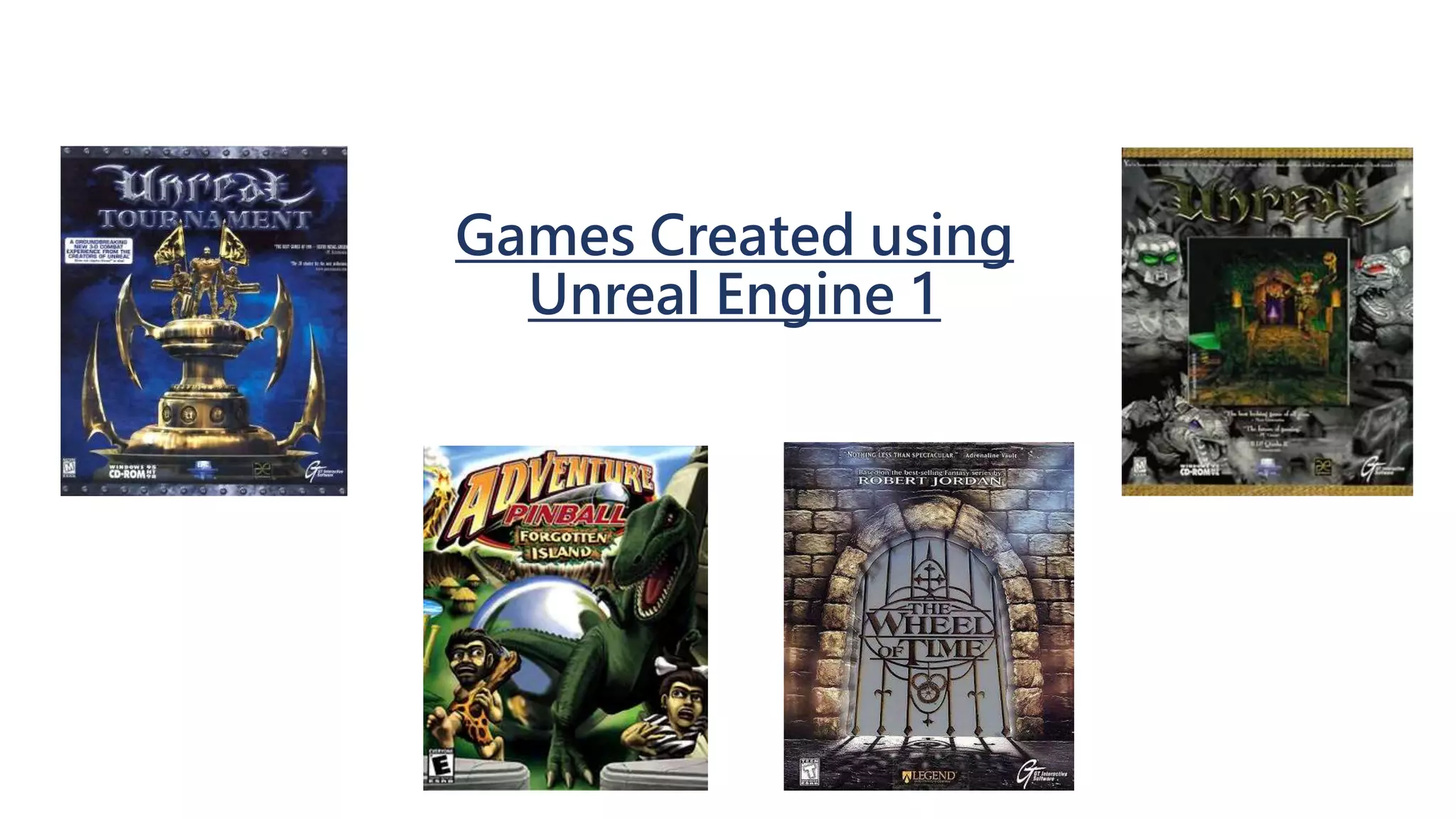
Unreal Engine 1 •Available for License : 1996 • First Release : Unreal (1998) • Integrated rendering, collision detection, AI, visibility, networking, scripting and file system management in one complete engine. • The engine became very popular due to the modular engine architecture and the inclusion of a scripting language, which made it easy to mod.
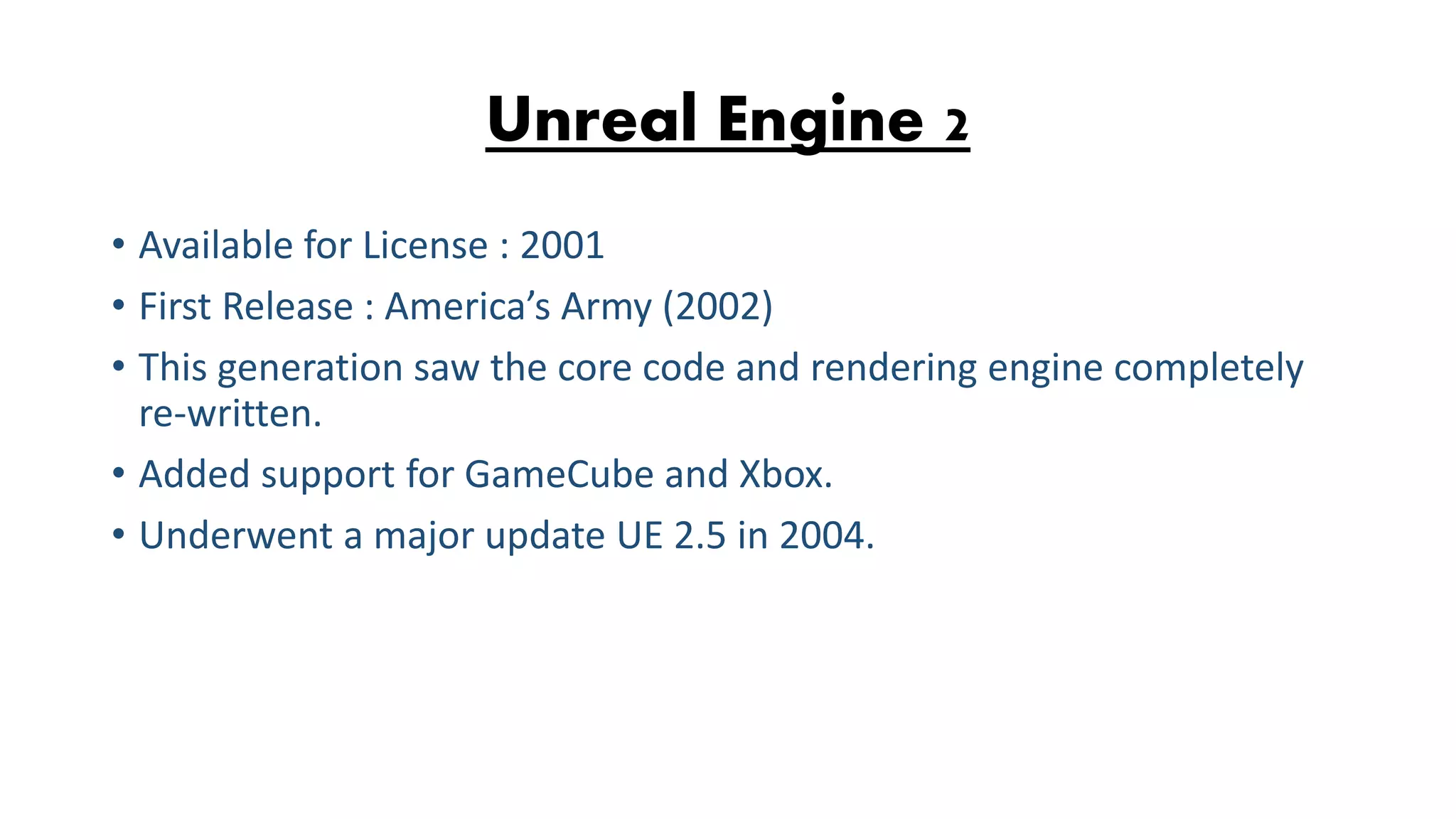
Unreal Engine 2 •Available for License : 2001 • First Release : America’s Army (2002) • This generation saw the core code and rendering engine completely re-written. • Added support for GameCube and Xbox. • Underwent a major update UE 2.5 in 2004.
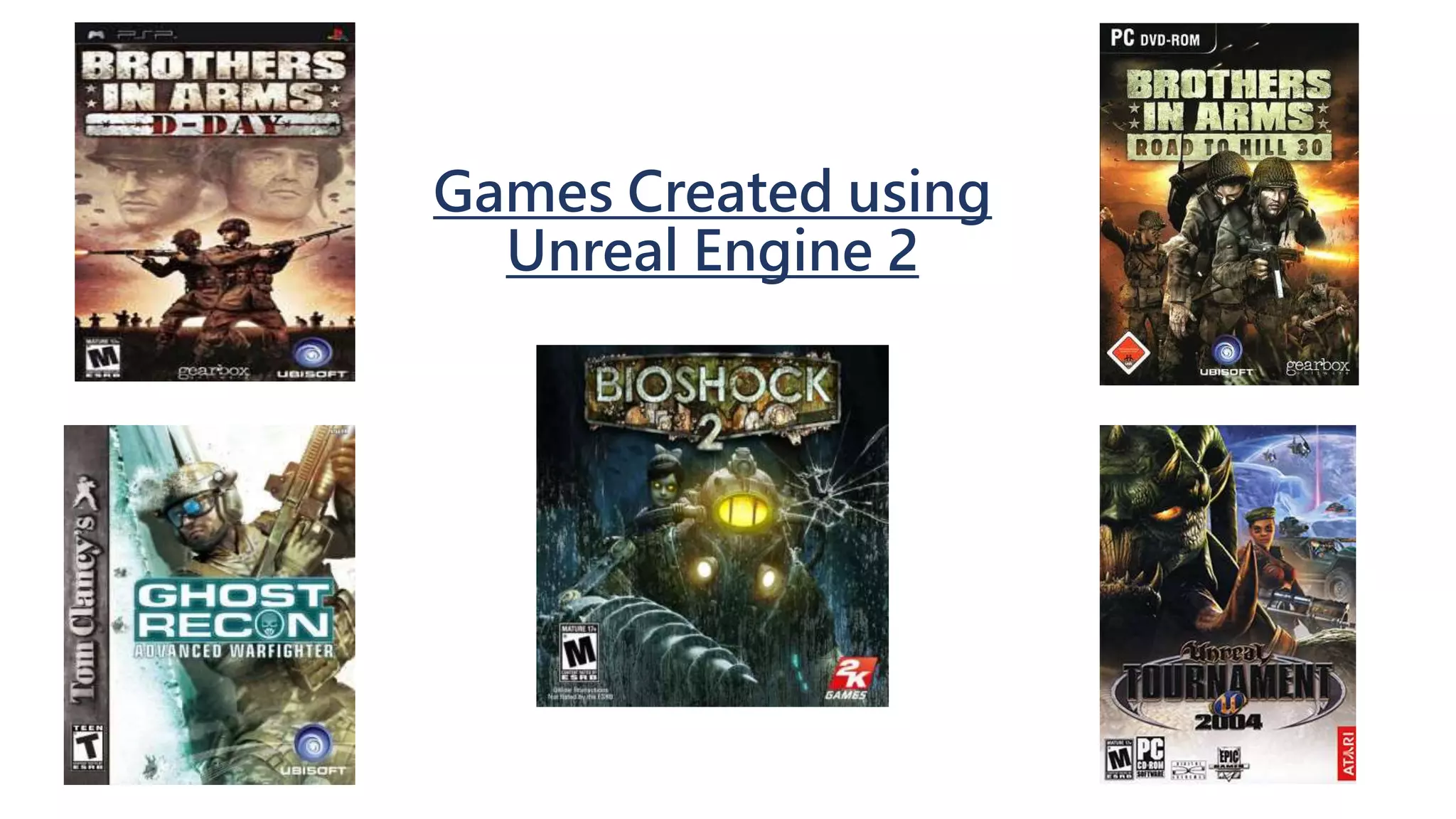
Unreal Engine 3 •Available for License : 2001 • First Release : America’s Army (2002) • Its renderer supports many advanced techniques including HDRR, per-pixel lighting, and dynamic shadows. • Initially, Unreal Engine 3 only supported Windows, Xbox 360, and PlayStation 3 platforms, while Android and iOS were added later in 2010. • Underwent many major changes between 2009-12.
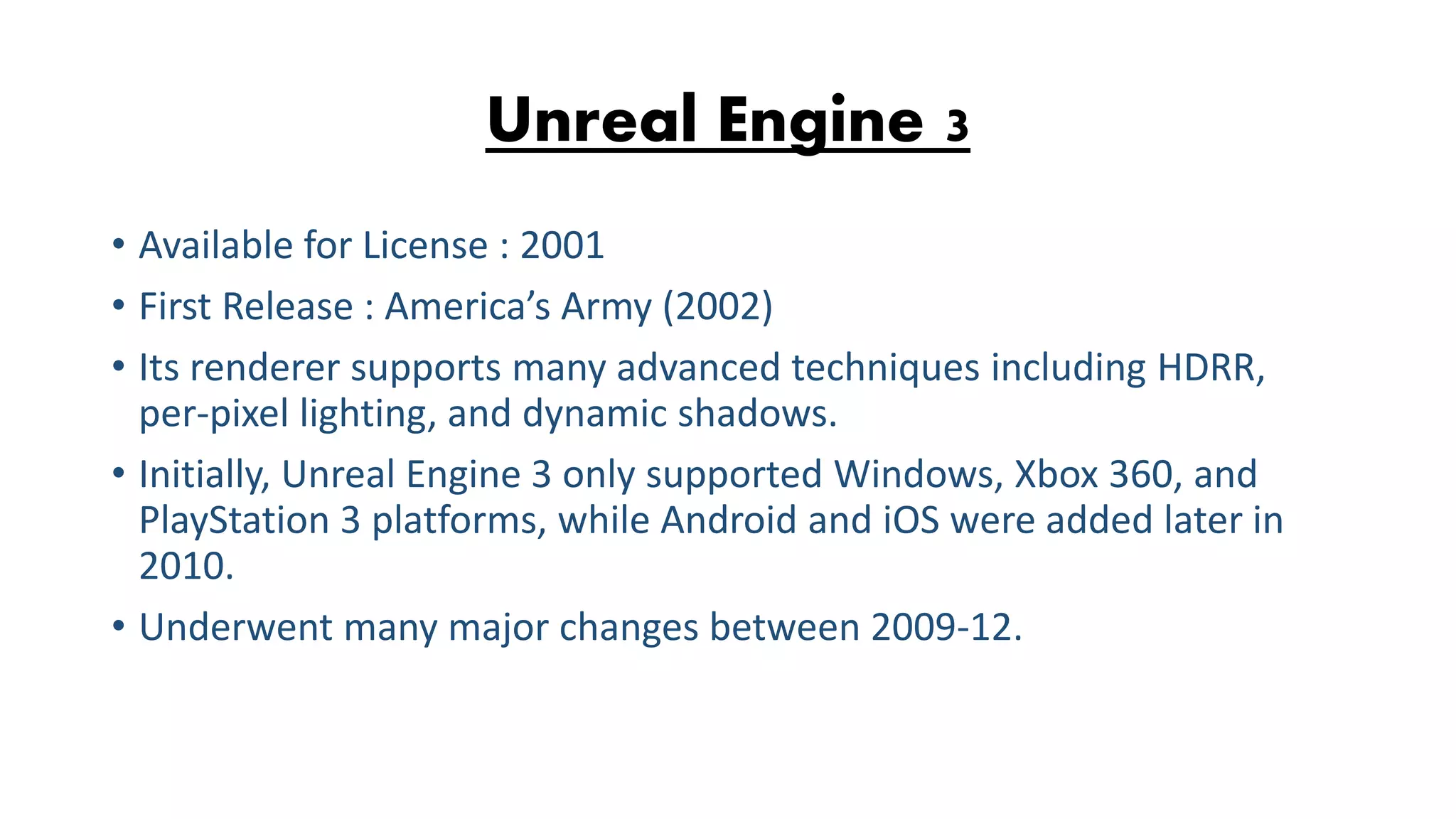
Unreal Engine 4 •Available for License : 2012 • First Release : America’s Army (2002) • The engine targets the eighth generation of consoles, PCs and Tegra K1-based devices running Android OS. • It’s features include physically-based rendering, UI, level building, animation, visual effects, physics, networking, and asset management.