DATA ANALYTICS FUNDAMENTALS WITH SQL AND PYTHON Turning Raw Data into Insights with Practical Tools
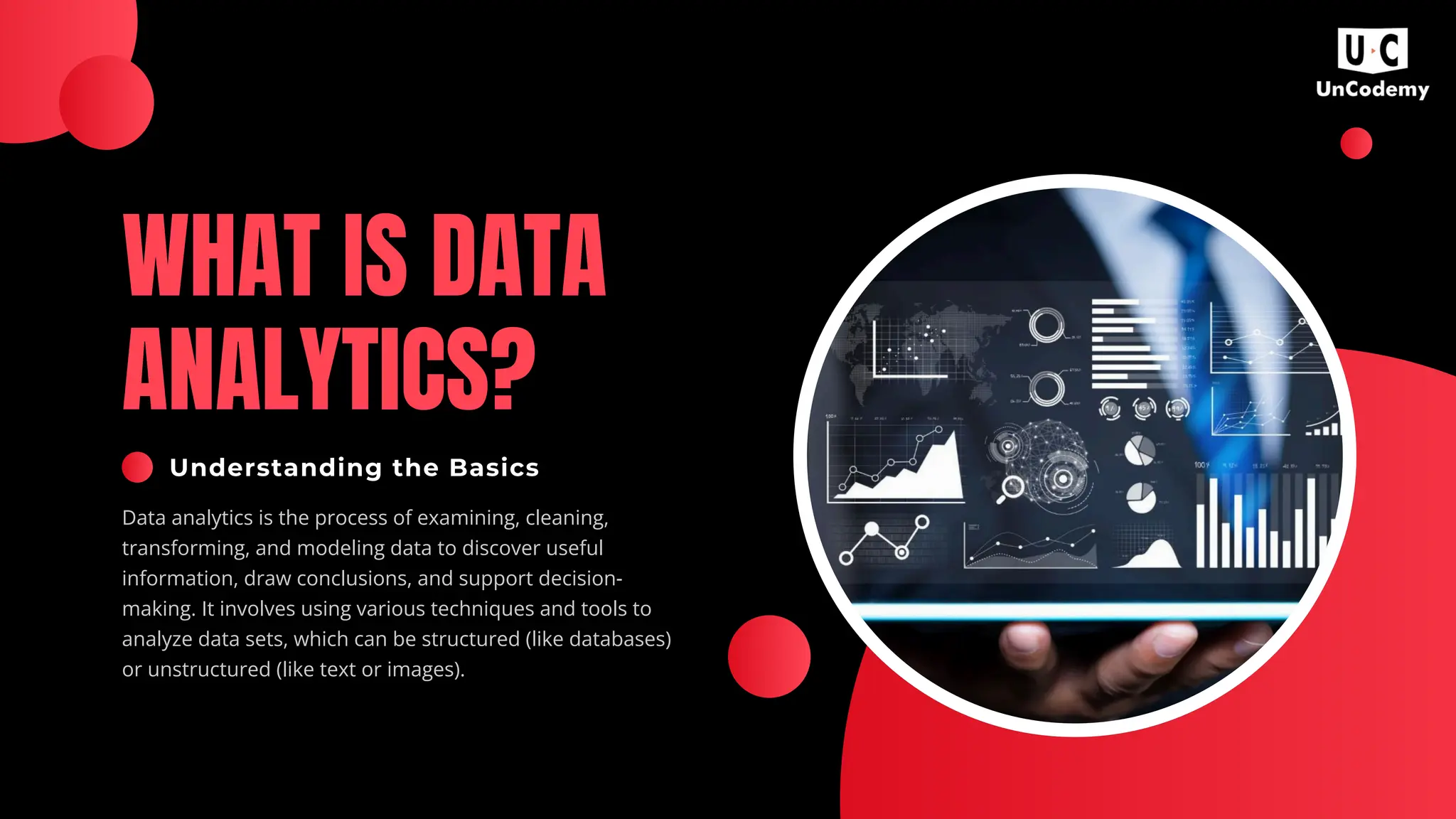
WHAT IS DATA ANALYTICS? Understanding the Basics Data analytics is the process of examining, cleaning, transforming, and modeling data to discover useful information, draw conclusions, and support decision- making. It involves using various techniques and tools to analyze data sets, which can be structured (like databases) or unstructured (like text or images).
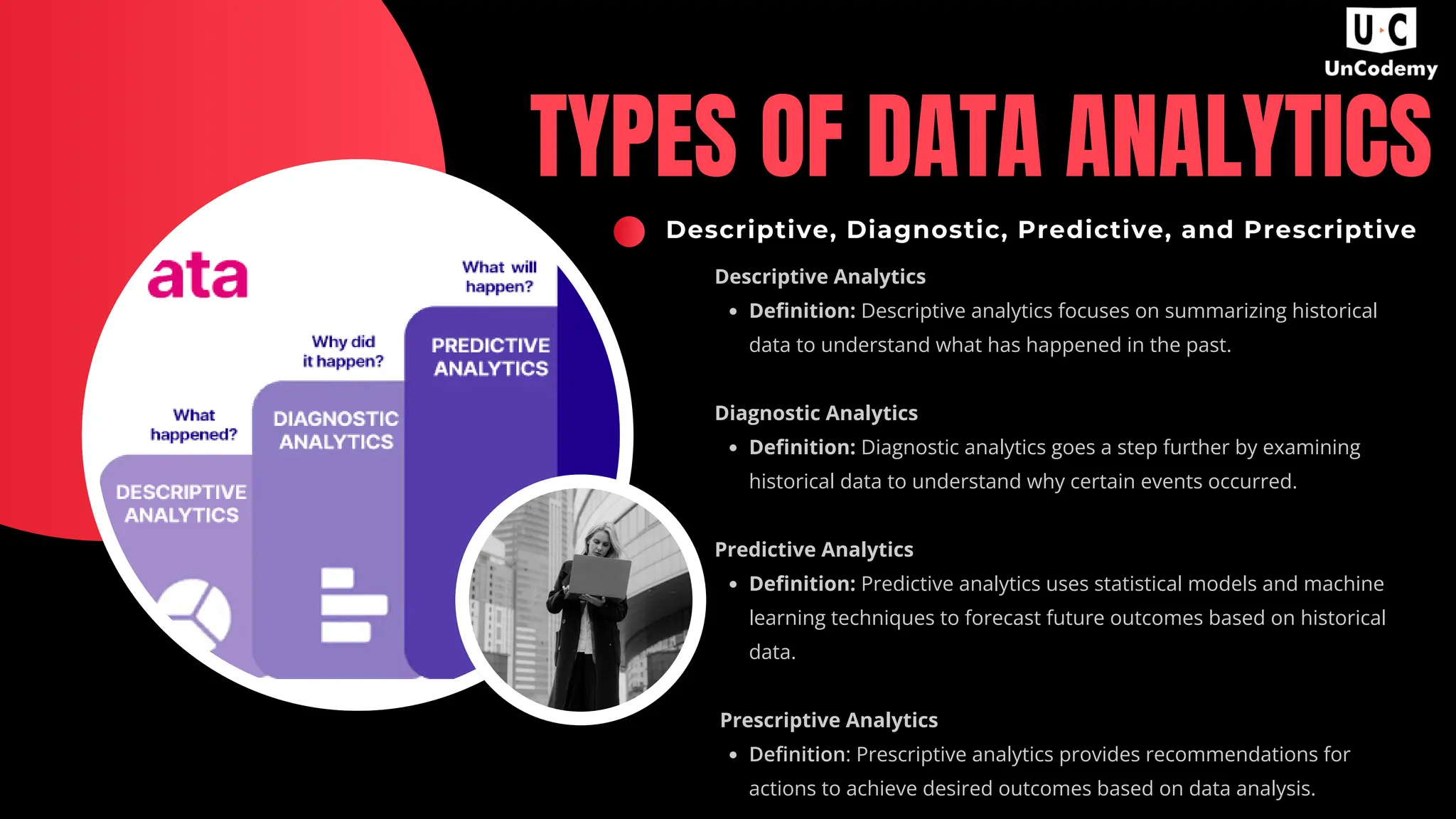
TYPES OF DATA ANALYTICS Descriptive, Diagnostic, Predictive, and Prescriptive Descriptive Analytics Definition: Descriptive analytics focuses on summarizing historical data to understand what has happened in the past. Diagnostic Analytics Definition: Diagnostic analytics goes a step further by examining historical data to understand why certain events occurred. Predictive Analytics Definition: Predictive analytics uses statistical models and machine learning techniques to forecast future outcomes based on historical data. Prescriptive Analytics Definition: Prescriptive analytics provides recommendations for actions to achieve desired outcomes based on data analysis.
DATA WORKFLOW OVERVIEW Data Collection Description: Gathering data from various sources, which can include databases, APIs, web scraping, surveys, sensors, and more. Considerations: Ensuring data quality, relevance, and compliance with regulations (e.g., GDPR). Cleaning Description: Converting data into a suitable format or structure for analysis. This may involve aggregating, filtering, or enriching the data. Techniques: ETL (Extract, Transform, Load) processes, data wrangling, and feature engineering. Data Analysis Description: Applying statistical methods, algorithms, and analytical techniques to extract insights from the data. Types: Descriptive, diagnostic, predictive, prescriptive, and exploratory analytics. Interpretation, and Reporting Description: Drawing conclusions from the analysis and visualizations, and understanding the implications of the findings. Considerations: Contextualizing results within the business environment and aligning them with strategic goals.
WHY SQL AND PYTHON? SQL and Python together provide a powerful combination for data analytics, allowing professionals to efficiently manage, analyze, and visualize data across various contexts. SQL(querying structured data efficiently) PYTHON (flexibility, libraries, automation) Data Retrieval: 1. Structured Data Handling: 2. Complex Queries: 3. Data Manipulation: 4. Standardization: 5. Performance: 6. Integration: 7. Versatility: 1. Rich Libraries: 2. Data Cleaning and Preparation: 3. Integration with Other Tools: 4. Machine Learning and AI: 5. Community and Support: 6. Ease of Learning: 7.
SQL FUNDAMENTALS BASIC STRUCTURE Databases and Tables: Understanding Relational Databases Basic Queries: SELECT, FROM, WHERE, ORDER BY, LIMIT Aggregations: COUNT, SUM, AVG, GROUP BY Joins: INNER JOIN, LEFT JOIN Real-world Query Example (e.g., sales or customer data) SQL (Structured Query Language) is a standard programming language used for managing and manipulating relational databases. Understanding SQL fundamentals is essential for anyone working with data. Here are the key concepts and components of SQL:
PYTHON FOR DATA ANALYTICS Key Libraries for Data Analytics Python Basics: Variables, data types, loops, functions Data Libraries: pandas for dataframes and manipulation numpy for numerical operations matplotlib / seaborn for visualization Reading and cleaning data (CSV example) Exploratory Data Analysis (EDA) with Python
CONCLUSION Data Analytics Fundamentals with SQL and Python Mastering data analytics fundamentals with SQL and Python equips individuals with the necessary skills to extract valuable insights from data. As organizations increasingly rely on data to drive their strategies, the demand for skilled data analysts continues to grow. By developing proficiency in these tools, individuals can position themselves for success in the dynamic and rewarding field of data analytics. Pursuing training from the best data analytics training institute in Delhi, Mumbai, Bangalore, or Hyderabad can further enhance one’s capabilities and career prospects in this exciting domain. Each of these cities offers unique opportunities and resources for aspiring data analysts, making them ideal locations for professional development in data analytics.
THANK YOU www.uncodemy.com

DATA ANALYTICS FUNDAMENTALS WITH SQL AND PYTHON

  • 1.
    DATA ANALYTICS FUNDAMENTALS WITHSQL AND PYTHON Turning Raw Data into Insights with Practical Tools
  • 2.
    WHAT IS DATA ANALYTICS? Understandingthe Basics Data analytics is the process of examining, cleaning, transforming, and modeling data to discover useful information, draw conclusions, and support decision- making. It involves using various techniques and tools to analyze data sets, which can be structured (like databases) or unstructured (like text or images).
  • 3.
    TYPES OF DATAANALYTICS Descriptive, Diagnostic, Predictive, and Prescriptive Descriptive Analytics Definition: Descriptive analytics focuses on summarizing historical data to understand what has happened in the past. Diagnostic Analytics Definition: Diagnostic analytics goes a step further by examining historical data to understand why certain events occurred. Predictive Analytics Definition: Predictive analytics uses statistical models and machine learning techniques to forecast future outcomes based on historical data. Prescriptive Analytics Definition: Prescriptive analytics provides recommendations for actions to achieve desired outcomes based on data analysis.
  • 4.
    DATA WORKFLOW OVERVIEW DataCollection Description: Gathering data from various sources, which can include databases, APIs, web scraping, surveys, sensors, and more. Considerations: Ensuring data quality, relevance, and compliance with regulations (e.g., GDPR). Cleaning Description: Converting data into a suitable format or structure for analysis. This may involve aggregating, filtering, or enriching the data. Techniques: ETL (Extract, Transform, Load) processes, data wrangling, and feature engineering. Data Analysis Description: Applying statistical methods, algorithms, and analytical techniques to extract insights from the data. Types: Descriptive, diagnostic, predictive, prescriptive, and exploratory analytics. Interpretation, and Reporting Description: Drawing conclusions from the analysis and visualizations, and understanding the implications of the findings. Considerations: Contextualizing results within the business environment and aligning them with strategic goals.
  • 5.
    WHY SQL ANDPYTHON? SQL and Python together provide a powerful combination for data analytics, allowing professionals to efficiently manage, analyze, and visualize data across various contexts. SQL(querying structured data efficiently) PYTHON (flexibility, libraries, automation) Data Retrieval: 1. Structured Data Handling: 2. Complex Queries: 3. Data Manipulation: 4. Standardization: 5. Performance: 6. Integration: 7. Versatility: 1. Rich Libraries: 2. Data Cleaning and Preparation: 3. Integration with Other Tools: 4. Machine Learning and AI: 5. Community and Support: 6. Ease of Learning: 7.
  • 6.
    SQL FUNDAMENTALS BASIC STRUCTURE Databasesand Tables: Understanding Relational Databases Basic Queries: SELECT, FROM, WHERE, ORDER BY, LIMIT Aggregations: COUNT, SUM, AVG, GROUP BY Joins: INNER JOIN, LEFT JOIN Real-world Query Example (e.g., sales or customer data) SQL (Structured Query Language) is a standard programming language used for managing and manipulating relational databases. Understanding SQL fundamentals is essential for anyone working with data. Here are the key concepts and components of SQL:
  • 7.
    PYTHON FOR DATA ANALYTICS KeyLibraries for Data Analytics Python Basics: Variables, data types, loops, functions Data Libraries: pandas for dataframes and manipulation numpy for numerical operations matplotlib / seaborn for visualization Reading and cleaning data (CSV example) Exploratory Data Analysis (EDA) with Python
  • 8.
    CONCLUSION Data Analytics Fundamentalswith SQL and Python Mastering data analytics fundamentals with SQL and Python equips individuals with the necessary skills to extract valuable insights from data. As organizations increasingly rely on data to drive their strategies, the demand for skilled data analysts continues to grow. By developing proficiency in these tools, individuals can position themselves for success in the dynamic and rewarding field of data analytics. Pursuing training from the best data analytics training institute in Delhi, Mumbai, Bangalore, or Hyderabad can further enhance one’s capabilities and career prospects in this exciting domain. Each of these cities offers unique opportunities and resources for aspiring data analysts, making them ideal locations for professional development in data analytics.
  • 9.